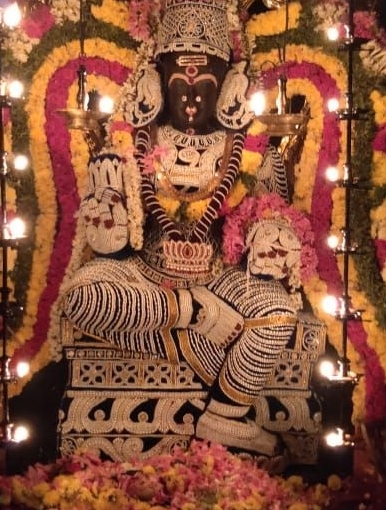
CIA 26,000 Years Old Wooden Chest With Life Enhancing Vishnu Idol
Radiocarbon (C14) dating conducted by the University of California Radiation Laboratory on the heavy 9-inch thick timber sides and lid of the chest in which it was discovered arrived at readings that indicated a period around 26,450 BCE.
# Information provided here has been checked for being a Hoax.
It does not seem so.
Wiki answers quote this story.
Kalpa Vigraha Vishnu Charged Water For Longevity CIA.
Kalpa Vigraha Vishnu Charged Water For Longevity CIA.
radiocarbon test of the timber with which the chest was made.
Corrosive salts or dampness had not crept into the chest despite its age, though some degree of natural oxidation and decay was noticed in the contents of the chest which included a manuscript written on wooden slats and the small brass-like crude metal idol.
The old pre-Rigvedic Sanskrit-type manuscript was translated by the CIA with difficulty.
In fact it reportedly took two long years to decipher, employing experts including some Indian and Nepalese.
They concluded that the language belonged to the proto-historic period of Hinduism when it was thought no language existed and that the Vedas were being passed down orally.
The manuscript appeared to be something akin to Sanskrit, but not quite anything any archaeologist or historian had ever encountered before.
The manuscript mentioned the name of the idol – “kalpa maha-ayusham rasayana vigraha” abbreviated in CIA files to “Kalpa Vigraha.”
The results given to them by the University of California Radiation Laboratory, Berkeley astounded the CIA officials.
The antiquity of the worn-out wooden chest and the idol was mind-boggling to say the least. It did not belong to this “yuga” or epoch on the Hindu time scale just as the monk had claimed.
Radiocarbon (C14) dating conducted by the University of California Radiation Laboratory on the heavy 9-inch thick timber sides and lid of the chest in which it was discovered arrived at readings that indicated a period around 26,450 BCE.
Seek the company of the wise and establish firm devotion to the Lord. Cultivate tranquillity and the other disciplines of the mind, and decisively renounce binding action. Approach a competent teacher, serve and honour the teacher daily, inquire into Brahman symbolized by Om, and listen attentively to the great Upaniṣadic declarations.