Chemotherapy started.Because of my age, the sessions were split into sub sessions and it was suggested that I undergo half the total dosage during pre operation period and the other postoperation.
After the second Chemotherapy session, I was discharged and I was staying in my daughter’s house which was near to Aster JP Nagar Bangalore.
I was also prescribed some medicines .
Unfortunately due to lack of communication, a tablet was discontinued and this led to serious side effects and also, in my case ,Blessing, as I was bestowed with a Vision .
This happened after the third sub cycle/ session of chemotherapy completed and I was discharged.
Three days after stopping a tablet, on an early morning, as I was entering my rest room to complete my morning routine around 7 AM IST, I felt that something was not alright with me. I called out to my son in law ( I sleep alone in my bedroom as I feel it is comfortable for me,even if I am sick/ recuperating).
Meenakshi Kalyana.
Vishnu Devi and Siva
Then what happened was neither a Feeling nor Cognitive nor was it something one can communicate. It was an experience which can not really be called so as I seemed to be away from the Experience ,yet I was experiencing.
Did I dream of it ? No, I was able to perceive, see( ?) hear( ?) with 360* perspective, with no restriction of Space or most Importantly Time.
I was seeing(?) ,I am using this term for want of better terminology. One who goes through WhatsApp I had, know what I am talking about), things around me in my daughter’s house;
-My son in law calling out that Appa collapsed, She calling out for the Ambulance,weeping,asking my son to come to Aster directly ;
I was seeing my son in law lifting me up as a child and propping me in the bed;
Hear him say that the Ambulance had arrived and that he is getting the wheel chair to go to lift;
Till then the body,which I later realised was mine,replied that it would walk and it would not need a wheelchair even to walk from the ground floor entrance ;
It walked,refused the stretcher and jumped into the ambulance saying that it’s daughter would be upset seeing It thus;
then the ambulance sped away to Aster JP Nagar ( which later I came to know took seven minutes);
The Body was taken to the hospital and I could hear the Doctors saying that It had to be admitted in Emergency ward as It was low in Sodium;
It was ,in its hands ,inserted the IV Needle;
Then I became ,’ I’
Sree Lalitha Sahasranama
Sri Vidya is a highly revered and intricate form of worship within the Hindu tradition. It encompasses various rituals, meditations, and ceremonies that focus on the worship of the divine goddess in her various forms. The practice is deeply rooted in ancient scriptures, and its followers often seek guidance from experienced practitioners to fully understand and engage in the rituals.
Suvasini is also a Marathi term of courtesy for a woman whose husband is alive, or for a woman of good residence. It can also mean “soft spoken”, “nice girl”, or “well-spoken”.
Suvasini Pooja is a ritual that takes place during Sharad Navratri. It is also known as Kumari Pooja.
If you’re looking to delve into the sacred practice of Devi Upasna, Ramanisblog.in is your gateway to insightful content on Indian religious traditions. The website extensively covers a wide array of topics, including the revered Suvasini Pooja and Devdhis.
Ramanisblog.in hosts a variety of resources, including a notable PDF titled “Homa List PDF”, encompassing essential rituals such as the Suvasini and Kannika Pooja. Diving deep into the rich tapestry of Indian culture, the blog sheds light on the significance and intricacies of Devi Upasna and related spiritual practices.
With its comprehensive coverage of ritualistic worship, symbolism, and cultural context, Ramanisblog.in serves as a valuable platform for enthusiasts and practitioners alike to explore the profound realm of Devi Upasna.
The Srividya Upasna is a sacred and intricate practice that holds great significance in the realm of Tantra and Hindu spirituality. It encompasses the worship of the divine mother, Lalita Tripurasundari, and involves intricate rituals, mantras, and meditative techniques. This profound form of worship is steeped in symbolism and seeks to awaken the practitioner’s spiritual consciousness through the devotion to the divine feminine.
Srividya Upasna is revered for its esoteric teachings and its focus on the unity of Shiva and Shakti, representing the cosmic principles of consciousness and energy. Practitioners of Srividya Upasna often undergo rigorous initiation and guidance from a qualified guru to immerse themselves in this profound spiritual practice.
If you’re eager to explore the depths of Srividya Upasna, consider seeking guidance from knowledgeable practitioners or resources that delve into the intricate facets of this revered spiritual tradition. It’s a journey that requires deep reverence, commitment, and a yearning for spiritual awakening.
I have provided an overview of Srividya Upasna, emphasizing its significance in Hindu spirituality and the profound devotion involved. If you need more specific details or a different approach, feel free to ask!
Navavarana in Srividya Upasna
The term “Navavarana” refers to a sacred and intricate aspect of Srividya Upasna, a profound practice central to the realm of Tantra and Hindu spirituality. In the context of Srividya Upasna, Navavarana pertains to the worship of the divine mother, Lalita Tripurasundari, through a structured ritual framework comprising nine enclosures or layers of worship.
These nine enclosures, or “avarana,” symbolically represent the layers of consciousness and energy within the practitioner, offering a transformative journey towards spiritual realization and transcendence. Each avarana is associated with specific deities, yantras (geometrical diagrams), mantras (sacred chants), and symbolic representations, collectively weaving a tapestry of profound spiritual significance.
The worship within Navavarana involves the recitation of esoteric mantras, visualization of divine forms, and meditative immersion into the sacred geometries of the yantras, culminating in the awakening of spiritual energies and the expansion of consciousness. This intricate and reverential practice is often undertaken under the guidance of a qualified guru, signifying a deep commitment to spiritual evolution and the profound teachings of Srividya Upasna.
Exploring the depths of Navavarana in Srividya Upasna unveils a profound journey of spiritual elevation, symbolizing the union of Shiva and Shakti, and the awakening of the practitioner’s divine potential. Delving into the nuances of each avarana and embracing the transformative power of these sacred rituals can lead to a heightened understanding of consciousness, energy, and the divine feminine within the rich tapestry of Hindu spirituality.
Based on texts of Srividya, Subhaagama Tantras, Soubhagya Ratnakara, Arunamodhini, Kulaarnava Tantra, Sree Lalitha Sahasranama, Lalitha Trisathi, Soundaryalahari, Siddha kunjika Stora Devi Khadgamala and Durga Saptashati, the list of Devis Worshiped is provided here.
Removal of Evil eye, Protection from forces that hinder Spiritual development. Protection from Black magic,Animals. Increases self confidence and self assurance. Clarity of thought.. Above all,Mukthi and Gnana are facilitated.
Date of Rig veda in Ramanisblog According to Ramanisblog, the date of the Rig Veda is subject to considerable debate, with modern scholarly estimates generally ranging between 2000 BCE to 1000 BCE[1]. However, Ramanisblog highlights that Hindu tradition considers the Vedas to be timeless and without a specific beginning[1]. Perspectives on Rig Veda Dating Ramanisblog…
Welcome to a world of limitless possibilities, where the journey is as exhilarating as the destination, and where every moment is an opportunity to make your mark on the canvas of existence. The only limit is the extent of your imagination.
प्राण प्रतिष्ठा क्या है? अयोध्या श्रीराम मंदिर के उद्घाटन की तारीख की घोषणा होने के बाद से ही श्रीराम भक्तों के मन में यही बात घूम रही है।
सनातन धर्म नाम और रूप से परे निर्गुण, अंतिम वास्तविकता के निर्गुण ब्रह्म की पूजा / अनुभूति की वकालत करता है। हालाँकि, सनातन धर्म जानता है कि ब्रह्म को महसूस करने के लिए केवल सिद्धांतों पर ध्यान केंद्रित करना कठिन है। हालाँकि ब्रह्म को गुणों से परे के रूप में वर्णित किया गया है, लेकिन तीन आवश्यक गुणों का वर्णन किया गया है। वे हैं
सत,होनाचित, चेतना औरआनंद, परमानंद.
मन गुणों के साथ ध्यान केंद्रित करना आसान बनाता है और यदि किसी के पसंदीदा गुणों के साथ एक रूप भी जोड़ दिया जाए, तो यह और भी आसान हो जाता है। ब्रह्म, वास्तविकता पर चिंतन करने की प्रक्रिया को सगुण उपासना कहा जाता है। इसके अंतर्गत मंदिर में देवी-देवताओं की पूजा की प्रक्रिया आती है। कोई भी व्यक्ति व्यक्तिगत रूप से पूजा कर सकता है। वेद व्यक्तिगत पूजा की वकालत करते हैं न कि सामूहिक पूजा की। यह आगम के आगमन के बाद आया, जो मंदिरों के निर्माण, देवताओं की मूर्तियों की स्थापना और अभिषेक की प्रक्रिया थी।
मंदिर में मूर्ति की स्थापना की प्रक्रिया पवित्र और विस्तृत है। गढ़ी गई छवि एक मूर्तिकला ही रहती है और वैदिक मंत्रों द्वारा प्राण, जीवन शक्ति को इसमें इंजेक्ट करने के बाद यह एक देवता बन जाती है।
प्राण का अर्थ है जीवन शक्ति। प्रतिष्ठा का अर्थ है स्थापित करना। तो प्राण प्रतिष्ठा का अर्थ है मूर्तिकला में जीवन शक्ति की स्थापना करना।
सनातन धर्म और जैन धर्म दोनों में प्राण प्रतिष्ठा के विभिन्न चरण हैं।
हम निम्नलिखित लेखों में विस्तार से देखेंगे कि प्राण प्रतिष्ठा क्या है।
‘संस्कृत शब्द प्रतिष्ठा, जिसका सामान्य उपयोग में अर्थ है “आराम करना” या “स्थिति”, जिसका उपयोग मूर्ति के संबंध में किया जाता है, आप्टे द्वारा इसका अनुवाद “किसी बर्तन या आवास का अभिषेक” के रूप में किया जाता है। संबंधित विशेषण प्रतिष्ठा का अर्थ है “स्थापित” या “प्रतिष्ठित”। प्राण का अर्थ है “जीवन शक्ति, सांस, आत्मा”। प्राण प्रतिष्ठा वाक्यांश एक अनुष्ठान है जिसका अर्थ है “अपनी महत्वपूर्ण सांस में छवि की स्थापना” या “मंदिर में जीवन लाना”। इसे मूर्ति स्थापना (मंदिर के अंदर छवि स्थापना), या समग्र शब्द प्राणप्रतिष्ठा के रूप में भी जाना जाता है। परंपरागत रूप से, यह वह चरण था जब हिंदू मंदिर के गर्भगृह (मंदिर का पुरुष स्थान) के अंदर मूर्ति की आंख खुली हुई थी।
अनुष्ठान में आमतौर पर पूजा, संस्कृत मंत्रों का जाप शामिल होता है, क्योंकि देवता को बाहर से केंद्र स्थान पर ले जाया जाता है। इसमें देवता को मंदिर के निवासी अतिथि के रूप में आमंत्रित करना, देवता को स्नान कराना और साफ करना शामिल है, जो लंबी यात्रा के बाद किसी सम्मानित अतिथि का स्वागत करने के समान है। इसके बाद देवता को कपड़े पहनाकर आराम की जगह पर बिठाया जाता है, छवि का चेहरा पूर्व की ओर उन्मुख होता है (सूर्योदय का संकेत), इसके बाद भजनों के साथ न्यासा समारोह होता है (मूर्ति के विभिन्न हिस्सों को छूने का कार्य, विभिन्न की उपस्थिति का प्रतीक है) देवता इंद्रिय अंगों के रूप में – इंद्र हाथ के रूप में, ब्रह्मा हृदय के रूप में, सूर्य आंखों के रूप में, आदि)। पुजारी विशिष्ट मंत्रों का पाठ करता है और मूर्ति में प्राण डालने के लिए अनुष्ठान करता है। इस प्रक्रिया के दौरान, देवता मूर्ति में उतरते हैं, जिससे यह एक जीवित प्रतिनिधित्व बन जाता है। प्राण के संचार के बाद, देवता को पवित्र और धन्य माना जाता है। भक्त अक्सर इस समय देवता का आशीर्वाद मांगते हैं। अनुष्ठान में सुगंधित पानी और फूलों का छिड़काव भी शामिल है, जिसमें चक्षुअनमिलन समारोह (संस्कृत: “चक्षु उन्मिलन”, दिव्य नेत्र का उद्घाटन) अनुष्ठान के उच्चतम बिंदु को चिह्नित करता है।[6] तब छवि को पवित्र माना जाता है। बड़े और औपचारिक सार्वजनिक मंदिरों में, मूर्ति को सूर्यास्त के समय वैसे ही विसर्जित किया जा सकता है जैसे एक अतिथि बिस्तर पर जाता है, और फिर सूर्योदय के समय पूजा-अर्चना, धुलाई, नए कपड़े, भोजन और भक्तों के साथ बातचीत के साथ जगाया जाता है।[6][7 ][8] कुछ मंदिरों में उत्सव को चिह्नित करने के लिए पारंपरिक गायन और नृत्य कार्यक्रमों जैसे सामुदायिक कार्यक्रमों के रूप में विस्तृत जुलूस शामिल हो सकते हैं।
देवता के दर्शन (संस्कृत: दर्शन) प्राप्त करने के लिए समुदाय को देवता की परेड कराने के उद्देश्य से उत्सव चिह्नों (संस्कृत: उत्सव विग्रह) के लिए एक विशेष प्रकार के अभिषेक का उपयोग किया जाता है।
The post discusses the concept of “Prana Pratishtha” and its significance in Hinduism and Jainism. It explains that Prana Pratishtha is the process of infusing life energy into a deity’s idol, typically performed in temples. The article details the ritualistic practices involved in Prana Pratishtha, including the chanting of Sanskrit mantras, bathing and dressing the deity, and invoking the presence of the divine. It also mentions the cultural and ceremonial aspects of this process, such as parading the deities during festivals and special worship ceremonies. For a comprehensive understanding, the original article is available here.
There are elaborate procedures laid down for Prana Prathista in Agama Sastras.There are, broadly speaking two types,
Saiva Agamas
Sree Vaishnava Agamas.
Each of these Agamas have different concepts and procedures for each Deity. Each of the Agamas have different types.
Sree Vaishnava Agama has two prominent types.
Paancharatra and
Vaikanasa.
It is reliably learnt that both Saiva and Vaishnava Agamas have been followed in the Prana Prathista of Sree Ayodhya Mandhir.
Following are the steps in Agama system followed in Ayodhya Mandhir.
1. Karmakutir.
2. Jalãdhivãs.
3.. Dhãnyãdhivãs.
4.Ghrutãdhivãs.
5.Snapan.
6.Netra-anãvaran.
7.Shodshopchar Puja.
8.Prãna Pratishtha Rites.
Karmakutir. After a murti is sculpted, it must be purified in the artisan’s workplace where the murti was made; this first step is known as Karmakutir. The artisan touches the entire murti with darbha grass. Darbha grass is a long, stalky species of grass that is considered to have purifying properties by Hindus. This first step removes any evil influences from the murti. The artisan then closes the murti’s eyes by smearing a thin layer of ghee and honey over the eyes, after which the artisan or a brahmin pundit perform 200 ahutis (oblations) or homas (any ritual in which making offerings into a consecrated fire is the primary action) while chanting mantras. A nada-chhadi is tied to the right wrist of the murti before it leaves the artisan’s workshop.
Jalãdhivãs
The murti is then transported to the yagna mandap where the yagna is to be performed. Here, the murti is submerged in jal (water). The purpose of submerging the murti in water is to check whether the murti is totally whole and not khandit (damaged in any way). A small amount of panchamrut is added into the vessel containing the murti along with other puja dravyas (auspicious substances used to perform puja). The vessel is then covered with a cloth, and the mantras of Agni are chanted for further purification. The cloth is then removed, and the murti is awakened by sounding a ghantadi (bell). The murti is removed from the vessel and wiped dry.
Dhãnyãdhivãs
A layer of dhãnya (grains or pulses) is spread on the floor, and the murti is laid supine on the layer of dhãnya. The murti is then completely covered with more dhãnya, usually rice or wheat grain. This is done to further purify the murti.
Ghrutãdhivãs
Next, the murti is submerged in cow’s ghee (ghrut), as cow’s ghee is considered to be pure. However, this step is altered on many occasions because a stone or marble murti covered with ghee is highly prone to slipping, resulting in possible damage to the murti. Instead, a piece of cotton wool soaked in ghee is placed on the big toe of the foot of the murti. The murti is again awakened and then placed on a wooden stand.
Snapan
Snapan, or abhishek, is the ritual of bathing a murti with a liquid such as milk or water. This rite is the principal form of purification involving 108 different types of materials, such as panchamrut, water containing the essence of various fragrant flowers and leaves, water which has been poured over the horns of a cow, and sugar cane juice. One dravya is placed in each pot. 108 pots are placed in front of the murti in three vedhis (groups): the dakshin (south) group has eleven pots; the madhya (middle) group has eleven pots; and the remaining pots are in the uttar (north) group. Abhishek of the murti is then performed with the contents of each pot. Each dravya has its own special mantra that is recited as abhishek is being performed with that particular pot. Such an extensive assortment of pure substances renders the murti’s immense shakti (power) and purity.
Netra-anãvaran
The artisan who sculpted the murti stands behind the murti and holds a mirror in front of the murti’s face. By looking at the murti’s eyes indirectly, reflected through the mirror, he removes the layer of ghee and honey (from the previous Karmakutir stage of purification) with a gold shalãkã (needle); this is known as the Netra-anãvaran rite. The reason for using the mirror is because once the murti’s eyes are opened, it’s first immensely powerful drashti (vision) should not fall on a human being. Instead, the murti is offered food already arranged in front of it prior to the Netra-anãvaran ritual.
Shodshopchar Puja
After wiping the murti dry, it is laid on a new mattress with food and a pot of water for one night’s rest. For sleep, the Nidrã Devi, Goddess of Sleep, is invoked with ãhawãn mantras. All through the night, ten brahmin pundits continually perform 200 homas in the yagna, away from the sleeping murti. While the pundits offer ãhuti of ghee in the eight directions (ashtãdikshu), one drop of ghee is placed in a pot of water. In the morning, water from this pot is sprinkled on the sleeping murti to awaken it while chanting uttishtha mantras.
Get the latest financial, economic and market news, instantly.
The murti is then taken from the yagna mandap to the garbha gruh (inner sanctum) of the mandir where it is placed on the pindika (pedestal). While chanting mangalashtak (mantras of auspiciousness), a mason cements the murti to the pindika. After the cement has dried, brahmin pundits (or the Satpurush) enter the garbha gruh to perform the actual murti prãna pratishtha.
Prãna Pratishtha Rites.
Now that the murti has been purified, it is ready to become the home of the Divine. It should be noted that the prãna pratishtha cannot be performed by just anyone. The Vaihãyasi Samhita (9/28-84, 90) of the Panchratra Agam Shastras states that, “One in whose every organ Paramatma resides fully, that pure Mahapurush is eligible to perform prãna pratishtha, because it is only he who can invoke Paramatma within his heart into the murti.” Today in the BAPS Swaminarayan Sanstha, Pramukh Swami Maharaj is such a Mahapurush (Satpurush).
Nyãsvidhi is the first step in the prãna pratishtha. ‘Nyãs’ means touching. Nyãsvidhi invokes various deities, such as Brahmã, Indra, Surya, and others, in different parts of the murti. Chanting Paramatma’s bij mantra, and with the wave of the darbha grass and shalãkã (golden needle), the rite begins from the head of the murti down to its feet. The Satpurush places his hands a few inches from the murti while pundits chant bij mantras invoking Paramatma. The divine shakti (power) of Paramatma emanates from the Satpurush and enters the murti. First the prãna (life breath) enters the murti, followed by the jiva (soul). Lastly, the ten indriyas (senses) are infused into the murti.
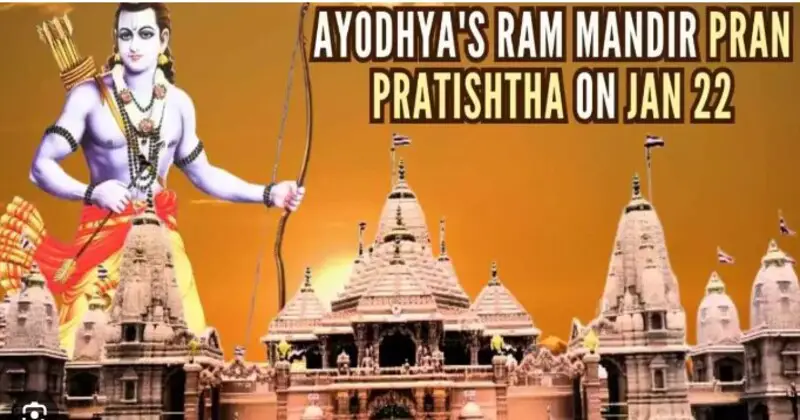
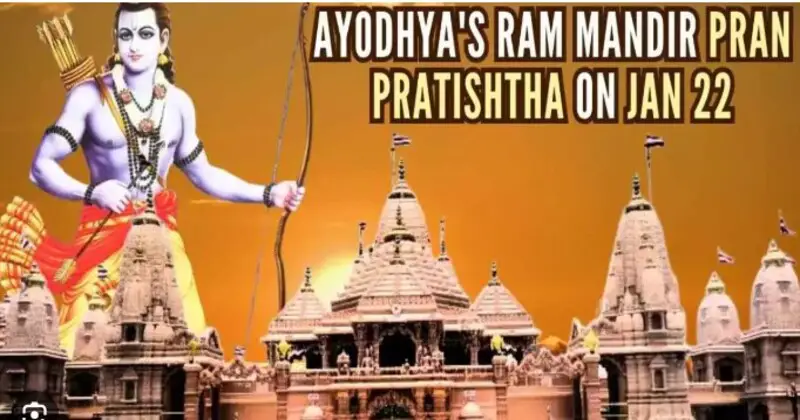
The religious rituals will begin from Jan 16 and will continue till Jan 21. On Jan 22, ‘Pran Pratishtha’ ceremony .
)
General Secretary of Shri Ram Janmabhoomi Teerth Kshetra Champat Rai on Monday announced that the idol of lord Ram will be placed at its position at the ‘Garbh Griha’ of the temple on January 18 and Pran Pratishtha will take place at 12.20 pm on January 22. Addressing a press conference, Rai said that the muhurat (auspicious timing) was decided by Ganeshwar Shastri Dravid of Varanasi.
“The religious rituals will begin from Jan 16 and will continue till Jan 21. On Jan 22, ‘Pran Prathista’ ceremony will take place. The idol for which ‘Pran Pratishtha’ will be done is expected to be around 150-200kgs. On 18th January, the idol will be placed at its position in the Garbha Gruha of the temple,” he added.
General Secretary of Shri Ram Janmabhoomi Teerth Kshetra Trust said that the Pran Prathishtha’ is expected to conclude by 1 pm on January 22.
Preparations are underway in full swing for the event, which is expected to be attended by thousands of dignitaries and people from all sections of society.
Details of Prana Pratishtha and Related Events:
Event Date and Venue: The auspicious Prana Pratishtha yoga of the Deity of Bhagwan Ram Lalla arrives on the approaching Paush Shukla Kurma Dwadashi, Vikram Samvat 2080, i.e., Monday, the 22nd of January 2024.
Scriptural Protocols and Pre-Ceremony Rituals: Following all the Shastriya protocols, the programme of Prana Pratistha will be held in the Abhijeet Muhurta in the afternoon. The formal procedures of pre-Prana Pratistha sacraments will start from tomorrow, i.e., 16th January and continue till 21st January 2024. The Dwadash Adhivas protocols will be as follows:
a. 16 January: Prayaschita and Karmakuti Poojan
b. 17 January: Parisar Pravesh of the Murti
c. 18 January (Evening): Teerth Poojan, Jal Yatra, and Gandhadhivas
d. 19 January (Morning): Aushadhadhivas, Kesaradhivas, Ghritadhivas
e. 19 January (Evening): Dhanyadhivas
f. 20 January (Morning): Sharkaradhivas,Phaladhivas
What is Prana Prathista? This is what has been engaging the mind of Sree Ram Bhakts ever since the opening of Ayodhya Sree Ram Mandhir opening date was announced.
Sanatana Dharma advocates the worship / Realisation of the Nirguna Brahman of The Nirguna,Ultimate Reality beyond Names and Forms. However, Sanatan Dharma is aware it is difficult to focus upon principles alone to realise the Brahman.Though Brahman vis described as Beyond Qualities, three essential qualities are described. They are
Sat,Being
Chit, Conscious and
Ananda,Bliss…
The Mind funds it easier to focus with qualities and if a form is added along with the qualities one likes ,it becomes easier still. The process of reflecting upon the Brahman, Reality is called Saguna Upasna. Under this comes the process of temple worship of Gods and Goddesses. One can worship personally. Vedas advocate individual,Personal Worship and not Collective Worship .This came later after the advent of Agamas,the procedure to build temples , installation and consecration of Idols of Devathas.
The process of installation of the Murthi in the temple is sacred and elaborate. The sculpted image remains a Sculpture and it becomes a Devatha after Prana,Life Force is injected into it by the Vedic mantras.
Prana means Life Force. Prathista means establishing. So Prana Prathista means Establishing the life force in the sculpture.
There are various steps in Prana Prathista,both in Sanatana Dharma and Jainism.
We shall see what prana Prathista in detail in the following articles.
‘The Sanskrit word pratiṣṭhā, which in general usage means “resting” or “position”, used in connection with a murti is translated by Apte as “the consecration of a vessel or dwelling”. The corresponding adjective pratiṣṭha means “installed” or “consecrated”.Prana means “life force, breath, spirit”. The phrase Prana Pratishtha is a ritual that means “establishment of the image in its vital breath” or “bringing life to the temple”.It is also referred to as Murti Sthapana (image placement inside the temple), or the composite word Pranapratishtha. Traditionally, this was the step when the eye of the murti was sculpted open, inside the garbhagriha (Purusha space of the temple) of a Hindu temple.
The ritual typically involves a Puja, chanting of Sanskrit mantras, as the deity is moved from outside into the center place. It includes inviting the deity as a resident guest of the temple, bathing and cleansing the deity, similar to welcoming a revered guest after a long journey. This is followed by dressing and seating the deity in a place of comfort, with the image’s face oriented towards the east (signifying the sunrise), followed by Nyasa ceremony with hymns (act of touching different parts of the murti, symbolizing the presence of various gods as sensory organs – Indra as the hand, Brahma as the heart, Surya as the eyes, etc.). The priest recites specific mantras and performs rituals to infuse the idol with prana. During this process, the deity descends into the idol, making it a living representation. After the infusion of prana, the deity is considered consecrated and blessed. Devotees often seek the deity’s blessings at this point. The ritual also includes the spraying of scented water and flowers, with the Chaksu͡unmilan ceremony (Sanskrit: “chakshu unmilan”, opening of the divine eye) marking the high point of the ritual.[6] The image is then considered as consecrated. In large and ceremonial public temples, the murti may be retired at sunset just like a guest retiring to bed, and then woken up at sunrise with pleasantries, washing, offering of fresh clothes, food and interaction with the devotees.[6][7][8] Some temples may include elaborate procession, as community events such as traditional singing and dancing events to mark the celebration.
A special type of consecration is used for festival icons (Sanskrit: utsava vigraha) for the purpose of parading the deity for the community to receive the vision (Sanskrit: darśaṇa) of the deity.




You must be logged in to post a comment.