Tag: Agama

  • Temple Construction Pdf Texts Not Veda Upa Veda Temple Construction 3

    Temple Construction Pdf Texts Not Veda Upa Veda Temple Construction 3

    I seem to landing on controversies when I start writing in detail.

    I have written on Temple construction History.

    I have mentioned that temple Worship is not mentioned in the Vedas.

    A reader had sent me information that it is a part of Atharva Veda,called Stapatya Veda.

    There are articles by eminent people like Sri.Ganapathy Sthapathi and Maharishiahesh Yogi on Vaasthu SASTRA.

    My observation is as under.

    Vedas are Four,Rig,Yajur,Sama and Atharva.

    There are six Angas of Veda.

    None of them talk about temple construction.

    However Shilpa SASTRA is included in the Sixty four Arts.

    But they are not a part of Vedas.

    Vedas talk about Reality, propitiation of Devas in Samhita,Rituals in Brahmanas , Aranyakas and pure philosophy in Upanishads.

    The Arts,which includes Dhanur Veda,Archery, is not a Veda imparting knowledge of Reality.

    And Shilpa SASTRA is about Sculpture and not about temple construction.

    To my knowledge there is no Upa Veda.

    Those with information may send with the text.

    Temple construction is from a later period,from Agama.

    (There is a rider here. Saraswati valley,Indus, Harappan civilisations are now found to have Dravidian Origin. I shall be writing in detail.)

    To my knowledge,there is no ancient Dravidian text on Temple construction.

    All of them are in Sanskrit and Brahmi.

    And there is a difference between Hindu and Buddhist Architecture.

    That the fact Tamils built Temples without Tamil text goes to prove that Sanatana Dharma was a part of Tamil polity.

    At which point they merged and got differentiated is difficult to find.

    Agamas came south from the descendants of Viswamitra.

    (Reference. History of Tamils by PT Srinivasa Iengar.)

    The corpus of Vedic Sanskrit texts includes:

    • The Samhitas (Sanskrit saṃhitā, “collection”), are collections of metric texts (“mantras”). There are four “Vedic” Samhitas: the Rig-Veda, Sama-Veda, Yajur-Veda, and Atharva-Veda, most of which are available in several recensions (śākhā). In some contexts, the term Veda is used to refer to these Samhitas. This is the oldest layer of Vedic texts, apart from the Rigvedic hymns, which were probably essentially complete by 1200 BCE, dating to c. the 12th to 10th centuries BCE. The complete corpus of Vedic mantras as collected in Bloomfield’s Vedic Concordance (1907) consists of some 89,000 padas (metrical feet), of which 72,000 occur in the four Samhitas.
    • The Brahmanas are prose texts that comment and explain the solemn rituals as well as expound on their meaning and many connected themes. Each of the Brahmanas is associated with one of the Samhitas or its recensions.The Brahmanas may either form separate texts or can be partly integrated into the text of the Samhitas. They may also include the Aranyakas and Upanishads.
    • The Aranyakas, “wilderness texts” or “forest treaties”, were composed by people who meditated in the woods as recluses and are the third part of the Vedas. The texts contain discussions and interpretations of ceremonies, from ritualistic to symbolic meta-ritualistic points of view. It is frequently read in secondary literature.
    • Older Mukhya Upanishads (Bṛhadāraṇyaka, Chandogya, Kaṭha, Kena, Aitareya, and others).

    The Vedas (sruti) are different from Vedic era texts such as Shrauta Sutras and Gryha Sutras, which are smriti texts. Together, the Vedas and these Sutras form part of the Vedic Sanskrit corpus.

    https://en.m.wikipedia.org/wiki/Vedas

    The texts on Construction are as follows.

    Stapatyaeda uses the circadian cycle, yet this knowledge expands to include the universe itself. The five elements — air, earth, fire, water and space — are also important factors in building design.
    Homes and buildings are cardinally positioned north, south, east and west. The orientation of the home is the primary consideration and the entrance is ideally facing east, which is governed by the rising sun. The only acceptable alternative would be a north facing entrance. South facing buildings are unacceptable.

    Stapatya Veda

    Maharishi Vastu Architecture (MVA) is a set of architectural and planning principles assembled by Maharishi Mahesh Yogi based on “ancient Sanskrit texts”Maharishi Vastu Architecture is also called “Maharishi Sthapatya Veda” (MVA), “Fortune-Creating” buildings and homes,and “Maharishi Vedic architecture”

    https://en.m.wikipedia.org/wiki/Maharishi_Vastu_Architecture

    The body of Vastu knowledge is monumental with lakhs of shlokas, which were handed down to succeeding generations by word of mouth and through hand written monographs such as:

    • Manasara Silpa Shastra (by Manasara),
    • Mayamatam (by the Mayasuras),
    • iswakarma Vaastushastra (by Viswakarma),
    • Samarangana Sutradara (by Raja Bhoja),
    • Aparajita Priccha (a dialogue between Viswakarma and his son Aparajita, written by Bhuvanadevacharya) Silparatna.
    • Other treatises such as Agni Puranaand works by Kautilya and Sukracharya are not popular even though they preceded the above mentioned documents.

    There is a distinction of style based on the place of origin of the Text. Mayamatam and Mansara Silpa Shastra are considered Dravidian because they are from South India whereas Viswaskarama Vaastu Shastra is considered Aryan due to its North Indian origin

    http://architectureideas.info/2008/10/origin-and-texts-on-vastu-shastra/

    Construction texts in PDF.

    Source. Hinduonline.

    http://www.hinduonline.co/vedicreserve/sthapatya_veda/diptagama.pdf

    http://www.hinduonline.co/vedicreserve/sthapatya_veda/Kashyapa_Shilpa_Shastra.pdf

    http://www.hinduonline.co/vedicreserve/sthapatya_veda/kiranagama.pdf

    http://www.hinduonline.co/vedicreserve/sthapatya_veda/manasara.pdf

    http://www.hinduonline.co/vedicreserve/sthapatya_veda/manushyalaya_candrika.pdf

    http://www.hinduonline.co/vedicreserve/sthapatya_veda/mayamatam_vastu_shastra.pdf

    http://www.hinduonline.co/vedicreserve/sthapatya_veda/viragama.pdf

    http://www.hinduonline.co/vedicreserve/sthapatya_veda/vishvakarma_vastu_shastra.pdf

    There is Maya connection in Mayamatam.

    Will write on this.

  • Oldest Temple Construction Dravida? History of Temple Construction 2

    Oldest Temple Construction Dravida? History of Temple Construction 2

    Vedas are four

    Rig,

    Yajur,

    Sama and Atharva.

    In addition to this there are six more,Vedanga,Limbs of the Vedas.

    They are,
    Siksha,Vyakarana,Chandas,Niruktha, Jyothisha and Kalpa.

    None of these relate to Temple construction.

    This is in tune with the Vedic approach of Reality being Abstract .

    Each Veda has Anugrahamani on this subject.

    To explain the meaning of the Vedas there is a special Group called Niruktham.

    There are six sub texts of the Vedas called Vedangas.

    They are Siksha,Vyakarana,Chandas,NirukthamJyothisham and kalpa.

    https://www.google.co.in/amp/s/ramanan50.wordpress.com/2014/03/01/veda-sutras-vedangas-details/amp/

    However,the Puranas and Smritis refer to temple construction.

    It may be noted that the Smritis do not have the same authority as Vedas.

    Smritis are traditions being followed.

    In case of conflict between Veda and Smritis,Vedas are the deciding authority.

    One may find references to Temple building in Puranas.

    Also how to construct divine images.

    Agni Purana describes methods of constructing Shiva Lingam.

    Puranas are ancient history and as such they are facts and they are not the final authority.

    However they are sign posts for Righteous Living

    So the concept of Temples is not a part of Vedas.

    This ,as mentioned in my earlier article,is a later Concept.

    And this concept seems to have been of Dravidian origin.

    The earliest temple of Murugan is found in Saluvarkuppam, Pondicherry,India.

    It is dated around Fourth century BC.

    The Guruvayur temple of Lord Krishna was built by a Chola king.

    The Temple is constructed B.C 3000(Around 5000 years oldest Temple) According to legends, the deity worshipped here is more than 5000 years old. But there are no historical records to establish it. In the 14th century, “Kokasandesam” (a Tamil literary work), references to a place called Kuruvayur are made. As early as the 16th century (fifty years after Narayaniyamwas composed) many references to Kuruvayur are seen’

    https://www.google.co.in/amp/s/ramanan50.wordpress.com/2015/05/14/guruvayurappan-temple-built-by-pandya-king-5000-years/amp/

    And the temples of South India seem to be more ancient and are of different architecture.

    Shiva worship in Tamil seems to have preceded the Vedas.

    (This is a contentious issue as it is difficult to say which language , Sanskrit or Tamil,is more ancient.)

    Thiruvananthapuram ,Abode of Shiva is 3.94 Billion years old.

    Tirupati is 2100 Million Years old.

    The worship of Vedic deities are found in ancient Tamil literature.

    The Tamils classified Land into five Regions.

    Kurinji,Mountaneous Region,God Murugan,

    Marutham, Paddy fields,Indra.

    Mullai,Forest land, Vishnu,Maayon,

    Neydhal,Seashore,God Varuna and Paalai,Desert,God Kotravai,Durga.

    One finds these in the oldest Tamil work available, Tholkappiyam,A book on Tamil Grammar.

    So the concept of Personal God’s are present both in Sanskrit and Tamil

    Curiously,Shiva is not mentioned in Tholkappiyam as God of a specific land area!

    This point made me arrive at the hypothesis that Shiva was a human being and that He was the First to Realize Brahman through Vaasi Yoga!

    Temple description abounds in Tamil literature.

    Silappadikaram,one of the Five Tamil Epics mentions this.

    Temple for Kotravai and Indra.

    Now Poompuhar remains are dated to be 11000 Years ago!

    Now on the find of the material being dated 11000 Years sets the Tamil History and the Sanatana Dharma back at least by 20,000 years.

    But the Tamil Sangams are dated at

    “that the first two of which were held in cities since “taken by the sea”, and the third of which was held during the 5th century BC in the present-day city of Madurai.'(wiki).

    Silappadikaram has been dated to likely belong to the beginning of Common era.

    https://www.google.co.in/amp/s/ramanan50.wordpress.com/2015/03/02/poompuhar-find-sets-tamilhinduism-by-atleast-20000-years/amp/

    References of temples in Silappadikaram.

    They also stop at a temple where “Aiyai, goddess of hunters” is being worshiped.
    When leaving the city of Puhar, Kannagi and Kovalan pass by “the great Vishnu temple”, “seven Buddhist Viharas”, and “wandering Jain monks” (26) all within close proximity to each other showing the obvious acceptance of multiplicity. At the time of Kannagi and Kovalan “Brahmanism (Hinduism), Jainism, and Buddhism – were at the time harmoniously coexisting in the south” (Adigal VIII).

    http://www.mahavidya.ca/2010/06/07/the-silappadikaram/

    Description: This is one of the 2 Shivastalams in the ancient Chola seashore capital of of Poompuhaar, a popular tourist destination, the other one beingTiruchaaikkadu.. Pallavaneeswaram is the 10th in the series of Tevara Stalangal on the northern banks of the river Kaveri in the Chola region of Tamilnadu. Temples in existence in Puhaar have been mentioned in the ancient Tamil work, Silappadikaaram. This is a shrine at the confluence of the Kaveri with the ocean. Poompuhaar was once a hoary port of the Cholas and is now a tourist attraction. The remnants of Puhar are seen under the ocean. Kovalan and Kannaki of Silappatikaram are said to have been born here.The Temple: This is a small temple with a 5 tiered Rajagopuram and a single prakaram. A Pallava king’s association with the temple lends the name.

    chrome-distiller://6b468200-c919-4364-9b11-16065dc98c2e/?time=22615665&url=http%3A%2F%2Fwww.templenet.com%2FTamilnadu%2Fs087.html

    Join 4,576 other subscribers
  • History of Temple Construction,Agama Part 1

    History of Temple Construction,Agama Part 1

    Temple worship, Group worship is not mentioned in the Vedas,the Authority in Hinduism.

    Yet one finds a lot of temples in India.

    And , despite the Vedas mentioning the Reality as Abstract,A Principle beyond thoughts, Space and Time,we find a multitude of God’s and Goddesses being worshipped.

    There is no contradiction in this.

    Vedas call Reality Brahman as Beyond Name and Form,it also realised the limitation of Human Nature.

    Humans are limited by mind,space and time while Brahman transcends these.

    There is no point in imparting a system if it can not be followed or practiced.

    The worship of Reality as Brahman as a Principle beyond Attributes is called Nirguna Aradhana.

    The processes through which one can Realize Brahman are through,

    Emotions and

    Reason.

    Mind being limited,logic being a double edged sword which contradicts one conclusion while affirming it, emotions are more effective.

    It is a fact that despite our assertion we are rational ,we are ruled by the heart, emotions.

    So Hinduism provides four avenues to Realize Brahman.

    Gnana Yoga,Path of Knowledge,

    Karma Yoga,Path of Action,

    Raja Yoga,Path of physical discipline that leads to Sprititual Awakening.

    Bhakti yoga,Path of Devotion.

    Gnana and Karma Yoga belong to the mental approach.

    Raja Yoga ,the Physical approach and Bhakti,the Emotional Approach.

    So the Vedas provide a source for emotional approach for self Realisation through Bhakti yoga.

    This Emotional Approach was found in Yoga Sutras of Patanjali as Iswara Pranidhana.

    The idea of Personal God,Iswara.

    This along with the Agama provided the source for Bhakti.

    The date of Agama is hard to fix.

    Sage Viswamitra banished his sons to Dravida Desa.

    Their descendant Apasthamba codified Vedas,incorporating some best practices of Tamils and formed the Apasthamba Sutra.

    This sutra is followed by the majority south of Vindhya mountains.

    It might be that Agama came later to this.

    We have Bodhayana Treatise on Agama.

    One finds a vast difference between South and North Indian temples in temple construction.

    The South Indian temples are huge and intricate and Tamil kings right from Mahabharata period have constructed temples.

    The designs of Dravidian temples are different and more elaborate.

    The Shiva cult is more more in the South.

    While the reference to Shiva limited in Vedas,Tamil abounds in Shiva reference and Shiva is attributed to have founded the Tamil language with his son Murugan,Subrahmanyam.

    Shiva is considered to be the first Yogi,Adi Yogi.

    One of his disciples Patanjali wrote the Yoga sutra,the first step of Vaasi Yoga of Shiva.

    So the Agama tradition was followed in South much earlier.

    And it is from Dravida Desa the Temple architecture spread to Far east, including at Angkor vat.

    There are four systems in Agama.

    Shiva,Shakti,Panchatantra and Vaikanasa.

    The last two are for Vishnu Worship,Shiva for Shiva and Shakti for Devi Worship.

  • What Are Agamas Details

    Those who follow the Vedas are called the Vaidikas.


    Agama Contents.Image. jpg
    Agama Contents.


    Their Principal Deity is Agni, The Fire God.


    The oldest Literature known to Man starts with the Invocation to Agni,


    ‘Agnimele Purohitham’


    For the Bramins Agni and worship of Agni is special.


    The Aupasna Fire(Ritual Fire0 )hat is kept at Home is carried for generations, being transferred from Father to Son and the Agnis is not to be put off.


    Though there are many Gods are  praised in the Vedas, Agni has priority.


    But worship of other Gods, though mentioned in the Vedas and Suktas are in the Vedas n praise of them they take a second place.


    But the term Sanatana Dharma is not to be confused with Vaidika.


    Vaidika refers to the worship of a particular entity(Agni), Sanatana Dharma refers to the whole systems of Indian Thoughts which includes Fire worship.


    When one reads the Vedas , he will find that the Vedas  have Samhitas, Hymns for worship for Gods.


    But the procedures are found, as we find them today.


    Where do these procedures come from?


    And from whom?


    It is believed that the practices are from Smrtis,(Recollections) for Individual Discipline and Agamas, for Collective worship.


    Two points are worth the mention.


    We have Smritis, Vishnu Smriti, Vasishta Smriti, and many more including Manu Smriti.


    These suggest they are Vedic if not Puranic, as he Smritis are mentioned in the Puranas.


    Allusions to Purans are in the Vedas.


    So which is older, the Purans are the Vedas?


    Secondly the Vedas do not mention collective worship or the building of temples.


    They find a place in Smritis.


    Intriguing!


    Then we have the Agama.


    Agama (Sanskrit आगम) is derived from the verb root गम (gam) meaning “to go” and the preposition आ (aa) meaning “toward” and refers to scriptures “that which has come down”.


    It also means “a traditional doctrine, or system which commands faith”


    The Agama , mainly, constitute the methods of temple construction and creation of idols, worship means of deities, philosophical doctrines, meditative practices, attainment of sixfold desires and four kinds of yoga.


    The Agamic religions are also called Tantrism, although the term ‘tantra’ is sometimes used specifically to refer to Shakta Agamas.


    The origin and chronology of Agamic religions remain contentious.


    The Vedas mentions Tantras(though they are to be inferred from the explanations of the Veda Text Commentaries, yet Tantra is consdidered to be of later origin along with the Agamas.


    In theMalay language the word Agama literally means ‘religion’. Agama traditions have been the sources of Yoga and Self Realization concepts in the Indian subcontinent, including Kundalini Yoga and encompass traditions of asceticism.


    Tantrism includes within its fold Buddhist and Jaina tantras suggesting that Hindu, Jaina and Buddhist tantrism developed separately after arising from common sources of Tantric elements.


    The Agamic tradition, in general, has been dated to the pre-Mauryan period as references to the tradition are found in later Vedic literature of Atharvaveda.


    While there is evidence that the Agama is a part of Veda, thee is a reference that the Agama was conceived by the descendants of Sage Viswamitra’s sons when then they were banished by Viswamitra to the South, Dravida.


    The Apasthamba sutra is considered to be compiled by Apasthamba in the South, incorporating the practices of the Tamils


    (History of the Tamils by PT. Srinivasa Iyengar)


    Let this contentious issue be.


    Agamas have following constituents.


    Cariya-Conduct.


    Kriya-Action(Rituals)


    Yoga-Union and


    Jnana -Supreme knowledge.

    Let us see what the Agamas are.


    Some popular agama-based religions are those of


    Shaiva, Vaishnava,


    Shakta,


    Ganapatya,


    Kaumara,

    Soura,


    Bhairava, and


    Yaksha-bhutadi-sadhana.


    There exist 28 Saiva Agamas,


    77 Shakta Agamas and


    215 Vaishnava Agamas.


    Enhanced by Zemanta
  • Temple Buliding 11 Steps 13 Procedures

    Vedas, the Hindu Scriptures do not speak of either Collective worship or of building temples.


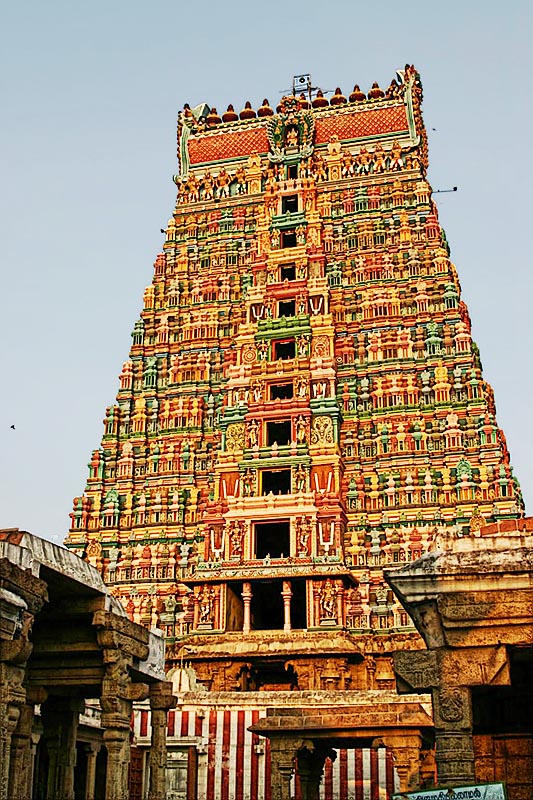
    Temple of Shiva, Tanjore
    Thanjavur Temple


    This is a later development as prescribed by The Agamas.


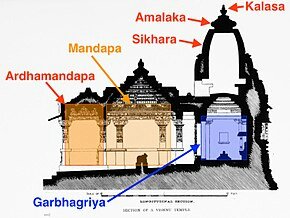
    The Hindu temple typically involves a multiple set of ideas.


     The temple is  generally oriented to face East, the auspicious direction where the sun rises to dispel darkness.


    Temple Corridor,Rameshwaram
    Rameswarm Temple Corridor


    The temple design includes the archetypal image of a Cosmic Person spread out yogi-like, symmetrically filling the gridded space of the floor plan, his

    navel in the center, and it includes the archetype of the cosmic mountain, between earth and heaven, of fertility, planets, city of the gods, deities, etc.).

    One encounters these simultaneous archetypal themes and meanings conveyed (and hidden) in the semi-abstract forms in many Hindu temples.

    There are rules of shape and proportion in the authoritative texts of Hindu tradition, the Agamas.


    Vaasthu Purusha,Cosmic Man. The Vastupurusa pinned down on the ground by the gods12  The body of the Vastupurusa is supposed to be sensitive at a number of points called  marmas. The well-being of the Vastupurusa assures the well-being of the building and, by  implication, its owner. An important criterion for any building, therefore, is to avoid injury  to the marmas located on the body of the Vastupurusa. To ensure that this is achieved,  texts prohibit any direct construction upon the marmas themselves. The marmas are  specifically said to lie at the intersection of major diagonals, seen as the veins (siras or  nadis) of the purusa
    Vaasthu Purusha,Cosmic Man.
    The Vastupurusa pinned down on the ground by the gods12
    The body of the Vastupurusa is supposed to be sensitive at a number of points called
    marmas. The well-being of the Vastupurusa assures the well-being of the building and, by
    implication, its owner. An important criterion for any building, therefore, is to avoid injury
    to the marmas located on the body of the Vastupurusa. To ensure that this is achieved,
    texts prohibit any direct construction upon the marmas themselves. The marmas are
    specifically said to lie at the intersection of major diagonals, seen as the veins (siras or
    nadis) of the purusa


    Basics.


    Selection of site.

    Soil and location are examined by acarya and shilpi., The Bhupariksha.

    Then  the planning off Nagara/Grama nirmana. the layout of town, its size, breadth of different levels of streets, locations and sizes of facilities like water tanks are determined based on the size of town. There are different names for different sizes of towns, like grama, kheta, kharvata, durga, nagara.

    Location of Brahma Sthana, the Location of the Temple  in the town is decided.

    Temple is usually in the center of village so that every one has easy access.

    Grama Vinyasa is the name of the Process.

    Then the size of temple is determined.

    For this, size of the image of main deity is to be known, since the size of a temple is always a fixed multiple of the size of image of main Deity.

    Then wood/metal/stone is selected for the image.

    The icon has three parts, main icon (vigraha), pedestal (peetha) and platform (adhisthana or upa peetha).

    The tests to determine quality of stone are prescribed by the Agamas.

    There are three kinds of stone, male female and neuter.

    When hit with an iron rod if the stone produces good sound and spark, it is male and should be used for the main icon.

    If it produces sound but not spark it is female and should be used for pedestal.

    If it produces neither, it is neuter and should be used for platform.

    There are various standards for the relative proportions of image, gopura, prakara .

    The Eleven Steps.


    1. Bhu pariksha: Examining and choosing location and soil for temple and town. The land should be fertile and soil suitable.
    2. Sila pariksha: Examining and choosing material for image
    3. Karshana: Corn or some other crop is grown in the place first and is fed to cows. Then the location is fit for town/temple construction.
    4. Vastu puja: Ritual to propitiate vastu devata.
    5. Salyodhara: Undesired things like bones are dug out.
    6. Adyestaka: Laying down the first stone
    7. Nirmana: Then foundation is laid and land is purified by sprinkling water. A pit is dug, water mixed with navaratnas, navadhanyas, navakhanijas is then put in and pit is filled. Then the temple is constructed.
    8. Murdhestaka sthapana: Placing the top stone over the prakara, gopura etc. This again involves creating cavities filled with gems minerals seeds etc. and then the pinnacles are placed.
    9. Garbhanyasa: A pot made of five metals (pancaloha kalasa sthapana) is installed at the place of main deity.
    10. Sthapana: Then the main deity is installed.
    11. Pratistha: The main deity is then charged with life/god-ness.


    The Thirteen Procedures  before Daily Worship.


    • Anujna: the priest takes permission from devotees and lord Ganesha to begin rituals
    • Mrit samgrahana: Collecting mud
    • Ankurarpana: Sowing seeds in pots of mud collected and waiting till they germinate
    • Rakshabandhana: The priest binds a holy thread on his hand to take up the assignment.
    • Punyahavacana: Purifying ritual for the place and invoking good omens
    • Grama santi: Worship for the good of village and to remove subtle undesired elements
    • Pravesa bali: Propitiation of various gods at different places in the temple, rakshoghna puja (to destroy asuric elements) and of specific gods like Kshetra palaka (devata ruling the town)
    • Vastu Santi: Pacifying puja for vastu (this happens twice and this is the second time)
    • Yagasala: Building the stage for homas, along with vedika.
    • Kalasasthapana: Installing kalasam
    • Samskara: Purifying the yaga sala
    • Kalasa puja, yagarambha: Woshipping the kalasa as god and propitiating deities through fire
    • Nayanonmeelana, Pratimadhivasa: Opening eyes of the god-image, installing it and giving it life.


    Then specific worship is done to deity, as prescribed. For instance in the case of Siva, this is followed by Astabandhana and Kumbhabhisheka.

    Citations.

    Temple Building

    Ref for Image and for further reading.

    Rules for Building a Temple pdf.


    Enhanced by Zemanta