I have been searching for information on the Saudi History for the Pre Islamic period.
It is difficult to come by.
All the information relates to the Saudi Kingdom and the founding of the Royal Family of Saudi Arabia.
No information at all about the ancient Arabia, while one knows from the Sanskrit and Tamil Classics that there was a close interaction between the People of India and of Arabia.
The nation says it has over 10,000 (?) historical sites , but they are coy about what they contain.
I am trying to collate a lot of information on the subject and shall come out with a comprehensive article on Saudi Arabian History.
As it happens with me, I stumbled to some information which is worth writing about.
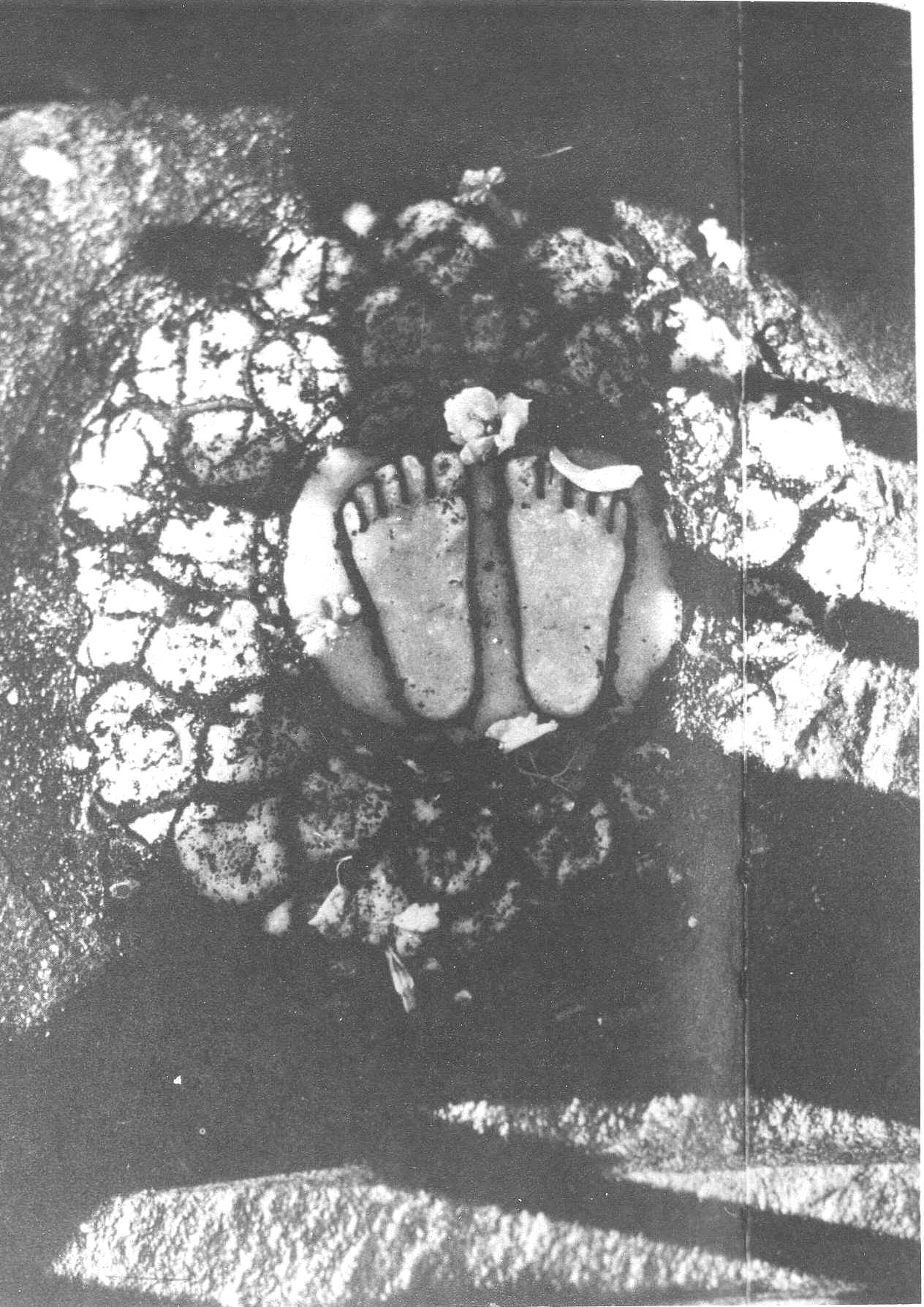
Lord Vishnu’s Feet have been found on Humayun Tomb.
And the Humayun tomb was built on a Vishnu Pada Temple.
Stephen Knapp had published a Photo of this.
Here it is.
Vishnu’s footprint’ in the so-called Humayun Tomb, New Delhi. This photo is reproduced from page 78 of “The World of Ancient India,” translated into English (from G. Le Bon’s original French book published in the 19th century) by David Macrae, Tudor Publishing co., New York, 1974.
This photo proves that the so-called Humayun mausoleum is an ancient Hindu temple palace. Inquiries with archaeologists in Delhi drew a blank They have never seen these footprints, which indicates that they are heir to a lot of non-information and mis-information. Humayun is not at all buried in Delhi. According to Farishta’s chronicle (English translation by John Briggs, Vol. II, page 174) Humayun is buried in Agra, while according to Abul Fazal (Elliot & Dowson, Vol. VI, page 22) Humayun lies buried in Sirhind.
Humayun was buried in Purana Qila, but, according to some scholars, the emperor’s remains were removed from there to a supurdgah or temporary tomb in Sirhind when Hemu advanced upon Delhi in 1556 and the Mughals had to vacate the city. He was reburied in the Sher Mandal again when Akbar defeated Hemu, and was moved into the mausoleum erected in 1569 by his widow, Haji Begum, also known as Bega Begum, at an estimated cost of rupees fifteen lakhs…

A photo reproduced from page 78 of ‘The World of Ancient India’ English shows that the site where the so called Humayun Tomb stands today was the site of an ancient Vishnu Temple. The book ‘World of Ancient India’ was translated from Dr. Gustave Le Bon’s original French work by the name ‘Les Monuments de L’Inde’ published in Paris in 1893. The English Translation was published by David Macrae, Tudor Publishing Co., (New York) in 1974. ‘Vishnu Pada’ (विष्णुपद) or ‘Vishnu Charan’ (विष्णुचरण) temples are significant in context of the legend that Vishnu in the form of Vamana strode across the world and planted his feet at three sites on earth.

...Dr. Gustave Le Bon writes that the site of the Humayun Tomb was the site of an ancient Vishnu Temple. Here is the photograph of the Vishnu footprint slab that had still survived until 1893 at the Humayun Tomb site. The photograph was captioned in the French version and then translated in ‘The World of Ancient India’ as ‘Vishnu’s Footprints at Humayun Tomb’.

Either this is correct or the materials from the Hindu temples were used to construct the tomb.
There is no denying this fact, as the images reveal.
Citation.


Leave a Reply to ganapathyCancel reply