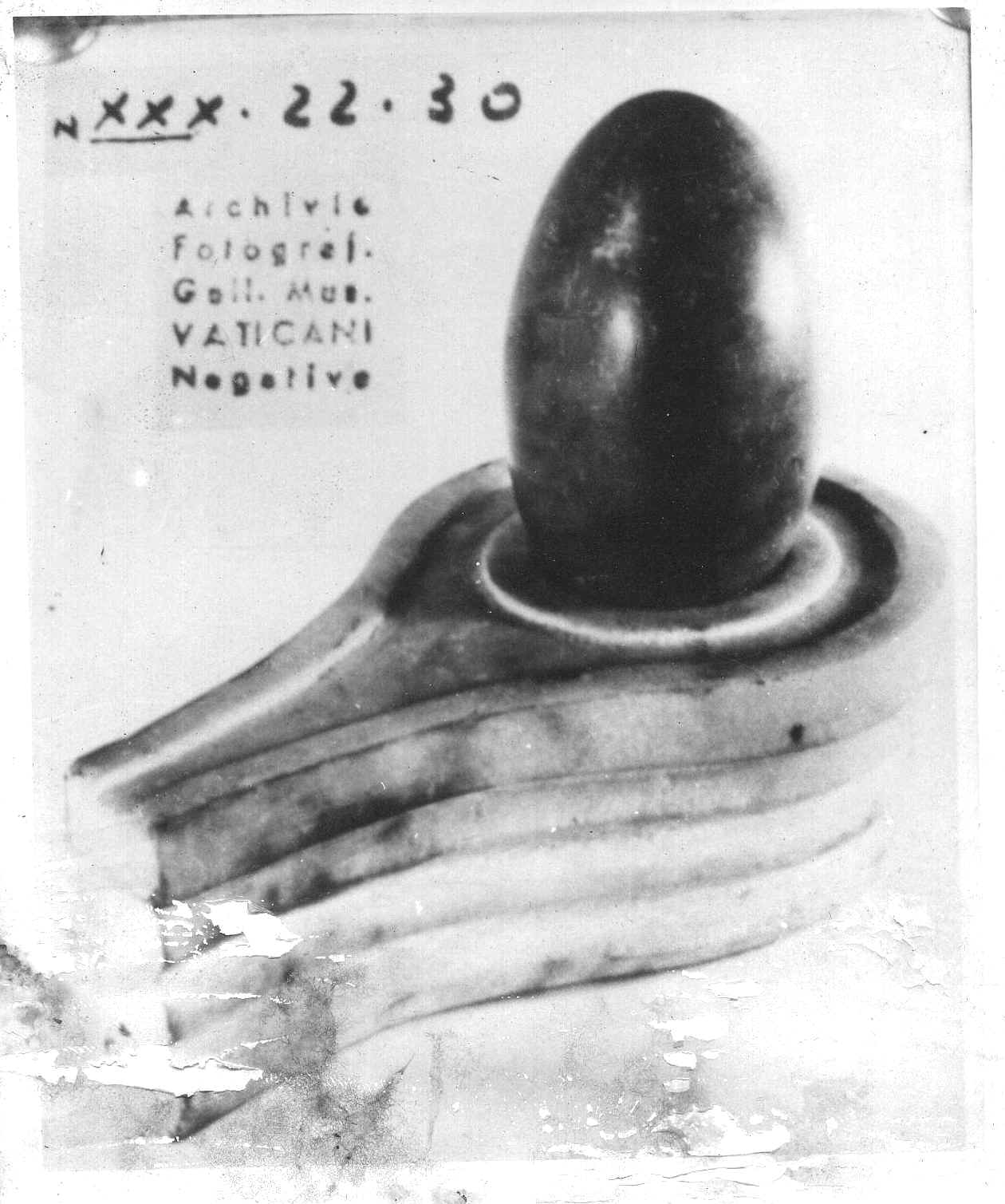
I have posted articles that the Kaaba was a Shiva Temple and a Linga is still in there with authentic links.
Sanatan Dhrma spread from the south of the Vindhyas twards the west of India,.
When Satyavata Manu , ancestor of Lord Rama left for Ayodhya ( in the north of the Vindhya,from the South (his son Ikshvaku fiunded a Kingdom ,Dynasty by the same name),Shiva and Ganesha left the Dravida Desa ( south) and traveled through the west, the first stop being what is nowknown as the Arbian Peninsula, which consists of Oman, Dubai and the other Emirates,Saudi Arabia, Iraq,Jordan,Lebanon,Turkey,Greece ,Italy before finally arriving in the Arctic.
They had the Rig Veda composed in the Arctic and returrned to India through Russia.
Please read my posts oon each of these places where the footprints of either Shiva/Ganesha are found
I came across some credible information worth postin g whaich states that the Vatican was built on
1.Pagan Tempe.
2.Shiva Temple.
Story:
St. Peter’s Basilica is built on a large pre-Roman and pagan cemetery which included an old temple with red walls. Very little is known about this excavation because it was done by the Catholic Church themselves. It was used to claim that Simon Peter’s bones are actually buried there.Actually, pretty much all of Christdom’s oldest churches are either retro-fitted temples, extensions of temples, or built on the foundation of old temples…
“The ancient Vedic custom of applying ash or sandalwood paste to the body is still retained by Christianity in the observance of Ash Wednesday. The so-called “All Soul’s Day” is an exact translation of the Vedic observance of Sarva Pitri Amavasya, the day fixed by tradition for the worship of all deceased ancestors
.Another Christian tradition derived from Vedic origins is that of having and ringing bells in the churches, especially before or during worship. In Vedic temples it is often seen where bells are rung during worship and when pilgrims enter the temple, announcing their entrance. Christian churches also ring bells to announce the beginning of worship.
The word “bell” comes from the Sanskrit bal which means strength. This is in reference to the idea that ringing a bell adds force to the voice of prayer in invoking divinity.
When the Christians say “Amen” at the end of their hymns or to emphasize something, what they are saying is a corrupted form of “Aum” or “Om,” which is a standard form of Vedic meditation and name of the Supreme Being.
While we are on the topic of words used in Christianity that are derived from Sanskrit, the Catholic term “Madonna,” another name for Mother Mary, comes from the Sanskrit Mata Nah, meaning “Our Mother.” This is also derived from the great Vedic Mother Goddess. Thus, Mother Mary was a reference not only to the mother of Jesus alone, but a reference to the Goddess, mother of all humanity. Furthermore, the European term of “Madam” is a soft pronunciation of the Hindu term mata or mataji, which also means “Mother.”
The term “vestry” in referring to the room in churches in which holy clothes are kept comes from the Sanskrit word vestra, meaning clothes. Even the word “psalm” with a silent “P” comes from the Sanskrit word sam or sama which means holy and serious sacred songs, hymns or chants, as found in the Sama-veda.
Other Christian links with Sanskrit words can be found in the name Bethlehem, which is the English mispronunciation of the Sanskrit Vatsaldham, which means “the home (town) of the darling child.” The Sanskrit term Nandarath is linguistically connected with Nazareth. Nandarath means Nanda’s chariot, and King Nanda was the guardian at whose village he nurtured Lord Krishna (sometimes pronounced as Chrisn, and later Christ in some regions).
The Christian term “Satan” and the Islamic term “Shaitan” both are derived from the Sanskrit term Sat-na, which means non-truth, falsehood, or fraudulence.
The Christians who explain the term “Devil” as a fallen angel should realize that the word is derived from the Sanskrit terminology which signifies a fallen Deva.”
Related articles


Leave a Reply to Nithya RohitCancel reply