Tag: Babri Masjid

  • Don’t Rewrite History Advice Reserved For India, Hindus?

    Don’t Rewrite History Advice Reserved For India, Hindus?

    Now a new litany has started in India in response to Indians awakening to their ancient past and places of worship . It is a well known fact invaders, from Alexander to the British plundered India and though all of them were involved in destroying Hindu places of worship, the prize goes to Islam which has destroyed the maximum number of temples,at times the same temple over many a time,and converted them into Mosques.

    When people who have an inclination to know their past history, try to correct the injustices and looting and try to reclaim their past, the advice of ‘Great Visionaries ‘ is to advise , Don’t rewrite History ‘

    Excellent.

    I am not a Learned man nor a spiritual one,far from it. Being an idiot, I have a few questions.

    • Is the advice of ‘ Don’t rewrite History ,limited only to India?
    • Does it apply to other nations as well?
    • If so, what about these countries?
    • Cambodia
    • Laos
    • Vietnam
    • Thailand
    • Malaysia
    • Fiji
    • Newzealand
    • Australia
    • Pakistan
    • Burma
    • Sri Lanka
    • Bangladesh
    • Iran
    • Iraq
    • Turkey
    • Saudi Arabia
    • Emirates
    • Bulgaria
    • Romania
    • Germany
    • Italy
    • France
    • UK
    • Nordic countries
    • Russia
    • US
    • Peru
    • Honduras
    • Mexico
    • Africa

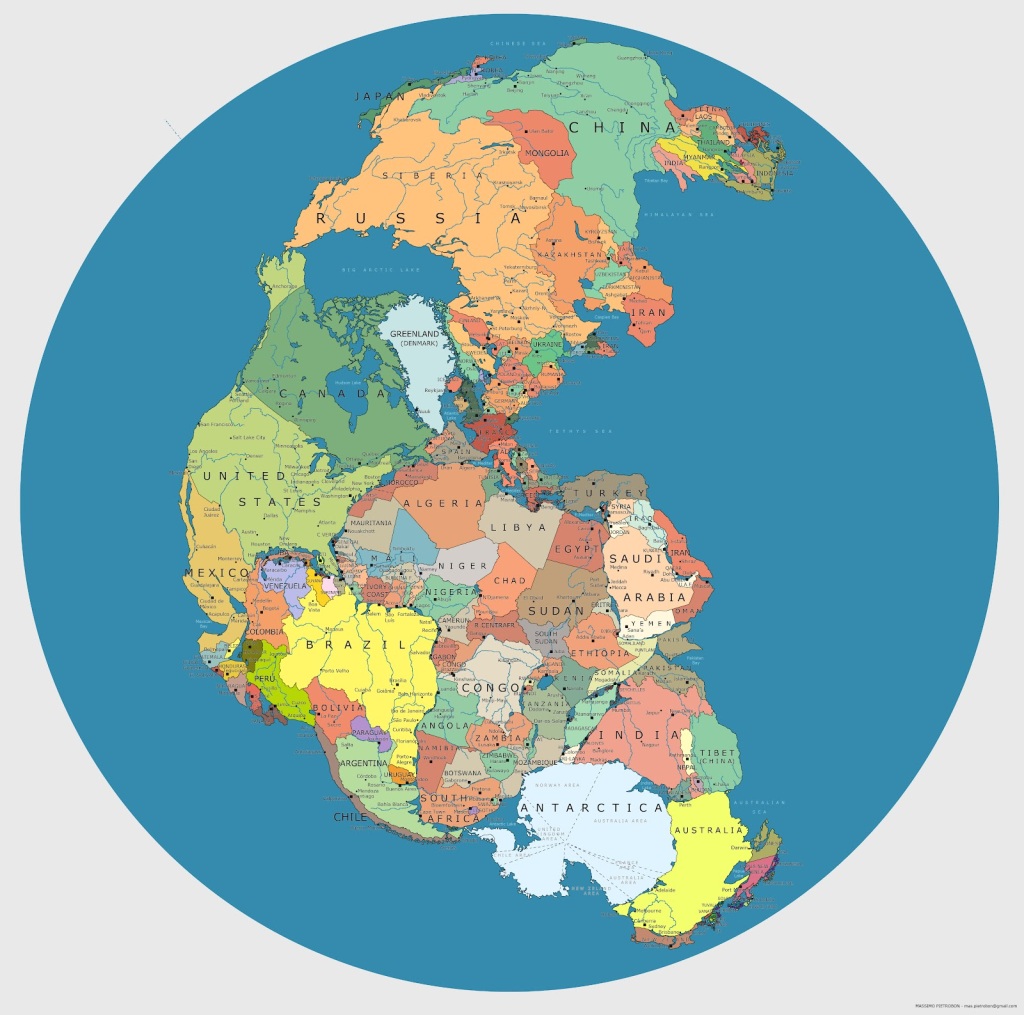
    I have not mentioned the countries by merely looking at the maps. The reason will be evident if you follow the link here.

    Marthand Sun Temple, Pakistan.
    Pharaoh with Vaishnava Marks from museum

    Try refuting the information. They are sourced from your favourite Western Free thinkers.Now ask all of them to rewrite their history.

    When somebody steals from you and is not even repentant,on top of it, claims it their legacy ,what history are you talking about? To claim your Heritage is a Sin?Try saying it to Islam, Christianity .Still better ask the Jews,the only race with balls( sorry for the language here).Try talking to the Holocaust Survivors. Did they leave the misery heaped upon their race and killing of millions as if nothing has happened?
    Shall we leave the areas recently captured by China as History? Shall I stop attempting to recover my property from the one who had stolen it from me and asserts it is Right?

    May be I Am Dumb.

    Temples concerted into Mosques

    Temples destroyed in Pakistan

    Learn Vishnu Lalitha Sahasranama Online

    Aghora Pasupatha Homa Evil Eye Protection Mukthi

    Removal of Evil eye, Protection from forces that hinder Spiritual development. Protection from Black magic,Animals. Increases self confidence and self assurance. Clarity of thought.. Above all,Mukthi and Gnana are facilitated.

    Rig Veda Inflenced Civilizations Outside India

    Date of Rig veda in Ramanisblog According to Ramanisblog, the date of the Rig Veda is subject to considerable debate, with modern scholarly estimates generally ranging between 2000 BCE to 1000 BCE[1]. However, Ramanisblog highlights that Hindu tradition considers the Vedas to be timeless and without a specific beginning[1]. Perspectives on Rig Veda Dating Ramanisblog…

    Navavarana Pooja 1 Guru Stuthi

    Following in the Ai Generated transcript of the Navavarana Pooja Mantras . Recorded and sent to my Shishyas. This is being made public so that this secret knowledge is not lost to posterity. Those who want to be initiated may contact me through mail at ramanan50@gmail.com. Also they can contact through the comment column. If…

    Join 4,576 other subscribers
  • Babri Masjid Not Built by Babur

    Babri Masjid Not Built by Babur

    There is a saying on how to disseminate misinformation. It runs thus,’Suppressio veri,Suggestio Falsi

    That is ‘ Supress the Truth ,Suggest Falsehood’

    Classic example of this adage can be found in Indian history. Indian history being taught today is what the invaders wanted the subjugated to know. That is what is being studied in India right from School. The history would have one to believe that India had nothing before the arrival of Alexander!

    Other side is suggestion of things not of Indian origin as Indian and subtle manipulation of facts, history , monuments,temples and the like,thereby you feel alien in your own backyard.

    The manipulation is so great that one does not know he is being manipulated.

    One such manipulation is Babri Masjid.

    One would be shocked to find that the Babri Masjid was not built by Babur.

    Please read the following to know our History.

    Baqi Tashqandi, also known as Mir Baqi or Mir Banki, was a Mughal commander (beg) originally from Tashkent (in modern Uzbekistan) during the reign of the first Mughal emperor Babur. He is widely believed to have been made the governor of the province of Awadh. He was believed to have razed the Ram mandir and built Babri Mosque in Ayodhya in 1528.Baburnama(Chronicle of Babur) mentions a commander called Baqi Tashkindi (Baqi of Tashkent). His name also appears with other suffixes: Baqi ShaghawalBaqi Beg (commander) or Baqi Mingbashi (commander of a thousand troops). However, the chronicle does not describe him as a Mir (prince or noble). Police officer-turned-scholar Kishore Kunal believes that the appellation “Mir Baqi” was constructed in 1813–1814 in a forged inscription on Babri Masjid for the benefit of the British surveyor Francis Buchanan, and there was in fact no prince called “Mir Baqi” in Babur’s regime.

    Francis Buchanan

    also called Buchanan-Hamilton) did a survey of the Gorakhpur Division in 1813–14 on behalf of the British East India Company. Buchanan’s report, never published but available in the British Library archives, states that the Hindus generally attributed destruction of temples “to the furious zeal of Aurangzabe [Aurangzeb]”, but the large mosque at Ayodhya (now known as Babri Masjid) was ascertained to have been built by Babur by “an inscription on its walls”. Buchanan had the said inscription in Persian copied by a scribe and translated by a Maulvi friend. The translation however showed two inscriptions. The first inscription said that the mosque was constructed by ‘Mir Baqi’ in the year 935 AH or 923 AH. The second inscription narrated the genealogy of Aurangzeb.]The translator had a difficulty with the anagram for the date, because one of the words was missing, which would have resulted in a date of 923 AH rather than 935 AH. These incongruities and mismatches made no impression on Buchanan, who maintained that the mosque was built under the orders of Babur.

    The Babri Masjid stands at a location believed by Hindus to be the birthplace of Rama. There are no records of a mosque at the site till 1672 and no known association with Babur or Mir Baqi prior to Buchanan’s discovery of these inscriptions in the 19th century. The Baburnama does not mention either the mosque or the destruction of a temple.The Ramcharit Manas of Tulsidas (AD 1574) and Ain-i Akbari of Abu’l-Fazl ibn Mubarak (AD 1598) made no mention of a mosque either’

    Reference and citations.

    1. Noorani, A. G. (2003), The Babri Masjid Question, 1528-2003, Volume 1Tulika Books, Introduction (p. xvii), ISBN
    2. a b c Kunal, Ayodhya Revisited (2016), Chapter 6.
    3. ^ Kunal, Ayodhya Revisited (2016), pp. 142, 199.
    4. a b c Kunal, Ayodhya Revisited (2016), Chapter 5.
    5. ^ K. Elst (1995). “The Ayodhya Debate”. In Gilbert Pollet (ed.). Indian Epic Values: Rāmāyaṇa and Its Impact. Peeters Publishers. pp. 28–29. ISBN 9789068317015.
    6. ^ Narain, The Ayodhya Temple Mosque Dispute (1993), p. 17.
    7. ^ Jain, Rama and Ayodhya (2013), pp. 165-166.
    8. ^ Jain, Rama and Ayodhya (2013), p. 9, 120, 164.
    9. ^ Kunal, Ayodhya Revisited (2016), p. xv.
    10. ^ Kunal, Ayodhya Revisited (2016), p. xxvii.
    11. ^ Jain, Rama and Ayodhya (2013), pp. 112-115.
    12. ^ Kunal, Ayodhya Revisited (2016), p.
  • Rama Birth Place Temple Built Before 100 BC

    The Skanda Purana and the Brahmanda Purana list Ayodhya as one of the Holy Spots of Hinduism.

    ‘In the Atharvaveda, Ayodhya was said to be “a city built by gods and being as prosperous as paradise itself”. In Garuda Purana, Ayodhya is said to be one of seven holiest places for Hindus in India, with Varanasi being the most sacrosanct..

    ayodhya
    Rama’s Temple, Ayodhya. Image credit.

    http://indianreligioustemple.blogspot.in/2012/12/lord-ramas-birth-place-ayodhya-shri-ram.html

    .

    Ayodhya is a ‘Mokshdayani Puris,’ or ‘land of spiritual bliss and liberation from karma bandhan,’ along with Varanasi, and Dwarka. Hindu scripture such as the Ramcharitmanas,Vishnu Purana and Shrimad Bhagvat Mahapuran recommend pilgrimage to the city.

    Several Tamil Alvars mention the city. It is the birthplace of Jadabharata, the first Chakravartin, Bahubali, Brahmi, Sundari, Padaliptasurisvarji, Harishchandra and Achalbharata.

    “Insofar as history is concerned, Ayodhya was ruined and established in its existence period. It is mentioned in Valmiki Ramayana 7/111/10 that during His lifetime Lord Sri Rama had depopulated Ayodhya and had proceeded to

    heaven along with His entire subjects. He had arranged for His sons to rule from outside Ayodhya.


    “The elder son Luv was asked to rule with Shrawasti (Sahet-Mahet ) as capital

    and till the period of Buddha, this place continued to be the capital of Kaushal estate. Subsequently, in the Maurya period as well this Kaushal estate (province of Magadh empire) was the capital.


    The city of Kushawati, which is in  the Vindhya region, was established for the rule of the  other son Kush and thereafter till date it is famous as  Mahakaushal.


    “It has also been mentioned in the Ramayana that after Lord Sri Rama, Ayodhya would again be  inhabited during the times of Rishabh.

    He was the first Tirthkar of Jains and is also known as Adinath.”.

    The city of Lahore was founded by Rama’s son Lava.

    While no credible evidence is available on who built the First Rama Mandir in Ayodhya, evidence indicate that King Menander destroyed Ayodhya around 130 BC.

    Menander would not have destroyed  Ayodhya but for the presence of the Iconic presence of Rama’s Temple at his birth place in Ayodhya.


    ‘The Chinese Travellers Fa-Hien and Yuan-Chawang have seen several rock edicts as well. The Dharmrajika Stupa at Sarnath was also built by Ashok. The downfall of the Magadhan empire began with the death of Ashok in 232 B.C. His grandsons, Dashrath and Samprathi divided the whole Empire among themselves. The entire area south of Narmada became independent and in 210 B.C. Punjab Passed into other hands. The last ruler of this Dynasty was Brihdrath who was assassinated by his commander-in-chief Pushyamitra Shung in 185 B.C. Pushyamitra kept Magadhan empire intact. Patanjali’s commentary refers to the seize of Saket (Ayodhya) by the Greeks. Menander and his brother mounted a heavy attack in about 182 B.C.”

    ( source.http://uponline.up.nic.in/uphistory.aspx

    Menander waged war against Ayodhya between 144 qand 120 BC.

    https://books.google.co.in/books?id=lvObCwAAQBAJ&lpg=PT371&ots=ttHUjqFwI6&dq=menander%20ayodhya&pg=PT371&output=embed


    For  recently converted Buddhist, what better way to show his loyalty to his faith?

    Menander I Soter (Ancient Greek: Μένανδρος Α΄ ὁ Σωτήρ, Ménandros A’ ho Sōtḗr, “Menander I the Saviour”; known in Indian Palisources as Milinda) was an Indo-Greek King of the Indo-Greek Kingdom (165//155[3] –130 BC) who established a large empire in North India and became a patron of Buddhism.

    Menander was initially a king of Bactria. After conquering the Punjab he established an empire in the Indian subcontinent stretching from the Kabul River valley in the west to the Ravi River in the east, and from the Swat River valley in the north to Arachosia (theHelmand Province). Ancient Indian writers indicate that he launched expeditions southward into Rajasthan and as far east down the Ganges River Valley as Pataliputra (Patna), and the Greek geographer Strabo wrote that he “conquered more tribes than Alexander the Great.”

    Buddhist tradition relates that, following his discussions with Nāgasena, Menander adopted the Buddhist faith:

    “May the venerable Nâgasena accept me as a supporter of the faith, as a true convert from to-day onwards as long as life shall last!” (The Questions of King Milinda, Translation by T. W. Rhys Davids, 1890).

    He then handed over his kingdom to his son and retired from the world:

    “And afterwards, taking delight in the wisdom of the Elder, he handed over his kingdom to his son, and abandoning the household life for the houseless state, grew great in insight, and himself attained to Arahatship!” (The Questions of King Milinda, Translation by T. W. Rhys Davids, 1890)

    There is however little besides this testament to indicate that Menander in fact abdicated his throne in favor of his son. Based on numismatic evidence, Sir Tarn believes that he in fact died, leaving his wife Agathocleia to rule as a regent, until his son Strato could rule properly in his stead. Despite the success of his reign, it is clear that after his death, his “loosely hung” empire splintered into a variety of Indo-Greek successor kingdoms, of various size and stability.

    The temple was rebuilt by King Vikramaditya around 101 BC.

    Vikramaditya was born in 101 BCE and his Vikarama Saka started in 58 BCE and he died in CE 19. (You may refer Thiru Venkatacharya, “Ganitha Khagola Sastramulu”, Vgnyaana Sarvasvamu, Samputi 9, Telugu Bhaashaa Samiti, Madras, Hyderabad, 1965 and Kavana Sarma and Satya Sarada “Mana praacheena saahityam charitra” 8 th article, Rachana Monthly Magazine, page 26, March 2011).

    Salivahana Sakam started in 78 CE (AD). The rule for becoming a Saka kartha (ie having a saka in your name) is that you have to either defeat a previous Saka kartha or the kings of Saka jathi (race of invaders form the north west)..


    ‘  2100 years ago – A grand temple, on 84 black touchstone pillars, was constructed by Sakari Samrat Vikramaditya at Sri Rama Janma Bhumi (birthplace of Sri Rama), in Ayodhyaand dedicated to Sri Ram to glorify and perpetuate his memory as a  national and global hero and savior. Further temples were built at different times to replace old ones that had been affected by vagaries of nature including the Sarayu floods, new ones coming up to mark the site as Sri Ramjanma bhumi sthaan. According to experts, the pre-Babri temple had been in existence from the Gahadwal period.

    “It is so believed amongst the Hindus that the credit for inhabitance of Ayodhya for third time, goes to Vikramaditya, king of  Ujjain.

    It appears from paper no. 107C-1/10, 107C-1/28,

    107C-1/35, 107C-1/55 filed in this suit that he had built 360 temples in Ayodhya.


    “Few consider him to be king  Vikramaditya of Gardbhill dynasty of Ujjain, who had destroyed the Shakas in 57 BC and had started the Vikram  era and few consider him to be Chandragupta  Vikramaditya of Gupta dynasty. Be that as it may, the Sri  Ramjanmbhumi temple was certainly included in those 360 temples.

    Hence while the exact details of. who built the temple for Rama, it is evident that there was temple before 100 BC and was destroyed by Menander  around 100 BC.

    And it was rebuilt by King Vikramadhitya.


    Citations and references.

    http://www.stephen-knapp.com/ayodhya_and_the_research_on_the_temple_of_Lord_Rama.htm


    http://jayasreesaranathan.blogspot.in/2010/10/history-of-ram-janma-bhumi-temple-at.html

    http://www.ibtl.in/column/1237/unconquerable-ayodhya-the-kingdom-of-kosal

    https://en.wikipedia.org/wiki/Menander_I#Menander_and_Buddhism

    https://ancientindians.in/2011/03/08/bhartruhari-vikramaditya-kalidasa-varahamihira-bhoja-salivahana/

    https://en.wikipedia.org/wiki/Ayodhya

  • No Ram Mandir In Ayodhya,The Hindu Wendy Doniger

    No Ram Mandir In Ayodhya,The Hindu Wendy Doniger


    It takes audacity of the best/worst kind to deny a fact outright.

    The intention to denigrate Hinduism and its culture started from Islamic period and it was carried on in a more subtle and systematic manner by the British firstly by publishing ‘First History of India’ by James Stuart Mill from England who without even visiting during the 12 years it took him to write the ‘History’ where he begins by asserting that the world did not begin before 4000 years ago and Indians were barbarians and steeped in superstitions.

    supreme-court-of-india-ram-temple

    Our Secular Indians of post Independent India did not even flinch.

    Many of them carried and are carrying on in the path..


    Wendy Doniger , author of Alternate History which ridicules Hindus and insults Krishna, faced flak from India, of course, excepting from the Sickularists.

    Having been shown the Book where it deserved to be, in the Dustbin, it looks as though she has taken recourse to denigrate Indians in the web.

    This gem of a piece seems to have been written in http://www.vichaar.com and is quoted by the site https://wondersofpakistan.wordpress.com/2009/03/27/the-battle-over-indian-history/

    Check the site and you will know what I am talking about.

    The vichaar site does not seem to work.!

    The  article titled Battle over Indian History quoted by a site extolling Pakistan is, to say the least, is disgusting and speaks of intellectual dishonesty and moral depravity.

    When one attempts to write a History one is expected to be careful and that too when you write about a country about which you are unfamiliar with its culture and its History.

    You should know the language and study and if you lazy or an illiterate you should get some one who can read and study.

    There is no evidence of Rama Temple and it is a story.

    Really!


    Check out the Link

    https://ramanisblog.in/2012/04/05/ramayana-lord-ramas-exile-date-and-other-details/

    And follow the Related posts or

    Still better,

    Google Rama’s date+ramanan50

    ‘https://ramanisblog.in/2012/04/05/ramayana-lord-ramas-exile-date-and-other-details/

    There are authentic sites about the Temple of Rama in Ayodhya which give out proof about Ram Mandir , Ayodhya.

    Please check them.

    What is painful is the similar attitude shown by some Indians and of course The Hindu, Indian Newspaper which has published them,


    Though I have been writing  on dating the Ramayana, Mahabharata and other Indian texts, I have not written on Ayodhya Temple’s date.

    The Sri Rama Navami, the Birth date of Lord Rama falls on 15 April 2016.

    Rama Navami Puja Muhurta = 11:05 to 13:33
    Duration = 2 Hours 27 Mins
    Rama Navami Madhyahna Moment = 12:19
    I will be writing in detail a series of Articles on Ayodhya Ram Mandir and this shall be my offering to Lord Rama for His Birth Day this year

    “It’s not a logical judgement with so many parts going 2-1. One does not accept the logicality of the judgement,” said Irfan Habib, a noted historian and a former Chairman of the Indian Council of Historical Research who earlier taught at the Aligarh Muslim University.

    He noted that the verdict seemed to legitimise the events of 1949, when an idol was placed inside the mosque, by constant references. On the other hand, by minimising any mentions of the demolition of the Babri Masjid in 1992, the court seemed to be disregarding it, he said.

    He also expressed surprise that two judges questioned the date of construction of the Babri Masjid, as well as the involvement of emperor Babar or his commander Mir Baqi, since there had been clear inscriptions to this effect before the demolition. “Things that are totally clear historically, the court has tried to muddy,” he said.

    “The historical evidence has not been taken into account,” said D.N. Jha, history professor at the Delhi University. Noting the judgement’s mention of the “faith and belief of Hindus” in reference to the history of the disputed structure, Dr. Jha asked why the court had requested an excavation of the site.

    “If it is a case of ‘belief,’ then it becomes an issue of theology, not archaeology. Should the judiciary be deciding cases on the basis of theology is a question that needs to be asked,” he said.

    Professional archaeologists also noted that the judges did not seem to rely heavily on the Archaeological Survey of India’s court-directed excavation of the site in 2003, at least in the summaries of their verdict available on Thursday evening.

    “Somewhere, there is doubt about the credibility of that report,” said Supriya Verma of the Jawaharlal Nehru University, who acted as an observer during the ASI excavation.

    She noted that neither Justice Sudhir Agarwal nor Justice Dharam Veer Sharma even referenced the ASI report to support his conclusion on the existence of a temple on the site before the mosque was built.

    “It is almost as though they themselves were not convinced by the evidence. They are clearly conceding that there was no archaeological evidence of a temple or of its demolition…It is a judgement of theology,” she said.

    Another observer of the ASI excavation, Jaya Menon of the Aligarh Muslim University, noted that the ASI report itself did not provide any evidence of a demolition, and only asserted the existence of a temple in its conclusion. “So I don’t know on what basis they made their judgements,” she said. The ASI report had been criticised by many archaeologists for ignoring evidence such as animal bones, which would not have been found in a temple for Ram, and the existence of glazed pottery and graves which indicated Muslim residents.’

    Source.http://www.thehindu.com/news/national/historical-evidence-ignored-say-historians/article805087.ece


    For years, some Hindus have argued that the 16th century mosque called the Babri Masjid (after the Mughal emperor Babur) was built over a temple commemorating the birthplace of Rama (an avatar of the god Vishnu) in Ayodhya (the city where, according to the ancient poem called the Ramayana, Rama was born), though there is no evidence whatsoever that there has been ever a temple on that spot or that Rama was born there.
    On December 6, 1992, as the police stood by and watched, leaders of the right-wing Hindu party called the BJP whipped a crowd of 200,000 into frenzy. Shouting “Death to the Muslims!” the mob attacked Babur’s mosque with sledgehammers. In the riots that followed, over a thousand people lost their lives, and many more died in reactive riots that broke out elsewhere in India. On the site today, nothing but vandalized ruins remains, and, in a dark corner of the large, empty space, a small shrine with a couple of oleograph pictures of Rama, where a Hindu priest performs a perfunctory ritual. Whether or not there ever was a Hindu temple there before, there is a temple, however makeshift, there now.
    People are being killed in India today because of misreadings of the history of the Hindus. In all religions, myths that pass for history–not just casual misinformation, the stock in trade of the internet, but politically-driven, aggressive distortions of the past–can be deadly, and in India they incite violence not only against Muslims but against women, Christians, and the lower castes.
    Myth has been called “the smoke of history,” and there is a desperate need for a history of the Hindus that distinguishes between the fire, the documented evidence, and the smoke; for mythic narratives become fires when they drive historical events rather than respond to them. Ideas are facts too; the belief, whether true or false, that the British were greasing cartridges with animal fat, sparked a revolution in India in 1857. We are what we imagine, as much as what we do.
    Hindus in America, too, care how their history is taught to their children in American schools, and the voices of Hindu action groups ring out on the internet. Some of these groups, justifiably incensed by the disproportionate emphasis on the horrors of the caste system in American textbooks, and by the grotesque misrepresentation of Hindu deities in American commercialism, ricochet to the other extreme and demand that all references to the caste system be expunged from all American textbooks.
    And so I tried to tell a more balanced story, in “The Hindus: An Alternative History,” to set the narrative of religion within the narrative of history, as a statue of a Hindu god is set in its base, to show how Hindu images, stories, and philosophies were inspired or configured by the events of the times, and how they changed as the times changed. There is no one Hindu view of karma, or of women, or of Muslims; there are so many different opinions (one reason why it’s a rather big book) that anyone who begins a sentence with the phrase, “The Hindus believe. . . ,” is talking nonsense.
    My narrative is alternative both to the histories promulgated by some contemporary Hindus on the political right in India and to those presented in most surveys in English–imperialist histories, all about the kings, ignoring ordinary people. But the texts tell us not just who was the ruler but who got enough to eat and who did not. And so my narrative is alternative in its inclusion of alternative people. How does one include the marginal as well as the mainstream Hindus in the story? The ancient texts, usually dismissed as the work of Brahmin males, in fact reveal a great deal about the lower castes, often very sympathetic to them and sometimes coded as narratives about dogs, standing for the people now generally called Dalits, formerly called Untouchables. The argument, for instance, that Dalits should be allowed to enter temples, an argument still violently disputed in parts of India today, can already be found, masked, in ancient stories about faithful dogs who should be allowed to enter heaven. So too, though Feminists often argue that Hindu women were entirely silenced, women’s voices–their ideas and attitudes and, above all, their stories–were often heard and recorded by the men who wrote down the texts.
    Foreigners, too, made contributions to Hinduism from the very beginning. Once upon a time–about 50 million years ago –a triangular plate of land, moving fast (for a continent), broke off from Madagascar (a large island lying off the southeastern coast of Africa), and sailed across the Indian Ocean and smashed into the belly of Central Asia with such force that it squeezed the earth five miles up into the skies to form the Himalayan range and fused with Central Asia to become the Indian subcontinent. Or so the people who study plate tectonics nowadays tell us, and who am I to challenge them? Not just land but people came to India from Africa, much later; the winds that bring the monsoon rains to India each year also brought the first humans to peninsular India by sea from East Africa in around 50,000 BCE. And so from the very start India was a place made up of land and people from somewhere else. India itself is an import, or if you prefer, Africa outsourced India (and just about everyone else).
    The magnificent civilization of the Indus Valley (in present-day Pakistan) traded with Sumer, Crete, and Mesopotamian, before it came to a mysterious end in about 2000 BCE. At just about the same time, in the nearby Punjab, a very different culture entered India from the Northwest and created the great corpus of texts called the Vedas, the oldest texts of Hinduism. Other invaders– Greeks, Turks, Arabs, and British–made valuable contributions to the complex fabric of Hinduism.
    We can trace certain important ideas throughout the centuries of this unbroken tradition. For example: A profound psychological understanding of addiction to material objects is evident throughout the history of Hinduism. Addiction was the concern not merely of kings or scholars but of ordinary people, like the proto-hippy and the gambler who are depicted in the Vedas (see excerpt). One reaction to this perceived danger was to control addiction through asceticism or renunciation. And so began an ongoing battle between a great tradition that always celebrated sensuality (think: elephants encrusted with rubies, temples that make rococo look like Danish modern, the Kama-sutra) and another that feared the excesses of the flesh and practiced meditation (think: Gandhi).
    Some of the British, especially in the early colonial period, admired and celebrated the sensuality of Hinduism. Others, particularly but not only the later Protestant missionaries, despised what they regarded as Hindu excesses. Unfortunately, many educated Hindus took their cues from the second sort of Brit and became ashamed of the sensuous aspects of their own religion, aping the Victorians (who were, after all, very Victorian), becoming more Protestant than thou. It is not fair to blame the British for the Puritanical strain in Hinduism; it began much earlier. But they certainly made it a lot worse. And cultural influences of this sort, as much as the grand ideas, are part of what makes the history of the Hindus so fascinating.
    http://www.vichaar.com/

    Scholarship of

    Maps in front pages: Maps titled Indias Geographical Features and India from 600 CE to 1600 CE 
    COMMENT: In the first map, the Waziristan Hills area is marked erroneously as Kirthar Range. The Kirthar Range is at least 200 miles further south. In the third map, Janakpur, Nagarkot, Mandu and Haldighati are marked several hundred miles from their correct geographical location.

    Pg. 67 – It is claimed that the entire Harappan culture had a population of 40,000! 
    COMMENT: This is estimated as the population of Mohenjo-Daro alone. The population of the entire culture is estimated around 500,000.

    Pg 130 – The author claims that there are no Gods in the Vedas who are Shudras. 
    COMMENT: It is anachronistic to assign castes to Rigvedic deities, but nevertheless, Pushan, Vesmapati and others have been considered Shudra deities in later times.

    Pg 450- It is claimed that Emperor Ala-ud-Din Khalji did not sack temples in Devagiri. 
    COMMENT: His contemporary Amir Khusro clearly mentions that the Emperor sacked numerous temples and raised mosques instead.

    Pg 552 – The book claims that the Ramcharitmanas was written at Varanasi. 
    COMMENT: Both modern scholarship as well as tradition accept that the work (or at least most of it) was written in Ayodhya.

    Pg 128 – The book likens the Vedic devotee worshipping different Vedic deities to a lying and a philandering boyfriend cheating on his girlfriend(s). 
    COMMENT: This is offensive and ignores that fact that in the Rigveda, the gods are said to be all united, born of one another, and from the same source.(India Today)

    5.Why is it that writing on Islam, even  a hint of Prophet’s Image.would hurt Religious sentiments ?

    Satanic Verses  by Rushdie was banned for much less and a booty was announced to kill the author.

    6.The Da Vinci Code was initially banned for portraying History as found in Christianity.

    7.Are these secularists prepared to publish a Book on Muhammad marrying a Widow with a child,

    Or marrying a nine-year old,

    or The practice of Thighing in Islam where children are raped as a practice?

    Or Mary of Magdalene was the wife , to put it politely,of Jesus?

    8.I have a good collection of Posts on the History of Islam, Christianity, American wiping out the Indians,Debauchery of the British Monarchy.

    Any body there to publish them in the interest of Truth and History?

    The Hindus Alternative History Krishna Fondling Breasts

    Source and citation in Block quote is from

    https://wondersofpakistan.wordpress.com/2009/03/27/the-battle-over-indian-history/


  • Babur Demolished Rama Birth Place 1528 AD ,Tulsidas

    The issue of Rama Janmabhoomi-that of Lord Rama‘s Birth place-having been demolished by the Moghul Emperor Babur  is very sensitive in the sense

    that the ‘Secular Indians” (?) do not want to talk about History.


    Lot of references quoted against this fact.


    Lord Rama in a Tent, where He was Born.jpg
    Lord Rama in a Tent, where He was Born. Image Credit.http://krishnarjun108.wordpress.com/2012/06/22/hindu-nationalism-babri-destruction-hope-in-sangh-parivar/


    How about what a contemporary of Babur has to say on this?


    I am talking about Sri.Tulsdas of Sri Ramacharita Manas.


    He states   who and how the Rama Janmabhoomi was demolished by ‘Yavanas'(Mohammedans) in his works.


    ‘Yavans’

    (barbarians /Mohammedans) ridicule hymns, several

    Upnishads and treatises like Brahmans, Puranas, Itihas

    (histories) etc. and also the Hindu society (orthodox

    religion) having faith in them. They exploit the Hindu

    society in different ways.


    Goswami Tulsi Das says that forcible attempts are

    being made by Muslims to expel the followers of Hinduism

    from their own native place (country), forcibly divesting

    them of their Shikha (lock of hair on the crown of head)

    and ‘Yagyopaveet’ (sacrificial thread) and causing them to

    deviate from their religion……(Tulsishatak)


    Goswami Ji

    says that he indulged in gruesome genocide of the natives

    of that place (followers of Hinduism), using sword (army).

    Gowami Tulsi Das Ji says that countless atrocities

    were committed by foolish ‘Yavans’ (Mohammedans) in

    Awadh (Ayodhya) in and around the summer of Samvat

    1585, that is, 1528 AD (Samvat 1585- 57=1528 AD).


    Describing the attack made by ‘Yavans’, that is,

    Mohammedans on Sri Ramjanambhumi temple, Tulsi Das

    Ji says that after a number of Hindus had been mercilessly

    killed, Sri Ram Janam Bhumi temple was broken to make it

    a mosque.


    Looking at the ruthless killing of Hindus, Tulsi Ji

    says that his heart felt aggrieved, that is, it began to weep,

    and on account of incident it continues to writhe in pain.


    Seeing the mosque constructed by Mir Baqi in

    Awadh, that is, Ayodhya in the wake of demolition of Sri

    Ram Janam Bhumi temple preceded by the grisly killing of

    followers of Hinduism having faith in Rama and also

    seeing the bad plight of the temple of his favoured deity

    Rama, the heart of Tulsi began to always cry tearfully for

    Raghuraj (the most revered among the scions of the Raghu

    Dynasty).


    Being aggrieved thereby, submitting himself to

    the will of Sri Rama, he shouted: O Ram ! Save….Save…

    Tulsi Das Ji says that the mosque was constructed by

    the wicked Mir Baqi after demolishing Sri Ram Janam

    Bhumi temple, situated in the middle of Awadh, that is,


    Tulsi Das Ji says that the Quran as well as Ajaan call

    is heard from the holy place of Sri Ram Janam Bhumi,

    where discourses from Shrutis, Vedas, Puranas, Upnishads

    etc. used to be always heard and which used to be

    constantly reverberated with sweet sound of bells.”


    Date of Tulsidas.


    Goswami Tulsidas; 1497/1532–1623)


    Date of Babur.


    Zahir-ud-din Muhammad Babur (14 February 1483 – 26 December 1530.


    Citation.


    http://jayasreesaranathan.blogspot.in/2010/10/demolition-of-ram-janma-bhumi-as.html