In my search for the spread of Sanatana Dharma, Hinduism, the material for China is hard to come by.
Considering the fact that the route for travel from and to from Bharatavarsha had taken place in the South,South East,West and North West and due East,
Remains of Sanatana Dharma have been found in all the countries of the world(Including China, though it is quite meagre when compared to the other countries),
Sanatana Dharma was well entrenched in South East Asia and is present there even today,
in the Southeastern countries, Buddhism, which is closely associated with Hinduism is present,
Tamil and Sanskrit texts mention China as a part of Bharata Varsha,
Lord Nataraja was considered as the Protector of Buddhism(!)
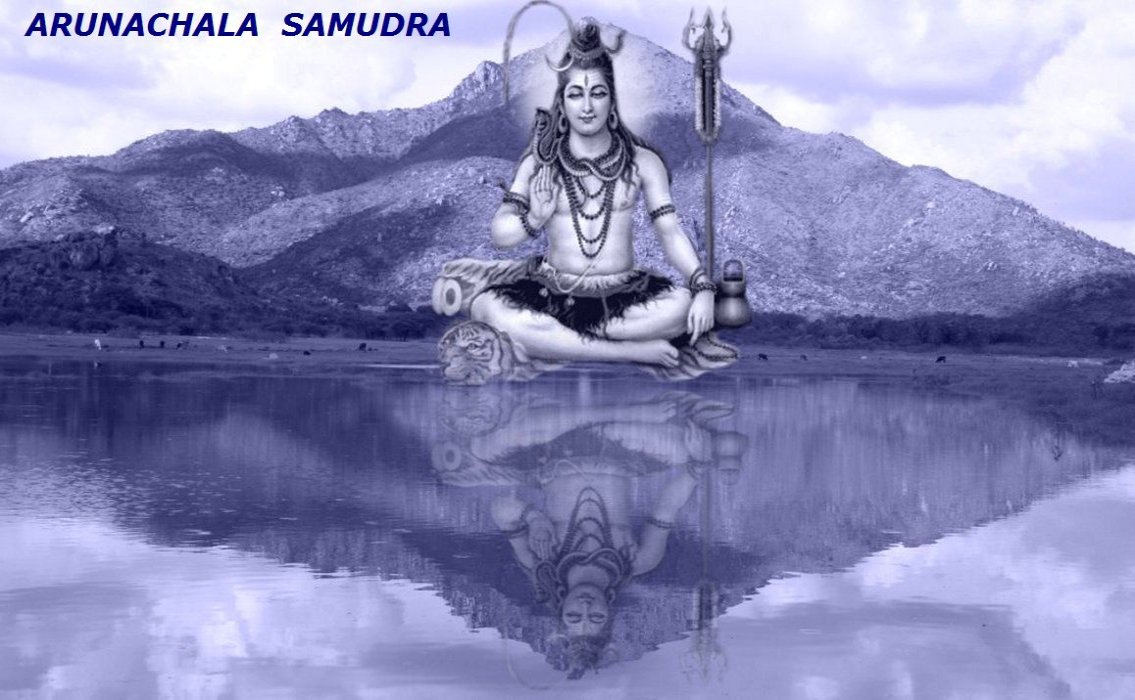
Shiva worship was present in ancient China,
So was Murugan, Subrahmanya worship,
it was only a matter of time and luck I could get hold on information that the Tamils were associated with China.
That, too a Shiva Idol was consecrated by the Firman of Kublai Khan himself.
We also find epigraph in Tamil in China.
Bilingual (Tamil & Chinese) inscription in China dated Saka era 1203 (1281 CE) Mentions the erection of deity Thirukkaniccuramudaiyar by one Sambandapperumal for the well being of Chinese emperor Cekacaikan Parman
The Story.
This Tamil Language inscription was found in China.
It was found about 500 miles north of Canton, in a place called Chuan Chou. This is a port city. It was an important port city in the ancient times also.
‘Normally, the Tamils used to sail to Ta Kua Pa in the west coast of Thailand.
They would then take an overland journey across the Isthmus of Kra to other ports like Nakon SiTammarat or Songkla. These ports were on the east coast of Thailand. From there they would sail on to one of the ports of present day Vietnam. Then they would sail northwards to Canton.
A straight sail would be a longer distance which would take them across the Bay of Bengal, Straits of Malacca, Gulf of Siam, and South China Sea. They would have to sail around the Malay Peninsula. This would have increased their journey by more than a thousand miles and would have taken up several more months.
Apart from Canton, the Tamils had gone to other places also and
established their own colonies. The merchant guilds like ‘Thisai Aayiraththu AinnuuRRuvar’ was very active around this part of the world.
In Chuan Chou, there was a Sivan Temple. In that temple, an image of Siva was consecrated under the ‘Firman’ – royal orders of ‘Sekasai Khan’.
This was done for the health of ‘Sekasai Khan’.
‘Sekasai Khan’ in this inscription is the name of Kublai Khan himself.
His full name was Kublai Sekcen Khan.
Sekcen Khan became Sekasai Khan in Tamil.
The Sivan Temple was known as ThiruKathaleesvaram and the Lord of the temple was known as ThiruKathaleesvaram udaiya Naayanaar.
The person who executed the order was Thava ChakkaravarththikaL Sampandha PerumaL.
It was done on the Chithra Paurnami day of Saka Era 1203 – 1281 AD.
This was during the rule of Kublai Khan who came to power in 1260 and ruled until 1294 AD.
Kublai Khan.
CitSeptember 23, 1215 – February 18, 1294), born Kublai (Mongolian: Хубилай, Xubilaĭ; Middle Mongolian: Qubilai; Chinese: 忽必烈; pinyin: Hūbìliè, Turkish: Kubilay Han; also spelled Khubilai) and also known by the temple name Shizu (Emperor Shizu of Yuan; Chinese: 元世祖; pinyin: Yuán Shìzǔ; Wade–Giles: Yüan Shih-tsu), was the fifth Khagan (Great Khan) of the Mongol Empire(Ikh Mongol Uls), reigning from 1260 to 1294. He also founded the Yuan dynasty in China in 1271, a division of the Mongol Empire, and ruled as the first Yuan emperor until his death in 1294.ation.
The connection between Hinduism and China runs deep.
I have recently posted an article on the connection between China and the influence of Ancient Hinduism in Chinese Religion.
Before the advent of Buddhism in China Hinduism was prevalent in China and Hinduism was indigence.
The spread of Hindu practices did not stop with the worship of Hindu Gods.
Nataraja
Unorthodox systems Vaiseshika ,Nyaya, Martial Arts,Kalari, Weapons like Vajra also found their way into China.
Names of the Deities were changed to suit the local conditions.
In this process, Lord Nataraja also finds a place in China as a Deity, a Protector.
”
“Prior to and during the life of the Buddha various principles were embodied within the warrior caste known as theKsatreya (Japanese: Setsuri). This title – stemming from Sanskrit root Ksetr meaning “power,” described an elite force of usually royal or noble-born warriors who were trained from infancy in a wide variety of military and martial arts, both armed and unarmed.
In China, the Ksatreya were considered to have descended from the deity Ping Wang (Japanese: Byo O), the “Lord of those who keep things calm.” Ksatreyas were like the Peace force – to keep kings and people in order. Military commanders were called Senani – a name reminiscent of the Japanese term Sensei which describes a similar status. The Japanese samurai also had similar traits to the Ksatreya. Their battle practices and techniques are often so close to that of the Ksatreya that we must assume the former came from India perhaps via China. The traditions of sacred Swords, of honorable self-sacrifice, and service to one’s Lord are all found first in India.
“In ancient Hinduism, nata was acknowledged as a spiritual study and conferred as a ruling deity, Nataraja, representing the awakening of wisdom through physical and mental concentration. However, after the Muslim invasion of India and its brutal destruction of Buddhist and Hindu culture and religion, the Ksatreya art of nata was dispersed and many of its teachers slain. This indigenous martial arts, under the name of Kalari or Kalaripayitexists only in South India today. Originating at least 1,300 years ago, India’s Kalaripayit is the oldest martial art taught today. It is also the most potentially violent, because students advance from unarmed combat to the use of swords, sharpened flexible metal lashes, and peculiar three-bladed daggers.
When Buddhism came to influence India (circa 500 B.c), the Deity Nataraja was converted to become one of the four protectors of Buddhism, and was renamed Nar (y)ayana Deva (Chinese: Na Lo Yen Tien). He is said to be a protector of the Eastern Hemisphere of the mandala.”
INDIA
Ksatreya Vajramukti
Simhanta
Bodhisattva Vajramukti
Trisatyabhumi
Trican Nata
Dharmapala
Mahabhuta Pratima CHINA Seng Cha
Pu Sa Chin Kang Chuan
(Bodhisattva Vajramukti
(Po Fu) (Huo Ming) (Pa She) (Pai Chin)
Seng Ping Chuan Fa or Kung Fu (Karate) (Tae Kwon Do) (Thai Boxing) (Ju Jitsu) (Judo) (Aikido)
In the Kin-kwang-ming-king, they are described as actively interfering in the affairs of the world. When kings and nations neglect the law ofBuddha, they withdraw their protection. They bestow all kinds of happiness on those that honour the San-pau (Three treasures), viz., Buddha, the Law, and the Priesthood.’
It is very difficult to know much about China and its Religion than what is allowed to be spread by the PRC, with the result many of us have a vague idea about Buddhism is practiced in China and we have heard Lao Tse.
But prior to the advent of Gautama the Buddha what Religion was practiced in China?
Oldest Hindu temple in China.
Carving of Shiva from a Hindu Temple at Quanzhou
Chedian shrine Chiba
This is possibly the only temple in China where we are still praying to a Hindu God,” says Li San Long, a Chedian resident, with a smile. “Even though most of the villagers still think she is Guanyin!” Mr. Li said the village temple collapsed some 500 years ago, but villagers dug through the rubble, saved the deity and rebuilt the temple, believing that the goddess brought them good fortune — a belief that some, at least, still adhere to. The Chedian shrine is just one of what historians believe may have been a network of more than a dozen Hindu temples or shrines, including two grand big temples, built in Quanzhou and surrounding villages by a community of Tamil traders who lived here during the Song (960-1279) and Yuan (1279-1368) dynasties.
“For the residents of Chedian, a few thousand-year-old village of muddy by-lanes and old stone courtyard houses, she is just another form of Guanyin, the female Bodhisattva who is venerated in many parts of China.
But the goddess that the residents of this village pray to every morning, as they light incense sticks and chant prayers, is quite unlike any deity one might find elsewhere in China. Sitting cross-legged, the four-armed goddess smiles benignly, flanked by two attendants, with an apparently vanquished demon lying at her feet.)The Hindu)
One gets the idea that the culture of China must be of a very high order and date quite some time back in History.
Hu Shih, former Ambassador of China to USA once said “India conquered and dominated China culturally for 20 centuries without ever having to send a single soldier across her border.”
Mahabharata, Book 6, chapter 9 (MBh.6.9) mentions like this:-
Among the tribes of the north are the Mlecchas, and the Kruras, the Yavanas, the Chinas, the Kamvojas, the Darunas, and many Mleccha tribes; the Sukritvahas, the Kulatthas, the Hunas, and the Parasikas; the Ramanas, and the Dasamalikas. Chinas were mentioned along with Chivukas and Pulindas and Khasas, Hunas, Pahlavas, Sakas, Yavanas, Savaras, Paundras, Kiratas, Kanchis, Dravidas, Sinhalasand Keralas.
They were described as the protectors of sage Vasistha and his cow against the attack of king Viswamitra.
Pahlavas and the Daradas and the various tribes of the Kiratas and Yavanas and Sakas and the Harahunas and Chinas and Tukharas and the Sindhavas and the Jagudas and the Ramathas and the Mundas and the inhabitants of the kingdom of women and the Tanganas and the Kekayas and the Malavas and the inhabitants of Kasmira were mentioned at (3,51) as bringing tribute to Pandava king Yudhisthira.
China is mentioned in the travel-descriptions of the Pandavas.
The passage below, describes these Chinas, to be located somewhere in the high Himalayas: Mahabharata book 3, chapter 176 (MBh 3.176):-
Leaving the place called Badari (Badrinath in Uttarakhand) and crossing the difficult Himalayan regions, and leaving behind them, the countries ofChina, Tukhara, Darada and all the climes of Kulinda, rich in heaps of jewels, those warlike men viz the Pandavas, reached the capital of Suvahu, the king of Pulindas (Kiratas).
Bhima mentions a China king Dhautamulaka, who caused the destruction of his own race (5,74). The name “Dhautamulaka” translates to “clean root”, and might be a reference to the last Xia emperor Jie[citation needed] (1728–1675 BC), whose name means “clean” in Chinese.
Deer skins from China is mentioned at (5,86). King Dhritarashtra, wanted to give as present, a thousand deer-skins from China, to Vasudeva Krishna:- I will give him a thousand deer-skins brought from China and other things of the kind that may be worthy of his praise. During the Han Dynasty (between the 2nd century BC and 2nd century AD), deer skins were used to make token money notes representing 400,000 coins
In the Sabhaparvan this king is described as surrounded by the Kiratas and the Cinas. In the Bhismaparvan, the corps of Bhagadatta, consisting of the Kirtas and the Cinas of yellow color, appeared like a forest of Karnikaras.
It is significant that the Kiratas represented all the people living to the east of India in the estimation of the geographers of the Puranas.
Even the dwellers of the islands of the Eastern Archipelago were treated as Kiratas in the Epics.
The reference to their wealth of gold, silver, gems, sandal, aloewood, textiles and fabrics clearly demonstrates their association with the regions included in Suvarnadvipa.
Thus, the connection of the Kiratas and Cinas is a sure indication of the fact that the Indians came to know of the Chinese through the eastern routes and considered them as an eastern people, having affinities to the Kiras, who were the Indo-Mongoloids, inhabiting the Tibeto-Burman regions and the Himalayan and East Indian territories, the word Kirata being a derivation from kiranti or kirati, the name of a group of people in eastern Nepal.
The story of Sun Hou Tzu, the Monkey King, and Hsuan Tsang.
It is a vicarious and humorous tale, an adventure story akin to the Hindu epic of Ramayana, and like Ramayana, a moral tale of the finer aspects of human endeavor which come to prevail over those of a less worthy nature.
The book ends with a dedication to India: I dedicate this work to Buddha’s pure land. May it repay the kindness of patron and preceptor, may it mitigate the sufferings of the lost and damned….’ ..
In early Indian literature China is invariably shown to be connected with India by a land-route across the country of the Kiratas in the mountainous regions of the north.
In the Vanaparvan of the Mahabharata the Pandava brothers are said to have crossed the country of the Cinas in course of their trek through the Himalayan territory north of Badri and reached the realm of the Kirata king Subahu.
The Cinas are brought into intimate relationship with the Himalayan people (Haimavatas) in the Sabhaparvan also.
The land of the Haimavatas is undoubtedly the Himavantappadesa of the Pali texts, which has been identified with Tibet or Nepal.
In the Sasanavamsa this region is stated to be Cinarattha. Thus, it is clear that China was known to the Indians as lying across the Himalayas and was accordingly included in the Himalayan territories
. In the Nagarjunikonda inscription of Virapurusdatta, China (Cina) is said to be lying in the Himalayas beyond Cilata or Kirata.
These references to the proximity of China to the Himalayan regions, inhabited by the Kiratas, show that there were regular routes through the Tibeto-Burman territories, along which the Indians could reach China.
Some such land-route is implied in the remark of the Harsacarita of Banabhatta that Arjuna conquered the Hemakuta region after passing through Cina.
Sources.
The beautiful bronze statue of Avalokitesvara from the pagoda of Ch’ung Sheng Ssu near Ta-li is an index to the high standard of culture and craftsmanship attained by the Buddhists of Yunan.
पीआरसी के अनुमति से बाहर प्रसारित होने वाले जानकारी से चीन और इसका धर्म के बारे में जानना बहुत मुश्किल है, जिसके परिणामस्वरूप हमारे पास चीन में बौद्ध धर्म के बारे में अनुमानित ज्ञान है और हमने आधिकारिक रूप से लाओ ट्से के बारे में सुना है।
लेकिन गौतम बुद्ध के आगमन से पहले चीन में कौन सा धर्म अपनाया जाता था?
चीन में संभवतः यह एकमात्र मंदिर है जहां हम अभी भी हिन्दू देवता की पूजा कर रहे हैं,” ऐसा कहते हैं चेदियां के निवासी ली सान लॉंग। “हालांकि, बहुत से गांव के लोग अभी भी सोचते हैं कि वह गुयानिन है!” मिस्टर ली ने यह कहा कि करीब 500 वर्ष पहले गांव के मंदिर का गिर गया था, लेकिन गांव के लोगों ने टूटे हुए संरचना के विखंडन में खुदाई की, देवी को बचाया और मंदिर को फिर से बनाया, यह मान्यता थी कि देवी उन्हें भलाई लाती है – यह मान्यता है जो कुछ, कम से कम, अभी भी मानते हैं। चेदियां का मंदिर केवल वही है जिसके सदाशिव बोधिसत्व परिवार के साथ बैठे हुए, चार बाहुओं से घिरे हुए, देवी मुस्कान करती है, उसके पैरों के नीचे एक जीती हुई राक्षस लेटी है। यह हिन्दू सर्वदेवी जैसी देवी है)
चीन की संस्कृति संभावतः बहुत उच्च अनुक्रम और काफी समय पूर्व के इतिहास में सवाल उठाने वाली है।
चीन के पूर्व राजदूत और भारत के प्रशांत में एचयू शिह ने कहा था “भारत ने 20 सदीयों तक सेना भेजे बिना चीन को सांस्कृतिक रूप से वशीभूत कर लिया।”
उत्तर के प्रजाओं में एमलेच्छ और क्रूर, यवन, चीन, कम्बोज, दारुण, और कई म्लेच्छ जातियां हैं; सुकृत्वाह, कुलत्थ, हुन, पारसिक; रमना और दाशमलिका। चीन को छीवुका, पुलिन्द और खासस के साथ उल्लेख किया गया था, हुन, पहलव, साका, यवन, सावर, पौण्ड्र, पुलिंद, रामथ, कंबुज, किंचीड्रविड, सिंहल और केरल।
इन्हें शहर के शिविर और कीनर, गांधर्व, चीन, सवारा, बारबरा, साका, तुषारा, कंका, पाथवा, अंध्र, मद्रक, पौण्ड्र, पुलिंद, रमथ, कंबोज जैसी जातियों के साथ बहुत संबंधित दिखाया गया है, जो आर्यवर्त के राजाओं के बाहर जातियों के तौर पर सूचित हैं।
चीन का उल्लेख पांडवों के यात्रा-वर्णनों में किया गया है।
नीचे दिए गए पाठ में यह चीनियों को उच्च हिमालय क्षेत्र में स्थित कहा जाता है: महाभारत पुस्तक 3, अध्याय 176 (एमबीएच 3.176): –
बद्री (उत्तराखंड में बद्रीनाथ) कहे जाने वाले स्थान को छोड़कर, कठिन हिमालयी क्षेत्रों को पार करते हुए, और गांधारी (चीन के लिए पहले संकेत) के देशों को छोड़ते हुए, ज्वलंत ज्वेल्स से भरी हुई कुलिंद की धरती, उन योद्धाओं ने राजा पुलिंदों (किरात्राज) के राज की राजधानी तक पहुँच गए।
भीम में एक चीन राजा धौतमूलका का उल्लेख है, जिसने अपने ही वंश को नष्ट कर दिया (5,74)। “धौतमूलका” नाम साफ्टवे होता है, और यह शायद चीनी में “साफ्ट” के साथ जोड़ान है, जिसका अर्थ होता है “साफ्ट”।
“चीन से हिरण चर्म” को (5,86) उल्लेख किया जाता है। धृतराष्ट्र ने उपहार के रूप में हजारों चीन से लाए गए हिरण चर्मों के माध्यम से वासुदेव कृष्ण को देने की इच्छा जताई:- “मैं उसे भारत की स्तुति के योग्य वसुदेव कृष्ण को दूंगा। यह मंदिर बनाने के लिए सुनहरे, चांदी, गहने, सफेद संदल, धातु और सिल्क और कपड़े जैसी चीजों को प्रशंसा के योग्य माना जा सकता है।
चीन के साथ द्वीपों के पूरे पूरे ईसानी भौगोलिक निरीक्षणों में उनकी मोनिक योग्य मान्यता की तुलना में उनके पास सोने, चांदी, मणियों, चंदन, एलोवुड, टैक्सटाइल और कपड़े की प्राप्ति शोधते हैं|
इस पुस्तक में कहानी का अंत भारत को समर्पित है: यह काम बुद्ध की शुद्ध भूमि को समर्पित है। इससे पात्र और प्रज्ञापार की कृपा लौटेगी, खोए हुए और दंडित लोगों की पीड़ा कम होगी।…
प्राचीन भारतीय साहित्य में चीन को लगातार किरातों के देश के बाहरी
You must be logged in to post a comment.