Tag: Buddhism

  • Hindu Name Buddhism Answers

    Hindu Name Buddhism Answers

    Ganadeviyo, Uppalavanna, Ganesha Vishnu in Buddhism

    What is not known is that though Buddhism advocates Idol worship and engages in NireswaraVada, denial ofpersonal God, Buddhism has declared Buddha and has Idols of Buddha being worshiped.

    Not only that.

    Buddhism has Hindu Gods being worshiped as Buddhist Gods.

    I had already posted an article that Skanda is considered as the protector of…

    Keep reading

    Gauthama Buddha Brahmin Gauthama Gotra

    He belonged to Sakhya clan, Kshatriya.

    But his genealogy as gleaned from Buddhist texts indicate his ancestry goes back to one of the first Rishis after whom the gotra system of Hindu lineage springs from.

    The rishi is Gautama and he was a Brahmin .

    Keep reading

    Shiva Buddha Worshiped As One God Machendranath

    Karma Kanda per se is very complicated and people were fed up.

    Buddhism filled in the void with its Philosophy of change , its Nireswara vada, denial of Personal God, Idol worship and its denial of Vedic Authority.

    It is an irony that Buddha is being worshiped as God.

    There is a temple in Nepal…

    Keep reading

    Nataraja Protector Of Buddhism Chinese Na Lo Yen Tien

    Before the advent of Buddhism in China Hinduism was prevalent in China and Hinduism was indigence.

    The spread of Hindu practices did not stop with the worship of Hindu Gods…Unorthodox systems Vaiseshika ,Nyaya, Martial Arts,Kalari, Weapons like Vajra also found their way into China.

    Names of the Deities were changed to suit the local conditions.

    Keep reading

    Skanda The Protector Of Chinese Buddhism, Wei Tuo Pú sà

    The difference between Buddhism and Santana Dharma(Vedic Hinduism) is so great that Buddhism is regarded as Nastika System since Buddhism does not accept the authority of the Vedas as a Pramana, source of Knowledge .

    However excepting this point and Sunya Vada,many similar and in some areas identical views concurring with the Vedas are found…

    Keep reading

    Over 7K people have signed up.
    Join the crowd.

    Enter your mail to get the latest to your inbox, delivered weekly.

  • Gauthama Buddha Brahmin Gauthama Gotra

    Gauthama Buddha Brahmin Gauthama Gotra

    One of my readers asked me how I arrived at the conclusion that Gautama Buddha was  aa Brahmin.

    Buddha’s given name Siddhartha Gautama.

    He belonged to Sakhya clan, Kshatriya.

    But his genealogy as gleaned from Buddhist texts indicate his ancestry goes back to one of the first Rishis after whom the gotra system of Hindu lineage springs from.

    The rishi is Gautama and he was a Brahmin .

    There is Gauthama gotra among Brahmins.

    He was one of the Rig Vedic Rishis.

    Hence Buddha’s given name was Gauthama Siddhartha.

    His father was Suddodhana and Mother Maya Devi.

    His place of birth Lumbini.

    Year is placed between 483 BC.

    But I am of the view that he could be dated much earlier.

    So,by genealogy he belongs to Brahmin Gotra but by disposition his Varna at the time of his birth was Kshatriya.

    This illustrates how dispositions decided Varna,loosely translated as Caste now,and geneology decided The Gotra.

  • Date Of Buddha 9000 BC?

    Date Of Buddha 9000 BC?

    Archeological findings unearthed recently in Tamil Nadu  shake up traditional historical dates assigned to many events in India.

    The finding of Poompuhar,Kaverippommpattinam,Tamil Nadu on the shores off Tamil date pushes the date of Poompuhar by at least 14,000 years.

    In fact this can be as far back by 30,000 years.

    The place is called Poompuhar. It lies on southeast India’s Coromandel coast facing the Bay of Bengal between modern Tamil Nadu and Sri Lanka. Its immediate offshore area has been the subject of marine archaeological investigations by India’s National Institute of Oceanography since the 1980’s — and numerous non-controversial finds of man-made structures dated between the third century AD and the third century BC have been made in the “inter-tidal zone” close to shore at depths down to 6 feet (approximately 2 metres).

    These finds of structures in shallow water (some so shallow that they are exposed at low tide) have been quite widely written-up in the archaeological literature. But for some reason other discoveries that the NIO has made in deeper water off Poompuhar have attracted no attention at all. Most notably these other discoveries include a second completely separate group of structures fully three miles from the Poompuhar shore in water that is more than 70 feet (23 metres) deep. The lack of interest is surprising because to anyone with even minimal knowledge of post-glacial sea-level rise their depth of submergence is – or should be – highly anomalous. Indeed according to Glenn Milne’s sea-level data the land on which these structures were built last stood above water at the end of the Ice Age more than 11,000 years ago.

    Is it a coincidence that there are ancient Tamil flood myths that speak of a great kingdom that once existed in this area called Kumari Kandam that was swallowed up by the sea? Amazingly the myths put a date of 11,600 years ago on these events — the same timeframe given by Plato for the end of Atlantis in another ocean.’

    https://ramanisblog.in/2017/07/06/tamil-sangam-dates-4140-to-14000-bc/

    Silappadikaram refers to Buddhism in detail and the author Ilango Adigal,brother of Chera King,Cheran Chenguttuvan,was a Buddhist monk.

    The authorship of Silappatikaram is credited to the pseudonym Ilango Adigal (“Prince-Ascetic”). He is reputed to be the brother of Chera king Senguttuvan, although there is no evidence in the Sangam poetries that the famous king had a brother. There are also claims that Ilango Adigal was a contemporary of Sattanar, the author of Manimekalai..The prologues of each of these books tell us that each were read out to the author of the other [Silappatikaram, pathigam 90]. From comparative studies between Silappatikaram and certain Buddhist and Jain works such as Nyayaprakasa, the date of Silappatikaram has been determined to be around the fifth and the sixth centuries CE’

    https://en.m.wikipedia.org/wiki/Silappatikaram

    Manimekalai ,another epic of Tamil is also Buddhist in approach and is believed to have been composed around the same time as that of Silappadikaram.

    These texts have been assigned between fifth and sixth century BC.

    Poompuhar remains Tamil Nadu,India.image
    Poompuhar remains Tamil Nadu,India.

    However,as most of the events narrated in Silappadikaram take place in Poompuhar,called Kaverippommpatinam then,and Poompuhar’s date can be pushed back by 14,000 years at least,Silappatikaram can be dated around the same time.

    https://ramanisblog.in/2015/03/02/poompuhar-find-sets-tamilhinduism-by-atleast-20000-years/

    More important is the fact that Silappatikaram refers to Buddhism extensively.

    This implies Buddhism,The Buddha should be dated 11,000 years back.

    But the current date assigned to Buddha is,

    Scholars are hesitant to make unqualified claims about the historical facts of the Buddha’s life. Most accept that he lived, taught and founded a monastic order during the Mahajanapada era during the reign of Bimbisara (c. 558 – c. 491 BCE, or c. 400 BCE’

    https://en.m.wikipedia.org/wiki/Gautama_Buddha

    How and Why?

    *The archeological finding related here and more dates arrived at based on Archeology makes one ponder over the present dates assigned to ancient history and our present concept of Time and Multiverses.

    I have written on these issues under Hinduism,Astronomy,Physics.e

    I am aware that the date arrived for Buddha places him before Ramayana.

    It is interesting to note that many Buddhist concepts are found in the Bhagavad Gita.

    Shall be writing on this.

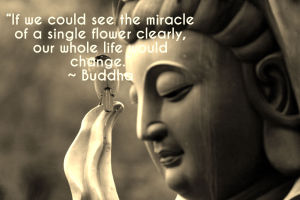
    Featured Image Credit.

    http://soulwritings.ca/tag/miracles/page/2/

  • Shankaracharya Misinterpret Vedas Misled, Shiva In Padma Purana?

    Shankaracharya Misinterpret Vedas Misled, Shiva In Padma Purana?

    Not for nothing Dr. Radhakrishnan, former President of India and a Philosopher said that ,

    ‘Indian Philosophy is not a view of Life, but a Way of Life’.

    It is one thing to read,study the Vedas and other Hindu Texts but it is another proposition to understand its soul and ethos.

    Mere Intellectual or Bhakthi approach would not help one to understand the spirit of Hinduism.

    Hinduism should be lived and practiced for years  to understand it in its multifarious aspects.

    Mere abstraction would remain just that, an intellectual Narcissism..

    Mere Bhakthi, or total surrender to God , though highly recommended, is likely to lead one into disappointment as this path is, though seems easy to say, is the toughest to practice.

    One must understand that Hinduism is a personal Religion in the sense that one can practice it the way it suits him, so long it is in conformity with the Vedas.

    As individuals are numerous, so are their mental attitudes.

    Hence Hinduism provides four paths to follow so that people of different mindsets can follow Spirituality.

    They are,

    Karma Yoga, Path of Action,

    Gnana Yoga, Path of Knowledge,

    Raja Yoga, Path of Mental and Physical Discipline and

    Bhakthi Yoga, the Path of total surrender.

    The fact that one is emphasized in the Vedas and other Hindu texts, when they speak of a particular path, does not mean that the other Paths are inferior.

    They are spoken this way so as to instill in the mind the conviction to follow the path that appeals to them and such sayings reinforces the attitude.

    The same logic applies to Nirguna Brahman,Reality without Attributes and Saguna Brahman,Reality with Attributes.

    (for details  please read my article God with names and forms Yes and No)

    This one can understand from the Vedas, Puranas, Ithihasas and the Slokas /Mantras.

    One would, in the same breath, the Vedas talk about Nirguna Brahman and Saguna Brahman.

    One would find the Reality being described as a principle, Nirguna, in the Mahavakyas thus,

    1. prajñānam brahma – “Prajña is Brahman” or “Brahman is Prajña”(Aitareya Upanishad 3.3 of the Rig Veda)
    2. ayam ātmā brahma – “This Self (Atman) is Brahman” (Mandukya Upanishad 1.2 of the Atharva Veda)
    3. tat tvam asi – “Thou art That” (Chandogya Upanishad 6.8.7 of the Sama Veda)
    4. aham brahmāsmi – “I am Brahman”, or “I am Divine” (Brhadaranyaka Upanishad 1.4.10 of the Yajur Veda)

    Then you find in the Narayana Suktha.

    Narayanam mahagyem Viswaathmaanam Parayanam,

    Vishnu Suktha,

    Vishnornukam veeryani pravosam..

    or the Sri Rudram,

    nama sivaya cha, Sivadharaaya Cha,

    where the Individual deities are  praised.

    or look a the Lalitha Sahasranama, where a portion is allotted for worshiping the Devi as Nirguna, the chapter being Nirguna Upasna and another Saguna Upasna where personal deity is worshiped.

    So both options are provided.

    Reading one and discarding the other is not compatible with the Vedas.

    Quoting Vedas in isolation lands one into situations and interpretations that run counter to Vedas themselves, as it has happened in the case of the Mimamsa.

    The Karma Kanda, the portion of the Vedas that deal with duties and performance of Yagas and Yagnyas, was carried to such an extreme that only the Karmas in the form of Yagnyas were followed and the Gnana and Bhakthi were totally omitted..

    And the performance of only Yagnas and sacrifices caused a revulsion among people and this one of the reasons for the raise of Buddhism.

    And many Gods were worshiped in the Yagnyas.

    It took all the Life of Shankaracharya to set matters right and establish the authority of the Vedas, by systematizing  worship into Shanmaha, Six systems of worship.

    And he reestablished the concept of Nirguna Upasna and also provided room for Saguna Upasna.

    Iswara concept found in Patanjali’s yoga Sutra was reinforced by him.

    Such being the case I was shocked to find an observation by Stephen Knapp who has done yeoman service to Hinduism by propagating Sanatana Dharma concept that Shankaracharya misinterpreted the Vedas!

    and

    he quotes Padma Purana and Siva Purana.

    We must point out that some spiritual authorities say that Shankaracharya was an incarnation of Lord Shiva who had been ordered by the Supreme Lord to cheat the atheists. The Shiva Purana quotes the Supreme Lord as ordering Shiva: “In Kali-yuga mislead the people in general by propounding imaginary meanings from the Vedas [Vedic literature] to bewilder them”:

    dvaparadau yuge bhutva

    kalaya manushadishu

    svagamaih kalpitais tvam ca

    janan mad-vimukhan kuru 1

    The Padma Purana also says that Lord Shiva would descend as a brahmana sannyasi and teach Mayavada philosophy in the verse:

    mayavada ashat shastram prachchanna

    boudhyam uchyate moya ebe godidam

    devi kalou brahmana murtina

    To do this, Shankara gave up the direct method of Vedic knowledge and presented an indirect meaning which actually covered the real goal of Vedanta. This is confirmed in the Padma Purana where Lord Shiva addresses his wife, Parvati:

    shrinu devi pravaksyami

    tamasani yathakramam

    yesham shravana-matrena

    patityam jnaninam api

    apartham shruti-vakyanam

    darshayal loka-garhitam

    karma-svarupa-tyajyatvam

    atra ca pratipadyate

    sarva-karma-paribhramsan

    naiskarmyam tatra cocyate

    paratma-jivayor aikyam

    mayatra pratipadyate

    “My dear wife, hear my explanations of how I have spread ignorance through Mayavada philosophy. Simply by hearing it even an advanced scholar will fall down. In this philosophy which is certainly very inauspicious for people in general, I have misrepresented the real meaning of the Vedas and recommended that one give up all activities in order to achieve freedom from karma. In this Mayavada philosophy I have described the jivatma and Paramatma to be one and the same.” 2

    The Padma Purana, in the quote that follows, describes how Lord Shiva tells his wife, Parvati, that he would appear in Kali-yuga to teach the impersonalistic philosophy, which is impious and merely a covered form of Buddhism. Yet, as explained next, there was a purpose for it.

    mayavadam asac-chastram

    pracchannam bauddham ucyate

    mayaiva kalpitam devi

    kalau brahmana rupini

    brahmanas caparam rupam

    nirgunam vaksyate maya

    sarvasvam jagato’py asya

    mohanartham kalau yuge

    vedante tu maha-shastre

    mayavadam avaidikam

    mayaiva vaksyate devi

    jagatam nasha-karanat

    “The Mayavada philosophy is impious. It is covered Buddhism. My dear Parvati, in the form of a brahmana in Kali-yuga I teach this imagined Mayavada philosophy. In order to cheat the atheists I mislead them by describing the Supreme Lord to be without any personal form or qualities.”

    Herein, Lord Shiva himself points out that to believe God has no form is not accurate and is equal to atheism. Even though this Mayavada philosophy was not good for pious people to hear because it would sway them toward an impersonalistic viewpoint, we should note that Shankara’s philosophy was just right for the time and circumstance. The Buddhists, who had spread throughout India and neglected the Vedas, believed in neither a soul nor a God and that, ultimately, the essence of everything is the nothingness or void wherein lies nirvana, freedom from all suffering. So considering how the Buddhists had followed a philosophy of what would generally be considered atheism for hundreds of years and would never have accepted a viewpoint which advocated a supreme personal God, Shankara’s was the only philosophy they would have considered. It was like a compromise between atheism and theism, but Shankara used portions of Vedic knowledge as the basis of his arguments. In this way, as Shankara traveled throughout India his arguments prevailed. Thus, Buddhism bowed and Vedic culture was brought back to prominence. Therefore, his purpose was accomplished, so much so that his Sariraka-bhasya is considered the definitive rendition of Vedanta even to the present day.’

    Totally wrong interpretation.

    If Bhaja Govindam is quoted to buttress the view that Shankaracharya was really only after

    Bhakthi to Vishnu, what about his nirvana Shatgam ,Manisha Panchakam, Soundarya Lahari,Kanakadhara Sthavam,Subrahmanya Bhujanga,Ganesha Pancharatnam?

    Shankaracharya should be studie in full an no in bits.

    And if proof is needed that there are interpolations in the Puranas, Padma Purana and Shiva Purana, this is it.

    This accusation against Shankaracharya is not new.

    He was also called a Pseudo-Buddhist for His Advaita!

    If Shankaracharya was misquoting the Vedas, then how come the Mahavakyas I have quoted above speak of Nirguna Brahmana and not Saguna Brahman, Reality without Attributes?

    ‘AUM
    That supreme Brahman is infinite, and this conditioned Brahman is infinite.
    The infinite proceeds from infinite.
    Then through knowledge, realizing the infinitude of the infinite, it remains as infinite alone-

    Mundaka Upanishad.

    Great indeed are the devas who have sprung out of Brahman.-Atarva Veda.

    ‘satyam jnanam anantam brahman
    “Brahman is of the nature of truth, knowledge and infinity” -Taittriya Upanishad.

    Reference and citation.

    http://www.stephen-knapp.com/complete_review_of_vedic_literature.htm

    Images credit.

    https://ribhuv.wordpress.com/tag/shankaracharya/

  • Rama Called Buddha A Thief?Rubbish

    The harm the Invaders inflicted on Indians and Hindu culture is unimaginable.

    Right from Max Mueller,to today’s secular authors.

    But there are some well meaning people who do not understand Sanskrit propagate Hinduism do more harm to Hinduism than good.

    One such is a piece in Quora where the author states that Lord Rama called Buddha a Thief!

    And the article quotes Ramayana of Valmiki.

    pop56-56
    Shankaracharya on Reality in Brahmasutra

    And the author asserts  that there have been interpolations in the Rmayana and people should be careful in reading the Ramayana!

    No doubt there have been interpolations in The Ramayana and people are aware of it

    a336374af756060ea2fb7a1d46f4e1ce
    Buddha on Reality.Image credit

    And one who knows Sanskrit and History also knows how to sift the chaff from the grain.

    In the meanwhile, people who very little of Sanskrit mus refrain from writing on these issues without adequate knowledge of Sanskrit and History.

    In the present case, the term Buddha means one who discusses things intellectually and nothing more,.

    The term Buddha also means enlightened one according Buddhism.

    So when the term Buddha is used in the Ramayana  it is in the sense of one who discusses things  as an Intellectual.

    Buddha is venerated as a Great Philosopher  for His interpretation of Reality is as aspect of Brahman.

    The Sunyavada of Buddhism is very close to Advaita, though not similar.

    “Valmiki Ramayana mentions Buddha in bad light.

    Valmiki Ramayana has divisons called Kandas like Bala Kanda , Ayodhya kanda , Yuddha kanda etc.

    Bala kanda deals with the balyam i.e childhood of sri rama. Ayodhya kanda,  deals mainly with events that happened after the Rama getting married i.e preparation for coronation of Rama and Rama leaving Ayodhya.

    In the beginning of Ayodhya kanda Rama was made to leave kingdom resulting in cascade of event like death of Dasaratha death , recalling of Bharatha urgently from his uncles kingdom and now Bharatha comes back to Ayodhya and comes to know about his mothers wishes , Rama’s exit to forests and death of his father .  He feels very sad for the things that happened and now he thinks about going to forest with many important people like his mothers, his ministers , soldiers etc to persuade rama to accept the Ayodhya kingdom and rule as the king.

    After meeting Rama the screen play starts, one by one starts requesting Rama to return to Ayodhya  using their oratory and logical skills and  now comes the turn of Jabali i.e one of the ministers of Ayodhya kingdom. In the replay given to Jabali shunning his logical arguments Rama criticises Buddha.

    In Ayodhya Kandas chapters called Sargaa. In ayodhya kanda in 109th sarga  has many poems and in the 34 poem Rama calls Buddha as theif and abuses his religion as atheistic  and bad.

    Here is the text:

    यथा हि चोरः स तथा हि बुद्ध |

    स्तथागतं नास्तिकमत्र विध्हि |

    तस्माद्धि यः शङ्क्यतमः प्रजानाम् |

    न नास्ति केनाभिमुखो बुधः स्यात् २-१०९-३४

    Source.https://www.quora.com/Is-Buddha-mentioned-in-the-Ramayana-What-does-that-imply-for-the-date-of-composition-of-the-text

    yathaa hi choraH sa tathaa hi buddha |
    stathaagataM naastikamatra vidhhi |
    tasmaaddhi yaH shaN^kyatamaH prajaanaam |
    na naasti kenaabhimukho budhaH syaat 2-109-34( Valmiki Ramayana, Ayodhya Kanda,Sarga 109. Sloka 34)

    34. yathaahi tathaa hi= It is an exact state of the case; saH= that; buddhaH= a mere intellection; choraH= (is deserves to be punished) as a thief; viddhi= and know; naastikam= an atheist; atra= here; tathaagatam= to be on par with a mere intellectual; tasaat= therefore; yaH= he who; shaN^kya tamaH= is the most suspectable; prajaanaam= (should be punished in the interest of) the people; na syaat= In no case; buddhaH= should a wise man; abhimukhaH= consort; naastikaa= with an atheist.

    ‘In sarga 110 & shloka 34 of Ayodhyakanda Rama saysto  Bharata, ” Buddha & his followers are thieves. They don’t believe  in God. It is better to be away of them.”

    तस्य ज्येष्ठो असि दायादो राम इत्य् अभिविश्रुतः |
    तद् गृहाण स्वकम् राज्यम् अवेक्षस्व जगन् नृप || ३४

    34. asi = you are; jyeSThaH = the eldest son; tasya = of that Dasaratha; abhivishrutaH = very well known; raama iti = as Rama; daayaadaH = the heir who can claim over the inheritance; nR^ipaiH = O; king!; tat = for that reason; gR^ihaaNa = take over; svakam = your; raajyam = kingdom; avekSasva = look after; janam = your people.

    “You are the eldest son of that Dasaratha, very well-known as Rama, the heir who can claim over the inheritance. O, King! Hence, take over your kingdom and look after your people there.”

    “It is an exact state of the case that a mere *intellection deserves to be punished as it were a thief and know an atheist to be on par with a mere intellectual. Therefore he is the most suspectable and should be punished in the interest of the poeple. In no case should a wise man consort with an atheist.”

    * It is the word that is responding to the chanllenge, which we call intellection. Truth/God is very subtle. A mind that is caught in the net of words/arguments cannot understand truth/God.

    http://www.valmikiramayan.net/ayodhya/sarga109/ayodhya_109_frame.htm

    http://sanskritdocuments.org/sites/valmikiramayan/ayodhya/sarga110/ayodhya_110_frame.htm

    https://ramanisblog.in/2013/08/02/ancient-maps-india-timeline-ramayana-mahabharata/