Month: March 2016

  • Tipu Sultan Forcibly Circumcised Hindus Christians Made Brahmins Eat Beef

    I am called by the Left(?) Historians that I am a Right Historian!

    I am neither.

    I am, probably one who writes what is Right.

    There is glorification of Tyrants like Aurangzeb and Tippu Sultan

    Aurangzeb is portrayed as a Pious Man,

    Of what use  Piety is if you kill your brothers and torture your Father?

    tipu-2bthe2bbrute
    Tipu Sultan, Ruler of Mysore, India .18 Century AD.

    Tipu Sultan is being projected ad the savior of Hindus , is being celebrated as the Tiger of Mysore and that he donated Shiva Linga to Sringeri Mutt and saved it from the British.

    He defended his fiefdom, nothing more.

    On his gifting Shiv Linga to Sringeri Mutt.Please refer my post on this.

    He plundered Hindu temples and destroyed them.

    I have provided a list of temples destroyed by him.

    Not only this.

    He forcibly circumcised  Hindus and made Brahmins eat Beef!
    ‘In the aftermath of the 1780 Battle of Pollilur, 7,000 British soldiers were held imprisoned by Haidar Ali and Tipu Sultan in the fortress of Seringapatnam. Of these, more than 300 were forcibly circumcised. Cromwell Massey, who kept a secret diary during his captivity, wrote: “I lost with the foreskin of my yard all those benefits of a Christian and Englishman which were and ever shall be my greatest glory.” Adolescent captives were, in addition to being circumcised, made to wear female clothes. James Bristow, a teenage artilleryman, revenged himself by circumcising dogs, believing that this would harm the religious feelings of the Muslim warders. The prospect of punishment did not deter him, because “compelling us to undergo an abhorred operation [was] so base and barbarous an act of aggression, that it was impossible to reflect on it with temper.”James Scurry, also a prisoner of war, confirms in his book, The Captivity, Sufferings, and Escape of James Scurry (1824), that English soldiers, Mangalorean Catholics, and other prisoners were forcibly circumcised.[31] In 1784, when Tipu returned fromMangalore, he brought back tens of thousands of Mangalorean Catholics from Kanara and subjected them to forced circumcision. A Hindi idiom ‘Mar-mar ke Musalman bana’ (meaning ‘make Muslim by repeated beating’) can be traced to originate from forcible conversion of Hindus.”


    According to the official report of Col. Fullarton of the British forces stationed in Mangalore, “(During the siege 1783) Tipu’s soldiers daily exposed the heads of many innocent Brahmins within sight from the fort for Zamorin and his Hindu followers to see. It is asserted that the Zamorin rather than witness such enormities and to avoid further killing of innocent Brahmins, chose to abandon the Palghat Fort” Further he states- “It was not only against the Brahmins who were thus put in a state of terror of forcible circumcision and conversion; but against all sections of Hindus. In August, 1788, a Raja of the Kshatriya family of Parappanad and also Trichera Thiruppad, a chieftain of Nilamboor, and many other Hindu nobles who had been carried away earlier to Coimbatore by Tipu Sultan, were forcibly circumcised and forced to eat beef.” an anti-Vedic practice as Hindus consider Cow as Holy Mother for her selfless contribution to the world and humans.

    Genocide of Hindus by Brutal Tipu Sultan

    The world-famous Protuguese traveller, Fr. Barthoelomeo, writes in his book Voyage to East Indies : “Tipu was riding on an elephant behind which another army of 30,000 soldiers followed. Most of the men and women were hanged in Calicut, first mothers were hanged with their children tied to necks of mothers. That barbarian Tipu Sultan tied the naked Christians and Hindus to the legs of elephants and made the elephants to move around till the bodies of the helpless victims were torn to pieces. Temples and churches were ordered to be burned down, desecrated and destroyed. Christian and Hindu women were forced to marry (mlecchas) mohammadans and similarly their men (after converting Hindu men into Islam) were forced to marry mohammadan women. Those Hindus, Christians who refused to be honoured with Islam, were ordered to be killed by hanging immediately.”

    Citation and references.

    https://en.m.wikipedia.org/wiki/Forced_circumcision#South_Asia

    http://haribhakt.com/terrorist-tipu-sultan-was-barbarian-cruel-and-brutal-ruler-murderer-of-millions-of-south-indian-hindus/

    Tipu Sultans persecution of Hindus in his words

    Temples destroyed by Tipu Sultan

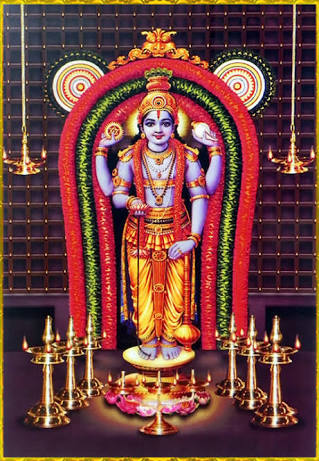
  • Love Letter To Lord Krishna Bhagavatham Guruvayaurappan Confirms

    Love Letter To Lord Krishna Bhagavatham Guruvayaurappan Confirms

    The sheer love of God  expressed in Hinduism is amazing .

    The texts of the Hindus, The Vedas do not advocate Idol worship.

    But it is sanctioned as a tool for realizing the Self.

    For more on this please refer my Post on Hinduism  Has Many Gods, Yes and No.

    God is treated as a child, Mother, Father, Friend , Lover….

    But in the case of Lord Krishna, whose existence is proved it is different.

    He married Rukmini.

    Rukmini expressed her Love for Krishna through a Love Letter and this is found in the Bhagavatham.

    Author of the Text is Vyasa!

    There was a difference of opinion as to whether the letter was in the Bhagavatham.

    This was resolved by Krishna from His Temple in Guruvayur!

    ‘In Bhagavatham, nowhere there is  any indication that Rukmini sent a letter to Krishna..She only sent a brahmin as emissary with the above message. 

    But then there is an interesting story behind the theory that there was a letter. It concerns the celebrated devotee of Guruvayurappan, Poonthanam Nambuthiri. It is heard that Poonthanam, though an ardent devotee of Guruvayurappan, was not a scholar in Sankrit by any standards. However in his great devotion to Guruvayurappan, he used to narrate the story of Bhagavatham in the temple precincts at Guruvayur.. As an innocent remark, Poonthanam once stated during his narration that Rukmini sent a letter with the above message to Krishna through the brahmin. An intolerant brahmin scholar, intent on humiliating Poonthanam in pulic, raised the issue as to where it was written in Bhagavatham that there was a letter.
    Then there came the voice of Guruvayurappan from His Sreekovil..” Is it said in Bhagavatham that there is no such letter? I know there was a letter because I sent it”This episode is narrated vividly in the Aitihyamala of Kottarathil Sankunni.

    (chapter 45 –Poonthanathu Namboothiree)

    श्रुत्वा गुणान्‌ भुवनसुन्दर शृण्वतां ते
    निर्विश्य कर्णविवरैर्हरतोऽङ्गतापं।

    रूपं दृशं दृशिमतां अखिलार्थलाभं
    त्वय्यच्युताविशति चित्तमपत्रपं मे॥१

    śrutvā guṇān bhuvanasundara śṛṇvatāṁ te
    nirviśya karṇavivarairharato’ṅgatāpaṁ|
    rūpaṁ dṛśaṁ dṛśimatāṁ akhilārthalābhaṁ
    tvayyacyutāviśati cittamapatrapaṁ me||1

    का त्वा मुकुन्द महती कुलशीलरूप
    विद्यावयोद्रविणदामभिरात्मतुल्यं।
    धीरा पतिं कुलवती न वृणीत कन्या
    काले नृसिंह नरलोकमनोऽभिरामं॥२

    kā tvā mukunda mahatī kulaśīlarūpa
    vidyāvayodraviṇadāmabhirātmatulyaṁ|
    dhīrā patiṁ kulavatī na vṛṇīta kanyā
    kāle nṛsiṁha naralokamano’bhirāmaṁ||2

    तन्मे भवान्‌ खलु वृतः पतिरङ्ग जाया-
    मात्मार्पितश्च भवतोऽत्र विभो विधेहि।
    मा वीरभागमभिमर्शतु चैद्य आरात्-
    गोमायुवद्‌ मृगपतेर्बलिमंबुजाक्ष॥३

    tanme bhavān khalu vṛtaḥ patiraṅga jāyā-
    mātmārpitaśca bhavato’tra vibho vidhehi|
    mā vīrabhāgamabhimarśatu caidya ārat-
    gomāyuvad mṛgapaterbalimaṁbujākṣa||3

    पूर्तेष्टदत्तनियमव्रतदेवविप्र-
    गुर्वर्च्चनादिभिरलं भगवान्‌ परेशः।
    आराधितो यदि गदाग्रज एत्य पाणिं
    गृह्ण्णातु मे न दमघोषसुतादयोऽन्न्ये॥४

    pūrteṣṭadattaniyamavratadevavipra-
    gurvarccanādibhiralaṁ bhagavān pareśaḥ|
    ārādhito yadi gadāgraja etya pāṇiṁ
    gṛhṇṇātu me na damaghoṣasutādayo’nnye||4

    श्वोभाविनि त्वमजितोद्वहने विदर्भान्
    गुप्तः समेत्य पृतनपतिभिः परीतः।
    निर्म्मथ्य चैद्यमगधेन्द्रबलं प्रसह्य
    मां राक्षसेन विधिनोद्वह वीर्यशुल्कां॥५

    śvobhāvini tvamajitodvahane vidarbhān
    guptaḥ sametya pṛtanapatibhiḥ parītaḥ|
    nirmmathya caidyamagadhendrabalaṁ prasahya
    māṁ rākṣasena vidhinodvaha vīryaśulkāṁ||5

    अन्तःपुरान्तरचरीमनिहत्य बन्धुं
    स्त्वामुद्वहे कथमिति प्रवदाम्युपायं।
    पूर्वेद्युरस्ति महती कुलदेवियात्रा
    यस्यां बहिर्न्नवावधूर्ग्गिरिजामुपेयात्॥६

    antaḥpurāntaracarīmanihatya bandhuṁ
    stvāmudvahe kathamiti pravadāmyupāyaṁ|
    pūrvedyurasti mahatī kuladeviyātrā
    yasyāṁ bahirnnavāvadhūrggirijāmupeyāt||6

    यस्याङ्घ्रिपङ्कजरजस्नपनं महान्तो
    वाञ्चन्त्युमापतिरिव्वत्मतमोपहत्यै
    यर्ह्यम्बुजाक्ष न लभेय भवत्प्रादं
    जह्यामसून् व्रतकृशान् शतजन्मभिः स्यात्॥७

    yasyāṅghripaṅkajarajasnapanaṁ mahānto
    vāñcantyumāpatirivvatmatamopahatyai
    yarhyambujākṣa na labheya bhavatprādaṁ
    jahyāmasūn vratakṛśān śatajanmabhiḥ syāt||7

    (Srimad Bhagavatamahapuranam Dashamaskanadm
    Chapter
    52–slokas 37 to 43)

    ( free translation avoiding technicalities to the extent possible) is given below)
    Krishna, you are the most attractive person in the whole
    universe, and having listened to your glories which enter one’s
    thought through the ears and destroys all woes of the body and
    mind, and Oh Achyutha, my shameless mind dwells upon you
    incapable of being wrenched away from your beautiful form
    which is the ultimate thing for anyone to set his eyes upon and
    that form bestows on all eternal fortune.

    Oh Mukunda, which girl , who has some strength of mind, who
    is born of high family , and in at least some way comparable to
    you in upbringing, character beauty, education ,age, wealth
    and status would not simply woo you by mind, you who looks
    like a lion in human form (you were once Narasaimha) and
    who is simply enchanting to the minds of all the living beings
    in this world.

    Therefore, you please accept me who has by my own will
    accepted you as my husband in mind and has simply placed my
    body and soul at your lotus feet, as you are the granter of all
    boons. Now I belong to you. Don’t permit the king of Chedhi
    the Sisupala to take possession of me. It will be like a wily
    jackal stealing away the royal food earmarked for the
    consumption of the Lion.

    If it a fact that you, the Lord of the Universe, have been
    worshiped by me with full devotion through good deeds like
    digging of ponds and lakes, offering to fire, through gifts to
    deserving people, through pilgrimages, through offerings to
    Brahmins on auspicious occasions, through worship of
    Brahmins, gods and preceptors, then you must immediately
    reach here and take possession of me through accepting my
    hands. My hands should not be dirtied by an evil fellow like
    sisupala.

    You Krishna the unconquerable, you please come over to
    Vidharabha tomorrow itself without being noticed by anyone.
    You must annihilate or defeat the Sisupala and his retinue with
    your own valour and marry me through the rakshasa method
    as a prize for your valour.

    If you are wondering how you can enter the palace at Vidarbha
    and accept me without causing damage to the lives of my
    relatives, I shall inform you the right way. On the eve of the
    marriage day there is a big procession to the Durga temple .
    Accompanying that procession, me the bride, will be going to
    the Parvati temple for worship.

    My Krishna, gods like the husband of Uma are eagerly
    awaiting to bathe themselves in the dust of your feet so that
    their own weaknesses will be removed. If it is my fate that I
    am not fortunate to get the protection from such great Krishna, I will kill myself through severe austerities in this life and will be born in hundreds of future lives till I attain your company.

    Citation and reference.

    Thank you Mr. Ananthanarayanan Vaidyanathan.

    http://kanfusion.blogspot.in/2010/06/rukminis-letter-to-krishna-corrected.html

  • Panchayatana Puja Mantras Text

    I had posted an article on Daily Worship of Five Deities Panchayatana Puja.

    I had provided a Link for the Mantras.

    The Link does not seem to work any longer..

    This has been brought to my notice by readers.

    I am furnishing the Text for the Panchayatana Pooja.

    panchayathanam
    Panchayana Pooja

    I thank Mr.K. N. Ramesh for the text.

    There are some who include Lord Subrahmanya in this Pooja.

    As Adi Shankaracharya would have it, Subrahmanya does not seem to find a place in this specific Puja.

    One may include Subrahmanya as well but then it would not be Panchayatana Puja.

    None of the Deities as mentioned by the Acharya are to be omitted.

    They are,

    Surya,

    Ganesha,

    Devi,

    Shiva and

    Vishnu.

    A paragraph from “Sankara’s Teachings’ by Sri Atmananda of Sri Ramakrishna Mutt on the subject:

    “Sankara instituted the worship of all these five Gods, Sun, Ambika, Vishnu, Ganapati and Shiva all on the same pedestal. This emphasized the idea that these are not five different Gods, but they are the one God worshipped in five different forms in different parts of India. Some wrongly think Sankara taught only Jnana and had no place for Karma. Sankara held that the place of Jnana was all-important but he knew equally well that many could not give up Karma and so they should be taught the most beneficial forms of Karma. Thus it is that the Panchayatana Puja (the worship of five Gods) came into vogue in Smartha homes. The other name for this is Siva-Puja.’


    Text of the Puja with procedure.

    Panchayatana puja

    Courtesy: Prof.Sri.V.Krishnamurthy

    MY PANCAYATANA PUJA

    [Note:  What is given below is an outline of how I do my Pancayatana-pUjA. I have been doing it for the past fifty years & more – of course now and then there have been breaks, short and long.  I have not referred to any old manuscripts or  any formal book; but what is written is what I got from my father sixty years ago, with, of course, some compromises I had to introduce due to my inability, over the years,  to follow all rules.  I do have a mss. of my father  to which I do refer now and then]

    For many Sanskrit  and Sanskrit-cum-Tamil words I am not giving the English meaning, because I presume those interested in this PUjA  would be familiar with such words.

    Key to Transliteration of Sanskrit words

    Kyoto-Harvard Convention (Modified)

    Vowels:

    Consonants:

    a    as the ‘u’ in but
    A or Aa or aa        as the ‘a’ in father
    i     as the ‘i’ in mill
    I     as the ‘ea’ in meal
    u    as the ‘u’ in put
    U   as the ‘u’ in rule
    e    as the ‘ey’ in they
    ai as the ‘ai’ in aisle
    o as the ‘o’ in go
    au as the ‘ou’ in loud
    R as the ‘r’ in Sanskrit
    gutturals        k          kh        g          gh            G

    palatals          c          ch        j           jh      jna

    linguals          T          Th        D         Dh            N

    dentals           t           th         d        dh          n

    labials            p          ph        b          bh       m

    semivowels   y           r          l           v


    Sibilants

    As in

    Beginning of word

    Middle of word

    Sanskrit Examples

    Palatal ‘s’ as in the German word ‘sprechen’ Sh (or) sh S ISvara, darSana, paSyati, ViSvaM
    Shankara, shAnti, Shiva, ShaSi (*)
    Shutter, shame Shh (or) shh  Sh (or) sh Vishnu, Purusha, dvesha. ShhaNmukha,
    Sun, sand S (or) s S samsAra, SamsAra, Satva, satva, VasanA

    Note on (*): In the word ‘ShaSi‘, the same palatal ‘s’ is transliterated differently in the beginning (as ‘Sh‘) and  in the middle of the word (as ‘S‘). Another word where this situation occurs is, for example, ‘shuSrUshA‘ where the first ‘sh‘ and the middle ‘S‘ represent the same palatal ‘s’.

    anusvAra —-  M     visarga —-         H          aspiration —–           h


    PujA articles needed:

    1. Panca-pAtram + UdraNi
    2. Akshatai –just a teaspoon.
    3. Kumkumam –
    4. Sandal-paste (a tea-spoon of this to be made for each pUjA day)
    5. An Asana for sitting. (One is supposed to sit facing East or North)
    6. A seat (Peetham) for keeping the deities and other accessories. If there is a picture included in your pUjA, the picture will face  South or East according respectively to the way you face, as described in No.5.
    7. A PujA Bell, which usually has a nandi at its top.
    8. A plate (called snAna-vedhi) for keeping the deities for the purposes of Abhishekam.  It may have a hole in the centre so that the Abhisheka-water may collect in a vessel below; or it may have a channel-like outlet by which the abhisheka-water may flow into another vessel. Another plate or cup (to be calledarghya-pAdya-AcamanIya pAtram — to be shortened as apA-pAtraM , hereafter in this document).
    9. Flowers for the PujA.
    10. VibhUti
    11. Three or four small plates, five small cups (each of which to be able to  hold at least two tablespoons of water). These five are for the so-called five kalaSas,ISAna, etc. These are to be arranged on a plate, one in the centre, one each in the four directions of the centre.
    12. Shankham, with some kind of stand for it, so that it may hold water and sit flat
    13. Camphor (to be used for the karpUra-nIrAnjanaM)
    14. Agarbati (to be used as a continuous light emitting fragrance throughout the pUjA as well as for the dhUpAM part of the sixteen-part pUjA)
    15. Cotton for deepam ( both for #16 below and for the deepaM part of the sixteen-part pUjA).
    16. Kuttu-vilakku or its equivalent
    17. A vessel for holding about six glasses of water; and most important of all,
    18. The PujA deities – to be separately described, along with two or three small kerchief-like towels to be used for drying the deities after the abhisheka, these towels not to be used for any other purpose.


    Note: Metals used in the above articles should, as far as possible, avoid steel or iron.  My own compromise is: except for #17 above, all are either silver or brass or bronze.

    Preferable Vedic Knowledge:  To be able to recite Rudram, Camakam, Purusha-sUktam.  This much is a minimum.   If Recitation can be done without the book, it will be wonderful; for, both the hands and all your attention would be needed for the pUjA.  To hold a book in one of the hands would be most inconvenient. Anything else that you can recite would be valuable.

    Daily Prerequisite: Morning Sandhyavandanam should have been done.

    Do an AcamanaM and then start:

    ShuklAmbaradharaM vishNum shaSi varNaM caturbhujaM /
    Prasanna-vadanaM dhyAyet sarva-vighnopaSAntaye //

    Guru brahmA gururvishNuH gurur-devo maheSvaraH/
    Gurus-sAkshAt paraM prahma tasmai shrI gurave namaH //

    prANAyAmaM.

    SankalpaM: shubhe shobhane muhUrte Adya-brahmaNaH dvitIya-parArdhe Shveta-varAha kalpe vaivasvata-manvantare ashtAvimSatitame kaliyuge  prathame pAde jambU-dvipe bhArata-varshe bharatha-khaNDe meroH dakshiNe pArshve  —-shakAbde  asmin vartamAne vyAvahArike prabhavAdi shhashTi-samvatsarANAM madhye   —- nAma-samvatsare —-ayane —–Ritau  —-mAse    —pakshe   —  tithau — nakshatra-yuktAyAM shubha-yoga shubha-karaNa evamguNa viSeshaNa-viSishTAyAM asyAM  — shubha-thithau  mamopAtta-samasta-durita-kshayadvArA  shrI-parameSvara-prItyarthaM asmAkaM saha-kuTumbAnAM kshema-sthairya-vIrya-vijaya-Ayur-Arogya-aiSvaryANAM abhivRiddhyarthaM  dharmArtha-kAma-moksha caturvidha-phala-purushArtha-siddhyarthaM ishTa-kAmyArtha-siddhyarthaM sarvAbhIshTa-siddhyarthaM sarvArishTa-shAntyartham aroga-dhRDha-gAtrathA-siddhyarthaM ShrI-sItA-lakshmaNa-bharata-shatrughna-hanUmat-sameta shrI rAma-chandrAdi-samasta-hari-hara-devatA-prasAda-siddhyarthaM sAmba-parameSvara-prasAda-siddhyarthaM

    [At this point, for the past few months, I have been adding  the following : asmin janmani janmAnte bhagavat-smaraNena saha anAyAsa-maraNa-prAptyarthaM, janmAntare’pi manushya-janma-prApti-dvArA parmAtmani atyanta-bhakti-siddhyarthaM, ekAnta-bhakti siddhyarthaM advaita-bhakti-siddhyarthaM]

    sAmba-parameSvare para-brahmaNi acancalA-bhakti-siddhyarthaM yAvac-chakti deva-pUjAM karishye. Adau deva-pUjAngaM shakti-pancAkshara mahAmantra-japaM karishye. tat-pUrvaM  mahA-gaNapati-mahA-mantra-japaM karishye.

    [These two japas are now done.  Obviously, the assumption is that you have been initiated into these japas formally by some one whom you consider to be your guru for that purpose.  I have been initiated into the shakti-pancAksharI by my father and into the mahA-gaNapati mantra by another Guru-ji]

    [One is supposed to do 108 times japa  of each of the mantras. This is the ideal situation.  Compromises are 54 or 32.   Ten time japa is only an apology.  But some of the days  I confess it  turns out to be  only an apology!]

    KalaSa-pUjA:

    kalaSa-pUjAM karishye /

    [Decorate the water-filled pancapAtraM with chandan & kumkum & flowers]

    kalaSasya AdhAre dvAdaSa-kalAtmane am arka-maNDalAya namaH / madhye daSa-kalAtmane mam vahni-maNDalAya namaH / mukhe ShhoDaSa-kalAtmane um soma-maNDalAya namaH //

    indrAya namaH / yamAya namaH / varuNAya namaH / somAya namaH /

    tatpurushAya namaH / [This on the east of the pAtram]
    aghorAya namaH [This on the south]
    vAmadevAya namaH [This on the north]
    sadyojAtAya namaH [This on the west]
    ISAnAya namaH  [This on the water in the pAtram]

    Tham vam amRte amRtodbhave amRtamayAsrAvaya srAvaya

    [Show the dhenu mudrA]

    [Now place your right palm on the top of the panca-pAtram].

    kalaSasya mukhe vishNuH kaNThe rudraH samASritAH / mUle tatra sthito brahmA madhe mAtR-gaNAH-smRtAH /kukshau tu sAgarAs-sarve  sapta-dvIpA vasundharA / Rgvedo’tha yajur-veda sAmavedo’hyatharvaNaH / angaiSca sahitAs-sarve kalaSAmbu samASritAH / AyAntu deva-pUjArthaM durita-kshaya-kArakAH / gange ca yamune caiva godAvarI saraswatI / narmade sindhu kAverI jale-smin sannidhiM kuru /

    Mantras to be recited now, if you know:  ‘Apo vA idam sarvaM …… bhUrbhuvasuavroM‘ / Also to be recited three times to be recited: GayatrI and any other mantra to which you have been initiated.

    Shankha-pUjA:

    [Now decorate the shankham with sandal and kumkum & flowers; fill it up with water from the panca-pAtram ]

    [Hold the shankham in your left palm and cover it up with the right palm]
    Shankha-mUle sthito brahmA shankha-madhye saraswatI / shankhAgre sarva-tIrthAni tasmAc-chankhaM prapUjayet // tvaM purA sagarotpanno vishNunA vidhRtaH kare / pUjitas-sarva-devAnAM pAncajanya-namo’stu te // pAnca-janyAya vidmahe pAvamAnAya dhImahi / tannaH shankhaH pracodayAt //

    [Say the GAyatrI and the pancAkshara-mantram three times ]

    [Sprinkle the shankha-water three times into the panca-pAtram as well as all the accessories kept for the pUjA. Also sprinkle it three times on yourself.  Any remaining water in the shankham to be poured into the panca-pAtraM. Now the panca-pAtram water has been purified.  So pour a little from it into the stored water-vessel No.17, so that  all the water that will be used for the pUjA would have been purified.   In the course of the rest of the pUjA, as and when the water in the panca-pAtram gets emptied, fill it up from No.17 hereafter].

    [Fill up the shankham again with water from the panca-pAtram, decorate with flowers and show the mudrAs of shankha, cakra-gadA-padma and dhenu]

    pUjA of the five kalaSas ‘ISAna’ etc.:

    Sandal, flowers, and akshata (mixed with sandalpaste and kumkum), all to be used as offering to each of the kalaSa – with the following mantras:

    naM hrAM ISAnAya Urdha-vaktrAya namaH  — for the central kalaSa, (to be called hereafter ‘ISAna-kalaSa‘).
    maM hrIM  tatpurushAya pUrvavaktrAya namaH —  for the kalaSa on the east, (to be called hereafter ‘tatpurusha-kalaSa‘).
    shiM hrUM aghorAya dakshiNa-vaktrAya namah —  for the kalaSa on the south  (to be called hereafter ‘aghora-kalaSa‘)
    vAM hraiM vAmadevAya uttaravaktrAya namaH – for the kalaSa on the north (to be called hereafter ‘vAmadeva kalaSa‘)
    yaM hrauM sadyojAtAya paScimavaktrAya namaH – for the kalaSa on the west (to be called hereafter ‘sadyojAta-kalaSa‘)


    [Now fill them with water from the panca-pAtraM,  in the following order, with the following mantras.  If you do not know how to recite them with the proper svaras, learn it from any vedic pundit]

    [Filling up of the ISAna-kalaSa]  ISAnas-sarva-vidyAnAM Isvaras-sarva-bhUtAnAM brahmAdhipatiH brahmaNo’dhipatir brahmA shivo me astu sadAshivoM //
    [Filling up of the tatpurusha-kalaSatatpurushAya vidmahe mahAdevAya dhImahi / tanno rudraH pracodayAt //

    [Filling up of the aghora-kalaSaaghorebhyo’tha gorebhyo ghora-ghoratarebhyaH sarvebhyaH sarva-SarvebhyO namaste astu rudra-rUpebhyaH //

    [Filling up of the  vAmadeva-kalaSa]  vAmadevAya namo jyeshTAya namaH shreshTAya  namo rudrAya namaH kAlAya namaH kalavikaraNAya namo balavikaraNAya namo balAya namo bala-pramathanAya namas-sarva-bhUta-damanAya namo manonmayAya namaH //

    [Filling up of the  sadyojAta-kalaSasadyojAtaM  prapadyAmi sadyojAtAya vai namo namaH /bhave bhave nAtibhave bhavasva mAM / bhavodbhavAya namaH //

    [Now decorate the arghya-pAdya-AcamanIya-pAtram with flowers, sandal and akshatA. Then do the PujA for the snAna-vedhi as follows]

    Om dharmAya namaH / adharmAya namaH//
    Om jnAnAya namaH / ajnAnAya namaH //
    Om vairAgyAya namaH / avairAgyAya namaH //
    Om aiSvaryAya namah / anaiSvaryAya namaH //

    [Now do the pUjA for the box or can in which the pancAyatana deities are kept]

    Om guM gurubhyo namaH / gaM gaNapataye namaH /duM durgAyai namaH / maM mahAlakshmyai namaH / saM saraswatyai namaH /kshaM kshetra-pAlakAya namaH /vaM vaTukAya namaH / paM paramAtmane namaH /


    [Ring or Sound the bell with the following shloka:] AgamArtham-tu devAnAM gamanArtham to rakshasAm /kurve ghaNTAravaM tatra devatAhvana-lAncanaM //
    Now you are going to open the deities-box.  Before opening it learn what is supposed to be in it.  There are five deities. The deities or divinities are not in their human-like forms but in certain symbols in the form of stones, which are nothing but certain rock-formations available in specified locations in the country. Surya, the Sun-God is inherent in certain crystals normally found in Vallam in Tamilnadu. Shakti is represented by the svarnamukhi stone found in the bed of the river of that name in the Andhra region. Vishnu is the sAlagrAma stone that can be had in plenty in the bed of the river GhanTaki in the Himalayas. GaneSa is the red Sonabhadra stone found in the bed of the river Sone flowing into the Ganga. Finally Shiva is the BANa-linga which is found in the Omkarakunda of the river Narmada, near the island of Mandhata.  It is by the worship of these formless deities that the devotee trains himself to take the mind from the forms to the formless while at the same time allowing full scope for his devotional feelings.

    [When you open the box, say the following]:
    vedAnta-vedyAkhila-viSva-mUrte  vibho virUpAksha-vikAra-rUpa /
    viSveSa viSvAdhika-viSva-mUrte kavATam-udghATaya kAla-kAla //

    [The deities are to be placed on the snAna-vedhi in a particular arrangment.The rule is: AgneyyAM sUryaM niRRtyAM gaNapatiM vAyavyAm-ambikAM aiSAnyAM ca vishNum sthApayet.  That is, Surya in the south-east, gaNapati in the southwest, ambikA in the northwest, and vishNu in the northeast, with Shivain the centre].

    atha-AtmANaM ShivAtmAnaM rudra-rUpiNaM dhyAyet  – meaning, ‘then one should meditate on one’s own Self as Shiva Himself’ thus:
    [Note here the distinguishing characteristic of
    the philosophy of advaita taking over.]
    shuddha-sphaTika-sankASaM triNetraM panca-vaktrakaM /
    gangAdharaM daSa-bhujaM sarvAbharaNa-bhUshitaM //
    nIlagrIvaM shaSAnkAnkaM nAga-yajnopavItinaM /
    nAgAbharaNa-shobhADhyaM vyAghra-carmottariyakaM //
    kamaNDvalvaksha-sUtrAdi dhAriNaM ShUlapANinaM /
    jvalantaM pingala-jaTAS-ShikhAmadhyoda-dhAriNaM //
    vRshas-skanda samArUDhaM umA-dehArdha-dhAriNaM /
    amRtenAplutaM hRshTaM divya-bhoga-samanvitaM /
    digdevatA-samAyuktaM surAsura-namaskRtaM //
    nityaM ca SASvataM shuddhaM dhruvam-aksharam-avyayaM //
    sarva-vyApinam-ISAnaM rudraM vai viSva-rUpiNaM /

    Rule: [evaM rUpiNaM eva dhyAtva dvijaH samyak tato yajanaM Arabhet : meaning, ‘thus should the twice-born meditate on the Form and begin his pUjA‘.
    athAto rudra-snAnArcanA-bhishekaM vidhim vyAkhyAsyAmaH : meaning, now let us describe the process of Abhisheka and Arcana of Lord Rudra]

    Note: In what all that follows, ‘akshata’ means akshata (rice, whole, not broken) mixed with sandalpaste and kumkum or turmeric powder.

    Atma-pUjA :

    [Sprinkling  the akshata on oneself]: Atmane namaH /paramAtmane namaH / jnAnAtmane namaH / sat-cid-Ananda-mUrtaye namaH /
    deho devAlayaH prokto  jIvo devas-sadAshivaH /
    tyajed-ajnAna-nirmAlyaM so’hambhAvena pUjayet //
    Meaning: This body is said to the temple of the Gods. The Soul within is Lord shiva Himself. Leave off the garbage of Ignorance and do the PujA with the attitude of ‘He I am’.

    As you place the deities on the snAna-vedhi, recite the following five shlokas on Atma-linga–pUjA, by Shankaracharya:

    ArAdhayAmi maNisannibham Atmalingam   ……   shambho tavArAdhanaM //

    snAna-vedhi pUjA: 
    [Akshata to be sprinkled on the East of the vedhi]: pUrvadvAre dvArashriyai namaH / dhAtre namaH, vidhAtre namaH //

    [on the south of the vedhi]: dakshiNa dvAre dvArashriyai namaH / jayAya namaH, v ijayAya namaH //

    [on the west of the vedhi]: paScimadvAre dvarashriyai namaH muNDAya namaH, camuNDAya namaH //

    [on the north of the vedhi]: uttaradvAre dvArashriyai namaH / shankanidhaye namaH, padma nidhaye namah //

    indrAya namaH, surAdhipataye namaH /    —  on the East side
    agnaye namaH, tejodhipataye namaH /  —  on the south-east
    yamAya namaH, bhUtAdhipataye namaH / — on the south
    niRRtaye namaH, rakshodhipataye namaH / — on the southwest
    varuNAya namaH, jalAdhipataye namaH / — on the west
    vAyave namaH, prANAdhipataye namaH /  — on the northwest
    kuberAya namaH, yakshAdhipataye namaH / — on the north
    ISAnAya namaH, vidyAdhipataye namaH /  — on the northeast

    [at the centre]:
    anantAya namaH, nAgadhipataye namaH
    brahmaNe namaH, lokAdhipataye namaH
    vishNave namaH, sarvAdhipataye namaH
    AdhAra-shaktyai namaH, mUla-prakRtyai namaH 
    saM satvAya namaH, raM rajase namaH, tam tamase namaH
    maM mAyAyai namaH, viM vidyAyai namaH /
    madhye suvarNa-maNTapAya namaH //

    Now starts the sixteen-part formal pUjA : [The svaras for the vedic mantras used have to be learnt orally from a Pundit.  Without the proper svaras, the pUjAloses all its sanctity]

    dhyAnaM & AvAhanaM:
    Om Asatyena rajasA vartamAno niveSayan amRtam martyamca / hiraNyayena savitArathena devo yAti bhuvanA-vipaSyan // Om CchAya-samjnA sameta shrI Surya-nArAyaNaswAminam dhyAyAmi, avAhayAmi // [Sprinkle the akshata on the Surya deity].
    Om shri gaNAnAm tvA ganapatim havAmahai kaviM kavInAm upamashravastamam / jyeshTarAjam brahmaNAm brahmaNaspata AnashRNvan Utibhis-sIdasAdanaM / Om shrI mahA-gaNapatim dhyayAmi AvAhayAmi // [Sprinkle the akshata on the Vinayaka deity].
    Om gaurImimAya salilAni takshatyekapadI dvipadI sA catushpadI / ashTApadI navapadI babhUvushI sahasrAksharA parame vyoman // GaurIM dhyAyAmi AvahayAmi [Sprinkle the akshatA on the ambikA deity].
    Om ISAnas-sarva-vidyAnAM Isvaras-sarva-bhUtAnAM brahmAdhipatiH brahmaNo’dhipatir brahmA shivo me astu sadAshivoM // Om shrI sAmba-parameSvaram dhyAyAmi AvAhayAmi [Sprinkle the akshata on the Shiva deity].

    Om sahasra-sIrshA purushaH / sahasrAkshas-sahasrapAt / sa bhUmiM viSvato vRtvA /atyatishTad-daSAngulaM /
    hiraNya varNAM hariNIm suvarna-rajatas-srajAM / candrAM hiraNmayIM lakshmIM jAtavedo ma Avaha//
    Om shrI lakshmI-nArayaNaM dhyAyAmi AvAhayAmi //

    [At this point, the following AvAhanAs are added according to our family custom.  Each one may follow one’s own family traditions:
    Om shrI sItA-lakshmaNa-bharata-shatrughna-hanUmat-sameta shrI rAmachandra para-brahmANaM dhyAyAmi AvAhayAmi.
    Samasta-hari-hara-devatAn dhyayAmi AvAhayAmi.
    durgA-lakshmI-saraswatIm dhyAyAmi AvAhayAmi.
    Shri Chandra-sekharendra-mahAswAminaM dhyAyAmi AvAhayAmi.
    Bhagavantam RamaNa maharshiM dhyAyAmi AvAhayAmi.
    Aravinda-mahAyoginaM dhyAyAmi AvAhayAmi
    ShrImAtR-yoginIm dhyAyAmi AvAhayAmi.]

    AsanaM :
             Purusha evedagm sarvaM  / yadbhUtaM yacca bhavyaM / utAmRtattvasyeSAnaH / yad-annenAtirohati //tAM ma Avaha jAtavedo lakshmIm-anapagAminIM /yasyAM hiraNyaM vindeyaM gAmaSvaM purushAn-ahaM //

    Om sAngAya sa-parivArAya sAmba-parameSvarAya namaH / AvAhitAbhyas-sarvAbhyo devatAbhyo namaH / AsanaM samarpayAmi // [Sprinkle the akshatA on all the deities in the snAna-pIThaM]

    [One can understand now what is going on.  We say four lines  from the PurushasUktam and two lines from the SrisUktaM and keep going on with the sixteen upacAras in that order ]

    PAdyaM :

    etAvanasya mahimA / ato jyAyAgmSca pUrushaH / pAdo’sya viSvA bhUtAni / tripAdasyAmRtaM divi // aSva-pUrvAM ratha-madhyAM hastinAda-prabodhinIM / shriyaM devIm-upahvaye shrIr-mA devI jushatAM //

    Om sAngAya sa-parivArAya sAmba-parameSvarAya namaH / AvAhitAbhyas-sarvAbhyo devatAbhyo namaH / PAdyaM samarpayAmi // [Pour an udraNiof water in the apA-pAtraM]

    arghyaM:

    tripAdUrdhva udait-purushaH / pAdosyehAbhavAt-punaH /tato vishhvang-vyakramat / sASanAnaSane abhi // kAM sOsmitAM hiraNya-prAkArAM ArdrAM jvalantIM tRptAM tarpayantIM / padme sthitAM padma-varNAM tAmihopahvaye shriyaM //

    Om sAngAya sa-parivArAya sAmba-parameSvarAya namaH / AvAhitAbhyas-sarvAbhyo devatAbhyo namaH / arghyaM samarpayAmi //[Pour an udraNiof water in the apA-pAtraM]

    AcamanIyaM :

    tasmAd-virADajAyata / virAjo adhi pUrushaH /sa jAto atyaricyata / paScAd-bhUmim-atho puraH // candrAM prabhAsAM yaSasA jvalantIM shriyaM loke devajushTAM udArAM /tAM padminImIM sharaNam-ahaM prapadye alakshmIr-me naSyatAM tvAM vRNe //

    Om sAngAya sa-parivArAya sAmba-parameSvarAya namaH / AvAhitAbhyas-sarvAbhyo devatAbhyo namaH / AcamanIyaM samarpayAmi // [Pour anudraNi of water in the apA-pAtraM]

    SnAnaM :

    yat-purusheNa havishA / devA yajnam-atanvata // vasanto asyAsIdajyaM / grIshma idhmaS-SaraddhaviH // Aditya-varNe tapaso’dhijAto vanaspatis-tava vRksho’tha bilvaH / tasya phalAni tapasA nudantu mAyAntarAyASca bAhyA alakshmIH //

    Om sAngAya sa-parivArAya sAmba-parameSvarAya namaH / AvAhitAbhyas-sarvAbhyo devatAbhyo namaH / snAnaM samarpayAmi //

    [This is one of the most important mandatory part. Here one spends as much time as one likes. The optimum standard practice is to recite Rudram, Camakam, Purusha-sUktaM, and Shri-sUktaM during the abhisheka of the deities. One does not pour water or any liquid just like that. One uses a cup with a hole at the bottom so that water, milk, honey, curd, coconutwater or any such liquid pours down the orifice in a continuous straight thin stream. One does this as you recite the various mantras like Rudram, etc. After this recitation is over, one pours the ISAnAdi panca-kalaSa water one after the other, but in the reverse order. That is the order now would be

    1.from the sadyojAta-kalaSa, . 2. from the vAmadeva-kalaSa 3. from the aghora-kalaSa 4. from the tatpurusha-kalaSa and 5. from the ISAna-kalaSa , each with the corresponding mantras associated with that kalaSa..

    At the end of this one pours the Sankha water on the deities, and at this point one repeats the mantra: yat-purusheNa havishA / devA yajnam-atanvata // vasanto asyAsIdajyaM / grIshma idhmaS-SaraddhaviH // Aditya-varNe tapaso’dhijAto vanaspatis-tava vRksho’tha bilvaH / tasya phalAni tapasA nudantu mAyAntarAyASca bAhyA alakshmIH /Om sAngAya sa-parivArAya sAmba-parameSvarAya namaH / AvAhitAbhyas-sarvAbhyo devatAbhyo namaH / snAnaM samarpayAmi // snAnAnantaraM AcamanIyaM samarpayAmi // [Pour one udraNi of water in the apA-pAtraM].

    [At the end of this snAna ritual, the pancayatana deities are dried with the towels kept for the purpose. They are then placed in the pUjA box, in the same geometrical locations that were prescribed for the snAna-vedhi. During this physical work of putting everything back in place, drying up the deities, etc. one can recite the stotras that one knows on any of the deities. I for one, invariably recite the Shiva-pancAkshara-stotra beginning with ‘nAgendra-hArAya’.]

    VastraM:

    saptAsyAsan paridhayaH / tris-sapta-samidhaH kRtAH / devA yad-yajnaM tanvAnAH / abadhnan purushaM paSuM // upaitu mAM devasakhaH kIrtiSca maNinA saha /prAdurbhUtosmi rAshTre’smin kIrtimRiddhiM dadAtu me //

    Om sAngAya sa-parivArAya sAmba-parameSvarAya namaH / AvAhitAbhyas-sarvAbhyo devatAbhyo namaH / vastraM samarpayAmi // [If there is no vastraM to be used for the pUjA, say ‘vastrArthaM akshatAn samarpayAmi‘ and sprinkle akshatAs on the deity]

    AbharaNaM:

    taM yajnaM barhishi proukshan / purushaM jAtam-agrataH / tena devA ayajanta / sAdhyA RshayaSca ye // kshut-pipAsAmalAM jyeshTAM alakshmIM nASayAmyahaM / abhUtim-asamRddhiM-ca sarvAM nirNuda me gRhAt //

    Om sAngAya sa-parivArAya sAmba-parameSvarAya namaH / AvAhitAbhyas-sarvAbhyo devatAbhyo namaH / AbharaNAni samarpayAmi [or AbharaNArtham akshatAn samarpayAmi]

    GandhaM & KunkumaM :

    tasmAd-yajnAt sarva-hutaH / sambhRtaM pRshadAjyaM / paSUgmstAgmScakre vAyavyAn / AraNyAn grAmyASca ye // gandha-dvArAM durAdharshAM nitya-pushTAM karIshiNIM /ISvarIgM sarva-bhUtAnAM tAmihopahvaye shriyaM //

    Om sAngAya sa-parivArAya sAmba-parameSvarAya namaH / AvAhitAbhyas-sarvAbhyo devatAbhyo namaH / gandhAn dhArayAmi; gandhasyopari haridrA-cUrNaM samarpayAmi//

    akshatAn :

    tasmAd-yajnAt sarvahutaH / Rcas-sAmAni jagnire / ChandAgmsi jagnire tasmAt /yajus-tasmAd-ajAyata // mahAlakshmI ca vidmahe vishNu-patnI ca dhImahi / tanno lakshmIH pracodayAt //

    Om sAngAya sa-parivArAya sAmba-parameSvarAya namaH / AvAhitAbhyas-sarvAbhyo devatAbhyo namaH / gandhAnAM upari akshatAn samarpayAmi //

    pushpArcanA:

    tasmAd-aSvA ajAyanta / ye ke cobhayAdataH / gAvo ha jagnire tasmAt / tasmAjjAtA ajAvayaH // manasaH kAmamAkUtiM vAcas-satyam-aSImahi /paSUnAgm rUpamannasya mayi shrIH shrayatAgm yaSaH /

    Om sAngAya sa-parivArAya sAmba-parameSvarAya namaH / AvAhitAbhyas-sarvAbhyo devatAbhyo namaH / pushpaiH pUjayAmi//

    [One spends as much time as one can, at this step. This is the second mandatory part. You can use all the ashTottaras and sahasranAmas that you can manage. You can also plan them to suit the different days of the week, or the different festival days that occur. But always precede all of them by a minimum arcanA of the five pancayatana deities, as follows]

    Om mitrAya namaH / Om ravaye namaH / Om sUryAya namaH / Om bhAnave namaH / Om khagAya namaH / Om pUshNe namaH /Om hiranya-garbhAya namaH / Om marIcaye namaH / Om Adityaya namaH / Om savitre namaH / Om arkAya namaH / Om bhAskarAya namaH //

    Om sumukhAya namaH / Om eka-dantAya namaH / Om kapilAya namaH / Om gaja-karNikAya namaH / Om lambodarAya namaH /Om vikaTAya namaH / Om vighna-rAjAya namaH / Om gaNAdhipaya namaH / Om dhUmaketave namaH /Om gaNAdhyakshAya namaH /Om phAla-candrAya namaH /Om gajAnanAya namaH / Om vakra-tunDAya namaH / Om SUrpa-karNAya namaH /Om herambAya namaH /Om skanda-pUrvajAya namaH / Om siddhi-vinAyaka-swAmine namaH //

    Om bhavasya devasya patnyai namaH / Om sharvasya devasya patnyai namaH / Om ISAnasya devasya patnyai namaH / Om paSupater devasya patnyai namaH / Om rudrasya devasya patnyai namaH / Om ugrasya devasya patnyai namaH / Om bhImasya devasya patnyai namaH / Om mahato devasya patnyai namaH //

    Om bhavAya devAya namaH / Om sharvAya devAya namaH / Om ISAnAya devAya namaH / Om paSUpater devAya namaH / Om rudrAya devAya namaH / Om ugrAya devAya namaH / Om bhImAya devAya namaH / Om mahate devAya namaH //

    Om KeSavAya namaH / Om nArAyaNAya namaH / Om MAdhavAya namaH / Om GovindAya namaH / Om vishNave namaH / Om MadhusUdanAya namaH / Om trivikramAya namaH / Om VAmanAya namaH / Om ShrIdharAya namaH / Om RshIkeSAya namaH / Om PadmanAbhAya namaH / Om dAmodarAya namaH //

    DhUpaM :

    yat-purushaM vyadadhuH / katidhA vyakalpayan / mukhaM kimasya kau bAhU / kAvUrU pAdAvucyete // kardamena prajA bhUtA mayi sambhava kardama / shriyaM vAsaya me kule mAtaraM padma-mAlinIM //

    Om sAngAya sa-parivArAya sAmba-parameSvarAya namaH / AvAhitAbhyas-sarvAbhyo devatAbhyo namaH / dhUpaM AghrApayAmi// dhUpAnantaraM AcamanIyaM samarpayAmi// [Pour one udraNi of water in the apA-pAtraM].

    dIpaM :

    brAhmaNo’sya mukham-AsIt / bAhU rAjanyaH kRtaH / urU tadasya yad-vaiSyaH / padbhyAgm SUdro ajAyata // ApaH sRjantu snigdhAni ciklIta vasa me gRhe / nica devIM mAtargm shriyaM vAsaya me kule //

    Om sAngAya sa-parivArAya sAmba-parameSvarAya namaH / AvAhitAbhyas-sarvAbhyo devatAbhyo namaH / deepaM darSayAmi // deepAnantaraM AcamanIyaM samarpayAmi// [Pour one udraNi of water in the apA-pAtraM].

    naivedyaM : (This is the third mandatory part. One is supposed to offer the deities, freshly cooked rice with a sprinkling of ghee on it, a little dholl, pAyasaM,any other sweets done specially for the offering, fruits of all kinds, coconuts, etc. In short you offer to the Lord whatever you plan to eat that day — keeping in mind all the restrictions on food that ShAstras prescribe.)

    candramA manaso jAtaH / cakshos-sUryo ajAyata / mukhAd-indraS-cAgniSca / prANAd-vAyur-ajayata // ArdrAM pushkariNIM pushTiM suvarNAM hema-mAlinIM / sUryAM hiraNmayIM lakshmIM jAtavedo ma Avaha //

    Om sAngAya sa-parivArAya sAmba-parameSvarAya namaH / AvAhitAbhyas-sarvAbhyo devatAbhyo namaH / ….. phalAni nivedayAmi//naivedyAnantaram AcamanIyaM samarpayAmi / [Pour one udraNi of water in the apA-pAtraM]

    tAmbUlaM :

    nAbhyA AsId-antarikshaM / ShIrshNordyaus-samavartata / padbhyAM bhUmir-diSas-shrotrAt / tathA lokAgm akalpayan // ArdrAM yah-kariNIM yashTiM pingalAm padma-mAlinIM / candrAM hiraNmayIm lakshmIM jAtavedo ma Avaha //

    Om sAngAya sa-parivArAya sAmba-parameSvarAya namaH / AvAhitAbhyas-sarvAbhyo devatAbhyo namaH / karpUra-tAmbUlaM samarpayAmi //

    KarpUra-nIrAjanaM :

    [This is the fourth mandatory part].

    vedAhametaM purushaM mahAntaM / Aditya-varNaM tamasastu paare /sarvANi rUpANi vicitya dhIraH /nAmAni kRtvA’bhivadan yadAste / / tAM ma Avaha jAtavedo lakshmIm-anapagAminIM / yasyAM hiraNyaM prabhUtaM gAvo dAsyo’shvAn vindeyaM purushAnahaM //

    Om sAngAya sa-parivArAya sAmba-parameSvarAya namaH / AvAhitAbhyas-sarvAbhyo devatAbhyo namaH / karpUra-nIrAjanaM darSayAmi//nIrAjanAnantaraM AcamanIyaM samarpayAmi / [Pour one udraNi of water in the apA-pAtraM]

    PradakshiNa-namaskArAn :

    [This is the fifth and last mandatory part].

    dhAta purastAd-yamudAjahAra / shakraH pravidvAn pratiSaS-catasraH / tamevaM vidvAn-amRta iha bhavati /nAnyaH panthA ayanaya vidyate // vishNupatNIm kshamAM devIM mAdhavIM mAdhava-priyAM / lakshmIM priya-sakhIm devIm namAmy-acyuta-vallabhAM //

    Om sAngAya sa-parivArAya sAmba-parameSvarAya namaH / AvAhitAbhyas-sarvAbhyo devatAbhyo namaH / pradakshiNa-namaskArAn samarpayAmi //

    Mantra-pushpaM :

    Om sAngAya sa-parivArAya sAmba-parameSvarAya namaH / AvAhitAbhyas-sarvAbhyo devatAbhyo namaH / vedokta-mantra-pushpaM samarpayAmi //samastopacAra-shhoDaSopacArAn samarpayAmi // All the remaining flowers to be offered to the Lord at this point; if convenient, all the members of the family can gather together, recite the mantra-pushpaM portion from the scriptures and offer flowers at the feet of the deities.

    Om shankha-madhye sthitaM toyaM bhrAmitaM shankaropari / anga-lagnaM manushyANAM brahmahatyAdhikaM dahet // [Thus the water in the shankha is emptied into the abhisheka water-collection]

    Om tatpurushAya vidmahe mahAdevAya dhImahi / tanno rudraH pracodayAt // [ With this mantra one udraNi of the abhisheka water-collection is sprinkled over the nandi on top of the Bell] ‘iti nandikeSvaraya namaH, baliM nivedayAmi’ — With this mantra a morsel of the food already offered to the Lord is offered to Nandi.

    Now we take one or two or a handful of flowers already offered to Lord Shiva in the PUjA box, and offer them to Nandi by putting them on the back of the Nandi in the form of a bull — while we recite “ISAnas-sarvavidyAnAM ISvaras-sarva-bhUtAnAM brahmAdhipatir brahmaNodhipatir brahmA shivo me astu sadAshivOM –hara OM, hara Om hara’.

    And the finale:

    AvAhanaM na jAnAmi na jAnAmi visarjanaM / pUjAvidhiM na jAnAmi kshamasva parameSvara // aparAdha-sahasrANi kriyante’harniSaM mayA / dAso’yam iti mAM matvA kshamasva purushottama // anAyAsena maraNaM vinA dainyena jIvanaM / dehi me kRpayA shambho tvayi bhaktim-acancalAM //

    akAla-mRtyu haraNaM sarva-vyAdhi-nivAraNaM / samasta-pApa-kshayakaraM shrI vishNu-pAdodakaM shubhaM // With this one drinks one sip of the abhisheka water-collection.


    Citation and references.

    Image and Quote from   https://mahaperiyavaa.wordpress.com/2014/06/25/panchayathana-puja-initiation-from-kanchi-acharyas/
    http://knramesh.blogspot.in/2011/12/panchayatana-puja.html
  • Indian Script Began in 3012 BC Beginning Of Kali Yuga

    Apart from wondering about the treasure trove of Hinduism which opens the doors to Wisdom,Knowledge, Information and Spirituality, one thing has been nagging my mind.

    There are thirty million manuscripts 700 poetic meters in Sanskrit.

    https://ramanisblog.in/2015/02/04/thirty-million-manuscripts-700-poetic-meters-amazing-sanskrit/

    and you have the Vedas.

    ps345722
    First Indus Valley script 2600 BC

    ‘The Vedic literature is composed of many books.

    mbh_ikswaku_lineage

    The oldest texts are the Rig-veda, Yajur-veda, Sama-veda, and the Atharva-veda. It is said in the Muktikopanishad that these four Vedas had 21, 109, 1000, and 50 branches respectively, with over 100,000 verses. Now, however, we can only find around 20,023 (some say 20,379) verses in total from these four Vedas.


    It is the oldest book in any Indo-European language and contains the earliest form of all Sanskrit mantras that date back to 1500 B.C. – 1000 B.C. Some scholars date the Rig Veda as early as 12000 BC – 4000 B.C

    https://ramanisblog.in/2013/08/16/rig-veda-date-components-details/

    It is well known that the Hindu Texts were transmitted orally.

    True.

    Even today one can see the Vedas being transmitted orally in India.

    I am amazed at the sheer volume being transmitted only by Oral tradition.

    It is enjoined in the Vedas that one has to study the Vedas from a Guru for Twelve Years.

    Even this can be one Shaka, a portion of a Specific Veda that is assigned to one by tradition.

    How come all the verses, well most of them, are available today?

    Only by Oral tradition?

    Without recourse to any form of writing?

    Well let me leave this for the present.

    But writing must have been in vogue during the Ramayana and Mahabharata Period.

    We have instances of Kings sending emissaries with written Communication ‘Nirupam’

    Sita’s Swayamwara, Damayanti Swayamvara, Draupadis Swayamvara have been communicated to all the Kings of India, then 56 in number.

    And these messages traveled from Ayodhya to Madurai and the present Kerala, to Pandyan and Chera kings respectively.

    The messages as Nirupam implies a language, script.

    Resting aside the  controversy about the common language, which I shall address later, the accepted early script is Brahmi.

    Again there is Tamil Brahmi, Sanskrit Brahmi, Kannada Brahmi.

    Tamil Brahmi is found in the Harappan Civilization.

    Two million year old Rock carving dating to Million years was found in Karnataka.

    Earliest Brahmi script  is assigned a date of 2600 BC

    ‘The first Indian script, developed in the Indus Valley around 2600 B.C. is still undeciphered. Thus, it is still not possible to fully understand this civilization, as we have no readable records of their beliefs, history, rulers or literature’


    ‘The Indus valley findings made Indologists acknowledge that writing existed prior to Mauryan writing. Though it has not been deciphered , it clearly shows writing existed in India before atlest 5-2 milliena before christ. Some Indology scholars have tried to show Indus script is derived from script from another civilization. But all these theories have fallen flat. Hrozny tried to derive Indus script from Hittite, Diringer is convinced that no script existed prior to Indus script from which Indus scirpt can be derived. Hunter and Langdon regard Indus script as prototype of Brahmi. The Vedic Scholars believed that Brahmi is from Brahma. It is mentioned in Narada Smriti that if Brahma has not created the art of writing or given excellant eye in the shape of script, the future would not have been deprived of obtaining bright future.

    The Absence of inscriptions since Indus valley is due to widespread use of Paper and Cloth, which are perishable in nature…

    ‘Alberuni believes Indian Alphabet originated with the begining of Kali Age (3102BC).

    Hiuen Tsang speaks of high Antiquity of Indian writing system. Brahmi is stated, in the Chinese Encyclopedia Fa-Wan-Shu-Lin, to be the best of scripts.’

    One of the first great civilizations–with a writing system, urban centers, and a diversified social and economic system–appeared around 3,000 B.C. along the Indus River valley in Punjab and Sindh.


    http://www.ancient.eu/article/294/

    I agree with Alberuni the Chinese  ancient .eu ,taking into account the dates of Ramayana and Mahabharata and of course the Vedas.


    Sources.
    A Concise History Of Classical Sanskrit Literature By Gaurinath Shastri, Bhattacharyya Shastri Gaurinath
    The rise, decline and renewals of sramanic religious traditions within indic civilisation with particular reference to the evolution of jain sramanic culture and its impact on the indic civilization by Bal patil
    Students’ Britannica India, Volumes 1-5 By Indu Ramchandani
    A Companion to Sanskrit Literature: Spanning a Period of Over Three Thousand … By Sures Chandra Banerji
    On the origin Indian Brahma Alphabet Georg Buhler
    Was Writing Know Before Panini by A Chela
    Agama Aura Tripitaka, Eka Anusilana: Language and Literature By Nagraj (Muni.)

    Citations.


    http://www.ancientindia.co.uk/writing/home_set.html

    http://controversialhistory.blogspot.in/search/label/sanskrit

    http://www.stephen-knapp.com/complete_review_of_vedic_literature.htm

    Ramani’s Blog

  • Pythagoras Theorem Geometric Series By Bodhayana 800 BC

    Pythagoras Theorem Geometric Series By Bodhayana 800 BC

    Indian History is so distorted and misinformation about Sanatana Dharma is so meticulous, it needs patient search among the Indian Texts to find out the truth.

    Well,centuries of misinformation takes time to be dispelled away.


    I have written about the presence of Krishna ,Balarama, Shiva in ancient Greece much before the arrival of Alexander in India and the worship of these deities were present in ancient Greece.

    Please read my articles on Krishna and Balarma being worshiped in Greece and Dionysus  was Shiva.

    Pillars of Hercules was dedicated to Krishna according to some researchers.

    Mind you, this is not by an Indian but by a Foreigner.

    We have a tendency to trust he sources from abroad than our own sources.

    There is a fundamental difference in western approach to Knowledge when compared to Indian way of Knowledge.

    While the western axiom is ‘ex nihilo nihi fit’- out of nothing nothing comes, while Indian Thinkers follow the dictum ‘Out of Fullness comes Full,having the Full from Full, the Full remains Full.

    ‘Om Poornamatha Poornamitham…Vasisyathi’

    I shall write on this later.

    The Renaissance as the west have it is from Greece.

    All knowledge flowed from Greece?

    If you read western Philosophy it would start from Socrates followed by Plato And Aristotle.

    History from Thucydides.

    And so on.

    Let us have a look at Pythagoras  Theorem.

    ,

    In mathematics, the Pythagorean theorem, also known as Pythagoras’ theorem, is a fundamental relation in Euclidean geometry among the three sides of a right triangle. It states that the square of the hypotenuse (the side opposite the right angle) is equal to the sum of the squares of the other two sides. The theorem can be written as an equation relating the lengths of the sides a, b andc, often called the “Pythagorean equation”:[1]

    a^2 + b^2 = c^2 ,

    where c represents the length of the hypotenuse and a and b the lengths of the triangle’s other two sides.

    Although it is often argued that knowledge of the theorem predates him, the theorem is named after the ancient Greekmathematician Pythagoras (c. 570 – c. 495 BC) as it is he who, by tradition, is credited with its first recorded proof.[3][4][5] There is some evidence that Babylonian mathematicians understood the formula, although little of it indicates an application within a mathematical framework. Mesopotamian, Indian and Chinese mathematicians all discovered the theorem independently and, in some cases, provided proofs for special cases.

    The theorem has been given numerous proofs – possibly the most for any mathematical theorem. They are very diverse, including both geometric proofs and algebraic proofs, with some dating back thousands of years. The theorem can be generalized in various ways, including higher-dimensional spaces, to spaces that are not Euclidean, to objects that are not right triangles, and indeed, to objects that are not triangles at all, but n-dimensional solids. The Pythagorean theorem has attracted interest outside mathematics as a symbol of mathematical abstruseness, mystique, or intellectual power; popular references in literature, plays, musicals, songs, stamps and cartoons abound.,

    Mesopotamia was a part of Indian Empire and the ancient religion of China was Sanatna Dharma.


    ,

    The earliest mathematician to whom definite teachings can be ascribed was Lagadha, who apparently lived about 1300 BC and used geometry and elementary trigonometry for his astronomy. Baudhayana lived about 800 BC and also wrote on algebra and geometry; Yajnavalkya lived about the same time and is credited with the then-best approximation to π. Apastambha did work summarized below; other early Vedic mathematicians solved quadratic and simultaneous equations.Other early cultures also developed some mathematics. The ancient Mayans apparently had a place-value system with zero already seen in Vedas before them and later known to the world by great Aryabhatt; Aztec architecture implies practical geometry skills. Ancient China certainly developed mathematics, though little written evidence survives prior to Chang Tshang’s famous book. Chang Tshang before writing book, gained great Vedic wisdom when he arrived in India.

    The Dharmasutra composed by Apastambha (ca 630-560 BC) from India contains mensuration techniques, novel geometric construction techniques, a method of elementary algebra, and what may be the first known proof after 800 BC of Sulbha Sutra which form the basis of plagiarized version better known as Pythagorean Theorem. Apastambha’s work uses the excellent (continued fraction) approximation √2 ≈ 577/408, a result probably derived with a geometric argument.

    Apastambha built on the work of earlier Vedic scholars, especially Baudhayana, as well as Harappan and (probably) Mesopotamian mathematicians. His notation and proofs were made primitive by westerners, and there is little certainty about his life. However similar comments apply to Thales of Miletus, so it seems fair to mention Apastambha (who was perhaps the most creative Vedic mathematician before Panini) along with Thales as one of the earliest mathematicians whose name is known…

    Eudoxus of Cyzicus us an ancient Greek explorer and sea navigator that is remembered by historical writings as one of the first sailors who managed to make successful trips between Arabian and Indian ports, explore Arabian Sea under contract from Ptolemy VIII king, the Hellenistic Ptolemaic dynasty in Egypt, and for his 2nd century BC attempt to circumnavigate the continent of Africa.

    ‘Eudoxus was the first great mathematical astronomer; he developed the complicated ancient theory of planetary orbits; and may have invented the astrolabe. (It is sometimes said that he knew that the Earth rotates around the Sun, but that appears to be false; it is instead Aristarchus of Samos, as cited by Archimedes, who may be the first “heliocentrist.”)

    Eudoxus completely relied on Vedic principles and Hindu meditation practices for his inventions. As it happened with most of the copy cats, some of his papers were mocked by next generation of mathematicians as they found flaws in mis-translations of Vedic texts done by Eudoxus.

    Four of Eudoxus’ most famous discoveries were the volume of a cone, extension of arithmetic to the irrationals, summing formula for geometric series, and viewing π as the limit of polygonal perimeters. None of these seems difficult today, but it does seem remarkable that they were all first achieved by the same man, due to his access to Vedas. As seen in most of the sutras in Vedas, where Sun and Moon were quoted as eyes of Lord Krishna. And how important it is for Sun and Moon to exist for the existence of human race is explained in detailed manner. Following the same principle, Eudoxus was too much impressed with the natural gifts of Lord Krishna given to mankind and he  has been quoted as saying “Willingly would I burn to death like Phaeton, were this the price for reaching the sun and learning its shape, its size and its substance.”

    Long before Eudoxus’ –  In the valley of the Indus River of India, the world’s oldest civilization had developed its own system of mathematics. The Vedic Shulba Sutras (fifth to eighth century B.C.E.), meaning “codes of the rope,” show that the earliest geometrical and mathematical investigations among the Indians arose from certain requirements of their religious rituals. When the poetic vision of the Vedic seers was externalized in symbols, rituals requiring altars and precise measurement became manifest, providing a means to the attainment of the unmanifest world of consciousness. “Shulba Sutras” is the name given to those portions or supplements of the Kalpasutras, which deal with the measurement and construction of the different altars or arenas for religious rites. The word Shulba refers to the ropes used to make these measurements’

    Shulbha Sutra and Pythogoras Theorem.

    The similarity between Shulbha Sutra and Pythogoras

    The diagonal chord of the rectangle makes both the squares that the horizontal and vertical sides make separately.

    — Sulba Sutra

    (8th century B.C.)

    vedic-geometry
    Pythagoras  Theorem was By Bodhayana, Apasthamba of India around 8 BC

    Compare.

    The square of the hypotenuse of a right angle triangle is equal to the sum of the squares of the other two sides.

    — Pythagorean Theorem

    (6th century B.C.)

    It is also referred to as Baudhayana theorem. The most notable of the rules (the Sulbasūtra-s do not contain any proofs for the rules which they describe, since they are sūtra-s, formulae, concise) in the Baudhāyana Sulba Sūtra says:

    दीर्घचतुरश्रस्याक्ष्णया रज्जु: पार्श्र्वमानी तिर्यग् मानी च यत् पृथग् भूते कुरूतस्तदुभयं करोति ॥

    dīrghachatursrasyākṣaṇayā rajjuḥ pārśvamānī, tiryagmānī,
    cha yatpṛthagbhūte kurutastadubhayāṅ karoti.

    A rope stretched along the length of the diagonal produces an area which the vertical and horizontal sides make together.

    A proof of the theorem by Bodhayana.

    Circling the square

    Another problem tackled by Baudhāyana is that of finding a circle whose area is the same as that of a square (the reverse of squaring the circle). His sūtra i.58 gives this construction:

    Draw half its diagonal about the centre towards the East-West line; then describe a circle together with a third part of that which lies outside the square.

    Explanation:

    • Draw the half-diagonal of the square, which is larger than the half-side by x = {a \over 2}\sqrt{2}- {a \over 2}.
    • Then draw a circle with radius {a \over 2} + {x \over 3}, or {a \over 2} + {a \over 6}(\sqrt{2}-1), which equals {a \over 6}(2 + \sqrt{2}).
    • Now (2+\sqrt{2})^2 \approx 11.66 \approx {36.6\over \pi}, so the area {\pi}r^2 \approx \pi \times {a^2 \over 6^2} \times {36.6\over \pi} \approx a^2.

    Square root of 2.

    Baudhāyana i.61-2 (elaborated in Āpastamba Sulbasūtra i.6) gives the length of the diagonal of a square in terms of its sides, which is equivalent to a formula for the square root of 2:

    samasya dvikaraṇī. pramāṇaṃ tṛtīyena vardhayet
    tac caturthenātmacatustriṃśonena saviśeṣaḥ
    The diagonal [lit. “doubler”] of a square. The measure is to be increased by a third and by a fourth decreased by the 34th. That is its diagonal approximately.[citation needed]

    That is,

    \sqrt{2} \approx  1 + \frac{1}{3} + \frac{1}{3 \cdot 4} - \frac{1}{3 \cdot4 \cdot 34} = \frac{577}{408} \approx 1.414216,

    which is correct to five decimals.[8]

    Other theorems include: diagonals of rectangle bisect each other, diagonals of rhombus bisect at right angles, area of a square formed by joining the middle points of a square is half of original, the midpoints of a rectangle joined forms a rhombus whose area is half the rectangle, etc.

    Note the emphasis on rectangles and squares; this arises from the need to specify yajña bhūmikās—i.e. the altar on which a rituals were conducted, including fire offerings (yajña).

    These Indian texts  form Kalpla Sutras.

    Citations and references.

    http://haribhakt.com/modern-inventions-stolen-from-vedas/#Likes_of_Pythogoras_and_Archimedes_Lifted_theories_of_Ancient_Hindu_Scientists_and_Mathematicians

    http://www.famous-explorers.com/explorers-by-time-period/eudoxus-of-cyzicus/

    https://en.wikipedia.org/wiki/Baudhayana_sutras

    Join 4,576 other subscribers