Tag: இந்தியக் கணித வரலாறு

  • Numbers Arithmetic Geometric Sequences In Vedas

    When one talks about the History of Mathematics,one must also remember to talk about Numbers and their origin. Numbers, in general ,have been classified into three types.

    • Decimal
    • Unary
    • Positional
    • Binary.

    I have provided information towards the close of the post the details with Links. Now let’s look at the Vedic connection of Numbers.

    Numerals in Vedas image.
    Numbers in Sanskrit, Vedas .

    One shall find references to Numbers in the Vedas. The decimal system and expressing numbers in terms of Tens is mentioned in the Vedas. For instance, the Chamakam Anuvaka refers to Numbers.

    Worshippers of Lord Siva recite Rudram with 11 sections followed by Chamakam with 11 sections as a routine prayer every day. This is called the daily nyasam or mode of worship. In the Rudram part, the devotee pays repeated obeisance to Lord Siva and prays for his blessings for human well being. But on special occasions, the number of times the recitation is done is increased.

    In Rudra EkadasiRudram is recited 11 times and Chamakam is recited once. After Rudram is recited once, one section or anuvaka ofChamakam is recited in order.

    In Laghurudram, Rudra Ekadasi is done 11 timesthat is, Rudram is recited 11 or 121 times and Chamakam is recited 11 times.

     In Maharudram, 11 Laghurudrams are recited; that is, Rudram is recited 113 = 1331 times and Chamakam 11= 121 times.

    In Atirudram, 11 Maharudrams are recited; that is, Rudram is recited 114 = 14641 times and Chamakam is recited 113 = 1331 times.

    The Chamakam mentions completely the ideal of human happiness and defines in the highest degree the desires to be fulfilled without delimiting those to be asked for or to be granted..

    DNA and Mathematics in Sri Rudram.

    In the Chamakam, in anuvakas or sections 1 to10the devotee prays for almost everything needed for human happiness and specifies each item.  But in the 11th anuvaka or 11th section of Chamakam, the devotee prays for the desired things not specifically but in terms of numbers, first in terms of odd numbers from 1 to 33 and later in multiples of 4 from 4 to 48, as follows:

    Eka cha me, thisrascha may, pancha cha may, sapta cha may, Ekadasa cha may, trayodasa cha may, panchadasa cha may, saptadasa cha may, Navadasa cha may, ek trimshatis cha may, trayovimshatis cha may, Panchavimshatis cha may, saptavimshatis cha may, navavimshatis cha may, Ekatrimshatis cha may, trayatrimshatis cha may, panchatrimshatis cha may, Chatasras cha may, ashtou cha may, dwadasa cha may, shodasa cha may, Vimsatis cha may, chaturvimshatis cha may, ashtavimshatis cha may, Dwathrimashatis cha may, shatstrimshas cha may, chatvarimshas cha may, Chatuschatvarimshas cha may, ashtachatvarimshas cha may”
    which means:

    “Let these be granted to me. One, three, five, seven, nine, eleven, thirteen, seventeen, nineteen, twenty one, twenty three, twenty five, twenty seven, twenty nine, thirty one and thirty three as also four, eight, twelve, sixteen, twenty, twenty four, twenty eight, thirty two, thirty six, forty, forty four and forty eight”.

    Traditional scholars and pandits explain the significance of these numbers as follows: more Maths DNA Mitochondrial Base Pairs In Chamakam Rudram

    The Vedas are not mathematical texts; they are merely hymns to the Vedic gods. However, the word Veda means “knowledge”, and when analyzed closely it actually contains many mathematical references, especially in the section on Jyotisa, or “the constellations”. Unfortunately, almost all of these references are implied, so much of the interpretation is largely guesswork. Another reason that the Vedas are hard to interpret is that because it was an oral document, there are no symbols for numbers or operations — only words. It is highly likely, however, that they did use symbols, because without them math becomes very tedious. For example, consider doing a multiplication problem using “four thousand six hundred and thirty-seven times two hundred and eighty-eight.” You would most likely convert the words to symbols, do the math on a piece of paper, and then probably only take the time to convert the answer back into words…..And yet another oddity of the Sanskrit language involves what happens with compound numbers, numbers with more than one “digit” (like “thirty-four”). In normal Sanskrit, compound words (like “servant of the king”) came from left to right in order of prevalence (so our example would be “king-servant”; “servant-king” would mean a servant who was treated well). However, compound numbers are written the opposite way, with the higher digits on the right. (Our number 529 would be written “nine-two-five”.) It is always like this, and there is even a rule included: ankanam vamato gatih, which literally means “the understanding of the numbers in the reverse way…

    A good example of a story from which we can extract mathematics is one about a man named Manu.3 Manu had ten wives, who had one, two, three, four, etc. sons each (the first wife had one son, the second wife two, etc.). The one son allied with the nine sons, and the two sons allied with the eight, and so on until the five sons were left by themselves. They asked Manu for help, and so he gave them each a samidh or “oblation-stick”. The five sons then used these sticks to defeat all of the other sons.

    On the surface, this is just a silly fable, but it shows several things about Vedic mathematics. Because the ten sons did not ally with anyone, and the nine did with the one, eight with two, and so on, the mathematicians must have been thinking that nine plus one, and eight plus two equal ten. This obviously shows that they practiced addition, and it also implies that they used a base 10, or decimal, system. For the second part of the story, the authors probably added the tens up to find that there were 50 allied sons. When the five remaining sons asked their father for help, it is likely that he gave them just enough mathematical power to defeat the others. This would mean that each stick equaled the strength of 10 men, for a total of 50. With the five sons added to that, they were able to defeat the 50. (Or maybe the father gave them 50 men worth of sticks, thinking it would be an equal battle, but not realizing that the five sons would throw off the balance.) But this 50 business implies both multiplication and division as well, because there were five groups of ten sons allied, or five times ten. Then, when the father went to decide the power of the sticks, he would have had to divide that 50 by five, to split the power equally among the five sons…even further, the story can be shown to symbolize the idea of positional notation — the idea of place values in numerals. (For an example of positional notation, 218 is the same as 200 + 10 + 8, or 2 x 10² plus 1 x 101 plus 8 x 100. In summary, the order of numerals tells how big the numbers are.) The “oblation-sticks” are obviously thought of as very powerful, just as 10 might be thought of as more “powerful” than a lowly 1. So when the 5 “lowly” sons were “added” to the 5 “powerful” sticks, this could have symbolized the 50 and 5 making 55, which is a bigger number (and therefore more powerful) than 50. This view of things also gives further evidence to the fact that they used base 10.

    So this simple story shows examples of addition, multiplication, division, base 10, and even positional notation. The Vedas are full of these stories, and many more examples are given throughout of all these concepts, along with subtraction, fractions, and squares.5 There are even instances of arithmetic and geometric sequences, which are series of numbers that increase by adding or multiplying a certain number (arithmetic sequence: 2 (+3 =) 5, 8, 11, 14, … ; geometric sequence: 2 ( x 3 =) 6, 18, 54, … Source. Zimmerman, Francis. “Lilavati, Gracious Lady of Arithmetic.” UNESCO Courier. Nov, 1989, p 20. [bibliography entry]
    2 Pandit, M. D. Mathematics as Known to the Vedic Samhitas. Dehli, India: Sri Satguru Publications, 1993, p 153. [bibliography entry]

    3 From Maitrayani Samhita (part of the Vedas), section 1.5.8, trans. M. D. Pandit. [bibliography entry]

    4 Most of the ideas in this paragraph come from Pandit, p 102.

    5 See Pandit for more details

    Going

    A numeral system (or system of numeration) is a writing system for expressing numbers; that is, a mathematical notation for representing numbers of a given set, using digits or other symbols in a consistent manner. The most commonly used system of numerals is decimal. Indian mathematicians are credited with developing the integer version, the Hindu–Arabic numeral system.The simplest numeral system is the unary numeral system, in which every natural number is represented by a corresponding number of symbols. If the symbol / is chosen, for example, then the number seven would be represented by ///////….The unary notation can be abbreviated by introducing different symbols for certain new values. Very commonly, these values are powers of 10; so for instance, if / stands for one, − for ten and + for 100, then the number 304 can be compactly represented as +++ //// and the number 123 as + − − /// without any need for zero. This is called sign-value notation. More elegant is a positional system, also known as place-value notation. Again working in base 10, ten different digits 0, …, 9 are used and the position of a digit is used to signify the power of ten that the digit is to be multiplied with, as in 304 = 3×100 + 0×10 + 4×1 or more precisely 3×10² + 0×101 + 4×100. Zero, which is not needed in the other systems, is of crucial importance here, in order to be able to “skip” a power. The Hindu–Arabic numeral system, which originated in India and is now used throughout the world, is a positional base 10 system.In computers, the main numeral systems are based on the positional system in base 2 (binary numeral system), with two binary digits, 0 and 1. Source.https://en.m.wikipedia.org/wiki/Numeral_system
    ,

    Join 4,576 other subscribers
  • Pythagoras Theorem Geometric Series By Bodhayana 800 BC

    Pythagoras Theorem Geometric Series By Bodhayana 800 BC

    Indian History is so distorted and misinformation about Sanatana Dharma is so meticulous, it needs patient search among the Indian Texts to find out the truth.

    Well,centuries of misinformation takes time to be dispelled away.


    I have written about the presence of Krishna ,Balarama, Shiva in ancient Greece much before the arrival of Alexander in India and the worship of these deities were present in ancient Greece.

    Please read my articles on Krishna and Balarma being worshiped in Greece and Dionysus  was Shiva.

    Pillars of Hercules was dedicated to Krishna according to some researchers.

    Mind you, this is not by an Indian but by a Foreigner.

    We have a tendency to trust he sources from abroad than our own sources.

    There is a fundamental difference in western approach to Knowledge when compared to Indian way of Knowledge.

    While the western axiom is ‘ex nihilo nihi fit’- out of nothing nothing comes, while Indian Thinkers follow the dictum ‘Out of Fullness comes Full,having the Full from Full, the Full remains Full.

    ‘Om Poornamatha Poornamitham…Vasisyathi’

    I shall write on this later.

    The Renaissance as the west have it is from Greece.

    All knowledge flowed from Greece?

    If you read western Philosophy it would start from Socrates followed by Plato And Aristotle.

    History from Thucydides.

    And so on.

    Let us have a look at Pythagoras  Theorem.

    ,

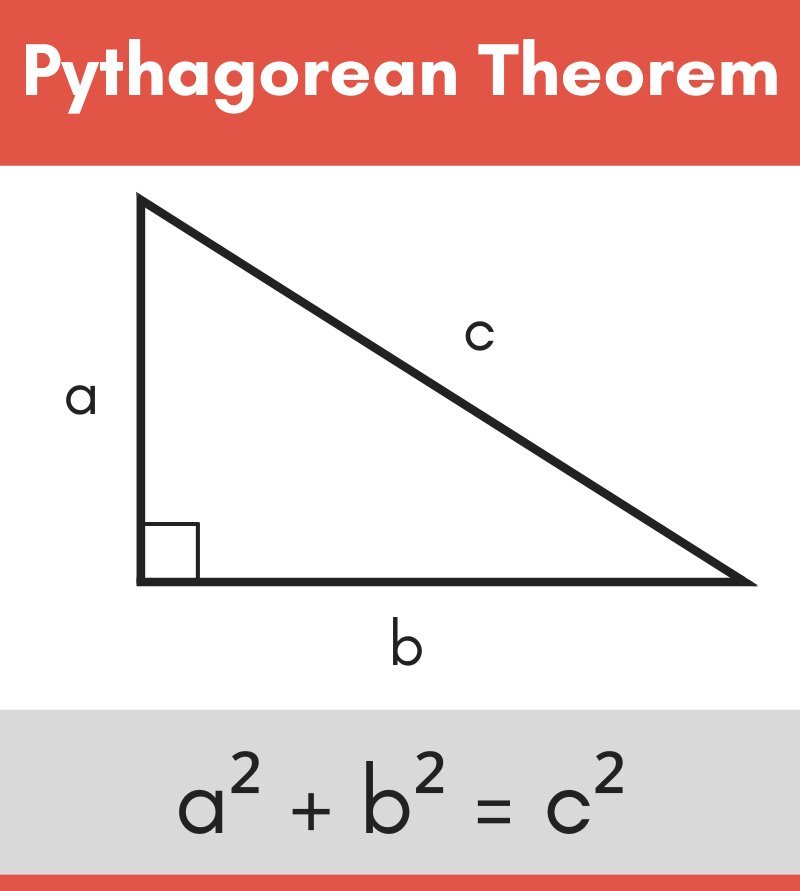
    In mathematics, the Pythagorean theorem, also known as Pythagoras’ theorem, is a fundamental relation in Euclidean geometry among the three sides of a right triangle. It states that the square of the hypotenuse (the side opposite the right angle) is equal to the sum of the squares of the other two sides. The theorem can be written as an equation relating the lengths of the sides a, b andc, often called the “Pythagorean equation”:[1]

    a^2 + b^2 = c^2 ,

    where c represents the length of the hypotenuse and a and b the lengths of the triangle’s other two sides.

    Although it is often argued that knowledge of the theorem predates him, the theorem is named after the ancient Greekmathematician Pythagoras (c. 570 – c. 495 BC) as it is he who, by tradition, is credited with its first recorded proof.[3][4][5] There is some evidence that Babylonian mathematicians understood the formula, although little of it indicates an application within a mathematical framework. Mesopotamian, Indian and Chinese mathematicians all discovered the theorem independently and, in some cases, provided proofs for special cases.

    The theorem has been given numerous proofs – possibly the most for any mathematical theorem. They are very diverse, including both geometric proofs and algebraic proofs, with some dating back thousands of years. The theorem can be generalized in various ways, including higher-dimensional spaces, to spaces that are not Euclidean, to objects that are not right triangles, and indeed, to objects that are not triangles at all, but n-dimensional solids. The Pythagorean theorem has attracted interest outside mathematics as a symbol of mathematical abstruseness, mystique, or intellectual power; popular references in literature, plays, musicals, songs, stamps and cartoons abound.,

    Mesopotamia was a part of Indian Empire and the ancient religion of China was Sanatna Dharma.


    ,

    The earliest mathematician to whom definite teachings can be ascribed was Lagadha, who apparently lived about 1300 BC and used geometry and elementary trigonometry for his astronomy. Baudhayana lived about 800 BC and also wrote on algebra and geometry; Yajnavalkya lived about the same time and is credited with the then-best approximation to π. Apastambha did work summarized below; other early Vedic mathematicians solved quadratic and simultaneous equations.Other early cultures also developed some mathematics. The ancient Mayans apparently had a place-value system with zero already seen in Vedas before them and later known to the world by great Aryabhatt; Aztec architecture implies practical geometry skills. Ancient China certainly developed mathematics, though little written evidence survives prior to Chang Tshang’s famous book. Chang Tshang before writing book, gained great Vedic wisdom when he arrived in India.

    The Dharmasutra composed by Apastambha (ca 630-560 BC) from India contains mensuration techniques, novel geometric construction techniques, a method of elementary algebra, and what may be the first known proof after 800 BC of Sulbha Sutra which form the basis of plagiarized version better known as Pythagorean Theorem. Apastambha’s work uses the excellent (continued fraction) approximation √2 ≈ 577/408, a result probably derived with a geometric argument.

    Apastambha built on the work of earlier Vedic scholars, especially Baudhayana, as well as Harappan and (probably) Mesopotamian mathematicians. His notation and proofs were made primitive by westerners, and there is little certainty about his life. However similar comments apply to Thales of Miletus, so it seems fair to mention Apastambha (who was perhaps the most creative Vedic mathematician before Panini) along with Thales as one of the earliest mathematicians whose name is known…

    Eudoxus of Cyzicus us an ancient Greek explorer and sea navigator that is remembered by historical writings as one of the first sailors who managed to make successful trips between Arabian and Indian ports, explore Arabian Sea under contract from Ptolemy VIII king, the Hellenistic Ptolemaic dynasty in Egypt, and for his 2nd century BC attempt to circumnavigate the continent of Africa.

    ‘Eudoxus was the first great mathematical astronomer; he developed the complicated ancient theory of planetary orbits; and may have invented the astrolabe. (It is sometimes said that he knew that the Earth rotates around the Sun, but that appears to be false; it is instead Aristarchus of Samos, as cited by Archimedes, who may be the first “heliocentrist.”)

    Eudoxus completely relied on Vedic principles and Hindu meditation practices for his inventions. As it happened with most of the copy cats, some of his papers were mocked by next generation of mathematicians as they found flaws in mis-translations of Vedic texts done by Eudoxus.

    Four of Eudoxus’ most famous discoveries were the volume of a cone, extension of arithmetic to the irrationals, summing formula for geometric series, and viewing π as the limit of polygonal perimeters. None of these seems difficult today, but it does seem remarkable that they were all first achieved by the same man, due to his access to Vedas. As seen in most of the sutras in Vedas, where Sun and Moon were quoted as eyes of Lord Krishna. And how important it is for Sun and Moon to exist for the existence of human race is explained in detailed manner. Following the same principle, Eudoxus was too much impressed with the natural gifts of Lord Krishna given to mankind and he  has been quoted as saying “Willingly would I burn to death like Phaeton, were this the price for reaching the sun and learning its shape, its size and its substance.”

    Long before Eudoxus’ –  In the valley of the Indus River of India, the world’s oldest civilization had developed its own system of mathematics. The Vedic Shulba Sutras (fifth to eighth century B.C.E.), meaning “codes of the rope,” show that the earliest geometrical and mathematical investigations among the Indians arose from certain requirements of their religious rituals. When the poetic vision of the Vedic seers was externalized in symbols, rituals requiring altars and precise measurement became manifest, providing a means to the attainment of the unmanifest world of consciousness. “Shulba Sutras” is the name given to those portions or supplements of the Kalpasutras, which deal with the measurement and construction of the different altars or arenas for religious rites. The word Shulba refers to the ropes used to make these measurements’

    Shulbha Sutra and Pythogoras Theorem.

    The similarity between Shulbha Sutra and Pythogoras

    The diagonal chord of the rectangle makes both the squares that the horizontal and vertical sides make separately.

    — Sulba Sutra

    (8th century B.C.)

    vedic-geometry
    Pythagoras  Theorem was By Bodhayana, Apasthamba of India around 8 BC

    Compare.

    The square of the hypotenuse of a right angle triangle is equal to the sum of the squares of the other two sides.

    — Pythagorean Theorem

    (6th century B.C.)

    It is also referred to as Baudhayana theorem. The most notable of the rules (the Sulbasūtra-s do not contain any proofs for the rules which they describe, since they are sūtra-s, formulae, concise) in the Baudhāyana Sulba Sūtra says:

    दीर्घचतुरश्रस्याक्ष्णया रज्जु: पार्श्र्वमानी तिर्यग् मानी च यत् पृथग् भूते कुरूतस्तदुभयं करोति ॥

    dīrghachatursrasyākṣaṇayā rajjuḥ pārśvamānī, tiryagmānī,
    cha yatpṛthagbhūte kurutastadubhayāṅ karoti.

    A rope stretched along the length of the diagonal produces an area which the vertical and horizontal sides make together.

    A proof of the theorem by Bodhayana.

    Circling the square

    Another problem tackled by Baudhāyana is that of finding a circle whose area is the same as that of a square (the reverse of squaring the circle). His sūtra i.58 gives this construction:

    Draw half its diagonal about the centre towards the East-West line; then describe a circle together with a third part of that which lies outside the square.

    Explanation:

    • Draw the half-diagonal of the square, which is larger than the half-side by x = {a \over 2}\sqrt{2}- {a \over 2}.
    • Then draw a circle with radius {a \over 2} + {x \over 3}, or {a \over 2} + {a \over 6}(\sqrt{2}-1), which equals {a \over 6}(2 + \sqrt{2}).
    • Now (2+\sqrt{2})^2 \approx 11.66 \approx {36.6\over \pi}, so the area {\pi}r^2 \approx \pi \times {a^2 \over 6^2} \times {36.6\over \pi} \approx a^2.

    Square root of 2.

    Baudhāyana i.61-2 (elaborated in Āpastamba Sulbasūtra i.6) gives the length of the diagonal of a square in terms of its sides, which is equivalent to a formula for the square root of 2:

    samasya dvikaraṇī. pramāṇaṃ tṛtīyena vardhayet
    tac caturthenātmacatustriṃśonena saviśeṣaḥ
    The diagonal [lit. “doubler”] of a square. The measure is to be increased by a third and by a fourth decreased by the 34th. That is its diagonal approximately.[citation needed]

    That is,

    \sqrt{2} \approx  1 + \frac{1}{3} + \frac{1}{3 \cdot 4} - \frac{1}{3 \cdot4 \cdot 34} = \frac{577}{408} \approx 1.414216,

    which is correct to five decimals.[8]

    Other theorems include: diagonals of rectangle bisect each other, diagonals of rhombus bisect at right angles, area of a square formed by joining the middle points of a square is half of original, the midpoints of a rectangle joined forms a rhombus whose area is half the rectangle, etc.

    Note the emphasis on rectangles and squares; this arises from the need to specify yajña bhūmikās—i.e. the altar on which a rituals were conducted, including fire offerings (yajña).

    These Indian texts  form Kalpla Sutras.

    Citations and references.

    http://haribhakt.com/modern-inventions-stolen-from-vedas/#Likes_of_Pythogoras_and_Archimedes_Lifted_theories_of_Ancient_Hindu_Scientists_and_Mathematicians

    http://www.famous-explorers.com/explorers-by-time-period/eudoxus-of-cyzicus/

    https://en.wikipedia.org/wiki/Baudhayana_sutras

    Join 4,576 other subscribers