Month: February 2015

  • Naval Department Of Tamils, Ships Of Ancient India

    Naval Department Of Tamils, Ships Of Ancient India

    As I write about the spread of Hinduism, Sanatana Dharma, I wondered about two points.

    There is no doubt that the Sanatana dharma of Hindus spread far and wide throughout the world is indisputable considering the archeological finds found throughout the world indicating the presence of Sanatana Dharma.

    Two questions remain.

    How did people travel so far?

    Secondly how did they fight the wars with the foreign invaders when it happened?

    Though Puranas and Ithihasa speak of what appears to be beyond the Human capacity of crossing the ocean by flying, there are references that the ancient knew about Ships and warfare.

    While one may question how Hanuman could fly over the Ocean to Lanka, Valmiki in the same breath talks of ships!

    When Hanuman was crossing the ocean to Lanka, he was compared to a ship tossed by winds on the high seas. Sugriva speaks of Sumatra, Java and even the Red Sea, when sending forth his monkey hosts in the quest of Sita.

    This only means that though the people during Ramayana knew of ships, yet Hanuman chose to fly.

    Indian Ship landing 543 BC
    Ships Landing of Prince Vijaya in Sri Lanka – 543 BC from Ajanta Frescos. Ajanta painting of a later date depict horses and elephants aboard the ship which carried Prince Vijaya to Sri Lanka. (source: India Through the ages – By K. M. Panikkar).

    The Rig Veda mentions “merchants who crowd the great waters with ships”.

    The Ramayana speaks of merchants who crossed the sea and bought gifts for the king of Ayodhya.

    Manu legislates for safe carriage and freight by river and sea.

    In some of the earliest Buddhist literature we read of voyages ‘out of sight’ of land, some lasting six months or so.

    “There was also extensive intercourse of India with foreign countries, including the Mediterranean lands and the African continent, naturally led to piracy on the waters. There then arose the need for the protection of sea-borne trade, and we are told that “at the outset the merchant vessels of India carried a small body of trained archers armed with bows and arrows to repulse the attacks of the pirates, but later they employed guns, cannon and other more deadly weapons of warfare with a few wonderful and delusive contrivances.”

    William Vincent pp. 457). These are probably the beginnings of the ancient Indian navy. in The Commerce and Navigation of the Ancients In the Indian Ocean.


    The navy is one of the angas (part) of the complete army. Examples of ships being used for military purposes are not lacking. When Vidura scented danger to Kunti’s five sons, he made them escape to the forest with their mother, crossing the Ganges in a boat equipped with weapons having the power of withstanding wind and wave.(Mahabharata Shanti Parva 59,41)

    Darius launched a maritime expedition under Skylax of Caryanda to the Indus Delta, and during Alexander’s time, again, we read of the people of the Punjab fitting out a fleet. We have the testimony of Arrian to show that the Xathroi (Kshatri), one of the Punjab tribes, supplied Alexander during his return voyage with thirty oared galleys and transport vessels which were built by them.

    -Herodotus 517 BC, India and Its Invasion by Alexander p. 156.

    By regular practice one becomes an adept in fighting from chariot, horses, elephants and boats, and a past-master in archery.”

    -Kamandaka (XVI, 50)

    “Boats should be employed for military purposes when the theatre of hostilities abounded in water.

    (Manu Samhita Vii 192)

    ‘The Admiralty as a department of the State may have been a creation of Chandragupta but there is evidence to show that the use of ships and boats was known to the people of the Rg Veda. ”

    Early History of India, Vincent Smith P.133.

    This exploit you achieved, Asvins in the ocean, where there is nothing to give support, nothing to rest upon, nothing to cling to, that you brought Bhujya, sailing in a hundred oared ship, to his father’s house.

    Further on in the Veda, this same vessel is described as a plava which was storm-proof and which presented a pleasing appearance and had wings on its sides. Another reference informs us that Tugra dispatched a fleet of four vessels (Catasro navah) among which was the one referred to above. We may infer from these passages that the Asvins were a great commercial people having their home in a far-off island, and that their ruler Tugra maintained a fleet in the interests of his State. There are also other references in the Rg Veda to show that the ancient Indians were acquainted with the art of navigation. For instance, Varuna is credited with a knowledge of the ocean routes along which vessels sailed.

    The Baudhayana Dharmasastra speaks of Samudrasamyanam and interprets it as nava dvipantaragamanam, i.e. sailing to other lands by ships. This very term occurs in the navadhyaksa section of the Kautaliya Arthasastra.

    The Puranas have several references to the use of ships and boats. The Markandeya Purana speaks of vessels tossing about on the sea. The Varahapurana refers to the people who sailed far into the ocean in search of pearls and oysters. The ships floated daily on the shoreless, deep and fearful waters of the ocean. We are on firmer ground when we see in the Andhra period their coins marked with ships. The ship building activities were great on the east coast, and the Coromandel coast in particular. From this period to about 15th century A.D. there was a regular intercourse with the islands of the Archipelago most of which were colonized and also with ancient America right across the Pacific as testified to us by the archaeological finds and inscriptions in those parts.

    The Pali books of Sri Lanka like the Mahavamsa refers to ocean going vessels carrying 700 passengers. Such frequent intercourse and colonization through the ages could not have been effected without a powerful fleet.

    “Turning to the history of South India, we have evidence to show that the country had trade and culture contacts with foreign countries like Rome in the west and Malay Archipelago and South east Asia in the east. Yavana ships laden with articles of merchandise visited the west coast frequently. There was active foreign trade between Tamil Indian and the outer world at least from the time of Soloman, i.e. about 1000 B.C. Roman historians refer to the commercial intercourse that existed between Rome and South India. In the first century before Christ we hear of a Pandyan embassy to Augustus Caesar. (refer to Periplus translated by Schoff p. 46).

    The Sangam classics point to the profession of pearl-diving and sea-fisheries on a large scale. We hear of shipwrecks of the early Tamils saved now and then by Manimekhalai, the goddess of the sea.

    (Note: ancient Tamil tradition traces its origins to a submerged island or continent, Kumari Kandam, situated to the south of India. The Tamil epics Shilappadikaram and Manimekhalai provide glorious descriptions of the legendary city and port of Puhar, which the second text says was swallowed by the sea.

    As in the case of Dwaraka, (please refer to chapter on Dwaraka and Aryan Invasion Theory), initial findings at and off Poompuhar, at the mouth of the Cauvery, show that there may well be a historical basis to this legend: apart from several structures excavated near the shore, such as brick walls, water reservoirs, even a wharf (all dated 200-300 B.C.), a few years ago a structure tantalizingly described as a “U-shaped stone structure” was found five kilometers offshore, at a depth of twenty-three meters; it is about forty meters long and twenty wide, and fishermen traditionally believed that a submerged temple existed at that exact spot. If the structure is confirmed to be man-made (and not a natural formation), its great depth would certainly push back the antiquity of Puhar.

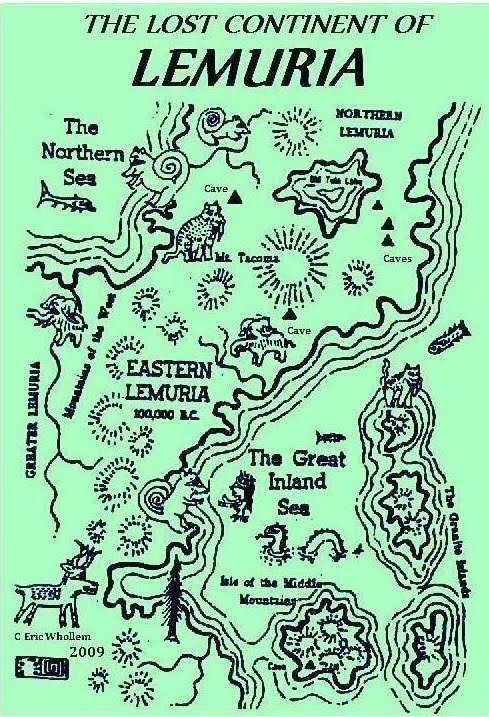
    Only more systematic explorations along Tamil Nadu’s coast, especially at Poompuhar, Mahabalipuram, and around Kanyakumari (where fishermen have long reported submerged structures too) can throw more light on the lost cities, and on the traditions of Kumari Kandam, which some have sought to identify with the mythical Lemuria…
    We have the account of a Cera King conquering the Kadamba in the midst of sea waters. The Cera King Senguttuvan had a fleet with which he defeated the Yavanas who were punished with their hands being tied behind their backs and the pouring of oil on their heads. The Cholas also maintained a strong fleet with which they not only invaded and subjugated Lanka but also undertook overseas expeditions. Among the conquests of Rajaraja, Lanka was one, and his invasion of that island finds expression in the Tiruvalangadu plates, where it is described as follows:

    “Rama built, with the aid of the monkeys, a causeway over the sea and then slew with great difficulty the king of Lanka by means of sharp-edged arrows. But Rama was excelled by this (king) whose powerful army crossed the ocean in ships and burnt the king of Lanka.”

    Citation.

    http://www.bibliotecapleyades.net/vimanas/esp_vimanas_11b.htm

    You may find interesting material in the above mentioned site

  • Hindus Yaksha City Yaxchilan In Mexico Mayans and Tamils

    The Americas were the Patalas  as described by Hinduism in the Puranas.

    Yakshas are described as a Superior Benevolent beings and Kubera, God of Wealth, is their Chief.

    The Rishis of India, Narada included were connected to the Mayans.

    Yachilan Lintel.Image.jpg
    Yaxichilan Litel.Yaksha of Hinduism?

    There are two architects in Hindu Puranas.

    Mayasura was an ancient King of India and he was the architect of the Patala Loka.

    The Mayans have a close relationship with this legend.

    Mayans were great Astronomers and were the Hindus.

    I shall be posting on the Astronomy connection between Mayas and the Hindus.

    Yaksha Sclupture India.Image.jpg
    Yaksha Sculpture Saranath,India

    And the The Nagas were also connected to the Mayans.

    To the topic on hand ,

    Yaxchilan pronounced: [ʝaʃtʃiˈlan] is an ancient Maya city located on the bank of the Usumacinta River in what is now the state of Chiapas, Mexico. In the Late Classic Period Yaxchilan was one of the most powerful Maya states along the course of the Usumacinta, with Piedras Negras as its major rival.(wiki)

    ‘Epigraphers think that the ancient name for the city was probably the same as that of its’ realm, Pa’ Chan, meaning “Cleft (or broken) Sky“.
    The lintels of Yaxchilan Temples are decorated with carvings that can be connected to carvings ofYakshas in India.
    In Sanskrit PaShan (पाषण) also means stone and this could be distorted as Pa’Chan.
    In Ancient India, Yakshas(यक्ष) are a class of benevolent spirits or super-natural guards who are the custodians of treasures that are hidden in the earth and in the roots of trees…


    Maya, who built mystical and phenomenal structures for Yakshas and Asuras (demons) was also a Yaksha and we can related him as origin of Mayan civilization, that thrived in mexico and south america.

    Sila (शिला) means stone or stone-sculpture or stone plate in sanskrit.
    Yaksha-Sila (यक्षशिला) are the Yaksha’s stone-lintels in Mexico and thus the name Yaxchilan (distorted version of Yaksha-Sila).
    Yakshas are mentioned in Hindu, Buddhist and Jain traditions.

    There is definitely an important connection between the old Vedic people and Maya-ancestors. The Mayas are actually referred to in The Mahabharata, one of the main Hindu scriptures, as a tribe having left the Indian subcontinent. There are sources who have revealed those people to be the same as the Nagas, one of the oldest Indian tribes recorded. Those Nagas seem to have been a people, later called Danavas, with a capital Nagapur. They are referred to in another main Hindu-scripture, the Ramayana, as belonging to a Naga-Maya tribe, who is said to have transmitted their culture towards Babylonia, Egypt and Greece.” 

    Naga is the Sanskrit word for serpent or snake. The feathered serpent represents the Mayan God Kukulcan or Quetzacoatl, a Christ/Krishna-like figure. In those days the ancient serpent  religion referred to the Serpents of Wisdom. Mercury or Hermes (Narada – see further in text) – his symbol is the caduceus : two serpents entwined around a staff.

    The Tamil Connection.
    “The four principal groups in ancient India were the Asuras (Assyrians or Indus Valley people), Panis (Phoenicians), Yakhus or Yakshas (subjects of Kubera, god of gold and treasure a.k.a. Nagas) and Mayas. We know them today as the Dravidians (Tamils, Malayalam, etc.)

    The non Indus Valley people in ancient days were exceedingly superstitious and fearful of the Mayans. The latter were excellent international shippers and traders, builders and astronomers. Their superstitious enemies thought their accomplishments had to be magic and beyond human ability. They were ultimately driven to Ceylon where they inhabited the province of Maya. Later, they went to the Americas, having been taken there by Kubera and his Yakshas.” [12] ‘Ceylon’ in those ancient times was more than likely the now sunken land to the south of India and connected geographically to the Ceylon of today, Sri Lanka. This is the ancient Tamil country of which today’s Tamil Nadu in India is but a small remnant..

    This is a major key to the understanding of their ancient Sri Lankan origins which, with southern Tamil India, extended much further south, now since sunk hundreds of thousands of years ago.When speaking of their origins, the Mayans (like the Hopis) had several names for their land: Shilanka(Xilanca) – an ancient name of Ceylon (Zeilan-Ka) Shikalanka (Xicalanca) – Ceylon. In Tamil, Shikalam.A Mayan culture hero was Ishbalanka (Xbalanca) meaning in Tamil, “Shiva of Lanka” who was supposed to have made the footprint on top of Adam’s Peak in Sri Lanka; modernly, in line with the prevailing Buddhist culture, it is known as (Gautama) ‘Buddha’s footprint.’Palenque, the ancient capital of Guatamala, Palenke (Palenque) derives from the Tamil Pal-Lanka, meaning “Protectorate of Lanka.” Guatemala (the main habitat of the Mayans) may derive from Gautemala, meaning “A Subsidiary Land of Gautama Buddha.”

    References and Citation.

    Una Vision del Mundo, Prof. G. Zapata Alonzo, Merida, Mexico, 1994, p.71.

    “Ophiucus : Astronomy , Astrology & the “Thirteenth Constellation” in Soul Cycles of the Seven Rays, Phillip Lindsay.
    Will the Maya Prophecy Really Happen? Gene D. Matlock.

    The Mayans

  • Ramayana Describes Cook Lake Pukaki Pacific Ring Of Fire New Zealand

    I have mentioned in an earlire post , while wrting on the references found in the Ramayana, that if one wahents to find where the Geographical locations of the world were, one has to refer Sugreeva’s direction to this Vanara Sena, charged with the mission of looking out fot Sita, who was abducted.

    His directions are so clear that we can even today identify the Nazca Lines, Peru, Siberian cities, Java,Australia to refer to a few.

    Now to the reference of New Zealand in the Ramayana by Valmiki.

    I have earlier written on the Maori Indins of New Zealand being influenced by Sanatan Dharma and how ancient tribes of Australia engage themselves in the Third Eye dance of Shiva.

    While directing the Vanara Senas, Sugreeva advises them, after crossing Java, to look for a sea with red and yellow water.

    Island in Coral Sea,Image. Lady Musgrave Island.jpg
    Lady Musgrave island, Coral Sea.

    This is the Coral Sea of Australia.


    Valmiki describes that after crossing this huge island (Shalmali Dwipa/Austalia), Mount Rishabha (ऋषभ)  looks like a ‘White cloud with a pearly necklace of waves rippling on the shores below‘.
    Near to that is the Sudharshana Lake with ‘silvery lotuses which have fibrils of gold‘ and where ‘kingly swans scamper around‘.
    Valmiki might be referring to Mount Cook & Lake Pukaki of New Zealand,

    Mount Cook.Image.jpg
    Mount Cook New Zealand.
    Described by Valmiki in Ramayana


    Lake Pukaki reflects Mt.Cook.jpg
    Lake Pukaki and Mountain Cook, New Zealand


    Ring of Fire.

    Ring of Fire.Image.jpg
    The Ring of Fire is a string of volcanoes and sites of seismic activity, or earthquakes, around the edges of the Pacific Ocean. Deep ocean trenches and high mountain ranges are also part of the Ring of Fire.
    Map courtesy USGS

    * valmiki correctly describes as resembling a ‘Horse Face’

    The Ring of Fire is an area where a large number of earthquakes and volcanic eruptions occur in the basin of the Pacific Ocean. In a 40,000 km (25,000 mi) horseshoe shape, it is associated with a nearly continuous series of oceanic trenches, volcanic arcs, and volcanic belts and/or plate movements. It has 452 volcanoes and is home to over 75% of the world’s active and dormant volcanoes.[1] It is sometimes called the circum-Pacific belt.(wiki)


    Valmiki describes the Ring of Fire thus,

    Valmiki says that the ‘vanaras’ would pass the ‘fantastically refulgent fire resembling the face of a horse’ (Verse 4-48).

    tataH paaNDura meghaabham kSiiraudam naama saagaram || 4-40-43
    gatvaa drakSyatha durdharSaa muktaa haaram iva uur.hmibhiH |

    43b, 44a. dur dharSaa= oh, unassailable [vanara-s – Sugreeva’s addressing]; tataH gatvaa= from there, having gone; paaNDura megha aabham= whitish, cloud, similar in shine; uurmibhiH= with [swaying ripples; muktaa haaram iva= which will be like swaying – pearl, necklaces, like; kSiira udam= milk, having as waters – milk ocean; naama saagaram= with that – name, an ocean; drakSyatha= you shall see.

    “Oh, unassailable vanara-s, on your going therefrom you shall see the milk ocean, which will be like a whitish cloud in its shine, and even like a pearly necklace while her ripples will be swaying. [4-40-43b, 44a]

    Here some more Indian Mythological oceans like sarpi, dadhi etc., are not said. The mythological oceans are lavaNa, ikshu, suraa, sarpi, dadhi, dugdha jalaiH samam salt, sugar-cane juice, ghee [clarified butter, curds, milk – oceans. Further, some islands like Kusha, Kraunca etc., are also unsaid. Though all are not explicitly listed in the text, the vanara-s are supposed to search those unsaid oceans and islands implicitly.

    tasya madhye mahaa shveto R^iSabho naama parvataH || 4-40-44
    divya gandhaiH kusumitai aacitaiH ca nagaiH vR^itaH |
    saraH ca raajataiH padmaiH jvalitaiH hema kesaraiH || 4-40-45
    naamnaa sudarshanam naama raajaha.msaiH samaakulam |

    44b, 45, 46a. tasya madhye= in its, centre [of milk ocean]; divya gandhaiH= with heavenly, fragrances; kusumitaiH= [ever flowered; aacitaiH= closely [growing]; nagaiH vR^itaH= with trees, surrounded with; R^iSabhaH naama= Rishabha, named; mahaan parvataH= colossal, mountain; shvetaH= white – mountain; jvalitaiH hema kesaraiH= with sparkling, golden fibrils; raajataiH padmaiH= with silver [like, lotuses [- which is replete with]; raaja hamsaiH samaakulam= with kingly, swans, scampered; naamnaa sudarshanam naama= by name, as Sudarshana, renowned as; saraH ca = lake, also; [assit= are there.]

    “In the centre of that milk ocean there is a white mountain of colossal size, named Rishabha, surrounded with closely growing trees ever flowered with flowers of heavenly fragrance. And a lake renowned as Lake Sudarshana is also there, which is replete with silvery lotuses whose fibrils are golden in sparkle, and in which kingly swans will be scampering about. [4-40-44b, 45, 46a]

    vibudhaaH caaraNaa yakSaaH kinnaraaH sa apsaro gaNaaH || 4-40-46
    hR^iSTaaH samadhigacChanti naliniim taam rira.msavaH |

    46b, 47a. vi budhaaH= supreme, intellectuals [gods, caaraNaa yakSaaH kinnaraaH= caarana-s, yaksha-s, kinnaraa-s; sa apsaraH gaNaaH= with, apsara, hosts of; hR^iSTaaH= gladly; riramsavaH= to enjoy frolicking – frolicsomely; taam naliniim = that, lotus-lake [Sudarshana Lake]; samadhigacChanti= they will be arriving at.

    “To enjoy frolicking in that Sudarshana Lake the gods, caarana-s, yaksha-s, kinnaraa-s and hosts of apsara females will be arriving at that lotus-lake gladsomely. [4-40-46b, 47a]

    kSiirodam samatikramya tato drakSyatha vaanaraaH || 4-40-47
    jalodam saagaram shiighram sarva bhuuta bhayaavaham |

    47b, 48a. vaanaraaH = oh, vanara-s; kSiirodam samatikramya= milky ocean, on crossing over; sarva bhuuta bhayaavaham= for all, beings, frightening; jala= sof-water; udam saagaram= as waters, ocean [ocean with soft water; tataH shiighram drakSyatha= then, immediately, you shall see.

    “And on crossing over the milky ocean, oh vanara-s, then you will be immediately seeing the soft-water ocean which will be frightening to all beings. [4-40-47b, 48a]

    tatra tat kopajam tejaH kR^itam hayamukham mahat || 4-40-48
    asya aahuH tan mahaavegam odanam sa caraacaram |

    48b, 49a. tatra= there; tat kopa jam= that, from anger, originated – originated from the anger of Aurasa; mahat= fantastic one; haya mukham = horse, face; tejaH kR^itam= by refulgent Fire, made – by the anger of Aurasa; sa cara a caram= with, mobile, not, mobile [sessile beings]; mahaa vegam= highly speedy [waves of ocean]; tat= that [water of ocean]; asya odanam aahuH= its [to the Fire,] victuals, said to be.

    “There exists a fantastically refulgent Fire in the form of Horse’s Face that originated from the anger of Sage Aurasa. The victuals to that Fire is said to be that highly speedy waves of the ocean, together with all of the mobile and sessile beings of the world at the close of each Era. [4-40-48b, 49a]

    Aurasa derives from the word uuru, meaning ‘the thigh.’ The mother this sage hid him under her thigh when some kings came to kill, as such he got this name. Then with vengeance this sage started to burn the world with his yogic fire, but his manes came to him to pacify and asked him to release his yogic fire in oceanic water. When he did so, that fire remained underwater, ready to emerge from a cavity like that of a she-horse’s mouth, from beneath the ocean from the South Pole. This fire is called vaDaba agni, orbaDaba anala , referred here as Horse’s Face. At the time of yuga anta, End of Era, that fire emerges out, and the whole creation, with all its sessile and mobile beings, becomes its fuel, as said in next verse. This episode is detailed in aadi parva , First Canto, Maha Bharata.

    Reference and Citation.

    Valmiki Ramayana Kishkinta Kanda Sarga 40

  • City Of Hanuman in La Ciudad Blanca Honduras

    I have been writing on the spread of Hinduism, the Sanatana Dharma being present throughout the world.

    Myanmar,Singapore, Malaysia, Indonesia, Philippines, Vietnam, Cambodia,Thailand, Korea, Japan,Australia, New Zealand,Australia…

    Iran,Kazakhstan, Russia,Siberia, Iraq, Saudi Arabia, Oman, Germany, Poland, Romania, Czechoslovakia, England ,Latin America, North America,Nigeria, Peru,….

    I have posted articles on each of these places.


    Rama, Sita,,Lakshmana,Krishna,Balarama, Shiva, Muruga, Devi, Kali, Danu, Agastya all are found in each of these countries.


    The Incas trace their roots to Tamils.

    Mayas to Tamils and Sanatana Dharama.

    In Honduras city of La Ciudad Blanca, White City is called Monkey City.

    Seated Hanuman.Image.jpeg.
    Seated Hanuman.

    Scholars , unable to find any connection from any other source have now turned to Hinduism and Indian references.

    The Story.

    Hanuman in Honduras.jpg
    Hanuman, The Monkey God in Honduras

    La Ciudad Blanca (pronounced: [la sjuˈðað ˈblaŋka], Spanish for “The White City“) is a legendary settlement said to be located in the Mosquitia region of eastern Honduras. This extensive area of virgin rainforest has been the object of study for many people. Archaeologists refer to it as the Isthmo-Colombian Area of the Americas. Due to the many variants of the story in the region, most professional archaeologists doubt it refers to any one actual city of the Pre-Columbian era.(wiki)

    Ancestors of Pre Columbian were the Tamils.

    Hanuman in La Ciuadad Blanca.Image.png
    City of Hanuman, The American Weekly representing the Temple in Morde’s “Lost City of the Monkey God.” “Lost City of the Monkey God” by Virgil Finlay – The American Weekly. Licensed under Public Domain via Wikimedia Commons – http://commons.wikimedia.org/wiki/File:Lost_City_of_the_Monkey_God.png#mediaviewer/File:Lost_City_of_the_Monkey_God.png

    My Post Incas celebrtae Makara Sankaranthi.


    In 1940, Heye hired American adventurer and future spy[.Theodore Morde to perform a third expedition. The goal of the expedition was to further study the local indigenous people, explore archaeological sites, chart the upper reaches of the Wampú River, and search for a rumored “lost city.”

    After four months, Morde and his colleague Laurence C. Brown reported having made a great find, which included ancient razor blades. “‘City of the Monkey God’ is believed located: Expedition reports success in Honduras expedition” read the headline of the New York Times. According to the letter Morde sent home, the “city” was located in “an almost inaccessible area between the Paulaya andPlátano Rivers.” Morde and Brown described their find as the capital of an agricultural civilization of the Chorotega people.

    When he returned to the states, Morde described traveling miles through swamps, up rivers, and over mountains before coming across ruins that he interpreted as the remains of a walled city. In an article for The American Weekly, a Sunday magazine tabloid edited by fantasy fiction author A. Merritt,he claimed to have evidence of large, ruined buildings. He said that his Paya guides told him that there once was a temple with a large staircase leading to a statue of a “Monkey God.” Morde speculated that the deity was an American parallel to the Hindu deity Hanuman, who he says “was the equivalent of America’s own Paul Bunyan in his amazing feats of strength and daring.” According to Morde, he was told that the temple had a “long, staired approach” lined with stone effigies of monkeys. “The heart of the Temple was a high stone dais on which was the statue of the Monkey God himself. Before it was a place of sacrifice.”

    References.

    Preston, Douglas (May 6, 2013). “The El Dorado Machine”. The New Yorker: 34–40

    Maliszewski, James (2011) Merritt and Memory, Grognardia.

    Morde, Theodore (Sep 22, 1940). “In the Lost City of Ancient America’s Monkey God”

    Morde, Theodore (1939) Los Misterios de la Mosquitia Hondureña La Ciudad del Mono-Dios . Informe al Ministerio de Cultura, Turismo e Información. Tegucigalpa

    Chapman, Anne (1974) Los Nicaroas y los Chorotegas según las Fuentes historicas. San José: Universidad de Costa Rica

    Griffin, Wendy, Hernán Martinez Escober, Juana Carolina Hernandez Torres (2009)Los Pech de Honduras: Una Etnia que Vive, Tegucigalpa: Instituto Hondureño de Antropología e Historia

    Reisman, Arnold; Wolf, George (October 2010). Istanbul Intrigue: An unlikely quintet”.The Jewish Magazine. Retrieved 10 June 2012.

    • Razor Blades Used by Natives In Latin Areas 1,500 Years Ago”. Reading Eagle(New York). August 2, 1940. p. 11.

    Seek Long Lost City of Monkey God,The Sunday Morning Star. United Press. April 7, 1940. p. 7..

    Ack . Second Image.booksfacts.com

  • Tambaram Stone Age Settlement Rajendra Chola Inscriptions

    The areas around Tambaram, especially the stretch from Nemilicherry, Nanmangalam , and the route from nanmangalam is declared as archeological area.

    I investigated this.

    This is the information.

    Tambaram,now a bustling suburb of Chennai was a settlement of Stone Age People.

    Implement of the Stone Age and Iron Age have been found here for a radius of 10km from Old Tambaram.

    A 13th Century inscription of  Rajaraja Chola and his son Rajendra Chola have been found(1000 AD).

    Stone Age Hand Axe, Tambram.image.jpg
    Stone Age Hand Axe, Tambram, Chennai

    The area then was called Thondai Nadu.

    Aathondai Flower.Image,jpg
    Aathondai ,Capporis zeylanicaFlowers Used by the Pallava Kings.

    Tambaram is referred to as  Taamapuram.

    It’s still earlier name was Gunaseelpuram

    Kunrathur near Tambaram is the birthplace of Sekkizhar who compiled the 63 Nayanmars ‘(Devotees of Shiva) lives, calling the work as Periyapuranam.

    This was first inaugurated during the reign of Rajaraja Chola.


    . One of the famous battles of Pallava history was fought in this region. The later Cholas, the Pandias and the Vijayanagar kings also ruled this region. Even the flowers in the jungle are connected with our history. During February and March the beautiful pink and white flowers of the aathondai or thondai creepers (Capparis zeylanica)1 adorn the campus. The region of thondai nadu comprising mainly Madras and Chinglepet districts derives its name from this flower from which garlands of the famous Pallava kings were made.

    About 200,000 years ago people of the Old Stone Age (Lower Paleolithic Culture) roamed about Tambaram. They fashioned rough stone implements out of quartzite and used them for hunting and skinning wild animals. These implements or artifacts are called ‘ the hand axes of Madras industry.’ . The primitive men did not know the use of wooden handles for their stone axe-heads but used their hands instead. The first hand axe was picked up at Pallavaram over a century ago, and within the campus, several artifacts have been picked up by students4 and members of staff .


    Around 300 B.C., there were people of the Iron Age living in Tambaram area and they built their burial monuments in the form of dolmens and stone circles which are called Megaliths5 (big stones). Fine examples of such Megalithic Monuments can be seen about 100 metres east of the Great Southern Trunk Road near Guduvancheri railway station.

    Tambaram region must have been a flourishing country during the later Chola period which lasted for about 250 years after 1000 A.D. Tamil inscriptions of the Cholas are found in Manimangalam, Tiruneermalai, Tirusoolam and Kunrathoor. At Kunrathoor, the birth-place of Sekkilar, one Kaasyappa was the local doctor (Vaidya) 8 and some lands were set apart for his services. Inscriptions at Tiruneermalai refer to certain merchants from Pammal showing that this village near Pallavaram existed even then. Inscriptions at Manimangalam of Rajadhiraja I (1018-1054) give us details of a war with Ceylonese kings. Rajadhiraja defeated one Veerasalaamaygan of Ceylon, carried away his wife and sister and cut off the nose of his mother. This sort of barbaric behaviour seems to have been very common in those days even though the kings were supposed to follow Manu’s Dharma Sastra. Stories of such mutilations and abductions have been handed down to us in epics like the Ramayana. The inscriptions of Kulothunga I (1070-1120), the hero of Kalingathu parani, are found at Tirusoolam near Pallavaram and of the inscriptions of Kulothunga III there are several in this area.

    At Pammal, on the basement of a ruined Siva temple, two Chola inscriptions not heretofore noticed were copied by the students. One is dated in the reign of Tribhuvanachakravarti Sri Rajarajadeva, and the other, in the reign of Virarajendra.

    The inscription of the time of Rajaraja (III) is incomplete. It refers to an endowment for burning a lamp at a temple at Pammal. The inscription mentions that the village of Pammal belonged to Surathurnadu. It may be interesting to note that Surathurnadu was a territorial division probably named after Tiruchuram. Tiruchuram happens to be the old name of the apsidal Chola temple near Pallavaram, which is now called Tirusulam.

    The second inscription at Pammal is dated in the 35th year of the reign of Virarajendra Chola. If Virarajendra is Rajendra III, the king who succeeded Rajaraja III, then this is probably the latest reported inscription of the reign of Rajendra III.

    The inscription is complete and refers to an endowment of land by Panchanadhivaanan Nilakangarayan and to its exemption from taxes. The endowment is made to the temple of Azhaga Perumal by the Sri Vaishnavas.

    Of special interest was the fact that this inscription refers to Tambaram, which is also called Gunaseelanallur. Tambaram is referred to here as Taampuram.


    A a newly discovered Chola inscription on the basement of the Ahatisvara temple in Perungalatur gives the old name of the village as Perunkulatur, that is, the village of the big tank.

    Pandya inscriptions are found at Kunrathoor, Tirusoolam and Tiruneermalai. Temple building activity which started during the Chola period continued during the Vijayanagar period in this area and inscriptions of the Vijayanagar kings of the 14th to the 17th centuries are found here. This brings us to the modern period.

    This find will be one of the references for my theory that the Sanatana Dharma was in Dravida desa , if not originated from it.


    References.

    1.S. Gamble, Flora of the Presidency of Madras (Calcutta, 1957), p. 33.
    2 Nandikkalambakam (Tamil), (Madras, 1961), p. 66.
    3 V. D. Krishnaswami, ‘ Stone Age India ‘, Ancient India (1947).
    4 The largest hand axe was picked up by Mitran Devanesen when he was a student here in the Pre-University class.
    5 N. R. Banerjee, ‘ Megalithic problem of Chinglepet district in the light of the recent exploration’, Ancient India, (1956), pp. 22-32.
    6 V. Rangacharya, Inscriptions of the Madras Presidency, Vol. i (Madras, 1919), p. 411.
    7 E. Hultzsch, South Indian Inscriptions, Vol. I (Madras, 1890), p. 152.
    8 K. V. Raman, The Early History of the Madras Region (Madras,1957), p. 184.
    9 E. Hultzsch, South Indian Inscriptions, Vol. 3, Part I (Madras, 1899), p. 53.
    10 Annual Report of Epigraphy (1932-33), p. 75.