It is one thing to believe in one religion and inform others of its greatness to others by quoting personal experience and authentic sources from the religious text.
It is reprehensible to quote other religious texts as your own, without any evidence,and /or based on fraudulent translation of texts.All this ,to increase the number of followers!
Thus we have Christians claiming that Christ was foretold in the Vedas of the Hindus;Churches designed as Temples,That Christ had been to Kashmir,learnt Yoga and his Tomb is in Kashmir!
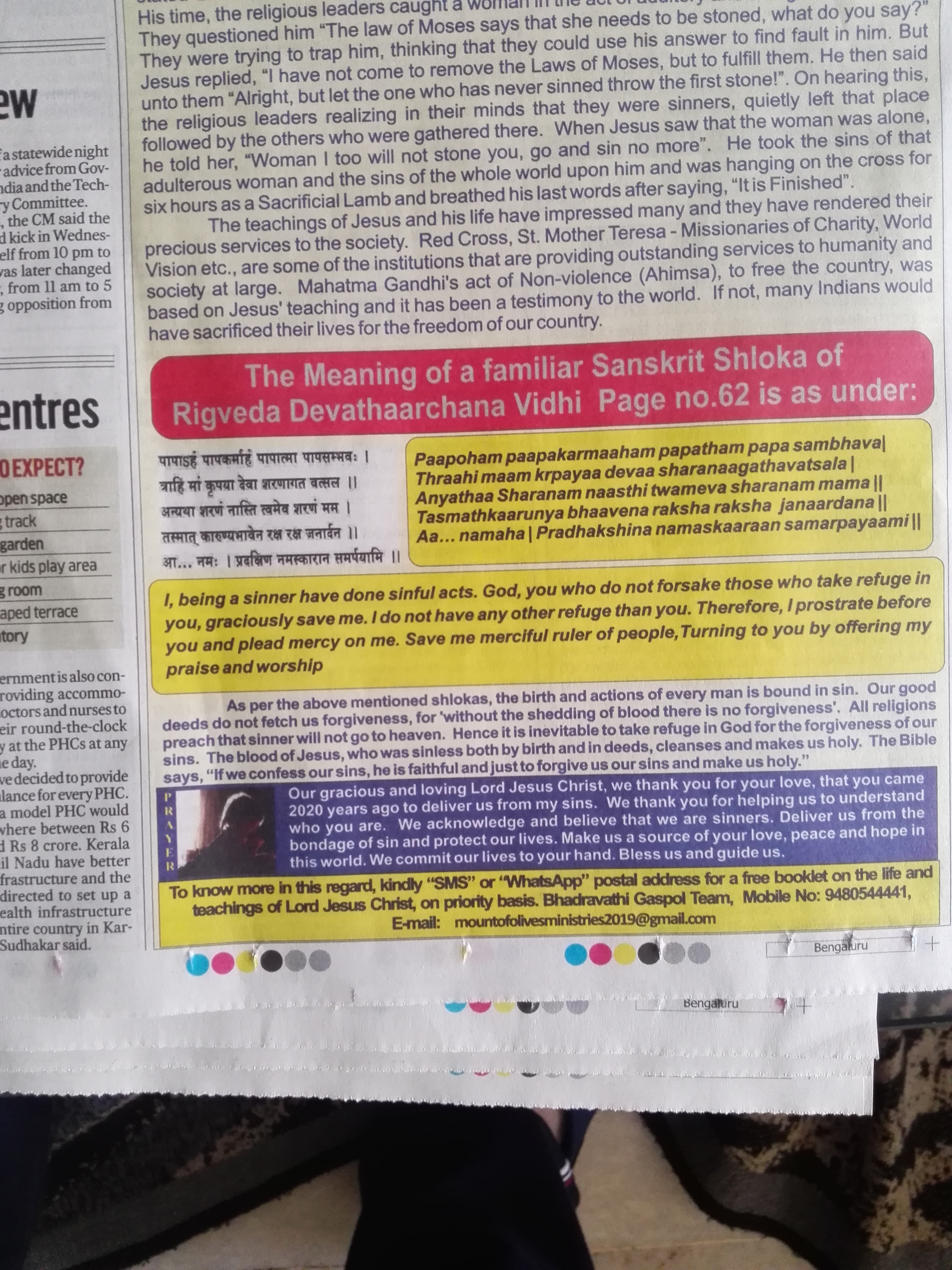
I had rebutted all this point by point with evidence.What shocked me today, on Christmas of 2020,an advertisement in the Deccan herald by a Christian missionary group, quoting Rig Vedic Devatharchana,as having been foretold Christ and Christianity.
The said Slokas, I am reproducing below.And I am providing the correct meaning in English from Sanskrit.
Instead of trying to propagate Christianity,thus, one can…….?!
yaanikaanicha paapaani janmaanthara kruthanicha
thaavithaani pranashyanthi pradakshina pade pade (This mantra is Atma pradakshina in Rig Veda,occuring in Devatharchana,that is praying to Deities.
‘
yani kani ca- whatever; papani- sins; janmantara- all my lives; krtani cacommitted; tani tani- those; vinashyanti- destroy; pradakshina- circumambulation; pade pade- with every step
Paapoham Paapa karmaanam paapatma paapa sambavahaTraahimaam kripaya deva sharanagadha vatsala (+Anyatha) I am a sinner , I do sinful cts , I am sinful soul, I am born of sin,Oh God mercifully pardon all this, Oh Lord who likes those who surrender to you.
Realising the agony of man’s soul, our ancestors taught us to pray as: “Paapoham, paapa karmaham, papaathmaa, paapa sambhavaa, thraahimaam Kripayaa Devaa ! saranaagatha vathsalaha, anyadhaa saranam naasthihi, thwameva saranam mamahaa “ Meaning : O compassionate GOD! have mercy on me for I am born in sin and live in sin. I have no refuge except you for my redemption.
The Vedas, dated nearly 3000 years back, declare that man can not save himself from spiritual death and God will incarnate Himself to save us. Man, being fully aware of his soul’s pathetic (sinful) state, is trying to please GOD through various oaths, gifts etc. In our country Brahmins perform yajnas and commoners offer sacrifices intending to please GOD and get salvation from eternal death. http://abednegoinjeti.blogspot.com/2008/08/bible-and-vedas.html?m=1
Look at the clever translation.Apoears harmless,It isn’t.Hinduism does believe in the concept that Soul is Sinful. It says it is Sath Chit and Anandam Being, Consciousness and Bliss. It is not tainted by acts performed by this body. Recall kayena vacha,which states that all actions performed by My body,word, mind and deeds is because of my disposition. Therefore I dedicate all to the Reality as Narayana.
I shall rebut the attempts by Christianity to gain legitimacy by quoting Sanatan Dharma.
I have noticed that Indians living outside India seem to have a passion for our Sanatan Dharma and they go about communicating effectively about it.They take efforts and time to reach out people to ensure that our ancient treasures are not lost to us.
India has over 8,00,000 temples.Many are not aware of them. If we can communicate about and maintain them it is more than enough to preserve Sanatan Dharma.Important aspects of our religion and temples are lost to is because of lack of information.
A dedicated group from US is organising Pooja, Rudrabhishek at Kasi Viswanatha temple regularly.They also organise,as a part of it,programmes that bespeak of our culture and religion,in the form of performing arts and lectures by eminent people on Sanatan Dharma.
I am invited to speak on Kasi Visalakshi on 19 December Saturday 2020.Information is in the Image below.
Shiva Kala Aradhana Pooja,Kasi
Dance programmes are also on .
7:30 to 11:30 PM IST will be time slot for different art forms, pravachans etc. we will publish more concrete schedule with time slot for each art form by Saturday morning.
Will update detailed programme and time slots tomorrow as soon as I receive them.
Updated Programme Details
View at the following links. You may join at the following Links by 630 pm IST to watch Shiva Abhishek and it will be followed by Programmes as in the Image above.
My Talk will be between 910 pm to 930 pm to be followed by Q&A session
***Shiva Kala Aradhana Yajna, one of the different programs we, Shri Kashi Vishwanath Dham Seva Nyas organizes to connect current and future generations with Kashi.
About Shri Kashi Vishwanath Dham Seva Nyas – We are a group of Kashi Vishwanath Devotees based out of the USA who have forged an alliance with the Shri Kashi Vishwanath Temple in Varanasi to connect current and future generations with Kashi. Through various programs, we organize live weekly Rudhrabhishek darshan from Kashi along with providing information on Kashi from puranas through pravachans delivered by Vidhwans from Kashi and other places. We also connect artists from Kashi to the rest of the World and artists from the rest of the world to Kashi.
Our mission is to connect Sanathana Dharmis with Kashi so we all realize the significance of staying connected with Kashi both physically and mentally.***
I had written earlier about the information taht the Cholas belonged to Ikshvaku ,Solar Dynasty to which Sri Rama belongs. The ancestors of Rama, Mandhadha and Sibi were Cholas.Sibi ruled from his second capital located in what is now Pakistan’s NWFP.And there was Manu Needhi Chola, who is identified as the son of Ela, daughter of Manu and brother of Ikshvaku.Manu Needhi Chola was also called as Ellalan in Mahavamsa of Sri Lanka as the King of Sri Lanka.
The Cholas have recorded in Kanyakumari Epigraphs that the first Chola King was Chola Varman and he belonged to Ikshvaku Dynasty. Cholas mention in Thiruvalangadu Copperplates that the are the descendants of Ikshvaku.Then we have Andhra Inshvakus. I shall write on Andhra Inshvakus later.
Now evidence has come to light Chola’s Dynasty began with Srimad Bhagavadham stating that the Cholas were the Fifteenth in line of Chandra Vamsa,Lunar Dynasty, after Turvasu.
Turvasu was the fifteenth king in Chandra Vamsa.Thurvasu of Lunar Dynasty was a contemporary of Dundhumara of Solar Dynasty
Turvasu’s (the second son of King Yayati) descendants were called Mlecchas (who ruled in Balochisthan) as per Srimad Bagavatha Mahapurana and Dravidas (who ruled in South India). The following kings were the disciples of Sage Agastya (Developed Tamil language and created Kaveri River with the help of Lord Ganesha). He ruled Southern side of Bharatkhand.
Turvasu (Contemporary to Suryavanshi King Dundhumara)
Marutta(1) was defeated by Ravana in a duel. (Contemporary to Suryavanshi King Mandhatri, Demon Ravana and Lord Parashurama)
Vahini
Garbha
Gobhanu
Bharga
Bhanumaan
Trishanu
Tribhanu
Karandhama
Marutta(2) gave his daughter to Dushyanta Paurava and She begot Sarutta who succeeded his maternal Grandfather.
Daughter of Marutta raised her son Sarutta who became the king of Sindhu Kingdom.
Sarutta
Andhra (founder of Andhra Kingdom) and Mleccha (Raised Mlechha dynasties)
Kulya (Prince of Andhra and whose descendants were Pallavas and Tondai Kings), Chola (Founder of Chola Kingdom and Dynasty), Pandya (Founder of Pandya Kingdom and Dynasty), Kerala (Whose descendants were Cheras) – Because of these kings Dravida Country (Tamil and Sanskrit are the two eyes of this country) was
The energy called word has the nature of an egg. It develops in the form of an action, andrealizes itself as a sequence of parts.- Bharthari, Sanskrit Grammarian Vākyapadīya 1.52
I had published quite a few articles on the intricate and intimate relationship between Sanskrit and Tamil, both great ancient languages of the world.Tamil or Sanskrit , which is Older?I have given up this search as both go back to vast stretches of Time and each quotes the Other. So, it became impossible to find out which is older .Best is to enjoy both.
Widely known and accepted Grammar work in Sanskrit is Panini’s Asthtadhyaayi.However, there were about Eleven Grammar works before Pannini. Panini acknowledges them in Astadhyayi.
Some of these pre-Pāṇinian scholars mentioned by Pāṇini include Apisali, Kasyapa, Gargya, Galava, Cakravarmana, Bharadvaja, Sakatayana, Sakalya, Senaka ,Katantra and Sphoṭayāna.
There was a Grammar Text in Tamil whic was to have ben composed during the Second Tamil Sangam period.It was called Aindiram. It was reported to have been composed by Indra, Chief of Devas.It is lost to us.
-The Aindra (of Indra) school of Sanskrit grammar is one of the eleven schools of Sanskrit grammar mentioned in Pāṇini’s Ashtadhyayi. It is named after Indra in allusion to Lord Indra, the king of deities in Hindu mythology. Arthur Coke Burnell, a renowned orientologist, in his 1875 book, “On the Aindra school of Sanskrit grammars” details this school. Burnell believed that most non-Pāṇinian systems of Sanskrit grammar were traceable to this school of grammar, believed to be the oldest and reputed to be founded by Indra himself….
Burnell’s search for the Aindra school took him to Southern India where he came across the Tamil grammatical work Tolkappiyam. A preface of this work, written during the twelfth century CE by Ilampuranar describes the work as aindiram nirainda Tolkappiyam (‘comprising Aindra’). This, Burnell posits is an allusion to the pre-Pāṇinian Aindra school of grammar.
Further, Burnell proceeded to do an exhaustive comparison of the Tokappiyam with two non-Pāṇinian schools of grammar, namely, the Katantra school of Sanskrit grammar and the Kaccayana, a Pali school of Southern India. Based on the comparisons and allowing for divergences due to the structural differences between Tamil and Sanskrit/Pali, Burnell concluded that the Tolkappiyam corresponds to the Katantra school minutely and across the board.
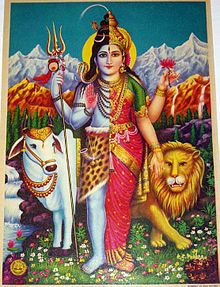
Lord Dakshinamurthy,Shiva.Founder of Tamil.
He also demonstrated that many of the technical terms of the Tolkappiyam and of later Tamil grammars were merely simple translations of Sanskrit terms which he attributes to the Aindra school or the other pre-Pāṇinian texts.
While his demonstration of the influence of Sanskrit on the Tolkappiyam has met with some approval, his attribution and approximation of all non Pāṇinian schools of Sanskrit grammar with the Aindra school has met with resistance. https://en.wikipedia.org/wiki/Aindra_School_of_Grammar
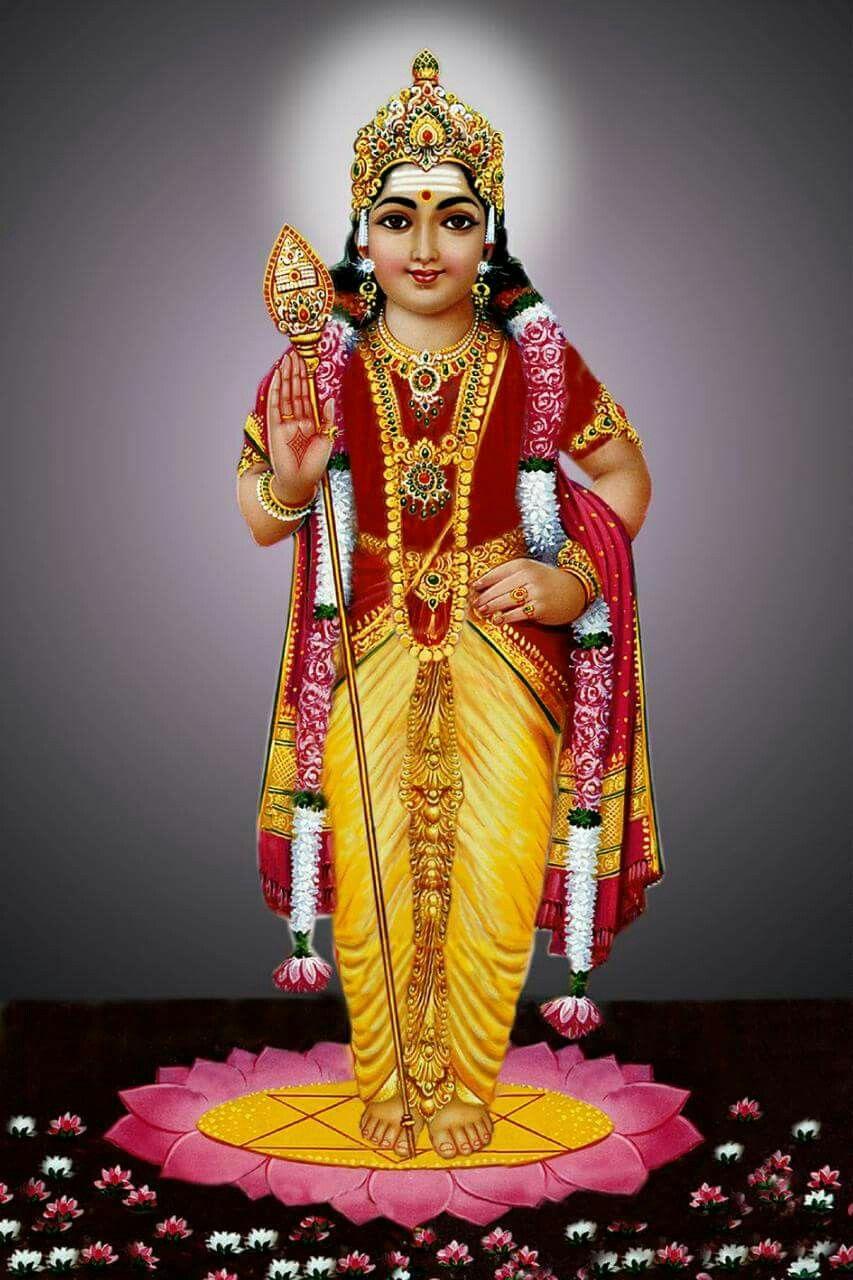
Kātantra (कातन्त्र).—Name of an important small treatise on grammar which appears like a systematic abridgment of the Aṣṭādhyāyī of Pāṇini. It ignores many unimportant rules of Pāṇini, adjusts many, and altogether omits the Vedic portion and the accent chapter of Pāṇini. It lays down the Sūtras in an order different from that of Pāṇini dividing the work into four adhyāyas dealing with technical terms, saṃdhi rules, declension, syntax compounds noun-affixes (taddhita affixes) conjugation, voice and verbal derivatives in an order. The total number of rules is 1412 supplemented by many subordinate rules or Vārttikas. The treatise is believed to have been written by Śarvavarman, called Sarvavarman or Śarva or Sarva, who is said to have lived in the reign of the Sātavāhana kings. The belief that Pāṇini refers to a work of Kalāpin in his rules IV. 3.108 and IV.3.48 and that Patañjali’s words -कालापम् (kālāpam) and माहवार्तिकम् (māhavārtikam) support it, has not much strength. The work was very popular especially among those who wanted to study spoken Sanskrit with ease and attained for several year a very prominent place among text-books on grammar especially in Bihar, Bengal and Gujarat. It has got a large number of glosses and commentary works, many of which are in a manuscript form at present. Its last chapter (Caturtha-Adhyāya) is ascribed to Vararuci. As the arrangement of topics is entirely different from Pāṇini’s order, inspite of considerable resemblance of Sūtras and their wording, it is probable that the work was based on Pāṇini but composed on the models of ancient grammarians viz. Indra, Śākaṭāyana and others whose works,although not available now, were available to the author. The grammar Kātantra is also called Kālāpa. A comparison of the Kātantra Sūtras and the Kālāpa Sūtras shows that the one is a different version of the other. The Kātantra Grammar is also called Kaumāra as it is said that the original 1nstructions for the grammar were received by the author from Kumāra or Kārttikeya. For details see Vol. VII Patañjala Mahābhāṣya published by the D.E. Society, Poona, page 375.context information
Vyakarana (व्याकरण, vyākaraṇa) refers to Sanskrit grammar and represents one of the six additional sciences (vedanga) to be studied along with the Vedas. Vyakarana concerns itself with the rules of Sanskrit grammar and linguistic analysis in order to establish the correct context of words and sentences.
There is a view that the Aindhiram was a Grammar work in Tamil belonging to either the first or second Tamil Sangam.
The work is lost and Tholkaapiyam is the earliest work on Grammar in Tamil available now.
Tholkaapiyar in his prelude to Tholkaapiyam states that he studied under A Brahmin,who was well versed in the Vedas.
The name he gives is Athankottu Aasan.
The term Aasan in Tamil means Teacher.
Athankodu might mean the place he hailed from.
So what Tholkaapiyar means is that he studied under a teacher who lived or from Athankodu.
Might be,it is in the present Kerala,which was earlier a part of Tamil Kingdom called Chera Naadu.
As Sage Agastya is mentioned repeatedly in Sangam literature and Tamil Legends,he is credited with The Tamil Grammar,
Tholkaapiyam and Tholkappiyar is a disciple of Sage Agastya as mentioned in Sddha’s works in Tamil, I postulated that Agastya could have wriiten the Aindhira work on Sanskrit Grammar,which Tholkaapiyar quotes.
He says ,
‘அறம் கரை நாவின் நான்மறை முற்றிய
அதங்கோட்டு ஆசாற்கு அரில் தபத் தெரிந்து மயங்கா மரபின் எழுத்து முறை காட்டி மல்கு நீர் வரைப்பின் ஐந்திரம் நிறைந்த தொல்காப்பியன் எனத் தன் பெயர் தோற்றிப் பல் புகழ் நிறுத்த படிமையோனே..
‘Me,Thokappiyan,who learnt the Aindhiram Grammar,which describes the functions and rules Word’
The first Tamil Grammar Agathiyam by Agastya is lost.
The second Grammar work Tholkappiyam is by Tholkappiyar and it is the oldest available text in Tamil.
Tholkappiyar was a Vedic Brahmin.
He composed Tamil Grammar.
And he states,while describing the origin of words,in Tholkappiyam,that words(sounds)rise from seven places in the body and that he is not explaining this in Tholkappiyam and this information can be found in The Vedas.
(This is translated by me. Tholkappiyar mentions seven places, while Wikipedia mentions as From five places. The learned may contribute))
The tonal inflection is indicated here.
It may be of interest to note that Swara,the Tone is important in Vedic Intonation.
It also stands to reason to surmise that Tholkappiyar indicates the seven noted, Saptha Swara,as the basis.
And the word for movement,which produces Sound,is Called ‘Isai’ in Tamil.
Isai indicates Music,Sound,in agreement with.
‘எல்லா எழுத்தும் வெளிப்படக் கிளந்து சொல்லிய பள்ளி எழுதரு வளியின் பிறப்பொடு விடுவழி உறழ்ச்சி வாரத்து அகத்து எழு வளி இசை அரில் தப நாடி அளபின் கோடல் அந்தணர் மறைத்தே. 20 Tholkappiyam தொல்காப்பியம் 20
https://ta.m.wikisource.org/wiki/தொல்காப்பியம்/எழுத்ததிகாரம்/பிறப்பியல் பள்ளிகளில் வளி எழும். சொல்லிய 5 இடங்களில் எழுத்தாகப் பிறந்து வளி விடுபடும். எழுத்தானது பிறந்து, எழுந்து, விடுபடும் அளபு அந்தணர் மறையில் உள்ளது. அகத்தே தோன்றும் அதனை இங்குச் சொல்லாமல், புறத்தே வெளிப்படும் பாங்கை மட்டும் கூறியுள்ளேன்” என்று தொலகாப்பியர் குறிப்பிடுகிறார்..
Based on the above information, it transpires that Tamil Grammar includes Sanskrit Grammar and is an improvement on Sanskrit Grammar.
n Aintiram ,The Science related to numerical order enables one to know the principles of role of number, space order nature of inner space and significantly know the potency of micro-structure. (atoms)
-one of the grossly underrated scientific books in Tamil ,which was totally neglected for the last 100 years..
-it also explains about the rationale for certain practices in our day to day life ,which have clear scientific reasons behind it,that we are totally unaware of…like where should we place our head while we sleep, practical stuff like that (for all those ppl who condemned lot of tamil traditions telling that they have no scientific evidence and are nothing but superstitious beliefs, this book was especially written for you guys) …stumbled across a small passage from Aindhiram book(English translation) which I would like to share
Mayan’s Aintiram …page 347]
East: Sleeping with head resting in the East enhances memory, health and spiritual inclination. It is usually advised by Vastu Shastra Consultants to plan the children’s room in such a way that their Vastu sleeping direction comes out to be east. This leads to higher concentration and retention power.
South: Vastu Shastra highly recommends this direction as your usual sleeping position with head towards the South. This is believed to provide sound sleep and increase the wealth and prosperity in the household.
ஆயிடைத் தமிழ் கூறும் நல் உலகத்து வழக்கும் செய்யுளும் ஆயிரு முதலின் எழுத்தும் சொல்லும் பொருளும் நாடிச் செந்தமிழ் இயற்கை சிவணிய நிலத்தொடு முந்து நூல் கண்டு முறைப்பட எண்ணிப் புலம் தொகுத்தோனே போக்கு அறு பனுவல் நிலம் தரு திருவின் பாண்டியன் அவையத்து அறம் கரை நாவின் நான்மறை முற்றிய அதங்கோட்டு ஆசாற்கு அரில் தபத் தெரிந்து மயங்கா மரபின் எழுத்து முறை காட்டி மல்கு நீர் வரைப்பின் ஐந்திரம் நிறைந்த தொல்காப்பியன் எனத் தன் பெயர் தோற்றிப் பல் புகழ் நிறுத்த படிமையோனே..




You must be logged in to post a comment.