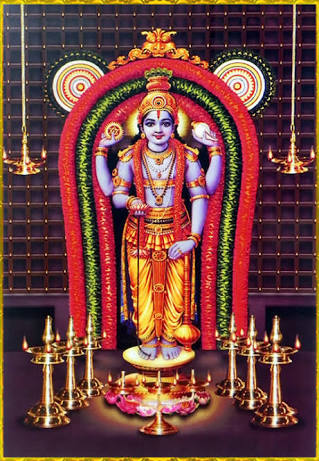
Tag: Guruvayur

  • Love Letter To Lord Krishna Bhagavatham Guruvayaurappan Confirms

    Love Letter To Lord Krishna Bhagavatham Guruvayaurappan Confirms

    The sheer love of God  expressed in Hinduism is amazing .

    The texts of the Hindus, The Vedas do not advocate Idol worship.

    But it is sanctioned as a tool for realizing the Self.

    For more on this please refer my Post on Hinduism  Has Many Gods, Yes and No.

    God is treated as a child, Mother, Father, Friend , Lover….

    But in the case of Lord Krishna, whose existence is proved it is different.

    He married Rukmini.

    Rukmini expressed her Love for Krishna through a Love Letter and this is found in the Bhagavatham.

    Author of the Text is Vyasa!

    There was a difference of opinion as to whether the letter was in the Bhagavatham.

    This was resolved by Krishna from His Temple in Guruvayur!

    ‘In Bhagavatham, nowhere there is  any indication that Rukmini sent a letter to Krishna..She only sent a brahmin as emissary with the above message. 

    But then there is an interesting story behind the theory that there was a letter. It concerns the celebrated devotee of Guruvayurappan, Poonthanam Nambuthiri. It is heard that Poonthanam, though an ardent devotee of Guruvayurappan, was not a scholar in Sankrit by any standards. However in his great devotion to Guruvayurappan, he used to narrate the story of Bhagavatham in the temple precincts at Guruvayur.. As an innocent remark, Poonthanam once stated during his narration that Rukmini sent a letter with the above message to Krishna through the brahmin. An intolerant brahmin scholar, intent on humiliating Poonthanam in pulic, raised the issue as to where it was written in Bhagavatham that there was a letter.
    Then there came the voice of Guruvayurappan from His Sreekovil..” Is it said in Bhagavatham that there is no such letter? I know there was a letter because I sent it”This episode is narrated vividly in the Aitihyamala of Kottarathil Sankunni.

    (chapter 45 –Poonthanathu Namboothiree)

    श्रुत्वा गुणान्‌ भुवनसुन्दर शृण्वतां ते
    निर्विश्य कर्णविवरैर्हरतोऽङ्गतापं।

    रूपं दृशं दृशिमतां अखिलार्थलाभं
    त्वय्यच्युताविशति चित्तमपत्रपं मे॥१

    śrutvā guṇān bhuvanasundara śṛṇvatāṁ te
    nirviśya karṇavivarairharato’ṅgatāpaṁ|
    rūpaṁ dṛśaṁ dṛśimatāṁ akhilārthalābhaṁ
    tvayyacyutāviśati cittamapatrapaṁ me||1

    का त्वा मुकुन्द महती कुलशीलरूप
    विद्यावयोद्रविणदामभिरात्मतुल्यं।
    धीरा पतिं कुलवती न वृणीत कन्या
    काले नृसिंह नरलोकमनोऽभिरामं॥२

    kā tvā mukunda mahatī kulaśīlarūpa
    vidyāvayodraviṇadāmabhirātmatulyaṁ|
    dhīrā patiṁ kulavatī na vṛṇīta kanyā
    kāle nṛsiṁha naralokamano’bhirāmaṁ||2

    तन्मे भवान्‌ खलु वृतः पतिरङ्ग जाया-
    मात्मार्पितश्च भवतोऽत्र विभो विधेहि।
    मा वीरभागमभिमर्शतु चैद्य आरात्-
    गोमायुवद्‌ मृगपतेर्बलिमंबुजाक्ष॥३

    tanme bhavān khalu vṛtaḥ patiraṅga jāyā-
    mātmārpitaśca bhavato’tra vibho vidhehi|
    mā vīrabhāgamabhimarśatu caidya ārat-
    gomāyuvad mṛgapaterbalimaṁbujākṣa||3

    पूर्तेष्टदत्तनियमव्रतदेवविप्र-
    गुर्वर्च्चनादिभिरलं भगवान्‌ परेशः।
    आराधितो यदि गदाग्रज एत्य पाणिं
    गृह्ण्णातु मे न दमघोषसुतादयोऽन्न्ये॥४

    pūrteṣṭadattaniyamavratadevavipra-
    gurvarccanādibhiralaṁ bhagavān pareśaḥ|
    ārādhito yadi gadāgraja etya pāṇiṁ
    gṛhṇṇātu me na damaghoṣasutādayo’nnye||4

    श्वोभाविनि त्वमजितोद्वहने विदर्भान्
    गुप्तः समेत्य पृतनपतिभिः परीतः।
    निर्म्मथ्य चैद्यमगधेन्द्रबलं प्रसह्य
    मां राक्षसेन विधिनोद्वह वीर्यशुल्कां॥५

    śvobhāvini tvamajitodvahane vidarbhān
    guptaḥ sametya pṛtanapatibhiḥ parītaḥ|
    nirmmathya caidyamagadhendrabalaṁ prasahya
    māṁ rākṣasena vidhinodvaha vīryaśulkāṁ||5

    अन्तःपुरान्तरचरीमनिहत्य बन्धुं
    स्त्वामुद्वहे कथमिति प्रवदाम्युपायं।
    पूर्वेद्युरस्ति महती कुलदेवियात्रा
    यस्यां बहिर्न्नवावधूर्ग्गिरिजामुपेयात्॥६

    antaḥpurāntaracarīmanihatya bandhuṁ
    stvāmudvahe kathamiti pravadāmyupāyaṁ|
    pūrvedyurasti mahatī kuladeviyātrā
    yasyāṁ bahirnnavāvadhūrggirijāmupeyāt||6

    यस्याङ्घ्रिपङ्कजरजस्नपनं महान्तो
    वाञ्चन्त्युमापतिरिव्वत्मतमोपहत्यै
    यर्ह्यम्बुजाक्ष न लभेय भवत्प्रादं
    जह्यामसून् व्रतकृशान् शतजन्मभिः स्यात्॥७

    yasyāṅghripaṅkajarajasnapanaṁ mahānto
    vāñcantyumāpatirivvatmatamopahatyai
    yarhyambujākṣa na labheya bhavatprādaṁ
    jahyāmasūn vratakṛśān śatajanmabhiḥ syāt||7

    (Srimad Bhagavatamahapuranam Dashamaskanadm
    Chapter
    52–slokas 37 to 43)

    ( free translation avoiding technicalities to the extent possible) is given below)
    Krishna, you are the most attractive person in the whole
    universe, and having listened to your glories which enter one’s
    thought through the ears and destroys all woes of the body and
    mind, and Oh Achyutha, my shameless mind dwells upon you
    incapable of being wrenched away from your beautiful form
    which is the ultimate thing for anyone to set his eyes upon and
    that form bestows on all eternal fortune.

    Oh Mukunda, which girl , who has some strength of mind, who
    is born of high family , and in at least some way comparable to
    you in upbringing, character beauty, education ,age, wealth
    and status would not simply woo you by mind, you who looks
    like a lion in human form (you were once Narasaimha) and
    who is simply enchanting to the minds of all the living beings
    in this world.

    Therefore, you please accept me who has by my own will
    accepted you as my husband in mind and has simply placed my
    body and soul at your lotus feet, as you are the granter of all
    boons. Now I belong to you. Don’t permit the king of Chedhi
    the Sisupala to take possession of me. It will be like a wily
    jackal stealing away the royal food earmarked for the
    consumption of the Lion.

    If it a fact that you, the Lord of the Universe, have been
    worshiped by me with full devotion through good deeds like
    digging of ponds and lakes, offering to fire, through gifts to
    deserving people, through pilgrimages, through offerings to
    Brahmins on auspicious occasions, through worship of
    Brahmins, gods and preceptors, then you must immediately
    reach here and take possession of me through accepting my
    hands. My hands should not be dirtied by an evil fellow like
    sisupala.

    You Krishna the unconquerable, you please come over to
    Vidharabha tomorrow itself without being noticed by anyone.
    You must annihilate or defeat the Sisupala and his retinue with
    your own valour and marry me through the rakshasa method
    as a prize for your valour.

    If you are wondering how you can enter the palace at Vidarbha
    and accept me without causing damage to the lives of my
    relatives, I shall inform you the right way. On the eve of the
    marriage day there is a big procession to the Durga temple .
    Accompanying that procession, me the bride, will be going to
    the Parvati temple for worship.

    My Krishna, gods like the husband of Uma are eagerly
    awaiting to bathe themselves in the dust of your feet so that
    their own weaknesses will be removed. If it is my fate that I
    am not fortunate to get the protection from such great Krishna, I will kill myself through severe austerities in this life and will be born in hundreds of future lives till I attain your company.

    Citation and reference.

    Thank you Mr. Ananthanarayanan Vaidyanathan.

    http://kanfusion.blogspot.in/2010/06/rukminis-letter-to-krishna-corrected.html

  • Guruvayurappan Temple Built By Pandya King 5000 Years?

    Guruvayur is a famous temple of Lord Krishna in Kerala and is called as the Dwaraka of the South.

    The temple is referred to as having been a place of worship since 5000 years.

    Sri Guruvayurappan,Image.jpg
    Sri Guruvayurappan, Guruvayur, Kerala,India

    According to the legends, the idol worshipped here is more than 5000 years old. But there are no historical records to establish it. In the 14th century Tamil literature ‘Kokasandesam’, references about a place called Kuruvayur is made. As early as 16th century (50 years after the Narayaneeyam was composed) many references are seen about Kuruvayur. In ancient Dravidic, Kuruvai means sea, hence the village on the coast may be called Kuruvayur.

    But according to Prof. K V Krishna Iyer (eminent historian), the Brahmins had begun to come and settle at Kodungalloor during the period of Chandra Gupta Maurya ( 321-297 BC). Trikkunavay in the Guruvayur documents is the same as Thrikkanamathilakam or Mathilakam mentioned in the Dutch and British records. And this place was in between Guruvayur and Kodungalloor. Guruvayur was Trikkunavay’s subordinate shrine since they were destroyed by the Dutch in 1755. That way Guruvayur must have come into existence before 52 AD. The story of Pandyan King building a shrine here may be a reference to the Azhavars , but they are all silent in their writing about Guruvayur.’..

    The Temple is constructed B.C 3000(Around 5000 years oldest Temple) According to legends, the deity worshipped here is more than 5000 years old. But there are no historical records to establish it. In the 14th century, “Kokasandesam” (a Tamil literary work), references to a place called Kuruvayur are made. As early as the 16th century (fifty years after Narayaniyam was composed) many references to Kuruvayur are seen. In ancient Dravidian languages, “kuruvai” means “sea”, hence the village on the Malabar Coast may be called Kuruvayur. The earliest temple records date back to the 17th century. The earliest mention of the many important Vishnu temples of Kerala are found in the songs of Alwars,Tamil saints, whose time-line is not exactly fixed. Mamankam was a very famous local event at Tirunavaya, on the bank ofBharatappuzha. The battles between the Calicut under Zamorins and Valluvanad popularised Guruvayur Temple. Due to the prolonged battles, people across the riverbank started preferring Guruvayur. Even the Zamorin of Calicut become a devotee and thus his subjects followed him. The central shrine that see today is said to have been rebuilt in 1638 AD. “Viswabali” was performed later to propitiate all the spirits, good and bad. By the end of the 16th century Guruvayur had become the most popular pilgrimage centre in Kerala.

    Considering the evidence I have been able to unearth about Hinduism and its spread throughout the world, its scientific approach and the references made to it by Sanskrit and Tamil literature two of the oldest languages, I am unable to brush aside that Gurauvayur has been a place of worship for 5000 years aside.

    It is a fact that the Vedas do not advocate collective, group, community worship and no mention is found in them to the practice of building temples.

    However, after the advent of the Agamas, the Temple worship has begun.

    The Agamas  are dated behind Lord Krishna and Mahabharata, though there are references to the worship of Mother Goddess in the Mahabharata in small temples.

    How these temples could have been built and by whom?

    The ancient temple, as far as History goes in found in Saluvar Kuppam ,Pondicherry for Lord Subrahmanya, which is excavated.

    Most of the early temples of India have been built by Tamil Kings.

    If the Tamil Kings had to build temples they had to be conversant with the happenings in the North of India and should have been influenced by them.

    They have been a part of Sanatana Dharma.

    The Tamil King Perunchotru Udiyan Neduncherallathan provided food for the armies of the Kauravas and the Pandavas during the epic battle of Mahabharata.

    He allotted lands to Brahmins in lieu for them performing the Yagnyas daily.

    He also offered Tharpana for those soldiers who died in the war.

    Other Tamil Kings followed suit.

    There is also evidence that Lord Krishna attended the Tamil Sangam as an Invitee.

    He also married a Pandyan Princess , had a daughter through her and allotted Yadavas to serve her as a part of her dowry.

    Ravana entered into a peace treaty with a Pandya King.

    Rig Veda and Puranas have references to pieces, Elephant Tusks,Gems, and Pearls being imported from Tamil Nadu /Dravida.

    Tamil Kings were present during the Swayamwar of Damayanthi, Sita, Draupadi, descriptions of the may be found in the Ramayana ,Mahabharata and the Puranas.

    I have some articles on this.

    During the Mahabharata Days the interaction between the South and the North were more intense and frequent than what it was during the Ramayana Period.

    Lord Krishna attended the Tamil Sangam,Conclave of Poets held at Kavatapuram.

    He was a special Invitee.

    “Krishna was known to Tamil lands even during his life time. He had been one of the esteemed guests at the 2nd Sangam assemblage that took place in Kavaatam, the then capital of the Pandyans. Kavaatam’s location can be deciphered from Shugreeva’s description of the trail to the South which he described to the vanaras in chapter 4-41-19a. That place was submerged around the time Byt Dwaraka was submerged.”

    Krishna married Nappinnai, a Pandyan Princess and had a Daughter Pandyahs, that’s how Megasthanes calls her.

    Krishna had his daughter married to a Pandya Prince and settled her near Madurai.

    For more Read here.

    The chances are that the Temple of Guruvayur having been built by a Tamil King, Krishna having been to the south and it could be a Tamil Pandya King who built the temple as Lord Krishna was the son-in-law of the Pandyas and his daughter was a Pandyan Princess.

    Scholars may look into this.

    Citation.

    http://en.wikipedia.org/wiki/Guruvayur_Temple

    http://www.guruvayurdevaswom.nic.in/htemple1.html

  • How To Perform Tulabharam.

    It is the practice among Hindus, and even among the other communities to perform Thulabara’, weighing one against materials and offering to God.

    This is offered mainly to Lord Guruvayurappan, Guruvayoor, Kerala.

    Tulabaram.
    Thulabharam Sculpture.

    Right now people walk in have the child weighed against the material they have vowed to perform the Tulabaram and have the material submitted to God.

    The Puranas prescribe a procedure for performing the Tulabharam.

    The procedure.

    1The parents of the child must fast on the day of the Tulabharam.

    2.Perform pooja for Graha Devatas, Family Deity and Personal Deity.

    3.Have a Yagashala prepared, perform Yaga for Ganapathy, Subrahmanya  and Siva.

    4.Also perform the Yaga for the Deity to whom the Tulabharam is offered.

    5.Then the child should be weighed in a Balance and the offering , equal to the weight of the child,is to be submitted to the Lord.

    6.In the case of Adults, they have to stand in the Balance, have their palms folded ‘repent their sins and Pray that the Tulabharam is completed successfully.

    The child can be fed during the day of the Tulabharam and not the Adults.

    Source:

    Sri Siva Purana.

    Tulabharam is a Hindu ritual that has been practised from Dwapara Yuga. Tulabharam means a person weighing himself or herself in a balance and pay in equal weight of gold, fruits or grains to God when one’s prayers are fulfilled. Temples in Tirupati, Guruvayur, Dwaraka, Udupi and several other towns practice such offerings. Recently, Guruvayur temple hit the headlines in newspapers when a businessman from Bangalore gave the temple his weight in gold – 70 kg. Tirupati temple hits the headlines now and then when famous politicians and film stars give something to god measure for measure. This is offered to the gods when their prayers are answered.

    The earliest reference to a Tulabharam comes from the Mahabharata, about the great emperor Sibi. He was so famous his name is found in ancient Tamil Sangam literature in four places and later in hundreds of places. He was even praised in Buddhist Jataka stories and Borobudur (Indonesia) sculptures. Emperor Sibi was a just king. Lord Indra and Agni wanted to test him and came in the form of an eagle and a dove. When the dove came to Sibi for protection from the chasing eagle, Sibi was ready to offer anything to save the dove. The eagle asked him to give his flesh measure for measure. Sibi cut himself bit by bit but the pans in the balance were never equal. At last when he himself stood on the pan the Gods appeared in front of him and blessed him. The story is found in other Sanskrit works as well.”

    http://www.speakingtree.in/spiritual-blogs/seekers/faith-and-rituals/tulabharam-indiansumerian-connection