Tag: Vedas

  • Understanding Saguna and Nirguna Brahman in Hinduism

    Understanding Saguna and Nirguna Brahman in Hinduism

    Introduction To Nirguna Saguna Sahasranama Aradhana.

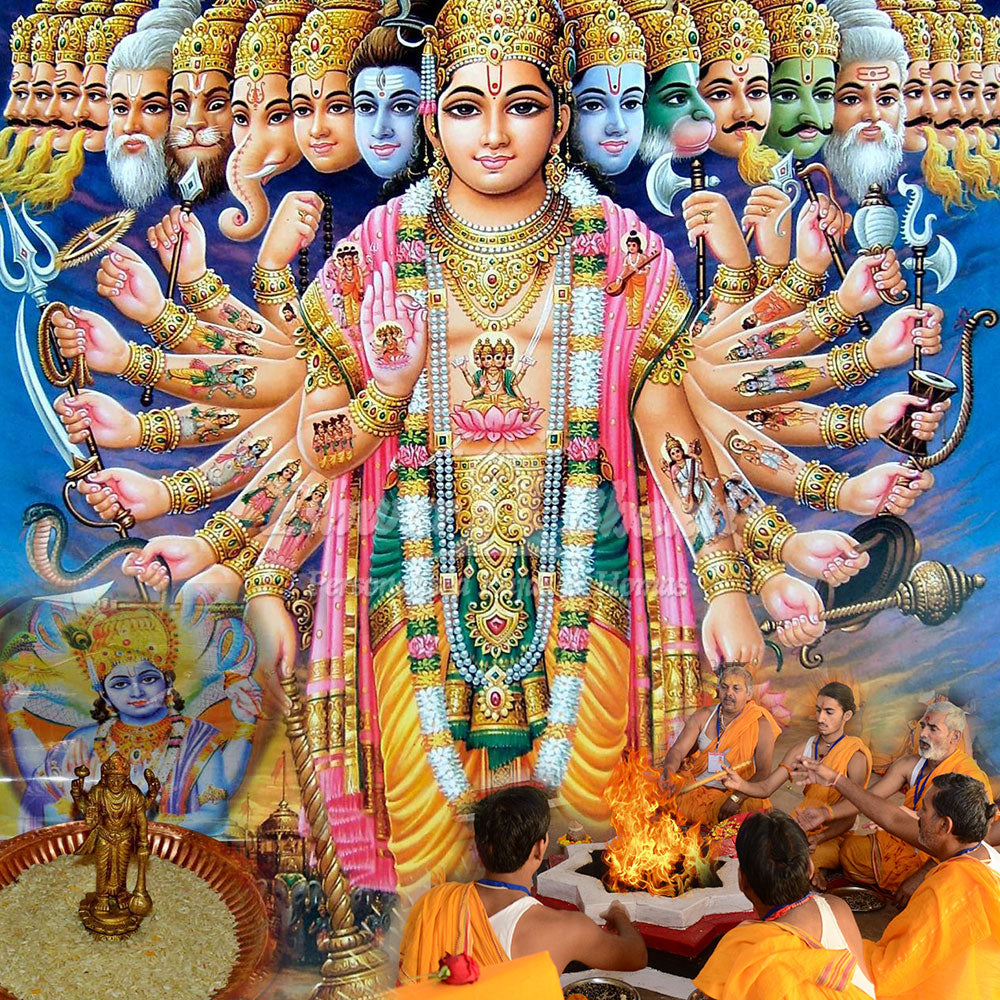
    Saguna means “with attributes.” Nirguna means “without attributes.” “Saguna Brahman” describes a God with (tangible) attributes. The term “Nirguna Brahman” describes a God with no (tangible) attributes.

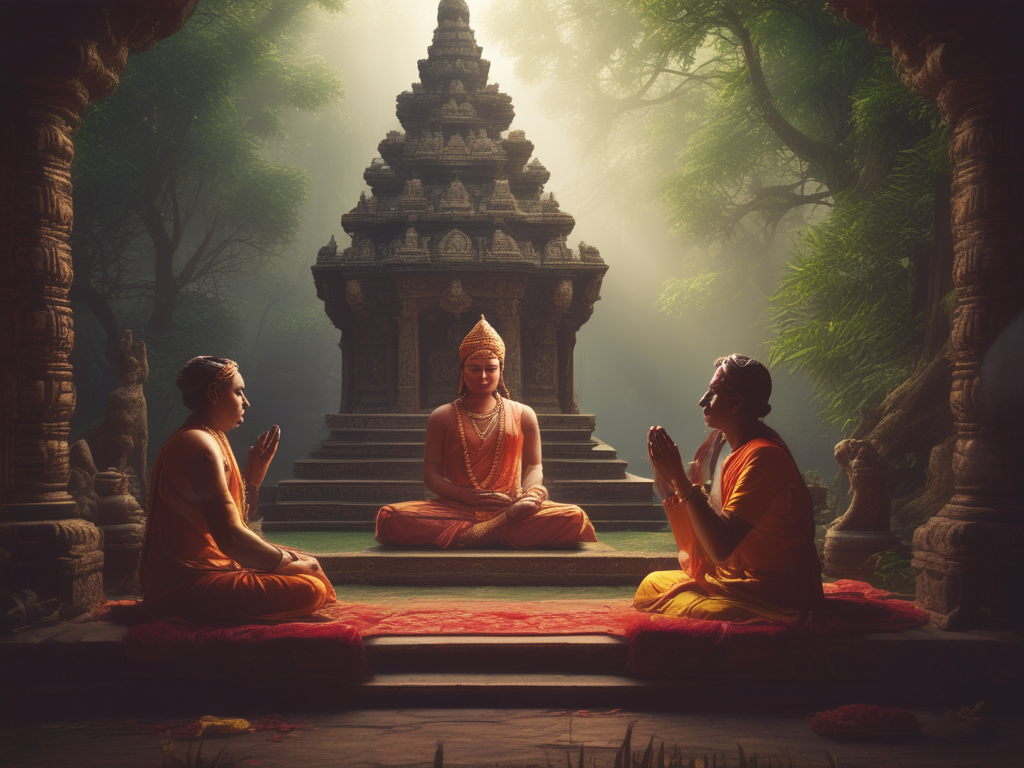
    One with Attributes, qualities,Saguna.The other Nirguna, without Attributes,Nirguna.The western thought explores the Universe through what is outside,the perceived.It is necessary to have something in us to perceive .For all we know, there may be things out there and if one does not se it or perceive it, one may never know it, aware of it.Awareness, which is the rudiment of Knowledge,, needs two things.That which is to one known and that which knows or is aware.‘We have the Mind as an instrument.We know things through the Mind.If the Mind is absent or dysfunctional, we will not know things out there or may not know them as they are.Hinduism makes further distinction.Mind is what interprets sensations and the Data received.The sensations or Data is received is through the Brain, which is just like a CPU, just receives.The job of sorting them out, collating adding value judgements is reserved for the Mind.The classification and addition of value judgments is by the Chitta that directs the mind.The Chitta is based on Human Dispositions.The dispositions of individuals vary.So what is out there varies .So logically what we perceive is not what IS but what we perceive as what IS.So Reality expresses itself in the way we want to perceive it.This is the reason why many Gods and Goddesses are found in Hinduism.Without accommodating the Mind to perceive by providing it with a Target, we can not know what is outside.Therefore knowing the limitations of the Mind, Hinduism prescribes different systems of worship.The target of worship may be an Idol, Symbol.Once the Mind gets focussed on this, it evolves to comprehend the Ultimate Reality without Attribute, Brahman.These procedures are like gradually moving from LKG to Ph.d.Once you obtain Ph.d , LKG seems to be irrational and look unnecessary.But without it, you could not have reached Ph.d level.Yet there are individuals who are equipped with dispositions to do Ph.d, that is to understand Reality without Attributes, Nirguna Brhaman.One Like Ramana MaharishiAdi Shankaracharya has provided a Stotra addressed to Nirguna Brahman which explains these.One may notice that all the Sahasranamas, Vishnu and Lalitha Sahasranamas have Saguna and Nirguna Brahma upasanas embedded in them.Lalitha Sahsranama has organised this better by allotting separate portions,like Saguna Aradhana, Nirguna Aradhana and the identification of Shiva and Shakthi in the same Text.

    Aghora Pasupatha Homa Evil Eye Protection Mukthi

    Removal of Evil eye, Protection from forces that hinder Spiritual development. Protection from Black magic,Animals. Increases self confidence and self assurance. Clarity of thought.. Above all,Mukthi and Gnana are facilitated.

    Rig Veda Inflenced Civilizations Outside India

    Date of Rig veda in Ramanisblog According to Ramanisblog, the date of the Rig Veda is subject to considerable debate, with modern scholarly estimates generally ranging between 2000 BCE to 1000 BCE[1]. However, Ramanisblog highlights that Hindu tradition considers the Vedas to be timeless and without a specific beginning[1]. Perspectives on Rig Veda Dating Ramanisblog…

    Navavarana Pooja 1 Guru Stuthi

    Following in the Ai Generated transcript of the Navavarana Pooja Mantras . Recorded and sent to my Shishyas. This is being made public so that this secret knowledge is not lost to posterity. Those who want to be initiated may contact me through mail at ramanan50@gmail.com. Also they can contact through the comment column. If…

    Brahman

    Brahman, a key concept in Hinduism, is the ultimate, unchanging reality beyond the physical world. It is described as omnipresent, infinite, and eternal. The concept of Brahman encompasses both Saguna (with attributes) and Nirguna (without attributes) manifestations. Saguna Brahman represents a God with tangible attributes, while Nirguna Brahman represents a God without tangible attributes. Understanding and realizing Brahman is central to various forms of Hindu worship and philosophical inquiry.

    In Hindu philosophy, the human mind plays a crucial role in perceiving and interpreting the external world. According to Hindu thought, the mind interprets sensations and data received from the external world, with the brain acting as a receiver. However, it is the mind that processes and adds value judgments to this information through the faculty known as Chitta, which is influenced by individual dispositions.

    Recognizing the limitations of the human mind, Hinduism prescribes various approaches to worship and spiritual practice. Different systems of worship are intended to gradually lead the mind from focusing on tangible forms, such as idols or symbols, to comprehending the ultimate reality without attributes, the Nirguna Brahman. This gradual progression is likened to the educational journey from kindergarten to obtaining a Ph.D. Individuals with predispositions for understanding the reality without attributes, like Ramana Maharishi and Adi Shankaracharya, are rare yet exemplify this profound understanding.

    It is notable that Hindu scriptures, such as the Vishnu and Lalitha Sahasranamas, incorporate both Saguna and Nirguna aspects of Brahman worship. Lalitha Sahasranama, in particular, comprehensively organizes these aspects by allocating separate sections for Saguna and Nirguna worship, acknowledging the interplay of Shiva and Shakti within the same text.

    In summary, the concept of Brahman in Hinduism encompasses both Saguna and Nirguna manifestations, reflecting the profound understanding of ultimate reality and the methods to realize it.

    Related Articles

  • Rig Veda Composed By Ten Rishis, Two Women

    Rig Veda Composed By Ten Rishis, Two Women

    The Rig Veda is recognised as the oldest literature by mankind. It is one of the sources of Sanatana Dharma. It, as in other Vedas, contains four portions. Samhita,Hymns;Brahmanas,Procedures for Rites; Aranyaka and Upanishads, containing Ontology and Philosophy. Earlier evidence suggesting it having been composed in Northern,North Western part of India is being revisited on the basis of evidence found in Russia that the Rig Veda could have been composed in the Arctic.

    The Rig Veda is organized as Mandala (books), sukta (hymns) and riks (prayers). There are total of 10 mandalas, 1028 hymns and 10552 riks.

    The text is layered consisting of the Samhita, Brahmanas, Aranyakas and Upanishads.[note 3] The Rigveda Samhita is the core text, and is a collection of 10 books (maṇḍalas) with 1,028 hymns (sūktas) in about 10,600 verses (called ṛc, eponymous of the name Rigveda). In the eight books – Books 2 through 9 – that were composed the earliest, the hymns predominantly discuss cosmology, rites, rituals and praise deities.The more recent books (Books 1 and 10) in part also deal with philosophical or speculative questions,virtues such as dāna (charity) in society, questions about the origin of the universe and the nature of the divine, and other metaphysical issues in their hymns.

    The main contributors were Angiras, Kanva, Vasishtha, and Vishvamitra. Among the other celebrated authors are Atri, Bhrigu, Kashyapa, Gritsamada,  Agastya, Bharadvaja, as well as female sages Lopamudra and Ghosha. In a few cases, more than one rishi is given, signifying lack of certainty. Source..https://en.m.wikipedia.org/wiki/Rigveda

    Of these twelve Rishis who have composed the Rigveda, Lopamudra and Ghosha were women ,Rishikas.

    Join 4,576 other subscribers
  • Nine Vedas From Russia Audio

    Nine Vedas From Russia Audio

    countries also call these deposits “Perun’s stones”, “thunderbolt stones”, “thunderbolt wedges” and “Perun’s arrow”; other unrelated names for these include “devil’s finger”, “God’s finger”, and “Mother of God finger”, and in Lithuania, “Perkun’s finger” These thunderbolt stones were sometimes said to be transferred back to the sky by the wind after being under earth for a period of seven years. The weapons of Perun protected against bad luck, evil ,magic,disease,and – naturally enough – lightning itself.

    Perun also had another type of weapon in his arsenal, as destructive as his firestone arrows, but even more unusual: mythical golden apples. While this may not seem to be much of a weapon, in many'( wiki Perun)

    ( https://en.m.wikipedia.org/wiki/Perun )

    Perun Temple seems to have an Altar resembling Navagraha.

    ‘Remains of an ancient shrine to Perun discovered in Peryn consisted of a wide circular platform centred around a statue, encircled by a trench with eight apses, which contained sacrificial altars and possibly additional statues. The overall plan of the shrine shows clear symbolism of the number nine. This is sometimes interpreted that Perun, in fact, had nine sons (or eight sons, with himself, the father, being the ninth Perun). It should also be noted that in some Slavic folk songs, nine unnamed brothers are mentioned.( wiki Perun)

    According to Perun Santees Fire God is to be worshiped as one finds in Vedas, Agni worship.

    And there are ample references to Mitra Varuna,Mithraism.

    There is a sect,Ynglism,which is based on Perun Santees and Book of Veles.

    Nine Vedas from Russia

    Join 4,576 other subscribers
    May 2026
    M T W T F S S
     123
    45678910
    11121314151617
    18192021222324
    25262728293031
  • Sanskrit Learning Increases Brain Size, Memory Cognition

    Sanskrit Learning Increases Brain Size, Memory Cognition

    Sanskrit is an ancient language and there are two versions of Sanskrit.
    One is the Vedic Sanskrit and another, Earlier Sanskrit.

    Sanskrit is found to be most compatible language for Computer.

    Sanskrit roots are found in words in world languages.

    Sanskrit ,though currently dated around 5000 years ago,is much older as the sunken city of Poompuhar,a port of Tamils,in Tamil Nadu is dated around 11,000 ago and Silappadikaram,one of the five Epics of Tamil Language quotes Vedas.

    And the remains of a Million year old Tamil site is found near Chennai .

    The earliest Tamil Grammar work available,Tholkaapiyam, mentions Sanskrit.

    It is of interest to note that such an ancient language, Sanskrit, transmitted and is still transmitting it’s Religious texts only by Oral Tradition!

    Learning of Sanskrit normally begins at the age of Five.

    The texts are learned by repetition.
    Many methods are adopted.

    One such method is ‘Gana Paada’
    In this process, one word is repeated again and again, and this word is recited along with the second word,then with the third word and this process is ealled Ganapaadan with the third word and this process is called Ganapaada.

    For details please read my article on Veda learning.
    Now research has been carried out on this method of learning in Sanskrit.
    It is found that Sanskrit learning by this method expands brain,improves memory and results in better Cognitive Functions.

    ‘Abstract

    We studied a group of verbal memory specialists to determine whether intensive oral text memory is associated with structural features of hippocampal and lateral-temporal regions implicated in language processing. Professional Vedic Sanskrit Pandits in India train from childhood for around 10years in an ancient, formalized tradition of oral Sanskrit text memorization and recitation, mastering the exact pronunciation and invariant content of multiple 40,000-100,000 word oral texts. We conducted structural analysis of gray matter density, cortical thickness, local gyrification, and white matter structure, relative to matched controls. We found massive gray matter density and cortical thickness increases in Pandit brains in language, memory and visual systems, including i) bilateral lateral temporal cortices and ii) the anterior cingulate cortex and the hippocampus, regions associated with long and short-term memory. Differences in hippocampal morphometry matched those previously documented for expert spatial navigators and individuals with good verbal working memory. The findings provide unique insight into the brain organization implementing formalized oral knowledge systems.

    Source.
    https://www.ncbi.nlm.nih.gov/m/pubmed/26188261/
    Visit the link to download report.

    Citation.

    Authors

    Author information

    1
    Center for Mind/Brain Sciences (CIMeC), University of Trento, 38060, Italy. Electronic address: James.Hartzell@unitn.it.
    2
    Center for Mind/Brain Sciences (CIMeC), University of Trento, 38060, Italy.
    3
    National Brain Research Centre, Manesar, Gurgaon Dist., Haryana 122 050, India.

    Citation

    Neuroimage. 2016 May 1;131:181-92. doi: 10.1016/j.neuroimage.2015.07.027. Epub 2015 Jul 15.