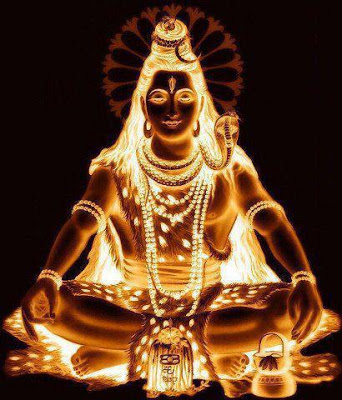
Tag: Pooja

  • Submissions To Shiva Kayena Vacha Equivalent After Pooja Rituals

    Submissions To Shiva Kayena Vacha Equivalent After Pooja Rituals

    Whatever actions we perform, they are because of our Nature.

    However much we try to convince ourselves that we perform because we choose actions,the truth is that we act we are impelled to act,either by instinct or reason.

    Both spring from our nature.

    Our nature, if truth be told, we do not know.

    I do not know how I would act or react in a given situation.

    Nor I can predict.

    Hindu scriptures call it Swabhava,Own Nature.

    Even when we worship God, we do so because of our nature.

    Our nature is not perfect.

    So when we worship God,however perfect we try to be, we commit mistakes.

    So we pray God to excuse us for mistakes committed while worshipping Him/Her.

    It may be because of some defects in pronouncing the mantras, in performing rituals as prescribed, our faith,

    “Mantra heenam,kriya heenam,Bhathi heenam..”

    So every pooja,homa or religious function,both auspicious and inauspicious, ends with a Prayer to Lord Vishnu thus,

    ‘Kayena vacha Manaseyinrairva Buddhyaath manavaa Prakruthe swabhaavaath ,

    Karomi yathyath sakalam parasmai sriman narayanayethi samarppayaami’

    Whatever actions I perform/ed, by My limbs,mind, intellect,it is because of my nature.( which is far from being Perfect)

    I dedicate these to Lord Narayana.

    There is a similar mantra addressed to Lord Shiva.
    Karacharana Kritham Vaa; Kayajam
    Karmajam Vaa; Shravana Nayanajam Vaa;
    Manasam Vaa Aparadham; Vihithama
    Vihitham Vaa; Sarva Medha Kshamasvaa;
    Jaya Jaya Karunabdhey ; Shree Mahadeva Shambo
    Meaning: Oh Lord! Please forgive me for all the wrong actions that I have commited knowingly or unknowingly with my hands, feet, speech, body, ears, eyes and mind. Victory to you, Oh Lord of compassion and Mercy.

  • Panchayatana Puja Mantras Text

    I had posted an article on Daily Worship of Five Deities Panchayatana Puja.

    I had provided a Link for the Mantras.

    The Link does not seem to work any longer..

    This has been brought to my notice by readers.

    I am furnishing the Text for the Panchayatana Pooja.

    panchayathanam
    Panchayana Pooja

    I thank Mr.K. N. Ramesh for the text.

    There are some who include Lord Subrahmanya in this Pooja.

    As Adi Shankaracharya would have it, Subrahmanya does not seem to find a place in this specific Puja.

    One may include Subrahmanya as well but then it would not be Panchayatana Puja.

    None of the Deities as mentioned by the Acharya are to be omitted.

    They are,

    Surya,

    Ganesha,

    Devi,

    Shiva and

    Vishnu.

    A paragraph from “Sankara’s Teachings’ by Sri Atmananda of Sri Ramakrishna Mutt on the subject:

    “Sankara instituted the worship of all these five Gods, Sun, Ambika, Vishnu, Ganapati and Shiva all on the same pedestal. This emphasized the idea that these are not five different Gods, but they are the one God worshipped in five different forms in different parts of India. Some wrongly think Sankara taught only Jnana and had no place for Karma. Sankara held that the place of Jnana was all-important but he knew equally well that many could not give up Karma and so they should be taught the most beneficial forms of Karma. Thus it is that the Panchayatana Puja (the worship of five Gods) came into vogue in Smartha homes. The other name for this is Siva-Puja.’


    Text of the Puja with procedure.

    Panchayatana puja

    Courtesy: Prof.Sri.V.Krishnamurthy

    MY PANCAYATANA PUJA

    [Note:  What is given below is an outline of how I do my Pancayatana-pUjA. I have been doing it for the past fifty years & more – of course now and then there have been breaks, short and long.  I have not referred to any old manuscripts or  any formal book; but what is written is what I got from my father sixty years ago, with, of course, some compromises I had to introduce due to my inability, over the years,  to follow all rules.  I do have a mss. of my father  to which I do refer now and then]

    For many Sanskrit  and Sanskrit-cum-Tamil words I am not giving the English meaning, because I presume those interested in this PUjA  would be familiar with such words.

    Key to Transliteration of Sanskrit words

    Kyoto-Harvard Convention (Modified)

    Vowels:

    Consonants:

    a    as the ‘u’ in but
    A or Aa or aa        as the ‘a’ in father
    i     as the ‘i’ in mill
    I     as the ‘ea’ in meal
    u    as the ‘u’ in put
    U   as the ‘u’ in rule
    e    as the ‘ey’ in they
    ai as the ‘ai’ in aisle
    o as the ‘o’ in go
    au as the ‘ou’ in loud
    R as the ‘r’ in Sanskrit
    gutturals        k          kh        g          gh            G

    palatals          c          ch        j           jh      jna

    linguals          T          Th        D         Dh            N

    dentals           t           th         d        dh          n

    labials            p          ph        b          bh       m

    semivowels   y           r          l           v


    Sibilants

    As in

    Beginning of word

    Middle of word

    Sanskrit Examples

    Palatal ‘s’ as in the German word ‘sprechen’ Sh (or) sh S ISvara, darSana, paSyati, ViSvaM
    Shankara, shAnti, Shiva, ShaSi (*)
    Shutter, shame Shh (or) shh  Sh (or) sh Vishnu, Purusha, dvesha. ShhaNmukha,
    Sun, sand S (or) s S samsAra, SamsAra, Satva, satva, VasanA

    Note on (*): In the word ‘ShaSi‘, the same palatal ‘s’ is transliterated differently in the beginning (as ‘Sh‘) and  in the middle of the word (as ‘S‘). Another word where this situation occurs is, for example, ‘shuSrUshA‘ where the first ‘sh‘ and the middle ‘S‘ represent the same palatal ‘s’.

    anusvAra —-  M     visarga —-         H          aspiration —–           h


    PujA articles needed:

    1. Panca-pAtram + UdraNi
    2. Akshatai –just a teaspoon.
    3. Kumkumam –
    4. Sandal-paste (a tea-spoon of this to be made for each pUjA day)
    5. An Asana for sitting. (One is supposed to sit facing East or North)
    6. A seat (Peetham) for keeping the deities and other accessories. If there is a picture included in your pUjA, the picture will face  South or East according respectively to the way you face, as described in No.5.
    7. A PujA Bell, which usually has a nandi at its top.
    8. A plate (called snAna-vedhi) for keeping the deities for the purposes of Abhishekam.  It may have a hole in the centre so that the Abhisheka-water may collect in a vessel below; or it may have a channel-like outlet by which the abhisheka-water may flow into another vessel. Another plate or cup (to be calledarghya-pAdya-AcamanIya pAtram — to be shortened as apA-pAtraM , hereafter in this document).
    9. Flowers for the PujA.
    10. VibhUti
    11. Three or four small plates, five small cups (each of which to be able to  hold at least two tablespoons of water). These five are for the so-called five kalaSas,ISAna, etc. These are to be arranged on a plate, one in the centre, one each in the four directions of the centre.
    12. Shankham, with some kind of stand for it, so that it may hold water and sit flat
    13. Camphor (to be used for the karpUra-nIrAnjanaM)
    14. Agarbati (to be used as a continuous light emitting fragrance throughout the pUjA as well as for the dhUpAM part of the sixteen-part pUjA)
    15. Cotton for deepam ( both for #16 below and for the deepaM part of the sixteen-part pUjA).
    16. Kuttu-vilakku or its equivalent
    17. A vessel for holding about six glasses of water; and most important of all,
    18. The PujA deities – to be separately described, along with two or three small kerchief-like towels to be used for drying the deities after the abhisheka, these towels not to be used for any other purpose.


    Note: Metals used in the above articles should, as far as possible, avoid steel or iron.  My own compromise is: except for #17 above, all are either silver or brass or bronze.

    Preferable Vedic Knowledge:  To be able to recite Rudram, Camakam, Purusha-sUktam.  This much is a minimum.   If Recitation can be done without the book, it will be wonderful; for, both the hands and all your attention would be needed for the pUjA.  To hold a book in one of the hands would be most inconvenient. Anything else that you can recite would be valuable.

    Daily Prerequisite: Morning Sandhyavandanam should have been done.

    Do an AcamanaM and then start:

    ShuklAmbaradharaM vishNum shaSi varNaM caturbhujaM /
    Prasanna-vadanaM dhyAyet sarva-vighnopaSAntaye //

    Guru brahmA gururvishNuH gurur-devo maheSvaraH/
    Gurus-sAkshAt paraM prahma tasmai shrI gurave namaH //

    prANAyAmaM.

    SankalpaM: shubhe shobhane muhUrte Adya-brahmaNaH dvitIya-parArdhe Shveta-varAha kalpe vaivasvata-manvantare ashtAvimSatitame kaliyuge  prathame pAde jambU-dvipe bhArata-varshe bharatha-khaNDe meroH dakshiNe pArshve  —-shakAbde  asmin vartamAne vyAvahArike prabhavAdi shhashTi-samvatsarANAM madhye   —- nAma-samvatsare —-ayane —–Ritau  —-mAse    —pakshe   —  tithau — nakshatra-yuktAyAM shubha-yoga shubha-karaNa evamguNa viSeshaNa-viSishTAyAM asyAM  — shubha-thithau  mamopAtta-samasta-durita-kshayadvArA  shrI-parameSvara-prItyarthaM asmAkaM saha-kuTumbAnAM kshema-sthairya-vIrya-vijaya-Ayur-Arogya-aiSvaryANAM abhivRiddhyarthaM  dharmArtha-kAma-moksha caturvidha-phala-purushArtha-siddhyarthaM ishTa-kAmyArtha-siddhyarthaM sarvAbhIshTa-siddhyarthaM sarvArishTa-shAntyartham aroga-dhRDha-gAtrathA-siddhyarthaM ShrI-sItA-lakshmaNa-bharata-shatrughna-hanUmat-sameta shrI rAma-chandrAdi-samasta-hari-hara-devatA-prasAda-siddhyarthaM sAmba-parameSvara-prasAda-siddhyarthaM

    [At this point, for the past few months, I have been adding  the following : asmin janmani janmAnte bhagavat-smaraNena saha anAyAsa-maraNa-prAptyarthaM, janmAntare’pi manushya-janma-prApti-dvArA parmAtmani atyanta-bhakti-siddhyarthaM, ekAnta-bhakti siddhyarthaM advaita-bhakti-siddhyarthaM]

    sAmba-parameSvare para-brahmaNi acancalA-bhakti-siddhyarthaM yAvac-chakti deva-pUjAM karishye. Adau deva-pUjAngaM shakti-pancAkshara mahAmantra-japaM karishye. tat-pUrvaM  mahA-gaNapati-mahA-mantra-japaM karishye.

    [These two japas are now done.  Obviously, the assumption is that you have been initiated into these japas formally by some one whom you consider to be your guru for that purpose.  I have been initiated into the shakti-pancAksharI by my father and into the mahA-gaNapati mantra by another Guru-ji]

    [One is supposed to do 108 times japa  of each of the mantras. This is the ideal situation.  Compromises are 54 or 32.   Ten time japa is only an apology.  But some of the days  I confess it  turns out to be  only an apology!]

    KalaSa-pUjA:

    kalaSa-pUjAM karishye /

    [Decorate the water-filled pancapAtraM with chandan & kumkum & flowers]

    kalaSasya AdhAre dvAdaSa-kalAtmane am arka-maNDalAya namaH / madhye daSa-kalAtmane mam vahni-maNDalAya namaH / mukhe ShhoDaSa-kalAtmane um soma-maNDalAya namaH //

    indrAya namaH / yamAya namaH / varuNAya namaH / somAya namaH /

    tatpurushAya namaH / [This on the east of the pAtram]
    aghorAya namaH [This on the south]
    vAmadevAya namaH [This on the north]
    sadyojAtAya namaH [This on the west]
    ISAnAya namaH  [This on the water in the pAtram]

    Tham vam amRte amRtodbhave amRtamayAsrAvaya srAvaya

    [Show the dhenu mudrA]

    [Now place your right palm on the top of the panca-pAtram].

    kalaSasya mukhe vishNuH kaNThe rudraH samASritAH / mUle tatra sthito brahmA madhe mAtR-gaNAH-smRtAH /kukshau tu sAgarAs-sarve  sapta-dvIpA vasundharA / Rgvedo’tha yajur-veda sAmavedo’hyatharvaNaH / angaiSca sahitAs-sarve kalaSAmbu samASritAH / AyAntu deva-pUjArthaM durita-kshaya-kArakAH / gange ca yamune caiva godAvarI saraswatI / narmade sindhu kAverI jale-smin sannidhiM kuru /

    Mantras to be recited now, if you know:  ‘Apo vA idam sarvaM …… bhUrbhuvasuavroM‘ / Also to be recited three times to be recited: GayatrI and any other mantra to which you have been initiated.

    Shankha-pUjA:

    [Now decorate the shankham with sandal and kumkum & flowers; fill it up with water from the panca-pAtram ]

    [Hold the shankham in your left palm and cover it up with the right palm]
    Shankha-mUle sthito brahmA shankha-madhye saraswatI / shankhAgre sarva-tIrthAni tasmAc-chankhaM prapUjayet // tvaM purA sagarotpanno vishNunA vidhRtaH kare / pUjitas-sarva-devAnAM pAncajanya-namo’stu te // pAnca-janyAya vidmahe pAvamAnAya dhImahi / tannaH shankhaH pracodayAt //

    [Say the GAyatrI and the pancAkshara-mantram three times ]

    [Sprinkle the shankha-water three times into the panca-pAtram as well as all the accessories kept for the pUjA. Also sprinkle it three times on yourself.  Any remaining water in the shankham to be poured into the panca-pAtraM. Now the panca-pAtram water has been purified.  So pour a little from it into the stored water-vessel No.17, so that  all the water that will be used for the pUjA would have been purified.   In the course of the rest of the pUjA, as and when the water in the panca-pAtram gets emptied, fill it up from No.17 hereafter].

    [Fill up the shankham again with water from the panca-pAtram, decorate with flowers and show the mudrAs of shankha, cakra-gadA-padma and dhenu]

    pUjA of the five kalaSas ‘ISAna’ etc.:

    Sandal, flowers, and akshata (mixed with sandalpaste and kumkum), all to be used as offering to each of the kalaSa – with the following mantras:

    naM hrAM ISAnAya Urdha-vaktrAya namaH  — for the central kalaSa, (to be called hereafter ‘ISAna-kalaSa‘).
    maM hrIM  tatpurushAya pUrvavaktrAya namaH —  for the kalaSa on the east, (to be called hereafter ‘tatpurusha-kalaSa‘).
    shiM hrUM aghorAya dakshiNa-vaktrAya namah —  for the kalaSa on the south  (to be called hereafter ‘aghora-kalaSa‘)
    vAM hraiM vAmadevAya uttaravaktrAya namaH – for the kalaSa on the north (to be called hereafter ‘vAmadeva kalaSa‘)
    yaM hrauM sadyojAtAya paScimavaktrAya namaH – for the kalaSa on the west (to be called hereafter ‘sadyojAta-kalaSa‘)


    [Now fill them with water from the panca-pAtraM,  in the following order, with the following mantras.  If you do not know how to recite them with the proper svaras, learn it from any vedic pundit]

    [Filling up of the ISAna-kalaSa]  ISAnas-sarva-vidyAnAM Isvaras-sarva-bhUtAnAM brahmAdhipatiH brahmaNo’dhipatir brahmA shivo me astu sadAshivoM //
    [Filling up of the tatpurusha-kalaSatatpurushAya vidmahe mahAdevAya dhImahi / tanno rudraH pracodayAt //

    [Filling up of the aghora-kalaSaaghorebhyo’tha gorebhyo ghora-ghoratarebhyaH sarvebhyaH sarva-SarvebhyO namaste astu rudra-rUpebhyaH //

    [Filling up of the  vAmadeva-kalaSa]  vAmadevAya namo jyeshTAya namaH shreshTAya  namo rudrAya namaH kAlAya namaH kalavikaraNAya namo balavikaraNAya namo balAya namo bala-pramathanAya namas-sarva-bhUta-damanAya namo manonmayAya namaH //

    [Filling up of the  sadyojAta-kalaSasadyojAtaM  prapadyAmi sadyojAtAya vai namo namaH /bhave bhave nAtibhave bhavasva mAM / bhavodbhavAya namaH //

    [Now decorate the arghya-pAdya-AcamanIya-pAtram with flowers, sandal and akshatA. Then do the PujA for the snAna-vedhi as follows]

    Om dharmAya namaH / adharmAya namaH//
    Om jnAnAya namaH / ajnAnAya namaH //
    Om vairAgyAya namaH / avairAgyAya namaH //
    Om aiSvaryAya namah / anaiSvaryAya namaH //

    [Now do the pUjA for the box or can in which the pancAyatana deities are kept]

    Om guM gurubhyo namaH / gaM gaNapataye namaH /duM durgAyai namaH / maM mahAlakshmyai namaH / saM saraswatyai namaH /kshaM kshetra-pAlakAya namaH /vaM vaTukAya namaH / paM paramAtmane namaH /


    [Ring or Sound the bell with the following shloka:] AgamArtham-tu devAnAM gamanArtham to rakshasAm /kurve ghaNTAravaM tatra devatAhvana-lAncanaM //
    Now you are going to open the deities-box.  Before opening it learn what is supposed to be in it.  There are five deities. The deities or divinities are not in their human-like forms but in certain symbols in the form of stones, which are nothing but certain rock-formations available in specified locations in the country. Surya, the Sun-God is inherent in certain crystals normally found in Vallam in Tamilnadu. Shakti is represented by the svarnamukhi stone found in the bed of the river of that name in the Andhra region. Vishnu is the sAlagrAma stone that can be had in plenty in the bed of the river GhanTaki in the Himalayas. GaneSa is the red Sonabhadra stone found in the bed of the river Sone flowing into the Ganga. Finally Shiva is the BANa-linga which is found in the Omkarakunda of the river Narmada, near the island of Mandhata.  It is by the worship of these formless deities that the devotee trains himself to take the mind from the forms to the formless while at the same time allowing full scope for his devotional feelings.

    [When you open the box, say the following]:
    vedAnta-vedyAkhila-viSva-mUrte  vibho virUpAksha-vikAra-rUpa /
    viSveSa viSvAdhika-viSva-mUrte kavATam-udghATaya kAla-kAla //

    [The deities are to be placed on the snAna-vedhi in a particular arrangment.The rule is: AgneyyAM sUryaM niRRtyAM gaNapatiM vAyavyAm-ambikAM aiSAnyAM ca vishNum sthApayet.  That is, Surya in the south-east, gaNapati in the southwest, ambikA in the northwest, and vishNu in the northeast, with Shivain the centre].

    atha-AtmANaM ShivAtmAnaM rudra-rUpiNaM dhyAyet  – meaning, ‘then one should meditate on one’s own Self as Shiva Himself’ thus:
    [Note here the distinguishing characteristic of
    the philosophy of advaita taking over.]
    shuddha-sphaTika-sankASaM triNetraM panca-vaktrakaM /
    gangAdharaM daSa-bhujaM sarvAbharaNa-bhUshitaM //
    nIlagrIvaM shaSAnkAnkaM nAga-yajnopavItinaM /
    nAgAbharaNa-shobhADhyaM vyAghra-carmottariyakaM //
    kamaNDvalvaksha-sUtrAdi dhAriNaM ShUlapANinaM /
    jvalantaM pingala-jaTAS-ShikhAmadhyoda-dhAriNaM //
    vRshas-skanda samArUDhaM umA-dehArdha-dhAriNaM /
    amRtenAplutaM hRshTaM divya-bhoga-samanvitaM /
    digdevatA-samAyuktaM surAsura-namaskRtaM //
    nityaM ca SASvataM shuddhaM dhruvam-aksharam-avyayaM //
    sarva-vyApinam-ISAnaM rudraM vai viSva-rUpiNaM /

    Rule: [evaM rUpiNaM eva dhyAtva dvijaH samyak tato yajanaM Arabhet : meaning, ‘thus should the twice-born meditate on the Form and begin his pUjA‘.
    athAto rudra-snAnArcanA-bhishekaM vidhim vyAkhyAsyAmaH : meaning, now let us describe the process of Abhisheka and Arcana of Lord Rudra]

    Note: In what all that follows, ‘akshata’ means akshata (rice, whole, not broken) mixed with sandalpaste and kumkum or turmeric powder.

    Atma-pUjA :

    [Sprinkling  the akshata on oneself]: Atmane namaH /paramAtmane namaH / jnAnAtmane namaH / sat-cid-Ananda-mUrtaye namaH /
    deho devAlayaH prokto  jIvo devas-sadAshivaH /
    tyajed-ajnAna-nirmAlyaM so’hambhAvena pUjayet //
    Meaning: This body is said to the temple of the Gods. The Soul within is Lord shiva Himself. Leave off the garbage of Ignorance and do the PujA with the attitude of ‘He I am’.

    As you place the deities on the snAna-vedhi, recite the following five shlokas on Atma-linga–pUjA, by Shankaracharya:

    ArAdhayAmi maNisannibham Atmalingam   ……   shambho tavArAdhanaM //

    snAna-vedhi pUjA: 
    [Akshata to be sprinkled on the East of the vedhi]: pUrvadvAre dvArashriyai namaH / dhAtre namaH, vidhAtre namaH //

    [on the south of the vedhi]: dakshiNa dvAre dvArashriyai namaH / jayAya namaH, v ijayAya namaH //

    [on the west of the vedhi]: paScimadvAre dvarashriyai namaH muNDAya namaH, camuNDAya namaH //

    [on the north of the vedhi]: uttaradvAre dvArashriyai namaH / shankanidhaye namaH, padma nidhaye namah //

    indrAya namaH, surAdhipataye namaH /    —  on the East side
    agnaye namaH, tejodhipataye namaH /  —  on the south-east
    yamAya namaH, bhUtAdhipataye namaH / — on the south
    niRRtaye namaH, rakshodhipataye namaH / — on the southwest
    varuNAya namaH, jalAdhipataye namaH / — on the west
    vAyave namaH, prANAdhipataye namaH /  — on the northwest
    kuberAya namaH, yakshAdhipataye namaH / — on the north
    ISAnAya namaH, vidyAdhipataye namaH /  — on the northeast

    [at the centre]:
    anantAya namaH, nAgadhipataye namaH
    brahmaNe namaH, lokAdhipataye namaH
    vishNave namaH, sarvAdhipataye namaH
    AdhAra-shaktyai namaH, mUla-prakRtyai namaH 
    saM satvAya namaH, raM rajase namaH, tam tamase namaH
    maM mAyAyai namaH, viM vidyAyai namaH /
    madhye suvarNa-maNTapAya namaH //

    Now starts the sixteen-part formal pUjA : [The svaras for the vedic mantras used have to be learnt orally from a Pundit.  Without the proper svaras, the pUjAloses all its sanctity]

    dhyAnaM & AvAhanaM:
    Om Asatyena rajasA vartamAno niveSayan amRtam martyamca / hiraNyayena savitArathena devo yAti bhuvanA-vipaSyan // Om CchAya-samjnA sameta shrI Surya-nArAyaNaswAminam dhyAyAmi, avAhayAmi // [Sprinkle the akshata on the Surya deity].
    Om shri gaNAnAm tvA ganapatim havAmahai kaviM kavInAm upamashravastamam / jyeshTarAjam brahmaNAm brahmaNaspata AnashRNvan Utibhis-sIdasAdanaM / Om shrI mahA-gaNapatim dhyayAmi AvAhayAmi // [Sprinkle the akshata on the Vinayaka deity].
    Om gaurImimAya salilAni takshatyekapadI dvipadI sA catushpadI / ashTApadI navapadI babhUvushI sahasrAksharA parame vyoman // GaurIM dhyAyAmi AvahayAmi [Sprinkle the akshatA on the ambikA deity].
    Om ISAnas-sarva-vidyAnAM Isvaras-sarva-bhUtAnAM brahmAdhipatiH brahmaNo’dhipatir brahmA shivo me astu sadAshivoM // Om shrI sAmba-parameSvaram dhyAyAmi AvAhayAmi [Sprinkle the akshata on the Shiva deity].

    Om sahasra-sIrshA purushaH / sahasrAkshas-sahasrapAt / sa bhUmiM viSvato vRtvA /atyatishTad-daSAngulaM /
    hiraNya varNAM hariNIm suvarna-rajatas-srajAM / candrAM hiraNmayIM lakshmIM jAtavedo ma Avaha//
    Om shrI lakshmI-nArayaNaM dhyAyAmi AvAhayAmi //

    [At this point, the following AvAhanAs are added according to our family custom.  Each one may follow one’s own family traditions:
    Om shrI sItA-lakshmaNa-bharata-shatrughna-hanUmat-sameta shrI rAmachandra para-brahmANaM dhyAyAmi AvAhayAmi.
    Samasta-hari-hara-devatAn dhyayAmi AvAhayAmi.
    durgA-lakshmI-saraswatIm dhyAyAmi AvAhayAmi.
    Shri Chandra-sekharendra-mahAswAminaM dhyAyAmi AvAhayAmi.
    Bhagavantam RamaNa maharshiM dhyAyAmi AvAhayAmi.
    Aravinda-mahAyoginaM dhyAyAmi AvAhayAmi
    ShrImAtR-yoginIm dhyAyAmi AvAhayAmi.]

    AsanaM :
             Purusha evedagm sarvaM  / yadbhUtaM yacca bhavyaM / utAmRtattvasyeSAnaH / yad-annenAtirohati //tAM ma Avaha jAtavedo lakshmIm-anapagAminIM /yasyAM hiraNyaM vindeyaM gAmaSvaM purushAn-ahaM //

    Om sAngAya sa-parivArAya sAmba-parameSvarAya namaH / AvAhitAbhyas-sarvAbhyo devatAbhyo namaH / AsanaM samarpayAmi // [Sprinkle the akshatA on all the deities in the snAna-pIThaM]

    [One can understand now what is going on.  We say four lines  from the PurushasUktam and two lines from the SrisUktaM and keep going on with the sixteen upacAras in that order ]

    PAdyaM :

    etAvanasya mahimA / ato jyAyAgmSca pUrushaH / pAdo’sya viSvA bhUtAni / tripAdasyAmRtaM divi // aSva-pUrvAM ratha-madhyAM hastinAda-prabodhinIM / shriyaM devIm-upahvaye shrIr-mA devI jushatAM //

    Om sAngAya sa-parivArAya sAmba-parameSvarAya namaH / AvAhitAbhyas-sarvAbhyo devatAbhyo namaH / PAdyaM samarpayAmi // [Pour an udraNiof water in the apA-pAtraM]

    arghyaM:

    tripAdUrdhva udait-purushaH / pAdosyehAbhavAt-punaH /tato vishhvang-vyakramat / sASanAnaSane abhi // kAM sOsmitAM hiraNya-prAkArAM ArdrAM jvalantIM tRptAM tarpayantIM / padme sthitAM padma-varNAM tAmihopahvaye shriyaM //

    Om sAngAya sa-parivArAya sAmba-parameSvarAya namaH / AvAhitAbhyas-sarvAbhyo devatAbhyo namaH / arghyaM samarpayAmi //[Pour an udraNiof water in the apA-pAtraM]

    AcamanIyaM :

    tasmAd-virADajAyata / virAjo adhi pUrushaH /sa jAto atyaricyata / paScAd-bhUmim-atho puraH // candrAM prabhAsAM yaSasA jvalantIM shriyaM loke devajushTAM udArAM /tAM padminImIM sharaNam-ahaM prapadye alakshmIr-me naSyatAM tvAM vRNe //

    Om sAngAya sa-parivArAya sAmba-parameSvarAya namaH / AvAhitAbhyas-sarvAbhyo devatAbhyo namaH / AcamanIyaM samarpayAmi // [Pour anudraNi of water in the apA-pAtraM]

    SnAnaM :

    yat-purusheNa havishA / devA yajnam-atanvata // vasanto asyAsIdajyaM / grIshma idhmaS-SaraddhaviH // Aditya-varNe tapaso’dhijAto vanaspatis-tava vRksho’tha bilvaH / tasya phalAni tapasA nudantu mAyAntarAyASca bAhyA alakshmIH //

    Om sAngAya sa-parivArAya sAmba-parameSvarAya namaH / AvAhitAbhyas-sarvAbhyo devatAbhyo namaH / snAnaM samarpayAmi //

    [This is one of the most important mandatory part. Here one spends as much time as one likes. The optimum standard practice is to recite Rudram, Camakam, Purusha-sUktaM, and Shri-sUktaM during the abhisheka of the deities. One does not pour water or any liquid just like that. One uses a cup with a hole at the bottom so that water, milk, honey, curd, coconutwater or any such liquid pours down the orifice in a continuous straight thin stream. One does this as you recite the various mantras like Rudram, etc. After this recitation is over, one pours the ISAnAdi panca-kalaSa water one after the other, but in the reverse order. That is the order now would be

    1.from the sadyojAta-kalaSa, . 2. from the vAmadeva-kalaSa 3. from the aghora-kalaSa 4. from the tatpurusha-kalaSa and 5. from the ISAna-kalaSa , each with the corresponding mantras associated with that kalaSa..

    At the end of this one pours the Sankha water on the deities, and at this point one repeats the mantra: yat-purusheNa havishA / devA yajnam-atanvata // vasanto asyAsIdajyaM / grIshma idhmaS-SaraddhaviH // Aditya-varNe tapaso’dhijAto vanaspatis-tava vRksho’tha bilvaH / tasya phalAni tapasA nudantu mAyAntarAyASca bAhyA alakshmIH /Om sAngAya sa-parivArAya sAmba-parameSvarAya namaH / AvAhitAbhyas-sarvAbhyo devatAbhyo namaH / snAnaM samarpayAmi // snAnAnantaraM AcamanIyaM samarpayAmi // [Pour one udraNi of water in the apA-pAtraM].

    [At the end of this snAna ritual, the pancayatana deities are dried with the towels kept for the purpose. They are then placed in the pUjA box, in the same geometrical locations that were prescribed for the snAna-vedhi. During this physical work of putting everything back in place, drying up the deities, etc. one can recite the stotras that one knows on any of the deities. I for one, invariably recite the Shiva-pancAkshara-stotra beginning with ‘nAgendra-hArAya’.]

    VastraM:

    saptAsyAsan paridhayaH / tris-sapta-samidhaH kRtAH / devA yad-yajnaM tanvAnAH / abadhnan purushaM paSuM // upaitu mAM devasakhaH kIrtiSca maNinA saha /prAdurbhUtosmi rAshTre’smin kIrtimRiddhiM dadAtu me //

    Om sAngAya sa-parivArAya sAmba-parameSvarAya namaH / AvAhitAbhyas-sarvAbhyo devatAbhyo namaH / vastraM samarpayAmi // [If there is no vastraM to be used for the pUjA, say ‘vastrArthaM akshatAn samarpayAmi‘ and sprinkle akshatAs on the deity]

    AbharaNaM:

    taM yajnaM barhishi proukshan / purushaM jAtam-agrataH / tena devA ayajanta / sAdhyA RshayaSca ye // kshut-pipAsAmalAM jyeshTAM alakshmIM nASayAmyahaM / abhUtim-asamRddhiM-ca sarvAM nirNuda me gRhAt //

    Om sAngAya sa-parivArAya sAmba-parameSvarAya namaH / AvAhitAbhyas-sarvAbhyo devatAbhyo namaH / AbharaNAni samarpayAmi [or AbharaNArtham akshatAn samarpayAmi]

    GandhaM & KunkumaM :

    tasmAd-yajnAt sarva-hutaH / sambhRtaM pRshadAjyaM / paSUgmstAgmScakre vAyavyAn / AraNyAn grAmyASca ye // gandha-dvArAM durAdharshAM nitya-pushTAM karIshiNIM /ISvarIgM sarva-bhUtAnAM tAmihopahvaye shriyaM //

    Om sAngAya sa-parivArAya sAmba-parameSvarAya namaH / AvAhitAbhyas-sarvAbhyo devatAbhyo namaH / gandhAn dhArayAmi; gandhasyopari haridrA-cUrNaM samarpayAmi//

    akshatAn :

    tasmAd-yajnAt sarvahutaH / Rcas-sAmAni jagnire / ChandAgmsi jagnire tasmAt /yajus-tasmAd-ajAyata // mahAlakshmI ca vidmahe vishNu-patnI ca dhImahi / tanno lakshmIH pracodayAt //

    Om sAngAya sa-parivArAya sAmba-parameSvarAya namaH / AvAhitAbhyas-sarvAbhyo devatAbhyo namaH / gandhAnAM upari akshatAn samarpayAmi //

    pushpArcanA:

    tasmAd-aSvA ajAyanta / ye ke cobhayAdataH / gAvo ha jagnire tasmAt / tasmAjjAtA ajAvayaH // manasaH kAmamAkUtiM vAcas-satyam-aSImahi /paSUnAgm rUpamannasya mayi shrIH shrayatAgm yaSaH /

    Om sAngAya sa-parivArAya sAmba-parameSvarAya namaH / AvAhitAbhyas-sarvAbhyo devatAbhyo namaH / pushpaiH pUjayAmi//

    [One spends as much time as one can, at this step. This is the second mandatory part. You can use all the ashTottaras and sahasranAmas that you can manage. You can also plan them to suit the different days of the week, or the different festival days that occur. But always precede all of them by a minimum arcanA of the five pancayatana deities, as follows]

    Om mitrAya namaH / Om ravaye namaH / Om sUryAya namaH / Om bhAnave namaH / Om khagAya namaH / Om pUshNe namaH /Om hiranya-garbhAya namaH / Om marIcaye namaH / Om Adityaya namaH / Om savitre namaH / Om arkAya namaH / Om bhAskarAya namaH //

    Om sumukhAya namaH / Om eka-dantAya namaH / Om kapilAya namaH / Om gaja-karNikAya namaH / Om lambodarAya namaH /Om vikaTAya namaH / Om vighna-rAjAya namaH / Om gaNAdhipaya namaH / Om dhUmaketave namaH /Om gaNAdhyakshAya namaH /Om phAla-candrAya namaH /Om gajAnanAya namaH / Om vakra-tunDAya namaH / Om SUrpa-karNAya namaH /Om herambAya namaH /Om skanda-pUrvajAya namaH / Om siddhi-vinAyaka-swAmine namaH //

    Om bhavasya devasya patnyai namaH / Om sharvasya devasya patnyai namaH / Om ISAnasya devasya patnyai namaH / Om paSupater devasya patnyai namaH / Om rudrasya devasya patnyai namaH / Om ugrasya devasya patnyai namaH / Om bhImasya devasya patnyai namaH / Om mahato devasya patnyai namaH //

    Om bhavAya devAya namaH / Om sharvAya devAya namaH / Om ISAnAya devAya namaH / Om paSUpater devAya namaH / Om rudrAya devAya namaH / Om ugrAya devAya namaH / Om bhImAya devAya namaH / Om mahate devAya namaH //

    Om KeSavAya namaH / Om nArAyaNAya namaH / Om MAdhavAya namaH / Om GovindAya namaH / Om vishNave namaH / Om MadhusUdanAya namaH / Om trivikramAya namaH / Om VAmanAya namaH / Om ShrIdharAya namaH / Om RshIkeSAya namaH / Om PadmanAbhAya namaH / Om dAmodarAya namaH //

    DhUpaM :

    yat-purushaM vyadadhuH / katidhA vyakalpayan / mukhaM kimasya kau bAhU / kAvUrU pAdAvucyete // kardamena prajA bhUtA mayi sambhava kardama / shriyaM vAsaya me kule mAtaraM padma-mAlinIM //

    Om sAngAya sa-parivArAya sAmba-parameSvarAya namaH / AvAhitAbhyas-sarvAbhyo devatAbhyo namaH / dhUpaM AghrApayAmi// dhUpAnantaraM AcamanIyaM samarpayAmi// [Pour one udraNi of water in the apA-pAtraM].

    dIpaM :

    brAhmaNo’sya mukham-AsIt / bAhU rAjanyaH kRtaH / urU tadasya yad-vaiSyaH / padbhyAgm SUdro ajAyata // ApaH sRjantu snigdhAni ciklIta vasa me gRhe / nica devIM mAtargm shriyaM vAsaya me kule //

    Om sAngAya sa-parivArAya sAmba-parameSvarAya namaH / AvAhitAbhyas-sarvAbhyo devatAbhyo namaH / deepaM darSayAmi // deepAnantaraM AcamanIyaM samarpayAmi// [Pour one udraNi of water in the apA-pAtraM].

    naivedyaM : (This is the third mandatory part. One is supposed to offer the deities, freshly cooked rice with a sprinkling of ghee on it, a little dholl, pAyasaM,any other sweets done specially for the offering, fruits of all kinds, coconuts, etc. In short you offer to the Lord whatever you plan to eat that day — keeping in mind all the restrictions on food that ShAstras prescribe.)

    candramA manaso jAtaH / cakshos-sUryo ajAyata / mukhAd-indraS-cAgniSca / prANAd-vAyur-ajayata // ArdrAM pushkariNIM pushTiM suvarNAM hema-mAlinIM / sUryAM hiraNmayIM lakshmIM jAtavedo ma Avaha //

    Om sAngAya sa-parivArAya sAmba-parameSvarAya namaH / AvAhitAbhyas-sarvAbhyo devatAbhyo namaH / ….. phalAni nivedayAmi//naivedyAnantaram AcamanIyaM samarpayAmi / [Pour one udraNi of water in the apA-pAtraM]

    tAmbUlaM :

    nAbhyA AsId-antarikshaM / ShIrshNordyaus-samavartata / padbhyAM bhUmir-diSas-shrotrAt / tathA lokAgm akalpayan // ArdrAM yah-kariNIM yashTiM pingalAm padma-mAlinIM / candrAM hiraNmayIm lakshmIM jAtavedo ma Avaha //

    Om sAngAya sa-parivArAya sAmba-parameSvarAya namaH / AvAhitAbhyas-sarvAbhyo devatAbhyo namaH / karpUra-tAmbUlaM samarpayAmi //

    KarpUra-nIrAjanaM :

    [This is the fourth mandatory part].

    vedAhametaM purushaM mahAntaM / Aditya-varNaM tamasastu paare /sarvANi rUpANi vicitya dhIraH /nAmAni kRtvA’bhivadan yadAste / / tAM ma Avaha jAtavedo lakshmIm-anapagAminIM / yasyAM hiraNyaM prabhUtaM gAvo dAsyo’shvAn vindeyaM purushAnahaM //

    Om sAngAya sa-parivArAya sAmba-parameSvarAya namaH / AvAhitAbhyas-sarvAbhyo devatAbhyo namaH / karpUra-nIrAjanaM darSayAmi//nIrAjanAnantaraM AcamanIyaM samarpayAmi / [Pour one udraNi of water in the apA-pAtraM]

    PradakshiNa-namaskArAn :

    [This is the fifth and last mandatory part].

    dhAta purastAd-yamudAjahAra / shakraH pravidvAn pratiSaS-catasraH / tamevaM vidvAn-amRta iha bhavati /nAnyaH panthA ayanaya vidyate // vishNupatNIm kshamAM devIM mAdhavIM mAdhava-priyAM / lakshmIM priya-sakhIm devIm namAmy-acyuta-vallabhAM //

    Om sAngAya sa-parivArAya sAmba-parameSvarAya namaH / AvAhitAbhyas-sarvAbhyo devatAbhyo namaH / pradakshiNa-namaskArAn samarpayAmi //

    Mantra-pushpaM :

    Om sAngAya sa-parivArAya sAmba-parameSvarAya namaH / AvAhitAbhyas-sarvAbhyo devatAbhyo namaH / vedokta-mantra-pushpaM samarpayAmi //samastopacAra-shhoDaSopacArAn samarpayAmi // All the remaining flowers to be offered to the Lord at this point; if convenient, all the members of the family can gather together, recite the mantra-pushpaM portion from the scriptures and offer flowers at the feet of the deities.

    Om shankha-madhye sthitaM toyaM bhrAmitaM shankaropari / anga-lagnaM manushyANAM brahmahatyAdhikaM dahet // [Thus the water in the shankha is emptied into the abhisheka water-collection]

    Om tatpurushAya vidmahe mahAdevAya dhImahi / tanno rudraH pracodayAt // [ With this mantra one udraNi of the abhisheka water-collection is sprinkled over the nandi on top of the Bell] ‘iti nandikeSvaraya namaH, baliM nivedayAmi’ — With this mantra a morsel of the food already offered to the Lord is offered to Nandi.

    Now we take one or two or a handful of flowers already offered to Lord Shiva in the PUjA box, and offer them to Nandi by putting them on the back of the Nandi in the form of a bull — while we recite “ISAnas-sarvavidyAnAM ISvaras-sarva-bhUtAnAM brahmAdhipatir brahmaNodhipatir brahmA shivo me astu sadAshivOM –hara OM, hara Om hara’.

    And the finale:

    AvAhanaM na jAnAmi na jAnAmi visarjanaM / pUjAvidhiM na jAnAmi kshamasva parameSvara // aparAdha-sahasrANi kriyante’harniSaM mayA / dAso’yam iti mAM matvA kshamasva purushottama // anAyAsena maraNaM vinA dainyena jIvanaM / dehi me kRpayA shambho tvayi bhaktim-acancalAM //

    akAla-mRtyu haraNaM sarva-vyAdhi-nivAraNaM / samasta-pApa-kshayakaraM shrI vishNu-pAdodakaM shubhaM // With this one drinks one sip of the abhisheka water-collection.


    Citation and references.

    Image and Quote from   https://mahaperiyavaa.wordpress.com/2014/06/25/panchayathana-puja-initiation-from-kanchi-acharyas/
    http://knramesh.blogspot.in/2011/12/panchayatana-puja.html
  • Deeparadhana Aarti Procedure Mantra Meaning

    At the close of the Pooja, light from wicks soaked in ghee (purified butter) or camphor is offered to one or more deities.

    This marks the successful completion of the Pooja.

    Naivedyam is offered later.

    Lord Balaji.jpg
    Lord Venkateswara Tirupati original image

    In Hinduism Darkness is a positive concept and Light a negative one.

    That is to say absence of Darkness is Light and the other way around as Darkness is Nature.

    In Human Beings Ignorance of Reality is Natural, Swabhava, removal of it heralds Knowledge..

    Lighting a Lamp and showing it before a Deity is a prescribed procedure ensures the removal of ignorance by God’s grace.

    It also serves the purpose of being able to see the intricate details in the Idols,

    Hindu Idols are intricately made with a lot of subtle details.

    Performing aarti is before the deities in a spirit of humility and gratitude, wherein faithful followers become immersed in God’s divine form. It symbolises the five elements:

    1. Ether (akash)
    2. Wind (vayu)
    3. Fire (agni)
    4. Water (jal)
    5. Earth (pruthvi)

    Many close their eyes during aarthi, Deeparadhana.

    This is not correct.

    The Deity is to be looked at attentively with total devotion enjoying the Beauty of God.

    Towards the conclusion of the Pooja,the other types of Homage(there are 8/16/64) are to be performed and the Deeparadhana with a single wick is to be the last.

    Deeparadhana is of different types.

    1.Eka Deepa, this is mandatory and is to be performed finally after all the Aarthis are done with.

    2.Pancha Deeparadhan, with five wicks.

    3.Kumbha Deeparadhana, with a Kumbha,a Vessel.

    4.Ekadasa Deeparadhana, with Eleven lights, it is to be performed  with a special plate.This is normally done for Lord Shiva.

    5.Sahasra Deeparadhana, with 1000 light on special occasions,done in Temples.

    The Deeaparadhana is to be offered in a special plate.

    The wick/camphor is to be lighted from the Lamp burning before the Deity and never is to be lit by a match box.

    The right hand must be held near the flame end of the plate, the left the bottom.

    Mantra should be chanted from now.

    The plate should be waved in front of the Deity slowly thrice clockwise.

    The up and down thrice.

    Then it is to be kept on the ground  sprinkling water around the plate once.

    Then the palms are to be shown to the flame, with out touching it, the palms are then to be shown to the Deity, then the palms are to be pressed in one’s eyes.

    Then others can come to the plate ,keep the palms over the plates and press the palms to their faces.

    The Deeparadhana plate should not  be taken to the people..

    This is allowed only in the temples.

    Depending on the Deity the Mantras are to be chanted.

    Finally Rajathiraajaaya Mantra from mantra Pushpam is to be chanted,.

    Deeparadhana Mantras.

    Rajadhi rajaya Prasahya Sahine|
    Namo Vayam Vai Sravanaya Kurmahe
    Samekaman Kama Kamaya mahyam
    Kamesvaro Vai Sravano dadatu
    Kuberaya Vai Sravanaya
    Maha rajaya Namah.( Final Mantra)

    King of kings , we praise thee,

    Who is the giver of all victories,

    Who is the fulfiller of all desires,

    Please bless me with wealth,

    To fulfill all our  desires,

    Oh,  Kubhera*, we praise thee,

    Salutations to the king of kings.

    * Kubhera is the Lord of wealth.

    For Shiva.

    Namasthe  asthu bhagavan visweswarayaa mahadevayaa tryambakaya, 
    Tripuranthakayaa trikagni kalaaya  kalagni rudhraaya neela kantaaya, 
    Mrutyunjayaaya sarveshwaraaya sadashivaaya  sriman maha devaaya nama.
    
    For Vishnu.
    
    Shanta Karam Bhujaga Shayanam,
     Padmanabham Suresham.
     Vishvadharam Gagana Sadrusham,
     Megha Varnam Shubhangam.
     Lakshmi Kantam Kamala Nayanam,
     Yogibhir Dhyana Gamyam.
     Vande Vishnum Bhava Bhaya Haram,
     Sarva Lokaia Kanatham.
    
    For Devi Uma.
    
    
    "Gauri mimaaya salilaani takshatyeka padi   dwipadi sa chatushpadi
    ashtapadi navapadi bhabhuvushi sahsraaraparame vyoman"
    
    For Laksmi.
    Lakshmi Ksheera Samudra Raja Tanaya
     Sree Ranga Dhameshvari
     Dasi Bhootha Samasata Deva Vanithaam
     Lokaika Deepankuram
     Sreeman Manda Kataaksha Labdha Vibhava
     Brahmendra Gangaadharam
     Tvaam Trailokya Kudumbineem
     Sarasijam Vande Mukunda Priyaam


  • Nyasa Anga and Kara Preparaion for Pooja

    There are procedures for performing Pooja in Hinduism.


    The Universe is connected and interdependent.

    Any action performed affect another and there may be certain elements which may not be tolerant of your actions.

    There may be elements that would help you  in your endeavor.

    To prevent the former and facilitate the latter some procedures have been evolved in Hinduism.

    While this may not be necessary for daily parayana , it is necessary for Pooja and more so for Tantrik Sadhana.

    The places are Head, Lips,Heart,Shoulder blades,Palm and Fingertips and in some cases pit of the stomach and Buttocks.

    Some Nyasas.

    Mahashodha nyasa where a sadhaka or sadhvika places planets, constellations, sacred sites and other elements of Lalita’s cosmology on her or his body. T

    Rishi Nyasa, Kara (hand) Nyasa, Matrika Nyasa and Sadanga Nyasa.

    Every mantra has a Rishi or seer who first pronounced the mantra,

    Matrika Nyasa is a form where the 50 letters of the Sanskrit alphabet are placed on the body.

    Sadanga Nyasa uses bijas connected with long vowels of the Sanskrit alphabet.


    Kara Nyasa refers to use of fingers and marking them.

    Mudras are special expressions with the fingers.

    There is another aspect, Dikbandhana, when the Diretions (Space) are marked to prevent evil influences disturbing one’s concentration.


  • Upachaaras Five Ten Sixty Four Offering To God

    The word Upachara’ in Sanskrit means flattery, when loosely translated.

    But the import of the word is  ‘welcoming, making one comfortable, saying things that ere agreeable, offering that are close to one’s heart’

    In Hindu tradition God is offered all these as we would one who visits our home.

    There are strict rules for this.

    There are different Upacharas.

    Five-Panchopachara,

    Six-Shadopachaara,

    Shodosupachaara-Sixteen.

    Chatushshasti-Sixtty Four.

    Some opt for  the Ten Upachaaaras.

    Of these   the sixty-four are practiced in temples, while Five or six are at Homes.

    In some texts, Snana or Bathing is taken as a Upachaara, while in some the other Upachaaras are done after the Bath(Snana)

    It may be noted that these procedures are not prescribed by the Vedas.

    These are later developments set by Smritis and for Temples in the Agama Shastra.

    Offerings God.
    Offerings to God.

    A. Pancha Upachaara.

    Gandha (Sandal wood paste),  Puhspa (Flowers), Dhupa (offering Incense),Deepa(Offering Oil Lamp)  and Naivedyam9Food, Fruits)

    B.Dasopachaara(Ten)

    Padyam (washing the feet) , Arghyam(Washing the Palms),  Acamaniyam (Special process of purification with water) ,Madhuparka(Honey )            Acamaniyam   ( Done again to purify after the use of hands in drinking) , Gandha,Pushpa,Dhupa, Deepa and Naivedyam  .

    C .Shodasopachara(16)

    1.Asana, Offering of Seat,also called Swagatham, Welcome

    2.Padyam,

    3.Argyam,

    4.Acamaniyam.

    5.Madhuparkam,

    6.Acamaniyam,

    7.Snaneeya,Bathing,

    8.Vastram,offering new clothes,

    9.Upavitam(offering the Sacred Thread)

    10.Alankara,Dressing up,

    11.Gandha,

    12.Pushpa,

    13.Dhupa.

    14.Deepa,

    15.Naivedyam

    16.Pranam,prostrating

    D.The Sixty Four Upachaaras.

    Early Morning activities:

    Waking the deity with vedic verses, praises, instrumental music.
    Offering a twig for brushing the teeth.
    Offering mangala aratika.
    Shouting jaya on seeing the deity.
    Offering pranamas to the Lord before entering for puja.

    Offering the Main Upacharas:

    Inviting the Lord (avahana), offering him a seat (asana), and making him comfortable (svagatam).
    Washing the Lord’s feet (padyam).
    Offering arghyam as a sign of welcome and respect.
    Offering water to wash the mouth (acamaniyam).
    Offering madhuparka, then water to wash the mouth.

    Offering the Lord shoes so that he may come to the bathing place.
    Cleaning the Lord’s body with a damp cloth to remove old chandana etc. (murti samskara).
    Rubbing the Lord’s body, especially the head,  with fragrant oils.
    Bathing the Lord in flower water.
    Bathing the Lord in milk.
    Bathing the Lord in yogurt.
    Bathing the Lord in ghee.
    Bathing the Lord in honey.
    Bathing the Lord in sugar.
    Bathing the Lord in water consecrated with mantras.

    Removing oil, ghee, etc, with flour, then warm water.
    Wiping the Lords body with a soft, dry cloth (anga vastra).
    Dressing the Lord in upper and lower cloth.

    Offering gayatri thread (upavita).
    Offering achamana again after dressing.

    Arranging the Lord’s hair.
    Decorating the Lord with bracelets, necklaces, rings etc.
    Offering kaustubha and other wonderful jewels.
    Offering various colors of clothing, belts, turbans, capes etc.
    Offering flowers to the Lord’s lotus feet. Applying gandha to the Lord’s feet with a Tulasi leaf.

    Offering incense.
    Offering lamps.
    Removing inauspicious influences, the glances of evil persons by mustard seeds etc.

    Offering naivedyam.
    Offering spices (mukha vasa).
    Offering betel (tambulam).
    Offering a couch for the Lord to relax in.
    Offering gandha again and decorating the Lord’s body with tilaka designs.
    Offering the Lord a crown.
    Offering varieties of flowers and garlands.

         Darshana:

    Offering a mirror.
    Offering chamara and umbrella.
    Singing.
    Playing instruments.
    Dancing.
    Offering aratika.
    Taking deity to a special mandapa.
    Bringing the Lord back to his throne.
         Bhoga Offering:

    Offering foot wash, mouth wash again.
    Offering another meal while burning incense.
    Offering betel, then performing aratika.

         Concluding Puja:

    Recitation of verses (stuti)
    Circumabulation of deity (pradakshina)
    Pranamas.

    Touching ones head at the lotus feet of the Lord (astanga pranama).
    The taking charanamrta and flower Prasad on one’s head.
    Taking the food remnants of the Lord.

     At  Night.

    Sitting at the feet of the Lord ready for service.
    Making a nice bed for the Lord, with  soft cloth, flowers and nice scented powders.
    Offering ones hand to the Lord, and offering him his shoes,  to bring him to the bed.
    Receiving the Lord at the bed with great festivity.
    Washing the Lord’s feet, then drying them, offering gandha, flowers, betel, condensed milk, fan.
    Having the Lord lie down in the bed and massaging his lotus feet.

    Ref.

    http://www.salagram.net/upacharas.html

    Enhanced by Zemanta