Tag: Buddha

  • Worlds First Republic Malla Kingdom India 700 BC

    History of India might seem to be disorganised ,but a careful and patient study will show that the history of India is an integrated one and Kingdoms were interrelated.

    Mostly through marriages.

    The difficulty in identifying the early history lies in the fact that the identification of these intricate relationships.

    Once we identify this ,the task becomes easier.

    While I was trying to fix the date of King Vikramaditya,I stumbled upon the History of Samudra Gupta,father of Chandra Gupta II,who is popularly known as Vikramaditya.

    But,as it is the wont,western historians dismiss most of the facts associated with Vikramaditya Chandra Gupta as legends.

    Facts seem to indicate otherwise.

    Vikramaditya’s grandfather,Chandra Gupta I married a princess from Lichavi Kingdom .

    (Samudra Gupta was the son of Chandra Gupta I).

    Malla reference may be found in Lichaavis.

    This Kingdom coexisted with the most ancient Kingdoms of India,that is the Mahajanapadas,the Sixteen Kingdoms of India,which is mentioned in the Vedas.

    The astonishing fact is that it was a Republic.
    The roots of Lichavis may be traced back to Nepal,Varanasi.

    These places are venerated in Buddhist texts.

    The date of Malla Kingdom is between 700 to 300 BC!

    The Gupta emperor Chandragupta I married a Licchavi princess Kumaradevi and the legend Licchavayah is found along with a figure of goddess Lakshmi on the reverse of the Chandragupta I-Kumaradevi type gold coins of Samudragupta. In the Allahabad Pillarinscription of Samudragupta, he is described as the Licchavidauhitra (the grandson of the Licchavis from his mother’s side). These probably suggest Licchavi occupation of Magadha immediately before the rise of the imperial Guptas, although there is no direct evidence to prove it

    Kautilya in his Arthaśāstra (ch. XI), describes the Licchavis as a tribal confederation (gaṇa sangha), whose leader uses the title of rājā(rājaśabdopajīvinah). A Buddhist text, the Mahāparinibbāna Suttanta refers them as Kshatriyas and one of the claimants of the relics of Buddha. They have claimed Kshatriya status themselves. According to the Dīgha Nikāya, the Licchavis were of the Vasiṣṭhagotra.Buhler assumes that, in the Manusmriti (X.22), the Licchavis are placed in the category of the Vratya Kshatriyas.

    Buddhaghośa in his Paramatthajotikā, traced the origin of the Licchavis to Benaras. The date of the establishment of the Licchavi domination over the area consisting of present-day north Bihar and Terai region of Nepal is not known. By the time of Mahavira and Gautama Buddha this clan was already well settled in the area around their capital Vaiśālī. Buddhist tradition has preserved the names of a number of eminent Licchavis, which include prince Abhyaya, Oṭṭhaddha(Mahāli), generals, Sīha and Ajita, Dummukha and Sunakkhata. The Kalpasūtra of Bhadravāhu refers to the nine Licchavi gaṇarājas (chieftains) who along with the nine Malla gaṇarājas and the eighteen KāśīKośalagaṇarājas formed a league against Magadha. The leader of this alliance was Chetaka, whose sister Trishala was the mother of Mahavir)

    Source.

    https://en.m.wikipedia.org/wiki/Licchavi_(clan)

    Malla was an ancient Indian republic (Gaṇa sangha) that constituted one of the sixteen Mahajanapadas (great kingdoms) of ancient India. The republic is notable for being the chosen death place of Mahavira and Gautama Buddha.

    Malla was one of the solasa (16) mahajanapadas of mentioned in the Anguttara Nikaya. It was named after the ruling clan of the same name. The Mahabharata (VI.9.34) mentions the territory as the Mallarashtra (Malla state). The Malla mahajanapada was situated north of Magadha. It was a small mahajanapada. The mahajanapada was divided into two main parts and the river Kakuttha (present day Kuku) was probably the dividing line. The capital of these two parts were Kusavati(modern Kasia near Gorakhpur) and Pava, modern Fazilnagar, 12 miles from Kasia.

    Source.

    https://en.m.wikipedia.org/wiki/Malla_(Ancient_India)

  • Gauthama Buddha Brahmin Gauthama Gotra

    Gauthama Buddha Brahmin Gauthama Gotra

    One of my readers asked me how I arrived at the conclusion that Gautama Buddha was  aa Brahmin.

    Buddha’s given name Siddhartha Gautama.

    He belonged to Sakhya clan, Kshatriya.

    But his genealogy as gleaned from Buddhist texts indicate his ancestry goes back to one of the first Rishis after whom the gotra system of Hindu lineage springs from.

    The rishi is Gautama and he was a Brahmin .

    There is Gauthama gotra among Brahmins.

    He was one of the Rig Vedic Rishis.

    Hence Buddha’s given name was Gauthama Siddhartha.

    His father was Suddodhana and Mother Maya Devi.

    His place of birth Lumbini.

    Year is placed between 483 BC.

    But I am of the view that he could be dated much earlier.

    So,by genealogy he belongs to Brahmin Gotra but by disposition his Varna at the time of his birth was Kshatriya.

    This illustrates how dispositions decided Varna,loosely translated as Caste now,and geneology decided The Gotra.

  • Date Of Buddha 9000 BC?

    Date Of Buddha 9000 BC?

    Archeological findings unearthed recently in Tamil Nadu  shake up traditional historical dates assigned to many events in India.

    The finding of Poompuhar,Kaverippommpattinam,Tamil Nadu on the shores off Tamil date pushes the date of Poompuhar by at least 14,000 years.

    In fact this can be as far back by 30,000 years.

    The place is called Poompuhar. It lies on southeast India’s Coromandel coast facing the Bay of Bengal between modern Tamil Nadu and Sri Lanka. Its immediate offshore area has been the subject of marine archaeological investigations by India’s National Institute of Oceanography since the 1980’s — and numerous non-controversial finds of man-made structures dated between the third century AD and the third century BC have been made in the “inter-tidal zone” close to shore at depths down to 6 feet (approximately 2 metres).

    These finds of structures in shallow water (some so shallow that they are exposed at low tide) have been quite widely written-up in the archaeological literature. But for some reason other discoveries that the NIO has made in deeper water off Poompuhar have attracted no attention at all. Most notably these other discoveries include a second completely separate group of structures fully three miles from the Poompuhar shore in water that is more than 70 feet (23 metres) deep. The lack of interest is surprising because to anyone with even minimal knowledge of post-glacial sea-level rise their depth of submergence is – or should be – highly anomalous. Indeed according to Glenn Milne’s sea-level data the land on which these structures were built last stood above water at the end of the Ice Age more than 11,000 years ago.

    Is it a coincidence that there are ancient Tamil flood myths that speak of a great kingdom that once existed in this area called Kumari Kandam that was swallowed up by the sea? Amazingly the myths put a date of 11,600 years ago on these events — the same timeframe given by Plato for the end of Atlantis in another ocean.’

    https://ramanisblog.in/2017/07/06/tamil-sangam-dates-4140-to-14000-bc/

    Silappadikaram refers to Buddhism in detail and the author Ilango Adigal,brother of Chera King,Cheran Chenguttuvan,was a Buddhist monk.

    The authorship of Silappatikaram is credited to the pseudonym Ilango Adigal (“Prince-Ascetic”). He is reputed to be the brother of Chera king Senguttuvan, although there is no evidence in the Sangam poetries that the famous king had a brother. There are also claims that Ilango Adigal was a contemporary of Sattanar, the author of Manimekalai..The prologues of each of these books tell us that each were read out to the author of the other [Silappatikaram, pathigam 90]. From comparative studies between Silappatikaram and certain Buddhist and Jain works such as Nyayaprakasa, the date of Silappatikaram has been determined to be around the fifth and the sixth centuries CE’

    https://en.m.wikipedia.org/wiki/Silappatikaram

    Manimekalai ,another epic of Tamil is also Buddhist in approach and is believed to have been composed around the same time as that of Silappadikaram.

    These texts have been assigned between fifth and sixth century BC.

    Poompuhar remains Tamil Nadu,India.image
    Poompuhar remains Tamil Nadu,India.

    However,as most of the events narrated in Silappadikaram take place in Poompuhar,called Kaverippommpatinam then,and Poompuhar’s date can be pushed back by 14,000 years at least,Silappatikaram can be dated around the same time.

    https://ramanisblog.in/2015/03/02/poompuhar-find-sets-tamilhinduism-by-atleast-20000-years/

    More important is the fact that Silappatikaram refers to Buddhism extensively.

    This implies Buddhism,The Buddha should be dated 11,000 years back.

    But the current date assigned to Buddha is,

    Scholars are hesitant to make unqualified claims about the historical facts of the Buddha’s life. Most accept that he lived, taught and founded a monastic order during the Mahajanapada era during the reign of Bimbisara (c. 558 – c. 491 BCE, or c. 400 BCE’

    https://en.m.wikipedia.org/wiki/Gautama_Buddha

    How and Why?

    *The archeological finding related here and more dates arrived at based on Archeology makes one ponder over the present dates assigned to ancient history and our present concept of Time and Multiverses.

    I have written on these issues under Hinduism,Astronomy,Physics.e

    I am aware that the date arrived for Buddha places him before Ramayana.

    It is interesting to note that many Buddhist concepts are found in the Bhagavad Gita.

    Shall be writing on this.

    Featured Image Credit.

    http://soulwritings.ca/tag/miracles/page/2/

  • Rama Called Buddha A Thief?Rubbish

    The harm the Invaders inflicted on Indians and Hindu culture is unimaginable.

    Right from Max Mueller,to today’s secular authors.

    But there are some well meaning people who do not understand Sanskrit propagate Hinduism do more harm to Hinduism than good.

    One such is a piece in Quora where the author states that Lord Rama called Buddha a Thief!

    And the article quotes Ramayana of Valmiki.

    pop56-56
    Shankaracharya on Reality in Brahmasutra

    And the author asserts  that there have been interpolations in the Rmayana and people should be careful in reading the Ramayana!

    No doubt there have been interpolations in The Ramayana and people are aware of it

    a336374af756060ea2fb7a1d46f4e1ce
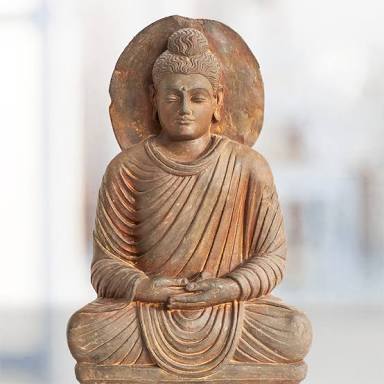
    Buddha on Reality.Image credit

    And one who knows Sanskrit and History also knows how to sift the chaff from the grain.

    In the meanwhile, people who very little of Sanskrit mus refrain from writing on these issues without adequate knowledge of Sanskrit and History.

    In the present case, the term Buddha means one who discusses things intellectually and nothing more,.

    The term Buddha also means enlightened one according Buddhism.

    So when the term Buddha is used in the Ramayana  it is in the sense of one who discusses things  as an Intellectual.

    Buddha is venerated as a Great Philosopher  for His interpretation of Reality is as aspect of Brahman.

    The Sunyavada of Buddhism is very close to Advaita, though not similar.

    “Valmiki Ramayana mentions Buddha in bad light.

    Valmiki Ramayana has divisons called Kandas like Bala Kanda , Ayodhya kanda , Yuddha kanda etc.

    Bala kanda deals with the balyam i.e childhood of sri rama. Ayodhya kanda,  deals mainly with events that happened after the Rama getting married i.e preparation for coronation of Rama and Rama leaving Ayodhya.

    In the beginning of Ayodhya kanda Rama was made to leave kingdom resulting in cascade of event like death of Dasaratha death , recalling of Bharatha urgently from his uncles kingdom and now Bharatha comes back to Ayodhya and comes to know about his mothers wishes , Rama’s exit to forests and death of his father .  He feels very sad for the things that happened and now he thinks about going to forest with many important people like his mothers, his ministers , soldiers etc to persuade rama to accept the Ayodhya kingdom and rule as the king.

    After meeting Rama the screen play starts, one by one starts requesting Rama to return to Ayodhya  using their oratory and logical skills and  now comes the turn of Jabali i.e one of the ministers of Ayodhya kingdom. In the replay given to Jabali shunning his logical arguments Rama criticises Buddha.

    In Ayodhya Kandas chapters called Sargaa. In ayodhya kanda in 109th sarga  has many poems and in the 34 poem Rama calls Buddha as theif and abuses his religion as atheistic  and bad.

    Here is the text:

    यथा हि चोरः स तथा हि बुद्ध |

    स्तथागतं नास्तिकमत्र विध्हि |

    तस्माद्धि यः शङ्क्यतमः प्रजानाम् |

    न नास्ति केनाभिमुखो बुधः स्यात् २-१०९-३४

    Source.https://www.quora.com/Is-Buddha-mentioned-in-the-Ramayana-What-does-that-imply-for-the-date-of-composition-of-the-text

    yathaa hi choraH sa tathaa hi buddha |
    stathaagataM naastikamatra vidhhi |
    tasmaaddhi yaH shaN^kyatamaH prajaanaam |
    na naasti kenaabhimukho budhaH syaat 2-109-34( Valmiki Ramayana, Ayodhya Kanda,Sarga 109. Sloka 34)

    34. yathaahi tathaa hi= It is an exact state of the case; saH= that; buddhaH= a mere intellection; choraH= (is deserves to be punished) as a thief; viddhi= and know; naastikam= an atheist; atra= here; tathaagatam= to be on par with a mere intellectual; tasaat= therefore; yaH= he who; shaN^kya tamaH= is the most suspectable; prajaanaam= (should be punished in the interest of) the people; na syaat= In no case; buddhaH= should a wise man; abhimukhaH= consort; naastikaa= with an atheist.

    ‘In sarga 110 & shloka 34 of Ayodhyakanda Rama saysto  Bharata, ” Buddha & his followers are thieves. They don’t believe  in God. It is better to be away of them.”

    तस्य ज्येष्ठो असि दायादो राम इत्य् अभिविश्रुतः |
    तद् गृहाण स्वकम् राज्यम् अवेक्षस्व जगन् नृप || ३४

    34. asi = you are; jyeSThaH = the eldest son; tasya = of that Dasaratha; abhivishrutaH = very well known; raama iti = as Rama; daayaadaH = the heir who can claim over the inheritance; nR^ipaiH = O; king!; tat = for that reason; gR^ihaaNa = take over; svakam = your; raajyam = kingdom; avekSasva = look after; janam = your people.

    “You are the eldest son of that Dasaratha, very well-known as Rama, the heir who can claim over the inheritance. O, King! Hence, take over your kingdom and look after your people there.”

    “It is an exact state of the case that a mere *intellection deserves to be punished as it were a thief and know an atheist to be on par with a mere intellectual. Therefore he is the most suspectable and should be punished in the interest of the poeple. In no case should a wise man consort with an atheist.”

    * It is the word that is responding to the chanllenge, which we call intellection. Truth/God is very subtle. A mind that is caught in the net of words/arguments cannot understand truth/God.

    http://www.valmikiramayan.net/ayodhya/sarga109/ayodhya_109_frame.htm

    http://sanskritdocuments.org/sites/valmikiramayan/ayodhya/sarga110/ayodhya_110_frame.htm

    https://ramanisblog.in/2013/08/02/ancient-maps-india-timeline-ramayana-mahabharata/

  • Brahmin Kings Of Indian History

    Brahmin Kings Of Indian History

    By disposition a Brahmin is Pious and is expected to learn Vedas,Teach them,

    “Adhyaapanam Adhyayanam
    Yajanam Yaajanam Tathaa
    Daanam Pratigraham Chaiva
    Brahmanaanaamakalpayaat”

    Adyayanam-Pracctice of reciting the Vedas, with meaning.

    Adhyaapnan-Teaching of the Vedas along with the Astras(scientific Arms) and Satras(Ordinary weapons of war)

    Yajanam-performance of the Yagnas and Yagas.

    Definition Of Brahmin,Duties

    Because of their disposition and non attachment to things worldly, they were the the Perceptor ,Gurus of the Kings, who are normally Kshatiyas.

    Sage Vasishta is the Raja Guru of Ikshvaku Dynasty, Dasaratha,Rama.

    However at times they had taken over the reigns of running a Kingdom.

    It is debatable whether they have been successful.

    List of Brahmin Kings.

    Surya, King of Kalinga whose gotra was Kashyap.
    Soma, King of area near Yamuna river whose gotra was Atreya.
    Mangal, King of Avanti whose gotra was Atri.
    Budha, King of Magadh whose gotra was Angiras.
    Guru, King of Sindhu whose gotra was Bhargav.
    Shukra, King of Bhojkot whose gotra was Kashyap.
    Shani, King of Saurashtra whose gotra was Kashyap.
    Rahu, King of Babar whose gotra was Maitrenis.
    Ketu, King of Kalinga whose gotra was Jaimini.
    Raja Dahir ,
    pushyamitra shung,,
    devbhuti,,
    susharma,,
    shimuk,
    Poru who fought against Sikandar was also Brahmin, pushyabhuti shung was the 1st bhrman king of india,
    Dantidurg,
    Vishbandan,
    Peshwas ,
    Kings of Sindh ,,
    Lakshmibai,
    Kings of Bengal,
    Sung dynasty ,
    Kuber ; Lankesh.
    Shivaji was Kaushik,
    Lord Buddha was Gautam,
    Achyutrai from Vijayanagar,
    King lilitaditya  ruled from Kashmir /Central asia .
    King Rudravarma of champa (vietnam) of 657 A.D.
    King jayavarma one of the kambuja (Kampuchea) of 781 A.D
    …Pushyamitra Sunga,
    Vasudeva Kanva,
    Satavahanas   were Brahmin Emperors,
    Raja Harishchander ,
    Samrat Hem Chandra Vikramaditya whose gotra was Parashar,
    Raja Birbal,
    A Raam Mohan Rai.
    Raja Bharat (Bharat)

    Important Brahmins ( from 19 Century)

     GREAT REVOLT OF 1957- Mangal Pandey who shot the first bullet, Rani Lakshmi Bai, Tatya Topey.  SOCIO-RELIGIOUS REFORMERS – Raja Rammohan Rai called Father of modern India, Debendranath Tagore, Pratap Chandra Majumdar (reformers), Ishwar Chandra Vidya Sagar (scholar), Swami Dayanand Saraswati, Sri V Narayan Agnohotri, R G Bhandarkar, M G Ranade, Vishnu Shastri Chiplunkar, K T Teelang, C V Joshi, G G Agarkar, Gopal Hari Deshmukh and Vishnu Bhikaji – crusaded against irrationality & other evils present at that time in the Indian societies.  Ramakrishna Paramhans spiritual saint who is more known by name of his disciple Swami Vivekanand who introduced principles of Hinduism to the world.  First Hindu spiritual teacher to visit U S A was Mr. Joshi, followed by others like P C Majumdar. B B Nagarkar, Narsimhacharya, Swami Ramtirath & Dr S Radhakrishnan.  Surinder Venkatesh Ketkar- First Indian to receive Doctorate from American University  NOBLE LAURITES – Rabindra Nath Tagore, C V Raman, Amartya Sen ~ 2 ~  FIRST TO CRITICISE BRITISH RULE – Bankim Chandra Chaterji, M G Ranade, Surendra Nath Banerji  FIRST PRESIDENT OF INDIAN NATIONAL CONGRESS – Vyomesh Chandra Banerji  One of most prominent leaders of Garam Dal & Naram Dal of then Congress party were Lokmanya Tilak & Gopal Krishan Gokhle.  KRANTI AGAINST BRITISH RAJ – Vasudeo Vasant Phadke, Chapekar brothers,Vishnu Ganesh Pingale, Bhai Parmanad, Birendra Nath Chattopadhyay, Bagvati Charan Bohra, Chandra Shekhar Azad, & Durga Bhabhi  NATIONALISTIC SLOGANS – “VANDE MATARAM”, “SWARAJ IS MY BIRTH RIGHT” & ‘SARFAROSHI KI TAMMANNA AB HAMAREY DIL ME HAI’ were written by Bankim, Tilak & Ram Prasad Bismil  REVOLUTIONERY WOMEN WHO SUFFERED UNDER BRITISH RAJ – Bala Devi, Vimal Pratibha Devi, Kalpana Dutt, Suhasini Ganguli, The Mukerji sisters – Usha & parul.  Sarojini Naidu, Kamla Nehru, Vijai luxmi Pandit- participated in Gandhian movement.  FIRSTS IN INDIA – o Satyendra Nath Tagore – First I C S Officer o Rabindra Nath Tagore Nobel Prize o Sarojini Naidu 1st Woman Congress President & governor of UP o Chakravarti Rajgopalachari- 1 st Governor General of India & 1st Bharat Ratna Award Winner, o Pt Jawahar Lal Nehru- 1 st Prime minister o Vjai luxmi Pandit 1st Woman Ambassador & Minister of State o CD Deshmukh 1st Finance Minister to present General budget o Ganeshvasudeo Malvankar 1st Speaker of Lok Sabha o S Mukherji 1st Chief of Air Staff o Vinoba Bhave 1st Roman Magasaysay Award winner o Dr S Radhakrishnan 1st elected President of India o Sucheta Kriplani, 1st Woman Chief Minister o G Sankar Kurup 1st Janpith Award Winner o Drba Banerji, 1st Woman Pilot of Indian Airlines o Mihir Sen 1st to swim across English Cannel o Udai Shankar 1st dancer to perform abroad o Atal Bihari Vajpaye 1st Hindi Speaker at UNO o Indira Gandhi 1st woman Prime minister of India o Rakesh Sharma 1st Indian Astronaut o Morarji Desai 1st Nishane-Pakistan winner o Sushmita Sen 1st Miss Universe o Saurav Ganguli 1st Cricketer in the world to win four consecutive “Man of the Match” awards in one day internationals.

    Citations,

    http://kanyakubj.org/notable.pdf