Tag: Plato

  • Pillars Of Hercules Tribute To Krishna ?

    Pillars Of Hercules Tribute To Krishna ?

    The Pillars of Hercules (Latin: Columnae Herculis, Greek: Ἡράκλειοι Στῆλαι, Arabic: أعمدة هرقل‎, Spanish: Columnas de Hércules) was the phrase that was applied in Antiquity to the promontories that flank the entrance to the Strait of Gibraltar. The northern Pillar is the Rock of Gibraltar (now part of the British overseas territory of Gibraltar). A corresponding North African peak not being predominant, the identity of the southern Pillar has been disputed through history,[1] with the two most likely candidates being Monte Hacho inCeuta and Jebel Musa in Morocco.

    Lord Rama’s Empire extended throughout the world.

    The landmass then called Gondwana.

    “At the time of Atlantis and Rama, the Mediterranean was a large and fertile valley. This ancient civilization, pre-dating dynastic Egypt, was known as the Osirian Civilization. The Nile river came out of Africa, as it does today, and was called the River Stix. However, instead of flowing into the Mediterranean Sea at the Nile Delta in northern Egypt, it continued into the valley, and then turned westward to flow in the deepest part of the Mediterranean Valley where it created a large lake and then flowed out between Malta and Sicily, and south of Sardinia into the Atlantic at Gibraltar (the Pillars of Hercules). When Atlantis was destroyed in a cataclysmic upheaval, this cataclysmic change in the Atlantic slowly flooded the Mediterranean Basin, destroying the Osirian’s great cities and forcing them to move to higher ground. This theory helps explain the strange megalithic remains found throughout the Mediterranean

    Pillars Of Hercules.jpg
    Pillars Of Hercules.

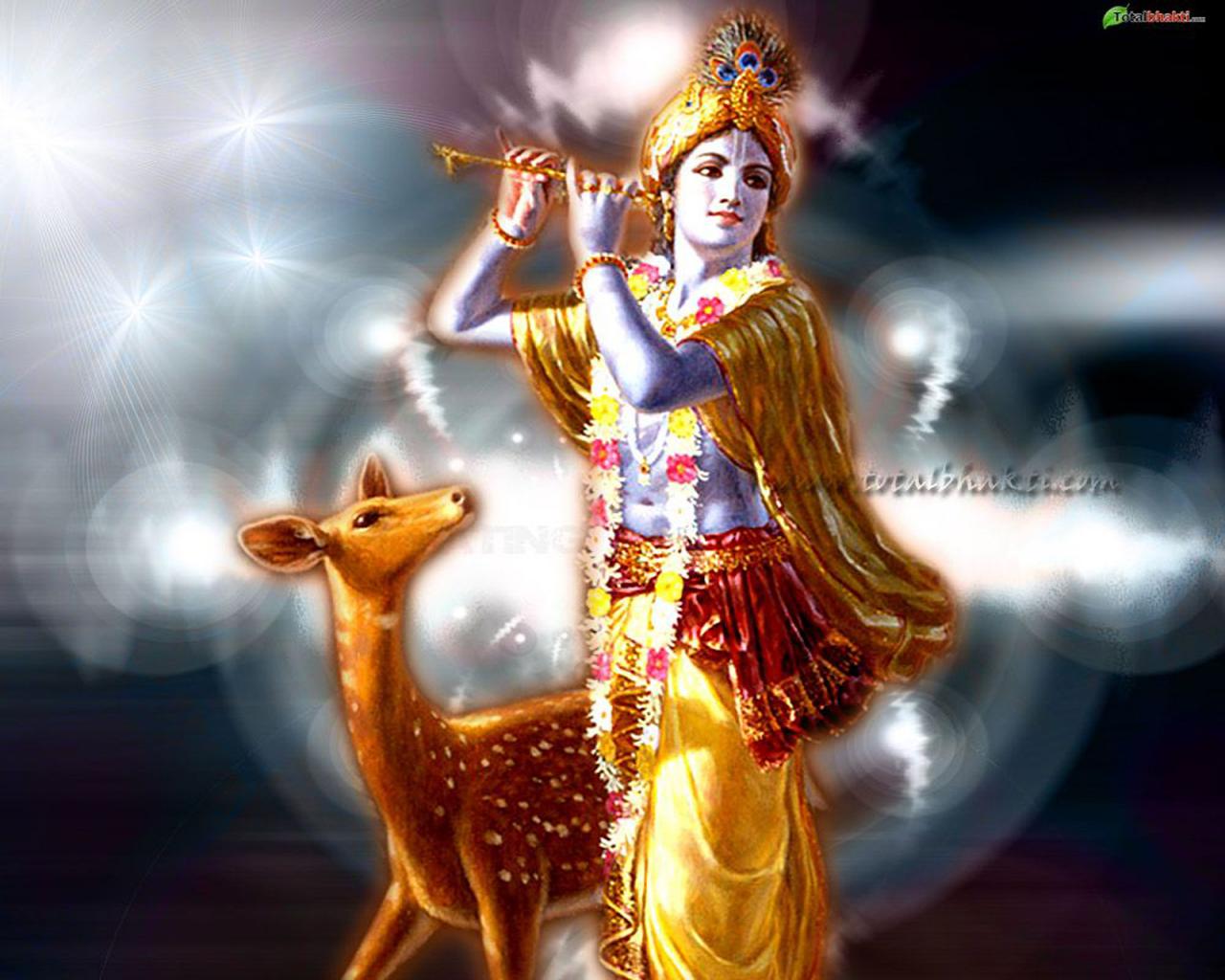
    Both Greeks and Romans habitually tried to understand the religions of India by trying to fit them as far as possible into Greco-Roman categories. Deities in particular were spoken of, not in Indian but in Greek terms and called by Greek names. Thus Shiva was identified as ‘Dionysos’, and Hare Krishna as ‘ Hercules’.

    In a passage of the Rig Veda, Vac is praised as a divine being. Vac is omnipotent, moves amongst divine beings, and carries the great gods, Mitra, Varuna, Indra and Agni, within itself. The doctrine of Vac teaches that “all gods live from Vac, also all demi-gods, animals and people. Vac is the eternal being, it is the first-born of the eternal law, mother of the Vedas and navel of immortality.” Vedic Aryans attached such great importance to the spoken word that one who could not correctly pronounce Sanskrit was called barbar (meaning stammering). ‘

    Hence one should not be too sure of the incredibility of the view of those who conceive that there is continuity between the parts about the Pillars of Hercules and the parts about India, and that in this way the ocean is one. As further evidence in favor of this they quote the case of elephants, a species occurring in each of these extreme regions, suggesting that the common characteristic of these extremes is explained by their continuity. Also those mathematicians who try to calculate the size of the earth’s circumference arrive at the figure only that the earth’s mass is spherical, but also that as compared with the stars it is not of great size. 400,000 stades. This indicates not only that the earth’s mass is spherical, but also that as compared with the stars it is not of great size…

    Most pre-Ptolemaic Greek geographers did accept that Africa was bounded on all sides by the sea, except where it joined Asia. Ptolemy, however, supposed that not far below the Horn of Africa, the continent trended to the east, eventually joining the Chinese mainland and making of the Indian Ocean a landlocked sea. He may have been influ­enced in this by the pas­sage from De Caelo, where Aristotle    sug­gests that the presence of elephants in both Asia and Africa might indi­cate that the two conti­nents   were contiguous. Ptolemy compounded his error by postulating the exist­ence of a huge “Southern Conti­nent,” a Terra Australis, to the south of Africa. This imaginary continent did not finally disappear from European maps until the early 18th century.

    Megasthanes took the legend of Krishna to Greece and had it incorporated  in Greek Legends.

    See the excerpts towards the close of the Post.

    Similarities between Krishna and Hercules.

    Krishna’s Killing of Kalinga is similar to Hercules with Hydra.

    Balarama Is Hercules.

    There is also a view that Balaram is Hercules.

    ““The Hercules who penetrated so far, the Indians tell us, was a native of their country. He is particularly worshipped by the Suraseni (Shurasena), who have two great cities, Methora (Mathura) and Cleisoborus (Surapura), and the navigable river Jobares (Yamuna), passes through their territories. This Hercules, as Megasthenes asserts, and the Indians themselves assure us, uses the same habit with the Theban Hercules. Many male children, but only one daughter was born to him in India, for he married many women. The daughter’s name was Pandaea, and the land where she was born, and over which Heracles placed her as ruler, was named Pandaea after her.”

    It is probable that the symbol of Pillar of Hercules was erected in honor of Lord Krishna even if Balarama was Hercules, Krishna being the most popular of the to brothers.

    Citation.

    saudiaramcoworld

    romaniamegalitica

    https://ramanisblog.in/2014/03/05/lord-krishna-was-also-a-greek-god-hercules/

    https://ramanisblog.in/2015/01/17/balarama-is-hercules-megasthenes/

  • ‘Indian Yogi Met Socrates’ Disciple Of Aristotle

    I have posted articles on the close affinity between Hinduism and Greek Religion.

    Krishna and Balarama have been worshiped and there is evidence to state that Hercules was Balarama, elder brother of Krishna.


    There is a report by Aristoxenus, a disciple of Aristotle.

    English: Bust of Socrates in the Vatican Museum
    English: Bust of Socrates in the Vatican Museum (Photo credit: Wikipedia)


    this Indian met Socrates in Athens and asked him what he studying. Socrates replied that he was studying human life. The Indian at this point laughed and asked him how could he study human life without studying the divine.  The quote is as follows

    ‘Now Aristoxenus the Musician says that this argument comes from the Indians: for a certain man of that nation fell in with Socrates at Athens, and presently asked him, what he was doing in philosophy: and when he said, that he was studying human life, the Indian laughed at him, and said that no one could comprehend things human, if he were ignorant of things divine [Eusebius of Caesarea: Praeparatio Evangelica (Preparation for the Gospel). Tr. E.H. Gifford (1903) — Book 11]

    It is not sure if Socrates changed his mind, but his student Plato was influenced. Plato who previously argued that human and divine affairs were the same, started distinguishing between the two. According to Plato there was one kind of study concerning nature, another concerning humans and a third concerning dialectic.

    ‘But he maintained that we could not take a clear view of human affairs, unless the divine were previously discerned: for just as physicians, when treating any parts of the body, attend first to the state of the whole, so the man who is to take a clear view of things here on earth must first know the nature of the universe; and man, he said, was a part of the world; and good was of two kinds, our own good and that of the whole, and the good of the whole was the more important, because the other was for its sake.[Eusebius of Caesarea: Praeparatio Evangelica (Preparation for the Gospel). Tr. E.H. Gifford (1903) — Book 11]

    Citation.

    1. Mcevilley, Thomas C. The Shape of Ancient Thought: Comparative Studies in Greek and Indian Philosophies. 1st ed. Allworth Press, 2001.
    2. Caesarea, Eusebius of. Eusebius of Caesarea: Praeparatio Evangelica, 2010.
  • Atlantis People Descendants Of Shiva Ganesha Muruga

    One can not wish away the concept of legends of Lemuria ,Atlantis.

    They are found in many a civilization’s legends,the civilizations set apart by distance and cultural practices.

    Descriptions and references are found in Greek,Latin,Spanish, Nordic, Sanskrit and Tamil.

    1.From the Hindu texts it may be inferred that it was inhabited by the descendants of Shiva, Ganesha and Subrahmanya.

    .Shiva with Trident.jpg
    Shiva in Atlantis .Shiva with Trident.

    Tamil literature speaks of  the great Tsunamis, repeatedly emphasized in Sangam Literature , about 5000 old and this is backed by the Puranas.

    Or the Tamil literature might be backing up the Purana.

    Lord Rama’s ancestor, Vaivasvatha Manu left from the Dravidian South for the Saraswathi valley and his successor’s founded the Ayodhya Kingdom.

    Manu left by the Arabian sea route and traveled to the Sarasvathi river initially.

    Shiva with his offspring Ganesha and Subrahmanya, referred to as Murugan in Tamil, left by the Arabian sea through the Arabian peninsula to settle down in the Europe, Africa and Latin American countries.

    Manu’s descendants also spread towards the north and north-east through Iran, Russia and went as far as the Arctic.

    The Rig Veda is reported to have been complied in the Arctic.

    2.References found in the Hindu Texts indicate that the people who left by the Arabian sea through the middle east mingled with the local people in those area and so were treated as Milechas by the Sarasvati Valley people.

    There seems to have been a constant war going on between these two Groups and those in the region of the Atlantis were referred to as Asuras, the powerful.

    3.Asuras are different from the Rakshasas who lived in the southern part of  thepresent India from SriLanka down wards, eastwards.

    Ravana is one such Rakshasa.

    This is mentioned in Tamil Literature  while speaking about Lemuria Continent.

    The Vedic and Purana texts  refer them as Southerners, Dravida.

    4.There have also been a clashes between the Lemurians and the Atlantis people.

    This again is mentioned n the Puranas as the clash between the Asuras and Rakshasas.

    5.In the Ramayana Sugreeva was asked to search for Sita in Peru and the Nazca lines are the Trishula Marks of Shiva.

    Plato’s description of Atlantis.

    But when the divine portion began to fade away in them, being diluted too often and too much by admixture with mortal blood, and the human nature began to preponderate, they became unable to control their behavior and became unseemly… and grew visibly debased…

    Then, Zeus, the god of gods, who rules by law… seeing that an honorable race was in a most wretched state, and intending to punish them, that they might be purified and improve… gathered all gods together and spake as follows:…”…

    There is a story which even you have preserved, that once upon a time Phaethon, the son of Helios, having yoked the steeds in his father’s chariot, because he was not able to drive them in the path of his father, burnt up all that was upon the earth, and was himself destroyed by a thunderbolt. Now, this has the form of a myth, but really signifies a declination of the bodies moving around the earth and in the heavens, and a great conflagration of things upon the earth recurring at long intervals of time: when this happens, those who live upon the mountains and in dry and lofty places are more liable to destruction than those who dwell by rivers or on the sea-shore; and from this calamity the Nile, who is our never-failing savior, saves and delivers us.

    When, on the other hand, the gods purge the earth with a deluge of water, among you herdsmen and shepherds on the mountains are the survivors, whereas those of you who live in cities are carried by the rivers into the sea; but in this country neither at that time nor at any other does the water come from above on the fields, having always a tendency to come up from below, for which reason the things preserved here are said to be the oldest.

    The fact is, that wherever the extremity of winter frost or of summer sun does not prevent, the human race is always increasing at times, and at other times diminishing in numbers. And whatever happened either in your country or in ours, or in any other region of which we are informed–if any action which is noble or great, or in any other way remarkable has taken place, all that has been written down of old, and is preserved in our temples; whereas you and other nations are just being provided with letters and the other things which States require; and then, at the usual period, the stream from heaven descends like a pestilence, and leaves only those of you who are destitute of letters and education; and thus you have to begin all over again as children, and know nothing of what happened in ancient times, either among us or among yourselves.

    As for those genealogies of yours which you have recounted to us, Solon, they are no better than the tales of children; for, in the first place, you remember one deluge only, whereas there were many of them; and, in the next place, you do not know that there dwelt in your land the fairest and noblest race of men which ever lived, of whom you and your whole city are but a seed or remnant. And this was unknown to you, because for many generations the survivors of that destruction died and made no sign.

    For there was a time, Solon, before that great deluge of all, when the city which now is Athens was first in war, and was preeminent for the excellence of her laws, and is said to have performed the noblest deeds, and to have had the fairest constitution of any of which tradition tells, under the face of heaven.’

    Solon marveled at this, and earnestly requested the priest to inform him exactly and in order about these former citizens.

    ‘You are welcome to hear about them, Solon,’ said the priest, ‘both for your own sake and for that of the city; and, above all, for the sake of the goddess who is the common patron and protector and educator of both our cities. She founded your city a thousand years before ours, receiving from the Earth and Hephaestus the seed of your race, and then she founded ours, the constitution of which is set down in our sacred registers as 8000 years old.

    As touching the citizens of 9000 years ago, I will briefly inform you of their laws and of the noblest of their actions; and the exact particulars of the whole we will hereafter go through at our leisure in the sacred registers themselves. If you compare these very laws with your own, you will find that many of ours are the counterpart of yours, as they were in the olden time.

    In the first place, there is the caste of priests, which is separated from all the others; next there are the artificers, who exercise their several crafts by themselves, and without admixture of any other; and also there is the class of shepherds and that of hunters, as well as that of husbandmen; and you will observe, too, that the warriors in Egypt are separated from all the other classes, and are commanded by the law only to engage in war; moreover, the weapons with which they are equipped are shields and spears, and this the goddess taught first among you, and then in Asiatic countries, and we among the Asiatics first adopted.’

    Citation:

    http://ascendingpassage.com/plato-atlantis-critias.htm

    http://www.lost-civilizations.net/horse-sacrifice-atlantis-indies-4.html#long

    Related.

    http://ramanisblog.in/2014/07/31/search-sita-in-peru-nazca-lines-sugreeva-ramayana/

    http://ramanisblog.in/2014/08/09/ramas-ancestor-manu-dravida-bhagavatha-purana/

  • 7 Books We Lost to History That Would Have Changed the World

    The vast majority of the knowledge humans have assembled over the centuries, has been lost. The world’s geniuses either kept their revelations to themselves and then died, or else they put it down on paper which has long since rotted or burned or been used to line some parakeet’s cage.

    Obviously we’ll never know what great books have been lost to time, but we have clues on some of them, and what those clues tell us is mind-boggling, and a little bit depressing. If you could make a library out of just books that didn’t survive, you’d have a collection of some of the best freaking books ever written.One Book is Eve’s Gospel.
    http://www.cracked.com/article/18368_7-books-we-lost-to-history-that-would-have-changed-world/

    History's Lost Books.
    Lost Books
    History's Lost Books.
    Lost Books