Tag: Lemuria

  • Tamil Lands Sanjaya Description Tallies Tamil Work Tholkaapiyam?

    Tamil Lands Sanjaya Description Tallies Tamil Work Tholkaapiyam?

    I have written articles on the relationship between Tamil/s and Sanatan Dharma. Based on references to Sanskrit,Puranas Ithihasas found in Tamil Literature of ancient times, (Five Epics, poems of Sangam period) and references in Sanskrit, Prakrit , Puranas, Ithihasas Ramayana and Mahabharata about Tamil and Tamil Kings, I have written about Vedic practices , inclusion of Tamils cultural practices in Sanatan Dharma .From these I had also mentioned about the marriage of Sri Krishna, Arjuna to Tamil princesses; Krishna had a daughter through the South Indian Princess and got her married to a Pandyan prince. Sri. Rama’ s sister, Shantha, was married to Rishyashrunga from Sringeri, Karnataka.The references are too many to be listed here. You may read some of them here.

    Based on such references in Sanskrit texts, I tried to elaborate what Bharata Varsha and it’s extent.You may read some of them here.

    In these posts, I have shown some of the areas mentioned in Sanskrit texts.I have also written von references to Tamil lands in Sanskrit texts. Please read  some of them here. Srimad Bhagvad purana and Skanda Purana identify Kumarikandam.

    Now I am trying to explore the Tamil lands from the statements by Sanjaya in Mahabharata.

    Sanjaya mentions six regions in Sakat dweepa, one of the areas mentioned as part of Earth’s landmass. They are.

    • Mahameru – Mountainous region
    • Mahakaasam- Pastoral land, where grass grows aplenty,Mullai.
    • Jaladham . Marutham.
    • Kumudhotharam,means where it rains, conducive to farming, The place water lilies,Aambal , ஆம்பல் in தமிழ், NymphaeaPubesecens.
    • Jaladhaaram- Where copious rains fall, Neydhal
    • Subrahmanya is referred to Sukumara in Sanskrit,which means handsome, good, nice Son; Tamil calls Subrahmanya as Murugan means, Exquisite, handsome. So, Sukumaaram land might indicate Mountain regions where Subrahmanya resides. In Tamil Literature, Murugan is assigned Mountains region; Vishnu as Krishna to Pastoral lands; Varuna to Sea and adjoining areas; Marutham belongs to Indra and Paalai to Kotravai, Durga.

    Tamil grammar defines six landmass. Kurunji ( Mountain and surrounding areas); Mullai ( Forest and adjoining areas); Marutham( Arable land); Neydhal(Sea and adjoining areas) and Paalai( Desert).

    So it is reasonable to infer Sanjaya was speaking about Tamil Lands.

    The desert region called Paalai in Tamil Literature is found in Seven then panai naadu, Seven  lands of  Normal and short Palmyra trees. Palmyra trees grow in and around Deserts. These Paalai lands were further classified into nearly Desert முன் பாலை and Desert பின் பாலை.

    The seven landmasses based on the list of areas ruled by Tamil Kings, Thennan , தென்னன், One who belongs to South, are as follows.

    தெங்க நாடு ஏழு,மதுரை நாடு ஏழு,முன் பாலை நாடு ஏழு,பின் பாலை நாடு ஏழு,குன்ற நாடு ஏழு,குணகரை நாடு ஏழு,குறும்பனை நாடு ஏழு.

    That is Thenga Nadu ( Seven in number) had Palmyra and Coconut groves; Madurai Nadu ( Seven) corresponds to Marutham ,Jaladham(;Kunakarai Nadu ( Seven) corresponds to Neydhal Sea  and adjoining areas); Kunra Nadu ( Seven) mountainous region;pin Paalai and mun Paalai might indicate dessert..

    Comments for improving this line of thought welcome.

    Reference. https://thamizhan-thiravidana.blogspot.com/2011/07/59-3.html?m=1

  • Madurai 155 Trillion Years Old? Puzzling Evidence.

    Madurai 155 Trillion Years Old? Puzzling Evidence.

    When one delves deep into Purana, Ithihasa and ancient texts of India, including regional language texts, one finds one Corroborates the other. Events,Persons mentioned in one is corroborated by the other. While the Purana is in Sanskrit, others are in ancient languages like Pali , Prakrit. Some languages like these may belong to Dialects. However, Tamil, an ancient language of India with which I am familiar, is rich in literature and grammar and it goes back to thousands of years along with Sanskrit. The archeological finds at Poompuhar, Tamil Nadu pushes the date of Tamil, at least, to 20,000 years. An Advanced Tamil civilization site near Chennai,reveals it to be a Million year old! . Thiruvannamalai,Tamilnadu is about 3.94 billion years old, Tirupati 2200 million years old, Jwalapuram Cuddapah, Andhara Is 74,000 years old Guruvayur, Kerala is over 25,000 years!

    Lemuris 230 Million years old My Tedtalk

    Ancient Bharathavarsha, in South, had Dravida Desa, Southern Countries. This landmass was ruled by three dynasties, Chera, Chola and Pandyas. The Kings of these dynasties trace their lineage to either Surya Vamsa , Ikshvaku Dynasty founded by Ikshvaku, son of the first human being Manu(Manu was the ancestor of Sri Rama) ;or to Chandra Vamsa, Lunar dynasty of Ila, Daughter of Manu.

    Manu, aka Satyavrata Manu or Vaivaswatha Manu was a Dradiva Emperor. This is recorded in the Bhagavadha Purana. I had written an article on this.

    While Satyavrata Manu was offering oblations to ancestors, a 🐠🐋🐟 Matsya appeared.

    There is a river by name “Krita-Maala”, today famously known as River Vaigai. On the banks of this River Krita-Maala, there was this “Shraadha-Manu”, who had the name “Satyavrata”. As this Satyavrata is living his life at this place, one day he goes to the river bank to do his regular “Tharpana” (Spiritual Practice) in the evening. As he was performing the “Tharpana”, there was a small little fish that got into his hands.

    “Tasyaa dheenataram vaakyam ashrutya sa maheepathihi!

    Kalasaapshu nihiteneyam dayaalu ninya aashramam!!”

    As the little fish enters into Satyavrata’s hands, it suddenly started to talk! Upon hearing a fish talk in human language, Satyavrata was surprised! The little fish talks to Satyavrata thus, “Oh Satyavrata! As you see, I’m such a small little fish, just taken birth! Please do not leave me again into this mighty river amidst the fast-flowing water. There are bigger fishes here, which would eat me off. Therefore, please help me out!” Upon hearing this, Satyavrata was moved! He asks the fish thus, “Oh little one! I don’t have any problem in helping you and ensuring your safety. Please tell me what should I do!” The fish replies back, “Oh Satyavrata! Why don’t you put me into your ‘Kamandala’ vessel and take me to your home? You can put me into a small tank at your place, where I would be safe and secure!”

    Accordingly, Satyavrata takes the little fish into his vessel, takes it to his home and tries to put it into a nicely made tank, exclusively for that fish alone. But as Satyavrata tries to transfer the little fish into the tank, he is in for another surprise! Within the time that he walked back to his home, the fish has grown in size! It is not able to come out of the ‘Kamandala’ vessel. Now the fish replies thus, “Oh Satyavrata! I think this vessel nor this tank would be of sufficient size to house me. Perhaps you should put me into the well in your house. Accordingly thus, Satyavrata takes the fish to the well and drops it inside! Again, Satyavrata is in for a surprise! As he drops the fish into the well, it again grows quickly to a bigger size, which renders the well to be useless to hold it anymore. Again, Satyavrata puts the fish into another big tank, but in vain! Again the fish grows into a mammoth size, engulfing the whole tank!

    Upon seeing this, Satyavrata couldn’t understand what is going on here! Hence, he takes the fish and puts it into the river again! Now, the fish grows into a huge whale-like size and engulfs the whole river too! This leaves Satyavrata stunned beyond words! He is clearly running out of options and doesn’t know what is going on around him. This is surely some message from someone who is all-pervasive and all-powerful. At one point, Satyavrata starts to doubt whether this is really a fish or something or someone else!

    As Satyavrata looks on with awe and shock, the fish tells him thus, “Oh Satyavrata! Looks like even this river is not capable of holding my mammoth size. I think it’s best that you take me to the ocean and leave me there!” Now Satyavrata is clearly perplexed here! He doesn’t know whether to really honour these words of the fish. With all his past experiences with the fish, he was damn sure that even if he is going to leave it in the ocean, it is going to say that this ocean is also insufficient! What would he do then? Mustering up his courage thus, Satyavrata asks the fish thus, “I do not think that you are an ordinary little fish! You are somebody else! Please tell me who are you and what do you want from me! Why are you playing this game with me?” Skanda 8,Srimad Bhagavadham. https://www.google.com/amp/s/theindiandharma.org/2020/05/05/episode-242-the-matsya-avatara-satyavratas-encounter-with-a-fish/amp/

    Now, the purport of this article is not about Manu and the evolution of World as described in the Srimad Bhagavadham. We focus on where Satyavrata Manu was offering Tharpana, Oblations.

    It was in River Kritamala. Kritamala is the name of River Vaigai, at Madurai Tamil Nadu India. So, it is reasonable to postulate that Vaigai, and consequently Madurai is as old as Manu!

    https://www.google.com/amp/s/ramanisblog.in/2017/05/20/lemuria-the-home-of-tamils-my-tedtalk-at-coimbatore/amp/Based on Tectonic shift, Archeology and related evidence Ihad ,earlier,arrived at a figure of 230 million years for Lemuria of which Madurai was a part. It was Then Madurai then. Because of tectonic shift, it had moved to it’s present location. The present information in this article is Mind blogging. It is easy to dispose it off as Non sense. But evidence presented and the recent confirmation about the nature of Time as Non linear by Quantum would make one ponder.

    More to follow.

    This yuga cycle is called maha (in english, it means great/big) or divya (divine) yuga. One thousand such cycles forms one day of Brahma (a demigod in hindu religion which governs the universe). So one day of Brahma is 4.32 million * 1000 = 4.32 billion human years. Each such day of Brahma is called a “kalpa”. His night also constitutes 4.32 billion human years. During his day, life exists in universe. In nighttime, no form of life exists. So one complete day and night has 8.64 billion human years.

    -> Age of Brahma is 100 years. Each year of Brahma has 360 days and same number of nights. Thus, total age of Brahma is 360 * 100 * 8.64 billion = 311,040 billion human years. i.e. 311.04 trillion years. This period is called “maha kalpa”.
    -> The life span of the universe is one “maha kalpa”. i.e. 311.04 trillion human years. This time span is also the duration of one breath of “Vishnu” (the ultimate god in hindu religion). When he exhales, thousands of universes emerges and one “Brahma” is born in each universe. When “Vishnu” inhales, all universes get sucked and Brahma dies.
    -> This cycle is non-ending and eternal. Thats why “Vishnu” is considered eternal in Vedic Science (or religion).
    How much old is our universe:
    -> Note that the period of Satya Yuga is 0.4x, Treta Yuga is 0.3x, Dwapara Yuga is 0.2x and Kali Yuga is 0.1x where x is the time-span of one maha-yuga cycle. I will use ‘x’ as 1 maha-yuga cycle subsequently.
    -> In 1 day of Brahma, there are 14 “manvantara”. Each “manvantara” is divided into 71 “maha-yuga” cycles. So total make 14*71 = 994x (mahayuga cycles).
    -> Remaining cycles (1 day of Brahma contains 1000 maha-yuga cycles) are used to fill gaps between manvantara. Before and after each manvantara (called as “sandhya” and “sandhyamsa” respectively), there is a junction of 1.728 million (age of Satya Yuga, or 0.4x) human years. Total number of junctions are 15 (since there are 14 manvantaras). So total gap period is = 0.4 * 15 = 6x. Hence total makes 1000 maha-yuga cycles or 1 brahma day.
    -> According to the Vedic texts, current age of Brahma is 50 Brahma years and 1 brahma day (we are in the 1st day of 2nd half of brahma)and we are in the seventh “manvantara”, in the 28th turnover of its 71 yuga cycles. In this cycle, we are in the start Kali Yuga. Age of kali yuga is not known perfectly but it is around 5000-10000 years. For calculation, lets assume 8000 human years.
    -> So current age of our universe (in terms of maha-yuga cycles) =
    (50 * 720 * 1000) — 50 years * (360 days + 360 nights) * total no. of cycles in one day/night
    + (6 * 71) — 6 manvantara each of 71 maha-yuga cycle
    + (7 * 0.4) — 7 junctions or gaps for 6 manvantara
    + (27 * 1) — we are in 28th cycle of 71
    + (0.4+0.3+0.2) — In this cycle, we are in Kali Yuga. Satya Yuga, Treat Yuga and Dwapara yuga are 0.4x, 0.3x and 0.2x respectively.
    + around 8000 human years — very small, so ignoring it.

    Thus total age = (36,000,000 + 456.7)x = 36,000,456.7 * 4.32 million = 155,521,972.944 million years = 155.521972944 trillion human years. Now add the age of kaliyuga. i.e. around 8000 human years. One we calculate the exact age of kaliyuga, we can know the exact age of universe.https://www.cs.ubc.ca/~goyal/age_of_universe.php

  • Manu Dynasties Saptha Rishi Star Visitations Study  Part I

    Manu Dynasties Saptha Rishi Star Visitations Study Part I

    Manu’ s Sons and Their Kingdoms.

    Manu was the first Man . He was from the South of Vindhyas. When a Tsunami struck, he moved to Ayodhya . His son Ikshvaku founded the Suryavansh,Solar Dynasty.Manu had ,apart from Ikshvaku ,one Daughter Ila and Nine brothers.Ila married Chandra’s son Budha and their Dynasty was called Chandravansh,after Pururavas.This Dynasty is also called as Aila Dynasty and Ailas seemed to have lived in the western region of the Present Indian landmass,probably around Arabia.Please read my articles on this. Manu’s other sons, for various reasons did not seem to be as enterprising as Manu’s son Ikshvaku in establishing a Dynasty.

    It is recorded that Ila ,along with Budha founded the Lunar Dynasty, Chandravansh;from One of the sons of Manu, Agnivesa,Brahmin Dynasty came into being; From Trinabindu, descendant of Nabhaga,son of Manu,came Ilavida and she gave birth to Kubera, who ruled what is now Lanka. Kubera is recorded to be the elder brother of Ravana.Ravana was the son of Vishrava, Brother of Sage Pulasthya, Brother Agastya.Agastya was the son of Brahma..* Here comes a point. Though Manu is reported to have sprung from Vivaswan,Surya,Sun, and recorded as first Human, Offspring of Saptha Rishis are shown as progenitors of Human race.For example Daksha.Saptha Rishis change for each Manvantara.For the present Vaiwasvatha Manvantara,the Saptha, Seven Rishis are, Atri, Bhrigu,Kuthsa, Vasishta,Gautama,Kasyapa and Angirasa.( There are variations to these names).The possibilities are a) Some Rishis like Angirasa,Bharatwaja founded some Kingdoms which are not under the landmass of present India; b) the beings like Ramba,Kubera, are beings of a different plane like the Adithyas,Rudras and Devas who are the children of Sage Kasyapa.So, this opens the possibility of a) Visitation by beings from outer space or b) existence of such beings in a different plane and c ) they visit us.Though it sounds preposterous, facts mentioned in Purana,which I had checked till now,stand the test of scrutiny.So, it is logical to search further to unravel the seemingly impossible.

    One may note that Ila Dynasty progressed in what is now the South and Far East, in ancient days and we can find Hinduism remains and practices there even today,including Angkorvat temple complex,Siva trinetra dance in Australia,presence of Kasyapa in New Zealand.Except those belonging to Ikshvaku and Chandravansh,other dynasties do not seem to have survived, though the other dynasties like Yadu sprang from them.Notable exception is the The Three Great Kings’ Dynasties of Tamils,Chera,Chola and Pandya. Yet these three trace their origin to Ikshvaku and Lunar Dynasty.Lunar Dynasty was mostly ,as far as Tamils are concerned, through Ila ,thrived in South,Lanka and around that area,which included? Tamilakam. So, this gives rise to Lemuria, Kumarikandam , Atlantis and MU civilisations.

    More to follow.

    Northern North  Central Kingdoms

    • Kuru
    • Panchala
    • Vatsa ||

    Kingdoms of North-Central India

    • Kosala
    • Kasi
    • Videha
    • Dakshina Kosala
    • Malla

    Kingdoms of Western and West-Central India

    • Surasena
    • Dwaraka
    • Anarta
    • Saurashtra
    • Heheya
    • Nishada
    • Gurjara
    • Karusha
    • Chedi
    • Dasrana
    • Kunti
    • Avanti
    • Malava

    North-Northwestern (Fishermen’s) kingdoms

    • Matsya

    Western kingdoms

    • Trigartha
    • Salwa
    • Madra
    • Sindhu
    • Sauvira
    • Sivi
    • Kekeya
    • Gandhara
    • Youdheya
    • Pahlava

    Northwestern kingdoms

    • Bhalika
    • Parma Khamboja
    • Uttara Madra
    • Uttara Kuru
    • Yavana
    • Lhasa
    • Saka

    Northern kingdoms

    • Kasmira
    • Kamboja
    • Drada
    • Parada
    • Parasika
    • Tushara
    • Huna
    • Harahuna
    • Rishika
    • China
    • Paramus China

    Eastern kingdoms

    • Magada
    • Kikata
    • Anga
    • Pragjyotisha
    • Sonita
    • Lauhitya
    • Pundra
    • Sushma
    • Vanga
    • Odra
    • Utkala

    Kingdoms South of the Vindhya Range

    • Vidarba
    • Anupa
    • Suparaka
    • Nasikya
    • Konkana
    • Asmaka
    • Danda
    • Kalinga

    Kingdoms in the extreme South

    • Telinga
    • Andhra
    • Kishkinds
    • Gomanta
    • Karnata
    • Kanchi
    • Chola
    • Pandya
    • Chera
    • Mushika
    • Satyaputra
    • Tulu
    • Sinhala

    Saraswati Valley kingdoms

    • Saraswatha
    • Abhira
    • Sudra
    • Nishada

    Reference and citation.

    http://veda.wikidot.com/kingdoms-of-ancient-india

    Following is the detail of what had happened to Ikshvaku’s brothers (Manu’s sons)

    This Second Chapter describes the dynasties of the sons of Manu, headed by Karūṣa.After Sudyumna accepted the order of vānaprastha and departed for the forest, VaivasvataManu, being desirous of sons, worshiped the Supreme Personality of Godhead and consequently begot ten sons like MahārājaIkṣvāku, all of whom were like their father. One of these sons, Pṛṣadhra, was engaged in the duty of protecting cows at night with a sword in his hand. Following the order of his spiritual master, he would stand in this way for the entire night. Once, in the darkness of night, a tiger seized a cow from the cowshed, and when Pṛṣadhra came to know this, he took a sword in his hand and followed the tiger. Unfortunately, when he finally approached the tiger, he could not distinguish between the cow and the tiger in the dark, and thus he killed the cow. Because of this, his spiritual master cursed him to take birth in a śūdra family, but Pṛṣadhra practiced mystic yoga, and in bhaktiyoga he worshiped the Supreme Personality of Godhead. Then he voluntarily entered a blazing forest fire, thus relinquishing his material body and going back home, back to Godhead.Kavi, the youngest son of Manu, was a great devotee of the Supreme Personality of Godhead from his very childhood. From Manu’s son known as Karūṣa, a sect of kṣatriyas known as Kārūṣas was generated. Manu also had a son known as Dhṛṣṭa, from whom another sect of kṣatriyas was generated, but although they were born of one who had the qualities of a kṣatriya, they became brāhmaṇas. From Nṛga, another son of Manu, came the sons and grandsons known as Sumati, Bhūtajyoti and Vasu. From Vasu, in succession, came Pratīka, and from him came Oghavān. Descending in order from the seminal dynasty of Nariṣyanta, another son of Manu, were Citrasena, Ṛkṣa, MīḍhvānPūrṇaIndrasenaVītihotra, Satyaśravā, Uruśravā, Devadatta and Agniveśya. From the kṣatriya known as Agniveśya came the celebrated brāhmaṇa dynasty known as Āgniveśyāyana. From the seminal dynasty of Diṣṭa, another son of Manu, came Nābhāga, and from him in succession came Bhalandana, Vatsaprīti, Prāṁśu, Pramati, Khanitra, Cākṣuṣa, Viviṁśati, Rambha, Khanīnetra, Karandhama, Avīkṣit, Marutta, Dama, Rājyavardhana, Sudhṛti, NaraKevalaDhundhumānVegavānBudha and Tṛṇabindu. In this way, many sons and grandsons were born in this dynasty. From Tṛṇabindu came a daughter named Ilavilā, from whom Kuvera took birth. Tṛṇabindu also had three sons, named Viśāla, Śūnyabandhu and Dhūmraketu. The son of Viśāla was Hemacandra, his son was Dhūmrākṣa, and his son was Saṁyama. The sons of Saṁyama were Devaja and Kṛśāśva. Kṛśāśva’s son, Somadatta, performed an Aśvamedha sacrifice, and by worshiping the Supreme Personality of Godhead, Viṣṇu, he achieved the supreme perfection of going back home, back to Godhead.

    https://prabhupadabooks.com/sb/9/2?d=1

  • Lemuria Tamils Live in Mount Sastha California Twin of Thiruvannamalai? Researcher Missing

    I have been sharing my thoughts on the antiquity of Hinduism,its presence throughout the world ,it’s influence on all world cultures,Tamil,an ancient language of India that runs parallel to the oldest language of the world.

    And the geographical locations mentioned in ancient Indian texts.

    These include the Eighteen Puranas,two Ithihasas Ramayana and Mahabharata,and Vedic texts;and ancient Tamil classics.

    Over a period of nine years, I have been able to note that the information provided in these texts are correct and I am yet to find an erroneous location and description.

    Added to these texts are the Sthala Purana of Temples,that is the History of temples as recorded in the History of the town Where the temples are located.

    To my surprise,though temple sources are totally different in that they are totally separate from the Sanskrit texts and they were recorded in different languages other than Sanskrit.

    Yet I am yet to find a contradiction between Sthala Purana and ancient Sanskrit texts!

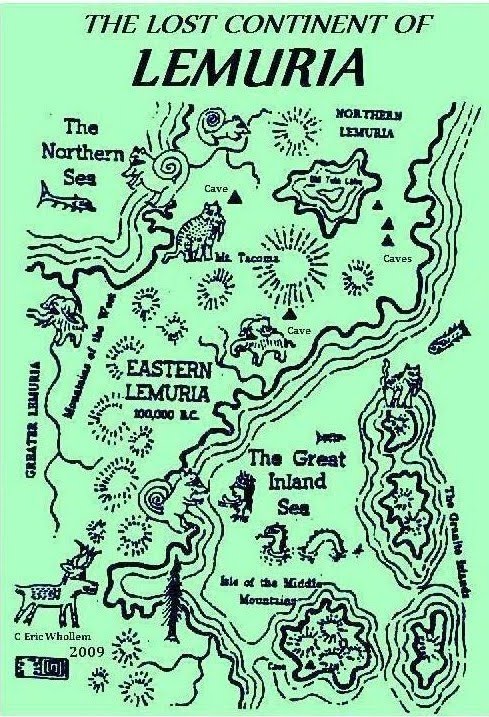
    Lemuria, Gondwana . image.
    Lemuria continent, Gondwana

    Sastha Mountain, California.
    Mount Sastha, California.

    And there is the issue of mountains of India.

    Many believe even now that Himalayas is the oldest mountain.

    No. Vindhya Mountains are quite older and they are about 230 Million Years old,a conservative estimate.

    Thirupathi of the Western Ghats is dated around 2100 Million Years old.

    Thiruvannamalai is about Three Billion years old.

    The Jwalapuram Nataraja is about 74,000 years and this is based on Krakotoa Volcano eruption.

    Taking these facts into account and the evidence of Lemuria,Date of ancient Tamil city Poompuhar around 16000 years ago,The first human being Manu meditated near Madagascar,presence of Hinduism , Kasyspa,Shiva, Subrahmanya in the far East, Australia and New Zealand , ancient history needs a relook.

    It,in my opinion ,is at two levels.

    One is that the ancient landmasses are different from what they are today.

    Sanatana Dharma was present in all these parts.

    Second is the enquiry into the type of inhabitants that lived there.

    Though we believe that they were like us, evidence surfacing now compels one to have a rethink.

    The systematic excavation of Giants’ remains in America and reports of places where some non humans are found.

    These include Bigfoot, Loch Ness monster.

    And there is Mount Sastha in California.

    And this is a sister mountain of Thiruvannamalai,Tamil Nadu, India.

    In this article I will explore more about Mount Sastha.

    Based on research,it transpires that people do live in towns inside Mount Sastha.

    One of the explorers,who had been going there often was missing!

    His reports are available.

    And there is more research on this,which I shall share shortly.

    Please note that there is a close liaison between North America, Central ,South America and Sanatana Dharma.

    America is the Patala referred to in Hinduism and it was populated by Giants.

    I have written on these.

    Please Google Hinduism Americas+ ramanan50 for details.

    By his own account, while investigating around Mount Shasta, he noticed an odd looking piece of rock that did not match the surrounding area. As he began clearing the debris and vegetation surrounding the rock, he noticed that there was a hole leading into a cavern system that led deep into Mount Shasta. He journeyed for about three miles into the interior of the mountain through an array of crisscrossing tunnel systems when he began stumbling across pieces of gold. After the eleventh mile he reached a location that resembled a village. Inside the village he came across chambers filled with gold and copper tablets, statues, spears and skeletons. The average heights of these skeletons were around 6’6” and the tallest being 10 feet in height. He painstakingly took down notes for the next few days, memorizing everything the best that he could and left everything exactly the way that he had found it.

    Brown spent the next 30 years researching and trying to build a group of experts to embark on an expedition. By this time he was 79 years old, living in Stockton, California, and had gained a following of about 80 people willing to contribute on the expedition including a museum curator and several scientists. He spent six weeks planning out the entire trip while several individuals sold off their properties believing that they would soon become rich. Brown, assumedly fearing that someone might jump the gun, withheld a lot of the specifics regarding the location of the cavern system. He met with the team one last time to make final preparations and established the time and place of departure; June 19th, at 1:00pm. However, that was the last time anyone saw J.C. Brown. Stockton Police spent the next several months investigating his disappearance to no avail. Theories ran amok, had he returned by himself? Was he kidnapped? Did he scam everyone? The simple fact remained, he never made a penny from his story nor did he have anything to gain from it.

    Stories surrounding Mount Shasta have long existed dating back to the earliest of Native American legends. Some of these older myths pertain to an invisible people who dwell within the mountain itself while newer claims attest to hidden passageways and rooms of gold existing within.

    Reference and citation.

    http://www.exploringtraditions.com/in-search-for-the-hidden-city-under-mount-shasta/

  • Three Hundred Million Years Pranava Veda Fifth of Nine Vedas Aindhiram Tamil?

    Three Hundred Million Years Pranava Veda Fifth of Nine Vedas Aindhiram Tamil?

    Vedas,the Scripture of Hindus, are quite ancient,have been transmitted,are being transmitted this even now and they are believed to be ‘Not Man-made’,Apauresheya’

    They are the inhaling and exhaling of Breath of Brahman,the Reality.

    This Reality is beyond speech,thought,time and space.

    To realise the Reality many paths have been set by people who have Realised It.

    These experiences are recorded in the Vedas.

    In the form of Mantras and Sukthas.

    Vedas provide solutions to mundane problems as well.

    Though the Reality is One and abstract,it can be realised by following procedures laid down in the Vedas.

    This path is a little difficult.

    This process is Called Nirguna Upasana,that is attempting to Realize Brahman as One Beyond Attributes.

    So another system was developed, taking into consideration the limited nature of Mind.

    This is Saguna Upasana.

    That is by praying to Individual Gods.

    As the Vedas have been transmitted orally,it is difficult to the date of origin.

    Taking some parameters like the Sanskrit used in Vedas,The oldest Veda,Rig Veda is currently dated around 5000 Years ago.

    This is way of the mark considering the facts that,

    Ramayana,which came much later is now dated at 5114 BC

    Mahabharata is dated around 5000 BC,

    (I have explained how Ramayana and Mahabharata are dated so close despite the information that these two are separated by thousands of years)

    The archeological evidence unearthed in India, Russia and all over the world ,sets the time line of Vedas by thousands of years.

    And fresh evidence points out that the Rig Veda was composed in The Arctic.

    That alone pushes it’s date back to Hyperborea,that to million years.

    And a million year old advanced Tamil site near Chennai, India refers to Vedas and Vedas refer to Tamil,an ancient language of India.

    Tamil and Sanskrit run parallel and compliment each other.

    The Vedas’ Date may be investigated from Tamil literature.

    And Tamil had a Religious system which includes Sanatana Dharma.

    In addition Tamil has systems not fully developed in the Vedas.

    For example the Vaasi Yoga by Lord Shiva,whose Disciple Panini wrote the Sanskrit Grammar.

    Patanjali,a disciple of Lord Shiva wrote the yoga Sutras,which is a prelude to Vaasi Yoga.

    Unfortunately Not much is known about Vaasi Yoga,though sufficient information is available for Seekers.

    The Tamils home land was Lemuria.

    It is dated around 300 million years ago.

    At the time of its existence,the sunken continent of Atlantis was in place.

    Lord Rama fought with Atlantis people to extend his Empire.

    Rama and the first Human being was Many.

    Many was from the South, Dravida Desa and migrated to Ayodhya due to a Tsunami.

    His son Ikshvsku founded the Surya vamsa, the Solar Dynasty.

    Manu’s daughter Ila founded the Chandra Vamsa,Lunar Dynasty.

    The Tamil philosophical system had a unique feature not found in the Vedas

    That of Siddha,Realized Souls.

    They are Realised souls much like the Yogins.

    It is worth mentioning that Yoga is not mentioned as a system in the Vedas.

    Patanjali’s Yoga Sutras came much later.

    But Shiva,who is considered as the first Siddha,Adi Siddha,in Tamil and is considered to have founded the Tamil language,along with Sanskrit.

    Shiva’s avatars are not found in detail in the north of Vindhya mountains,while South of Vindhya,the Dakshina pada, Dravida Desa details avatars, sixty four in number.

    The landmass which was the Tamils home is about 300 Million year old, Lemuria.

    These people and those adjoining Lemuria,The MU were highly advanced.

    Ancient Tamil Advaita is found in Thirumandhiram,by Thirumoolar.

    And the Tamils had and have a vast literature.

    The Sangam period saw some finest httpsliterature.

    It is currently dated around 3000 years ago.

    But consequent to the dating of Poompuhar,Tamil Nadu to 20,000 years ago,the history of Tamil Sangam goes farther back.

    The oldest Tamil literature available now is Tholkappiyam,a Book on Grammar and this belongs to second Tamil Sangam.

    There was an earlier Tamil Grammar Work Aindhiram,which was lost to a Tsunami.

    Aindhira is presumed to be Indra ,A Vedic Deity.

    He is reported to have written this grammar.

    Tholkappiyam indicates that it follows Aindhiram.

    It is worth noting that Valmiki was a Tamil Sangam poet.

    So was Tholkappiyar,who wrote Tholkappiyam.

    Now recent research Sri.Ganapathi Sthapathi states that Aindhiram was written by Mamuni Mayan.

    This treatise was lost due to Tsunami.

    This is the fist Veda from which the Four Vedas,Rig,Yajur Sama and Atharva sprang.

    The four Vedas were not perfect.

    Interesting concept.

    The basis for the concept rests on the following.

    1. Tamil land Lemuria was older.

    2.The Tamils had a distinct identity.

    3.The term Pranav’s Veda is referred in Bhagavathi and some Puranas.

    4.The Mayan civilisation sprang from Tamils.

    5.Mayan Sculpture and architecture follows Tamil systems.

    It is true that Mayan civilisation had its roots in Bharatavatsha,of which Tamils were a part.

    Tamils followed Sanatana Dharma.

    However they had distinct identity in worship.

    The Vedas speak of Fire Worship.But Tamil worship did not include fires worship at the beginning.

    However references to fire worship in the form Yagnyas are found from the days of Perunchotru Udhiyan Neduncheralaathan,a Cheers king,who donated areas for Dwelling of Brahmins.

    He also took part in the Mahabharata war.

    This places him in the Mahabharata Era.

    Madurai Meenakshi’s father took part in the Mahabharata war, fought along side the Pandavas.

    And as stated earlier Valmiki vwho wrote Ramayana was a Tamil Siddha and he wrote a Tamil poem.

    The Vaasi Yoga of Tamils preceded Patanjali’s Yoga Sutras.

    However the concept that the Pranav’s Veda is perfect and others are not so seems to be without basis.

    I had written in detail about thePranava Veda being imparted by Lord Subrahmanya to Shiva at Swamimalai,Tamil Nadu.

    On perusal of available material on the net ,Pranava Veda seems to concentrate more on Cosmology.

    The importance of OM and Light is stressed along with principles of Cosmos.

    There are also points of reference to Realisation,though not in vivid detail as found in the Vedas.

    That Aindhiram is the source for this text is hard to digest.

    Records available indicate that it is a book on Grammar and not a Scriptural text.

    And the Texts quoted from Pranav’s Veda seem to be more on Vaasthu,that is rules of architecture.

    The Pranava Veda texts also speak of Temple construction.

    Vedas do not speak of Temple Worship nor do they mention public Worship.

    Iswara Pranidhana concept was introduced by Patanjali in his Yoga Sutras.

    Prior to this individual deity worship is not found in Smritis.

    However one of the oldest temples in India ,Thiruvellarai was built by King Sibi,a Chola.

    He was the ancestor of Lord Rama and he had his second capital in what is now the NWFP of Pakistan.

    The concept of Building temple originated during the Period of Agama composition.

    Agama lays down rules for Temple construction and these are followed even today.

    Please refer my articles on Agama for details.

    The Agama System was after Sage Viswamitra.

    Sage Viswamitra banished his sons to Dravida Desa,for disobeying and questioning him .

    (Please refer my articles on this and other points mentioned in this article for details.

    I am providing a couple of links and more can be found in this site.)

    They found Tamil cultures to be quite advanced and their descendent Apasthamba formed the Apasthamba Sutra for The Four Vedas.

    This is followed till today by those living south of the Vindhya Mountains.

    Apasthamba also wrote Treatises on way of Living,called Gruhya Sutras.

    There he incorporated the non Vedic Concept of Thirumangalyam for women in marriage.

    Vedic marriage is complete when Sapthapathi is completed.

    No Maangalya Dhaarana is mentioned.

    So the best practices of Sanatana Dharma and Tamils, in the opinion of Apasthamba, were incorporated in Apasthamba Sutras.

    Hence there was a free flow of thoughts between Vedic and Tamil people.

    And there is no proprietary right over Vedas for Brahmins.

    Those who write on Pranava Veda speak of Pranava Veda as one that belongs to Viswamitra and People belonging to the Viswakarma community need not follow other Vedas and Pranava Veda is mainly addressed to Viswakarmas.

    Nothing can be farther from Truth.

    There is also a mention of names of Asuras and their characters were misinformation.

    This is also incorrect.

    Based on available resources it appears to me , that,

    Pranava Veda is Scripture ,

    It speaks of Pranava,OM and cosmology in detail as compared to Vedas,

    Siddha concepts are found in Pranava Veda,

    It deals more with Vaasthu and Sculpture and Architecture,

    It is in Tamil,

    It is not Aindhiram,

    Mamuni Mayon could have complied it,

    It is not Veda as is understood now in that it does not have enough material to call it as such

    And the origin of finding the manuscript from Saraswati Mahal is not backed up by facts,like where the the man who found them lived and how the texts are interpreted,other than some foundations repeating the same fact and references in Theosophy.

    I am yet to see Tamil Text of Pranava Veda.

    More research is needed to arrive at a firm objective conclusion.

    Will write more on Pranava Veda,It’s concepts,Mayasura,Mamuni Mayon,Mayan and Tamil civilisation,though I have written on the last mentioned.

    However,as per Russian Tradition there are Nine Vedas and only four were released to Bharathavarsha.

    The Rig Veda was composed in the Arctic.

    Krishn’a son Pradhyumna built a city in Por Baijn, Sibria,

    River Volga was the cradle of Vedic civilization

    Russia was called Rishi Varsha and also as Sthree Varsha, a country ruled by women,

    It belonged to Ila Varsha od Indian Puranas,

    Lake Baikal was Vaikanasa Theertha,

    Indra’s Amravathi was Arkaim,

    Swasthik Rig Vedic Mandala city was built in Russia.

    https://ramanan50-wordpress-com.cdn.ampproject.org/v/s/ramanan50.wordpress.com/2015/09/26/vedas-as-peruns-vedas-santees-in-russia/amp/?amp_js_v=a2&amp_gsa=1&usqp=mq331AQCCAE%3D#referrer=https%3A%2F%2Fwww.google.com&amp_tf=From%20%251%24s&ampshare=https%3A%2F%2Framanan50.wordpress.com%2F2015%2F09%2F26%2Fvedas-as-peruns-vedas-santees-in-russia%2F

    Pranava Veda.

    What we see above is called the “Five fold Veda.” This is the “source” Veda that presents the scientific manifestation process (Pranava Veda) and the four products of that manifestation (poetry, music, dance, and architecture).

    All of these “forms” (poetry, music, dance, architecture) are generated from the Unmanifest Space or Brahmam based on SPACE, TIME, SOUND and LIGHT which give rise to all aural and visual forms in the manifest world. In this science and technology, each of these manifest forms of paravastu or Vastu are governed by a common grammar of Kaala manaa (time units) called Taala maana.The dominant and all pervasive element in the creation of these forms is the concept and process of the unmanifest becoming manifest by its own creative nature.

    Based upon this theory of manifestation, and to signify the Five Fold Veda, the Shilpis have created a form with five heads. This form is called Vishwakarman. It represents the five Vedas, that is the Pranava Veda which is the instruction manual for how the Unmanifest (Vastu) turns Itself into Manifest creation (Vaastu) and the four products of that manifestation (poetry, music, dance and architecture).

    https://viswakarmasuvarnakar.jimdo.com/pranava-vedam/

    Pranava Veda, Theosophy angle.

    This material is provided by Dr. Guy Pettitt; below this table of contents is his introductory letter on this rare resource.

    The following links open .pdf files (usewww.adobe.com for the reader)

    With any problems, please contact the webmaster, vicktorya, at vsk @ makara . us (remove spaces)

    www.makara.us/05ref/01books/pranavavada/pv_toc.htm

    Lemuria 300 Million Years Old

    https://ramanisblog.in/2015/01/29/the-fifth-veda-pranava-veda/

    https://en.m.wikipedia.org/wiki/Mamuni_Mayan

    https://m.facebook.com/AUM.Vastu/posts/819583718074409