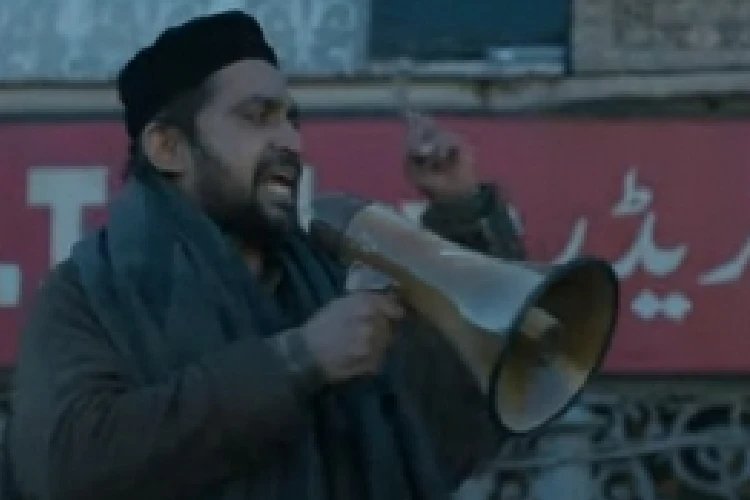
Kashmir Files is neither a documentary nor a film in the conventional sense. Nor is it a propaganda film as many have you believe , for the Party in power at the center now and the Prime Minister are directly attacked.The film is A Narrative.
A narrative that begins with a scene that numbs you, yet it is not gory. It portrays the helplessness of one, whom you know well behaves differently the way he does.What is left unsaid makes the impact.The story then,though it does not move away from the perspective of the individual,shifts to macro issues of Terrorism. It does not become preachy nor does it apportion blame on anyone directly.
Those who had followed Kashmir issue in 1990, can vouch for the facts portrayed in the Kashmiri Files. The apathy of the Bureaucracy,the contempt with which the then Chief Minister and the Home minister of the Government of India treated the issue and the dilemma of the soldiers on whose orders to follow,their superior or the terrorists. How the decision makers in the Media did not,nor does it now,allow the facts to be made public, despite reporters filing the Facts. Cleverly manipulated history is presented as facts purveyed as Truth ,to students to instigate them. India’s past history sans Kashmir is cleverly presented to them.
The performances are not performances,everyone lives the role and one can feel this. It is difficult to point out the best performance. Sheer characterisation of the University Professor makes Pallavi Joshi and her natural portrayal makes her effort stand out.
And the narrative is not melodramatic.Mention must be made of the Music that sets the mood of the movie.Camera work is non intrusive and poignant.Editing is slick. Dialogues are punchy without being intentionally so.
And of course, direction, a new way of film making that leaves now immersed without even allowing you to emote even; but leaves you with a lump in your throat.
How insensitive and callous have we have been to the plight of our own? I felt ashamed. Holocaust happened because People remained quiet and let thugs take over.
Adi Shankaracharya ascended the Sarvagna Peetha, Seat of Learning of Throne of Wisdom’
Ramanujacharya visited and contemplated before embarking upon his commentary on Brahma Sutra,
‘The temple is so ancient that Kashmir State was earlier known as ‘Sharada Peeth’. It is at this temple that Sankaracharya received the right to sit on
the Sarvanjnanapeetham orSarvajna peetha(Throne of Wisdom).
The temple is at a height of 11000 feet above the sea level and is about 70 miles from Shrinagar.
The length of the temple is 142 feet and width is 94.6 feet. The outer walls of the temple are 6 ft. wide and 11 ft long.
And there are arches with 8 ft. height. It is a very good example of architecture.
The Śāradā image atShringeri Sharadamba temple was once said to have been made of sandalwood, which is supposed to have been taken by
the Shankaracharya from here.”
*Kashmiri Pandits from India regularly try to visit this temple to offer prayers, but there are instances where they were not permitted to cross the LOC and visit the temple.
Yet some of the best photographs of this place is by Pakistani Muslims.
Location of the Temple.
The temple is located in the remote village of Sharda, in Pakistan’ Neelam Valley, at a distance of 60 miles from Baramulla in Indian-administered Kashmir, and 40 miles from Muzaffarabad, capital of Azad Kashmir. It lies 16 miles to the northwest of the Line of Control in a militarily sensitive area.
Sharada Peeth (Sarvajnapeetha) temple ruins, in Azad Kashmir.
Given its close proximity to the contentious Line of Control, access to the site by foreigners is sometimes restricted during periods of heightened tension with India.
In 2007, a group of Kashmiri Pandits who were permitted to visit Azad Kashmir were denied permission visit the temple.
Citizens of Pakistan, including its Hindu population, do not face any official restriction in visiting the site. Visitors from India are generally refused access to the region, given its close proximity to the Line of Control, though foreigners from other countries do not face similar restrictions – although they may be denied entry during periods of heightened tensions with India.
I am providing the thread of discussions found in the site.
”
jiju
27-May-2013 17:18
aacharya shankara was born in kerala (southern part of India) Kashmir is in northern part of India…this temple teach us the unity of our country in the ancient age..but now…we are divided..let us rebuild this oldest university and also our unity…
SURESH PANDITA
22-Mar-2013 06:42
WE THE KASHMIRI PANDITS USE TO VISIT NEELUM VALLEY AND PAY THE OBEISANCE TO MATA SHARDA FROM THE IMMORAL TIMES . MATA SHARDA IS THE SUPREME SEAT OF LEARNING AND KNOWLEDGE. AT JAMMU J&K INDIA WE HAVE CREATED REPLICA OF MATA SHARDA SHRINE MANAGED BY THE SHARDA MATA TRUST . WE HAD REQUEST GOVT . TO ALLOW US TO VISIT SHARDA TO PAY OBEISANCE .
KINDLY SEND ME MORE PICS SO OF SHARDA SHRINE .
Asif Razzaq(Grace)islamabad
11-Jul-2012 20:34
Salam to all,I m Asif Razaq live in islamabad but belong to azad kashmir,I want tel u some think about azad kashmir,if u want go there then best time to visit May to September,in azad kashmir many beautifull places,Nelem vally,sharda,kail,Halmat,tio butt,Grace,Rati Gali,Banjosa,Haji peer,Ali abad,Kaler,Sodan Gali,Lepa vally,Jhelum Vally,and many beautifull and nice places,but before going u must need information about these places,u need information,about Road,Hotels,Waither,And convence,if u want need guide line u cal me i will tel u about azad kashmir,cuz i see 90% azad kashmir and i know v well about azad kashmir,i want ur trip will be good and u must remember ur this trip,if u want see all nelem valy then u need 5 to 6 days,in nelem valy best places,tio butt,halmat,Kail,sharda,Davarehaa,karan,is best places to vissit in nelem vally,but in all places r hotels r cheep but some places gust house r good but in muzfarabad u go to forest office then u boked rrom already,cuz in 4,to 5 months many people go there then 90% hotels have no room.if u have ur own car then u go to sharda,not more cuz in sharda road is good but after sharda road is v bad and if u want go to halmat or tio but then u nopt use car cuz in places u need jeep,in these places u not go with car,u need 4×4,cuz road condeshan is v bad,and dangress,in azad kashmir best place to visit *Rati Gali.* in rati gali 6 beautifull lake,but if u want go there then u go on road and walking cuz no convence to rati gali lake,u must travel 8 to 10 hours then u will reach in lake,and u go there in after 15 jully to 28th aguest cuz in this time u see lake before 15 july if u go there then lake r complete freez and u need tent and food with u,cuz in rati gali no hotels no gust house,and in rati gali lots of cold u must need jecket and sweeter,i hope u under stand ,if u want more information u cal me i will more guide u,Take care God bless u,my mobile number,0333,5507160
abdullah khawaja seri kalas
11-Jul-2012 17:56
welldone brother
Adi guru Shankaracharya paid a visit to Sharada Nilaya in Kashmir known as Sarvajna Peetha (the seat of the all knowing).
Those who are not all-knowing are not entitled to sit on it; no one could claim to be an expert in any religion or philosophy without sitting on it. Shankara did not wish to show himself off as Sarvajna.
He felt that Sri Sharada Nilaya with Sarvajna Peetha was by itself a place worthy of visit by all devotees. Besides, Kashmir is the crown of Bharat. So he resolved to go there, lest the ancient Hindu religion should perish there.
There are four gates in four directions for entering Sharada Nilaya.
Eminent scholars and philosophers had entered it from various directions and had established their scholarly merit But no one so far had adorned this chair of Sarvajna.
And also till their no one had even attempted to enter the temple through the Southern gate May be this gate was waiting for Acharya Shankara. only who was from the South! Scholars of many group and communities were waiting for him in ‘ the premises of Sir SharadaNilaya
All were filled with a feeling of reverence to see him who was learned in both Jnana and Vijnana Yet the scholars in religious philosophies of Jaina, Bouddha, Samkhya, Yoga, Nays and Vaisheshika confronted him at the time of his entry to the temple, Shankara defeated all of them in philosophical debate and then entered the temple through the Southern gate.
Acharya went to ascend Sarvajna Peetha. Sri Sharada, the presiding deity of all learning, herself set a test for him. Shankara passed this test also. After this the Goddess Herself blessed him, proclaiming his omniscience. So say the ‘Shankara Vijayas’.
The Sharada Peeta of Ashtadasa Peeta is in LoC between India and Pakistan,80 km from Srinagar.
As it is not possible to visit this shakti peetha, one can visit the famous Saraswathi temple in Basara in Nizamabad district of Andhra Pradesh. Basara is 200 km from Hyderabad.
Sharada Peeta Kashmir
Sharada Script resembles Devnagari
The original idol of Sri Sharadamba in sandalwood, now housed in the temple of Sri Vidyashankara at Sringeri.
HHH Abhivava Vidya Theertha,My Guru
“It may be noted that Goverments of both countries, India and Pakistan have allowed muslim population of Kashmir to cross the line of actual control and have allowed trade as well across the border , both these countries are not allowing Kashmiri Hindus to visit the above shrine despite many requests.”
Any updates on this position?
Varanasyam Vishalakshi, Kashmire tu Saraswati / Ashtadasha Shakti peethani, Yoginamapi durlabham // Ashtadasa Stotra of Adi Shankaracharya.
Devi is called Kashmirpura vasini,one who lives in Kashmir and there is a script called Sharada resembling Devanagari .
” Kashmir was a high established centre of learning of vedantic works until Muslim invaders from central-Asian countries came and destroyed it.
Indegenious script of Kashmir is named after the deity Sharada Devi.[2]
Kashmir was sometimes called Sharada Desh because of this temple and Sharada was called Kashmira Puravasini (resident of city of Kashmir ).[citation needed]
The Kashmiris are highly devoted towards this great deity[1] addressed as Bhagavathy.
During their daily worship they often say
“Namastey Sharada Devi Kashmir Pur Vasini Tvam Ham Prartheye Nityam Vidya Danam Che De hi mey”
meaning,
Salutations to you, O Sharada, O Goddess, O one who resides in Kashmir.I pray to you daily, please give me the charity of knowledge”
. According to the Prabhāvakacarita, a Jain historical work dated 1277–78, the Śvetāmbara scholar Hemacandra requested grammatical texts preserved here so he could compile his own grammar, the Siddhahema.[10]
The Vaishnava saint Swami Ramanuja traveled all the way from Srirangam to refer to Bodhayana’s vritti on Brahma Sutras preserved here, before commencing work on writing his commentary on the Brahma sutras, the Sri Bhasya.
Near Sree Sharada Devi temple, there used to be famous Sanskrit university.
Kashmir was also called “Shardapeeth” (the base of Sharda), the name being derived from the temple. We can take this to be an allegory of all the struggles Shankara had to face in his life. Ascending the seat of Sarvajna situated in Kashmir of the North is a symbol.
The meaning of it is that Shankara reached the peak of spirituality. We can get an idea of his greatness from the fact that a person of just thirty had ascended the throne of all knowledge.
They are all well to do, all of them occupying important positions in the Society
They still have their ancestral home in Kashmir, though all of them are settled in Delhi.
When I started discussing the Kashmiri Pandit‘s Problems, they broke out in tears , hugged me and said they were moved that some one from deep South is bothered about their problems.
They narrated the problems, utter contempt with which they were treated in Kashmir, where they have no say in anything at all.
Their problems after displacement from Kashmir have only multiplied, with the Government, irrespective of whichever party comes to power.
They find it difficult to voice their grievances to the Government at The State pr at the Center,
Worst is that whomsoever they get to meet, on rare occasions, in the Government, they got a stock reply that Kashmir is a sensitive issue with international ramifications and the Government has to tread carefully.
But the Muslims of Kashmir say that they are persecuted?
By whom?
Brahmins?
They were/are being ruled by Muslims and by the Sheikh Abdullah Family, Sheikh Abdulla to Omar Abdullah , his Grand son.
Muslims cry foul with Muslims ruling here.
What about the Kashmiri Pandits?
The history of Kashmir makes a sad reading.
Except for a limited period during the period of King Lalitaditya-Muktapida’s (725-753 A.D.) reign.
During the reign of King Rajadev (1213-1236 A.D.) the oppression and plunder of the Brahmins was extreme.
Once Asoka came to Kashmir, began the death-knell of Hinduism and Brahmins.
Then came the Mongols, Turks,Mogul and the British.
We know how the Mongols, Turks and the Moguls treat inavding countries and the British , as is their wont, developed the ‘Divide and Rule Policy’
“
According to figures from the CIA for 2007, at that time about 300,000 Pandits living in India were “internally displaced people” from Kashmir and Jammu. The US government has reported on the terrorist threat to Pandits still living in the Kashmir region.
The socio-political situation in Kashmir continues to be volatile, with the displaced Kashmiri Pandits beginning to lose their cultural identity. The USDepartment of State reports that, according to the National Human Rights Commission of India, the Kashmiri Pandit population in Jammu and Kashmir dropped from 15 percent in 1941 to 0.1 percent as of 2001.[17] In 2009 Oregon Legislative Assembly passed a resolution to recognise 14 September 2007, as Martyrs Day to acknowledge ethnic cleansing and campaigns of terror inflicted on non-Muslim minorities of Jammu and Kashmir by terrorists seeking to establish an Islamic state..
Read this,
During one of these days my brotherhad gone to get some air into the wheel of his cycle when suddenly two young men carrying guns killed a man in the Kralpora Bazar. Both men lived close to our village and my brother was naïve to tell someone that he knows one of them.A well wisher visited us that evening and told us to send him out of Kashmir.This advice fell on us like a pack of bricks. My grandmother cursed my brother for being stupid and my mother started sobbing. It was too late to do anything.My brother thankfully knew how to ride a scooter. We had some petrol in the fuel tank of the scooter which would have been enough to take him to Lal Chowk.My father put some money into the pocket of his Pheran and told him, if there is a knock on the door just jump from the back window and don’t stop the scooter till you reach Tiku’s who lived near Central Telegraph Office in Lal Chowk. We kept awake all night hoping against hope that no one would come asking for Rinku, and no one did.
Strange diktats started appearing on walls. Some would tell us how to dress, others what not to drink but the most interesting were the ones asking us to time our watches with Pakistan StandardTime. Mohalla Committees were made to check vice. It was like a Taliban Ministry of Promotion of Virtue and Prohibition of Vice. What constituted vice included watching something as harmless as Doordarshan. Everything Indian was the new untouchable. During all this time the writ of the terrorists went unchallenged.The National Conference government had run away and abdicated all its responsibilities. There was no administration at all.
The timing was just right for the“mass uprising” to be engineered. From here on I write the account that my brother had written in his dairy many years after that fateful night.
“We were about to have dinner when the final call for prayers was heard. It was normal for us to hear the call to the faithful. A soulful Allah-u-Akbar rendering went up in the cold mist ofJanuary. As soon as we finished dinner the soulful voice of our pious localMuslim priest was replaced by someone who sounded not just hoarse but uncouth too. He didn’t sound like a Kashmiri .At first his words sounded like cacophony but it took us little time to realize that he was provoking the people of the village to come to the mosque and hit the streets. The nearest mosque was almost seven hundred meters from our home. People were possibly awaiting the call. A song blazed out of the loudspeaker and went something like this.
Jago Jago Subah Huyee;Rus ne Baazi Haari Hain,Hind par larzaan tarehain,Ab Kashmir ki baaree hain
Wake Up,Russia has fallen and India eyes defeat,It is the turn of Kashmir to be freed.
We looked at each other in complete silence. No one even had the guts to move from his/her place. The song was played for a long duration, many times over and as soon as it ended it gave way to sloganeering of a different kind, the kind that did not just target the establishment of India but the one which targeted the Pandits directly.
The slogans that were now filling the air left us in no doubt that we were about to be defiled or killed.
Hum Kya Chahte Azadi…(We want freedom)
Azzadi Ka Matlab Kya,La Illah Il lallah(Freedom means La Illah Il Laalh)
Agar Kashmir Main Rehna Hoga,Allah-u-Akbar Kehna Hoga(If you want to live in Kashmir,you have to sayAllah-u-Akbar)
“Exactly 24 years ago, on January 19, 1990, the biggest ever exodus of people happened since the partition of India. The minority Hindus of Kashmir, Kashmiri Pandits, fled the valley leaving behind their homes and homeland to save themselves from persecution at the behest of Islamic extremists/terrorists.
Around four to five lakh Kashmiri Pandits were displaced due to militancy in Kashmir valley. Every year since that day, Kashmiri Pandits commemorate January 19 as Kashmiri Pandit Holocaust/Exodus Day, hoping to go back to their homes one day.
Terrorism in Kashmir valley started with the ethnic cleansing and genocide of Kashmiri Pandits in 1989-1990. Ethnic cleansing refers to an attempt to create ethnically homogeneous geographic areas through the expulsion or forcible displacement of persons belonging to particular ethnic groups. United Nations defines ethnic cleansing as rendering an area ethnically homogeneous by using force or intimidation to remove from a given area, persons of another ethnic or religious group.
The so-called freedom movement (Azaadi) in Kashmir was joined by many local Kashmiri Muslims (and not all). They opted for guns for the so-called Azaadi which never was attained. The main purpose of terrorism in Kashmir was to create a valley homogenous in its religious (read Islamic) character. The minority Kashmiri Pandits were forced to leave the valley to create such homogeneity. If the majority community of the valley had not supported the insurgency, there probably wouldn’t have been any exodus of the minority community”
People like Arundati Roy believe that they are the intelligentsia of the country.
A non-Indophile, she thinks she knows every thing and deludes herself in imaginary causes to get the lime light.
You do not take yourself seriously after having written glorified pulp fiction, which, unfortunately has been praised out of proportion, just as we praise the child for its efforts.
Former Jammu and Kashmir Chief Minister Farooq Abdullah referring to self-proclaimed human rights activist Arundhati Roy‘s anti-India statement, said on Tuesday (October 26) that, ‘in India we have so much freedom that the ones who harm the country are also Indians’.
The Union Minister also said, “They are misusing the freedom and there’s no limit. Our country has given that freedom of speech, it is for them to use that freedom”.
Arundhati Roy in her speech on October 24 at the anti-India meet in Srinagar said, “Kashmir has never been an integral part of India. It is a historical fact. Even the Indian Government has accepted this. By describing the pro-freedom leaders in the Valley as separatists, India in a sense has already acknowledged that secession has taken place”.
She further claimed, “India fought in Nagaland, Manipur, Punjab and Kashmir. It projects itself as the biggest democracy in the world and emerging economic power but at the same time it oppresses its states and the people of diverse cultures”.
Arundhati Roy’s this statement created controversy after which Centre and Jammu and Kashmir government took notice and have now started scrunitising her speech.