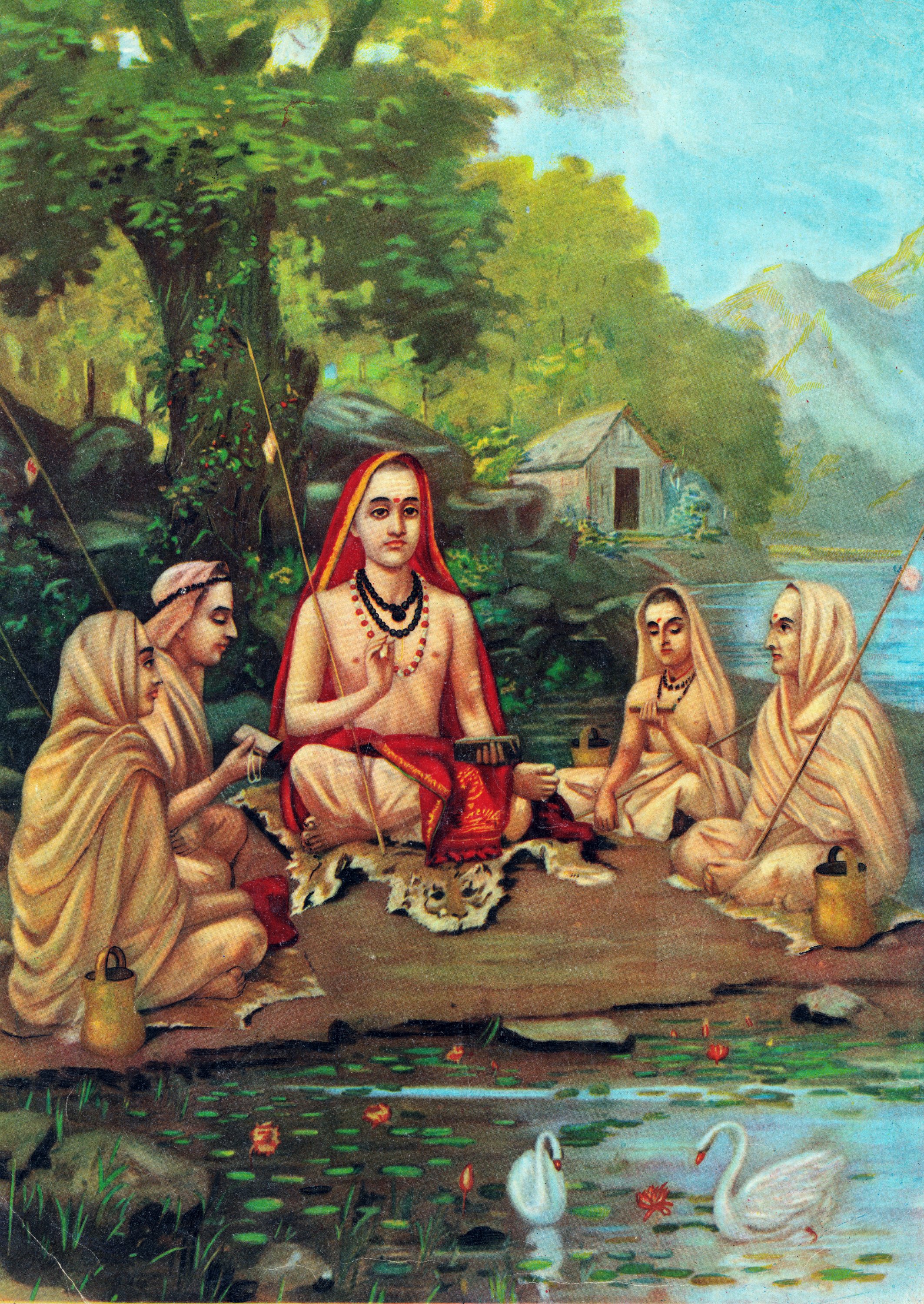
Tag: Shankaracharya

  • Shankaracharya Misinterpret Vedas Misled, Shiva In Padma Purana?

    Shankaracharya Misinterpret Vedas Misled, Shiva In Padma Purana?

    Not for nothing Dr. Radhakrishnan, former President of India and a Philosopher said that ,

    ‘Indian Philosophy is not a view of Life, but a Way of Life’.

    It is one thing to read,study the Vedas and other Hindu Texts but it is another proposition to understand its soul and ethos.

    Mere Intellectual or Bhakthi approach would not help one to understand the spirit of Hinduism.

    Hinduism should be lived and practiced for years  to understand it in its multifarious aspects.

    Mere abstraction would remain just that, an intellectual Narcissism..

    Mere Bhakthi, or total surrender to God , though highly recommended, is likely to lead one into disappointment as this path is, though seems easy to say, is the toughest to practice.

    One must understand that Hinduism is a personal Religion in the sense that one can practice it the way it suits him, so long it is in conformity with the Vedas.

    As individuals are numerous, so are their mental attitudes.

    Hence Hinduism provides four paths to follow so that people of different mindsets can follow Spirituality.

    They are,

    Karma Yoga, Path of Action,

    Gnana Yoga, Path of Knowledge,

    Raja Yoga, Path of Mental and Physical Discipline and

    Bhakthi Yoga, the Path of total surrender.

    The fact that one is emphasized in the Vedas and other Hindu texts, when they speak of a particular path, does not mean that the other Paths are inferior.

    They are spoken this way so as to instill in the mind the conviction to follow the path that appeals to them and such sayings reinforces the attitude.

    The same logic applies to Nirguna Brahman,Reality without Attributes and Saguna Brahman,Reality with Attributes.

    (for details  please read my article God with names and forms Yes and No)

    This one can understand from the Vedas, Puranas, Ithihasas and the Slokas /Mantras.

    One would, in the same breath, the Vedas talk about Nirguna Brahman and Saguna Brahman.

    One would find the Reality being described as a principle, Nirguna, in the Mahavakyas thus,

    1. prajñānam brahma – “Prajña is Brahman” or “Brahman is Prajña”(Aitareya Upanishad 3.3 of the Rig Veda)
    2. ayam ātmā brahma – “This Self (Atman) is Brahman” (Mandukya Upanishad 1.2 of the Atharva Veda)
    3. tat tvam asi – “Thou art That” (Chandogya Upanishad 6.8.7 of the Sama Veda)
    4. aham brahmāsmi – “I am Brahman”, or “I am Divine” (Brhadaranyaka Upanishad 1.4.10 of the Yajur Veda)

    Then you find in the Narayana Suktha.

    Narayanam mahagyem Viswaathmaanam Parayanam,

    Vishnu Suktha,

    Vishnornukam veeryani pravosam..

    or the Sri Rudram,

    nama sivaya cha, Sivadharaaya Cha,

    where the Individual deities are  praised.

    or look a the Lalitha Sahasranama, where a portion is allotted for worshiping the Devi as Nirguna, the chapter being Nirguna Upasna and another Saguna Upasna where personal deity is worshiped.

    So both options are provided.

    Reading one and discarding the other is not compatible with the Vedas.

    Quoting Vedas in isolation lands one into situations and interpretations that run counter to Vedas themselves, as it has happened in the case of the Mimamsa.

    The Karma Kanda, the portion of the Vedas that deal with duties and performance of Yagas and Yagnyas, was carried to such an extreme that only the Karmas in the form of Yagnyas were followed and the Gnana and Bhakthi were totally omitted..

    And the performance of only Yagnas and sacrifices caused a revulsion among people and this one of the reasons for the raise of Buddhism.

    And many Gods were worshiped in the Yagnyas.

    It took all the Life of Shankaracharya to set matters right and establish the authority of the Vedas, by systematizing  worship into Shanmaha, Six systems of worship.

    And he reestablished the concept of Nirguna Upasna and also provided room for Saguna Upasna.

    Iswara concept found in Patanjali’s yoga Sutra was reinforced by him.

    Such being the case I was shocked to find an observation by Stephen Knapp who has done yeoman service to Hinduism by propagating Sanatana Dharma concept that Shankaracharya misinterpreted the Vedas!

    and

    he quotes Padma Purana and Siva Purana.

    We must point out that some spiritual authorities say that Shankaracharya was an incarnation of Lord Shiva who had been ordered by the Supreme Lord to cheat the atheists. The Shiva Purana quotes the Supreme Lord as ordering Shiva: “In Kali-yuga mislead the people in general by propounding imaginary meanings from the Vedas [Vedic literature] to bewilder them”:

    dvaparadau yuge bhutva

    kalaya manushadishu

    svagamaih kalpitais tvam ca

    janan mad-vimukhan kuru 1

    The Padma Purana also says that Lord Shiva would descend as a brahmana sannyasi and teach Mayavada philosophy in the verse:

    mayavada ashat shastram prachchanna

    boudhyam uchyate moya ebe godidam

    devi kalou brahmana murtina

    To do this, Shankara gave up the direct method of Vedic knowledge and presented an indirect meaning which actually covered the real goal of Vedanta. This is confirmed in the Padma Purana where Lord Shiva addresses his wife, Parvati:

    shrinu devi pravaksyami

    tamasani yathakramam

    yesham shravana-matrena

    patityam jnaninam api

    apartham shruti-vakyanam

    darshayal loka-garhitam

    karma-svarupa-tyajyatvam

    atra ca pratipadyate

    sarva-karma-paribhramsan

    naiskarmyam tatra cocyate

    paratma-jivayor aikyam

    mayatra pratipadyate

    “My dear wife, hear my explanations of how I have spread ignorance through Mayavada philosophy. Simply by hearing it even an advanced scholar will fall down. In this philosophy which is certainly very inauspicious for people in general, I have misrepresented the real meaning of the Vedas and recommended that one give up all activities in order to achieve freedom from karma. In this Mayavada philosophy I have described the jivatma and Paramatma to be one and the same.” 2

    The Padma Purana, in the quote that follows, describes how Lord Shiva tells his wife, Parvati, that he would appear in Kali-yuga to teach the impersonalistic philosophy, which is impious and merely a covered form of Buddhism. Yet, as explained next, there was a purpose for it.

    mayavadam asac-chastram

    pracchannam bauddham ucyate

    mayaiva kalpitam devi

    kalau brahmana rupini

    brahmanas caparam rupam

    nirgunam vaksyate maya

    sarvasvam jagato’py asya

    mohanartham kalau yuge

    vedante tu maha-shastre

    mayavadam avaidikam

    mayaiva vaksyate devi

    jagatam nasha-karanat

    “The Mayavada philosophy is impious. It is covered Buddhism. My dear Parvati, in the form of a brahmana in Kali-yuga I teach this imagined Mayavada philosophy. In order to cheat the atheists I mislead them by describing the Supreme Lord to be without any personal form or qualities.”

    Herein, Lord Shiva himself points out that to believe God has no form is not accurate and is equal to atheism. Even though this Mayavada philosophy was not good for pious people to hear because it would sway them toward an impersonalistic viewpoint, we should note that Shankara’s philosophy was just right for the time and circumstance. The Buddhists, who had spread throughout India and neglected the Vedas, believed in neither a soul nor a God and that, ultimately, the essence of everything is the nothingness or void wherein lies nirvana, freedom from all suffering. So considering how the Buddhists had followed a philosophy of what would generally be considered atheism for hundreds of years and would never have accepted a viewpoint which advocated a supreme personal God, Shankara’s was the only philosophy they would have considered. It was like a compromise between atheism and theism, but Shankara used portions of Vedic knowledge as the basis of his arguments. In this way, as Shankara traveled throughout India his arguments prevailed. Thus, Buddhism bowed and Vedic culture was brought back to prominence. Therefore, his purpose was accomplished, so much so that his Sariraka-bhasya is considered the definitive rendition of Vedanta even to the present day.’

    Totally wrong interpretation.

    If Bhaja Govindam is quoted to buttress the view that Shankaracharya was really only after

    Bhakthi to Vishnu, what about his nirvana Shatgam ,Manisha Panchakam, Soundarya Lahari,Kanakadhara Sthavam,Subrahmanya Bhujanga,Ganesha Pancharatnam?

    Shankaracharya should be studie in full an no in bits.

    And if proof is needed that there are interpolations in the Puranas, Padma Purana and Shiva Purana, this is it.

    This accusation against Shankaracharya is not new.

    He was also called a Pseudo-Buddhist for His Advaita!

    If Shankaracharya was misquoting the Vedas, then how come the Mahavakyas I have quoted above speak of Nirguna Brahmana and not Saguna Brahman, Reality without Attributes?

    ‘AUM
    That supreme Brahman is infinite, and this conditioned Brahman is infinite.
    The infinite proceeds from infinite.
    Then through knowledge, realizing the infinitude of the infinite, it remains as infinite alone-

    Mundaka Upanishad.

    Great indeed are the devas who have sprung out of Brahman.-Atarva Veda.

    ‘satyam jnanam anantam brahman
    “Brahman is of the nature of truth, knowledge and infinity” -Taittriya Upanishad.

    Reference and citation.

    http://www.stephen-knapp.com/complete_review_of_vedic_literature.htm

    Images credit.

    https://ribhuv.wordpress.com/tag/shankaracharya/

  • Gotra Pravara Adi Shankaracharya Krishna Yajur Vedin

    There is a dispute about the date of Adi Shankaracharya.

    There are quite a lot of theories on this.

    Shankaracharya and Kamakshi Amman
    Kamakashi Amman,Shankaracharya

    Some date the Acharya between 688-720 AD, there are also theories that date him around 400 to 500 BC.


    Shankaracharya‘ Guru Govinda Bhagavadpada, one study claims lived during the period of Vikramaditya as there are two Vikramadityas,one of the

    Maurya and another of the Chalukya dynasty.


    The first one lived around 4th Century CE, while the latter in (Vikramaditya II )(733–746 CE)


    2.The internal evidence of Shankaracharya’s works do not provide many a clue,exception being the one about Thirugnana Sambhandar, who, it is

    agreed, is addressed by Shankaracharya as ‘Dravida Sisu’ in his Soundayalahari.


    His references to Kumarila Bhatta and Mandana Misra are equally confusing to pin point the date.


    Kumarilabhatta is dated approximately at  roughly AD 700.


    Mandana Misra at 800 AD;he was a student of Mandana Misra.


    Thirugnana Sambhandar who is referred by Shankaracharya is dated  7th Century AD

    Date of Shankaracharya

    I received a comment that whether Shankaracharya’s gotra  is Namboodiri and whether his gotra belongs to Viswakarma .

    I replied that Namboodiri is a sect of Brahmins and they have Gotras and though I have written on Namboodiris, I shall write on their Gotras.

    Definitely Shankara did no not belong to Viswakarma as some scholars suggest.

    Now to Shankaracharya’s Gotra.

    Shankracharya is from the Namboodiri community.

    Shankaracharya is from Atri Gotra.

    ‘Acharya’s grandfather is known to be Vidhyadhiraja and his father is Shivaguru. His mother’s name, though accepted as Aryamba by most biographers, is also quoted as Vishishta Devi and Sati Devi. Madhaviya Shankara Vijaya describes the auspicious Muhurta of Acharya’s birth as `lagne shubhe shubhayute suShuve kumAraM’. There is no mention of Samvatsara and other details. As per the tradition of Sringeri Sarada Peetha, it is accepted as Vaishakha Suddha Panchami.

    Acharya’s Gotra was Atri and he was a Krishna Yajurvedi. He is known to be a Nambudari Brahmana by birth.

    Adi Shankaracharya’s Pravar.

    Atri a a.k.a. AatrEya:  AatrEya, Archanaanasa, Syaavaasva.

    References.

    1. Shankara Digvijaya of Madhavacharya

    2. Shankara Vijaya of Anandagiri.

    3. Shankara Vijaya of Chidvilasa Yati.

    4. Shankara Vijaya of Vyasachala

    5. Shankara Vijayasara by Sadananda Vyasa

    6. Acharya Charita by Govindananda Yati

    7. Shankarabhyudaya by Rajachudamani Dikshitar

    8. Brihat Shankara Vijaya by Brahmananda

    9. Keraliya Shankara Vijaya by Govindanatha

    10. Bhagavatpadabhyudaya by Lakshmana Suri.

    http://www.salagram.net/Gotras.html

    http://www.kamakotimandali.com/advaita/truefacts.html


  • Who Are Gauda Saraswat Brahmins

    I had written on the History of Brahmins in India and followed it up with an article From where did the Brahmins come from.

    I had written a couple of articles about the Brahmins of Tamil Nadu ,Karnataka.

    Now let us see who the Gouda  Sarswat Bramins are .(GSB)


    http://ecx.images-amazon.com/images/I/51OHd1rjq0L._SX351_BO1,204,203,200_.jpg

    Kalhana, King cum Historian about the distribution of Families in India thus.

    कर्णाटकाश्च तैलंगा द्राविडा महाराष्ट्रकाः,
    गुर्जराश्चेति पञ्चैव द्राविडा विन्ध्यदक्षिणे ||
    सारस्वताः कान्यकुब्जा गौडा उत्कलमैथिलाः,
    पन्चगौडा इति ख्याता विन्ध्स्योत्तरवासि ||

    Karnataka (Kannada), Telugu (Andhra), Dravida (Tamil and Kerala), Maharashtra and Gujarat are Five Southern (Panch Dravida). Saraswata, Kanyakubja, Gauda, Utkala (Orissa), Maithili are Five Northern (Pancha Gauda ).

    -Kalhana in Raja Tharangini

    saraswat_brahman

    During the period of Sanatana Dharma, when the landmass of India was different,when Lemuria and Atlantis were in place as a part of Rodina , the Super Continent, Hindus were apread throughout the world.

    Brahmins being a part of the group, were also spread through out the world.

    Brahmins were found in as far away places from the present India to Ireland,Egypt, Turkey,Caucasus Region, Arctic, Polynesia and Australia to mention a few placed.

    Taking into account the present political map of the present India, concentration of Brahmins were in the following regions.

    Dravida Desa, comprising of the present States of Tamil Nadu, Kerala, Karnataka,and Andhra.

    Among this there were two areas were Brahmins were more concentrated.

    That is in The Godavari Valley and the Cauvery Delta.

    While the former are now found more in Andhra and Karnataka, the later are settled in Tamil Nadu and Kerala.

    In the North we have the Brahmins in the Basins of Sind, Saraswati,Ganges.

    Panch Gaur (the five classes of Northern India):


    (1) Saraswat, (2) Kanyakubja, (3) Maithil Brahmins, (4) Gauda brahmins (including Sanadhyas), and (5)Utkala Brahmins .


    In addition, for the purpose of giving an account of Northern Brahmins each of the provinces must be considered separately, such as, Kashmir, Nepal, Uttarakhand, Himachal, Kurukshetra, Rajputana, Uttar Pradesh,Ayodhya (Oudh), Gandhar, Punjab, North Western Provinces and Pakistan, Sindh, Central India, Trihoot, Bihar, Orissa, Bengal, Assam, etc. The originate from south of the (now-extinct) Saraswati River.

    In Bihar, majority of Brahmins are Kanyakubja Brahmins, Bhumihar Brahmins and Maithil Brahmins with a significant population of Sakaldiwiya or Shakdwipi Brahmins.

    Of this there were Families that migrated from the Saraswathi River region towards the south,probably due to a Tsunami that engulfed the Region towards the closing years of Dwapara Yuga, that is some time after the Mahabharata War.

    This finds a reference in the Bhagavatha Purana and Tamil Classics.

    One group led by Sage Agastya came to Dravida Desa and they were 72 Families who were called Velirs and formed a part of Tamil Kingdom.

    These Kingdoms were mostly under the tutelage  of the Cholas of Tamil Nadu though at times they became independent  and at some other times with the Rashtrakutas.

    . Im They belonged to Smartatradition and primarily worshipped Panchayatana (the five deities): Shiva, Vishnu, Devi, Surya and Ganesha.  These Brahmins were one of the Pancha Gouda Brahmin groups who lived north of the Vindhyas. 

    Saraswat Brahmins mastered the Vedas, and administered the priestly rites in the temples. The Vedas were passed down to the generations by the virtue of word of mouth, as written records didn’t exist at that time.  The Saraswat Brahmins had to maintain a very tight hold on their culture to maintain and protect their legacy. 
    The first migration of Saraswats to Goa took place around 700 BC. They migrated from the Saraswati, mostly through sea routes in search of greener pastures.  They took up farming and trading business in Goa and worked in partnership with indigenous people. At the same time, they retained their Vedic way of life, performing their rituals and retaining their cultural traditions.  They also brought theirKuladevtas and established temples for their deities. These temples facilitated socio-cultural activities of the community.’
    ‘According to the mythological chronicle Sahyadrikhanda of the Skanda Purana, ninety-six Brahmin families belonging to ten gotrasmigrated to Goa from north-western India.The Purana adds that the sage Parashurama brought Saraswats to Goa. Even if Parashurama is considered as a historical figure, the regionalisation of Brahmins had not taken place during his era and he had brought only Brahmins and not specifically Saraswats Brahmin. According to Bhau Daji and Dharmananda Damodar Kosambi, there is no connection between Parashurama and the migration of the Brahmins. The Sahyadrikhaṇḍa is a later inclusion in the original SanskritSkanda Puraṇa, not a part of the original Sanskrit text. The Parashurama legend serves as a symbol of the Sanskritisation that Goan culture experienced with the advent of Brahminical religion to the region. This was achieved to a certain extent through the agency of the Saraswat Brahmins who had migrated to Goa who sought to establish their hegemony.

    Sahyadrikhanda mentions the original home of Saraswats as Tirhut. The section in which the Tirhut is mentioned has been tentatively dated to 1400 CE. A writer on the basis of the genealogy and chronology of Puranic sages has mentioned that Aryans reached Goa around 2500 BCE. This is based on a preconceived notion that Aryans and Saraswats were identical. Elsewhere in the same work the author has argued that Parashurama had brought only Brahmins and not Saraswats. Therefore, equating Aryans and Saraswats seems to be far-fetched.[3] It is more reasonable to suppose that the Saraswats of Goa migrated from northwestern Uttar Pradesh, Punjab, Sindh, Kutch and Saurashtra. There is no agreement among scholars about the original home of Saraswats. The name by which these Brahmins have been designated clearly indicates that the river Saraswati had played an important role in the life in their life. Even after the disappearance of the river, the Brahmins who had once inhabited the banks of river Saraswati retained the name of the region. There are evidences in history about the migration of the population from one region to another regions account of foreign invasions and sudden climatic changes. Recent researches in archaeology have shown that the Saraswati river dried up before 1000 BCE. For the study of the migration of the Saraswats to Konkan and Deccan, the linguistics provides corroborative evidence. The main line of Indo-Aryan linguistic expansion began from north to south much before 500 BCE. The Saraswats settled themselves in Rajasthan, Sindh and Gujarat. In ancient Gujarat there was a separate division called Saraswat Mandal. There are many Konkani words which are found only in Gujrati. From this it is evident that Saraswats had settled in Gujarat migrated to Goa. This also indicates that the Saraswats from the Kutch regions might have migrated to Goa on account of Arab invasion in the 8th century CE.[3]

    Reference to Saraswat names are found in Shilaharas well as Kadambacopper plate inscriptions. Certain Muslim incursions in North India provoked the Brahmin exodus. The inscriptions found in Goa bear testimony to arrival of Brahmin families in the Konkan region.Sahyadrikhanda and Mangesh Mahatmya allude to migrations of Saraswats, constituting sixty-six families, who settled in eight villages of Goa. There were regional variations among the Saraswats, such as those among Bardeskars, Pednelkars, Kudalkarsand Sashtikars. The Konkana mahatmya, from the 17th century CE, deals with the internal rivalry of the Saraswats and strained relations between these groups. Saraswats were not recognised by the local Brahmins as well as others. They were not entitled to the six duties of the Brahmins called Shatkarmas and they were called Trikarmi, entitled to three duties like the other Dvijas. Hence besides their sacerdotal duties, they took up administrative vocations under the ruling dynasties. Therefore, they gradually established themselves in the landowning class and also as traders. After settling down in Konkan and Goa in about 800 CE Saraswats may have taken about a century to acquire patronage from the Shilaharas and the Kadambas of Goa. Many Saraswats left Goa after the invasion of Malik Kafur to the neighbouring regions and during the period of religious persecution of the Portuguese also Saraswats migrated to Uttar Kannada, Dakshina Kannada and North Konkan. The Saraswat Brahmins particularly served as village Kulkarnis, financiers, tax farmers, merchants in the intra-Asian trade, and diplomats. Many sources of government income in Goa, Konkan and elsewhere, including taxes on commodities and customs duties, remained in their hands.


    First Migration :
    A king from Saraswat country, called Videgha Mathava with his preceptor, Gautama Rahugana set out eastwards to find out new pastures. In those days fire was to be carried physically from place to place and the king carried a tiny spark on his tongue. On the way the preceptor started conversing with the king but the king remained tight-lipped without giving any reply for fear that the spark might fall or get extinguished. The preceptor understood the anxiety of the king and invoked Agni, the fire-god. On hearing the praises, out came the flames of fire from the mouth of the king and started rolling on the ground like the waves of the sea. “Agnideva, what is thy command?” the priest asked, “Follow me,” was the commandment of the fire-god. Accordingly, they followed. The flames sped away eastwards through the Gangetic belt and on reaching the western bank of the River Sadaneera vanished. This is how the civilisation moved to the eastern region, later to be known as Aryavarta, and some of the families of Saraswat Brahmins moved to the east and settled down in Trihotrapura a township in Gowda Desha and later called them selves as Gowda Saraswats. According to another version, our forefathers never went to Trihotrapura but were called Gowda Saraswats as Saraswats were one among five groups of Brahmins who were collectively called Panchagowdas as stated above at the beginning. Whatever be the version, civilisation moved from western part of India to the Eastern India and definitely some families, when the river went dry must have gone to Trihotrapura. This anecdote is mentioned in Shatapatha Brahmana.

    Second Migration :
    As stated in the Sahyadri Khanda of Skanda Purana Lord Parashurama after reclaiming land from the western sea invited various groups of Brahmins from different parts of Bharat Khanda. In response ten families of Gowda Saraswats came down from Trihotrapura with their deities of daily worship and settled down in Gomantak now known as Goa. In gratitude even today the Gowda Saraswats dedicate all their havans and yajnas be it Gayatri or Mrityunjaya to Lord Parashurama stating “Yajnantargat Bhagwan Shri Parashuramamurti priyatam.”

    In the course of time the ten families multiplied and with the passage of time they took to trade and commerce as permitted by the scriptures, besides officiating as priests. Depending upon their occupations this gave them various surnames as they have to-day like Kini – a treasurer handling money with the jingling sound, Mallya – a construction contractor who built mansions or mahals, Nayak-a leader in any army. In Goa they were in full bloom and they built up hundreds of shrines and temples besides establishing Shri Kaivalya Math in the eighth century.

    Brother Communities :
    Their brother Saraswats migrated to various other parts of the country. Those who migrated to Kashmir called themselves as Kashmiri Pandits, Sind-Sind Saraswats, Kutch-Kutchi Saraswats, Rajapur-Rajapur Saraswats, Punjab-Punjab Saraswats, Rajasthan-Rajasthan Saraswats and Chitrapur-Chitrapur Saraswats.

    This in a nutshell is the mythological and historical background of the Gowda Saraswat Brahmins popularly known as GSBs. 

    Saraswat Muni : Saraswat was the son of Maharshi Dadhichi and the River Goddess Saraswati brought him up. When he was a student mastering the scriptures on account of successive droughts, the river went dry and people leaving their home and hearth on the banks of the River Saraswati left for other places in search of food and water. The young Saraswat also wanted to leave the place but the mother persuaded him to stay back and pursue his studies, and assured that she would provide him food and water. According to another version, he had the prowess to conquer hunger, thirst and sleep. Like this 12 long years passed and the normalcy returned only thereafter. In the meantime the Brahmins had forgotten the Vedas in their anxiety to survive. 

    When they were eager to learn again, only one person, that was Saraswat, was available as a teacher. They became his shishyas irrespective of their age and learnt from him the Vedas that were forgotten. They were altogether 60,000 brahmins and single handedly Saraswat taught them in his gurukula. Perhaps nowhere in the history of mankind there is a record available that one single teacher had taught such a huge assembly of students. This story is told in Mahabharat and it is believed that long ago our forefathers must have been his disciples and we acquired the name Saraswats as his disciples. Vishnupurana while giving a list of Vyasas (which in fact is a title given to a sage who had rendered selfless service for the preservation and propagation of Vedas) mentions Saraswat’s name also.

    Jagaduru Gowdapadacharya : Lived in 8th Century and for the first time expounded Adwaita philosophy. His very name and fame attracted Shri Adiguru Shankaracharya and at the behest of Shri Gowdapada, his shishya Shri Govindapada gave deeksha to Shri Shanakara and also to Shri Vivarananda Saraswati to commence a new Guruparampara for GSBs. More is narrated about him under “Our Religious Seats, Shri Kavle Math.”


    Citations and references.

    https://en.wikipedia.org/wiki/Goud_Saraswat_Brahmin


    http://www.gsbkonkani.net/OurHistory.htm


  • Ramani’s Blog Sources Sankara and Sanitary Napkin Reply

    This blog receives notice among the netizens and is often quoted in Texts, both in English and Tamil as well.

    This is also rated as the 15th authentic site on Hinduism by a site and 30th in the world by another.

    It is my duty to disclose my sources to lend more authenticity  and credibility ,though I provide relevant sources and links in the Posts.

    There is another reason.

    Ramana Maharishi On Consciousnes.quote,jpg. Ramana Maharishi On Consciousnes..

    The colonial mindset implanted in us is so great that people even when they look at facts of Indian Origin and Indian Texts, refuse to look into them.

    Brush aside as non sense.

    Worse still is that some make funny remarks.

    One of the readers in a Facebook community commented  for the Post Shankaracharya Intellectual Giant,where I listed the  His works as follows,

    ‘So, He could have invented sanitary Napkins!’

    I did not respond to this comment.

    The point is that we have to let it be known our treasures with authority, which was eroded by the British as they have done for the whole world, including their own Irish.

    I will take personal insults.

    But I can not take any disrespect to Adi Shankaracharya.

    The information I am sharing here in the blog is not my invention nor I am a Gnani or a self-styled Guru.

    I am more like a curious child who is awestruk.

    I refer sources, cross check them and publish.

    If contrary evidence comes along I publish it too.

    The sources of my Posts( Relevant Link is provided in each Post)

    1.Rig , Shukla, Krishna Yajur , Sama and Atharva Vedas.( Includes all the parts of the Vedas)

    2.Satapada Brahmana.

    3.Puranas, specifically,the Vishnu Purana and Bhagavatham.

    4.Ramayana of Valmiki, Tulsidas, Kamban, Adyatma ramayana, Jain Ramayana.

    5,Mahabharata By Vyasa..

    6.Commentaies of Adi Shankaracharya, Sri Ramanuja, Vallabhacharya,

    7.Buddha Deepika.

    8.Lalita Sahasranama.

    9.Vishnu Sahasranama.

    10.Surya Siddhantha,

    11.Varahamihiram.

    12.Agastya Samhita.

    13.Raja Tharngini .

    14.Harsha Charitha.

    15.Magha’s Sisupala vadha.

    16.Raghuvamsa of Kalidasa.

    17.Fahien.

    18.Yuan susuang.

    19.Akbar nama by Firdausi.

    20.Tholkaapiyam.(Tamil)

    21.Purananuru.

    22.Pathiruppathu.

    23.Paripadal.

    23.Silappakikaram.

    24.Manimekalai.

    25.Natrinai.

    25.Siddhar paadalgal.

    26.Thirumurugaatruppadai.

    27.U.Ve. Swaminatha Iyer.

    28,Vaiyapuri  Pillai.

    29.PT. Srinivasa Ayyanagar.

    30.Works of Swami Vivekananda,.

    31.Theory of Relativity by Einstein.

    32.Plato’s Republic.

    33.Rene Descartes.

    34.Spinoza.

    35.Aritotle.

    36.Socrates.

    37.Pliny.

    38.Edward Gibbon, Rise and Fall of the Roman Empire.

    39.Leibniz.

    40.Immanuel Kant, Critique of Pure Reason, Practical Reason.

    41.Histroy of Time by Stephen Hawking.

    42.Nicholas Tesla.

    43.Lobsang Rampa.

    44.Bertrand Russel.

    45.Bishp Berkeley.

    46.David Hume.

    47,Kierkegaard.

    48.Neils Bohr.

    49.Edward Schordinger.

    50.Schopenhauer.

    51.D.N..Oaks.

    52.Sir John Woodroffe.

    53.Maurice Maeterlinck,

    54.Huston Smith

    55.Pierre-Simon Laplace

    56.Tarikh al-Yaqubi, The Foundations of the Composite Culture in India,

    57.Carl Sagan.

    58.Romain Rolland, The life of Vivekananda and the universal gospel

    59.Zend Avestha

    60.Indian Acheology .( Government of India)

    61.Epigraphy.

    62.Thirukoilur Plates.

    63.Rajaraja Plates.

    64.Arikkamedu.

    65.Dwaraka Remains.

    66.Rajeda Chola Plates.

    67.Tectonic plate movements.

    68.Stephen Knapp.

    69.Graham Hancock.

    In addition Astronomy, Etymology are some of the tools I have used.

    Links have been provided in the Posts.

    62.Archeology online,

    63.Jayasree Saranathans Blog.

    64.Space.com.

    I can recall only this much off the hat.

    Shall update frequently.

  • Adi Shankaracharya Explains Gayatri Mantra

    Some time back there was a  question about the number of Letters in the Gayatri.


    I had explained  the answer with Adi Sankaracharya’s Explanation.


    Gayatri Mantra.jpg
    The Gayatri Mantra.


    Now I am quoting Jagad Guru Shankaracharya’s commentary on the Gayatri Mantra.


    OM :- Pranava – The word that is God the Almighty
    BHUH :- God who is eternal,
    Embodiment of vital or spiritual energy 
    BHUVAHA :- God who is the creator,
    Destroyer of suffering
    SVAHA :- God who is Independent,
    Embodiment of happiness
    OM TAT :- That eternal God
    SAVITHUR :- That creative principle of light manifested through Sun
    VARENYAM :- That Supreme God propitiated by the highest Gods
    BHARGO :- That light that bestows wisdom, bliss and everlasting life
    DHEVASYA :- The light of that effulgent God
    DHEEMAHI :- we mediate
    DHIYO :- May our intellect
    YO NAHA :- Be directed by that lord
    PRACHODAYAT :- Towards Illumination


    Nah – asmakam Dheeyah – Buddhi Prachodayat- prerayet
    Sarvabudhi samgnanthah karana prkashakah sarva sakshi prethyagathma iti uccyathe
    Thusya prachodayatu sabdanistasya atmanah
    Swarupabhutam param brahma tat savitur ityati padayh nirdisyateh
    Atra tat subdena prthyagbhutam swatah siddham param bramhma uccayathe
    “Savituriti” srustistitilayam lakshnasya sarvaprpanjasya dwaitabhavasya adistanam lakshyate
    “varenyamiti” sarvaraneyam niradhshayaandarupam
    “bharga iti” aviyatidosabharjanatmakam gyanaikavishayathwatu
    “devasya iti” sarvathyadhothanathmakaakandachitekarasam
    savitudevasya ityatra sastayarchi rahoha shirovatu oupacarikaha
    bhdhyati sarva dhrisyasya sakshilakshanan
    yanme swarupam thath sarvadhristanarupam paramanandam
    nirastasamasthanardharupam swaprkashachitatmakam brahma ityevam
    dhimahe – dhiyayeth
    evam sathi praytyagatmanaha brahmana saha thatahtmarupamekatvam bhavathi
    thayaa sarvathmakabrahmabhodakosyam gayatrimantraha sampatyate
    atah saptavyahritinam ayamarthah


    I pray,my Buddhi ( beyond Intellect shines forth),

    (Nah – asmakam Dheeyah – Buddhi Prachodayat- prerayet)


    By praying, chanting the Gayatri, all the inner organs,Gnanedriyas, Mans, Buddhi, Chitta and the Para Brahman in the Form of Witness reveal themselves,the first four being cleaned by the Gayathri.


    ( Sarvabudhi samgnanthah karana prkashakah sarva sakshi prethyagathma iti uccyathe)


    by chanting , praying the Savitri.


    The Sound of Savitri ,-all the gross elements get submerged in the Brahman, which is the embodiment of Sabda, the primordial Sound.


    (Thusya prachodayatu sabdanistasya atmanah
    Swarupabhutam param brahma tat savitur ityati padayh nirdisyateh
    Atra tat subdena prthyagbhutam swatah siddham param bramhma uccayathe)


    Savitri is the Creation, Sustenance and dissolution,the differentiation of being two as Jivatman and Paramatman gets obliterated.

    (srustistitilayam lakshnasya sarvaprpanjasya dwaitabhavasya adistanam lakshyate)


    Varenyam stands for the Ananda Rupa of the Brahman.

    (“varenyamiti” sarvaraneyam niradhshayaandarupam)


    By chanting Varenyam one the impurities of the Mind, and Chitta are removed and Knowledge shines forth.


    (“bharga iti” aviyatidosabharjanatmakam gyanaikavishayathwatu)


    Chanting of  Devasya Iti’ is the the culmination of worshiping all the Devatas, the Meditation and merges one in the Aakasa roopa of Brahman, that is from the Gross to the subtle.

    (devasya iti” sarvathyadhothanathmakaakandachitekarasam)


    Thus the Savitri is the chief among the Obeisance and Oblations offered to the Devathas and is the culmination of all Perception.

    (savitudevasya ityatra sastayarchi rahoha shirovatu oupacarikaha
    bhdhyati sarva dhrisyasya sakshilakshanan)


    This is the essence of all the Siddhantas about the Para Brahman.
    (yanme swarupam thath sarvadhristanarupam paramanandam)


    It is the Unsullied Form of  the Reality  Brahman that shines forth
    (nirastasamasthanardharupam swaprkashachitatmakam brahma ityevam
    dhimahe – dhiyayeth)


    By chanting ,praying this/thus,the duality is vanishes and the One Reality dawns.
    (evam sathi praytyagatmanaha brahmana saha thatahtmarupamekatvam bhavathi)


    This is explanation and the results  of the Seven Vyahrutis of the Gaytri,


    And this is my (Shankaracharya) explanation.
    thayaa sarvathmakabrahmabhodakosyam gayatrimantraha sampatyate
    atah saptavyahritinam ayamarthah


    * There  might be errors in my translation.


    Scholars in Sanskrit are requeted to send in corrections as this, I consider to be the best explanation of the Gaytri Mantra and the essence of the Vedas