Tag: Temples of Madhya Pradesh

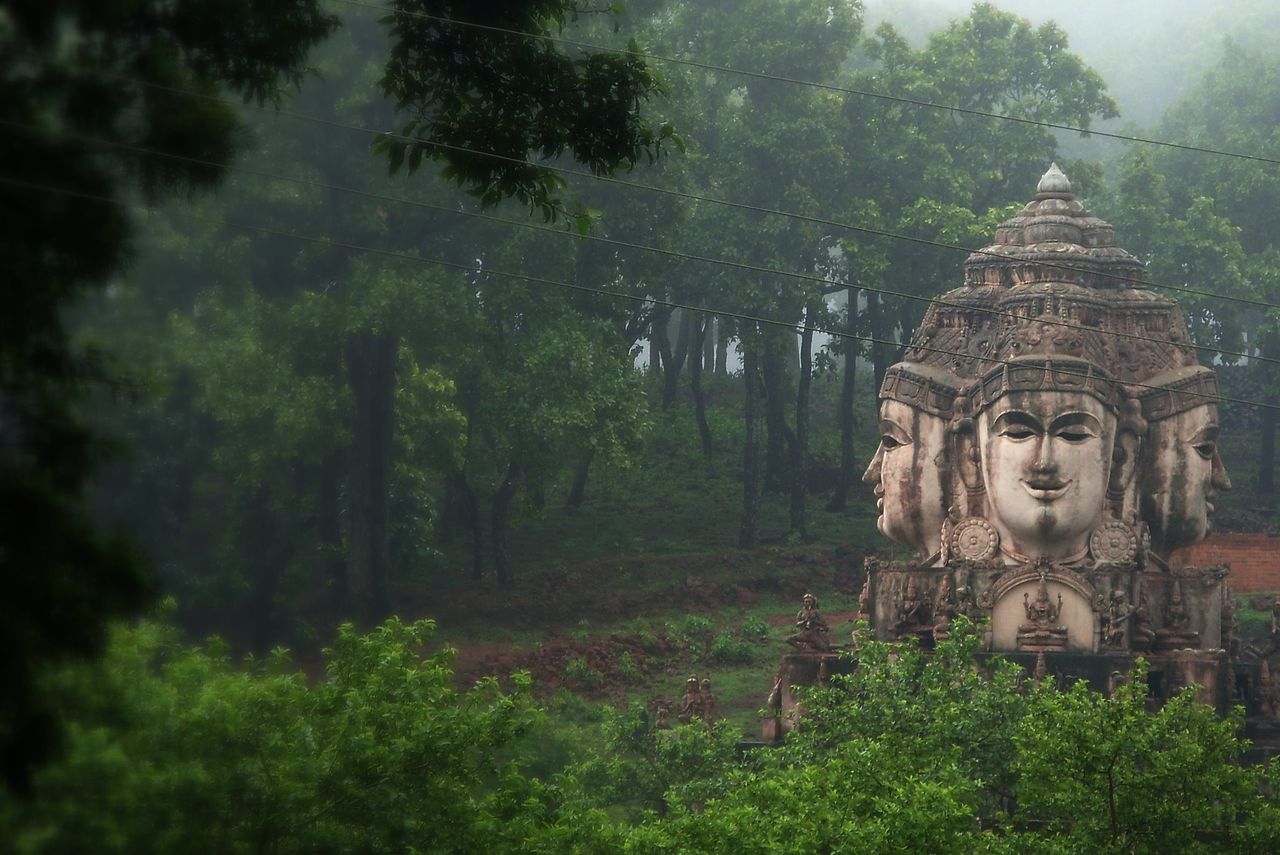
  • Matsya Purana Temple Design Amarkantak Temple Madhya Pradesh

    Matsya Purana Temple Design Amarkantak Temple Madhya Pradesh

    Hindu temples are built nit merely as Prayer halls. To call them as Prayer halls is erroneous. Temples are the places where positive vibrations are felt and those who go there are charged with positive energy. The power that reside in temples is due to the Veda mantras being chanted daily. Mantras are mystically locked sounds that awaken one’s spirituality.

    Though the central principle of Vedas do not mention or sanction Idol worship, but abstract Brahman, the Reality, later idol worship was introduced as a means to Self Realization. Worshipping Abstract Brahman, which is Reality, is difficult, is called Nirguna Upasna, worship of the ‘Beyond Attributes’; Sauguna Aradhana or worship is reaching the goal of Brahman through idols as it is, easy for the Mind to concentrate upon. So no mention of Temples in the Vedas.

    However, later texts called Agamas dealt with this aspect and laid down rules for construction of Temples. I had written on this in this site.

    Matsya purana, one of the eighteen purana of Hinduism explains the construction of Temple in Square Form. I have provided details in this article.

    Vasthu Mandala Design as designed in Matsya Purana Hindu temple

    Oldest temple in This design is found in Amarkantak temples in Madhya Pradesh. It is the birth place of River Narmada, Son and Johila.

    The Matsya Purana ( Matsya Purāṇa) is one of the eighteen major Puranas (Mahapurana), and among the oldest and better preserved in the Puranic genre of Sanskrit literature in Hinduism.The text is a Vaishnavism text named after the half-human and half-fish avatar of Vishnu. However, the text has been called by the 19th-century Sanskrit scholar Horace Hayman Wilson, “although a Shaivism (Shiva-related) work, it is not exclusively so”; the text has also been referred to one that simultaneously praises various Hindu gods and goddesses.

    The text highlights the square design principle, suggesting that the land and design of large temples be set on 64 squares (mandala or yantra),and numerous other square grid designs such as the 16 square grid smaller temple.A temple’s main entrance and the sanctum space should typically open east facing the sunrise, states the text, while the human body was the template of the temple, with Atman and Brahman (Purusha) as the resider in the heart, respectively. The relative ratios, of various levels and various spaces, which the text asserts are naturally pleasing, such as those of entrance height, lengths and heights, placement of carvings are specified in chapters 253-269, as well as other sections such as chapters 58-65. For example, the text suggests that the pillar inside the temple (stambha) be considered as of nine parts, with terms such as Padma, Kumbha, Antara and others, wherein the width of the pillar and each of these parts have certain ratios, and the structural features or carvings be laid out on these nine parts.The text, though named after an avatar of Vishnu, has numerous sections on the installation of Shiva Linga, while other chapters mention Vishnu murti, goddesses and other deities https://en.m.wikipedia.org/wiki/Matsya_Purana

    Amarkantak  is the origin of Narmada River, Son River and Johila River. It is a sacred place for Hindus. amarkantak, situated in the Maikal hills, is a popular Hindu pilgrimage center in Anuppur district of Madhya Pradesh. At this place 1065 meters above sea level, only the Vindhya and Satpura hills of central India merge. The Narmada and Son rivers originate from Amarkantak surrounded by teak and mahua trees from all around. The Narmada River flows westwards and the Son River in the east direction. The beautiful waterfalls, sacred ponds, high hills and serene environment mesmerize the tourists. Nature lovers and religious people love this place. Amarkantaka is associated with many traditions and legends. It is said that Narmada, the daughter of Bhagavan Shiva, flows from here in the form of Jeevandayini river. There are many temples dedicated to Maa Narmada, which are considered as the form of Durga. Amarkantaka is also famous for many ayurvedic plants, which according to legends are considered to be full of life-giving properties. Apart from this, Mahadev hills are situated between the Narmada and Tapti rivers of India.

    https://sattology.org/content/amarkantak-origin-of-maa-narmada/
  • Britisher Who Saw Lord Shiva Renovated Shiva Temple  Baijnath Agar Malwa

    Britisher Who Saw Lord Shiva Renovated Shiva Temple  Baijnath Agar Malwa

    Hinduism advocates God as A Principle,Beyond Attributes.

    The underlying principle of Life and Universe,both known and Unknown lies in all these,they in It,yet It is beyond them.

    It is the Reality,Brahman.

    This Brahman is without beginning and end.

    It is Infinite.

    It is beyond words,thoughts.

    It Immanent and as well all Pervasive.

    It can be felt and Realized.

    There are various methods tried to Realize Brahman,also known as the Self.

    There are as many paths,methods to Realize Brahman as many individuals and individual dispositions are.

    To understand this principle and realize Brahman as a Priniple,Beyond Attributes is possible only for a few.

    Brahman is Realized and not Known in the manner of our knowing mundane things.

    It is,for short of words, I use this term, Experienced.

    Experiences,all of them need not be through our sense organs alone.

    However as this understanding of Brahman as Principle,Hinduism has suggested the method of Realizing Brahman through worship of Personal God,called Easwara.

    Please read my article on Iswara Pranidhana,Yoga.

    In this method God is related as Preceptor,Father,Mother,Guru,Friend,Lover……

    The mind relates to things it likes.

    So one is advised to choose the Devatha as he pleases,in consultation with a Guru,who can guide him in choosing what is best .

    This worship of Personal God is called Saguna Aradhana,while the realization process of Brahman as The Absolute is called Nirguna Aradhana.

    According to Vedas,the authority for Hindus on Spirituality,Saguna Aradhana leads to Realization.

    Many Gods are found in Hindu traditions because of this thought,though the substratum of all is,One.

    Among many Gods/Goddesses,three are called the Trimurthis,the Trinity.

    Brahma,Vishnu and Shiva,representing Potential,Kinetic and Potentio-kinetic energy respectively.

    And the Trimurthis are attributed with all human and beyond human Attributes.

    The prayers addressed to them Delivers.

    I have written  articles on The Sage who spoke from the Grave,Goddess Meenakshi leads by hand,Goddess Abhirami plays,how,all documented.

    Here is another such recorded fact.

    A Britisher’s prayer to Shiva was answered and her husband saw Lord Shiva.

    And the couple renovated the Shiva Temple.

    Read on.

    BAIJNATH MAHADEV MANDIR, AGAR
    • This Mandir is located on the bank of the Banganga river.
    • The construction of this Mandir was started 1528 and completed in 1536.
    • Height of this Mandir is about 50 feet from ground level with 4 feet High kalash.
    • There is 17 feet deep kund(well) on the back side of the Mandir.

    History:-

    The British ruled India for hundreds of years, and built many churches and cathedrals. But in the 1880s, a Shiva temple in Agar Ma lwa, Madhya Pradesh, was rebuilt by Lt. Col. Martin — the only temple ever made by an Englishman in India.

    Col. Martin was in the Afghan wars. He used to regularly write to his wife, informing her of conditions there. It was a long war, and gradually the colonel’s letters stopped. Mrs. Martin, who then lived in the cantonment of Agar Malwa, was besides herself with grief, fearing the worst.

    She would spend time riding for hours to calm herself. One day she rode her horse, past the temple of Baijnath Mahadev. It was in a decrepit state. It was the time of arti, and the sound of conches and the chanting of mantras compelled her to stop. She went inside to see the worship of Lord Shiva taking place. The priests saw the grief on her face and asked her what was wrong. Mrs. Martin narrated her sad story. The Brahmins told her that Lord Shiva listens to sincere prayers of all devotees and saves them from difficult situations. She was advised by one of the priests to start chanting the mantra: “Om Namah Shivaya” for 11 days. The Englishwoman prayed to Lord Shiva for the colonel’s safe return, promising she would rebuild the temple if he came home safe from the war. On the 10th day, a messenger arrived from Afghanistan with a letter from her husband. It read, “I was regularly sending you letters from the battlefield but then suddenly the Pathans surrounded us. I thought there was no way of escape. Suddenly I saw an Indian yogi with long hair, wearing a tiger skin carrying a trident. He had an awe-inspiring personality and he started wielding his weapon against the Afghans who ran away from the field in fright. With his grace what was certain death our bad times turned into victory. Then the great yogi told me that I should not worry and that he had come to rescue me because he was very pleased with my wife’s prayers.”

    Tears of joy and gratitude welled up in Mrs. Martin’s eyes as she read the letter. Her heart was overwhelmed. She fell at the feet of Lord Shiva’s image and sobbed. After a few weeks Lt. Col. Martin returned and his wife told him her story. The couple became devotees of Lord Shiva. In 1883, they donated Rs 15,000 to renovate the temple. This information is engraved on a slab kept in the Baijnath Mahadev Temple.

    The Martins sailed for England with the firm resolution that they would make a Shiva temple at their home and pray to him till the end of life. And they did.

    How to Reach:-

    01 By Air 109 km away Indore Airport (IDR)Indore, Madhya Pradesh
    149 km away Bhopal Airport (BHO)Bhopal, Madhya Pradesh
    02 By Rail 50 km away Shajapur (SFY)Shajapur, Madhya Pradesh
    50 km away Tarana Road (TAN)Tarana , Madhya Pradesh
    65 km away Ujjain (UJN)Ujjain, Madhya Pradesh

    Nearest:-

    Nearest Name Distance ( in Kms)
    Airport INDORE 110
    Railway Station SHAJAPUR 50
    Railway Station UJJAIN 65
    Bus Stand AGAR 00

     Reference and citation.

    http://www.agarmalwa.mp.gov.in/baijnath-mandir/

  • Shiva Devi Play Dice As Snakes Omkareswar Infra Red Image

    Legends they may be , in the eyes of the Westerners, yet some legends are facts even to day, the so called rationalistic 21st century.

    Most of the so called legends and myths of India are verifiable History.

    wp-1456713130100.jpeg

    I have been writing validating these myths with the help of known modern Technics including carbon dating and Infra read dating.

    I have written on the 12 Jyotir Lingas of Shiva.

    One of these is Omkareswara in Madhya Pradesh.

    Here Shiva and Devi are believed to play Dice after the night pooja.

    This they do in the form of Snakes.

    Above is a photograph taken recently with a night vision Camera.

    OmkAreshwar is a beautiful self manifest (swayambhu) linga. From the Vindhyanchal mountain range in Madhya Pradesh, river Narmada, turns westward and meanders in that direction. The deep wide river looks like it has assimilated into itself all the sins and sorrows of the humans and releasing them from these. This river Narmada, which flows rippling from the mountains, is also known as “Reva”. The smooth, round pebbles found in this river are called “BanaLingas”.


    On the banks of river Narmada, there is a huge island on which the fourth of the JyotirLinga “Omkaram Amaleshwar” is situated. This island and the river are shaped like “OM” and that is how it derives its name. It is a natural phenomenon. The devotees who go round the temple consider themselves blessed because they are doing a Parikrama or Circumambulation of Omkara itself and Darshan of the holy JyotirLinga. The Narmada banks and the island are extremely beautiful. The beauty of Nature here is seen to be believed. The houses perched on the terraced green, strong mountains, the temple, KotiTeerth located in the waterfalls and valleys like Chakrateerts are some of the places to be seen. One can see very big fish and also crocodiles in these waers. There are many trees with beautiful creepers all over them. Groups of monkeys live on these trees. There are a variety of birds. The temple towers look bright and shiny in between. The whole atmosphere echoes with the the sound of “Om Namah Shivaya”. It is here that Lord Sankara has taken the forms of “Omkareshwara” and “Amaleshwara”, as JyotirLinga.

    Sthala purana.

    In the ancient times the Demons defeated the gods or divines. Indra was worried. The Danavas or Demons have wrecked havoc in all the three worlds, i.e., Trilokas. In order to empower the Devas once again, Lord Shiva assumed the form of Jyotirmaya Omkararoop. He came out of the nether world or Patala. Lord Shankar came out in the form of Linga on the banks of river Narmada. The gods or Devas have worshipped the Linga which made them powerful once again. This time they were able to destroy the demons and re-acquiesced their empire in Heavens.

    Brahma and Vishnu also lived in the same place as Omkar Amaleshwar. That is why on the banks of Narmada Brahmapuri, Vishnupuri and Rudrapuri are built which are known as Tripuri Kshetra. The Amareshwar JyotiraLinga is situated in Rudrapuri.

    Later on, in the mythological era or Purana Kala, Yavanaswa Putra Mandhata came into power here with the blessings of Indra. He served Lord Shankara with great devotion. Lord Shankara was pleased with him. The waters of Narmada emanated from the Arghya (holy water) or Jalahari of the Omkar JyotirLinga and flown through the mountains, downward and later on flow unseen. Narmada joins the deep-water spring located near the Linga idol of Omkareshwar. It flows there eternally. When some bubbles appear at the bottom of this spring, it is said, that Lord Shankar is pleased.

    King Mandhata made this holy place his capital. Therefore, this place is also known as Omkar Mandhata. The descendents of Mandhata live here even today. The Vindhya mountain also performed a severe penance and pleased Omkar-Amareshwar. As a result of which, the whole place turned beautiful. Many hermits like Agastya have performed severe penances and japas at Omkar-Amaleshwaram JyotirLingam. They had built their hermitages.


    This shrine of Omkar Mandhata Shiva pilgrimage is most beautiful. According to Shankaracharya. It is:

    kAverikAnarmadayoH pavitre samAgame sajjanatAraNAya |
    sadaiva mAndhAtRipure vasantamoNkAramIshaM shivamekamIDe ||

    Meaning:
    I pay my obeisance to the One Who is the savior of the good people and the great One Who always resides at the Holy merging point of Kaveri and Narmada, i.e., Omkar Shiva.

    There was an interesting, pertinent  comment thus,

    ‘How come night vision camera capture image in full colours? Night vision only captures image in dark with green colour’

    The answer is there are cameras to get color images.

    See demo here.

    Citation and reference.


    http://www.shaivam.org/siddhanta/sp/spjyoti_omkar.htm

  • Where Hanuman Threw  Saneeswara Rare Shani Idol

    Where Hanuman Threw Saneeswara Rare Shani Idol

    Ravana was so mighty he could dictate terms to all, including the Devas and even the Navagrahas, the Nine Planets.


    Saneeswar Mandir, Gwalior.Image.jpg Shri Shani(Saturn) Mandir Shanishchara,Shani Parvat, Village Ainti , District Morena ,Near Gwalior Madhya Pradesh

    When his wife Mandodaru,was pregnant with Indrajit,Ravana wanted  all the planets to be in a benevolent position,  at the time of Indrajit’s Birth

    He ordered all the Nine planets  to be in the places assigned by him,that is the Eleventh Houses.

    But Shani refused but to humour Ravana sat on the Eleventh House but stretched his to the 12th House, with disastrous consequences for Indrajit.

    Had Saneeswara remained in the eleventh house, along with the other planets,Indrajit would have remained immortal.

    That was not to be.

    Ravana imprisoned Saneeswara.

    Saneeswara responded by saying,


    Scroll down for Video.

    “O King of Lankaa, You may keep me as a prisoner, but only I will destroy your whole family, and I will do in a such a way that nobody will remain in your family to remember you. O Raavan, You have got the Vardaan of immortality from Brahmaa Jee, you are misusing it by using your might. But listen to me, nobody can stay before me whether Devtaa, human being or Asur. I can burn them even just by looking at them. But, no, I won’t burn you, because by burning you I do not want to insult Prabhu. That is why I accept your imprisonment, because presently you are enjoying the fruits of your Tap.

    But listen, In the end of Tretaa Yug, one Raam Bhakt (devotee) will enter your Lankaa in spite of your strict vigilance, and Hey Raavan, just in moments he will burn your Lankaa. Normally after burning the gold should be pure but by looking at it I will make it black. By doing this I will show you my power to you for the first time.” But Raavan was very proud, so he did not pay much attention to his words and tied him.”

    Shani got tied, but he sat on Raavan’s head in a subtle form and destroyed his wisdom. As a result he brought his death Seetaa to his city Lankaa. When Hanumaan came to Lankaa searching for Seetaa Jee and he burned it, he saw Shani Dev. He asked him – “Who are you and why are tied up here? What is your power?”

    Shani replied – “Hey Pavan Putra, I am Shani. Because of his Tap, Raavan has tied me here. Please cut my bondage.” Hanumaan cut his bondage and said to Shani – “I burned this Lankaa, but this Lankaa has shone more than before, therefore you destroy it by your one gaze.” Shani said – “Take me to a high place.” So Hanumaan took him on a peak of a mountain and as soon as Shani cast a look on Lankaa, Lankaa got burnt to ashes. Raavan continued to look at his Lankaa, but in spite of being immortal he could not do anything. Such is the effect of Shani’s gaze. All Graha of Meghnaad were in auspicious House, but Shani alone sitting in 12th House, not only killed Meghnaad but destroyed the whole Lankaa also.

    Hanumaan said to Shani – “It is not appropriate for you to stay here now, I am throwing you into Bhaarat with my power. Wherever you will fall, you will be worshipped there, you will free people from affliction and and besow them material comforts.” Hearing this Shani got very happy. He said to him – “Hey Hanumaan, My day is Saturday. I am giving this day to you. Who will worship you with devotion this day, offer you Naivedya, feed banana, jaggery, Chanaa, sweet Kheel (puffed Dhaan), I will not afflict those people.” Hearing this Hanumaan also gotvery happy.

    There is a mountain near Gwalior, at a distance of 30 Kms, its name is Shanishcharaa. Shani fell on that mountain. There is Shani’s idol where special fair is celebrated on Shani Amaavasyaa day (any Amaavasyaa fallen on Saturday).

    Location.

    Shani Parvat, Village Ainti , District Morena ,Near Gwalior Madhya Pradesh.

    Shanichara railway station is located at Gwalior Bhind Railway Line. From any part of India you have to reach Gwalior and from there you can easily access Shanischara (Shanichara).

    For air travellers nearest airport is Gwalior Airport.Shanischara is just 15kms away from Rajmata Vijaya Raje Scindia Terminal i.e. Gwalior Airport.

    From Gwalior city you can hire an autorikshaw or a car to reach shanischara at nominal cost.

    A Grand Prayer Organised On Every Saturday
    A grand puja (prayer) is held here every Amavasya Shanivar (moonless Saturday night), which has devotees
    thronging to the temple in droves. Special narrow gauge trains operate from Gwalior, Agra, Jaipur, Baroda and
    some other cities to bring devotees to the temple.
    The Statue of Hanuman 
    Just outside this stone temple is a statue of the monkey-god Hanuman. It depicts Hanuman with a dagger tied to
    his waist stepping on another monkey. A very curious practice is observed here: worshippers leave behind their
    shirts and shoes or have their hair cut in the belief that any curse that might have been cast on them will disappear
    along with their locks.
    Facilities
    Transport
    The Shanichara Temple is about 37 kilo meters from Morena en route to Banmore (NH3) Aiti Village.
    The Shanichara Temple is about 18 kilo meters from Gwalior en route to Padhavali, Bateshwar and Mitaoli.
    Bus services are rare – make enquiries at the Morena bus station. Hiring a cab is a better idea.
    Roads are moderately good up to a point, after which it is just a dry track to the temple.

    Contact.

    Collector , District Morena , Maafi and Aukaf Officer Gwalior Region , Motimahal Gwalior , Tahsildar Morena
    Roopesh Upadhyay , President Shri Shani Shradhalu Samuh , Gwalior. Mobile – 9425360221

    Check the Mobile number.

    Citation.

    http://www.oocities.org/bhagvatjee/shani/4-extra-50-79/74-shani-Raavan.htm

    http://morena.nic.in/shanichara.html

  • 11 Lamps Lit On Ravana’s Head Maheswar

    Karthavirarjuna, whose killing of Jamadagni prompted Parashurama to wipe out Kshatriyas, till Parashurama was defeated at the hands of Lord Rama ,


    was once playing with his consorts in the river Narmada near Avanti, (Southern Avanti).


     No higher resolution available. (1)_Lingam_with_Yoni_and_Nandi_in_river_Narmada,_Maheshwar_MP_India.jpg ‎(604 × 404 pixels, file size: 133 KB, MIME type: image/jpeg)
    Lingam amidst River.


    As the water level was low, he built a reservoir by holding down the water with his 1000 arms.


    Unaware of this Ravana, who happened to be there a Lingam in the dried up area downstream and started praying .


    As playtime was over, Karthaviryarjuna removed his hands of the water body and the dammed up water overflowed and sunk the Linga,


    Furious Ravana picked up a fight with Karthaviryarjuna.


    Ravana was defeated.


    The mighty Sahasrarjuna with the 1000 arms pinned Ravana to the ground. Then he placed 10 lamps on his heads and one on his hand. After tying up Ravana, Sahasrarjuna dragged him home and tied him up to the cradle pole of his son. A humiliated Ravana stayed prisoner until his release was secured.

    Even today, the Sahasrarjun temple at Maheshwar lights 11 lamps in memory of the event.


    Festivals.

    Maheshwar is full of festivals and celebrations, some are: Nag Panchami, Gudi Padava, Teez (New year celebrations according to the Hindu calendar), All Mondays of Shravan month, (DOLA of Kashivishwnath on last Monday, bhang is served as prasad of Shiva), Mahashivratri, Samoti Amavas, and all other Indian festivals. There are many visiting places like gold swing is also their and it is situated at Rajwada. Maheshwar also has the temple of Goddess Vindhyavasini Bhavani, one of the 24Shaktipeeths of Goddess Parvati.

    Every year on the immediately preceding Sunday of Makar Sankranti (i.e. the Sunday just before the date when the Sun is about to enter the sign of Capricorn as per Indian Astrological / Sidereal calendar), Swaadhyaaya Bhavan Ashram (based at Mahalaxmi Nagar, Maheshwar) organizes Mahaamrityunjaya Rath Yaatraa in the town of Maheshwar. This Mahaamrityunjaya Rath Yaatraa was initiated by Shri Harvilas Aasopaa for the welfare of humanity, and is known to be the first of its kind in the world. The yaatraa intends to invoke blessings of Ayurved Murti Bhagwaan Sadaashiv Mahaamrityunjaya (who is regarded as the primordial and supreme doctor), and it starts from Swaadhyaaya Bhawan Ashram and culminates at the banks of the holy river Narmada.


    How to reach Maheswar.


    By Air: The nearest airport is at Indore; located about 91 km from Maheshwar. The airport is well connected by flightsto cities like MumbaiDelhi and Bhopal. From the airport, visitors can hire a taxi to reach Maheshwar.

    By Rail: The nearest railhead is at Barwaha; located about 39 km from Maheshwar. Indore is the nearest major railhead. Trains from Mumbai, Delhi, Bhopal and many other Indian cities halt at the station. From the station, visitors can hire taxi for Maheshwar.

    By Road: Maheswar can be reached easily by road. Several state-run buses do ply regularly from Indore, Bhopal, Khandwa, Dhar, Dhamnod and many other cities of Madhya Pradesh.


    Citation.

    Wiki.