Tag: Madhya Pradesh

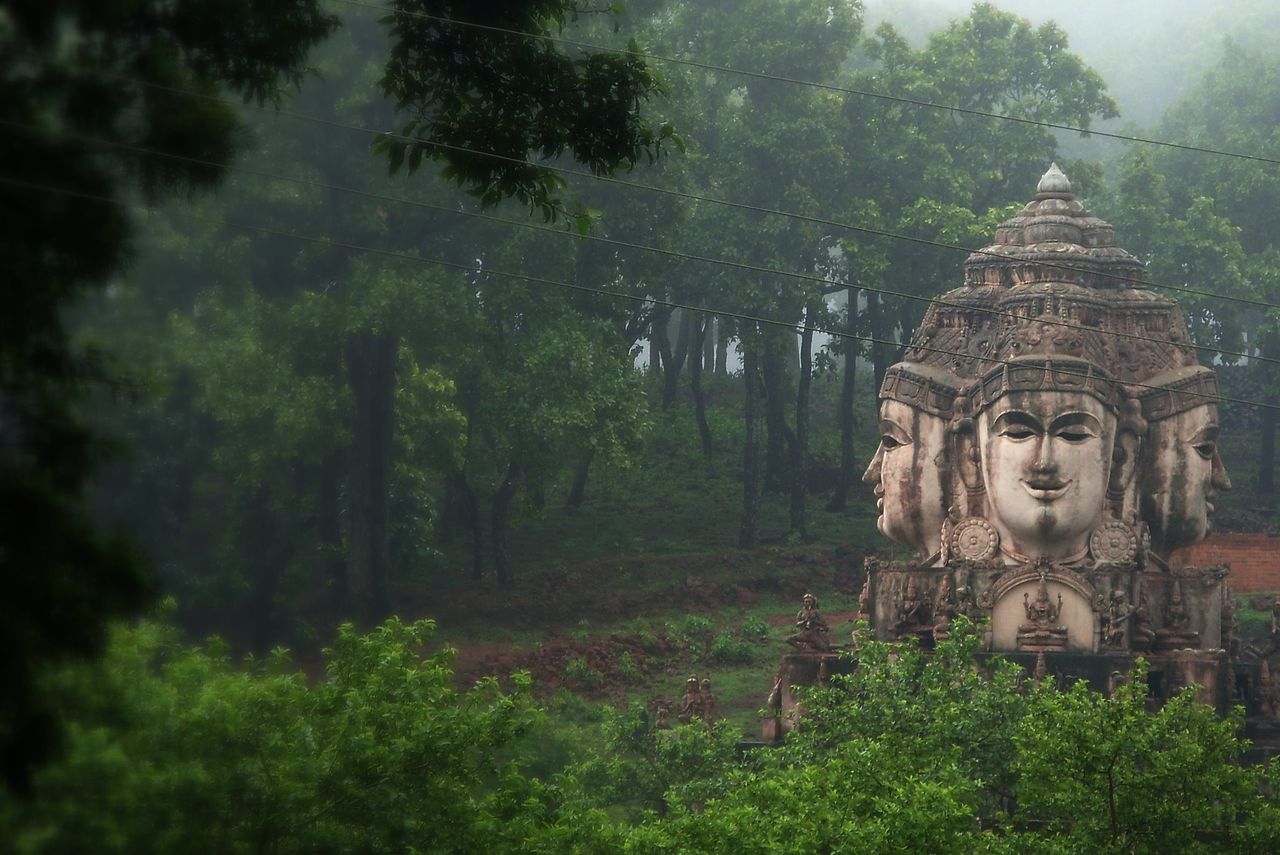
  • Matsya Purana Temple Design Amarkantak Temple Madhya Pradesh

    Matsya Purana Temple Design Amarkantak Temple Madhya Pradesh

    Hindu temples are built nit merely as Prayer halls. To call them as Prayer halls is erroneous. Temples are the places where positive vibrations are felt and those who go there are charged with positive energy. The power that reside in temples is due to the Veda mantras being chanted daily. Mantras are mystically locked sounds that awaken one’s spirituality.

    Though the central principle of Vedas do not mention or sanction Idol worship, but abstract Brahman, the Reality, later idol worship was introduced as a means to Self Realization. Worshipping Abstract Brahman, which is Reality, is difficult, is called Nirguna Upasna, worship of the ‘Beyond Attributes’; Sauguna Aradhana or worship is reaching the goal of Brahman through idols as it is, easy for the Mind to concentrate upon. So no mention of Temples in the Vedas.

    However, later texts called Agamas dealt with this aspect and laid down rules for construction of Temples. I had written on this in this site.

    Matsya purana, one of the eighteen purana of Hinduism explains the construction of Temple in Square Form. I have provided details in this article.

    Vasthu Mandala Design as designed in Matsya Purana Hindu temple

    Oldest temple in This design is found in Amarkantak temples in Madhya Pradesh. It is the birth place of River Narmada, Son and Johila.

    The Matsya Purana ( Matsya Purāṇa) is one of the eighteen major Puranas (Mahapurana), and among the oldest and better preserved in the Puranic genre of Sanskrit literature in Hinduism.The text is a Vaishnavism text named after the half-human and half-fish avatar of Vishnu. However, the text has been called by the 19th-century Sanskrit scholar Horace Hayman Wilson, “although a Shaivism (Shiva-related) work, it is not exclusively so”; the text has also been referred to one that simultaneously praises various Hindu gods and goddesses.

    The text highlights the square design principle, suggesting that the land and design of large temples be set on 64 squares (mandala or yantra),and numerous other square grid designs such as the 16 square grid smaller temple.A temple’s main entrance and the sanctum space should typically open east facing the sunrise, states the text, while the human body was the template of the temple, with Atman and Brahman (Purusha) as the resider in the heart, respectively. The relative ratios, of various levels and various spaces, which the text asserts are naturally pleasing, such as those of entrance height, lengths and heights, placement of carvings are specified in chapters 253-269, as well as other sections such as chapters 58-65. For example, the text suggests that the pillar inside the temple (stambha) be considered as of nine parts, with terms such as Padma, Kumbha, Antara and others, wherein the width of the pillar and each of these parts have certain ratios, and the structural features or carvings be laid out on these nine parts.The text, though named after an avatar of Vishnu, has numerous sections on the installation of Shiva Linga, while other chapters mention Vishnu murti, goddesses and other deities https://en.m.wikipedia.org/wiki/Matsya_Purana

    Amarkantak  is the origin of Narmada River, Son River and Johila River. It is a sacred place for Hindus. amarkantak, situated in the Maikal hills, is a popular Hindu pilgrimage center in Anuppur district of Madhya Pradesh. At this place 1065 meters above sea level, only the Vindhya and Satpura hills of central India merge. The Narmada and Son rivers originate from Amarkantak surrounded by teak and mahua trees from all around. The Narmada River flows westwards and the Son River in the east direction. The beautiful waterfalls, sacred ponds, high hills and serene environment mesmerize the tourists. Nature lovers and religious people love this place. Amarkantaka is associated with many traditions and legends. It is said that Narmada, the daughter of Bhagavan Shiva, flows from here in the form of Jeevandayini river. There are many temples dedicated to Maa Narmada, which are considered as the form of Durga. Amarkantaka is also famous for many ayurvedic plants, which according to legends are considered to be full of life-giving properties. Apart from this, Mahadev hills are situated between the Narmada and Tapti rivers of India.

    https://sattology.org/content/amarkantak-origin-of-maa-narmada/
  • Festival Of God Sisters Karwah Chauth

    It is the unique feature of Hindu Fesivals to have a spiritual meaning,as in Pongal,Baisakhi which celebrates the Compassion of the Sun for providing good yield from the earth.


    Embed from Getty Images


    It also serves a social purpose , that of uniting the family members in all the functions.


    In one festival celebrated in Uttarakhand, Uttar Pradesh, western Bihar, Himachal Pradesh, Jammu and Kashmir, Haryana, Punjab, Rajasthan, Chhattisgarh, Madhya Pradesh, Jharkhand and Gujarat States of India meets the psychological needs a  newly married bride.


    In the early days distance was an issue, girls married to a far off place would feel lonelyand feel depressed.


    She develops a  close friendship with a woman, of nearly the same age, of the bride and both the girls share their joys and sorrows.


    There is another legend.


    Karva is another word for ‘pot’ (a small earthen pot of water) and chauth means ‘fourth’ in Hindi (a reference to the fact that the festival falls on the fourth day of the dark-fortnight, or krishna paksh, of the month of Kartik).[8] It is uncertain how the festival originated and how it came to be celebrated only in the northwestern part of the Indian subcontinent. One hypothesis is that military campaigns and long-distance travel usually resumed around the time of the festival, as the area dried and numerous rivers of the region (see Sapta Sindhu) subsided from the effects of the monsoon. Women observed the fast to pray for the safety of their husbands at this time as they ventured away from home. The festival coincides with the wheat-sowing time (i.e., the beginning of the Rabi crop cycle). Big earthen pots in which wheat is stored are sometimes called Karvas, so the fast may have begun as a prayer for a good harvest in this predominantly wheat-eating region.


    This Festival falls on the Chaturthi, Fourth day of the Waning Moon,Krishna paksha  Nine days before Diwali. It falls on the fourth day of the Kartik month.
    The pooja preparations start a day in advance. Married women buy the shringar or the traditional adornments and the other pooja items like the karwa, matthi, heena etc.

    Early in the morning they prepare food and have it before sunrise. The morning passes by in other festive activities like decorating hand and feet with heena, decorating the pooja thali and meeting friends and relatives.

    In the late afternoon women gather at a common place like temple or a garden or someones’ place who has arranged the pooja. An elderly lady or the pujarin narrates the legend of Karwa Chouth.

    The essentials of this gathering and listening of the Karwa chauth story , a special mud pot, that is considered a symbol of lord Ganesha, a metal urn filled with water, flowers, idols of Ambika Gaur Mata, Goddess Parwati and some fruits, mathi and food grains. A part of this is offered to the deities and the storyteller.

    Earlier an idol of Gaur Mata was made using earth and cowdung. Now just an idol of Goddess Parwati is kept. Every one lights an earthen lamp in their thalis while listening to the Karwa story. Sindoor, incense sticks and rice are also kept in the thali.

    At this time the women wear heavy saris or chunries in red , pink or other bridal colors, and adorn themselves with all other symbols of a married women like, nose pin, tika, bindi, chonp, bangles, earrings etc.

    Once the moon rises, the women see its reflection in a thali of water, or through a dupatta or a sieve. They offer water to the moon and seek blessings. They pray for the safety, prosperity and long life of their husbands. This marks the end of the day long fast.


    Other Legends.


    A beautiful queen called Veervati was the only sister of seven loving brothers. She spent her first Karva Chauth as a married woman at her parents’ house. She began a strict fast after sunrise but, by evening, was desperately waiting for the moonrise as she suffered severe thirst and hunger. Her seven brothers couldn’t bear to see their sister in such distress and created a mirror in a pipal tree that made it look as though the moon had risen. The sister mistook it for the moon and broke her fast. The moment she ate, word arrived that her husband, the king, was dead. Heartbroken, she wept through the night until her shakti compelled a Goddess to appear and ask why she cried. When the queen explained her distress, the Goddess revealed how she had been tricked by her brothers and instructed her to repeat the Karva Chauth fast with complete devotion. When Veervati repeated the fast, Yama was forced to restore her husband to life.

    In a variant of this story, the brothers build a massive fire behind a mountain instead and trick their sister by convincing her that the glow is the moon. She breaks her fast and word arrives that her beloved husband has died. She immediately begins running to her husband’s house, which is somewhat distant, and is intercepted by Shiv[disambiguation needed]-Parvati. Parvati reveals the trickery to her, cuts her own little finger to give the wife a few drops of her holy blood, and instructs her to be careful in keeping the complete fast in the future. The wife sprinkles Parvati’s blood on her dead husband and, coming back to life, they are reunited.

    The Legend of Mahabharata

    The belief in this fast and its associated rituals goes back to the pre-Mahabharata times. Draupadi, too, is said to have observed this fast. Once Arjun went to the Nilgiris for penance and the rest of the Pandavas faced many problems in his absence. Draupadi, out of desperation, remembered Lord Krishna and asked for help. Lord Krishna reminded her that on an earlier occasion, when Goddess Parvati had sought Lord Shiva’s guidance under similar circumstances, she had been advised to observe the fast of Karva Chauth. In some tellings of this legend, Shiva tells Parvati the story of Veervati to describe the Karva Chauth fast. Draupadi followed the instructions and observed the fast with all its rituals. Consequently, the Pandavas were able to overcome their problems.[37]

    The Legend of Karva

    A woman named Karva was deeply devoted to her husband. Her intense love and dedication towards him gave her shakti (spiritual power). While bathing at a river, her husband was caught by a crocodile. Karva bound the crocodile with a cotton yarn and asked Yama (the god of death) to send the crocodile to hell. Yama refused. Karva threatened to curse Yama and destroy him. Yama, afraid of being cursed by Pati-vrat (devoted) wife, sent the crocodile to hell and blessed Karva’s husband with long life. Karva and her husband enjoyed many years of wedded bliss. To this day, Karva Chauth is celebrated with great faith and belief.

    The Story of Satyavan and Savitri

    When Lord Yama came to procure Satyavan’s soul, Savitri begged him to grant him life. When he refused, she stopped eating and drinking and followed Yama who carried away her dead husband. Yama said that she could ask for any other boon except for the life of her husband. Savitri asked that she be blessed with children. Yama agreed. Being a “‘Pati-Vrat (devoted) wife, Savitri would never let any other man be the father of her children. Yama was left with no other choice but to restore Savitri’s husband to life


  • 11 Lamps Lit On Ravana’s Head Maheswar

    Karthavirarjuna, whose killing of Jamadagni prompted Parashurama to wipe out Kshatriyas, till Parashurama was defeated at the hands of Lord Rama ,


    was once playing with his consorts in the river Narmada near Avanti, (Southern Avanti).


     No higher resolution available. (1)_Lingam_with_Yoni_and_Nandi_in_river_Narmada,_Maheshwar_MP_India.jpg ‎(604 × 404 pixels, file size: 133 KB, MIME type: image/jpeg)
    Lingam amidst River.


    As the water level was low, he built a reservoir by holding down the water with his 1000 arms.


    Unaware of this Ravana, who happened to be there a Lingam in the dried up area downstream and started praying .


    As playtime was over, Karthaviryarjuna removed his hands of the water body and the dammed up water overflowed and sunk the Linga,


    Furious Ravana picked up a fight with Karthaviryarjuna.


    Ravana was defeated.


    The mighty Sahasrarjuna with the 1000 arms pinned Ravana to the ground. Then he placed 10 lamps on his heads and one on his hand. After tying up Ravana, Sahasrarjuna dragged him home and tied him up to the cradle pole of his son. A humiliated Ravana stayed prisoner until his release was secured.

    Even today, the Sahasrarjun temple at Maheshwar lights 11 lamps in memory of the event.


    Festivals.

    Maheshwar is full of festivals and celebrations, some are: Nag Panchami, Gudi Padava, Teez (New year celebrations according to the Hindu calendar), All Mondays of Shravan month, (DOLA of Kashivishwnath on last Monday, bhang is served as prasad of Shiva), Mahashivratri, Samoti Amavas, and all other Indian festivals. There are many visiting places like gold swing is also their and it is situated at Rajwada. Maheshwar also has the temple of Goddess Vindhyavasini Bhavani, one of the 24Shaktipeeths of Goddess Parvati.

    Every year on the immediately preceding Sunday of Makar Sankranti (i.e. the Sunday just before the date when the Sun is about to enter the sign of Capricorn as per Indian Astrological / Sidereal calendar), Swaadhyaaya Bhavan Ashram (based at Mahalaxmi Nagar, Maheshwar) organizes Mahaamrityunjaya Rath Yaatraa in the town of Maheshwar. This Mahaamrityunjaya Rath Yaatraa was initiated by Shri Harvilas Aasopaa for the welfare of humanity, and is known to be the first of its kind in the world. The yaatraa intends to invoke blessings of Ayurved Murti Bhagwaan Sadaashiv Mahaamrityunjaya (who is regarded as the primordial and supreme doctor), and it starts from Swaadhyaaya Bhawan Ashram and culminates at the banks of the holy river Narmada.


    How to reach Maheswar.


    By Air: The nearest airport is at Indore; located about 91 km from Maheshwar. The airport is well connected by flightsto cities like MumbaiDelhi and Bhopal. From the airport, visitors can hire a taxi to reach Maheshwar.

    By Rail: The nearest railhead is at Barwaha; located about 39 km from Maheshwar. Indore is the nearest major railhead. Trains from Mumbai, Delhi, Bhopal and many other Indian cities halt at the station. From the station, visitors can hire taxi for Maheshwar.

    By Road: Maheswar can be reached easily by road. Several state-run buses do ply regularly from Indore, Bhopal, Khandwa, Dhar, Dhamnod and many other cities of Madhya Pradesh.


    Citation.

    Wiki.

  • Pandava’s Caves or Buddhist Monastery Pachmarhi


    The Five brothers, The Pancha Pandavas, while on exile for thirteen years were reported to have dwelt in caves in Madhya Pradesh,


    They also built a Pond for Draupadi .


    These caves are in Satpura range in Madhya Pradesh at Pachmarhi.

    Pachmarhi is a hill station and has other tourist attractions

    Caves of The Pandavas
    Pandava Caves

    A Cave of the Pancha Pandavas
    One of the Caves of The Pandavas


    The Pond of Draupadi
    Draupadi Kund


    It is widely known as Satpura ki Rani (“Queen ofSatpura“), situated at a height of 1100 m in a valley of the Satpura Range in Hoshangabaddistrict. Dhupgarh, the highest point (1,350 m) in the central India region and the Vindhyaand Satpura range, is located here.


    The Legend:

    These caves were built by five Pandavabrothers of Mahabharatha era during their fourteen years of exile.

    The caves are situated on a hilltop and provide an excellent vantage point.

    How to Reach Pachmarhi.


    Amongst these five caves, the most well ventilated and the spacious one is the ‘Draupadi Kuti’, named after Draupadi, the wife of the five Pandava brothers. The darkest of all the caves is the ‘Bhim Kothari’, named after the toughest of the five brothers – Bhima. All the five caves are hewed in a rough manner, which however do not mar their beauty or attraction. People visit the humble sanctuaries that relate their name with the Mahabharata, round the year.

    Though Pandava caves proudly associate with Mahabharata, many archaeologists contradict the fact. They believe that these caves belong to the Gupta period (9th or 10th century AD) and even predict their construction by Buddhist monks. Traces of an ancient brick-built stupa have been unearthed on top of the caves, which dates back these caves to the Buddhist period. Archeologists believe the stupa is a remnant of the regime of King Ashoka.


    Airport . Bhopal 144 Kms.


    Railway Station. Bhopal.


    Bus station.Bhopal,Chhindwara.


    Buses start from Habibganj ISBT of Bhopal and generally take close to 5–6 hours to reach Pachmarhi.


    Other Tourist spots in Pachmarhi and around.


    Pachmarhi is blessed with very rich flora and fauna. It has endless nature spots, lush greenery, breath-taking views, waterfalls, mountain streams, rich and rare wildlife. Some of the popular spots are as follows

    Dhupgarh
    Highest point of Satpura ranges. It is known for sunrise and sunset view point. At night one can see the lights of the neighboring towns such as Itarsi. At the day time the view of the lush green valley offers a captivating view. One can reach the top either by road or by trekking.
    Chauragarh
    This the second highest peak. It is a pilgrimage site with Lord Siva’s temple at the top.
    B-Hill and B-Falls
    This is another hill very close to the township. On the hind side of this hill a big waterfall called B-fall. It is a popular picnic spot as it offers pristine water flowing down this fall.
    PanarPani
    Panarpani has a natural fresh water lake with forest around.
    Sangam
    This is a conflux of mountain streams behind Dhupgarh. The water in these streams is crystal clear in all seasons except of course autumn.
    Jatashankar and Mahadeo caves
    These are mountain caves with fresh water dripping from them. One can witness ecosystem at work out here with mountains feeding the streams with fresh water, the water that they soak-in during autumn. As the name suggests, these caves and many others like these are abode of lord Siva.
    Silver Falls
    Also called Rajat Prapat/Big Fall. The falls comes 2800+ feet roaring down the gorge creating a sliver streak that gives its name. The view of dense, serene, virgin forest and stream is simply mesmerizing.
    Apsara Vihar
    This is a mountain stream that creates a beautiful natural water pool, cascades and waterfall in its a course.
    Other waterfalls
    Pachmarhi’s ecosystem is blessed with many waterfalls. To name a few are Silver Fall, B-Fall, Little Fall, Duchess Fall etc.
    Rich Biosphere
    One would love to get lost in the forests of Pachmarhi, particularly in the summer, as it is full of fruit trees such as – mangoes, jamun, custard fruit and lesser known but very delicious local fruits such khatua, tendu, chunna, khinni and chaar. The forest is also known for its richness in medicinal plants and herbs.
    Wildlife
    The jungle has tigers, panthers, bear, deer, bison, wide variety of birds etc. Tigers have retreated deeper in the forest though.
    Citation:
    http://en.wikipedia.org/wiki/Pachmarhi


    Enhanced by Zemanta
  • Tripura Ashes Gods’ Abode Ganges Visits Amarkantak

    Lord Shiva burnt the Tripura He had  a portion of the Ashes to fall in Kailash, and some in Amarkantak,Madhya Pradesh,.


    This is also the place the Narmada River originates.


    The presiding Deity of River Ganges visits this place, as the Legends would have it.


    origin of River narmada
    This photo of Bhrigu Kamandal is courtesy of TripAdvisor


    Amarkantak, on the western edge of ancient Kingdom of Kalinga, is a place of worship for all the three worlds. Gods and Gandharvas (celestial beings), Asuras (demons), Saints and sages have achieved great spiritual powers here. It is believed that who ever dies at Amarkantak is assured a place in heaven. If a woman makes offerings of fruits and flowers, she will gain the respect of her husband, and no doubt she will achieve a place in heaven.


    When Lord Shiva destroyed Tripura (the three cities) by fire, the ashes of one fell upon mount Kailash, the ashes of another fell upon Amarkantak, and the ashes of the third were saved by Lord Shiva and kept in heaven. The ashes that fell upon Amarkantak turned into crores of Shivalingas. Only one is visible at Jwaleshwar in Amarkantak.


    Legend has it that Lord Shiva blessed Narmada with unique purifying powers.


    Whereas to purify himself, a devotee requires to take one dip in the Holy Ganga, seven days’ prayers on the banks of Yamuna and three days prayers on the banks of Saraswati, the mere sight of Narmada is enough.


    A charming folk tale describes the superiority of Narmada over Ganga.


    Once every year, after she herself is polluted beyond tolerance, Ganga visits Narmada dressed like a dark woman and takes a cleansing purifying dip in its waters!


    There are other rivers too, popular, romantic and life sustaining, each glamourized in the folk lore and history but none can match the mystique of Narmada.


    Amarkantak is a Sanskrit word the literal meaning of which is immortal (amar) obstruction (kantak). The place was abode of gods but was disturbed by the hindrances of Rudraganas and hence called Amarkantak. The poet Kalidas has mentioned it as Amrakoot, which later became Amarkantak. Myth is that the dense forests of this region were full of mango (amra) trees”.


    Amarkantak and rivers originating from it do not find mention in Vedic literature, but they have been mentioned in Puranas, Ramayana, Mahabharata, Vashishtha samhita and “Shatapatha Brahmana”. After Mahabharata the history of about 3000 years is in dark. Professor Arjun Chaube Kashyap concludes that the Puranic name of Amarkantak was Riksh parvat. About 6000 years back the Suryavanshi samrat Mandhata founded a town in the valley Riksh parvat and named it Mandhata. The queen of samrat Purukutsa, who was son of Mandhata, gave the title of Narmada to the river. Due to occupation of this area by Mandhata the descendants of Yayati moved from this area to west of Madhya Pradesh and settled on the banks of Narmada River.


    According to tradition, this Vindhyachal area was included in the Kingdom of Ayodhya, Kapila Muni, Bhrigu Rishi and Markandeya Rishi had ashrams here. It is said that Pandavas stayed here and gained spiritual benefits during their exile.


    After about 3000 years of Mahabharata the Adi Shankarachrya was born in 788 AD and consecrated on the banks of Narmada River. He founded Pataleshwar Mahadev in Amarkantak at the origin of Narmada from the bamboo clumps. This place is known as Surajkund today. There are no bamboo clumps now.


    How to Reach:


    Nearest airports are Jabalpur (228 km.) and Raipur (230 km).


    The nearest rail head is Pendra Road (42 km) on the Katni – Bilaspur section of the South-Eastern Railway.


    Amarkantak is connected by regular bus service with Shahdol, Umaria, Jabalpur, Rewa, Bilaspur, Anuppur and Pendra Road.

    Citations.


    Amarkantak


    Wiki Amarkantak


    Enhanced by Zemanta