Tag: Ravana

  • Ravana Parashuram Lived 340000 Years Before Sri Rama

    Ravana Parashuram Lived 340000 Years Before Sri Rama

    The lineage of Sri Rama, Surya vansh,Solar Dynasty makes interesting reading for those interested in Researching Sanatana Dharma. As is known Sri Rama belongs to Solar Dynasty ,founded by Ikshvaku who was the son of Manu ,first human being. Manu also had a daughter called Ela who founded the Lemuria Empire of Chandra Vamsa. I shall write an article the importance of this fact to determine the date of Tamils. I had written about Lemuria, home of Tamils being 230 Million years old.

    Now in this article let me explore the kings who preceded Sri Rama and their contemporaries.

    Puthra kameshti yagnya. Rama was born after performing the yagnya

    And even among these kings, let us explore one king at a time.

    Mandhata. He was the Seventeenth King in the Lineage of Solar Dynasty. Sri Rama was the Fifty first in that Line.Mandhatha and Sri Rama were separated by eighteen Kings.

    Ravana was a contemporary of Mandhata.( The hypothesis that there were more than one Ravana does not stand scrutiny of one checks Ramayana, Mahabharata and Purana)

    Now Ravana was killed by Sri Rama .

    This means Ravana was living about 3,40,000 Years before Sri Rama and Parashuram was his contemporary.

    Average lifespan of Humans was, in Tretha Yuga, 10,000 years. Tretha Yuga lasts for 1,296,000 human years.

    So Ravana and Parashuram preceded Sri Rama by about 3,40,000 years.

    To the sceptics, it is not improbable for people to have such a long Lifespan and their technology Superior to us. I have sufficient material saved in Pinterest from credible sources to doubt our understanding of our ancient history .

    And Historical Anamolies which we can not wish away with.

    The information in Puranas and Ithihasas check out when one cross checks geography ,flora and fauna, and references in Regional languages like Tamil and ancient information found around the world.

    ‘As Mandhata grew old, he was having pride of his strength and desired to entirely conquer Swarga, the heavenly regions ruled by Indra. Indra was perturbed by this and told Mandhata that he had not completely conquered the earth. Indra told Mandhata that the Asura Lavana, the son of Madhu and Ravana, the king of Lanka were not a subject to his rule. As he knows he cannot pardon Indra’s request as his son, he goes to Madhupuri. Reference and citation. https://en.m.wikipedia.org/wiki/Mandhatri

    https://en.m.wikipedia.org/wiki/Ancestors_of_Rama

    Vishnu Purana.

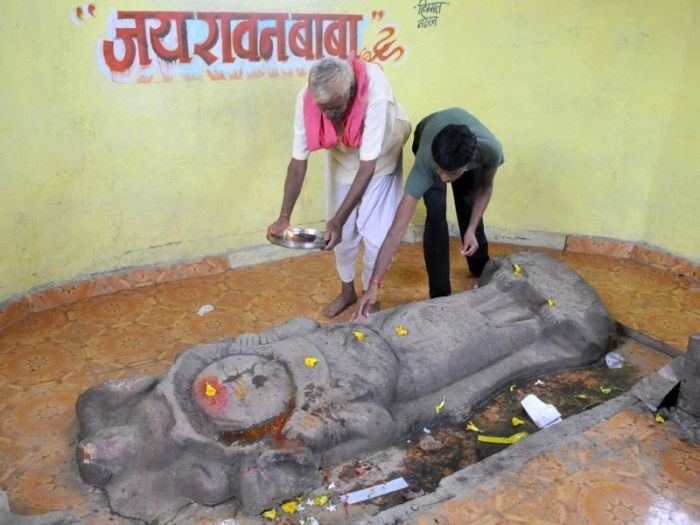
  • Ravana History by Brahmin Somachandra Odisha in Gold

    Ravana History by Brahmin Somachandra Odisha in Gold

    I am checking on the history of Ravana from Sri Lanka.

    Though some information is yet to be cross checked, I am providing information that have been checked and will be writing more.

    Ravana who was killed by Lord Rama was a Brahmin.

    He was also considered to be part Yaksha.

    He was also part of the Dravidas of the South and the Naga Loka was considered to be under him.

    He was a Sanskrit scholar and an ardent devotee of Lord Shiva.

    He ruled vast stretches of territory which included the now sunk Atlantis.

    His father in law, Maya built a city in Atlantis.

    Maya is also credited with having built Indraprastha, now called Delhi, capital of India.

    Ravana had his reserve Army in Atlantis, The Americas.

    Ravana is mentioned in Ramayana in detail and all the Eighteen Puranas of India, Mahabharatha, and classics of regional languages of India.

    Not only Hindu texts refer to him but Buddhist texts as well.

    He was called Ravana Buddha, Buddha denoting Enlightened one.

    He wrote Shiva Tandava Stotra, treatises on Astrology and Ayurvedateachers veda.

    He is reported to have conquered territories not covered by the Ikshvaku dynasty of Lord Rama.

    Information of Ravana abounds in Sinhala , Ceylon.

    One such work is Ravana Tales.

    Ravana tales was written in Gold plate by a Brahmin, Somachandra Sri Bharathi from Odisha, India.

    `Ravana Saga’ were based on the ola manuscript `Ravana

    Tales’. The readers will wonder what this `Ravana Tales’

    is? What is its history? This concluding chapter is intended

    to provide the answer to such concerns.

    Dr. Mirandi Obeysekere explains it as follows.

    The original Ravana Tales had been written on gold

    plates by Somachandra Sri Bharathi, an erudite Brahmin of

    Kälinga Dash (presently known as Orissa) to be presented

    to King Khallatanaga (110-104 BC) of Murunda dynasty.

    However, he could not fulfill his wish as the King died

    before the writing was completed.

    Prince Marina, the elder son of King Khallatanaga

    ascended the throne following the demise of his father

    and the book was presented to him. Prince Marina was at

    that time ruling in Girandurukotte with Mirandi Villa as

    his centre of administration.

    This book of gold sheaves was later inherited by his

    elder son Prince Marina Senadhilankara and had since then

    been passed over to the senior member of the succeeding

    generation. Accordingly, it came into the possession of

    the Chieftain Mildew Marina Senadhilankara who was

    the Chieftain of Eva region. Subsequently it was inherited

    by Marina Mahakappina Lanni Bandana Senadhilankana

    who was a chieftain of Eva region, from his father Mildew

    Marina Senadhilankara.

    Erudite successors of this dynasty subsequently

    contributed additional pages written on silver and copper

    sheets to the original book of Sotuachandra Sri Bharathi.

    The book contains factual information about King

    Ravana, ancient Kshatriya (royal) families of Canna,

    Brahmanic lineage, Naga, Yaksha, Diva clans, ancient

    medicine, incantations, illangam and illangam (ancient battle

    craft). The contents of the book were subsequently re-

    written on Ala leaves and the original gold and copper

    sheets had been donated to Mahiyangana temple.

    The donation had been done by Adigar Wickramasinghe

    (1515-1542 AD), son of General Rajaguru Marina

    Mahakappina Lanni Bandana Kenadhilankara. Adigar

    Wickramasinghe served as the Chief Adigar (Mama

    Adikaratn) of King Jayaweera I (1514- 42 AD)’

    Reference and Citation.

    https://ravana1.wordpress.com

    Image credit.

    http://www.india.com/buzz/6-ravana-temples-in-india-you-need-to-visit-atleast-once-in-your-life-609985/

  • What Was Happening in World during Ramayan Part 1 India

    The information one comes across in the Indian Puranas,Purana means ‘very old’ and Ithihasa,meaning ‘It was thus (this is how it happened) are being validated by science,modern archaeology,Astronomy and cultural and Linguistic cross references among the world civilizations.

    I have been exploring this and have published articles validating what is stated in these texts.

    49ebf-map_of_the_periplus_of_the_erythraean_sea

    I was intrigued about what was happening in the rest of the world when ,to begin with  when Ramayana took place.

    That Ramayana took place is beyond doubt has been proved by available dating tools.

    Rama has been dated at 5114 BC.

    Other events like Sita’s kidnapping ,Hanuman’s Meet with Sita,LordcRama’s death..

    All have been proved with dates.

    You may check my articles on these issues.

    Now what has been happening in the rest of the world then?

    One must bear in mind some facts before venturing further.

    1.The landmass then ws different then.There were Super Continents like Hyperborea,Rodina,Pangea.And Lemuria and Atlantis.

    While the existence of these continents were brushed aside till some time back,researches now prove that these continents existed and the glitch is about fixing their location and the time when they existed and why and how they broke.

    It is theorised that these landmasses were destroyed because of  Tsunami.

    The Tsunami is described as Great Flood in all ancient Cultures of the world.

    2.Our concept of Time as Linear needs revision as Time is Cyclic.

    Please read my article on this.

    3.Bharatavarsha is different from Bharata Kanda, where we live.

    Bharata Kanda was a part of Bharatavarsha which encompassed the entire world.

    Lord Rama’s Empire encompassed nearly all the world.

    Please read my articles on Ramas Extended throughout the world,Rama Dropped Atom Bomb,Rama in Sumerian King List,Rama’s dynasty ruled for 28,000 years..

    4.,’The cycle of Satya is characterized by virtue, wisdom and religion, there being practically no ignorance and vice, and the yuga lasts 1,728,000 years. In the Tretā-yuga vice is introduced, and this yuga lasts 1,296,000 years. In the Dvāpara-yuga there is an even greater decline in virtue and religion, vice increasing, and this yuga lasts 864,000 years. And finally in Kali-yuga (the yuga we have now been experiencing over the past 5,000 years)’

    So Puranas ascribe Ramayana Treta Yuga, that is, some time before 1.3 million years.

    Yet the date we arrive at Ramayana is 5114 BC.

    This date has been arrived at by checking Astronomical data.

    This is because celestial events keep repeating at fixed intervals regularly and it is a big task to link a particular event with a celestial phenomenon.

    As other details of these texts tally with historical events described about those times, one can not but accept the time frame.

    So one is compelled to look at Time as Cyclic.

    Please check my article on Time Cyclic to get a clear idea.

    This concept of Time has been accepted by Quantum.

    You may refer my articles on this.

    Having these points in mind we can look at what was happening around at the time of Ramayana, in India and the rest of the world.

    Interesting to note that Afghanisthan, Iran,South Asia being referred to.

    And the eastern kingdoms included Southern territories as well.

    In addition there are references to Tamil kings separately,indicating some thing else.

    Lemuria,perhaps!

    Shall be exploring the connection between eastern kingdoms and Tamil kings reference.

    This article is about the kingdoms in India.

    Shall be writing on other world kingdoms including Lemuria,Atlantis,MU and Uighurs.

    These were the kingdoms mentioned in the Valmiki Ramayana.

    1.Anga.

    The Eastern Kingdom of India finds a reference , not only in the Ramayana,but also in Vedas Puranas ,Mahabharata(Karna ruled over it) and in  Buddhist text Angaguttara and Jain text Vakpajnanapati’s  list of Janapadas.

    Interestingly this area seems to have included what we know now as South East Asia.

    The earliest mention occurs in the Atharava Veda (V.22.14) where they find mention along with the Magadhas, Gandharis and the Mujavatas, all apparently as a despised people.

    Puranic texts place the janapadas of the Angas, Kalingas, Vangas, Pundras (or Pundra Kingdomm – now some part of Eastern Bihar, West Bengal and Bangladesh), Vidarbhas, and Vindhya-vasis in the Purva-Dakshina division.

    The Puranas also list several early kings of Anga. The Mahagovinda Suttanta refers to king Dhatarattha of Anga. Jain texts refer to Dhadhivahana, as a ruler of the Angas. Puranas and Harivamsa represent him as the son and immediate successor of Anga, the eponymous founder of the kingdom. Jain traditions place him at the beginning of sixth century BCE.’

    2.Dakshina Kosala.

    Southern Kosala was a colony of Kosala kings identified as ruling Chhattisgarhl state and the Western Odisha region of India. According to the mythological epics, the Hindu avatar Rama’s mother Kausalya came from this kingdom.’

    3.Danda Kingdom.

    Danda (alias Dandaka, a kingdom and a forest had the same name) is a frequemntly featured region in Hindu mythology. It was a colonial state of Lanka under the reign of Ravana. Ravana’s governor Khara ruled this province. It was the stronghold of all the Rakshasa tribes living in the Dandaka Forest. It is roughly the Nashik District, Maharashtra with Janasthana (Nashik city) as its capitnal. It was from here that the Rakshasa Khara attacked Raghava Rama of Kosala, who lived with his wife and brother at Panchavati (modern day Nashik), not far away.

     4.Gandhara Kingdom. Included present Pakistan,Afghanistan and Iran.
     5.Heheya Kingdom. Narmada valley kingdom with Mahismati as capital. Karthaviryajuna ruled there.This kingdom included the present Madhya Pradesh..
    6.Kekaya Kingdom.
    The epic Ramayana also mentions Kekeya as a western kingdom. One of the wives of Dasharatha, the king of Kosala and father of Raghava Rama , was from Kekeya kingdom and was known as Kaikeyi. Her son Bharata conquered the neighbouring kingdom of Gandhara nd built the city of Takshasila. Later the sons and descendants of Bharata ruled this region from Takshasila.

    7.Kishkinda Kingdom.

     This kingdom is identified to be the regions around the Tungabhadra river (then known as Pampa Saras) near Hampi and belongs to Koppal district, Karnataka. The mountain near to the river with the name Rishimukha where Sugriva lived with Hanuman, during the period of his exile also is found with the same name.

    8.Kosala kingdom. Included the present UP.Rama’s mother was from this place.

    9.Lanka kingdom,Ruled by Ravana.

    10.Mithila Kingdom. The present Bihar. Sita was from here.

    11.Videha Kingdom.This term is used to refer to the total area of which Mithila, now in India is a part.As this kingdom inculded the present Nepal as well,there is difficulty in identifying the Mithila where Sita was born.

    Videha was an ancient kingdom in Vedic India established by King Janaka and based in Mithila, India. The kingdom’s trans-boundary is presently located in Northern Bihar of India and Mithila state of Nepal. According to the sacred Ramayana, the capital of Videha kingdom is mentioned as Ancient Mithila in Janakpurdham.’

    Source. https://en.m.wikipedia.org/wiki/Category:Kingdoms_in_the_Ramayana

    References.

    https://ramanisblog.in/2015/02/04/ramas-empire-covered-the-worlda-study/https://ramanisblog.in/2015/02/04/ramas-empire-covered-the-worlda-study/


    https://www.quora.com/Are-Ramayan-and-Mahabharata-real/answers/2467443

    https://ramanisblog.in/2014/12/27/kings-list-india-by-puranas-validated/

    https://www.quora.com/Historical-India-When-Mahabharata-and-Ramayana-were-taking-place-in-India-then-at-the-same-time-what-was-happening-in-the-rest-of-the-world


    https://ramanisblog.in/2015/10/28/rama-used-atom-bomb-against-atlantis-mohenjo-daro/https://ramanisblog.in/2015/10/28/rama-used-atom-bomb-against-atlantis-mohenjo-daro/

  • Rama’s Brother In Law In 2 Million Year Old Karnataka Ramayana

    Karnataka , as we know of it today, was a part of Deccan Plateau and it was  Karnataka Plateau.

    After the formation of linguistic states history of India got murky.

    Earlier India was called Bharavarsha and remained one, albeit ruled by many kings.

    Rama with Kodanda,Bow.jpg
    Lord Rama

    Karnataka ,till the advent of  the Satavahanas in 230BCE  was ruled either by the emperors of the North or by the Tamil Kings as this area was not  a separate entity then.

    Chandragupta Maurya ruled the Karnataka Plateau and died in Sravanabelagola as a Jain ascetic around 239 BCE

    However Karnataka has prehistorical past.

    I shall provide the information based on Geology and Archeology  towards the close of the post.

    The recorded history of Karnataka goes back more than two millennia.

    Meanwhile let us see the references in the Ramayana.

    1.

    Anegundi, believed to be the monkey kingdom of Kishkindha (Kishkinta means in local language a forest where the monkeys lived) in the epic of Ramayana, is at a distance of 5 km from the historical site of Hampi. Anjanadri hill, the birthplace of monkey-god Hanuman, and the mountain Rishimuka are the other places near Anegundi associated with Ramayana. It is said to have one of the oldest plateaus on the planet, estimated to be 3,000 million years old. So, only local story-tellers refer to Anegundi as the maternal home of Bhoodevi (Mother Earth).

    The picturesque village, located on the northern side bank of River Tungabhadra, was said to be the legendary Kishkindha, a kingdom of the monkey Prince Sugriva and the cradle place of the historic Krishnadevaraya dynasty of the glorious Vijayanagar empire and falls in the core zone of Hampi.

    Sage Rishyasrunga.jpg Sage Rishyasrunga.

    2.Pampa Sarovar is mentioned as the place where Shabari (also Shabri), a disciple of the Rishi Matunga, directedRama as he journeyed southwards on his quest to redeem Sita, his wife, from the demon king Ravana. According to the story,Shabari, a pious devotee of Rama, prayed faithfully everyday to see Rama. She lived in the ashram of her guru, Matunga in the place know known as Matunga Parvat, in Hampi. Before her guru Matunga Rishi died he told her she would certainly see Rama. After his death, Shabari continued to live in the ashram awaiting Rama. Many years passed by and Shabari became an old woman, before Rama stopped at the ashram on his journey to Lanka. She proceeded to feed Rama and his brother Lakshmana. Touched by her piety Rama and Lakshmana bowed down at her feet. Then, they narrated to her the incident of Sita’s kidnapping and Shabarisuggested that they seek help from Hanuman and Sugriva of the monkey kingdom who lived further south near the Pampa lake. Pampa sarovar is also famous for the pushti marg vaishnavas, where in Srimad Vallabhacahrya had performed Srimad Bhawwad in the 16th century, in is many bharat darshan visits, also reafirms the importance of the holy place..

    3.Sringer is the place where Sage Rishyasrunga, son of Vibhantaka brought rains to the drought affected kingdom of Romapada.(Balakanda of Ramayana).

    4.There is Rishyasrunga Hill near Sringeri.

    5.Rama’s sister Shanta  was married to Romapada.Romapada was the King of Anga Desa, now in Pakistan, near Mohenjo Daro. His son-in-law  was Rishyasrunga, which makes Rishyasrunga Rama’s Sister’s husband!

    A king named Dasharatha will be born into Ikshwaku dynasty who will be very virtuous, resplendent and truthful one to his vow.” Said Sanat Kumara, the Sage.”King Dasharatha will befriend the king of Anga and the king of Anga will beget a fortunate girl named Shanta.

    Shanta is said to be the daughter of Dasharatha and given to Romapada in adoption, and Rishyasringa marries her alone. This is what Sumantra says to Dasharatha at 1-9-19.

    The son of the king of Anga, the earlier king of Anga kingdom, will be known as Romapada, or also know as Chitraratha, and the highly renowned king Dasharatha approaches Romapada. Then king Dasharatha says to king of Anga “oh, righteous one, I am childless and hence I intend to perform a Vedic ritual. Let the husband of your daughter Shanta, Sage Rishyasringa, preside over that Vedic ritual at you behest, for the sake of progeny in my dynasty.

    “On hearing those words of king Dasharatha that benevolent soul Romapada, the king of Anga, considers heartily and agrees to send the one who endows progeny by rituals, namely Sage Rishyasringa his son-in-law.

    The words pradaasyate putravantam are read in some translations as ‘Rishyasringa who already has a son…’ while others read it as ‘a sage who endows progeny by putra kameSti ritual…’ But in Maha Bharata father Vibhandaka says to Rishyasringa to comeback after begetting a son, which Rishyasringa did not concede. So taking this some say Rishyasringa has a son. But it is generally accepted that putravantam as aahitaagni, Vedic ritualist of eminence, according to: j˜ta putra× k®þõa keþo agnŸn adhŸta…according to shruti scripture.

    “On receiving that Brahman, Sage Rishyasringa, at the behest of his father-in-law, that king Dasharatha gets rid of his febrile condition and will accomplish that Vedic ritual, feeling very felicitous in the depths of his heart.

    “That king, the desirer of glory, the knower of virtue and the lord of people, namely Dasharatha will be requesting that best Brahman Rishyasringa with his palms adjoined in supplication for the conduct of ritual, for progeny and even for his heavenly abodes, and that king of all the quarters of earth will accomplish those desires from that eminent Brahman Rishyasringa.’

    Balakanda Ramayana

    6.Ravana in Gokarna.

    Gokarna is the place where Ravana kept the Atmalinga down.

    7.Sage Agastya killed Vatapi .

    There is a lake called Agastya Lake bear Vatapi, now called as Badami.

    Archeological evidence.

    The pre-historic culture of Karnataka (and South India in general) is called the hand-axe culture, as opposed to the Sohan culture of North India. Paleolithic hand axes and cleavers in the shape of pebbles made with quartz and quartzite which have been found in places such as Lingadahalli in Chikkamagaluru district and Hunasagi in Yadgir district, and a wooden spike atKibbanahalli in Tumkur district are examples of old stone age implements.There are reports that a polished stone axe was discovered at Lingasugur in the Raichur district[7][8] Neolithic sites (new stone age) of importance are Maski in Raichur district,Brahmagiri in Chitradurga district etc., with abundance of evidence that man begun to domesticate animals such as cows, dogs and sheep, use copper and bronze weapons, wear bangles, rings, necklaces of beads and ear-rings and have burial chambers. To the end of the Neolithic era, during the Megalithic age, people in Karnataka began to use long swords, sickles, axes, hammers, spikes, chisels and arrows, all made of iron.

    Scholarly hypothesis postulates contacts between the Indus Valley (3300 BCE – 1300 BCE) cities of Harappa and Lothal, citing the discovery of gold found in the Harappan sites that was imported from mines in Karnataka.

    Citations.

    https://en.wikipedia.org/wiki/Pampa_Sarovar

    https://en.wikipedia.org/wiki/Anegundi

    https://en.wikipedia.org/wiki/History_of_Karnataka

  • Hanuman Returned From Lanka 5076 BC 11 AM Speed 660Km

    Indian Epics ,Ramayana and Mahabharata stand the test of Astronomy.

    Hanuman takes four and a half hours to fly from Lanka to India.jpg Hanuman takes four and a half hours to fly from Lanka to India.

    I have written on the Dating tools of  Ramayana and the dates of the various incidents in Lord Rama’s Life.

    Also on Mahabharata.

    Mr.Pushkar Bhatnagar of Indian Revenue Service, with the help of a software named ‘Planetarium Gold’ (of Fogware Publishing) has made a detailed study.

    This is used to predict the solar/lunar eclipses and distance and location of other planets from earth by the scientists and astronomers. He entered the relevant details about the planetary positions vis-a-vis zodiac constellations narrated by Maharishi Valmiki and obtained very interesting and convincing results, which almost determine the important dates starting from the birth of Shri Rama to the date of his coming back to Ayodhya after 14 years of exile.

    Mr. Pushkar Bhatnagar  written a Book in his book ‘Dating the Era of Lord Rama’ published by Rupa & Co.

    He made use of this software to date the Ramayana in detail.

    I am referring here about the Flight of Hanuman from Lanka to Rameswaram.

    ‘Only six of the twelve constellations remain above the horizon at the same time. Valmiki’s Ramayan contains graphic and poetic details of eight constellations during Hanuman’s return journey from Sri Lanka to Sunaabh Hill in the middle of the sea which apparently took about four and a half hours from 6:30 a.m. to 11 a.m. All these details of planets and nakshtras with reference to eight constellations described in Sarga 57(1,2,3) of chapter 5 tally exactly with the sky view generated by the software for the morning of 14th September 5076 BC.”

    But since Hanuman was flying across, and it must have taken him approximately four hours to get there (Lanka to Rameswaram), he could see eight constellations— in two hours one constellation would have moved out of sight and another become visible. So in a period of four hours he saw eight constellations. Following is the excerpt from Chapter 57 of Sundara Kanda:

    “ Like a winged mountain Hanuman sailed over the airy sea; Yakshas looked like the lotus flowers, Gandharvas moon,  the sun its water fowl, Tishya and Sravana Nakshatras its swans and the clouds its reeds and moss. Punarvasu was the whale and Lohitanga (Mars) the crocodile,  Airavata the spacious island, Swati, its decoration in the form of a swan; the breezes were its billows and the rays of the moon its cool and peaceful waves”.

    The above passage is a metaphor and refers to the stars Shravana (Capricorn), Tishya (Gemini), Punarvasu (Gemini/ Cancer), Lohitanga ( Mars or red star Jyeshta)(Scorpio) and Swati (Libra). Lohitanga in Sanskrit means planet Mars. But he might have meant red star Jyeshta (Kettai in Tamil). Airavata is Indra’s heavenly elephant Vahana/vehicle. But here it means a star.’

    sacandra kumudam ramyam saarka kaaraNDavam shubham |
    tiShya shravaNa kadambam abhra shaivala shaadvalam || 5-57-1
    punarvasu mahaamiinam lohita anga mahaagraham |
    airaavata mahaadviipam svaatii hamsa viloDitam || 5-57-2
    vaata samghaata jaata uurmim candra amshu shishira ambumat |
    bhujamga yakSha gandharva prabuddha kamala utpalam || 5-57-3
    hanumaan maarutagatirmahaanauriva saagaram |
    apaaramaparishraantaH pupluve gaganaarNavam || 5-57-4

    1, 2, 3, 4. hanumaan= Hanuma; maarutagatiH= with a rush equal to that of wind; aparishraantaH= without a fatigue; pupluve= leapt across; apaaram= the boundless; gaganaarNavam= sea analogous to sky; mahaanauH iva= like a large ship; saagaram= crossing the ocean; ramyam= pleasant; sachandra kumudam= having the moon for a white water-lily; saarkakaaraN^Davam= the sun for a water-fowl; shubham= auspicious; tiSyashravaNakaadambam= having the constellations known by the names of Pushya and Shravana for swans; abhrashaiVaalashaadvalam= the clouds for its duck-weeds; punarvasumahaamiinam= the twin constellations, the Punarvasus, for its large fish; lohitaaN^ga mahaagraham= the planet Mars for its large alligator; airaavata mahaadviipam= Airavata (Indra’s elephant) for a large island; svaatihamsaviloLitam= graced with a swan in the form of the constellation Sati; vaata samghaatajaatormi= having gales for its waves; chandraamshushishiraambumat= and the moonbeams for its cool water; bhujaN^ga yakSa gandharva prabuddha kamalotpalam= with the Nagas, Yakshas and Gandharvas for its full-blown lotuses and water-lilies.

    Hanuma, with a rush equal to that of wind, without a fatigue, leapt across the boundless sea looking analogous to sky, like a large ship crossing the ocean. In that pleasant and auspicious sky-like sea, shone the moon as a white water-like sea, shone having the constellations known by the names of Pushya and Shravana as swans, the clouds as its duck-weeds; the twin constellations the Punarvasus as its large fish, the planet Mars as its large alligator, a large island as Airavata (Indra’s elephant), graced with a swan in the form of the constellation, Swati, having gales as its waves, the moon beams as its cool water and with the Nagas, yakshas and Gandharvas as its full blown lotuses and water-lilies.

    • There is variation in the dates of Rama.some date it to 7000 BC.I have written on this as well.
    • As I have explained in a separate Post dating based on Astronomical events has this problem of the Celestial events recurring at fixed intervals.This makes it difficult to assign a date to a specific incident as the Astronomical events recur.

    Citations.

    http://www.cosmicconscious.in/2015/03/facts-about-birth-and-historical-era-of.html#.ViXLL9IrLIU

    http://swamiindology.blogspot.in/2013/06/maruti-miracle-660-kms-per-hour.html

    http://www.valmikiramayan.net/sundara/sarga57/sundara_57_frame.htm