While checking up the spread of Sanatana Sharma, I stumbled upon facts ,which though initially seemed at variance with Indian texts,deeper study has proved that the information provided by Indian texts are in agreement with foreign sources.
Only after such verification, I write.
But one information, I am unable to reconcile.
That is Ramayana.
Rama’s Empire extended throughout the world and his sons were found in the far east and northwest of India.
Rama”s legacy is found in abounds in Iraq and the middle east.
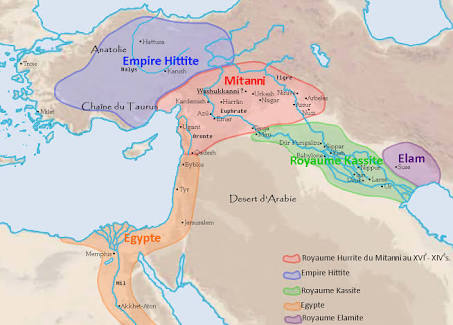
The issue I am facing is that while names of Ramayana,Bharata( not Rama’s brother,but Dushyanta’s son) and Dasaratha are found in the Sumerian Kings List,and names of Dasaratha,Parashurama are found in the Kings List of Mittani.
But the progenies’ names of Rama are not found,though the names in these Kings Lists after Dasaratha are of Sanskrit origin .
But Bharatha,Lakshmana and Shatrugna do not find a place in these lists,though Rama’s son Lava founded the present day Lahore in Pakistan.
I am unable to find mention of any sons of Dasaratha,other than Rama,Lakshmana,Bharatha and Shatrugna.
So if Dasaratha,spelled as Tusharatta in these Kings Lists,who were Dasaratha’s successors in Sumerian and Mittani Empire?
Names of the sons of Ramayana,Lava and Kusa are not found ,either.
Could it be that the Kings of Sumerian and Mittani are the children of Bharatha,Lakshmana,Shatrugna?
Or the sons of Dasaratha, through his consort other than Kausalya,Kaikeyi and Sumitra?
According to Hindu Sharma,A King can not anoint a son not through Queens.
Is it that Dasaratha gave away these far lands to his console’s son?
Though it is stated that Dasaratha married 60,000 wives to avoid the wrath of Parashurama,Valmiki records the 350 wives of Dasaratha.
Dasaratha said to Sumantra, “Oh, Sumantra! being all my wives, who are here. Surrounded by all of them, I want to see the virtuous Rama.” (‘who are here’ means available at the capital city then) Valmiki Ramayana, Ayodhya Kanda, Chapter 34, Verse 13: अर्ध सप्त शताः ताः तु प्रमदाः ताम्र लोचनाः | कौसल्याम् परिवार्य अथ शनैः जग्मुर् धृत व्रताः || २-३४-१३ “ardha sapta shataah taah tu pramadaah taamra locanaah | kausalyaam parivaarya atha shanaih jagmur dhrita vrataah ||” 2-34-13 atha= thereafter; taah= those; ardha sapta shataah= THREE HUNDRED AND FIFTY pramadaah= women; dhritavrataah= steadfast in their vow (of devotion to their husband); taamra lochanaah= having red eyes; parivaarya= encircling; kausalyaam= Kausaly; jagmuh= went; shanaih= slowly. ‘Encircling Kausalya, three hundred fifty women, steadfast in their vow (of devotion to their husband), with their eyes reddened, went there slowly.’ (ii) Valmiki Ramayana, Book II : Ayodhya Kanda, Chapter (Sarga) 39, Verse 34 & 35: Rama said to Queen Kausalya, His mother, “Oh, mother! You do not grieve. You look after my father. The end of exile will come rather soon.”
Scholars may clarify whether Dasaratha had any more sons than the four.
Rama in Sumerian Kings List
‘I have posted an article that Lord Rama and Bharata’s names are found in the Kings List of Sumerians chronicling their Kings.
Not only Rama and Bharata, but the names of other Hindu Puranic figures find a place in the Kings List.
The Names found are,
Indra,Pururavas,Dasaratha,Parashurama,Satyavrata,Iksvahu,Kakusha,Janaka,Vasishta, Janamejaya,Dushyanta(Father of Bharata,after whom India is named as Bharatavarsha),Rishis Gautama,Dundhu,,Muchukunda,Drupada,Harischandra,Sagara,Bhagiratha, Lava, Kusha(Rama’s sons),Aja and Raghu(Rama’s ancestors),Pundarika,
Curious enough ‘ all of them belong to Solar Dynasty mentioned in Puranas.
The First Pharaoh of Egypy,Menes is identified as the son of Sagara, Emperor belonging to Surya,Solar Dynasty of India.
Menes ,the First Pharoah of Egypt was Asamanja , the son of Emperor of Sagara.
Sagara was from Kosala Kingdom of India.
One may recall his descendant ,Bhagiratha brought River Ganga to Earth.
Lord Rama belonged to Solar Dynasty and Sagara was his ancestor.
The Kings List of Sumeria and the Kings List of Egypt confirm this.
The reference to Sumeria is found in Indus Valley.
This has been brought out by researcher Waddelll in his Book.
I have provided the link to his work at the close of this article.
He also presents evidence to the effect that the Sumerian Kings List and the Egyptian Kings List confirm that the Sumerians preceded the Egyptians and both these trace their ancestry to Indian Solar Dynasty.
The study is backed by deciphering the Sumerian ,Egyptian and Indus valley Seals,Tablets,Hieroglyphics and archaeology.
And of course, the literature of these three civilizations.
Not surprising at all.
Considering the facts,
Rama,Dasaratha and Bharatha find their names in the Sumerian Kings List.
Akkadian civilization preceded the Sumerian civilization.
Menes,( C 3150 BCE) is the legendary first king of Egypt who is thought to have united Upper and Lower Egypt through conquest and founded both the First Dynasty and the great city of Memphis. His name is known from sources such as Manetho’s Chronology (3rd century BCE), The Turin King List, and the Palermo Stone as well as from some scant archaeological evidence such as ivory engravings. In the early days of Egyptology, Menes was accepted as the first historical king based upon the written records. As time went by, however, and archaeological excavations failed to turn up any evidence of such a king, scholars began to question whether he had actually existed or was, perhaps, a composite figure drawn from the memory of the reigns of other kings.
But here it is noteworthy, that in the Indian list of kings
given in the Puru version of the Indian Aryan King-
Lists — that is in that version which preserves especially full
details of Menes' dynasty as Manasyu of Gopta — we find that
the immediate successors of Manasyu' s dynasty are Nine kings,
whose names equate to a considerable extent with those of the
Ntne kings forming the Second Dynasty in the lists of Manetho
and the others. And these nine kings were clearly the local
successors of Manasyu's dynasty in Egypt and not in Meso-
potamia, for they are absent in all the main-line lists of
the Early Aryan kings, who, we have found, were kings of
Mesopotamia. 1
In this Indian Puru version of the kings who immediately
succeeded Manasyu's dynasty, is given a string of nine
names of which the holders are described as the " sons " or
descendants of Raudrashwa, a personage who is therein
(MBt. I. 94) called a " brother " of Sargon (or Pra-Vira,
see p. 4) ; and who is stated to have married " the
nymph " Misri-Keshi, whose name Misri is suggestive of
the old name Misr for Egypt. 2 And Sargon's father was,
as we have seen, a Predynastic Pharaoh of Egypt. This
presumes that Raudrashwa was an elder brother of Sargon
and was resident in Egypt. And the fact that he did not
succeed his deposed father in the kingship in Mesopotamia
could be explained by his having died before the reign of
the usurper Zaggisi, i.e. before Sargon had attained manhood
and recovered his father's empire ; for Sargon being a
posthumous son could not have had a younger brother. In
this view therefore, there were resident in Egypt, contem-
porary with and during the reign of Sargon's or Menes'
…
The first clues to these discoveries were gained by my
observation that Menes (as he was called by the Greeks) or
Manj (as he is usually called in his own Egyptian inscriptions) 1
appears in his due chronological position along with his
dynasty in the official king-lists of the Early Aryans from
the first king onwards, as preserved in the ancient Indian
epic chronicles, the Puranas. In the latter he bears the name
of Asa Manja, or " Manja the shooter " in the solar version
of these lists, and Manasyu or Mawas-the-Uniter in the lunar
version. 2 And the great Indian epic, the Maha-Bhaxata, in
supplementing the Purana chronicle account, describes
him as " Manasyu of the line of the Prabhu [Parda or
' Pharaoh '], the royal eye of Gopta [Kopt or Egypt] and
of the four ends of the earth." 3 The Indian epic king-lists
further record that he was the son and successor of the
mighty world-emperor, King Kuni or Sha-Kuni or Sagara,
whom I had fully identified with the Mesopotamian world-
emperor, whose name is variously spelt Kin, Gin, Gani,
Guni, or Shar-Guni, a name which is arbitrarily semitized by
Assyriologists into " Sargon," in order to equate it with
the Hebrew name " Sargon " of the much later notorious
Semitic Assyrian king of that name in the eighth century B.C.
who carried the Jews into exile, and from whom they dis-
tinguish the former as " Sargon-the-Great."
On comparing these Early Aryan king-lists with those of
the Sumerians in Mesopotamia,* I observed that the latter
documents also recorded in the self-same chronological
position the dynasty of King Gin or Guni (" Sargon-the-
Great "), bearing substantially the same names and titles as
in the Indian lists and in exactly the same order ; and that
the names and order from " Sargon's " son Manis onwards
were identical with those of Menes' dynasty of Pharaohs on
1 See later. 2 See pp. ^i. 3 See p. 4 and App. I. 4 Kish Chronicle.
MENES AS SON OF SARGON-THE-GREAT 3
their own Egyptian monuments. Menes or Manj in his
Egyptian inscriptions usually bears the title of " Manj-
the-Warrior," and in the Sumerian king-lists and in his own
inscriptions in Mesopotamia, the son and successor of
" Sargon-the-Great " is styled " Manis-the-Warrior." And
the last king of this dynasty, bearing the same name in both
Sumerian and Egyptian inscriptions, has his name signifi-
cantly written on his own Egyptian inscription by the
self-same Sumerian pictographic signs as in the Sumerian
king-lists and in his own inscriptions as Sumerian emperor
in Mesopotamia.
Further comparison disclosed that Menes' father, " Sargon-
the-Great," along with the latter's father and grandfather
were identical in names and titles with the three Predynastic
Pharaohs who immediately preceded Menes in Egypt ; and
who have left there their records, seals or sealings in
Sumerian script. And these identities are confirmed by their
own Sumerian inscriptions in Egypt, and by their official
seals in their Indus Valley colony, in which most of them
bore also the title of " Pharaoh," and mention Egypt by
name as being within their empire.
Let us now examine the detailed proofs for these identities
of Menes or Manj and his " predynastic " ancestors in
Egypt with those of Manis and his immediate imperial
Sumerian ancestors in their contemporary inscriptions in
Mesopotamia and the Indus Valley and in the Indian epic
records of the Early Aryan kings.
Menes or Manis-Tusu as Manasyu the " Pharaoh
of Gopta " (Egypt) in the Indian Epics
The name of this Aryan king under the form of Manasyu
is found in the lunar version of the Indo-Aryan King-Lists,
and corresponds to the solar form of his name as Asa
Manj as or Asa Manj a in the solar main-line lists in which
he is No. 38 (see Table, p. 151) — the solar lists 1 being the
most complete and in undisturbed chronological order.
And " Sargon " in this Puru version is called Pra-Vira or
" Foremost hero," in which Vlra corresponds to his Sumerian
title of Pir, 2 V being a very late invented letter. 3
1 Lists of the purer Sun-worshippers. 2 WMC. 200. 3 See WAOA. 49 f .
....
The fuller Egyptian form of Menes' name as Manj,
strikingly confirms the literal identity of the Egyptian with
the Sanskrit Manja (or Asa-Manja), the son of the Emperor
Sagara, that is Sargon ; and it equates also phonetically
with the Manis name of Sargon's son in Sumerian — the
affix Tusu meaning, as seen below, " The Warrior." This
fuller Egyptian form of Menes' name is usually disguised by
many English Egyptologists as Mena. But the alphabetic
value of the last letter is rightly rendered by the Berlin
school as J} which is now seen to be its proper value by
our trilingual comparison ; and this is confirmed by the
pictorial form of this Egyptian hieroglyph which pictures a
flowering reed, which I observed was the same sign, form,
sound, and meaning as the Sumerian pictograph of the
flowering reed word-sign with the phonetic value Gi 2 — thus
affording another of the many instances I have demonstrated
of the derivation of the Egyptian hieroglyphs from the
Sumerian pictographs, with the same pictographs, form,
phonetic value and meaning.
....
of the two crowns of Upper and Lower Egypt." Under
his other Indian name as Asa-Manja, or " Manja the
Shooter," is described in the Indian Chronicles, his quarrel
with, and disinheritance by, his father, Sagara (Sargon),
which, we shall find later, appears to relate to his declaration
of independence in Egypt during the lifetime of his father
in Mesopotamia ; and thus explaining why Sargon's younger
son succeeded his father on the Mesopotamian throne and
not Manis-Tusu, his eldest son, who only succeeded later.
Identity of Menes with the Aryan Emperor Manasyu
& Manis-Tusu, son of Sargon, confirmed
I have written on the presence of artifacts in the middle east, areas surrounding it in Europe which indicate the presence of Sanatana Dharma and Tamil in the culture of Mesopotamia and Sumeria.
Akkadian Relgious artifact.Trishul or Subrahmanya’s Spear?
Akkadian King List. Note the similarities to Sanskrit Names.
‘
1.Lord Rama’s Chapel was found in UR, Iraq.*
2.A burial ground called as Nagar is fond in Syria. It is called Tel Brak now.
3.Idols of Rama,Sita and Lakshmana are found.*
4.Ancestors of the Syrians were the Halaf and Ubaid.
They date back to 6100 BC.
They had connection with the Tamils and this is reflected in the ruins of Nagar.*
These people traded with the Tamils.
”Naram-Sin traded with Meluhha (almost certainly corresponding to the Indus Valley civilization), and controlled a large portion of land along the Persian Gulf. He expanded his empire by defeating the King of Magan at the southern end of the Persian Gulf, and conquering the hill tribes to the north in the Taurus Mountains.
5.Akkadian’s( Forefathers of the Sumerians) Moon God was Naram Sin, Narasimha.*
6.There are repeated references in the Sumerian/Akkadian language to Meluuha.
7.Ancient Tamil Brahmi Scripts were found in Oman and Egypt.
These facts establish that,
The Tamils were an advanced civilisation by 2200 BC(Akkadian Empire)
The Hindu Gods and Goddesses were worshiped in Sumeria,
Names of Lord Rama and Bharata were found in the Kings List of Sumeria.’
‘A Tamil-Brahmi script inscribed on a potsherd, which was found at the Khor Rori area in Oman, has come to light now. The script reads “nantai kiran” and it can be dated to first century CE, that is, 1900 years before the present. The discovery in the ancient city of Sumhuram has opened a new chapter in understanding the maritime trade of the Indian Ocean countries, according to specialists in history.
Please read the related posts of the above as well.
Who are Akkadians?
‘
The Akkadian Empire/əˈkeɪdiən/ was the first ancient Semitic-speaking empire of Mesopotamia, centered in the city of Akkad/ˈækæd/ and its surrounding region, also called Akkad in ancient Mesopotamia. The empire united all the Akkadian and Sumerian speakers for the first time under one rule. The Akkadian Empire controlled Mesopotamia (modern Iraq, Kuwait, northeast Syria and southeast Turkey), the Levant (modern Syria and Lebanon), and eastern and southern parts of Anatolia(modern Turkey) and Iran, sending military expeditions as far south as Dilmun and Meluhha (modern Bahrain and Oman) in the Arabian Peninsula.
During the 3rd millennium BC, there developed a very intimate cultural symbiosis between the Sumerians and the Akkadians, which included widespread bilingualism. Akkadian gradually replaced Sumerian as a spoken language somewhere between the 3rd and the 2nd millennia BC (the exact dating being a matter of debate).
The Akkadian Empire reached its political peak between the 24th and 22nd centuries BC, following the conquests by its founder Sargon of Akkad (2334–2279 BC). Under Sargon and his successors, the Akkadian language was briefly imposed on neighboring conquered states such as Elam and Gutium. Akkad is sometimes regarded as the first empire in history, though there are earlier Sumerian claimants.
Elam was an Empire of Tamils which exited before the great Flood probably in Lemuria.
And there was one more Tamil Empire in the North west of India.
Please read my article Two Tamil Empires?
After the fall of the Akkadian Empire, the people of Mesopotamia eventually coalesced into two major Akkadian-speaking nations: Assyria in the north, and, a few centuries later, Babylonia in the south.”
Now there is a theory that Rishi Angirasa was worshiped/funded the Akkadian Empire
There seven Seers of Hinduism, who, at the beginning of every time cycle formulate the code of conduct, texts to follow.
These are called Saptha(7) Rishis.
They are.,
Atri,
Bhrigu,
Kutsa,
Vasishta,
Gautama,
Kasyapa and
Angirasa.
Now. the theory states that.
‘The supreme deity of the Sumerian pantheon is AN, or Anu. In the first two letters of the Sanskrit word An-gir-as, AN could refer to Anu. GIR might relate to the Akkadian fire-god— fire as in rocket propulsion. DinGIR in the cuneiform writing meant sky or heaven, and also a god or goddess. The masters of the sky were perceived as deities by the earthbound. This reminds of Angiras and his descendants, the Angirasas, as a group of higher beings who traversed the realms between gods and men — an inter-stellar and inter-dimensional elite…
The Angirasas and the Bhrigus families “…represent the pre-Rig Vedic past: they go so far back into the past that not only are they eponymous founders of these families (Angiras and Bhrigu respectively), but even certain other ancient Rishis belonging to these families (Brihaspati, Atharvan, Ushana) are already remote mythical persons in the Rigveda; and the names of the two families are already names for mythical and ritual classes: the Angirasas are deified as ‘a race of higher beings between Gods and men’ …the Bhrigus and the Atharvans are synonymous with fire-priests in general. …the names of these two families are also found in the Iranian and Greek texts…” [Shrikant G. Talageri]..
No one can compare the Avestan poetry with the Indian [Rigvedic] poetry in its content, in its style of expression, and in its entire coloring, without coming to the conclusion, on account of their agreement in small details which force themselves on us at every step, that both the literatures point not only to a common origin of these two peoples and their religions, but also to a community of Indo-Iranian religious poetry, developed in well-established forms.
[Hermann Oldenberg]
“The name Anu or Ânava for the Iranians appears to have survived even in later times: the country and the people in the very heart of Avesta land, to the immediate north of Hâmûn-i Hilmand, were known as late as Greek times as the Anauon or Anauoi. The names of Anu tribes in the Rigveda and the Puranas can be clearly identified with the names of the most prominent tribes among latter-day Iranians.” [Shrikant G. Talageri]..
….Malati J. Shendge says “Sanskrit is derived from Akkadian and Sumerian…Sanskrit is not a language of the Aryas…It is essentially a lineal descendent of the languages of the Asuras.” She states that the Rig Veda does not belong to the Aryas and in fact in her view this was “purely an assumption without any firm basis.” And she states “…it is possible to find parallels in the Akkadian sources to many clans and personal names of the poets of Rig Vedic compositions, and of the Asuras, the enemies of Indra.” She believes that the language of the Rig Veda — [meaning the older Vedic Sanskrit which is very different from the latter classical Sanskrit] — is a form of Akkadian and “that the Akkadian in the process of evolution has become what we know today as Sanskrit….
References and citations.
Prolegomena on Metre and Textual History of the Rigveda, by Hermann Oldenberg, Berlin 1888; translated into English by V.G. Paranjape and M.A. Mehendale; Motilal Banarsidass Publishers Private Ltd., Delhi, 2005.
The Rig Veda and the History of India, by David Frawley; Aditya Prakashan, New Delhi, 2001, 2003.
The RIGVEDA, A Historical Analysis, by Shrikant G. Talageri; Aditya Prakashan, New Delhi, 2000, 2004.
The Civilized Demons: The Harappans in Rigveda, by Malati J. Shendge; Abhinav Publications, New Delhi, 1977.
The Language of the Harappans: From Akkadian to Sanskrit, by Malati J. Shendge; Abhinav Publications, New Delhi, 1997.
You must be logged in to post a comment.