Tag: Sumerian Civilization

  • Vedic Roots of Sumeria Cuneiform Evidence

    I have been exploring the presence of Sanatana Dharma throughout the world through this blog for the past ten years and I have been able to find the Vedic presence throughout the world in the Form of Indian kings,Tamil references, Vedic practices,Indian legends,cultural similarities, linguistic affinities of these areas with Sanskrit ,Tamil and archeological finds around the world.

    The earliest civilizations like Sumerian,Assyrian,Akkadian,Elamite,Mayan , Aztec and Egypt…

    All trace their origins back to Sanatana Dharma / Tamil.

    In the context of the present article,Lord Rama,Dasaratha and Bharatha are found in the Sumerian Tablet,Kings List of Sumeria;On ,the Vedic prayer is found;there is Rama’s Chapel in Ur,Iraq;Hindu kings ruled over Sumeria;

    Angirasa founder of pre Sumerian Civilization .

    Now further evidence in the form of Cuneifom in UR, Sumeria using Vedic practice of marking oral recitation,Kusi.

    Kusi signifies pin to mark in Veda recitation; this word is substrate in Sumerian, a cuneiform symbolReference.

    Sanskrit script,Vedic root of SumeriaSumerian script from Vedic Script

    This word was used in Sumerian tablet to refer to metalcasters,moneylenders in Cueniform.

    Seals of ancient Indian style found at Ur, in: Proceedings of the BritishAcademy, XVIII, 1932, Plate 1, no. 1. Gadd considered this an Indus seal because, 1) it was asquare seal, comparable to hundreds of other Indus seals since it had a small pierced boss at the back through which a cord passed through for the owner to hold the seal in his or her possession;and 2) it had a hieroglyph of an ox, a characteristic animal hieroglyph deployed on hundreds ofseals. This classic paper by Cyril John Gadd F.B.A. who was a Professor Emeritus of Ancient SemiticLanguages and Civilizations, School of Oriental and African Studies, University of London,opened up a new series of archaeological studies related to the trade contacts between AncientFar East and what is now called Sarasvati-Sindhu (Hindu) civilization.There is now consensus that Meluhhan communities were present in Ur III and also inSumer/Elam/Mesopotamia. (Parpola S., A. Parpola & RH Brunswig, Jr., 1977, The Meluhhavillage. Evidence of acculturation of Harappan traders in the late Third MillenniumMesopotamia in:
    Journal of Economic and Social History of the Orient
    , 20, 129-165.)Use of rebus-metonymy layered cipher for the entire Indus Script Corpora as metalwork catalogs provides the framework for reopening the investigation afresh on the semantics of the cuneiformtext on Gadd Seal 1, the Indus seal with cuneiform text. .
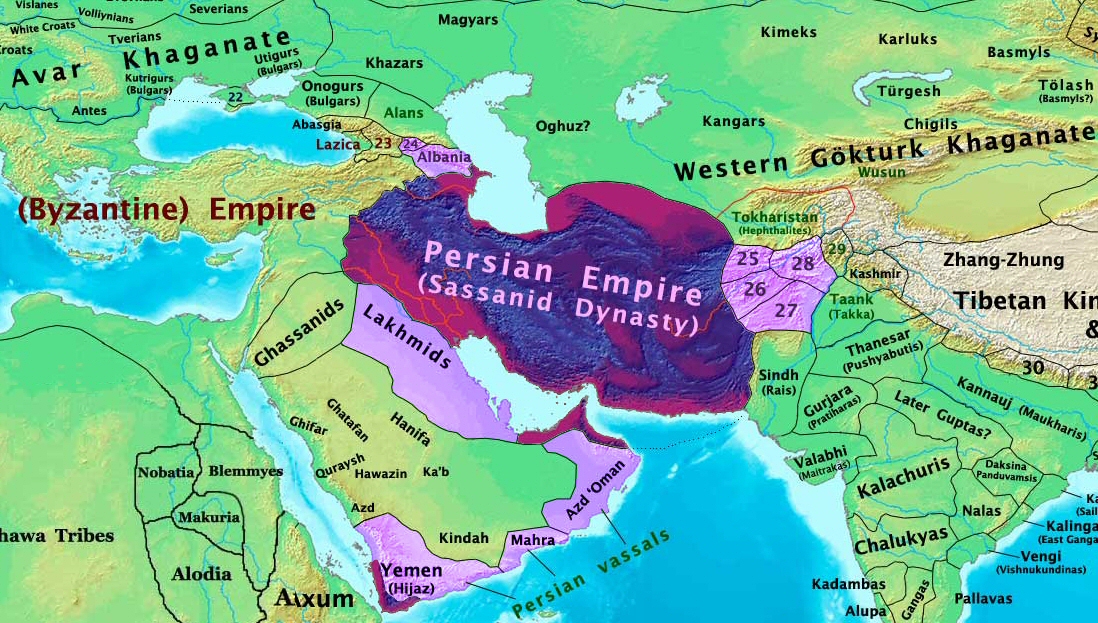
  • Persia Origin Achaemenid Assyrian Akkadian To Tamils Vedic Tribes

    Persia Origin Achaemenid Assyrian Akkadian To Tamils Vedic Tribes

    The search for Kingdoms and cultures of the ancient people is interesting.

    To make it more interesting one must have patience and tenacity to follow the leads.

    One must not stop at a single point and follow the leads.

    Any civilization ,to begin with is likely to have many components of people from various places.

    If one were to follow each one of them,one is sure to find the one origin.

    This is what makes the search stimulating.

    Persia.

    A great empire with rich cultural and religious tradition intrigued me.

    Their religious text Zend Avestha has striking similarities to Rig Veda.

    The Persians had an almost identical Upanayana ceremony of the Hindus.

    This is the Navjote ceremony.


    Upanayana, Navjote For Zoroastrians Zend Avesta Veda Connection

    Zorastrianism Vedic Offshoot Zoraster Vedic Rebel

    Vedas Rama Vayu In Zend Avesta Iran


    I have written an article on this.

    ‘The Persian nation contains a number of tribes as listed here. … : the Pasargadae, Maraphii, and Maspii, upon which all the other tribes are dependent. Of these, the Pasargadae are the most distinguished; they contain the clan of the Achaemenids from which spring the Perseid kings. Other tribes are the Panthialaei, Derusiaei, Germanii, all of which are attached to the soil, the remainder -the Dai, Mardi, Dropici, Sagarti, being nomadic.’ — Herodotus, Histories 1.101 & 125

    The Persians have their immediate predecessor in  Sinthasta people from one angle and Sinthasta have their origins in the Vedic people!

    ‘Anthony examined a burial site just east of the Ural Mountains, southeast of the town of Magnitogorsk, where for the past 15 years Russian archeologist Genady Zdanovich and his colleagues have been excavating the remains of an ancient grassland culture they call Sintashta-Petrovka. As part of an elaborate mortuary ritual, the Sintashta people buried their dead with weapons, ornaments, horses, and other livestock–and sometimes whole chariots whose wheels were fitted into holes in the grave floor. Though the chariots themselves have decayed, the Russian archeologists have found the imprint of spoked wheels stained in the ground (as well as the remains of drivers). Spokes are the chariot’s defining characteristic; they’re what distinguish it from earlier, heavier wagons.

    Based on the style of the artifacts, the Russian researchers dated the Sintashta chariots to 1600 B.C.–200 years after the first evidence of chariots in the Middle East. But recently they permitted Anthony to take samples from horse skulls found in one grave back to the United States, where he could determine their age by the more accurate radiocarbon method. He concluded that the skulls and thus the chariots date from around 2000 B.C.–200 years before the appearance of Middle Eastern chariots. My dating suggests that chariotry may have been invented in the steppes of Eurasia by people who were, comparatively speaking, barbarians, says Anthony.

    The Sintashta chariots weren’t just Middle Eastern imports. Like the more plodding wagons that have been found to the west, near the Black Sea, the Sintashta chariots were wide enough for just one person, whereas Middle Eastern chariots could hold two or three. Moreover, the Sintashta wheels had between 8 and 12 spokes, whereas Middle Eastern chariot wheels had only 4. It doesn’t look like something that’s being copied from the Middle East, Anthony says. It looks indigenous…

    The answer may lie, says Anthony, in a 3,000-year-old religious text called the Rig Veda, a book of hymns compiled by the Aryans–the horsemen who invaded the Indian subcontinent from the north. The hymns give detailed accounts of Aryan rituals. In mortuary rituals, warriors were buried with their chariots and horses. A plank roof was laid across the burial chamber, and horses and a goat were sacrificed on the roof and again around an earthen mound built on top. A thousand years before the Rig Veda, the Sintashta people were burying their dead in the same way–down to the last eerie detail.

    In one recurring myth in the Rig Veda, for instance, the divine Ashvin twins seek a magical drink made by another god. A human fire priest knows the secret of the drink but has been sworn not to tell. The Ashvin twins cut off his head and replace it with the head of a horse. The priest then speaks through the horse’s head and is able to divulge the secret of the drink. At one of the Sintashta sites, says Anthony, a grave was found with a human sacrifice on top. Now, this is unusual in itself, he says. But this guy had his head cut off and replaced with the head of a horse.

    In the Rig Veda, chariots are the vehicles of gods and heroes, and chariot races are described in loving detail. Anthony thinks the Sintashta people were the ancestors of the Aryans and that their chariots were developed for ritual racing rather than warfare. A lot hung on chariot racing, he explains. You could win enormous prizes, disputes were decided, you had trials by chariot race. Winners and losers were real winners and real losers. I think chariots were used for racing from the beginning, and I think Sintashta represents the origins of a tradition later reflected in the Rig Veda.

    That would support Anthony’s views on a much broader question– that of the origin and spread of Indo-European languages. According to a theory that has become popular in the past two decades, the proto-Indo- Europeans were farmers who began to spread out of Anatolia around 6000 B.C., taking their language and their agriculture with them. But Anthony holds to an older theory, which says the original Indo-Europeans were horsemen from north of the Black Sea–the people whose wagons appear to be ancestral to the Sintashta chariots. *The Sintashta people, he thinks, were the original speakers of Indo-Iranian, which later gave rise to ancient Iranian and to the Indic of the Rig Veda. Theirs was an early step in the spread of Indo-European language and culture.

    * I hold the view that the Vedic  people of Rig Veda had come through after thecRig Veda was compiled in the Arctic.

    Source.http://discovermagazine.com/1995/apr/chariotracersoft500


    Persia, From another angle.

    The Achaemenid Empire was created by nomadic Persians and this empire was spread to Mesopotamia.

    This empire was preceded by Assyrians.

    The Assyrians were preceded by Akkadians.

    Akkadians were influenced and they trace their ancestry to Tamils!

    ‘A Tamil-Brahmi script inscribed on a potsherd, which was found at the Khor Rori area in Oman, has come to light now. The script reads “nantai kiran” and it can be dated to first century CE, that is, 1900 years before the present. The discovery in the ancient city of Sumhuram has opened a new chapter in understanding the maritime trade of the Indian Ocean countries, according to specialists in history…


    1.Lord Rama’s Chapel was found in UR, Iraq.*

    2.A burial ground called as Nagar is fond in Syria. It is called Tel Brak now.

    3.Idols of Rama,Sita and Lakshmana are found.

    4.Ancestors of the Syrians were the Halaf and Ubaid.

    They date back to 6100 BC.

    They had connection with the Tamils and this is reflected in the ruins of  Nagar.*

    These people traded with the Tamils.

    ”Naram-Sin traded with Meluhha (almost certainly corresponding to the Indus Valley civilization), and controlled a large portion of land along the Persian Gulf. He expanded his empire by defeating the King of Magan at the southern end of the Persian Gulf, and conquering the hill tribes to the north in the Taurus Mountains.

    Tamil city 2200 BC Sumeria.

    A Tamil King ,Sibi,ruled from the NWFP where he had his second capital.

    And Lord Rama was engaged in a battle with the Atlantis people in Seven River Valley,currently in Pakistan.

    The Uighur people must beyond what Persia was ,were in close contact with thecRama Empire.

    Sumerian civilization had Rama connection and Sumerian Kings List has Rama,Dasaratha and Bharatha.

    The Yazdi people of Turkey were called the Peacock Tribe of Lord Murugan.

    I shall be writing on Sassanian,Parthian and Scythian connection to Persia and Bharathavarsha, cross referencing with Gandhara Kingdom,Vedic tribes dispersal.

    References and Citations.

    https://en.m.wikipedia.org/wiki/Achaemenid_Empire

    https://en.m.wikipedia.org/wiki/Assyria


  • Ayodhya of Rama Center of Sumeria

    Ayodhya of Rama Center of Sumeria

    I have written quite a few articles on Lord Rama and His Empire.

    These were based on,

    Astronomical data provided by Valmiki in Ramayana,

    References found in world Religious Texts,Literature,Similarity of customs between the people of Rama Empire in Bharata Varsha and elsewhere,

    References in Sumerian texts,Tablets, and

    References in ancient Tamil literature.


    I have also written on the presence of Sanatana Dharma throughout the world and the popping up of artifacts identified as belonging to Sanana Dharma;Idols of Hindu Gods.

    There was an article of mine highlighting the Chapel of Lord Rama in Ur,Iraq( Sumer).

    That set me in pursuit of more information on this front.

    If Rama had conquered Kingdoms in Sumer,he should have defeated Sumer Kings and consequently ,Rama’s Capital Ayodhya should have become the Capital of the vanquished Sumerians.

    Now evidence has come to light on this point.

    Ayodhya was called Aguda by the Sumerians and they called this city as their capital .

    This was,as they declared,at the center of Sumeria.

    In this context,one has to examine the exploits of Parashurama,another Avatar of Rama,who existed during the time of Rama.

    Parashurama is regarded as the one who killed Kshatriyas,as an act of vengeance for killing of his father Jamadagni by a King Karthaviryarjuna’s sons.

    The import is that ,having been slighted by a Kshatriya,Parashurama decided to show that though Brahmins are soft by Nature and volition,they are not pushovers if the set their minds to.

    So he fought Kings,especially the Heheya Kings,to which Karthaviryurjuna belonged.

    This area was in the present Madhya Pradesh and Narmada valley and areas surrounding it.

    Probable he crossed the Arabian Sea as well.

    One may recall that he created land out of sea to carve out what is present Kerala State in India.

    One may also recall that Parashurama settled down in South India and the Akkadian connection to Tamil.

    *Kindly check my articles on Rama Empire,Ellu in Akkadian Empire,Rama Chapel in UR and follow related articles to know more.

    ‘With his bow he slew 64 times 10,000 Kshatriyas. In that slaughter were included 14,000 Brahmana-hating Kshatriyas of the Dantakura country. Of the Haihayas, he slew a 1000 with his short club, a 1000 with his sword, and a 1000 by hanging. Rama slew 10,000 Kshatriyas with his axe. He could not quietly bear the furious speeches uttered by those foes of his. And when many foremost of Brahmans uttered exclamations, mentioning the name of Rama of Bhrigu’s race, he proceeding against the Kashmiras, the Daradas, the Kuntis, the Kshudrakas, the Malavas, the Angas, the Vangas, the Kalingas, the Videhas, the Tamraliptakas, the Rakshovahas, the Vitahotras, the Trigartas, the Martikavatas, counting by thousand, slew them all by means of his whetted shafts. Proceeding from province to province, he thus slew thousands of scores of Haihaya-Kshatriyas. Creating a deluge of blood and filling many lakes also with blood and bringing all the 18 islands under his subjection, he performed a 100 sacrifices. (MBh 7,68)’

    Lord Rama,after coronation ,established His Rule in Sumeria .

    Reference and Citations.

    https://en.m.wikipedia.org/wiki/Heheya_Kingdom


  • Angirasa Founder Pre Sumerian Civilization Akkadian Empire?

    I have written on the presence of artifacts in the middle east, areas surrounding it in Europe which indicate the presence of  Sanatana Dharma and Tamil in the culture of Mesopotamia  and Sumeria.

    Akkadian Civilization remains
    Akkadian Relgious artifact.Trishul or Subrahmanya’s Spear?

    Kings' List, Akkadian Empire
    Akkadian King List. Note the similarities to Sanskrit Names.

    1.Lord Rama’s Chapel was found in UR, Iraq.*

    2.A burial ground called as Nagar is fond in Syria. It is called Tel Brak now.

    3.Idols of Rama,Sita and Lakshmana are found.*

    4.Ancestors of the Syrians were the Halaf and Ubaid.

    They date back to 6100 BC.

    They had connection with the Tamils and this is reflected in the ruins of  Nagar.*

    These people traded with the Tamils.

    ”Naram-Sin traded with Meluhha (almost certainly corresponding to the Indus Valley civilization), and controlled a large portion of land along the Persian Gulf. He expanded his empire by defeating the King of Magan at the southern end of the Persian Gulf, and conquering the hill tribes to the north in the Taurus Mountains.

    5.Akkadian’s( Forefathers of the Sumerians) Moon God was Naram Sin, Narasimha.*

    6.There are repeated references in the Sumerian/Akkadian language to Meluuha.

    7.Ancient Tamil Brahmi Scripts were found in Oman and Egypt.

    These facts establish that,

    The Tamils were an advanced civilisation by 2200 BC(Akkadian Empire)

    The Hindu Gods and Goddesses were worshiped in Sumeria,

    Names of Lord Rama and Bharata were found in the Kings List of Sumeria.’

    ‘A Tamil-Brahmi script inscribed on a potsherd, which was found at the Khor Rori area in Oman, has come to light now. The script reads “nantai kiran” and it can be dated to first century CE, that is, 1900 years before the present. The discovery in the ancient city of Sumhuram has opened a new chapter in understanding the maritime trade of the Indian Ocean countries, according to specialists in history.

    Tamil city in Sumeria  2200 BC

    OM in Sumerian Prayer 2600 BC

    Haran Shiva In Turkey

    Please read the related posts of the above as well.

    Who are Akkadians?

    The Akkadian Empire /əˈkdiən/ was the first ancient Semitic-speaking empire of Mesopotamia, centered in the city of Akkad/ˈækæd/ and its surrounding region, also called Akkad in ancient Mesopotamia. The empire united all the Akkadian and Sumerian speakers for the first time under one rule. The Akkadian Empire controlled Mesopotamia (modern Iraq, Kuwait, northeast Syria and southeast Turkey), the Levant (modern Syria and Lebanon), and eastern and southern parts of Anatolia(modern Turkey) and Iran, sending military expeditions as far south as Dilmun and Meluhha (modern Bahrain and Oman) in the Arabian Peninsula.

    During the 3rd millennium BC, there developed a very intimate cultural symbiosis between the Sumerians and the Akkadians, which included widespread bilingualism. Akkadian gradually replaced Sumerian as a spoken language somewhere between the 3rd and the 2nd millennia BC (the exact dating being a matter of debate).

    The Akkadian Empire reached its political peak between the 24th and 22nd centuries BC, following the conquests by its founder Sargon of Akkad (2334–2279 BC). Under Sargon and his successors, the Akkadian language was briefly imposed on neighboring conquered states such as Elam and Gutium. Akkad is sometimes regarded as the first empire in history, though there are earlier Sumerian claimants.

    Elam was an Empire of Tamils which exited before the great Flood probably in  Lemuria.

    And there was one more Tamil Empire in the North west of India.

    Please read my article Two Tamil Empires?

    After the fall of the Akkadian Empire, the people of Mesopotamia eventually coalesced into two major Akkadian-speaking nations: Assyria in the north, and, a few centuries later, Babylonia in the south.”

    Now there is a theory that Rishi Angirasa was worshiped/funded the Akkadian Empire

    There seven Seers of Hinduism, who, at the beginning of every time cycle formulate the code of conduct, texts to follow.

    These are called Saptha(7) Rishis.

    They are.,

    Atri,

    Bhrigu,

    Kutsa,

    Vasishta,

    Gautama,

    Kasyapa and

    Angirasa.

    Now. the theory states that.

    ‘The supreme deity of the Sumerian pantheon is AN, or Anu. In the first two letters of the Sanskrit word An-gir-as, AN could refer to Anu. GIR might relate to the Akkadian fire-god— fire as in rocket propulsion. DinGIR in the cuneiform writing meant sky or heaven, and also a god or goddess. The masters of the sky were perceived as deities by the earthbound. This reminds of Angiras and his descendants, the Angirasas, as a group of higher beings who traversed the realms between gods and men — an inter-stellar and inter-dimensional elite…

    The Angirasas and the Bhrigus families “…represent the pre-Rig Vedic past: they go so far back into the past that not only are they eponymous founders of these families (Angiras and Bhrigu respectively), but even certain other ancient Rishis belonging to these families (Brihaspati, Atharvan, Ushana) are already remote mythical persons in the Rigveda; and the names of the two families are already names for mythical and ritual classes: the Angirasas are deified as ‘a race of higher beings between Gods and men’ …the Bhrigus and the Atharvans are synonymous with fire-priests in general. …the names of these two families are also found in the Iranian and Greek texts…” [Shrikant G. Talageri]..

    No one can compare the Avestan poetry with the Indian [Rigvedic] poetry in its content, in its style of expression, and in its entire coloring, without coming to the conclusion, on account of their agreement in small details which force themselves on us at every step, that both the literatures point not only to a common origin of these two peoples and their religions, but also to a community of Indo-Iranian religious poetry, developed in well-established forms.
    [Hermann Oldenberg]

    “The name Anu or Ânava for the Iranians appears to have survived even in later times: the country and the people in the very heart of Avesta land, to the immediate north of Hâmûn-i Hilmand, were known as late as Greek times as the Anauon or Anauoi. The names of Anu tribes in the Rigveda and the Puranas can be clearly identified with the names of the most prominent tribes among latter-day Iranians.”   [Shrikant G. Talageri]..

    ….Malati J. Shendge says “Sanskrit is derived from Akkadian and Sumerian…Sanskrit is not a language of the Aryas…It is essentially a lineal descendent of the languages of the Asuras.” She states that the Rig Veda does not belong to the Aryas and in fact in her view this was “purely an assumption without any firm basis.” And she states “…it is possible to find parallels in the Akkadian sources to many clans and personal names of the poets of Rig Vedic compositions, and of the Asuras, the enemies of Indra.” She believes that the language of the Rig Veda — [meaning the older Vedic Sanskrit which is very different from the latter classical Sanskrit] — is a form of Akkadian and “that the Akkadian in the process of evolution has become what we know today as Sanskrit….

    References and citations.

    Prolegomena on Metre and Textual History of the Rigveda, by Hermann Oldenberg, Berlin 1888; translated into English by V.G. Paranjape and M.A. Mehendale; Motilal Banarsidass Publishers Private Ltd., Delhi, 2005.

    The Rig Veda and the History of India, by David Frawley; Aditya Prakashan, New Delhi, 2001, 2003.

    The RIGVEDA, A Historical Analysis, by Shrikant G. Talageri; Aditya Prakashan, New Delhi, 2000, 2004.

    The Civilized Demons: The Harappans in Rigveda, by Malati J. Shendge; Abhinav Publications, New Delhi, 1977.

    The Language of the Harappans: From Akkadian to Sanskrit, by Malati J. Shendge; Abhinav Publications, New Delhi, 1997.

    http://metaphysicalmusing.com/articles/rigveda2015/AnuPart1.htm

    https://en.wikipedia.org/wiki/Akkadian_Empire

    Images credit.

    http://www.wikiwand.com/en/Akkadian_Empire

  • Yavanacharya Pythagoras Studied Vedic Science in Egypt

    One of the great philosophers of the West hailed form Greece.,who influenced Plato and Aristotle, the other to giants of the western thought.

    And Aristotle was the teacher to King Philip of Macedonia and his son Alexander, The Great.

    Thales was a contemporary of Pythagoras and Thales was a philosopher in his on right. He advised  Pythagoras to study in Egypt.

    Following is the history from Greek sources

    Pythagoras was revered in India as Pitar Guru, Father and Teacher, and as Yavanacharya, the Ionian philosopher. He was known by other names in ancient Egypt where he spent twenty years in preparation before, at the age of fifty-six, he founded the School at Crotona in Magna Graecia, with great deliberation and in accord with the wisdom and the vision of the mighty Brotherhood he represented. He taught an entire emerging community, seeking four hundred pure souls who might constitute a small brotherhood for the sake of making that polis a city of souls in search of wisdom in harmony with the larger fellowship of man. His School was based upon the most stringent rules for admission, including a probation lasting five years and a requirement of total silence in the presence of those in the assembly who had been longer in the school. He initiated those who had passed all the preliminary trials, making themselves channels for the divine fount of omniscience, towards which he always pointed and upon which he enjoined an absolute, reverential silence.

    Pythagoras by Theosophy Trust


    The influence of Pythagoras is so widespread, and coupled with the fact that no writings of Pythagoras exist today, this short article will attempt to guide the reader through the life of this most remarkable teacher.

    He traveled widely in his youth with his father Mnesarchus, who was a gem merchant from Tyre. His family settled in the homeland of his mother, Pythais, on the island of Samos, where he studied with the philosopher Pherekydes. He was introduced to mathematical ideas and astronomy by Thales, and his pupil Anaximander in Miletus when he was between 18 and 20 years old. Thales advised Pythagoras to travel to Egypt to learn more of these subjects. Leaving Miletus, Pythagoras went first to Sidon, where he was initiated into the mysteries of Tyre and Byblos. It is claimed that Pythagoras went onto Egypt with a letter of introduction written by Polycrates, making the journey with some Egyptian sailors who believed that a god had taken passage on their ship. Arriving in Egypt, Pythagoras tried to gain entry into the Mystery Schools of that country. He applied again and again, but he was told that unless he goes through a particular training of fasting and breathing, he cannot be allowed to enter the school. Pythagoras is reported to have said, ” I have come for knowledge, not any sort of discipline.” But the school authorities said,” we cannot give you knowledge unless you are different. And really, we are not interested in knowledge at all, we are interested in actual experience. No knowledge is knowledge unless it is lived and experienced. So you will have to go on a 40 day fast, continuously breathing in a certain manner, with a certain awareness on certain points.” After 40 days of fasting and breathing, aware, attentive, he was allowed to enter the school at Diospolis. It is said that Pythagoras said,”You are not allowing Pythagoras in. I am a different man, I am reborn. You were right and I was wrong, because then my whole standpoint was intellectual. Through this purification, my center of being has changed. Before this training I could only understand through the intellect, through the head. Now I can feel. Now truth is not a concept to me, but a life.”

    http://9waysmysteryschool.tripod.com/sacredsoundtools/id13.html


    Pythagoras The Greek Philosopher
    Pythagoras The Greek Philosopher

    http://9waysmysteryschool.tripod.com/sacredsoundtools/id13.html

    The most famous of mystic philosophers, born at Samos, about 586 B.C., Pythagoras seems to have travelled all over the world, and to have culled his philosophy from the various systems to which he had access. Thus, he studied the esoteric sciences with the Brachmanes of India, and astronomy and astrology in Chaldea and Egypt. He is known to this day in the former country under the name of Yavanâchârya (“Ionian teacher”). After returning he settled in Crotona, in Magna Grecia, where he established a college to which very soon resorted all the best intellects of the civilised centres. His father was one Mnesarchus of Samos, and was a man of noble birth and learning. It was Pythagoras. who was the first to teach the heliocentric system, and who was the greatest proficient in geometry of his century. It was he also who created the word “philosopher”, composed of two words meaning a “lover of wisdom”—philo-sophos. As the greatest mathematician, geometer and astronomer of historical antiquity, and also the highest of the metaphysicians and scholars, Pythagoras has won imperishable fame. He taught reincarnation as it is professed in India ..

    Pythogoras

    Egypt had its origin in Sumerian civilization and Sumerian from the Sanatana dharma and Tamils.

    I have posted an article that Lord Rama and Bharata’s names are found in the Kings List of Sumerians chronicling their Kings.


    ‘Not only Rama and Bharata, but the names of other Hindu Puranic figures find a place in the Kings List.

    Indra,Pururavas,Dasaratha,Parashurama,Satyavrata,Iksvahu,Kakusha,Janaka,Vasishta, Janamejaya,Dushyanta(Father of Bharata,after whom India is named as Bharatavarsha),Rishis Gautama,Dundhu,,Muchukunda,Drupada,Harischandra,Sagara,Bhagiratha, Lava, Kusha(Rama’s sons),Aja and Raghu(Rama’s ancestors),Pundarika,


    Curious enough ‘ all of them belong to Solar Dynasty mentioned in Puranas.

    Hinduism Gods Kings in Sumeria Ramani’s blog

    sumerian-texts-2-deities
    Sumerian cuneiform


    The OM MantraImage.jpeg
    OM Mantra.  found i ancient Sumerian Text.

    Source. Om In Sumeria Ramani’s blog


    Sumeria Tamil connection.

    Sumerian texts repeatedly refer to three important centers with which they traded: Magan, Dilmun, and Meluhha. Magan is usually identified with Egypt in later Assyrian texts; but the Sumerian localization of Magan was probably Oman. Dilmun was a Persian Gulf civilization which traded with Mesopotamian civilizations, the current scholarly consensus is that Dilmun encompassed Bahrain, Failaka Island and the adjacent coast of Eastern Arabia in the Persian Gulf.[1][2]

    The location of Meluhha, however, is hotly debated. There are scholars today who confidently identify Meluhha with the Indus Valley Civilization (modern South Asia) on the basis of the extensive evidence of trading contacts between Sumer and this region. Sesame oil was probably imported from the Indus River region into Sumer: the Sumerian word for this oil is illu (Akkadian: ellu). In Dravidian languages of South India, el or ellu stands for sesame”

    Ancestors of the Syrians were the Halaf and Ubaid.

    They date back to 6100 BC.

    They had connection with the Tamils and this is reflected in the ruins of  Nagar.*

    These people traded with the Tamils.

    ”Naram-Sin traded with Meluhha (almost certainly corresponding to the Indus Valley civilization), and controlled a large portion of land along the Persian Gulf. He expanded his empire by defeating the King of Magan at the southern end of the Persian Gulf, and conquering the hill tribes to the north in the Taurus Mountains.

    5.Akkadian’s( Forefathers of the Sumerians) Moon God was Naram Sin, Narasimha

    Tamil city in Sumeria Ramani’s blog

    Pythagoras studied in Egypt, which learned from Sumerians and they leaned from Sanatana Dharma.

    No wonder Pythagoras is respected as Yavanacharya in India.

    I shall be writing on Yavanas mentioned in Mahabharata, Puranas and in Tamil classics as there is a lot of information on this and of course controversies.