Tag: Angirasa

  • Rig Veda Composed By Ten Rishis, Two Women

    Rig Veda Composed By Ten Rishis, Two Women

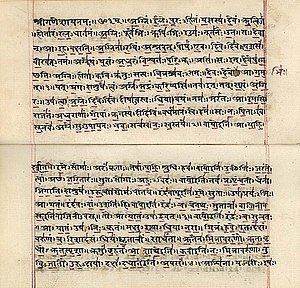
    The Rig Veda is recognised as the oldest literature by mankind. It is one of the sources of Sanatana Dharma. It, as in other Vedas, contains four portions. Samhita,Hymns;Brahmanas,Procedures for Rites; Aranyaka and Upanishads, containing Ontology and Philosophy. Earlier evidence suggesting it having been composed in Northern,North Western part of India is being revisited on the basis of evidence found in Russia that the Rig Veda could have been composed in the Arctic.

    The Rig Veda is organized as Mandala (books), sukta (hymns) and riks (prayers). There are total of 10 mandalas, 1028 hymns and 10552 riks.

    The text is layered consisting of the Samhita, Brahmanas, Aranyakas and Upanishads.[note 3] The Rigveda Samhita is the core text, and is a collection of 10 books (maṇḍalas) with 1,028 hymns (sūktas) in about 10,600 verses (called ṛc, eponymous of the name Rigveda). In the eight books – Books 2 through 9 – that were composed the earliest, the hymns predominantly discuss cosmology, rites, rituals and praise deities.The more recent books (Books 1 and 10) in part also deal with philosophical or speculative questions,virtues such as dāna (charity) in society, questions about the origin of the universe and the nature of the divine, and other metaphysical issues in their hymns.

    The main contributors were Angiras, Kanva, Vasishtha, and Vishvamitra. Among the other celebrated authors are Atri, Bhrigu, Kashyapa, Gritsamada,  Agastya, Bharadvaja, as well as female sages Lopamudra and Ghosha. In a few cases, more than one rishi is given, signifying lack of certainty. Source..https://en.m.wikipedia.org/wiki/Rigveda

    Of these twelve Rishis who have composed the Rigveda, Lopamudra and Ghosha were women ,Rishikas.
    Join 4,576 other subscribers
  • Twenty Six Brahmin Gotras Samudra Gupta Period 350 AD Alampbayana,Salankayana

    Twenty Six Brahmin Gotras Samudra Gupta Period 350 AD Alampbayana,Salankayana

    History of India,as I have been finding,is quite ancient and when one checks it,date of Indian history is constantly pushed back by centuries.

    There are many avenues to explore it’s antiquity.

    Historical references in Indian and Foreign Literature,Indian Piranhas,Ithihasas(Ramayana and Mahabharata), Cultural links with tribes of the world, Etymology Astronomical dating,Legends verified by archeological findings and through the groups in India,who are classified based on their dispositions and Character.

    One such factor is the study of Gotra system,the Indian system of tracing one’s roots.

    I have written on the Gotras of Brahmins, Kshatriyas and Vaisyas, providing details about their origin and geological area where they had come from

    When the history is ancient and one is unable to trace it for want of Knowledge of Indian texts,it was easy to dismiss facts as myths and bring in a theory like Aryan Invasion theory which stands discredited now.

    In the process of unearthing the details of Gotras,I have come across instances where I could not get information on some Gotras and their Group details.

    And their geographical locations.

    I have been updating information as and and when I find information relating to the missing Gotras.

    One such is Alampayana Gotra.

    One reader wrote to me that he,with great difficulty, was able to find the Alambayana Gotta,which was misspelt.

    He also wanted a clarification whether it was a Kshatriya Gotra.

    I found some interesting information.

    The Alambayana Gotra is a Brahmin Gotra.

    Sometimes,as the group is determined by profession, disposition and character,the group name changes when one changes any of the attributes mentioned above undergoes Change.

    Such is the case with Alampayana Gotra.

    Though it is a Brahmin Gotra,it might have been modified as a Kshatriya Gotra because of change in Profession.

    Viswamitra Gotra is a Brahmin Gotra .

    But when Viswamitra became a Rajarishi and gave the Gayatri Mantra to the world his Gotra became Brahmin.

    His initial Gotra,Kaushika,was a Kshatriya Gotra as he was a king before he became a Rishi.

    The Alampayana Gotra was mentioned by Varma Dynasty of Bengal,Assam.

    And they date back to 350-600 AD!

    And one may also note from the plates that how each Gotra was assigned based on the part of Vedas one followed.

    Kamrupi Brahmins, also known as Kamarupi Brahmana and Kamrupi Bamon; are those brahmins who claimed their descent from the Kanauji immigrant brahmins whom settled in Kamarupa(present day Assam). They brought with them different Hindu epics and became the torch-bearers of Aryan culture in the region.

    Kamrupi brahmins are those brahmins who claimed their descent from the Kanauji immigrant brahmins of a very early period. They settled in Kamrup and later on spread out

    Kamrupi Brahmins were prosperous during the Varman dynasty‘s reign of Kamarupa. The Kamrupi king Bhaskaravarman regularly gave land grants to the Kamrupi Brahmins. With these land grants they were also given copper plates grants.A portion of the copper-plate grant of Bhaskaravarman states: Rigvedic, Samavedic and Yajurvedic Brahmins lived in Kamarupa before the time of Bhaskaravarman.Of these three classes of Brahmins the followers of the Bahvrichya branch of the Rigveda were divided into the gotras of: – Kasyapa, – Kausika, – Gautama, – Parasarya, – Bharadvaja, – Varaha, – Vatsya, – Varhaspatya and – Saunaka ; Of those following the Chhandoga branch of the Samaveda belonged to the gotras of : – Paskalya The followers of the Taittiriya branch of the Yajurveda belonged to the gotra of: – Kasyapa And those of the Charaka branch to the gotra of: – Katyayana ; The followers of the Vajasaneya branch belonged to the gotras of: – Angirasa, – Alambayana, – Gargya, – Gautama, – Bharadvaja, – Yaska, – Sakatayana, and – Salankayana besides the six gotras mentioned before.In all these three groups of Brahmanas living in Kamarupa had 26 gotras at the time of their greatest power and standing. In later ages any traces of the Samavedic and Rigvedic Brahmanas disappeared .’

    Varman Dynasty.

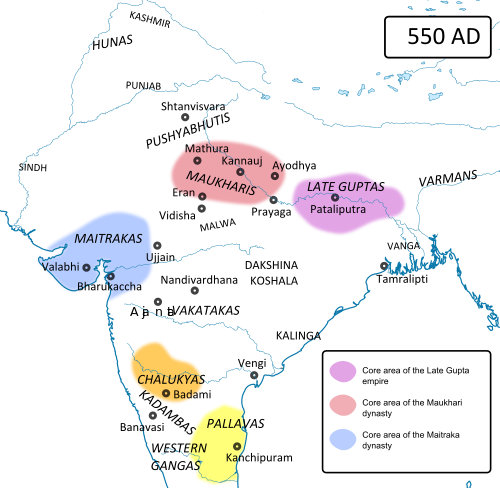
    The Varman dynasty (350-650) is the first historical dynasty of the Kamarupa kingdom. It was established by Pushyavarman, a contemporary of Samudragupta

    Reference and citation.

    https://en.m.wikipedia.org/wiki/Kamrupi_Brahmins

    https://en.m.wikipedia.org/wiki/Varman_dynasty

  • Four Of The Saptha,Seven Rishis From South Of India

    There are Seven Seers of Hinduism called as Saptha (seven) Rishis.

    According to Puranas,these change for every Manvantara,a Time scale of Hinduism going back to lakhs of years.

    For more read my article on Manvatara.

    The Saptha Rishis for our Manvantara are,

    Atri,

    Bhrigu,

    Kutsa,

    Vasishta,

    Gautama,

    Kasyapa and

    Angirasa.

    It is interesting to note that references to these Rishis are associated with certain regions of the world,though all of them are from Bharatavarsha.

    Of these,while,

    Bhrighu from Himachal Pradesh,Kutsa from near Uttar Pradesh,Vasishta from Indus valley,Atri,Kasyapa and Gautama and Angirasa are from the south of Vindhyas.

    It is also curious that the Bhargavas,those from Bhrighu Lineage, to which Parashurama,an Avatar of Vishnu,are sometimes treated as those from the south,with Parashurama establishing Goa and Kerala regions of today.

    Kasyapa is the earliest and his name means Turtle.

    The Turtle concept  is present in almost all lehends related to Creation of Earth.

    Kasyapa must have lived in the south ,though he is reported to have come to south twice .

    Once when the earth was tilted during Shiva,s Marriage with Uma and again during Ramayna whe he came down to Lanka to impart The Adityahridhaya Stotra on Surya,the Sun God,to Lord Rama,when he was depressed during his battle with Ravana in Lanka.

    Agastya’s movement has been validated by the Star Canopus.

    Please read my article on this.

    Sage Gauthama was from the Godavari basin/valley,the River Godavari is named after him.

    Bhrighu and Angirasa are classified as pre Vedic Rishis.

    Though they are referred thus and are mentioned in The Zend Avestha of Zoraosterianism,Angirasa ,going by Sumerian and Tamil related material was from the Dravida desa and he seems to have founded the Akkadian empire or worshiped by them.

  • Angirasa Founder Pre Sumerian Civilization Akkadian Empire?

    I have written on the presence of artifacts in the middle east, areas surrounding it in Europe which indicate the presence of  Sanatana Dharma and Tamil in the culture of Mesopotamia  and Sumeria.

    Akkadian Civilization remains
    Akkadian Relgious artifact.Trishul or Subrahmanya’s Spear?

    Kings' List, Akkadian Empire
    Akkadian King List. Note the similarities to Sanskrit Names.

    1.Lord Rama’s Chapel was found in UR, Iraq.*

    2.A burial ground called as Nagar is fond in Syria. It is called Tel Brak now.

    3.Idols of Rama,Sita and Lakshmana are found.*

    4.Ancestors of the Syrians were the Halaf and Ubaid.

    They date back to 6100 BC.

    They had connection with the Tamils and this is reflected in the ruins of  Nagar.*

    These people traded with the Tamils.

    ”Naram-Sin traded with Meluhha (almost certainly corresponding to the Indus Valley civilization), and controlled a large portion of land along the Persian Gulf. He expanded his empire by defeating the King of Magan at the southern end of the Persian Gulf, and conquering the hill tribes to the north in the Taurus Mountains.

    5.Akkadian’s( Forefathers of the Sumerians) Moon God was Naram Sin, Narasimha.*

    6.There are repeated references in the Sumerian/Akkadian language to Meluuha.

    7.Ancient Tamil Brahmi Scripts were found in Oman and Egypt.

    These facts establish that,

    The Tamils were an advanced civilisation by 2200 BC(Akkadian Empire)

    The Hindu Gods and Goddesses were worshiped in Sumeria,

    Names of Lord Rama and Bharata were found in the Kings List of Sumeria.’

    ‘A Tamil-Brahmi script inscribed on a potsherd, which was found at the Khor Rori area in Oman, has come to light now. The script reads “nantai kiran” and it can be dated to first century CE, that is, 1900 years before the present. The discovery in the ancient city of Sumhuram has opened a new chapter in understanding the maritime trade of the Indian Ocean countries, according to specialists in history.

    Tamil city in Sumeria  2200 BC

    OM in Sumerian Prayer 2600 BC

    Haran Shiva In Turkey

    Please read the related posts of the above as well.

    Who are Akkadians?

    The Akkadian Empire /əˈkdiən/ was the first ancient Semitic-speaking empire of Mesopotamia, centered in the city of Akkad/ˈækæd/ and its surrounding region, also called Akkad in ancient Mesopotamia. The empire united all the Akkadian and Sumerian speakers for the first time under one rule. The Akkadian Empire controlled Mesopotamia (modern Iraq, Kuwait, northeast Syria and southeast Turkey), the Levant (modern Syria and Lebanon), and eastern and southern parts of Anatolia(modern Turkey) and Iran, sending military expeditions as far south as Dilmun and Meluhha (modern Bahrain and Oman) in the Arabian Peninsula.

    During the 3rd millennium BC, there developed a very intimate cultural symbiosis between the Sumerians and the Akkadians, which included widespread bilingualism. Akkadian gradually replaced Sumerian as a spoken language somewhere between the 3rd and the 2nd millennia BC (the exact dating being a matter of debate).

    The Akkadian Empire reached its political peak between the 24th and 22nd centuries BC, following the conquests by its founder Sargon of Akkad (2334–2279 BC). Under Sargon and his successors, the Akkadian language was briefly imposed on neighboring conquered states such as Elam and Gutium. Akkad is sometimes regarded as the first empire in history, though there are earlier Sumerian claimants.

    Elam was an Empire of Tamils which exited before the great Flood probably in  Lemuria.

    And there was one more Tamil Empire in the North west of India.

    Please read my article Two Tamil Empires?

    After the fall of the Akkadian Empire, the people of Mesopotamia eventually coalesced into two major Akkadian-speaking nations: Assyria in the north, and, a few centuries later, Babylonia in the south.”

    Now there is a theory that Rishi Angirasa was worshiped/funded the Akkadian Empire

    There seven Seers of Hinduism, who, at the beginning of every time cycle formulate the code of conduct, texts to follow.

    These are called Saptha(7) Rishis.

    They are.,

    Atri,

    Bhrigu,

    Kutsa,

    Vasishta,

    Gautama,

    Kasyapa and

    Angirasa.

    Now. the theory states that.

    ‘The supreme deity of the Sumerian pantheon is AN, or Anu. In the first two letters of the Sanskrit word An-gir-as, AN could refer to Anu. GIR might relate to the Akkadian fire-god— fire as in rocket propulsion. DinGIR in the cuneiform writing meant sky or heaven, and also a god or goddess. The masters of the sky were perceived as deities by the earthbound. This reminds of Angiras and his descendants, the Angirasas, as a group of higher beings who traversed the realms between gods and men — an inter-stellar and inter-dimensional elite…

    The Angirasas and the Bhrigus families “…represent the pre-Rig Vedic past: they go so far back into the past that not only are they eponymous founders of these families (Angiras and Bhrigu respectively), but even certain other ancient Rishis belonging to these families (Brihaspati, Atharvan, Ushana) are already remote mythical persons in the Rigveda; and the names of the two families are already names for mythical and ritual classes: the Angirasas are deified as ‘a race of higher beings between Gods and men’ …the Bhrigus and the Atharvans are synonymous with fire-priests in general. …the names of these two families are also found in the Iranian and Greek texts…” [Shrikant G. Talageri]..

    No one can compare the Avestan poetry with the Indian [Rigvedic] poetry in its content, in its style of expression, and in its entire coloring, without coming to the conclusion, on account of their agreement in small details which force themselves on us at every step, that both the literatures point not only to a common origin of these two peoples and their religions, but also to a community of Indo-Iranian religious poetry, developed in well-established forms.
    [Hermann Oldenberg]

    “The name Anu or Ânava for the Iranians appears to have survived even in later times: the country and the people in the very heart of Avesta land, to the immediate north of Hâmûn-i Hilmand, were known as late as Greek times as the Anauon or Anauoi. The names of Anu tribes in the Rigveda and the Puranas can be clearly identified with the names of the most prominent tribes among latter-day Iranians.”   [Shrikant G. Talageri]..

    ….Malati J. Shendge says “Sanskrit is derived from Akkadian and Sumerian…Sanskrit is not a language of the Aryas…It is essentially a lineal descendent of the languages of the Asuras.” She states that the Rig Veda does not belong to the Aryas and in fact in her view this was “purely an assumption without any firm basis.” And she states “…it is possible to find parallels in the Akkadian sources to many clans and personal names of the poets of Rig Vedic compositions, and of the Asuras, the enemies of Indra.” She believes that the language of the Rig Veda — [meaning the older Vedic Sanskrit which is very different from the latter classical Sanskrit] — is a form of Akkadian and “that the Akkadian in the process of evolution has become what we know today as Sanskrit….

    References and citations.

    Prolegomena on Metre and Textual History of the Rigveda, by Hermann Oldenberg, Berlin 1888; translated into English by V.G. Paranjape and M.A. Mehendale; Motilal Banarsidass Publishers Private Ltd., Delhi, 2005.

    The Rig Veda and the History of India, by David Frawley; Aditya Prakashan, New Delhi, 2001, 2003.

    The RIGVEDA, A Historical Analysis, by Shrikant G. Talageri; Aditya Prakashan, New Delhi, 2000, 2004.

    The Civilized Demons: The Harappans in Rigveda, by Malati J. Shendge; Abhinav Publications, New Delhi, 1977.

    The Language of the Harappans: From Akkadian to Sanskrit, by Malati J. Shendge; Abhinav Publications, New Delhi, 1997.

    http://metaphysicalmusing.com/articles/rigveda2015/AnuPart1.htm

    https://en.wikipedia.org/wiki/Akkadian_Empire

    Images credit.

    http://www.wikiwand.com/en/Akkadian_Empire

  • Rudram Prokshana Mantra By Kutsa Indras Look Alike

    There are seven Seers, Rishis in Sananatana Dharma.

    These seven Rishis are called Saptha (seven) Rishis.

    These Rishis are Eternal and they do not die even at the time of the Dissolution of the Universe.

    t34_sri-vadivazhagiya-nambi-perumal_temple6
    Thiru Anbil Temple near Tiruchi.

    But the Rishis change for every Yuga(aeon)

    For the present time frame called Kali Yuga, these are the Saptha Rishis.

    Atri,

    Bhrigu,

    Kutsa,

    Vasishta,

    Gautama,

    Kasyapa and Angirasa.

    One of the least known Rishis is Kutsa.

    Kutsa who traces his ancestry to Angirasa is mentioned in all the  four Vedas, a rare honour.

    He authored Sukthas in The Rig Veda but refers it to hos ancestor Angirasa as a mark of respect by callimg it Kutsa Angirasa.

    As an aside it may be mentioned that the Great Acharayas never attribute their works directly to themselves.

    They refer to their ancestors, as in the case of Kutsa or to thier Guru.

    Following the later tradition Adi Shankaracharya attributes every work of his as,

    ‘Ithi Govinda Bhagavad Pada Shisya’

    Kutsa also contributed 65 sukthas to Sri Rudram on the Yajur Veda.

    He was a close friend of Indra, the Chief of Gods( devas)

    He was a mirror image of Indra.

    there is mention of a conversation between Sage Vamadeva and Indra which illustrates how Kutsa and Indra were not only intimate friends, but were also ‘look-alikes’ — so much so that at one point, Indrani herself could not tell them apart- Rig Veda 4.6.10

    Kutsai was the son of a Rajarishi named Ruru. Indra helped Ruru by decimating his enemies, and he invited Kutsa to Indraloka to celebrate the victory. Once, Kutsa fell into a deep well, and Indra came running to save his friend- Rig Veda10.40.6.


    Rig Veda106.6 there is a suktam consisting of seven mantras. Although Kutsa Rishi discovered this suktam, he named it in conjunction with his guru, Angirasa, as the Kutsa Angeerasa.

    In Panini’s Ashtadhyayi, he is mentioned as an old acharya. He is described as worshipping Agni in different forms, addressing him with different names.

    The Prokshana Mantra

    Om Bhoo, Om Bhuvaha, Om Suvahaâ”

    is by Kutsa.

    Despite Kutsa Rishis strict observances, however, it is said that he once made a mistake in pronouncing a Veda mantram, and for this he was cursed to be a frog in a well. Once his period of atonement had passed, Veda Purusha told him that even while he was a frog, he would remember his previous birth and could be relieved of the curse if he did penance in a pushkarani (holy waters), praying to Soundararaja Perumal at Valmiki kshetram for 48 days. This the Rishi did, the curse was released, and he regained his former body.


    The Valmiki kshetram referred to here is Thiru Anbil, which is situated 5 miles east of Lalgudi, in Tiruchy District of Tamil Nadu. It is the birthplace of the great sage, Valmiki, and is one of the 108  divya kshetrams.

    Citation.


    http://puredevoteeseva.ning.com/m/group/discussion?id=3913762%3ATopic%3A168035

    Moolavar : Sundararaja Perumal
    Urchavar : Vadivu Azhagia Nambi
    Amman / Thayar : Azhagia Valli
    Thala Virutcham : Thazhamboo
    Theertham : Manduka Theertham
    Agamam / Pooja :
    Old year : 1000-2000 years old
    Historical Name :
    City : Anbil
    District : Thiruchirapalli
    State : Tamil Nadu