Tag: Brahmins

  • Bamonn Brahmins  Wear Upaveeda Pope Special Order

    Bamonn Brahmins Wear Upaveeda Pope Special Order

    The story of Conversion of Hindus to Christianity is innovative right from the day they entered India.

    They were aware that,to influence Hindus,it is necessary to gain the acceptance of the Brahmins,who are revered in Hinduism.

    So they targeted Brahmins.

    This method of Conversion was not limited to Britishers.

    The Dutch and Portugese who were in India were equally adept.

    The Portugese converted Gouda Saraswat Brahmins in Goa and Konkan area.

    How far the Christians could go may be witnessed by the fact the Pope,by special dispensation allowed these converted Brahmins to continue wearing the Upaveeda,Yagnyopaveeda!

    There is a view that Saint Thomas landed in Kerala and was the first one to spread Christianity in India.

    This is misinformation.

    He did not visit India.

    The Brahmins who were converted to Christianity in Kerala were called Syrian Christians.

    They are an Endogenous group.

    As a rule they consider themselves to be superior to other Christian denominations and do not intermarry with the other sects.

    Those Saraswat Brahmins who were thus converted are called Bayonne.

    These converted Brahmins were allowed to wear the Upaveeda by a special dispensation by the Pope.

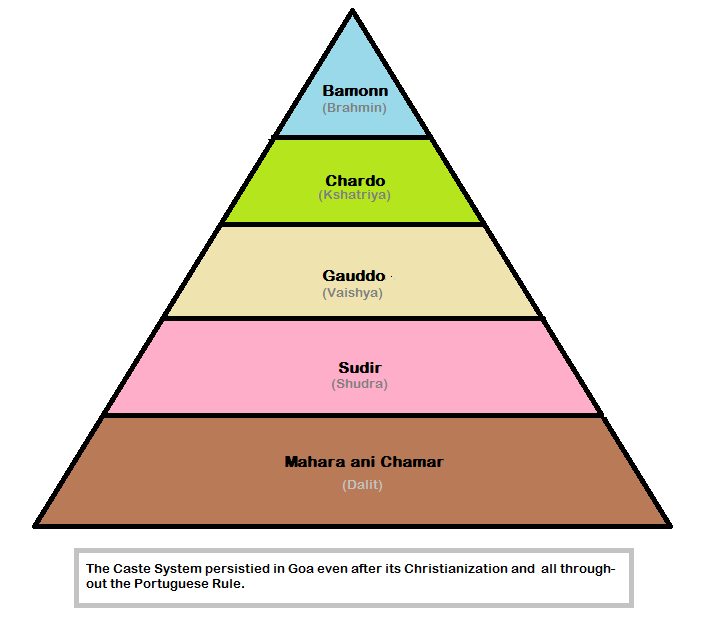
    The Roman Catholic Brahmin, also referred to as Bamonn (Devanagari: बामण, Kannada: ಬಾಮಣು; IAST: Bāmaṇ; pronounced /baməɳ ~ bamɔɳ/) in Konkani, is a caste among the Goan and Mangalorean Catholics,of modern-day descendants of Konkani Brahmin, predominantly Goud Saraswat Brahmin converts to Roman Catholicism.

    In Goa, the Brahmins were originally engaged in the priestly occupation, but had taken up various occupations like agriculture, trade, goldsmithy, etc.The origins of this particular caste can be traced back to the Christianisation of the Velhas Conquistas(Portuguese: Old Conquests) that was undertaken by the Portuguese during the 16th and 17th centuries. It was during this period that the Jesuit, Franciscan and Dominicanmissionaries converted many Brahmins to Christianity.The first mass conversions took place among the Brahmins of Divar, and the Kshatriyas of Carambolim.In his Oriente conquistado a Jesu Christo pelos padres da Companhia de Jesus da Provincia de Goa(1710), Portuguese Jesuit priest, Fr. Francisco de Sousa gives an account of the mass conversions of Brahmins in Divar:

    All converts from Brahmin sub-castes such as the Goud Saraswat Brahmins, Padyes, Daivadnyas, etc., were lumped into the Christian caste of Bamonn. Since the conversions of Brahmins of a particular area became instrumental in the conversions of members of other castes, such converts were highly valued and esteemed by the church and Portuguese authorities alike. They were even allowed to wear the Yajnopavita (sacred thread) and other caste markings by special dispensation of Pope Gregory XV in 1623, on the condition that these were blessed by a Catholic priest.Historian Charles Ralph Boxer observed:

    ..

    “The converted Brahmenes retained their pride of caste and race, and they very seldom intermarried with the Portuguese and never with their Indian social inferiors. Similarly, the lower castes who became Christians did not lose their ingrained respect for the Brahmenes, and they continued to venerate the latter as if they were still their ‘twice-born’ (dvija) and natural superiors.”

    The Bamonns in general, consider their caste system to be an Indian class form of social categorisation.Since their concept is divorced from all the religious elements associated to it by their Hindu counterparts, they tend to justify their maintenance of caste as a form of social stratification similar to the Western class concept. Traditionally, they are an endogamous group and have refrained from inter-marriage with Catholics of other castes. However, while the Bamonnsnever inter-married or mingled with the low caste Sudirs (Konkani: Shudras), Mahars, and Chamars, the statutes and norms of the Roman Catholic church restrained them from discriminating against the latter

    Source.

    https://en.m.wikipedia.org/wiki/Roman_Catholic_Brahmin

  • Brahmins Neither Masters Nor Servants, First In Dignity Greek Historian Diodorous 1 BC

    Brahmins Neither Masters Nor Servants, First In Dignity Greek Historian Diodorous 1 BC

    While Indian History was doctored after the arrival of the British, it continues even today, Greek Historians seem to have recorded Indian History with an amount of integrity.

    I shall be writing on the description of India by Greek Historians from antiquity.

    Herebelow I am quoting the Greek Historian DIODORUS SICULUS, first century BC.

    I am quoting the portion that speaks of Brahmins of India.

    Brahmins are being vilified for everything in India.

    Be it the hiding of the Vedas from Non Brahmin(the same people say Vedas are rubbish!),

    Be it the oppression of some communities in India.

    And Brahmins are accused of usurping power!

    My answer to this is that if Brahmins wanted power, Sage Vasishta could have assumed power when Lord Rama was banished to Forest and his brother Bharatha was unwilling to assume charge,

    Chanakya, Kautilya did not usurp power from Chandragupta, who would have willingly given kingdom to Kautilya,

    Nor did Aniruddha Brahmaraya usurp power from Sundara Chola who was the father of Rajaraja Chola.

    They were class mates and close friends.

    Aniruddha was the Prime Minister of Sundara Chola.

    Sundara Chola was quite ill in Thanjavur , his eldest son Aditha Karikala was in Kanchipuram his younger son Arulmozhi who later became Rajaraja, was in Lanka fighting enemies.

    The smaller kingdoms under Cholas were in turmoil and were intent on breaking up Chola empire, by aligning with Pandy as.

    IT was Aniruddha who was instrumental in getting Rajaraja coronoted. Aniruddha was not the only one who was instrumental in Rajaraja there were many including Sembian Madevi, Kundavai,:Aniruddha s contribution was exceptional.

    Now let us see what Diodorous Siculus has to say on Brahmins in his work,Bibliotheca historica

    The whole multitude of the Indians is divided into seven castes,14 the first of which is formed of the order of the philosophers, which in number is smaller than the rest of the castes, but in dignity ranks first. For being exempt from any service to the state the philosophers are neither the masters nor the servants of the others. 2 But they are called upon by the private citizens both to offer the sacrifices which are required in their lifetime and to perform the rites for the dead, as having proved themselves to be most dear to the gods and as being especially experienced in the matters that relate to the underworld, and for this service they receive both notable p21 gifts and honours. Moreover, they furnish great services to the whole body of the Indians, since they are invited at the beginning of the year to the Great Synod and foretell to the multitude droughts and rains, as well as the favourable blowing of winds, and epidemics, and whatever else can be of aid to their auditors. 3 For both the common folk and the king, by learning in advance what is going to take place, store up from time to time that of which there will be a shortage and prepare beforehand from time to time anything that will be needed. And the philosopher who has erred in his predictions is subjected to no other punishment than obloquy and keeps silence for the remainder of his life.

    Reference and Citation

    http://penelope.uchicago.edu/Thayer/E/Roman/Texts/Diodorus_Siculus/2B*.html

  • Brahmins Who Accepted Dakshina From Rama Sanadh Brahmins. Saryupareen Of River Saryu

    Brahmins Who Accepted Dakshina From Rama Sanadh Brahmins. Saryupareen Of River Saryu

    About a year back one reader asked me that he was informed by his grandfather that they were the priests of Lord Rama and whether I could provide more information on this.

    As far as I knew Vasishta was Ikshvaku Dynasty Guru and there was Viswamitra who took Rama and Lakshmana and initiated the Bala and Adi Bala Mantras.


    However I told him that I would check and provide when I get the information.

    This is it.

    Brahmin is one who has realized the Reality, Brahman.

    He is selfless and dedicated to the welfare of others.

    This sloka tells us who a Brahmin is.

    “Adhyaapanam Adhyayanam
    Yajanam Yaajanam Tathaa
    Daanam Pratigraham Chaiva
    Brahmanaanaamakalpayaat”

    Adyayanam-Pracctice of reciting the Vedas, with meaning.

    Adhyaapnan-Teaching of the Vedas along with the Astras(scientific Arms) and Satras(Ordinary weapons of war)

    Yajanam-performance of the Yagnas and Yagas.

    Here there is a small difference between a Yagna and Yaaga.

    While a Yaaga is performed with a specific wish to be fulfilled, as a Puthra Kameshti for begetting a Good offspring, Yajna is performed expecting no results, performed because it has to be performed as sanctioned by the Vedas.

    BRAHMIN

    Dakshina is an offering made by the receiver to Brahmins and they are expected to be contented with what is offered.

    With changed economic and social structure this is not in practice and we have Brahmins who demand Dakshina.

    Many are disappointed with this attitude.

    My view is that what they do now is not correct for Brahmin.

    However, if people do not provide them economic security, which was provided in earlier days right from King’s to common Man, how would a Brahmin live?

    Worse still why would they let their children become the torch bearers of the Vedas?

    So we see Brahmins taking up all professions, including me, fo economic security.

    My submission is that we offer fair Dakshina to Brahmins to help them economically secure so that our Culture thrives.

    We spend so much for movies and entertainment.

    Now to the issue on hand.

    There is a group of Brahmins who accepted Dakshina from Lord Rama.

    They were the priests who welcomed Lord Rama when he returned to Ayodhya after killing Ravana.

    They are Sanadh Brahmins.

    Just as there are Brahmins whose origins are associated with Rama, such as the Saryuparins that came into being when Rama reached Ayodhya after slaying Ravana, and the Sanadhs, who recall their acceptance of dakshina from Ramchandra on the victory over Ravana, there are also Brahmins that are associated in origin from Ravana, and these include the Daves (of Mudgal gotra) of Rajasthan, as well as Gujarat’s Sachoras, the Kanyakubjas of Vidisha in Madhya Pradesh, and the Brahmins of the Kaumara sub-gotra of the Vasistha gotra

    Source.

    ‘Sanadya Brahmin or Sanadh Brahmin, or Sanah Brahmin or Sanidya Brahmin are a community of Brahmins. Their main concentration is in Western Uttar Pradesh, Rajasthan and Madhya Pradesh area of India.’ wiki.

    The Hindi poet Keshavdas was a Sanadhya, and praised his community in his Ramachandran.

    Saryupareen Brahmins.

    Saryupareen Brahmins , also known as Sarvarya Brahmins or Saryupariya Brahmins, are North Indian Brahmins residing on the eastern plain of the Sarayu near Ayodhya. Saryupareen families such as the Chaturvedi, Tripathi, Tiwari, Trivedi, Dwivedi, Pandey, Mishra,Shukla, and Dikshit were involved solely in the research and analysis of Vedas and other religious texts, performing yajnas and other religious practices. These families did not perform ‘pujas for benefactors and did not take dakshinas or donations against such prayers. Hence they were considered to be solely devoted to the quest of learning about the Vedas and spreading knowledge rather than benefiting in any way through benefactors. Along with the other Pancha-Gauda Brahmin communities, the Saryupareen traditionally preserve the customs and traditions as prescribed by ancient Hindu canons.
    In the 19th (held at Prayag) and 20th (held at Lucknow) national convention of Kanyakubja Brahmins by Kanyakubja Mahati Sabha, in 1926 and 1927 respectively, it appealed for unity among Kanyakubja Brahmins whose different branches included Sanadhya, Pahadi, Jujhoutia, Saryupareen,Chattisgarhi, Bhumihar Brahmins and different Bengali Brahmins.
    The Saryupareen generally dwell in the states of Uttar Pradesh, Bihar and Madhya Pradesh with a significant amount of them concentrated in the eastern region of Uttar Pradesh known as Purvanchal. There are also minority Saryupareen communities in Mauritius, where Bhojpuri is a commonly spoken language and the Caribbean.

    Vanshavali

    “Kanyakubj Vanshavali” mentions five branches of Kanyakubja Brahmins as Saryupareen, Sanadhya, Bhumihar, Jujhautiya and Prakrit Kanaujia:
    Saryupari Sanadhyashcha Bhumiharo Jijhoutayah
    Prakritashcha Iti Panchabhedastasya Prakartitah
    These Brahmins are divided into 26 categories
    Gautama, Sandilya,Vashista, Parashara,Kaundinya,Garga, Udbahu, Upamanyu, Maunas, Kanva, Vartantu, Bhrigu, Agastya, Kaumasya,Galava, Kasyapa, Kaushika, Bhargava, Savarnaya, Atri, Katyayana, Angiras, Vatsa, Sankritya Jamadagni, Punah. Other than above gotras 1. Krishanatraya, 2. Ghritakausika, 3. Margeya are called mishrit (combined) gotra. However, 261 gotras are mentioned in some source.

    Reference and Citation.

    http://gopalakri.blogspot.in/2013/01/saryupareen-brahmins.html?m=1

  • Aaruvelu Brahmins History

    Aaruvelu Brahmins History

    Brahmins whose duty was priesthood, took to other vocations over a period of time.

    Some took to other professions fully while some continued both priestly duties and other professions.

    Yet some remained only with priestly duties, like the Vaidika Brahmins.

    Brahmins, contrary to what is being projected as outsiders, were a part of Sanatana Dharma and were present throughout Bharatavarsha.

    Yet there were migrations of the community from one part of Bharatavarsha to another.

    As Sanatana Dharma extended throughout the world there is no question of anyone coming from outside into India.

    For instance the migration of Niyogi Brahmins from Multan, now in Pakistan into India is not real migration into India as Brahmins were living in Bharatavarsha earlier to this period as part of Pancha Dravidas.

    One of the Brahmin groups is the Aaruvelu Brahmins.

    They speak Telugu but are spread throughout India.

    Aaruvelu means six thousand.

    Six thousand Brahmins are grouped to form Aaruvelu Brahmins.

    Essentially there is no difference among Brahmins.

    Different names have been assigned based on the geographical locations where they settled, the additional duties they undertook, and number of families that constitute a group.

    Thus we have Vadamas of Tamil Nadu who settled on the Northern banks of River Cauvery,

    Vaathima a, who took primarily to priestly duties like Vaidika Brahmins and Astasahasram which consists of Eight Thousand families of Brahmins like the Aaruvelu Brahmins….

    ‘The Smarta Brahmins in Andhra Pradesh can be grouped into two major divisions formed about a thousand to 700 years ago (most probably during Kakatiya rule), Niyogi and Vaidiki, besides the smaller group of Bhatt. This classification is based on their inherent ability and Masterity in Administration, Spiritual Practices and cooking respectively.

    Traditionally believed to have descended from Lord Parasurama, Niyogi Brahmins are those Brahmins who are into various secular vocations including military activities and gave up religious vocation, especially the priesthood just like Bhumihar Brahmins in north India who largely gave up priesthood. There is a lot of brotherhood between Niyogi Brahmins and Bhumihar Brahmins. The Bhumihar Brahmins, of whom many, though not all, belong to the Saryupareen Brahmin division of Kanyakubja Brahmins. The Bhumihar Brahmins were established when Parashurama destroyed the Kshatriya race, and he set up in their place the descendants of Brahmins, who, after a time, having mostly abandoned their priestly functions (although some still perform), took to land-owning.’

    Pancha Dravidas

    There are some references.

    One states that Sage Viswamitra had his fifty sons ostracised to Dravida Desa for questioning his authority and these people intermarried with the Dravidas.

    One of their descendants, Apasthamba compiled the Vedas in yet another form in the form of Sutras, called the Apasthamba Sutras.

    This sutra incorporates some practices of the Dravidians like the wearing of Mangal Sutra in a Marriage.

    https://www.google.co.in/amp/s/ramanan50.wordpress.com/2014/12/31/who-are-south-indian-brahmins-five-vedic-families/amp/

    Reference and Citation.

    Aarama Brahmins

    http://www.ahladam.com/en-US/uncategorized/ancestorage-and-the-niyogi-brahmins-umasankar-vadrevus-web-page.php/7

  • Vaidika Brahmins Andhra Details. Sringeri Acharyas

    Vaidika Brahmins Andhra Details. Sringeri Acharyas

    This article is in continuation of my articles on Brahmins of Andhra.

    Among the major Brahmin Groups of Andhra are Mulukkanadu, Niyogi.

    I have written on Mulukkanadu Brahmins as Brahmins who had come into Gaya, Bihar and Andhra at the instance of Samba, one of the sons of Lord Krishna, from Multan, ( originally called Kasyapapura),

    And the Niyogi Brahmins as those who took to other vocations like literature, music, in addition to or in lieu of Priestley duties.

    There are two more Brahmin sects of Andhra Brahmins.

    Vaidika Brahmins and

    Aaruvelu Brahmins.

    Vaidika Brahmins are those Brahmins who dedicated themselves only to the study and practice of Vedas.

    Sringeri Shankaracharya, His Holiness Sri. Abhivava Vidyatheertha, my Guru belongs to the Vaidika Brahmin sect.

    Vaidiki Brahmins (Vaidika, Vaidikulu, Vaideeki) are a sect of Telugu-speaking Smartha Brahmins. They are predominantly followers of Adi Shankaracharya and are mostly found in Andhra Pradesh. The name derives from Vedas.

    Some great personalities of Vaidika Brahmin sect.

    ‘ Syama Sastri Carnatic Classical composer, one of the Musical Trinity.

    • Sri pad SriVallabha , according to GuruCharitra, he is the first avatar (incarnation) of the deity Shri Dattatreya in Kali Yuga
    • Vallabha Acharya – founded Shri Vallabha Sampradayam, now prevalent in Uttar Pradesh, Bengal, Rajasthan and Gujarat
    • Ganapati Sachchidananda – head of Avadhoota Datta Peetham in Mysore
    • Ekkirala Bharadwaja – also known as “Master Gaaru”, he popularised ‘Sai Baba Sampradayam’ in Andhra Pradesh
    • Chittamuru Ramaiah – follower of Theosophy
    • Malladi Chandrasekhara Sastry
    • Ushasri(Puranapanda Deekshitulu)
    • Sribhashyam Appalacharyulu
    • Garikapati Narasimha Rao
    • Sri Bharati Tirtha – 36th and current Jagadguru of Sringeri Sharada Peetham
    • Sri Abhinava Vidyatirtha- 35th Jagadguru of Sringeri Sharada Peetham
    • Chandrashekhara Bharati III – 34th Jagadguru of Sringeri Sharada Peetham
    • Sri Sacchidananda Shivabhinava Narasimha Bharathi – 33rd Jagadguru of Sringeri Sharada Peetham

    Reference and Citation.

    https://en.m.wikipedia.org/wiki/Vaidiki_Brahmins