Tag: Brahmin sects

  • Brahmins Who Accepted Dakshina From Rama Sanadh Brahmins. Saryupareen Of River Saryu

    Brahmins Who Accepted Dakshina From Rama Sanadh Brahmins. Saryupareen Of River Saryu

    About a year back one reader asked me that he was informed by his grandfather that they were the priests of Lord Rama and whether I could provide more information on this.

    As far as I knew Vasishta was Ikshvaku Dynasty Guru and there was Viswamitra who took Rama and Lakshmana and initiated the Bala and Adi Bala Mantras.


    However I told him that I would check and provide when I get the information.

    This is it.

    Brahmin is one who has realized the Reality, Brahman.

    He is selfless and dedicated to the welfare of others.

    This sloka tells us who a Brahmin is.

    “Adhyaapanam Adhyayanam
    Yajanam Yaajanam Tathaa
    Daanam Pratigraham Chaiva
    Brahmanaanaamakalpayaat”

    Adyayanam-Pracctice of reciting the Vedas, with meaning.

    Adhyaapnan-Teaching of the Vedas along with the Astras(scientific Arms) and Satras(Ordinary weapons of war)

    Yajanam-performance of the Yagnas and Yagas.

    Here there is a small difference between a Yagna and Yaaga.

    While a Yaaga is performed with a specific wish to be fulfilled, as a Puthra Kameshti for begetting a Good offspring, Yajna is performed expecting no results, performed because it has to be performed as sanctioned by the Vedas.

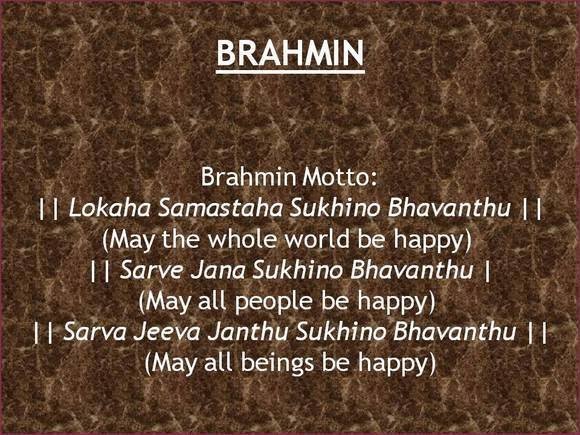
    BRAHMIN

    Dakshina is an offering made by the receiver to Brahmins and they are expected to be contented with what is offered.

    With changed economic and social structure this is not in practice and we have Brahmins who demand Dakshina.

    Many are disappointed with this attitude.

    My view is that what they do now is not correct for Brahmin.

    However, if people do not provide them economic security, which was provided in earlier days right from King’s to common Man, how would a Brahmin live?

    Worse still why would they let their children become the torch bearers of the Vedas?

    So we see Brahmins taking up all professions, including me, fo economic security.

    My submission is that we offer fair Dakshina to Brahmins to help them economically secure so that our Culture thrives.

    We spend so much for movies and entertainment.

    Now to the issue on hand.

    There is a group of Brahmins who accepted Dakshina from Lord Rama.

    They were the priests who welcomed Lord Rama when he returned to Ayodhya after killing Ravana.

    They are Sanadh Brahmins.

    Just as there are Brahmins whose origins are associated with Rama, such as the Saryuparins that came into being when Rama reached Ayodhya after slaying Ravana, and the Sanadhs, who recall their acceptance of dakshina from Ramchandra on the victory over Ravana, there are also Brahmins that are associated in origin from Ravana, and these include the Daves (of Mudgal gotra) of Rajasthan, as well as Gujarat’s Sachoras, the Kanyakubjas of Vidisha in Madhya Pradesh, and the Brahmins of the Kaumara sub-gotra of the Vasistha gotra

    Source.

    ‘Sanadya Brahmin or Sanadh Brahmin, or Sanah Brahmin or Sanidya Brahmin are a community of Brahmins. Their main concentration is in Western Uttar Pradesh, Rajasthan and Madhya Pradesh area of India.’ wiki.

    The Hindi poet Keshavdas was a Sanadhya, and praised his community in his Ramachandran.

    Saryupareen Brahmins.

    Saryupareen Brahmins , also known as Sarvarya Brahmins or Saryupariya Brahmins, are North Indian Brahmins residing on the eastern plain of the Sarayu near Ayodhya. Saryupareen families such as the Chaturvedi, Tripathi, Tiwari, Trivedi, Dwivedi, Pandey, Mishra,Shukla, and Dikshit were involved solely in the research and analysis of Vedas and other religious texts, performing yajnas and other religious practices. These families did not perform ‘pujas for benefactors and did not take dakshinas or donations against such prayers. Hence they were considered to be solely devoted to the quest of learning about the Vedas and spreading knowledge rather than benefiting in any way through benefactors. Along with the other Pancha-Gauda Brahmin communities, the Saryupareen traditionally preserve the customs and traditions as prescribed by ancient Hindu canons.
    In the 19th (held at Prayag) and 20th (held at Lucknow) national convention of Kanyakubja Brahmins by Kanyakubja Mahati Sabha, in 1926 and 1927 respectively, it appealed for unity among Kanyakubja Brahmins whose different branches included Sanadhya, Pahadi, Jujhoutia, Saryupareen,Chattisgarhi, Bhumihar Brahmins and different Bengali Brahmins.
    The Saryupareen generally dwell in the states of Uttar Pradesh, Bihar and Madhya Pradesh with a significant amount of them concentrated in the eastern region of Uttar Pradesh known as Purvanchal. There are also minority Saryupareen communities in Mauritius, where Bhojpuri is a commonly spoken language and the Caribbean.

    Vanshavali

    “Kanyakubj Vanshavali” mentions five branches of Kanyakubja Brahmins as Saryupareen, Sanadhya, Bhumihar, Jujhautiya and Prakrit Kanaujia:
    Saryupari Sanadhyashcha Bhumiharo Jijhoutayah
    Prakritashcha Iti Panchabhedastasya Prakartitah
    These Brahmins are divided into 26 categories
    Gautama, Sandilya,Vashista, Parashara,Kaundinya,Garga, Udbahu, Upamanyu, Maunas, Kanva, Vartantu, Bhrigu, Agastya, Kaumasya,Galava, Kasyapa, Kaushika, Bhargava, Savarnaya, Atri, Katyayana, Angiras, Vatsa, Sankritya Jamadagni, Punah. Other than above gotras 1. Krishanatraya, 2. Ghritakausika, 3. Margeya are called mishrit (combined) gotra. However, 261 gotras are mentioned in some source.

    Reference and Citation.

    http://gopalakri.blogspot.in/2013/01/saryupareen-brahmins.html?m=1

  • Aaruvelu Brahmins History

    Aaruvelu Brahmins History

    Brahmins whose duty was priesthood, took to other vocations over a period of time.

    Some took to other professions fully while some continued both priestly duties and other professions.

    Yet some remained only with priestly duties, like the Vaidika Brahmins.

    Brahmins, contrary to what is being projected as outsiders, were a part of Sanatana Dharma and were present throughout Bharatavarsha.

    Yet there were migrations of the community from one part of Bharatavarsha to another.

    As Sanatana Dharma extended throughout the world there is no question of anyone coming from outside into India.

    For instance the migration of Niyogi Brahmins from Multan, now in Pakistan into India is not real migration into India as Brahmins were living in Bharatavarsha earlier to this period as part of Pancha Dravidas.

    One of the Brahmin groups is the Aaruvelu Brahmins.

    They speak Telugu but are spread throughout India.

    Aaruvelu means six thousand.

    Six thousand Brahmins are grouped to form Aaruvelu Brahmins.

    Essentially there is no difference among Brahmins.

    Different names have been assigned based on the geographical locations where they settled, the additional duties they undertook, and number of families that constitute a group.

    Thus we have Vadamas of Tamil Nadu who settled on the Northern banks of River Cauvery,

    Vaathima a, who took primarily to priestly duties like Vaidika Brahmins and Astasahasram which consists of Eight Thousand families of Brahmins like the Aaruvelu Brahmins….

    ‘The Smarta Brahmins in Andhra Pradesh can be grouped into two major divisions formed about a thousand to 700 years ago (most probably during Kakatiya rule), Niyogi and Vaidiki, besides the smaller group of Bhatt. This classification is based on their inherent ability and Masterity in Administration, Spiritual Practices and cooking respectively.

    Traditionally believed to have descended from Lord Parasurama, Niyogi Brahmins are those Brahmins who are into various secular vocations including military activities and gave up religious vocation, especially the priesthood just like Bhumihar Brahmins in north India who largely gave up priesthood. There is a lot of brotherhood between Niyogi Brahmins and Bhumihar Brahmins. The Bhumihar Brahmins, of whom many, though not all, belong to the Saryupareen Brahmin division of Kanyakubja Brahmins. The Bhumihar Brahmins were established when Parashurama destroyed the Kshatriya race, and he set up in their place the descendants of Brahmins, who, after a time, having mostly abandoned their priestly functions (although some still perform), took to land-owning.’

    Pancha Dravidas

    There are some references.

    One states that Sage Viswamitra had his fifty sons ostracised to Dravida Desa for questioning his authority and these people intermarried with the Dravidas.

    One of their descendants, Apasthamba compiled the Vedas in yet another form in the form of Sutras, called the Apasthamba Sutras.

    This sutra incorporates some practices of the Dravidians like the wearing of Mangal Sutra in a Marriage.

    https://www.google.co.in/amp/s/ramanan50.wordpress.com/2014/12/31/who-are-south-indian-brahmins-five-vedic-families/amp/

    Reference and Citation.

    Aarama Brahmins

    http://www.ahladam.com/en-US/uncategorized/ancestorage-and-the-niyogi-brahmins-umasankar-vadrevus-web-page.php/7

  • Mulukkanadu Brahmins Origins Pratisthan, Paithan Maharashtra

    I have written on Brahmins and their History.

    Brahmins were present throughout Bharatvarsha, India was called thus in ancient times.

    They did not come from outside India as made out in the now discredited Arya Invasion Theory.

    There are various sects of Brahmins based on geographical locations,as in Vadama among Tamil Brahmins,
    particular activity of Vedas they practiced as in Vajpayee Gotra.

    Some Brahmin communities take their set’s name from the region they originally hailed from.

    The Mukukanadu Brahmins.

    They were believed too have been originally from Andhra Pradesh, India, from the Godavari Valley.

    On careful search it transpires that they Hail from the present region of Maharashtra, India.

    The Kingdom was ruled by Chandravamsa, Lunar Dynasty founder Ila daughter of Vaivaswatha Manu, father of the founder of Suryavamsa Solar Dynasty.

    Manu was a Dravidian king who migrated to Ayodhya because of a Tsunami in the south mentioned in world literature, legends and Tamil Classics.

    Ila ruled from Pratisthan, called Paithan now, Maharashtra.

    The first Satavahana King ruled from this place, from around First Century BC.

    This date may be pushed back.

    Pratishthanapura or present day Paithan is said to be the capital of Mulaka desh. Aurangabad, Nashik, Jalna, Washimare parts of Mulaka. Mulukanadu follows the usual conjoint formulation of similar communities: the word Naadu means country in all the south Indian languages; this is suffixed to the country whence the community hails, being in this case “Muluka”. Thus, Muluka+Naadu=Mulukanadu, “people of the Muluka land.” Muluka or Mulaka is identified and it is also known as Moolaka or Moolaka desha along with Ashmaka.

    Reference and citation.

    https://en.m.wikipedia.org/wiki/Paithan

    Related.

    https://ramanisblog.in/2013/10/26/from-where-did-the-brahmins-come/