Tag: Konkan Brahmins

  • Bamonn Brahmins  Wear Upaveeda Pope Special Order

    Bamonn Brahmins Wear Upaveeda Pope Special Order

    The story of Conversion of Hindus to Christianity is innovative right from the day they entered India.

    They were aware that,to influence Hindus,it is necessary to gain the acceptance of the Brahmins,who are revered in Hinduism.

    So they targeted Brahmins.

    This method of Conversion was not limited to Britishers.

    The Dutch and Portugese who were in India were equally adept.

    The Portugese converted Gouda Saraswat Brahmins in Goa and Konkan area.

    How far the Christians could go may be witnessed by the fact the Pope,by special dispensation allowed these converted Brahmins to continue wearing the Upaveeda,Yagnyopaveeda!

    There is a view that Saint Thomas landed in Kerala and was the first one to spread Christianity in India.

    This is misinformation.

    He did not visit India.

    The Brahmins who were converted to Christianity in Kerala were called Syrian Christians.

    They are an Endogenous group.

    As a rule they consider themselves to be superior to other Christian denominations and do not intermarry with the other sects.

    Those Saraswat Brahmins who were thus converted are called Bayonne.

    These converted Brahmins were allowed to wear the Upaveeda by a special dispensation by the Pope.

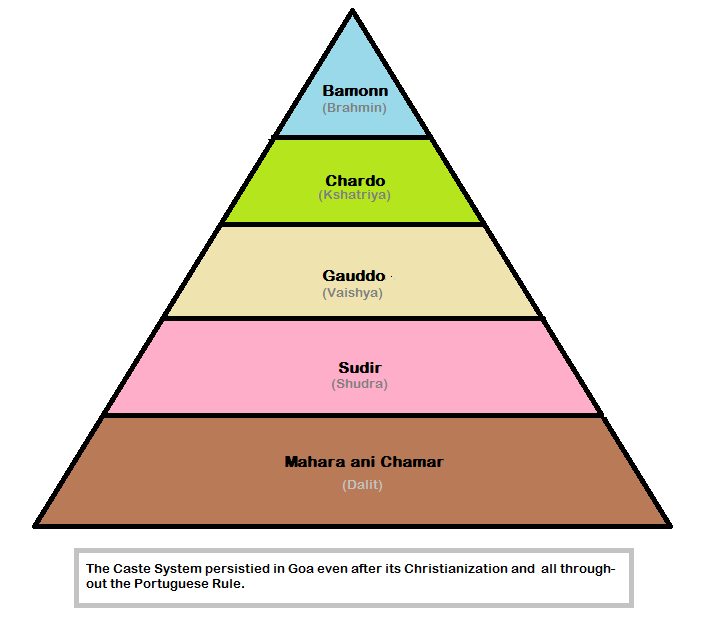
    The Roman Catholic Brahmin, also referred to as Bamonn (Devanagari: बामण, Kannada: ಬಾಮಣು; IAST: Bāmaṇ; pronounced /baməɳ ~ bamɔɳ/) in Konkani, is a caste among the Goan and Mangalorean Catholics,of modern-day descendants of Konkani Brahmin, predominantly Goud Saraswat Brahmin converts to Roman Catholicism.

    In Goa, the Brahmins were originally engaged in the priestly occupation, but had taken up various occupations like agriculture, trade, goldsmithy, etc.The origins of this particular caste can be traced back to the Christianisation of the Velhas Conquistas(Portuguese: Old Conquests) that was undertaken by the Portuguese during the 16th and 17th centuries. It was during this period that the Jesuit, Franciscan and Dominicanmissionaries converted many Brahmins to Christianity.The first mass conversions took place among the Brahmins of Divar, and the Kshatriyas of Carambolim.In his Oriente conquistado a Jesu Christo pelos padres da Companhia de Jesus da Provincia de Goa(1710), Portuguese Jesuit priest, Fr. Francisco de Sousa gives an account of the mass conversions of Brahmins in Divar:

    All converts from Brahmin sub-castes such as the Goud Saraswat Brahmins, Padyes, Daivadnyas, etc., were lumped into the Christian caste of Bamonn. Since the conversions of Brahmins of a particular area became instrumental in the conversions of members of other castes, such converts were highly valued and esteemed by the church and Portuguese authorities alike. They were even allowed to wear the Yajnopavita (sacred thread) and other caste markings by special dispensation of Pope Gregory XV in 1623, on the condition that these were blessed by a Catholic priest.Historian Charles Ralph Boxer observed:

    ..

    “The converted Brahmenes retained their pride of caste and race, and they very seldom intermarried with the Portuguese and never with their Indian social inferiors. Similarly, the lower castes who became Christians did not lose their ingrained respect for the Brahmenes, and they continued to venerate the latter as if they were still their ‘twice-born’ (dvija) and natural superiors.”

    The Bamonns in general, consider their caste system to be an Indian class form of social categorisation.Since their concept is divorced from all the religious elements associated to it by their Hindu counterparts, they tend to justify their maintenance of caste as a form of social stratification similar to the Western class concept. Traditionally, they are an endogamous group and have refrained from inter-marriage with Catholics of other castes. However, while the Bamonnsnever inter-married or mingled with the low caste Sudirs (Konkani: Shudras), Mahars, and Chamars, the statutes and norms of the Roman Catholic church restrained them from discriminating against the latter

    Source.

    https://en.m.wikipedia.org/wiki/Roman_Catholic_Brahmin

  • Six South Brahmin Groups Settled by Parashurama From Narmada

    I have observed in some of my articles that while we seem to have attempted to explore Indian civilization on the banks of Rivers , Sarasvathi, Ganga and Sindhu we are yet to explore the rivers mentioned repeatedly in the Vedas, Puranas and Ithihasas.

    Parashurama .jpg
    Bhargava Rama, called Parashurama .Avatar of Vishnu

    Also the rivers mentioned by  regional classics.

    The Rivers are.

    Ganga

    Yamuna,

    Godavari,

    Sarasvathi,

    Narmada,

    Sindhu,

    Kaveri.

    • ‘Gangesca yamuneschaiva Godavari Sarasvathi
    • Narmade Sindhu Kaveri Jalesmin Sannithim kuru,

    Snanan Mantra. MANTRA FOR TAKING BATH.

    There are Vaigai, Tamraparani in the present Tamil Nadu and there are references in Tamil classics about Pahruli, Nadu and Peru rivers.

    The Vaigai is closely associated with Lord Shiva and the present Madurai is on the banks of Vaigai river.

    Tamraparani river is in Thirunelveli District of Tamil Nadu and is associated with Sage Agastya and Shiva.

    Pahruli and the other two rivers have submerged and their probable location is near Madagascar.

    I am trying to attempt some of the civilizations on these river banks.

    Narmada is a holy river in the western part of India and one finds Shiva more prominently.

    And Dwaraka of Krishna was in the present Gujarat.

    Hindu texts mention two migrations from this valley.

    Both due to Tsunami.

    Latest Tsunami after Mahabharata War resulted in Sage Agastya bringing 71 Families from there and settling them in the present Karnataka and Tamil Nadu.

    These settlers in Tamil Nadu ruled the border areas of Karnataka, Coimbatore, Dharma puri, Salem and Erode areas as Velirs, small kingdoms under the three great kingdoms of Chera, Chola and Pandya

    .I have written on this.

    Another migration seems to have been there before Ramayana period and this seems to have been led by Bhargava Rama, popularly known as Parashurama.

    He shifted families from the Narmada Area to the south , to Kerala, Konkan coast Maharashtra and Goa.

    Detailed post on this follows.

    Parashurama, born a Brahmana took upon the responsibilities of a Kshtriya by waging war against Kshatriyas.

    He settled the immigrant families from Narmada and settled them in Kerala and Andhra Pradesh.

    These six groups of Brahmins settled by Parashurama are,

    1. Anavil

    2. Dravidulu.

    3. BHumihar

    4. Tyagi.

    5. Chitpuvan and

    6. Nambbodiris.

    The practices of these Brahmins differ slightly from Vedic Brahmins.

    ‘Parashurama is worshipped as mūlapuruṣa, or male ancestral founder by some Anavil , Dravidulu, Bhumihar,Tyagi ,Chitpavan , Nambudiri Brahmin communities. Along with the sages Vyasa, Kripaand Drona’s son Ashwatthama, Parashurama is considered to be foremost among the rishis in the Kaliyuga.Parashurama will also become one of the saptarishi in the 8th Manvantara

    This, coupled with the regions the were settled is a mine of History which I shall write in detail.


    ‘Reference and citations.

    https://en.m.wikipedia.org/wiki/Parashurama