Tag: Cognition

  • Nothing Remains But  Universal Cognition

    Nothing Remains But Universal Cognition

    What is Experience?

    We see, hear or in short Perceive. There is A stimulus. around us ,at any given point of time, there are N number of Stimulii.We respond to a particular Stimuli.Why we respond to a particular Stimuli is not what this article is About. That is a very complex issue,which I shall address later.Here let’s look at what Experience is.

    Early this morning , I went through an article in the Guardian about Free Will and recent scientific view on it. I shall,though I have written in Free Will, be writing taking reference to the Guardian article.

    I remembered that I had written an article on Experience earlier . I found the article I had written in 2014. I have provided excerpts from it here.

    This post is not about what went on with us friends on this issue.


    But what happens to us and our Life’s experiences over a period of time.


    I remember some one to be pretty without recollecting her face( my friend gave her name).


    Similarly I remember some of the most painful moments in my Life like my mother’s death, first wife’s death,death of my brother’s grand child in its mother’s hand, which I took away from her hands to prevent my brother’s daughter feeling sad about the fact the child had died in her hands;


    I recall my most pleasant moments in my career but not the worst problems.


    Even the pain I recall has dimmed but at times I am overtaken by it.


    But one thing is clear.


    My reaction to these issues, now, is not very passionate .


    They pass through my mind’s eye as  fleeting images.


    I am not affected by them.


    What is an incident becomes an experience when we react.


    We become passionate, disturbed,anxious and worry so much as if Life would end there.


    It does not seem to be so.


    What has been an experience becomes nothing more than a fading memory.


    I do not get involved, though some of these incidents appeared ,at that time, to affect my life radically.


    On hindsight it does not seem so mentally.


    Another curious fact is that most insignificant things get recalled but not what I thought was very important.


    Like a game played on the street in childhood, a meal with a stranger in a Train, the hotel where I stayed in a town…..


    Is Life all but a series of fleeting impressions?


    Seems so, to me.

    https://ramanisblog.in/2014/09/28/incidents-experience-impressions-life/

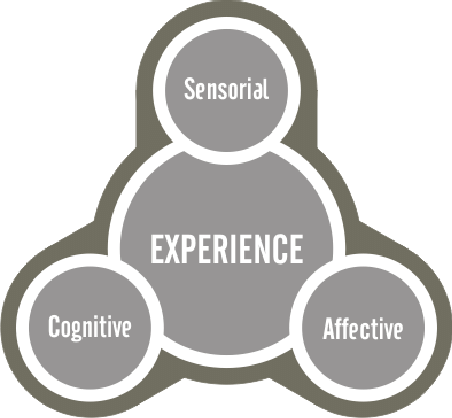
    To take this forward, Experience needs three factors.

    In this sense, free will just seems to be a given.

    But is it? When my mind is at its quietest – for example, drinking coffee early in the morning, before the four-year-old wakes up – things are liable to feel different. In such moments of relaxed concentration, it seems clear to me that my intentions and choices, like all my other thoughts and emotions, arise unbidden in my awareness. There’s no sense in which it feels like I’m their author. Why do I put down my coffee mug and head to the shower at the exact moment I do so? Because the intention to do so pops up, caused, no doubt, by all sorts of activity in my brain – but activity that lies outside my understanding, let alone my command. And it’s exactly the same when it comes to those weightier decisions that seem to express something profound about the kind of person I am: whether to attend the funeral of a certain relative, say, or which of two incompatible career opportunities to pursue. I can spend hours or even days engaged in what I tell myself is “reaching a decision” about those, when what I’m really doing, if I’m honest, is just vacillating between options – until at some unpredictable moment, or when an external deadline forces the issue, the decision to commit to one path or another simply arises.

    This is what Harris means when he declares that, on close inspection, it’s not merely that free will is an illusion, but that the illusion of free will is itself an illusion: watch yourself closely, and you don’t even seem to be free. “If one pays sufficient attention,” he told me by email, “one can notice that there’s no subject in the middle of experience – there is only experience. And everything we experience simply arises on its own.”

    https://www.theguardian.com/news/2021/apr/27/the-clockwork-universe-is-free-will-an-illusion?ref=refind

    So, Experiencer, called Subject in Philosophy needs things to Experience ,to know, what is to be Experienced .The Flip side is That which is to be experienced is needed to prove the Subject or The Experiencer! It is not enough if we have the Subject, the Experiencer and thing to by Experienced, called Object.We need both to be connected.That is, it is not enough to Experience if we have the Subject ( Experiencer) and the thing to be Experienced ( Object). If we have ,say a Pen in the adjacent room which we can not see ,of which we have not been informed earlier, then despite one( Subject) and the Pen(Object) being present, we can not Perceive the Pen.The subject and object are to be connected , relate to each other.

    When we perceive, initially, we have three things present, which we can be sure of. That is , Subject , Object and the Connection.Once you get connected to the Object,you Experience the Object.That is you are no longer aware of the object on the sense that you don’t look for it and you have immersed in it by way of experiencing it whether pleasant or unpleasant.Only when you come out of the state of Experiencing , you are aware of yourself, what you have experienced.At the point of Experience itself,Nothing Remains but Experience.

    This is the Goal, Purpose of Yoga.

    This Experience at the Macro , Universal Cognition, is Realisation.

    How Individual Experience becomes Universal Cognition?

    Article to follow.

    Featured image of Cognition is from researchgate

  • Read More Slow Down Aging, Brain Decline Study

    As the adage goes the more use the fresh things, remain, do not read naughty meaning into this.

    The more we use the Brain in Cognitive functions.like reading, Memory slows down the Agung process, prevents the decline of Brain, helps prevent the onset of Alzheimer’s Disease..

    The Brain.
    Image source.mi2.g.com

    “Habitual participation in cognitively stimulating pursuits over a lifetime might substantially increase the efficiency of some cognitive systems,” writes a research team led by neuropsychologist Robert Wilson of Chicago’s Rush University Medical Center. This efficiency apparently counteracts the often-devastating effects of nervous system diseases

    Tests were given to measure a variety of skills, including long-term memoryworking memory, and visuospatial ability. Finally, within hours after their deaths, their brains were removed and examined for evidence of various diseases.

    The key result: “More frequent cognitive activity can counterbalance the cognitive loss associated with neuropathological conditions.”

    In the words of an accompanying editorial, the researchers found that “individuals with high lifetime levels of cognitive activity show slower decline, despite the presence of underlying pathology.”

    “Interestingly,” the editorial continues, “both more frequent current and early-life engagement in cognitively stimulating activities were shown to independently slow late-life cognitive decline.” This suggests it’s never too late to start, but earlier is better.

    A study published last year also reported a link between mental activity and old-age neurological disorders. It found people who were mentally active throughout their lives had, in their later years, lower levels of beta-amyloids—clumps of proteins that build up into the plaques associated with Alzheimer’s Disease.”

    Source.

    http://rockmelt.com/feed/FPhTNyo4KPD79bQPLvWDqGM8CGT?tile=R9DkaEiUySrDNCqfe4II3tm71fc&user=2Xgzk0wihd4rfp3BcGawRZ&coupon=c5whr3b

  • We Rationalize, Not Reason

    'Brain'
    The Brain

    I came across an interesting Article which states that we Rationalize and not Reason.

    To me it seems correct.

    When we choose anything, we, if we reflect, rationalize.

    We are driven by instincts, Feelings and Emotions.Any choice depends on and is driven by these.

    As we have mores and Social respectability to consider, we rationalize, not Reason while making a choice.

    We rationalize our decisions, consciously later, more to ourselves .

    The Organism chooses what is Right for its survival.

    We are driven to decisions, that’s all.

    All of us have Dispositions and these are not determined by us.

    The Dispositions determine our Attitude, Attitudes our Desires and Desire actions.

    This has ben brought forth in the Bhagavad Gita.

    All of us are born with Three Gunas(loosely translated,Dispositions)

    These interact with each other constantly and we behave.

    There is no such thing as inactivity for all of us ar driven by thees Gunas.

    So any decision that we take is purely instinctive and we justify it later(an euphemism for Rationalising)

    This we call as Reason,

    Theer is interesting sequel for this in The Bhagavad Gita.

    Lord Krishna advises Arjuna to fight for Honour, Wealth and Name.

    He later says that is always better to do one’s Duty;yet the results his actions are not in his hands alone;even if he does not do it, things will happen;attachment breeds anger when thwarted; anger breeds indecision, indecision leads to the Destruction of the Intellect and destruction of the Intellect ensures the Destruction of Man;then adds it is ideal that one Realises Reality forgoing every action , nay, the resolve to get the results;the best way is through Knowledge,then Surrender to God.

    Confusing, isn’t it?

    Arjuna tells Krishna that since all actions be-get results because of which one is born and has to go through the pain in Life, he will not perform any action;hence no results and no birth and no pain.

    Krishna tells him that no such activity is possible as we are driven by Gunas and He, the Supreme Lord that He is, after having been born. is not beyond action.

    And adds a punch line ‘Is there anything in the world that is not Mine and is there any thing I need?

    Still I perform action, because I can not help it’ Bhagavad Gita -Chapter 2)

    Story;

    Jonathan Haidt’s new book makes a well-reasoned case against reason. It persuades that the power of persuasion is overrated. It opens minds to the near universality of closed minds. Does Haidt’s convincing theory affirm or rebut his argument? My brain hurts.

    Western philosophy has been worshipping reason and distrusting the passions for thousands of years,” the University of Virginia psychology professor writes. “There’s a direct line running from Plato through Immanuel Kant to Lawrence Kohlberg. I’ll refer to this worshipful attitude throughout this book as the rationalist delusion. I call it a delusion because when a group of people make something sacred, the members of the cult lose the ability to think clearly about it.”

    Intellectuals confuse a more ideal state of affairs for the way things actually are—reason is more often than not rationalization, a justification for ideas developed not in the brain but in the gut. Haidt’s antecedent here is David Hume. Reason plays servant to man’s whims. Man forces the facts to fit his beliefs rather than the reverse. It’s no wonder that ideas that work marvelously in our minds fail miserably when applied to the world outside our heads. How a theory makes us feel, not whether it works, is the most important prerequisite for our acceptance of it.

    Were athletes to seek rule by the strong or models rule by the beautiful, intellectuals would clearly see naked self-interest masked as reason. But Haidt finds other smart people to be no more reasonable in their use of reason. Intellectuals seek rule by the intelligent. The Righteous Mind explains that the rationalist delusion is

    the idea that reasoning is our most noble attribute, one that makes us like the gods (for Plato) or that brings us beyond the ‘delusion’ of believing in gods (for the New Atheists). The rationalist delusion is not just a claim about human nature. It’s also a claim that the rational caste (philosophers or scientists) should have more power, and it usually comes along with a utopian program for raising more rational children.

    Intelligence is a virtue. So are prudence, integrity, humility, and courage. People who possess the first trait, but lack the latter ones, tend to downplay the importance of their weaknesses and inflate the importance of their strength. The limitations of intelligence are never as glaring as when highbrains advocate intelligence as the panacea for everything. But it is not the intelligence of Haidt’s fellow liberals that he indicts. It’s their morals.

    Haidt helped devise a questionnaire that gauged moral views by eliciting test-taker responses to statements in five categories: care/harm, fairness/cheating, loyalty/betrayal, authority/subversion, and sanctity/degradation. Haidt likens these moral groupings to the five taste receptors of the tongue (sweet, sour, bitter, savory, salty). It turns out that liberal receptors failed to engage on questions of loyalty, authority, and sanctity. Conservatives, on the other hand, reacted to all five moral categories more or less equally. Haidt’s conclusion is that his fellow liberals are morally tone deaf. “Republicans understand moral psychology,” Haidt concedes. “Democrats don’t.”

    It gets worse for liberals. Haidt and colleagues asked their subjects to answer their questionnaire as if they were liberals, as if they were conservatives, and as themselves. Liberals don’t know their political adversaries nearly as well as the right knows them. “The results were clear and consistent. Moderates and conservatives were most accurate in their predictions, whether they were pretending to be liberals or conservatives. Liberals were the least accurate, especially those who described themselves as ‘very liberal.’ The biggest errors in the whole study came when liberals answered the Care and Fairness questions while pretending to be conservatives.” Liberals see caricatures when they see conservatives.

    http://www.theamericanconservative.com/articles/the-psychology-of-partisanship/


  • Memory doesn’t fade with age.


    Memory doesn’t necessarily fade with age. New research shows the ability to recognize and remember faces is sharpest in our 30s.

    Experts say people are best at many mental tasks, such as recalling names and quickly processing new information, in their 20s.

    But a group of researchers has found that the ability to recognize faces may take more time to mature. Laura Germine, a graduate student in the psychology department at Harvard University in Boston, Massachusetts, bases the conclusion on a study involving some 44,000 volunteers between the ages of 10 and 70. They were asked, online, to memorize and identify unfamiliar faces.

    Germine says the recognition success rate got better with age, up to a point. “What we found is not only did it really change in adolescence, but it actually changed in early adulthood as well.  In fact, the ability didn’t peak until the early 30s, which was actually very surprising for us.”

    http://www.voanews.com/english/news/health/Memory-Doesnt-Necessarily-Fade-with-Age–112863689.html

  • ART of learning-Study and Comments.

    Too much intervention by people other than students and Teachers have made learning a complicated one.
    Fundamentals are.
    Read where produces the best result.You do not need others to tell you,including psychologists, where to read.Children know it best.Ask them to study well.Do not impose your ideas, for all you know your ideas may be wrong or the idea may not suit the child.Also do not set ‘long term goals’ and short-term goals.it only frustrates the child.
    Do not compare the child with siblings and other children
    There are some who can read well amid disturbance and noise;some in solitude.
    But it is a fact Classical music improves concentration.In some cases loud rap music also does the job.
    Some learn by part learning,some by whole learning,some by key words,some by mnemonics.The learner knows which is good for him.If not we can suggest the alternates and ask him/her to check all of these and choose what suits him/her.
    Teaching with visuals ,anecdotes,actions all these improve learning process.
    Also reading in the early hours of the day between 430am to 6am is the most effective in terms of retentive memory
    Food that you take also has an important role to play
    That food which is stale,reheated, too spicy,oily does not help learning.Moderate tastes with less oil and fresh cooked home food is the best( you may check my  blog filed under Health)
    Teachers are to be a breed apart , for teaching is an art born out of passion, dedication and love of the children.Unless teachers have these attributes they are unfit to be teachers.Most important is the atmosphere at home-it must be calm and composed with out adults bickering like children in front of children.

    Story:

    As students around the country go back to school and hit the books, scientists are offering new insights into the best ways to study and learn, reports Benedict Carey in the Science Times Mind column. He writes:

    In recent years, cognitive scientists have shown that a few simple techniques can reliably improve what matters most: how much a student learns from studying. The findings can help anyone, from a fourth grader doing long division to a retiree taking on a new language. But they directly contradict much of the common wisdom about good study habits, and they have not caught on.

    For instance, instead of sticking to one study location, simply alternating the room where a person studies improves retention. So does studying distinct but related skills or concepts in one sitting, rather than focusing intensely on a single thing.

    “We have known these principles for some time, and it’s intriguing that schools don’t pick them up, or that people don’t learn them by trial and error,” said Robert A. Bjork, a psychologist at the University of California, Los Angeles. “Instead, we walk around with all sorts of unexamined beliefs about what works that are mistaken.”

    http://well.blogs.nytimes.com/2010/09/06/for-young-and-old-the-best-ways-to-study/?apage=3#comments

    AfrikaansAlbanianArabicBelarusianBulgarianCatalanChineseCroatianCzechDanishDetect languageDutchEnglishEstonianFilipinoFinnishFrenchGalicianGermanGreekHaitian Creole ALPHAHebrewHindiHungarianIcelandicIndonesianIrishItalianJapaneseKoreanLatvianLithuanianMacedonianMalayMalteseNorwegianPersianPolishPortugueseRomanianRussianSerbianSlovakSlovenianSpanishSwahiliSwedishThaiTurkishUkrainianVietnameseWelshYiddishAfrikaansAlbanianArabicBelarusianBulgarianCatalanChineseCroatianCzechDanishDutchEnglishEstonianFilipinoFinnishFrenchGalicianGermanGreekHaitian Creole ALPHAHebrewHindiHungarianIcelandicIndonesianIrishItalianJapaneseKoreanLatvianLithuanianMacedonianMalayMalteseNorwegianPersianPolishPortugueseRomanianRussianSerbianSlovakSlovenianSpanishSwahiliSwedishThaiTurkishUkrainianVietnameseWelshYiddish

    Detect language » Hungarian
    AfrikaansAlbanianArabicBelarusianBulgarianCatalanChineseCroatianCzechDanishDetect languageDutchEnglishEstonianFilipinoFinnishFrenchGalicianGermanGreekHaitian Creole ALPHAHebrewHindiHungarianIcelandicIndonesianIrishItalianJapaneseKoreanLatvianLithuanianMacedonianMalayMalteseNorwegianPersianPolishPortugueseRomanianRussianSerbianSlovakSlovenianSpanishSwahiliSwedishThaiTurkishUkrainianVietnameseWelshYiddishAfrikaansAlbanianArabicBelarusianBulgarianCatalanChineseCroatianCzechDanishDutchEnglishEstonianFilipinoFinnishFrenchGalicianGermanGreekHaitian Creole ALPHAHebrewHindiHungarianIcelandicIndonesianIrishItalianJapaneseKoreanLatvianLithuanianMacedonianMalayMalteseNorwegianPersianPolishPortugueseRomanianRussianSerbianSlovakSlovenianSpanishSwahiliSwedishThaiTurkishUkrainianVietnameseWelshYiddish

    Detect language » Hungarian