Tag: Perception

  • Prana Nadis Yoga Link  Explained

    Prana Nadis Yoga Link Explained

    There is a lot of information on Nadis, as used Indian philosophy.There is Nadi associated with Patanjali Yoga,Prana,Hatha Yoga,Vaasi Yoga and Shatkarma. It is also mentioned in connection with Nadi Reading in Future prediction.

    And all this is connected to Self Realisation.And Prana.Let us try to understand the concept on detail.

    Indian philosophy is based on experience and such experiences as are found have led seekers towards Realisation of Brahman,Reality are compiled and presented in the Form of Vedas and also through as systems of philosophy.

    Vedas are called as Sabda pramana, Testimony. It is a tool of knowledge. There are many sources of knowledge,Perception, Inference,Comparison,Testimony, Intuition.Of these, Vedas come under Testimony. In life , one has to depend on Testimony of others as a source of knowledge at some point of time. Vedas are such sources that provide you the Testimonies of seekers of Reality. You can follow them if they suit you.It is your choice.

    Some prefer other sources of knowledge like Perception and other sources listed above. In experience, one finds one single source of knowledge does not seem to help in Self Realisation . More than one source of knowledge is needed.

    All these relate to things that are external. We have our senses through which we come to know, experience. There are five sense organs,Eyes,Ears,Nose,Mouth,Skin. Each of these contribute one aspect of experience.Nose, Smell; Mouth,speech;Taste;Eyes,seeing;Skin, Touch .Ears, hearing.These Five are called Karmendriya, Organs of Action. In addition, we have five Organs of knowledge, corresponding to each Karmendriya.These Five are called Gnanendriyas.I shall devote an article on the difference between Karmendriya and Gnanendriya.

    Knowledge Is out of the interaction between the senses and what we find out of ourselves,out in the world. These are known to us through the tools of knowledge like Perception…

    How correct, incorrect or How Right or Wrong this knowledge is another matter. That forms a separate topic.

    Assume that such knowledge is true. We shall proceed Such knowledge as we gain through the senses and the tools of knowledge we have, of things out there are ‘Is’.

    Such knowledge is received by our Brain- Mind – Intellect – Chitha ( it is on a higher plane than Intellect,which we call Buddhi). Brian received sensory inputs and it does not add any judgement to what has been received.It is just like CPU, receives input without starting to process . Mind connects the dots and forms One full picture of Information.Then Intellect decides whether the information is factual : Right or Wrong. That is, Intellect passes Factual,Value judgements. The particular interpretation of same sensory inputs by each one of us differently is decided by Chitha. Chitha is directed by dispositions of individuals and dispositions are, in turn, influenced by Karmic particles,which are the results of actions performed by us,either physically,mentally, and by words. Or by all the three.

    These three processes are linked though a single factor. It is called Prana,Life Energy.Prana is the life force running through every cell of our body. It is Life. Difficult to separate one from another so much so both are considered to be the same.

    Subtle Boy showing three Nadis A simplified view of the subtle body of Indian philosophy, showing the three major nadis or channels, the Ida (B), Sushumna (C), and Pingala (D), which run vertically in the body.

    This Prana is considered to be the Individual Soil. Some philosophers differ on this, especially Adi Shankaracharya.

    This Prana flows in the body as Nadis.It is also considered as an attribute of Prana.With this background, let us look at Nadis.

    Nadis are generally quantified at 72,000 in Human body. ( Chidambaram Nataraja temple roof had 72000 ‘

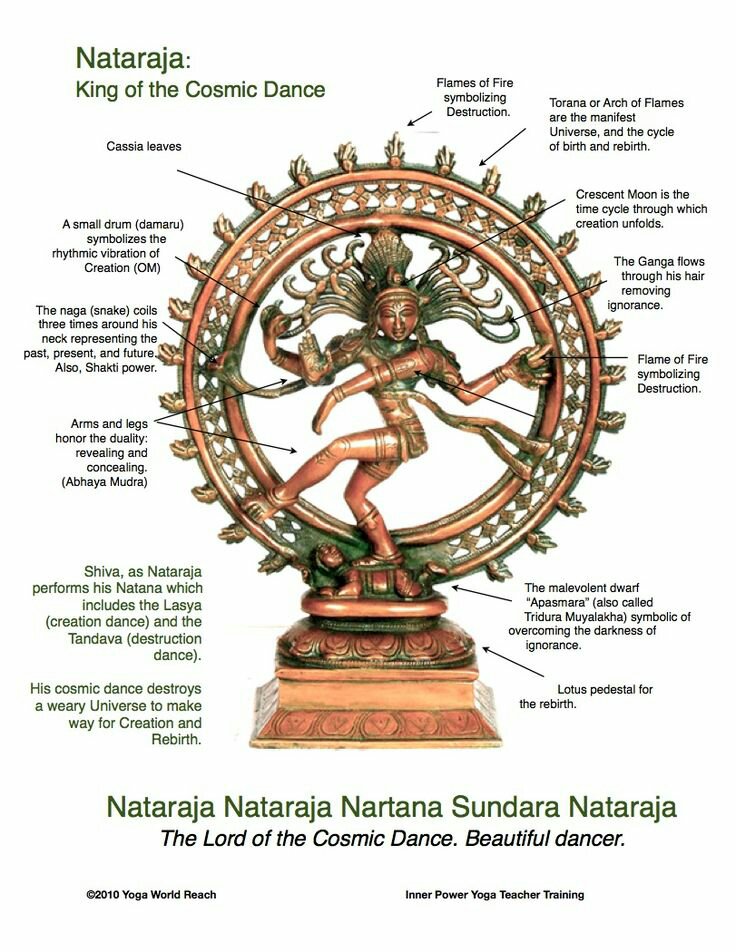
    The sanctum sanctorum housing the Nataraja statue is called the Chit Sabha or Ponnambalam. The five pillars of the Chit Sabha indicates the five senses. The roof of this Sabha contains 9 kalasas depicting the 9 dwaras (gateways) in the human body (namely 2 eyes, 2 nostrils, 2 ears, mouth, rectum, genitals). The roof has 22600 tiles denoting the number of times a person can breathe in a day. The tiles are fixed to the roof using 72000 nails depicting the number of nadis (

    Chidambaram Nataraja temple human body

    ‘Nadi is an important concept in Hindu philosophy, mentioned and described in the sources, some as much as 3,000 years old. Human body is claimed to have up to hundreds-of-thousands and even millions. The Shiva Samhita treatise on yoga states, for example, that out of 350,000 nadis 14 are particularly important, and among them, the three just mentioned are the three most vital.The three principal nadis are idapingala, and sushumnaIda (इडा, iḍā “comfort”) lies to the left of the spine, whereas pingala (पिङ्गल, piṅgala “orange”, “tawny”, “golden”, “solar”) is to the right side of the spine, mirroring the ida. Sushumna (सुषुम्णा, suṣumṇā “very gracious”, “kind”) runs along the spinal cord in the center, through the seven chakras. When the channels are unblocked by the action of yoga, the energy of kundalini uncoils and rises up the sushumna from the base of the spine.

    The nadis play a role in yoga, as many yogic practices, including shatkarmas, mudras and pranayama, are intended to open and unblock the nadis. The ultimate aim of some yogic practices are to direct prana into the sushumna nadi specifically, enabling kundalini to rise, and thus bring about moksha, or liberation.’Source . Wikipedia

    More to follow on Nadis,their attributes and functions.

    Multi Lingual Blog English Tamil Kannada Hindi Indian History Verified Vedic Thoughts Hinduism around The World Tamils History

  • Nothing Remains But  Universal Cognition

    Nothing Remains But Universal Cognition

    What is Experience?

    We see, hear or in short Perceive. There is A stimulus. around us ,at any given point of time, there are N number of Stimulii.We respond to a particular Stimuli.Why we respond to a particular Stimuli is not what this article is About. That is a very complex issue,which I shall address later.Here let’s look at what Experience is.

    Early this morning , I went through an article in the Guardian about Free Will and recent scientific view on it. I shall,though I have written in Free Will, be writing taking reference to the Guardian article.

    I remembered that I had written an article on Experience earlier . I found the article I had written in 2014. I have provided excerpts from it here.

    This post is not about what went on with us friends on this issue.


    But what happens to us and our Life’s experiences over a period of time.


    I remember some one to be pretty without recollecting her face( my friend gave her name).


    Similarly I remember some of the most painful moments in my Life like my mother’s death, first wife’s death,death of my brother’s grand child in its mother’s hand, which I took away from her hands to prevent my brother’s daughter feeling sad about the fact the child had died in her hands;


    I recall my most pleasant moments in my career but not the worst problems.


    Even the pain I recall has dimmed but at times I am overtaken by it.


    But one thing is clear.


    My reaction to these issues, now, is not very passionate .


    They pass through my mind’s eye as  fleeting images.


    I am not affected by them.


    What is an incident becomes an experience when we react.


    We become passionate, disturbed,anxious and worry so much as if Life would end there.


    It does not seem to be so.


    What has been an experience becomes nothing more than a fading memory.


    I do not get involved, though some of these incidents appeared ,at that time, to affect my life radically.


    On hindsight it does not seem so mentally.


    Another curious fact is that most insignificant things get recalled but not what I thought was very important.


    Like a game played on the street in childhood, a meal with a stranger in a Train, the hotel where I stayed in a town…..


    Is Life all but a series of fleeting impressions?


    Seems so, to me.

    https://ramanisblog.in/2014/09/28/incidents-experience-impressions-life/

    To take this forward, Experience needs three factors.

    In this sense, free will just seems to be a given.

    But is it? When my mind is at its quietest – for example, drinking coffee early in the morning, before the four-year-old wakes up – things are liable to feel different. In such moments of relaxed concentration, it seems clear to me that my intentions and choices, like all my other thoughts and emotions, arise unbidden in my awareness. There’s no sense in which it feels like I’m their author. Why do I put down my coffee mug and head to the shower at the exact moment I do so? Because the intention to do so pops up, caused, no doubt, by all sorts of activity in my brain – but activity that lies outside my understanding, let alone my command. And it’s exactly the same when it comes to those weightier decisions that seem to express something profound about the kind of person I am: whether to attend the funeral of a certain relative, say, or which of two incompatible career opportunities to pursue. I can spend hours or even days engaged in what I tell myself is “reaching a decision” about those, when what I’m really doing, if I’m honest, is just vacillating between options – until at some unpredictable moment, or when an external deadline forces the issue, the decision to commit to one path or another simply arises.

    This is what Harris means when he declares that, on close inspection, it’s not merely that free will is an illusion, but that the illusion of free will is itself an illusion: watch yourself closely, and you don’t even seem to be free. “If one pays sufficient attention,” he told me by email, “one can notice that there’s no subject in the middle of experience – there is only experience. And everything we experience simply arises on its own.”

    https://www.theguardian.com/news/2021/apr/27/the-clockwork-universe-is-free-will-an-illusion?ref=refind

    So, Experiencer, called Subject in Philosophy needs things to Experience ,to know, what is to be Experienced .The Flip side is That which is to be experienced is needed to prove the Subject or The Experiencer! It is not enough if we have the Subject, the Experiencer and thing to by Experienced, called Object.We need both to be connected.That is, it is not enough to Experience if we have the Subject ( Experiencer) and the thing to be Experienced ( Object). If we have ,say a Pen in the adjacent room which we can not see ,of which we have not been informed earlier, then despite one( Subject) and the Pen(Object) being present, we can not Perceive the Pen.The subject and object are to be connected , relate to each other.

    When we perceive, initially, we have three things present, which we can be sure of. That is , Subject , Object and the Connection.Once you get connected to the Object,you Experience the Object.That is you are no longer aware of the object on the sense that you don’t look for it and you have immersed in it by way of experiencing it whether pleasant or unpleasant.Only when you come out of the state of Experiencing , you are aware of yourself, what you have experienced.At the point of Experience itself,Nothing Remains but Experience.

    This is the Goal, Purpose of Yoga.

    This Experience at the Macro , Universal Cognition, is Realisation.

    How Individual Experience becomes Universal Cognition?

    Article to follow.

    Featured image of Cognition is from researchgate

  • What Is Mantra, Definition Explanation

    Salvation,Self Realization is made possible by disciplining the Mind.

    Unlike western philosophy, Indian philosophy considers Mind as an organ like Eyes,Ears,Nose,Mouth and Body( Panchendriyas,the Five Organs).

    The difference between Mind and other organs is that Mind is Subtler and more powerful than the other organs.

    It controls other organs.

    To realize Self or Reality,Mind has to be stilled,by a process of regulation.

    What we perceive initially,when we come into contact with objects, is a jumble of various inputs conveyed to us by various organs like Eyes,Ears…

    This reaches the Mind as unconnected stimulii

    At this level,Mind just collects information , without collating them,categorising them.

    The next level of Mind,Buddhi collates the information,categorises them,tags them as correct or incorrect from a factual point of view and also passed value judgements like Good or Bad.

    Why a particular event is designated as Good or Bad,or why amidst multitudes of stimulii being present around us and are being received by Mind as raw information,only a specific event or fact is taken cognisance of,forms a different and exhaustive study.

    To put it simply,Buddhi selects event/s at any given point of time,as directed by Chitta,the higher plane,which exists,to understand the concept,one may say,than the Mind.

    Consciousness ,one of the Attributes of the Soul is Realized by stilling the projections made by the Chitta when it comes into contact with objects of senses.

    One of the methods to regulate the Mind is Mantra.

    • मननात्‌ त्रायते इति मंत्र: ।’ manan means bringing only one thought to one’s mind repeatedly and trayate means to protect. In other words mantra refers to that which when thought of repeatedly protects oneself and also that which protects one from the mind or that which helps to bring about the dissolution of the mind. At a further stage Mantrayoga also means that state in which contemplation (manan) stops during chanting, there is dissolution of the mind, cessation of the mantra, dissolution of the triad (triputi) that is, of the mantra, the one chanting the mantra and the act of chanting and the seeker attains the state of dissolution (layavastha).

    • B.Mantra refers to the collection of letters which assists in acquisition of the favourable and the vanquishing of obstacles. The word mantra is derived from mantri, a Sanskrut word which means secret speeches (guhyabhashane). It has various meanings like acquisition of secret objectives, acquisition of secret meanings, invoking a deity for a specific cause, etc. Philosophically it means that by contemplation (manan) of which, knowledge about the oneness of the entire world, that is the embodied soul (jiva), Brahman and the universe is bestowed upon oneself and that by which the embodied soul acquires Liberation (Mukti) from worldly bondages and <span class=”glossary” title=”Practicing Dharma i.e. Dharmacharan”>Righteousness (Dharma), wealth (artha) and desire (kama) are achieved in this world.

    • C. “मंत्रा: मननात्‌ ।” means a mantra is that on which one contemplates (manan) and from which one acquires the knowledge about sacrificial fires (yadnya), God and the soul (Nirukta 7.12).

    • D. मकारो मननं प्राह त्रकारस्त्राणमुच्‍यते ।
      मननत्राणसंयुक्‍तो मंत्र इत्‍यभिधीयते ।।

      The meaning: In the word mantrama’ (म) refers to contemplation (manan) and ‘tra’ (त्र) to protection (tran). Thus that which consists of contemplation (manan) and protection is called a mantra.’ (1)

    • E. The word mantra is derived from ‘man’ (मन्‌) and ‘tra’ (त्र). ‘Man’ refers to the mind and ‘tra’ to vital energy (pran). That which is done with the fusion of the mind and vital energy is called a mantra.

    • F. According to the science of Tantra: ‘According to the sorcerers (tantriks) sound (nad or dhvani) being the fundamental frequency of creation appears foremost in the origin of the universe. Sound is a subtle part of the divine energy (chit shakti) of the embodied soul (jiva). Just as sound waves are produced in the atmosphere due to air currents, so also in the body of the embodied soul sound waves are generated due to flow of a type of vital energy (pranvayu). A word is generated from this sound. Later, a mantra originates from it. The energy contained in a mantra is beyond one’s imagination.'(Source. https://www.hindujagruti.org/hinduism/knowledge/article/what-is-a-bijamantra.html#1https://www.hindujagruti.org/hinduism/knowledge/article/what-is-a-bijamantra.html#1)

      Reality is One,but it appears to be many.(Advaita)

    • The world of Name and Form has only relative existence.
    • Once Knowledge dawns, differentiation disappears.

    When one perceives,three things are needed.

    The Perceiver,

    The Perceived and the process of

    Perception.

    By Mantra,one can discipline the Mind and the differentiation between the Three,The Perceiver,Perceived and the process of Perception is dissolved and one becomes a part of Reality.

    As an empirical spinoff,one gets his wishes granted and obstacles removed.

    Will write on the effects not Mantras,the process and composition.

  • Happiness Success And You

    Success and Happiness are two different things.

    A child enjoys
    Happy Child

    Those who are successful need not be happy and the Happy need not be successful.
    Success is measured by the others or our conception of what others consider us to be a Success.
    We think we are happy with success because we hear people talking about our ‘Success”

    But not all say you are successful in an endeavor, profession.

    Some deride because of it if not brushing it aside.

    One feels Happy when one hears talk about one’s success and becomes depressed when some one ignores it .

    And we set ourselves a Goal in Life, in the present days,at success in what is being perceived by the others as Success.

    If some group says you are a Success when  you get a five figure Income, own a house, Beautiful wife, become CEO of a Company, Star or a Public personality.

    Till some one comes out with another formula.

    All these are subject to change as perceptions of people starts changing on things and issues.

    There used to be a time in India, that getting B.Com Degree, secure a Bank employment you are a success.

    Then came MBA.

    Now it is B.E. in Computers and an IT Job.

    You were a success if you ha a two-wheeler.

    Now a Car!

    As values change s is your success target.

    And our own definition of Success changes from one point if time to another.

    As against t this, Happiness does not require the others.

    Look at a toddler.

    Its smile of Happiness captivates you, so natural

    Why?

    Because a Child knows to be Happy with itself.

    You set it for your self.

    Once set, it does not generally change.

    Here your happiness does not get affected or change because of the changing perception of you by the others.

    You are within You.

    You are contented.

    Ultimately you are always Alone( not lonely)

    You are with you.

    Unfortunately we spend the least time with ourselves, never pause to ask what we want to be happy.

    Check.

    Yuu would find that it needs only You and nothing else.

    Enhanced by Zemanta