Tag: Krishna

  • Bhagavad Gita In Egyptian Pyramid  NOW With Private Collector?

    Bhagavad Gita In Egyptian Pyramid NOW With Private Collector?

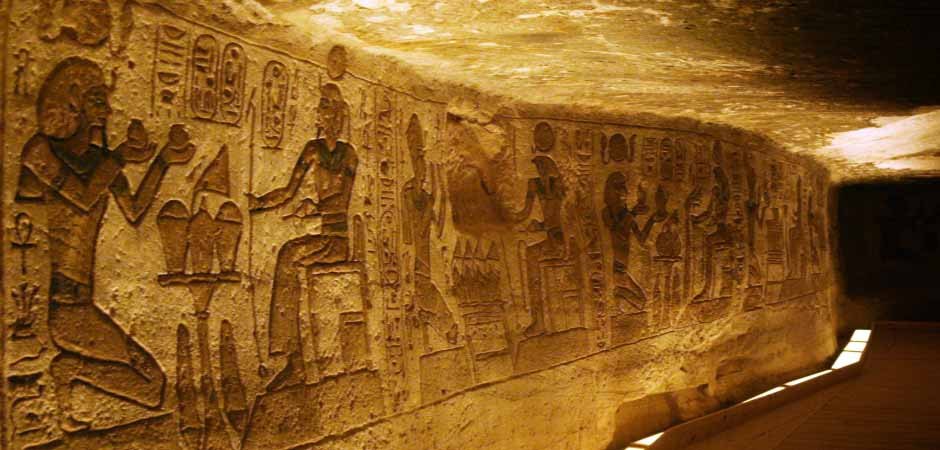
    I wrote an article on 8 December, 2014, Appropriate Bhagavad Gita Verse in Egyptian Pyramid.

    I received information as comment from a reader as to where the tomb is.

    The comment.

    JessicaEDIT 0 0 Rate This

    Mr. Ramani,
    Its Pyramid 2 in Egypt but the tablet was immediately taken to British Museum and no photographs can be found online)
    # During my visit to UK in April 2019, I visited the Museum to check the information contained in this article.

    I was informed by the curator that the artifact was returned to the private collector.

    The curator informed me that he could not divulge information about the collector.

    In Leeds Musuem, I saw a Third Century BC Vishnu Panchaloka Idol.

    The curator was reluctant to share additional information except the date.

    Screenshot of Original source Navbharat times. Screeenshot
    Screenshot from Navbharat Times 18/04//1967

    In one of the Pyramids, dating back to 3000 BC, a verse, from the second chapter of the Bhagavad Gita was found inscribed.

    Here it is:

    vasanvsi jeernani yatha vihaya, navani
    ghrunnati naro parani

    – Nava Bharat Times, 18-4-1967

    # During my visit to UK in April 2019, I visited the Museum to check the information contained in this article.

    I was informed by the curator that the artifact was returned to the private collector.

    The curator informed me that he could not divulge information about the collector.

    In Leeds Musuem, I saw a Third Century BC Vishnu Panchaloka Idol.

    The curator was reluctant to share additional information except the date.

    I received information as comment from a reader as to where the tomb is.

    This verse is from The Bhagavd Gita Chapter 2,verse 22.

    The text and translation.

    vasamsi jirnani yatha vihaya
    navani grhnati naro ‘parani
    tatha sarirani vihaya jirnany
    anyani samyati navani dehi

    vasamsi–garments; jirnani–old and worn out; yatha–as it is; vihaya–giving up; navani–new garments; grhnati–does accept; narah–a man; aparani–other; tatha–in the same way; sarirani–bodies; vihaya–giving up; jirnani–old and useless; anyani–different; samyati–verily accepts; navani–new sets; dehi–the embodied.

    As a person puts on new garments, giving up old ones, similarly, the soul accepts new material bodies, giving up the old and useless ones.

    How appropriate for a Burial Tomb!

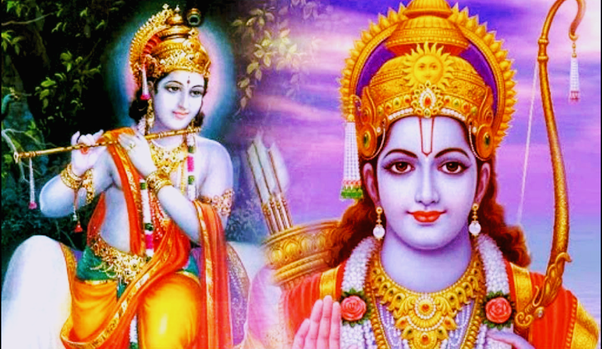
  • Sri Rama is Krishna’s Paternal Cousin

    Sri Rama is Krishna’s Paternal Cousin

    History of India starts with two Dynasties,both had sprung from Vaiwaswatha Manu.The Suryavansh,the Solar Dynasty was founded by Manu’s son, Ikshvaku , while the Chandravansh Lunar Dynasty was by Ila, daughter of Manu.So , Solar and Lunar dynasties are related by blood.

    There is then the Yadava Dynasty, to which Sri Krishna belongs.The Dynasty is named after Yadu. ‘Yadu is one of the five Indian tribes (panchajanapanchakrishtya or panchamanusha) mentioned in the Rig Veda. Krishna is the descendant of Yadu from Vedic tribe’https://en.m.wikipedia.org/wiki/Yadu

    An interesting fact is that Sri Rama’s ancestor, Mandhata was married to a Yadu princess.

    Krishna’s Family Tree

    Mandhatri or Mandhata (Sanskrit: मान्धातृ, Māndhātṛ), in Hindu mythology, was an Ikshvaku dynasty king and son of Yuvanashva.[1] He married Bindumati Chaitrarathi, daughter of Yadava king Shashabindu and granddaughter of Chitraratha.[2] Source. Wikipedia Mandhatri.

    Thus,Sri Krishna is related to Sri Rama . Krishna’s Ancestor Chaitravathi was married to Mandhata,Sri Rama’s Ancestor.

    Thus Sri Rama is related to Krishna as Krishna’s Great Aunt’s descendant ( removed by Thirty Seven generations.

  • Krishna Father-in-law of Yudhishthir’s Daughter

    Krishna Father-in-law of Yudhishthir’s Daughter

    When one starts delving into Indian Purana, one is struck by the wealth of details. Many of us are unaware of a lot of information as we do not read them. Another point is that knowing the details ,one is able to verify various facts mentioned in the Puranas and Ithihasas, Ramayana and Mahabharata.Not only this. This information helps one to verify the dates of persons and events mentioned in Indian history. It helps me to fix Kingdom’s boundaries and landmass. And ,of course, the Time Frame.Of course there is this paradox of long stretches of Time and I have addressed this issue in my article Time is Cyclic and not Linear.

    While trying to check the Time frame of Ramayana and Mahabharata and the connection between the various persona in both the Epics, I had come across a curious information.

    Lord Krishna is the Father in law of Yudhishtra’ s son.

    Yudhishthira had two wives, Draupadi and Devika.Draupadi was the common wife of all the Pandavas, and she bore children for each of the 5. Draupadi bore Yudhishthira a son, Prativindhya and a daughter, Suthanu.Yudhishthira married Devika in a self-choice marriage ceremony, arranged by her father Govasena, who was the king of Sivi Kingdom. They had a son, Yaudheya. Yaudheya was also the name of the son of Prativindhya. Suthanu was married to the son of Lord Krishna and Satyabhama, Bhanu. Reference and citation. https://en.m.wikipedia.org/wiki/Yudhishthira#Marriage_and_children

  • Was Lord Krishna an Irresponsible Father?

    I have received a comment on Lord Krishna being an irresponsible father, asking me for an explanation.

    I have reproduced the comment towards the close of the article.

    The comment has two parts.

    One,Lord Krishna being an irresponsible father

    and

    Upbringing of children today.

    Hinduism is a practical Religion.

    It understands obligations and also the limitations of people in changing others,even it be they are of your Blood.

    Before understanding the behaviour of Lord Rama, Krishna,one must understand the approach of Hinduism on Patenting.

    It does not accord Parenting any special place or does it ignore it.

    It treats as a routine affair of Life and treats is such…..

    It considers all these as a Natural process and one need not be overly concerned about this as such.

    The Vedas offer basic Guide lines.

    1.Dharmachara, Righteous Conduct.

    Behavior should be according to the Dharma, Moral Principle.

    Parents are expected to behave he way they expect their children to behave towards them or others when they become adults.

    Parents are prohibited from using vulgar language or the use of harsh words in front of their children.

    2.Dharma Svagriha.

    Worship at Home.

    Parents should set an examples of following the Anushtaanas laid down for them in the Shastras.

    Parenting in Hinduism

    Beyond these guidelines one does not find anything much about Parenting in Hinduism.

    Apart from laying the foundation to be a good Human being,by setting a personal example and sending to a a teacher of impeccable character and learning,parents in Hinduism do not interfere.

    There is a saying in Dharma SASTRA.

    ‘Treat your son as

    A King till till Five,

    Treat as a slave till 15, and as

    A friend thereafter.

    Stages of Life in an individual is classified into four.

    Brahmacharya,the Celibate stage,

    Gruhastha, Married Stage,

    Vanaprastha,Stage of leaving the family affairs to the eldest and leaving for Forest to meditate on Reality with spouse if she desires, and

    Sanyasa,total Renunciation.

    Aware of the fact that one can not do much to change one’s Swabhava, Natural disposition,people limited themselves to what is possible and stopped at that.

    They did not set impossible goals in Life, including changing others,even it be wife or children.

    One performs as his Swabhava.

    This is reflected in ancient social life.

    Take Lord Ram’s case.

    He obeyed his parents unconditionally.

    He loved his relatives,be it Lakshman or Bharatha.

    He was accessible to his devotees, like Hanuman.

    He was harsh towards his enemies,Ravana.

    Yet the reason for all this is Dharma, loosely translated as Righteousness.

    Rama performed all these actions so long as they were in conformity with Dharma.

    The moment an instance is against Dharma,he would not hesitate to be against people whom he loves dearest.

    He sent a pregnant Sita Away from home, because there was a slur,though he knew it was false.

    He resorted to this step as as A King His Dharma is to set an example for His subjects however painful the act could be for him

    He fought against his sons and Hanuman as it would be a bad example as a King to have his children and devotee to raise against him , however justified they might have been from their standpoint.

    Once the issue was resolved he took them back.

    Dharma was the cardinal principle and not relationships.

    Relationships belong to Apara Vidya stage,lower Knowledge.

    Para Supreme knowledge is by following scriptures and Dharma.

    While Rama followed Karma Yoga,the Path of Knowledge thus,Lord Krishna belongs to another Higher level in performing Karma.

    Rama had a conscious goal while performing can action and was looking forward to its results being favourable to him, Krishna had no such thoughts.

    He performed an action because it ought to be performed, period.

    It did not matter to Krishna who ruled Among Pandavas or Kauravas,both being his relatives:he would not an inch of land from either of them or any other favour,not that Krishna needed anything from anyone!

    Yet he took the side of Pandavas for it was Dharma to be with just cause.

    Krishna practiced what he preached in Bhagavad-Gita.

    Renouncing the determination of the fruits of His actions.

    Karma Sankalpa Thyaga.

    Lord Rama was not in the same league,he practised one aspect of Karma Yoga.

    As to Samba.

    The incidents narrated are found in The Vishnu Purana as well.

    One additional information.

    After Samba was cursed, the Rishis came to Krishna and sought His forgiveness for their act in cursing his son,Samba.

    Krishna replied,

    ‘ Why do you worry?

    You have done your Dharma.

    I should reap the consequence of my action in Rama Avatar,of killing Vaali from Behind a tree.

    I should face the consequences for that.

    The Yadava Vamsa is growing by leaps and bounds and it should stop to reduce the weight,Basra of Bhoomi,earth.

    And I should have an excuse to shed this Body.

    You have obliged me by cursing Samba’

    That’s it.

    While we remember Samba,who was a bad apple,how many know of Pradyumna Krishna’s other son,who was valiant and built a city in Port Barzhyn in Russia,which has been found?

    Everyone has one’s destiny.

    Shall write on present day parenting.

    The comment I received.

    Namaste. Devdutt patnaik is raising questions as below. Need help to respond pls.
    One of the most disturbing stories that we find in the Puranas is the story of Krishna’s son Samba, whose mother was the bear-princess, Jambavati.

    He dupes his father’s junior wives by disguising himself as Krishna and is cursed by Krishna that he will suffer from a skin disease that will enable his wives to distinguish father and son. Samba is cured after he builds temples to the sun. All sun temples in India, from Konark in Odisha to Modhera in Gujarat to Markand in Kashmir, are attributed to this son of Krishna.

    Samba also attempts to kidnap Duryodhana’s daughter and this leads to war between the Kauravas and the Yadavas. Peace is restored, and the marriage is solemnised, only after Balarama, Krishna’s elder brother, and Samba’s uncle, in a fit of fury threatens to drag Hastinapur into the sea.

    Then there is the story of Samba pretending to be a pregnant woman and duping sages who were visiting Dwaraka. They sages were not amused and cursed Samba that he would give birth to an iron mace that would be responsible for the end of the Yadu clan.

    Must not Krishna’s son be as noble and divine and wise and loving as Krishna? But that is not so. Samba comes with his own personality and his own destiny over which Krishna has no influence. Or does he?

    Can we wonder if Samba was a product of his father’s neglect? For was not Krishna spending most of his time with Arjuna and the Pandavas and in the politics of Kuru-kshetra?

    There are hardly any stories of Krishna as father. He is friend, philosopher and guide to Arjuna, but the only stories of father and son are of tension, rage and violence.

    In conversations about corporates, we often forget about the other half of our lives, the personal one. As more and more people are working 24×7, thanks to Internet, and smart devices, the lines between professional and personal, work and life are getting blurred. In fact, people feel noble when they sacrifice family for work and guilty when they take a holiday to take care of their family.

    Family is not seen as achievement. Children are not seen as purpose. They are seen as obligations, duties, by-products of existence, even collateral damage.

    We admire leaders who sacrifice family for a ‘larger’ cause. Like freedom fighters who neglect their wives and children. Like business men and entrepreneurs and consultants who spend most of their time in office.

    With the rise of feminism, women are also working. Parenting has been outsourced to maids, teachers, computers, videogames and grandparents.

    Women who work in the office have not been compensated by their husbands spending more time at home. Instead women are made to feel guilty for not being good mothers. No one questions men for not being good fathers. Eventually, the office wins. Absent parents rationalise how office is more important than the children: we need the money, the children eventually grow up, surely our needs are also important.

    Many great Krishnas in the workplace discover that they have nurtured Samba at home: sons who either follow destructive paths as they seek attention, or sons who make their way away from parents, as they have grown used to not having them around. Who wins?

    Corporates were supposed to create wealth for the family. Now families are creating only workers for the corporates.

    We have many more Krishnas in this generation and maybe many Sambas in the next.

    As written *By Devdutt Pattanaik*

    Thought Provoking …

    👆

  • Parashurama Wife Dharani Details

    Among the incarnations of Lord Vishnu, many are not aware of the fact that Vaamana and Parashurama do not appear to be married.

    So are Matsya and Koorma.

    In the case of Koorma, it may be taken as that since Lakshmi came out of the churning of the Ocean, the incident of Samudra Manthan and the marriage of Lakshmi with Vishnu subsequently, it may be concluded that Koorma Avatar had Lakshmi as his consort.

    In Varaha Avatar Vishnu has Lakshmi on His Horns.

    Narasimha has Lakshmi on His left Lap.

    Rama has Sita: Krishna, Radha , Sathabhama, Rukmini:

    Balarama. , Revathi.

    Matsya being the first probably did not have a consort.

    Given the fact, reiterated in all the Puranas that Lakshmi always accompanies Vishnu in His avatars, Parashurama and Vamana should have had Lakshmi as Consort.

    Parashurama is the only Avatar of Vishnu that is present in both Avatars of Vishnu, in Rama and Krishna.

    This could be because of the fact Parashurama is classified as Immortal, Chiranjivi.

    Reference to Parashurama having been married is hard to come by.

    So is about Vamana.

    However there is a reference in Vishnu Purana that Parashurama was married to Dharani, an Avatar of Vishnu.

    ‘Parashurama, the destroyer of the warrior class, she was his wife Dharani; – from Vishnu Purana.

    Reference and Citation.

    https://www.britannica.com/topic/Lakshmi#ref158464

    I am deliberately quoting Brittanica as the source, though it quotes Vishnu Purana, A Hindu text, as we, Indians have a penchant for trusting western sources than Indian texts, even if these western sources rely on Indian texts!