Tag: Mitra varuna

  • Mitra,Surya Worshipped Pre Roman ,Greece,Iran.Rig Vedic King Suda

    Mitra,Surya Worshipped Pre Roman ,Greece,Iran.Rig Vedic King Suda

    Mitra is a Hindu Deity,often mentioned in conjunction with Varuna,God of Water/Ocean.

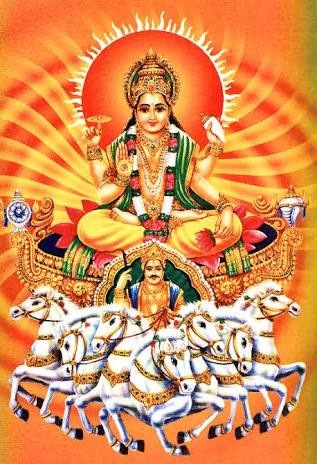
    Mitra is also used to denote Surya,The Sun God of Hinduism.

    Mitra is also worshiped as Dawn.

    Sun ,as he appears in the morning is worshipped as Mitra.

    ‘Mitrasya Sarshaneeth Dhridha’ Upasthana Mantra in morning Sandhyavandan daily,worship of Sun,Surya.

    Mitra also means Friend,Contract.

    Ancient Mittani ,Hittie Empiress refer to Mitra as a Witness in Treaties.

    The worship of Mitra became a cult and spread throughout the world.

    It may be worth noting that Mitra and Varuna are invoked towards the close of any Veda recitation, as the Deities who bring Prosperity.

    ‘Sanno Mitra Sam Varuna,

    Sanna Bavath Aryaman,

    Sanno Indro Bruhaspathihi’ -Santhi Paada,the recital of Peace in Veda Mantra.

    The Mitra worship spread to Europe and Mesopotamia through Persia,Iran,where Mitra was called Ahirman.

    From there it spread to Pre Roman period,Mittani and Hitties.

    Mitra relief in Roman Empire.image.
    Mithra Slaying Bull,

    The Romans and Greeks followed the worship of Mitra as a detailed cult, ‘Mithraism’.

    Mithraism, also known as the Mithraic mysteries, was a mystery religion centred around the god Mithras that was practised in the Roman Empire from about the 1st to the 4th century. The religion was inspired by Persian worship of the god Mithra (proto-Indo-IranianMitra), though the Greek Mithras was linked to a new and distinctive imagery, and the level of continuity between Persian and Greco-Roman practice is debated. The mysteries were popular in the Roman military.

    Worshippers of Mithras had a complex system of seven grades of initiation and communal ritual meals. Initiates called themselves syndexioi, those “united by the handshake”.They met in underground temples, called mithraea, which survive in large numbers. The cult appears to have had its centre in Rome.

    Numerous archaeological finds, including meeting places, monuments and artifacts, have contributed to modern knowledge about Mithraism throughout the Roman Empire.The iconic scenes of Mithras show him being born from a rock, slaughtering a bull, and sharing a banquet with the god Sol (the Sun). About 420 sites have yielded materials related to the cult. Among the items found are about 1000 inscriptions, 700 examples of the bull-killing scene (tauroctony), and about 400 other monuments. It has been estimated that there would have been at least 680 mithraea in Rome.No written narratives or theology from the religion survive; limited information can be derived from the inscriptions and brief or passing references in Greek and Latin literature. Interpretation of the physical evidence remains problematic and contested.

    (  https://en.m.wikipedia.org/wiki/Mithraism )

    In the Suda under the entry “Mithras”, it states that “No one was permitted to be initiated into them (the mysteries of Mithras), until he should show himself holy and steadfast by undergoing several graduated tests.Gregory Nazianzen refers to the “tests in the mysteries of Mithras”.

    There were seven grades of initiation into Mithraism, which are listed by St. Jerome. Manfred Clauss states that the number of grades, seven, must be connected to the planets. A mosaic in the Ostia Mithraeum of Felicissimus depicts these grades, with symbolic emblems that are connected either to the grades or are just symbols of the planets. The grades also have an inscription beside them commending each grade into the protection of the different planetary gods.( wiki)

    Sudha.

    Sudās (Sanskrit: सुदास्) was an Indo-Aryan tribal king of the Bhāratas, during the main or middle Rigvedic period (c. 14th century BCE).[1]

    He led his tribe to victory in the Battle of the Ten Kings near the Paruṣṇī (modern Ravi River) in Punjab, defeating an alliance of the powerful Puru tribe with other tribes, for which he was eulogised by his purohita Vashistha in a hymn of the Rigveda. His victory established the ascendency of the Bhārata clan, allowing them to move eastwards and settle in Kurukshetra, paving the way for the emergence of the KuMru “super-tribe” or tribal union, which dominated northern India in the subsequent period.

    He was a son or descendant of Divodasa. Divodasa was a descendant of Srnjaya, who in turn was a descendant of Devavata.

    His name means “giving well”, an s-stem, either from a root dās, or with the extra s added to avoid an archaic root noun in āSudā-, which would easily be mistaken for a feminine name. Sudas can differently mean “one who gives beautiful gifts/ bountiful/ giver of great gifts”. ( https://en.m.wikipedia.org/wiki/Sudas )

    Mitra in Rome ,Greece.

    “Both Mithras and Christ were described variously as ‘the Way,’ ‘the Truth,’ ‘the Light,’ ‘the Life,’ ‘the Word,’ ‘the Son of God,’ ‘the Good Shepherd.’ The Christian litany to Jesus could easily be an allegorical litany to the sun-god. Mithras is often represented as carrying a lamb on his shoulders, just as Jesus is. Midnight services were found in both religions. The virgin mother…was easily merged with the virgin mother Mary. Petra, the sacred rock of Mithraism, became Peter, the foundation of the Christian Church.”

    Gerald Berry, Religions of the World

    “Mithra or Mitra is…worshipped as Itu (Mitra-Mitu-Itu) in every house of the Hindus in India. Itu (derivative of Mitu or Mitra) is considered as the Vegetation-deity. This Mithra or Mitra (Sun-God) is believed to be a Mediator between God and man, between the Sky and the Earth. It is said that Mithra or [the] Sun took birth in the Cave on December 25th. It is also the belief of the Christian world that Mithra or the Sun-God was born of [a] Virgin. He travelled far and wide. He has twelve satellites, which are taken as the Sun’s disciples…. [The Sun’s] great festivals are observed in the Winter Solstice and the Vernal EquinoxChristmas and Easter. His symbol is the Lamb….”

    Swami Prajnanananda, Christ the Saviour and Christ Myth


    In time, the Persian Mithraism became infused with the more detailed astrotheology of the Babylonians and Chaldeans, and was notable for its astrology and magic; indeed, its priests or magi lent their very name to the word “magic.” Included in this astrotheological development was the re-emphasis on Mithra’s early Indian role as a sun god. As Francis Legge says in Forerunners and Rivals in Christianity:

    The Vedic Mitra was originally the material sun itself, and the many hundreds of votive inscriptions left by the worshippers of Mithras to “the unconquered Sun Mithras,” to the unconquered solar divinity (numen) Mithras, to the unconquered Sun-God (deus) Mithra, and allusions in them to priests (sacerdotes), worshippers (cultores), and temples (templum) of the same deity leave no doubt open that he was in Roman times a sun-god. (Legge, II, 240)

    By the Roman legionnaires, Mithra—or Mithras, as he began to be known in the Greco-Roman world—was called “the divine Sun, the Unconquered Sun.” He was said to be “Mighty in strength, mighty ruler, greatest king of gods! O Sun, lord of heaven and earth, God of Gods!” Mithra was also deemed “the mediator” between heaven and earth, a role often ascribed to the god of the sun.

    An inscription by a “T. Flavius Hyginus” dating to around 80 to 100 AD/CE in Rome dedicates an altar to “Sol Invictus Mithras”—”The Unconquered Sun Mithra”—revealing the hybridization reflected in other artifacts and myths. Regarding this title, Dr. Richard L. Gordon, honorary professor of Religionsgeschichte der Antike at the University of Erfurt, Thuringen, remarks:

    It is true that one…cult title…of Mithras was, or came to be, Deus Sol Invictus Mithras (but he could also be called… Deus Invictus Sol Mithras, Sol Invictus Mithras…

    …Strabo, 15.3.13 (p. 732C), basing his information on a lost work, either by Posidonius (ca 135-51 BC) or by Apollodorus of Artemita (first decades of 1 cent. BC), states baldly that the Western Parthians “call the sun Mithra.” The Roman cult seems to have taken this existing association and developed it in their own special way. (Gordon, “FAQ.” (Emph. added.))

    “Mithra is who the monuments proclaim himthe Unconquered Sun.”

    As concerns Mithra’s identity, Mithraic scholar Dr. Roger Beck says:

    Mithras…is the prime traveller, the principal actor…on the celestial stage which the tauctony [bull-slaying] defines…. He is who the monuments proclaim himthe Unconquered Sun. (Beck (2004),

    Mithra in the Roman Empire

    Subsequent to the military campaign of Alexander the Great in the fourth century BCE, Mithra became the “favorite deity” of Asia Minor. Christian writers Dr. Samuel Jackson and George W. Gilmore, editors of The New Schaff-Herzog Encyclopedia of Religious Knowledge (VII, 420), remark:

    It was probably at this period, 250-100 b.c., that the Mithraic system of ritual and doctrine took the form which it afterward retained. Here it came into contact with the mysteries, of which there were many varieties, among which the most notable were those of Cybele.

    According to the Roman historian Plutarch (c. 46-120 AD/CE), Mithraism began to be absorbed by the Romans during Pompey’s military campaign against Cilician pirates around 70 BCE. The religion eventually migrated from Asia Minor through the soldiers, many of whom had been citizens of the region, into Rome and the far reaches of the Empire. Syrian merchants brought Mithraism to the major cities, such as Alexandria, Rome and Carthage, while captives carried it to the countryside. By the third century AD/CE Mithraism and its mysteries permeated the Roman Empire and extended from India to Scotland, with abundant monuments in numerous countries amounting to over 420 Mithraic sites so far discovered…

    By the third century AD/CE Mithraism and its mysteries permeated the Roman Empire and extended from India to Scotland.”

    From a number of discoveries, including pottery, inscriptions and temples, we know that Roman Mithraism gained a significant boost and much of its shape between 80 and 120 AD/CE, when the first artifacts of this particular cultus begin to be found at Rome. It reached a peak during the second and third centuries, before largely expiring at the end of the fourth/beginning of fifth centuries. Among its members during this period were emperors, politicians and businessmen. Indeed, before its usurpation by Christianity Mithraism enjoyed the patronage of some of the most important individuals in the Roman Empire. In the fifth century, the emperor Julian, having rejected his birth-religion of Christianity, adopted Mithraism and “introduced the practise of the worship at Constantinople.” (Schaff-Herzog, VII, 423)

    Modern scholarship has gone back and forth as to how much of the original Indo-Persian Mitra-Mithra cultus affected Roman Mithraism, which demonstrates a distinct development but which nonetheless follows a pattern of this earlier solar mythos and ritual. The theory of “continuity” from the Iranian to Roman Mithraism developed famously by scholar Dr. Franz Cumont in the 20th century has been largely rejected by many scholars. Yet, Plutarch himself (Life of Pompey, 24) related that followers of Mithras “continue to the present time” the “secret rites” of the Cilician pirates, “having been first instituted by them.” So too does the ancient writer Porphyry (234-c. 305 AD/CE) state that the Roman Mithraists themselves believed their religion had been founded by the Persian savior Zoroaster.’

     ( http://www.truthbeknown.com/mithra.htm )

  • Surya Sun God Mitra Worshipped Ancient Rome Pope Baptised With Varuna

    Surya Sun God Mitra Worshipped Ancient Rome Pope Baptised With Varuna

    Mitra is  Vedic Deity,often mentioned along with Varuna,both called togehter as Mitra Varuna.

    Mitra indicates dawn.

    Varuna and Maitra are the sons of Aththi and Kasyapa.

    So also Surya,the SunGod.

    Worship of Surya is found throughout the world,with the attributes described in Hinduism.

    Mitra Varuna is worshiped in the Middle east, Italy and throughout Europe.

    And the Mayas,Incas,Mittanis,Akkadians,Sumerians and Egyptians were Sun worshippers.

    The Popes Baptized with Warter, invoking Mitra Varuna.

    These sons of Aththi and Kasyapa are Twelve.

    1. Varuna
    2. Mitra
    3. Aryama
    4. Bhaga
    5. Amshuman
    6. Dhata
    7. Indra
    8. Parjanya (Savitr?)
    9. Tvashtha
    10. Vishnu (The head of all the Adityas
    11. Pushya
    12. Vivasvan

    They are called the Adhityas.

    Lord Vishnu is on off the Adityas.

    Lord Krishna states in the Bhagavad Gita ,

    ‘Adityanaam Aham Vishnu’

    In Vibhuti Yoga.

    In the daily oblations offered to Surya in Sandhyavandana,the morning Upasthana mantra offers oblations to Mitra thus.

    ‘Mitrasya sarshanaathdriyaha’

    Mitra also means friend.

    One can find these names in the Adityahrudaya Stotra.

    Srimad Bhagavatham states that all these are Forms of Surya,The Sun God.

    In each month of the year, it is a different Aditya who shines as the Sun-God.As Indra, Surya destroys the enemies of the gods. As Dhata, he creates living beings. As Parjanya, he showers down rain. As Tvashta, he lives in the trees and herbs. As Pusha, he makes foodgrains grow. As Aryama, he is in the wind. As Bhaga, he is in the body of all living beings. As Vivasvana, he is in fire and helps to cook food. As Vishnu, he destroys the enemies of the gods. As Amshumana, he is again in the wind. As Varuna, he is in the waters and As Mitra, he is in the moon and in the oceans.’

    (  https://en.m.wikipedia.org/wiki/Ādityas )

    Sun worship in Mesapotamia,Mittani Empire and Rome was from the Mitra Varuna of the Vedas.

    These Deities are mentioned in the Zend Avestha of Parsis,Iran fron where this has traveled to Europe.

    The Pagan Worship ,preceding Christianity had Mitra Varuna included.

    The origin of the cult of Mithra dates from the time that the Hindus and Persians still formed one people, for the god Mithra occurs in the religion and the sacred books of both races, i.e. in the Vedas and in the Avesta. In Vedic hymns he is frequently mentioned and is nearly always coupled with Varuna, but beyond the bare occurrence of his name, little is known of him (Rigveda, III, 59). It is conjectured (Oldenberg, “Die “Religion des Veda,” Berlin, 1894) that Mithra was the rising sun, Varuna the setting sun; or, Mithra, the sky at daytime, Varuna, the sky at night; or, the one the sun, the other the moon. In any case Mithra is a light or solar deity of some sort; but in vedic times the vague and general mention of him seems to indicate that his name was little more than a memory. In the Avesta he is much more of a living and ruling deity than in Indian piety; nevertheless, he is not only secondary to Ahura Mazda, but he does not belong to the seven Amshaspands or personified virtues which immediately surround Ahura; he is but a Yazad, a popular demigod or genius. The Avesta however gives us his position only after the Zoroastrian reformation; the inscriptions of the Achaemenidae (seventh to fourth century B.C.) assign him a much higher place, naming him immediately after Ahura Mazda and associating him with the goddess Anaitis (Anahata), whose name sometimes precedes his own. Mithra is the god of light, Anaitis the goddess of water. Independently of the Zoroastrian reform, Mithra retained his place as foremost deity in the northwest of the Iranian highlands. After the conquest of Babylon this Persian cult came into contact with Chaldean astrology and with the national worship of Marduk. For a time the two priesthoods of Mithra and Marduk (magi and chaldaei respectively) coexisted in the capital and Mithraism borrowed much from this intercourse. This modified Mithraism traveled farther northwestward and became the State cult of Armenia. Its rulers, anxious to claim descent from the glorious kings of the past, adopted Mithradates as their royal name (so five kings of Georgia, and Eupator of the Bosporus). Mithraism then entered Asia Minor, especially Pontus and Cappadocia. Here it came into contact with the Phrygian cult of Attis and Cybele from which it adopted a number of ideas and practices, though apparently not the gross obscenities of the Phrygian worship. This Phrygian-Chaldean-Indo-Iranian religion, in which the Iranian element remained predominant, came, after Alexander’s conquest, in touch with the Western World. Hellenism, however, and especially Greece itself, remained remarkably free from its influence. When finally the Romans took possession of the Kingdom of Pergamum, occupied Asia Minor and stationed two legions of soldiers on the Euphrates, the success of Mithraism in the West was secured. It spread rapidly from the Bosporus to the Atlantic, from Illyria to Britain. Its foremost apostles were the legionaries; hence it spread first to the frontier stations of the Roman army.

    Mithraism was emphatically a soldier religion: Mithra, its hero, was especially a divinity of fidelity, manliness, and bravery; the stress it laid on good fellowship and brotherliness, its exclusion of women, and the secret bond amongst its members have suggested the idea that Mithraism was Masonry amongst the Roman soldiery. At the same time Eastern slaves and foreign tradesmen maintained its propaganda in the cities. When magi, coming from King Tiridates of Armenia, had worshipped in Nero an emanation of Mithra, the emperor wished to be initiated in their mysteries. As Mithraism passed as a Phrygian cult it began to share in the official recognition which Phrygian worship had long enjoyed in Rome. The Emperor Commodus was publicly initiated. Its greatest devotee however was the imperial son of a priestess of the sun-god at Sirmium in Pannonia, Valerian, who according to the testimony of Flavius Vopiscus, never forgot the cave where his mother initiated him. In Rome, he established a college of sun priests and his coins bear the legend “Sol, Dominus Imperii Romani”. Diocletian, Galerius, and Licinius built at Carnuntum on the Danube a temple to Mithra with the dedication: “Fautori Imperii Sui”. But with the triumph of Christianity Mithraism came to a sudden end. Under Julian it had with other pagan cults a short revival. The pagans of Alexandria lynched George the Arian, bishop of the city, for attempting to build a church over a Mithras cave near the town. The laws of Theodosius I signed its death warrant. The magi walled up their sacred caves; and Mithra has no martyrs to rival the martyrs who died for Christ.’

    (  http://www.newadvent.org/cathen/10402a.htm )

    The above Link is Catholic Encyclopedia.

    Now excerpts from Russain Veda,Perun,from research Scholars  on how the Roman Emperors and Popes worshiped Mitra -Varuna

    And how Pope Hadrian Baptised with Varuna,the God of Water / Ocean.

    I Robertson and others tell us that both Christianity existed almost exactly the same cult of the god Mithras, whose name, I think, comes from the Hebrew Inscription MTP, which means irrigation, 1 t. e. baptized in water (according to the Roman rite). Hence it is likely to occur, and the name of the spiritual crown-miter (mitra Italian and Greek?????),and the word of the Metropolitan as a difference in the Greek and Latin spelling proves nothing: in other nomadic names it Many significant.


    During the time of Hadrian, t. E., According to our comparisons of Honorius (395-423), if the case is not about the pope Hadrian, structures that “baptism in water” were,-says archaeologist Wright 2-scattered across Britain, South of France, Spain Germany, Dalmatia, Dacia and North Africa. In all the cities and forts, located in Italy and along the banks of the Rhine and Danube were Mithraeum (t. E. Baptistery with water). «Mitraism, says John Robertson in his book« Pagan Christs»,t. E ..” Pagan Christs», -was in point of range the most nearly universal religion of the Western World in the early centuries of the Christian era 3(Mithraism was almost universal religion of Western Europe in the first centuries of the Christian era). In England, it was found by an artificial grotto with sculptures of services Mitra and the inscription “God, the best and greatest, the invincible Mithra, the god of the ages”, and in Kichestere been with the same inscription: “God the Sun, the invincible Mithra, the god of the ages.” Others are the same found in Cumberland, near Oxford, near London, near York, near Manchester, and so on.. In Rome and its surroundings were a number of these same caves; they existed in Egypt and probably in West Asia. Only in Greece, they were few at this imenem ‘(  https://www.politforums.net/eng/other/1336328618.html )