Tag: Roman Empire

  • Mitra,Surya Worshipped Pre Roman ,Greece,Iran.Rig Vedic King Suda

    Mitra,Surya Worshipped Pre Roman ,Greece,Iran.Rig Vedic King Suda

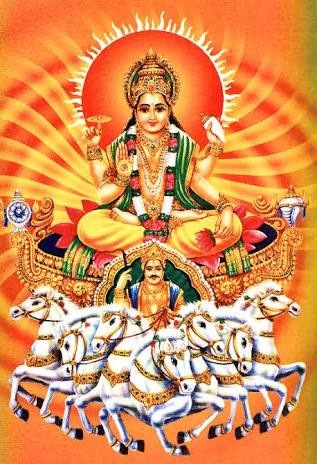
    Mitra is a Hindu Deity,often mentioned in conjunction with Varuna,God of Water/Ocean.

    Mitra is also used to denote Surya,The Sun God of Hinduism.

    Mitra is also worshiped as Dawn.

    Sun ,as he appears in the morning is worshipped as Mitra.

    ‘Mitrasya Sarshaneeth Dhridha’ Upasthana Mantra in morning Sandhyavandan daily,worship of Sun,Surya.

    Mitra also means Friend,Contract.

    Ancient Mittani ,Hittie Empiress refer to Mitra as a Witness in Treaties.

    The worship of Mitra became a cult and spread throughout the world.
    It may be worth noting that Mitra and Varuna are invoked towards the close of any Veda recitation, as the Deities who bring Prosperity.

    ‘Sanno Mitra Sam Varuna,

    Sanna Bavath Aryaman,

    Sanno Indro Bruhaspathihi’ -Santhi Paada,the recital of Peace in Veda Mantra.

    The Mitra worship spread to Europe and Mesopotamia through Persia,Iran,where Mitra was called Ahirman.

    From there it spread to Pre Roman period,Mittani and Hitties.

    Mitra relief in Roman Empire.image.
    Mithra Slaying Bull,

    The Romans and Greeks followed the worship of Mitra as a detailed cult, ‘Mithraism’.

    Mithraism, also known as the Mithraic mysteries, was a mystery religion centred around the god Mithras that was practised in the Roman Empire from about the 1st to the 4th century. The religion was inspired by Persian worship of the god Mithra (proto-Indo-IranianMitra), though the Greek Mithras was linked to a new and distinctive imagery, and the level of continuity between Persian and Greco-Roman practice is debated. The mysteries were popular in the Roman military.

    Worshippers of Mithras had a complex system of seven grades of initiation and communal ritual meals. Initiates called themselves syndexioi, those “united by the handshake”.They met in underground temples, called mithraea, which survive in large numbers. The cult appears to have had its centre in Rome.

    Numerous archaeological finds, including meeting places, monuments and artifacts, have contributed to modern knowledge about Mithraism throughout the Roman Empire.The iconic scenes of Mithras show him being born from a rock, slaughtering a bull, and sharing a banquet with the god Sol (the Sun). About 420 sites have yielded materials related to the cult. Among the items found are about 1000 inscriptions, 700 examples of the bull-killing scene (tauroctony), and about 400 other monuments. It has been estimated that there would have been at least 680 mithraea in Rome.No written narratives or theology from the religion survive; limited information can be derived from the inscriptions and brief or passing references in Greek and Latin literature. Interpretation of the physical evidence remains problematic and contested.

    (  https://en.m.wikipedia.org/wiki/Mithraism )

    In the Suda under the entry “Mithras”, it states that “No one was permitted to be initiated into them (the mysteries of Mithras), until he should show himself holy and steadfast by undergoing several graduated tests.Gregory Nazianzen refers to the “tests in the mysteries of Mithras”.

    There were seven grades of initiation into Mithraism, which are listed by St. Jerome. Manfred Clauss states that the number of grades, seven, must be connected to the planets. A mosaic in the Ostia Mithraeum of Felicissimus depicts these grades, with symbolic emblems that are connected either to the grades or are just symbols of the planets. The grades also have an inscription beside them commending each grade into the protection of the different planetary gods.( wiki)

    Sudha.

    Sudās (Sanskrit: सुदास्) was an Indo-Aryan tribal king of the Bhāratas, during the main or middle Rigvedic period (c. 14th century BCE).[1]

    He led his tribe to victory in the Battle of the Ten Kings near the Paruṣṇī (modern Ravi River) in Punjab, defeating an alliance of the powerful Puru tribe with other tribes, for which he was eulogised by his purohita Vashistha in a hymn of the Rigveda. His victory established the ascendency of the Bhārata clan, allowing them to move eastwards and settle in Kurukshetra, paving the way for the emergence of the KuMru “super-tribe” or tribal union, which dominated northern India in the subsequent period.

    He was a son or descendant of Divodasa. Divodasa was a descendant of Srnjaya, who in turn was a descendant of Devavata.

    His name means “giving well”, an s-stem, either from a root dās, or with the extra s added to avoid an archaic root noun in āSudā-, which would easily be mistaken for a feminine name. Sudas can differently mean “one who gives beautiful gifts/ bountiful/ giver of great gifts”. ( https://en.m.wikipedia.org/wiki/Sudas )

    Mitra in Rome ,Greece.

    “Both Mithras and Christ were described variously as ‘the Way,’ ‘the Truth,’ ‘the Light,’ ‘the Life,’ ‘the Word,’ ‘the Son of God,’ ‘the Good Shepherd.’ The Christian litany to Jesus could easily be an allegorical litany to the sun-god. Mithras is often represented as carrying a lamb on his shoulders, just as Jesus is. Midnight services were found in both religions. The virgin mother…was easily merged with the virgin mother Mary. Petra, the sacred rock of Mithraism, became Peter, the foundation of the Christian Church.”

    Gerald Berry, Religions of the World

    “Mithra or Mitra is…worshipped as Itu (Mitra-Mitu-Itu) in every house of the Hindus in India. Itu (derivative of Mitu or Mitra) is considered as the Vegetation-deity. This Mithra or Mitra (Sun-God) is believed to be a Mediator between God and man, between the Sky and the Earth. It is said that Mithra or [the] Sun took birth in the Cave on December 25th. It is also the belief of the Christian world that Mithra or the Sun-God was born of [a] Virgin. He travelled far and wide. He has twelve satellites, which are taken as the Sun’s disciples…. [The Sun’s] great festivals are observed in the Winter Solstice and the Vernal EquinoxChristmas and Easter. His symbol is the Lamb….”

    Swami Prajnanananda, Christ the Saviour and Christ Myth


    In time, the Persian Mithraism became infused with the more detailed astrotheology of the Babylonians and Chaldeans, and was notable for its astrology and magic; indeed, its priests or magi lent their very name to the word “magic.” Included in this astrotheological development was the re-emphasis on Mithra’s early Indian role as a sun god. As Francis Legge says in Forerunners and Rivals in Christianity:

    The Vedic Mitra was originally the material sun itself, and the many hundreds of votive inscriptions left by the worshippers of Mithras to “the unconquered Sun Mithras,” to the unconquered solar divinity (numen) Mithras, to the unconquered Sun-God (deus) Mithra, and allusions in them to priests (sacerdotes), worshippers (cultores), and temples (templum) of the same deity leave no doubt open that he was in Roman times a sun-god. (Legge, II, 240)

    By the Roman legionnaires, Mithra—or Mithras, as he began to be known in the Greco-Roman world—was called “the divine Sun, the Unconquered Sun.” He was said to be “Mighty in strength, mighty ruler, greatest king of gods! O Sun, lord of heaven and earth, God of Gods!” Mithra was also deemed “the mediator” between heaven and earth, a role often ascribed to the god of the sun.

    An inscription by a “T. Flavius Hyginus” dating to around 80 to 100 AD/CE in Rome dedicates an altar to “Sol Invictus Mithras”—”The Unconquered Sun Mithra”—revealing the hybridization reflected in other artifacts and myths. Regarding this title, Dr. Richard L. Gordon, honorary professor of Religionsgeschichte der Antike at the University of Erfurt, Thuringen, remarks:

    It is true that one…cult title…of Mithras was, or came to be, Deus Sol Invictus Mithras (but he could also be called… Deus Invictus Sol Mithras, Sol Invictus Mithras…

    …Strabo, 15.3.13 (p. 732C), basing his information on a lost work, either by Posidonius (ca 135-51 BC) or by Apollodorus of Artemita (first decades of 1 cent. BC), states baldly that the Western Parthians “call the sun Mithra.” The Roman cult seems to have taken this existing association and developed it in their own special way. (Gordon, “FAQ.” (Emph. added.))

    “Mithra is who the monuments proclaim himthe Unconquered Sun.”

    As concerns Mithra’s identity, Mithraic scholar Dr. Roger Beck says:

    Mithras…is the prime traveller, the principal actor…on the celestial stage which the tauctony [bull-slaying] defines…. He is who the monuments proclaim himthe Unconquered Sun. (Beck (2004),

    Mithra in the Roman Empire

    Subsequent to the military campaign of Alexander the Great in the fourth century BCE, Mithra became the “favorite deity” of Asia Minor. Christian writers Dr. Samuel Jackson and George W. Gilmore, editors of The New Schaff-Herzog Encyclopedia of Religious Knowledge (VII, 420), remark:

    It was probably at this period, 250-100 b.c., that the Mithraic system of ritual and doctrine took the form which it afterward retained. Here it came into contact with the mysteries, of which there were many varieties, among which the most notable were those of Cybele.

    According to the Roman historian Plutarch (c. 46-120 AD/CE), Mithraism began to be absorbed by the Romans during Pompey’s military campaign against Cilician pirates around 70 BCE. The religion eventually migrated from Asia Minor through the soldiers, many of whom had been citizens of the region, into Rome and the far reaches of the Empire. Syrian merchants brought Mithraism to the major cities, such as Alexandria, Rome and Carthage, while captives carried it to the countryside. By the third century AD/CE Mithraism and its mysteries permeated the Roman Empire and extended from India to Scotland, with abundant monuments in numerous countries amounting to over 420 Mithraic sites so far discovered…

    By the third century AD/CE Mithraism and its mysteries permeated the Roman Empire and extended from India to Scotland.”

    From a number of discoveries, including pottery, inscriptions and temples, we know that Roman Mithraism gained a significant boost and much of its shape between 80 and 120 AD/CE, when the first artifacts of this particular cultus begin to be found at Rome. It reached a peak during the second and third centuries, before largely expiring at the end of the fourth/beginning of fifth centuries. Among its members during this period were emperors, politicians and businessmen. Indeed, before its usurpation by Christianity Mithraism enjoyed the patronage of some of the most important individuals in the Roman Empire. In the fifth century, the emperor Julian, having rejected his birth-religion of Christianity, adopted Mithraism and “introduced the practise of the worship at Constantinople.” (Schaff-Herzog, VII, 423)

    Modern scholarship has gone back and forth as to how much of the original Indo-Persian Mitra-Mithra cultus affected Roman Mithraism, which demonstrates a distinct development but which nonetheless follows a pattern of this earlier solar mythos and ritual. The theory of “continuity” from the Iranian to Roman Mithraism developed famously by scholar Dr. Franz Cumont in the 20th century has been largely rejected by many scholars. Yet, Plutarch himself (Life of Pompey, 24) related that followers of Mithras “continue to the present time” the “secret rites” of the Cilician pirates, “having been first instituted by them.” So too does the ancient writer Porphyry (234-c. 305 AD/CE) state that the Roman Mithraists themselves believed their religion had been founded by the Persian savior Zoroaster.’

     ( http://www.truthbeknown.com/mithra.htm )

  • Augustus Temple In Musiri Roman Colony Madurai

    Augustus Temple In Musiri Roman Colony Madurai

    .The contact between the Romans and the people of Sanatana Dharma is quite ancient.

    People from the region from where the Romans ruled later, were transacting business with India right from Sanatana Dharma Vedic times.

    The civilizations  which preceded the Romans, Minoans, Sumerians had contacts with the Vedic people.

    Augustus Caesa
    Augustus Caesar,Roman Emperor.


    Image credit.

    By Till Niermann – Own work, CC BY-SA 3.0, https://commons.wikimedia.org/w/index.php?curid=388210

    Vedic texts refer to there areas as Yavana, though it is normally taken s denoting the Greeks.

    Yavanas are referred to in The Vedas,Mahabharata and Tami Literature speaks  in detail about Yavanas.

    The Great Tmail epic Silappdikarm, which is set in the background of Madurai and Poompuhar, called as Kaverippompattinam mentions that Yavanas hd a flourishing Trade with all the Tamil Kings, Chera, Chola and Pandyas.

    The items exported to Rome /the area under which Romans ruled were,

    Tigers of Four varieties,

    Elephants,

    Animal products,

    Pearls,

    Diamonds,

    Pliny states that Nero paid one million sesterces for one cup of Emerakds from India!

    Iron and Steel.

    Spices.

    Imported in India from Rome.

    Gold,

    Cotton,

    Gold Coins,

    Ornamental pieces like vases,

    Horses.

    The trade reached its peak during the period of Augustus and the Roman currency depreciated alarmingly.

    During Augustus’s period ratio of Gold to 1:9.3 aureus, aureus being 25 Silver Dinari.

    Because of the heavy import from India, the ratio became 1:96 during the period of Nero and this economic decline was one of the reasons for Rome’s .disintegration as an Empire.


    ‘The recorded history of the city goes back to the 3rd century BCE, being mentioned by Megasthenes, the Greek ambassador to India, and Kautilya, a minister of the Mauryan emperor Chandragupta Maurya. Signs of human settlements and Roman trade links dating back to 300BC are evident from excavations by Archeological Survey of India in Manalur’

    Romans, because of the high volume of Trade settled in India in great numbers.

    They had a colony for them Roman Colony. In Madurai.

    As is the wont they even built a Temple for Augustus in Musiri.

    Periplus mentions this.

    Towns mentioned by Grrek Roman Historians.

    Madurai,

    Musiri,

    Korkai,

    Kanyakumari,

    Uraiyur,

    Poompuhar,

    Kanchipuram,

    Tondi,

    Karur,

    Point Calimere( kodiyakkarai)

    Mahabalipuram.

    I may add that Poompuhar is dated 20,000 years ago!

    Reference and citation.

    https://en.wikipedia.org/wiki/Madurai

    https://en.wikipedia.org/wiki/Augustus

    Periplus

    Warmington

    History Of Tamils by P.T Srinivasa Iyengar Page 301 to 321.

  • Petra Jordan Ancient Shiva Temple?

    Petra , an ancient city , which belonged to the Greeks earlier,excavated in Jordan is considered as one of the wonders of the world.

    English: Facade of Al Khazneh, Petra, Jordan Français : Façade de El Khazneh (la Trésorerie) à Pétra en Jordanie
    Al Khazneh,Petra Image source Wikimedia Commons.

    This city had the imprint of Constantine as well.

    ‘In a recently conducted Internet poll, Petra was voted by internet users as one of the ‘seven wonders of the modern world’. In this abandoned city, which lies hidden behind impenetrable mountains and gorges, magnificent rock-cut temples and palaces have been carved into towering cliffs of red and orange sandstone. The most famous of these structures is the ‘Al Khasneh’ (or the ‘Treasury’), which was made famous in an Indiana Jones film.

    Sometime during the 3rd century BC, the Nabataeans began to decorate their capital city with splendid rock-cut temples and buildings. [Right: The Khasneh or “Treasury”] Their economic prosperity and architectural achievements continued unabated even after they came under the control of the Roman Empire in 106 CE. The neglect and decline of Petra started soon after Emperor Constantine declared Christianity as the official religion of the Roman Empire in 324 CE. A series of earthquakes crippled the region in the 7th – 8th centuries and Petra disappeared from the map of the known world, only to be rediscovered centuries later in 1812, by a Swiss explorer named Johann Burckhardt…

    Deity Petra
    A baetyl physically marked a deity’s presence. It could be a square [Above, left] or rounded like a dome [Above, right]. Some baetyls’ were depicted with a lunar crescent on the top. The Nabataeans also appear to be snake worshippers. One of the most prominent structures in Petra is the snake monument, which shows a gigantic coiled-up snake on a block of stone. [Below]
    Within the temple of Al Deir, the largest and most imposing rock-cut temple in Petra, is present an unworked, black, block of stone, like an obelisk, representing the most important deity of the Nabataeans — Dushara.

    The term Dushara means ‘Lord of the Shara’, which refers to the Shara mountains to the north of Petra. The symbolic animal of Dushara was a bull. All over Petra, Dushara was represented symbolically by stone blocks.

    At the entrance of Petra there are three massive standing blocks of stone, known as Djin blocks, which were sacred to the inhabitants. There are nearly 40 such Djin blocks present throughout Petra. In addition, at religious sites throughout the city, the Nabataeans carved a standing stone block called a baetyl, literally meaning ‘house of god’…

    Remains Petra
    Petra remains

    This unusual array of symbolic elements associated with the chief god of the Nabataeans, Dushara, may have confounded historians, but to anyone familiar with the symbolism of the Vedic deity Shiva, the similarities between Dushara and Shiva will be palpable.

    Shiva is still worshipped all over India in the form of a black block of stone known as a Shiva Linga. A Shiva Linga, which is essentially a ‘mark’ or ‘symbol’ of Shiva, sometimes appears as an unworked block of stone, much like the idol of Dushara in the temple of Al Deir; but typically it is represented by a smooth, rounded stone which resembles some of the rounded, dome-shaped, baetyls that we find in Petra.

    Temple Petra
    [Above, left: Idol of Al-Uzza, found in the Temple of the Winged Lions Middle: One of the two reliefs of lion of the Lion Triclinium in Petra, Jordan Right: Durga on a Lion, slaying Mahisarura who has taken the form of a bull. Aihole temple complex, Karnataka, dating from the 6th century CE.]
    Shiva is also associated with the mountains; his residence is supposed to be in the Kailash Mountain in the Himalayas, to the north of India, where he spends most of his time engaged in rigorous asceticism. His symbolic animal is a bull, named Nandi, which is commonly depicted kneeling in front of the Shiva Linga. Pictorial depictions of Shiva always show a crescent-shaped moon in his matted locks, much like the lunar crescent that appears on top of certain baetyls in Petra; and on top of the Shiva Linga is present a coiled-up serpent, bearing a strong resemblance to the serpent monument of Petra. It is evident that Shiva and Dushara are symbolically identical, leaving little scope for doubt that Dushara must indeed be a representation of the Vedic deity Shiva.

    At Petra, an elaborate processional way leads from the center of the city to the temple of Al Deir. In front of the temple there is a massive, flat, courtyard, capable of accommodating thousands of people. This has led historians to suggest that the Al Deir temple may have been the site of large-scale ceremonies. It is possible that this was a celebration of Dussehra, since Al-Uzza was the ‘goddess of the people’ and Dussehra is the celebration of the victory of the goddess over the forces of evil.

    It is not unlikely that the presiding god of the Nabataeans, Dushara, may have obtained his name from the festival Dussehra. The cult of Shiva-Shakti represented the sacred masculine and feminine principles, and the worship of Shiva has always been inextricably linked with the celebrations of the divine feminine. Even now in rural Bengal in India, the final day of celebration of Dussehra (Basanti Puja) is followed by an exuberant worship of Shiva. For these people, it remains the most important festival of their annual religious calendar.

    It is unclear to historians whether all the representations of the female goddess found in Petra refer to Al-Uzza or to the Nabataean goddess triad of Al-Uzza, Al-lat and Manat. Although it is has been supposed that the consort of Dushara may be Al-Uzza, the depictions of Al-Uzza in other places of Arabia do not support such an association.

    Al-Uzza (the ‘Strong One’) was the goddess of the morning and evening star. Isaac of Antioch referred to her as Kaukabta, ‘the Star’. She was sometimes depicted riding a ‘dolphin’ and showing the way to sea-farers. She is, thus, the counterpart of the Indo-European goddess of dawn, Ostara, and the Vedic ‘Usas’.

    In the Rig Veda, there are around 20 hymns dedicated to the Usas, the goddess of dawn, who appears in the east every morning, resplendent in her golden light, riding a chariot drawn by glorious horses, dispelling the darkness, awakening men to action, and bestowing her bounty and riches on all and sundry.

    Source: including Images other than the top most from

    http://www.viewzone.com/petra.html

    Enhanced by Zemanta
  • Jesus Was White Controversy

    It is debatable whether Jesus existed at all, considering the evidence available.

    What we know from Archaeology is that there was a preacher who rebelled against the Roman Empire and united people against Roman occupation and he conveyed a message of Love and Peace.

    More than that we are not  even sure of his name,Jesus.

    Portrait of Jesus.
    Jesus Christ.

    The Bible was conceived 300 years after his death.

    There is scant reference to his personal appearance in the Bible.

    One can surmise that considering the place of his origin Jesus should have been an oriental, brownish in color.

    Now there is fresh controversy stating that Jesus was White!

    Read the discussion and the links from my earlier posts.

    The myth of a white Jesus is one with deep roots throughout Christian history. As early as the Middle Ages and particularly during the Renaissance, popular Western artists depicted Jesus as a white man, often with blue eyes and blondish hair. Perhaps fueled by some Biblical verses correlating lightness with purity and righteousness and darkness with sin and evil, these images sought to craft a sterile Son of God.

    The only problem was that the representations were historically inaccurate.

    Modern Western Christians have carried these images over into their own depictions of Jesus. Pick up a one of those bright blue “Bible Story” books in a Sunday School classroom and you’ll find white Jesus waiting for you, rosy cheeks and all. Or you could survey the light-skinned Jesus in any number of modern TV or film portrayals, including History Channel’s hit series The Bible.

    If the Bible is silent on the matter of Jesus’ skin color, does it really matter that Megyn Kelly says Jesus is white?

    If the Bible is silent on the matter of Jesus’ skin color, does it really matter that Megyn Kelly says Jesus is white?

    Yes, actually.

    As some historians and theologians have posited, the silence of the Scriptures on the issue of Jesus’ skin color is critical to Christianity’s broad appeal with people of various ethnicities. In a world where race often divides communities and even churches, the Biblical depictions of God’s son positions him as one who can bridge those divides.

    For this reason, one American Presbyterian minister in the 1880s warned his flock not to trust popular images of Christ:

    If He were particularised and localised—if, for example, He were made a man with a pale face—then the man of the ebony face would feel that there was a greater distance between Christ and him than between Christ and his white brother.’ Instead, because the Bible refused to describe Jesus in terms of racial features, his gospel could appeal to all. Only in this way could the Church be a place where the ‘Caucasian and Mongolian and African sit together at the Lord’s table, and we all think alike of Jesus, and we all feel that He is alike our brother’.

    In Martin Luther King Jr.’s “Advice for Living” column for Ebony in 1957, the civil-rights leader was asked, “Why did God make Jesus white, when the majority of peoples in the world are non-white?” King replied, “The color of Jesus’ skin is of little or no consequence” because what made Jesus exceptional “His willingness to surrender His will to God’s will.” His point, as historian Edward Blum has noted, is that Jesus transcends race.

    Source:

    http://www.theatlantic.com/politics/archive/2013/12/insisting-jesus-was-white-is-bad-history-and-bad-theology/282310/

    Links.

    http://www.stumbleupon.com/su/1Fjo1j/ramanan50.wordpress.com/2011/04/07/first-porttrait-of-jesus/

  • 2000 Year Old Ship Found with Food, Edible.

    Why do not we understand what the preservatives have been used?

    Story:

    'Shipwreck with Food intact,
    Divers examine one of an estimated 200 pots found on a shipwreck off the coast of Italy. The pots are so well-preserved food remains inside them

    One of the best preserved shipwrecks ever found has been discovered off the Italian coast.

    Divers say they have found a ship off the coast of Italy which they believe is about 2,000 years old.

    The ship, which was spotted in the sea off the town on Varazze in the province of Liguria, is thought to be a Roman-era commercial vessel.
     http://www.dailymail.co.uk/sciencetech/article-2185958/2-000-year-old-shipwreck-discovered-Italy-preserved-FOOD-intact.html#ixzz236qjUsgY

    THE ROMAN MENU

    The ship was found to be carrying over 200 pots containing food.

    Initial tests have found pickled fish, which was often used to create a sauce called garum.

    Garum was a popular staple of menus for wealthly Romans, made from fermented fish and served as a side dish to meals.

    It was created by placing fatty fish such as sardines along with fish guts and blood into a large container with herbs and layers of salt.

    The container was then left in the sun for several days, before being mixed ever day for around 20 days, until it became a liquid.

    Other foodstuffs found in the pots include wine, oil and grain.

    Shipwreck with Food Intact