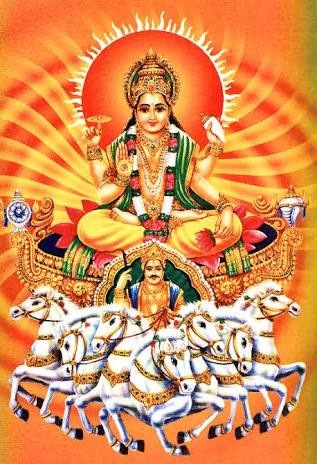
Tag: Surya

  • Surya Sun God Mitra Worshipped Ancient Rome Pope Baptised With Varuna

    Surya Sun God Mitra Worshipped Ancient Rome Pope Baptised With Varuna

    Mitra is  Vedic Deity,often mentioned along with Varuna,both called togehter as Mitra Varuna.

    Mitra indicates dawn.

    Varuna and Maitra are the sons of Aththi and Kasyapa.

    So also Surya,the SunGod.

    Worship of Surya is found throughout the world,with the attributes described in Hinduism.

    Mitra Varuna is worshiped in the Middle east, Italy and throughout Europe.

    And the Mayas,Incas,Mittanis,Akkadians,Sumerians and Egyptians were Sun worshippers.
    The Popes Baptized with Warter, invoking Mitra Varuna.

    These sons of Aththi and Kasyapa are Twelve.

    1. Varuna
    2. Mitra
    3. Aryama
    4. Bhaga
    5. Amshuman
    6. Dhata
    7. Indra
    8. Parjanya (Savitr?)
    9. Tvashtha
    10. Vishnu (The head of all the Adityas
    11. Pushya
    12. Vivasvan

    They are called the Adhityas.

    Lord Vishnu is on off the Adityas.

    Lord Krishna states in the Bhagavad Gita ,

    ‘Adityanaam Aham Vishnu’

    In Vibhuti Yoga.

    In the daily oblations offered to Surya in Sandhyavandana,the morning Upasthana mantra offers oblations to Mitra thus.

    ‘Mitrasya sarshanaathdriyaha’

    Mitra also means friend.

    One can find these names in the Adityahrudaya Stotra.

    Srimad Bhagavatham states that all these are Forms of Surya,The Sun God.

    In each month of the year, it is a different Aditya who shines as the Sun-God.As Indra, Surya destroys the enemies of the gods. As Dhata, he creates living beings. As Parjanya, he showers down rain. As Tvashta, he lives in the trees and herbs. As Pusha, he makes foodgrains grow. As Aryama, he is in the wind. As Bhaga, he is in the body of all living beings. As Vivasvana, he is in fire and helps to cook food. As Vishnu, he destroys the enemies of the gods. As Amshumana, he is again in the wind. As Varuna, he is in the waters and As Mitra, he is in the moon and in the oceans.’

    (  https://en.m.wikipedia.org/wiki/Ādityas )

    Sun worship in Mesapotamia,Mittani Empire and Rome was from the Mitra Varuna of the Vedas.

    These Deities are mentioned in the Zend Avestha of Parsis,Iran fron where this has traveled to Europe.

    The Pagan Worship ,preceding Christianity had Mitra Varuna included.

    The origin of the cult of Mithra dates from the time that the Hindus and Persians still formed one people, for the god Mithra occurs in the religion and the sacred books of both races, i.e. in the Vedas and in the Avesta. In Vedic hymns he is frequently mentioned and is nearly always coupled with Varuna, but beyond the bare occurrence of his name, little is known of him (Rigveda, III, 59). It is conjectured (Oldenberg, “Die “Religion des Veda,” Berlin, 1894) that Mithra was the rising sun, Varuna the setting sun; or, Mithra, the sky at daytime, Varuna, the sky at night; or, the one the sun, the other the moon. In any case Mithra is a light or solar deity of some sort; but in vedic times the vague and general mention of him seems to indicate that his name was little more than a memory. In the Avesta he is much more of a living and ruling deity than in Indian piety; nevertheless, he is not only secondary to Ahura Mazda, but he does not belong to the seven Amshaspands or personified virtues which immediately surround Ahura; he is but a Yazad, a popular demigod or genius. The Avesta however gives us his position only after the Zoroastrian reformation; the inscriptions of the Achaemenidae (seventh to fourth century B.C.) assign him a much higher place, naming him immediately after Ahura Mazda and associating him with the goddess Anaitis (Anahata), whose name sometimes precedes his own. Mithra is the god of light, Anaitis the goddess of water. Independently of the Zoroastrian reform, Mithra retained his place as foremost deity in the northwest of the Iranian highlands. After the conquest of Babylon this Persian cult came into contact with Chaldean astrology and with the national worship of Marduk. For a time the two priesthoods of Mithra and Marduk (magi and chaldaei respectively) coexisted in the capital and Mithraism borrowed much from this intercourse. This modified Mithraism traveled farther northwestward and became the State cult of Armenia. Its rulers, anxious to claim descent from the glorious kings of the past, adopted Mithradates as their royal name (so five kings of Georgia, and Eupator of the Bosporus). Mithraism then entered Asia Minor, especially Pontus and Cappadocia. Here it came into contact with the Phrygian cult of Attis and Cybele from which it adopted a number of ideas and practices, though apparently not the gross obscenities of the Phrygian worship. This Phrygian-Chaldean-Indo-Iranian religion, in which the Iranian element remained predominant, came, after Alexander’s conquest, in touch with the Western World. Hellenism, however, and especially Greece itself, remained remarkably free from its influence. When finally the Romans took possession of the Kingdom of Pergamum, occupied Asia Minor and stationed two legions of soldiers on the Euphrates, the success of Mithraism in the West was secured. It spread rapidly from the Bosporus to the Atlantic, from Illyria to Britain. Its foremost apostles were the legionaries; hence it spread first to the frontier stations of the Roman army.

    Mithraism was emphatically a soldier religion: Mithra, its hero, was especially a divinity of fidelity, manliness, and bravery; the stress it laid on good fellowship and brotherliness, its exclusion of women, and the secret bond amongst its members have suggested the idea that Mithraism was Masonry amongst the Roman soldiery. At the same time Eastern slaves and foreign tradesmen maintained its propaganda in the cities. When magi, coming from King Tiridates of Armenia, had worshipped in Nero an emanation of Mithra, the emperor wished to be initiated in their mysteries. As Mithraism passed as a Phrygian cult it began to share in the official recognition which Phrygian worship had long enjoyed in Rome. The Emperor Commodus was publicly initiated. Its greatest devotee however was the imperial son of a priestess of the sun-god at Sirmium in Pannonia, Valerian, who according to the testimony of Flavius Vopiscus, never forgot the cave where his mother initiated him. In Rome, he established a college of sun priests and his coins bear the legend “Sol, Dominus Imperii Romani”. Diocletian, Galerius, and Licinius built at Carnuntum on the Danube a temple to Mithra with the dedication: “Fautori Imperii Sui”. But with the triumph of Christianity Mithraism came to a sudden end. Under Julian it had with other pagan cults a short revival. The pagans of Alexandria lynched George the Arian, bishop of the city, for attempting to build a church over a Mithras cave near the town. The laws of Theodosius I signed its death warrant. The magi walled up their sacred caves; and Mithra has no martyrs to rival the martyrs who died for Christ.’

    (  http://www.newadvent.org/cathen/10402a.htm )

    The above Link is Catholic Encyclopedia.

    Now excerpts from Russain Veda,Perun,from research Scholars  on how the Roman Emperors and Popes worshiped Mitra -Varuna

    And how Pope Hadrian Baptised with Varuna,the God of Water / Ocean.

    I Robertson and others tell us that both Christianity existed almost exactly the same cult of the god Mithras, whose name, I think, comes from the Hebrew Inscription MTP, which means irrigation, 1 t. e. baptized in water (according to the Roman rite). Hence it is likely to occur, and the name of the spiritual crown-miter (mitra Italian and Greek?????),and the word of the Metropolitan as a difference in the Greek and Latin spelling proves nothing: in other nomadic names it Many significant.


    During the time of Hadrian, t. E., According to our comparisons of Honorius (395-423), if the case is not about the pope Hadrian, structures that “baptism in water” were,-says archaeologist Wright 2-scattered across Britain, South of France, Spain Germany, Dalmatia, Dacia and North Africa. In all the cities and forts, located in Italy and along the banks of the Rhine and Danube were Mithraeum (t. E. Baptistery with water). «Mitraism, says John Robertson in his book« Pagan Christs»,t. E ..” Pagan Christs», -was in point of range the most nearly universal religion of the Western World in the early centuries of the Christian era 3(Mithraism was almost universal religion of Western Europe in the first centuries of the Christian era). In England, it was found by an artificial grotto with sculptures of services Mitra and the inscription “God, the best and greatest, the invincible Mithra, the god of the ages”, and in Kichestere been with the same inscription: “God the Sun, the invincible Mithra, the god of the ages.” Others are the same found in Cumberland, near Oxford, near London, near York, near Manchester, and so on.. In Rome and its surroundings were a number of these same caves; they existed in Egypt and probably in West Asia. Only in Greece, they were few at this imenem ‘(  https://www.politforums.net/eng/other/1336328618.html )

  • Kashyapa Father of Vishnu Rudra Paediatrics Kashmir An Overview

    Kashyapa Father of Vishnu Rudra Paediatrics Kashmir An Overview

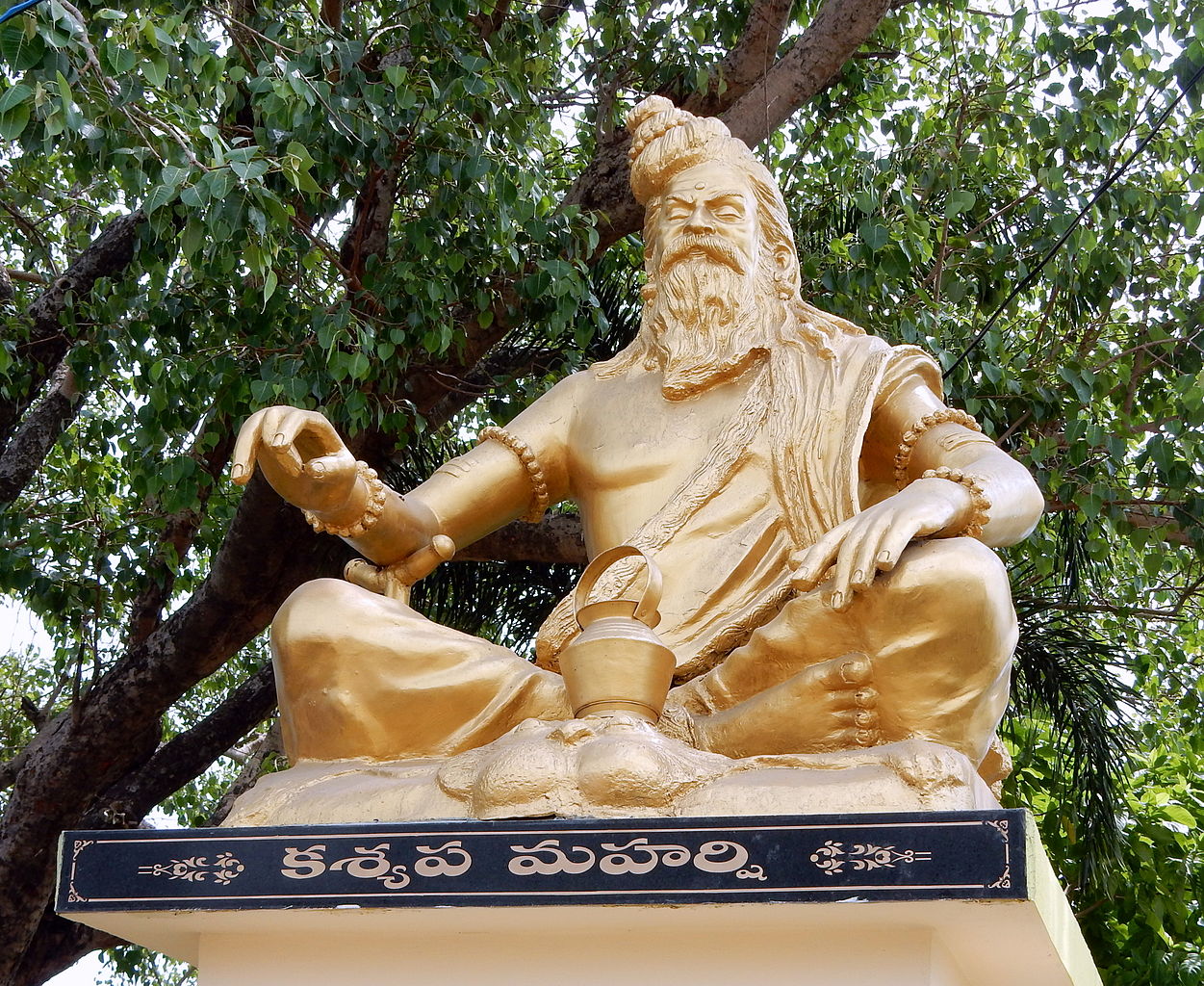
    Kashyapa,one of the Eternal Seven Seers, a Saptha Rishi,may in a sense be considered as the Grandsire of Humanity.

    The term Kashyapa means ‘tortoise’

    Undisturbed am I, undisturbed is my soul,
    undisturbed mine eye, undisturbed mine ear,
    undisturbed is mine in-breathing, undisturbed mine out-breathing,
    undisturbed my diffusive breath, undisturbed the whole of me.

    Thereafter rose Desire in the beginning, Desire the primal seed and germ of Spirit,
    O Kama dwelling with the lofty Kama, give growth of riches to the sacrificer, (…)
    Prolific, thousand eyed, and undecaying, a horse with seven reins Time bears us onward,
    Sages inspired with holy knowledge mount him, his chariot wheels are all the worlds of creatures.

    Kala [Time] created yonder heaven, and Kala made these realms of earth,
    By Kala, stirred to motion, both what is and what shall be, expand, (…)
    Kala created living things and first of all Prajapati,
    From Kala self-made Kasyapa, from Kala Holy Fire was born.

    — Atharvaveda, Book XIX, Hymns L51-5′

    One may recall the Koorma Avatar of Vishnu and the legend of Turtle/Tortoise is present in the formation of Earth in ancient legends.

    Seems there is a message here.

    Am looking into references in world religious texts and legends.

    Kasyapa is the most ancient Rishi listed in the most ancient Upanishad,Brihadaayanka Upanishad.

    Kasyapa is listed as a Saptha Rishi in the Rig Veda.

    Saptha Rishis are eternal and they remain,Along with Narayana in is Yogic Slumber,while the world is being withdrawn.(Pralaya).

    In Hinduism,there is no destruction of the Universe.

    The term Dissolution is used to convey the meaning of the Sanskrit word,Pralaya.

    Withdrawal may be nearer to the meaning of Pralaya.

    These Saptha Rishis preserve the Vedas and lay down the rules for Mankind in Ech Manvantara.

    Kashyapa is one among these.

    His progenies included Devas,the Heavenly Beings and the Asuras,the Beings of the Netherworld,Patala.

    Of his children, 12 Adityas,Lord Vishnu is One.

    Adityaanam Aham Vishnu’ -Bhagavad Gita.Vibhuthi Yoga.

    Rudra is also recorded as a son of Kashyapa and his wife Aditi.

    The Eleven Rudras.

    1. Nirriti
    2. Shambhu
    3. Aparajita
    4. Mrigavyadha
    5. Kapardi
    6. Dahana
    7. Khara
    8. Ahirabradhya
    9. Kapali
    10. Pingala
    11. Senani

    And Kasyapa  had the Eight Vasus among his 33 children.

    ‘Kashyapa was wedded to the famed mothers of Lokas viz. Aditi, Diti, Danu, Kaashtha, Arishta, Anayuvu, Khasa, Surabhi, Vinata, Taamra, Muni, Krodhavasa, and Kadru. His sons were the Dwadashadityaas viz. Dhata, Aryama, Mitra, Varuna , Amsha, Bhaga, Indra, Vivaswanta, Pusha, Parjanya, Twashta, and Vishnu.

    From Surabhi, Kashyapa was blessed with Ekadasha Rudraas viz.Angaraka, Sarpa, Niruti, Sadasaspati, Ajaikapaada, Ahirbhudnya, Jwara, Buvana , Ishwara, Mrityu and Kapali. From Surabhi, there were two daughters, viz. Rohini and Gandharvi; Rohini begot four daughters named Surupa, Hamsakali, Bhadra and Kamadu: Kamadu gave birth to Cows, Hamsakali begot Mahishaas; and Gandharvi begot Ashvas or horses; Surabhi also begot a Vrishabha/ Bull which was secured as ‘ Shiva Vahana’.

    From Aditi, Kashyapa Muni begot Indra and Devatas. Diti gave birth to Hiranya kashipu  as Kashyapa concluded the ‘Ati Raatra’ of the just finished Ashvamewdha Yagna; the new born was the younger brother of Hiranyaaksha. Their younger sister was Simhika the wife of Viprachit and their son was Rahu.

    His wives were the daughters of Daksha.

    His marriage and his offsprings may be interpreted by Cosmology and as an allegory of Astronomy as well.

    Available evidence points out to Kashmir as Kashyapa’s birth place and Kashmir is named after him.

    ‘Rishi. According to the ancient legends, he reclaimed that land from a vast lake, his school was based there, and the land was named after him.The name Kashmir, states Christopher Snedden, may be a shortened form of “Kashyapa Mir” or the “lake of the sage Kashyapa”, or alternatively derived from “Kashyapa Meru” or the sacred mountains of Kashyapa’

    Kasyapa in Russia.

    Caspian Sea.

    The word Caspian is derived from the name of the Caspi (Persian کاسی), an ancient people that lived to the west of the sea in Transcaucasia. Strabo wrote that “to the country of the Albanians belongs also the territory called Caspiane, which was named after the Caspian tribe(Kaswan, Kashyap Jat clans), as was also the sea; but the tribe has now disappeared”. Moreover, the Caspian Gate, which is the name of a region in Tehran province of Iran, is another possible piece of evidence that they migrated to the south of the sea.

    The root of the word Caspian can also be traced to Sanskrit.’

    Works of Kasyapa.

    • Kashyapa Samhita, also called Vriddajivakiya Tantra or Jivakiya Tantra, is a classical reference book on Ayurvedic pediatrics, gynecology and obstetrics. It was revised by Vatsya.
    • Kashyapa Jnanakandah, or Kashyapa’s book of wisdom, is a 9th century text of the Vaishnavism tradition. ( I do not agree with this date. Kasyapa can be dated much earlier).
    • Kasyapa dharmasutra, likely an ancient text, but now believed to be lost. The text’s existence is inferred from quotes and citations by medieval Indian scholars.
    • Kasyapa sangita, likely another ancient text, but now believed to be lost.
    • Kasyapasilpa, also called Amsumad agama, Kasypiya or Silpasastra of Kasyapa, is a Sanskrit treatise on architecture, iconography and the decorative arts, probably completed in the 11th century

    https://ramanisblog.in/2015/02/21/caspian-sea-kashyapa-sagar-of-hinduism/

    References and Citations.

    http://www.kamakoti.org/kamakoti/brahmandapurana/bookview.php?chapnum=12

    https://en.m.wikipedia.org/wiki/Kashyapa

    //ws-na.amazon-adsystem.com/widgets/q?ServiceVersion=20070822&OneJS=1&Operation=GetAdHtml&MarketPlace=US&source=ss&ref=as_ss_li_til&ad_type=product_link&tracking_id=ramasblog-20&marketplace=amazon&region=US&placement=8170305330&asins=8170305330&linkId=094ea6a59f84ff4dfd6819b5be30cae5&show_border=true&link_opens_in_new_window=true

    //ws-na.amazon-adsystem.com/widgets/q?ServiceVersion=20070822&OneJS=1&Operation=GetAdHtml&MarketPlace=US&source=ss&ref=as_ss_li_til&ad_type=product_link&tracking_id=ramasblog-20&marketplace=amazon&region=US&placement=B00P293PO2&asins=B00P293PO2&linkId=ea18983e9c484150128e37beb1a26b4a&show_border=true&link_opens_in_new_window=true

  • SUN Hums OM Scientific Study

    The Universe, which includes us, Is, because of vibrations and Sound.

    interstellar Sound recorded
    interstellar Sound


    It is constantly in Motion and motion creates sound( or is it the other way around?)

    And apart from the above facts mentioned by Hindu Texts, they also mention that what is is in the Macrocosm is in the Microcosm, that is what is found in the biggest objects in the Universe is also found in the minutest things/organisms in the Universe.

    Universe is made of Five elements,Earth, Water,Fire, Air and Ether(Aakasa)

    the sun god Surya in Hinduism
    Surya, son God

    So are we.

    What happens in the Universe also happens in/to us.

    The Vibration of the Universe is recorded.

    I have written on on OM , the sacred Mantra of Hindus, which can be chanted by any one, how it originates in the Human Body, how the breath of Earth is identical to OM ., and how Om throws up the image of Sri Yantra, a practice of worshiping through geometric shapes, on  screen when used by a tonoscope.

    The sound generated by Sun is OM.

    Watch the video.


    Our Sun lies 93,000,000 miles away, surrounded by the vacuum of space. Sound won’t travel through space, of course. But with the right instrument, scientists can “hear” pulsations from the Sun.

    The entire Sun vibrates from a complex pattern of acoustical waves, much like a bell. If your eyes were sharp enough, you could see a bell’s surface jiggle in complex patterns as the waves bounced around within it.

    Likewise, astronomers at Stanford University can record acoustical pressure waves in the Sun by carefully tracking movements on the Sun’s surface. To do this, they use an instrument called a Michelson Doppler Imager (MDI), mounted on the SOHO spacecraft, circling the Sun 1,000,000 miles from Earth.

    The Sun’s acoustical waves bounce from one side of the Sun to the other in about two hours, causing the Sun’s surface to oscillate, or wiggle up and down. Because these sound waves travel underneath the Sun’s surface, they are influenced by conditions inside the Sun. So scientists can use the oscillations to learn more about how the structure of the Sun’s interior shapes its surface.

    The Sun’s sound waves are normally at frequencies too low for the human ear to hear. To be able to hear them, the scientists sped up the waves 42,000 times — and compressed 40 days of vibrations into a few seconds. What you’ll be hearing are just a few dozen of the 10 million resonances echoing inside the Sun.

    Studying the Sun Through Its Sounds Waves (NY Times)

     Listen To the Sun’s Song These solar sounds were generated from 40 days of SOHO/MDI data and processed by A. Kosovichev

    Reference. and citation.

    http://solar-center.stanford.edu/singing/

    http://www.noao.edu/education/ighelio/solar_music.html

  • Whom Did Lord Rama Worship?

    Whom Did Lord Rama Worship?

    My Posts are an attempt to unravel our History, which has been distorted ,erased beyond imagination by the Britishers and other westerners at the instance of the Vatican and the special effort of the Britishers to Divide India and rule it, by sowing seeds of mistrust, disrespect for our scriptures.

    Rameshwaram.jpg
    Rameshwaram, where Rama worshiped Shiva.

    This was achieved by totally erasing some of our texts,by having the ancient manuscripts shipped abroad, by introducing English as a Medium of instruction totally banishing India Languages, especially Sanskrit and by pseudo Indologists like Max Mueller,a  Missionary by initially trying to write honestly and later interpolating meanings of the Vedas that would make a mockery of Hinduism.

    I am trying to piece together our History , thanks to the web, where wittingly or unwittingly the suppressed information about Santana Dharma is available.

    It takes a considerable effort to locate them.

    That has been the purpose of my Blog, apart from informing the younger generation about how they are inheritors of a Great Culture.

    In this process some times information is likely to surface, which may not be palatable to some Hindus even.

    For example the information that Vedas do not prohibit women from performing Sraddha or having Upanayana performed for them

    Or there is no such thing temple worship.

    Or there is no Caste by Birth.

    Now I am presenting information about the Avatars of Vishnu,Rama here.

    Similar information on other Avatars follows.

    After the Vedic period there have been unsavoury pollution of Sanatana Dharam with many schools of Thoughts coming into force, some denying the Vedas, some denying God, but believing in the Vedas,then sects Saivism and Si Vaishnavam

    The last one took an ugly turn with each accusing the other and one sect insulting Vishnu and another Shiva.

    All are wrong and they do not carry the authority of the Vedas, notwithstanding what the Puranas say.

    For a Hindu, the Vedas are The Authority, period,

    Now to the question of whom did Lord Rama worship, one depends on Valmiki Ramayana and other Ramayana also by Valmiki.

    Now Valmiki Ramayana is the one being accepted as the source.

    Lord Rama belonged to Surya Vamsa, the Solar Dynasty.

    As such Surya the Sun is their Deity.

    That Surya is considered as the expression of Vishnu is another matter.\

    However Lord Krishna says , in the Bhagavad Gita,otherwise.

    He says He is Vishnu, not as the other way.

    Adhityaanam aham  Vishnu and not as

    Vishnunnam Aham Adhitya.

    So Rama. following family Traditions, worshiped Surya.

    Apart from this Rama worshiped Shiva a couple of times the important one being His Worship of Lord Shiva, at Rameswaram to rid of the Brahmahathi Dosha accrued by killing Ravana, a vedicV scholar.

    Rama also worshiped Surya in the battle field for mental strength and victory, at the instance of Sage Agastya.

    Thus was born the Adhitya Hrudayam Sloka.

    Rama also seemed to have worshiped Devi though Valmiki does not mention this in Ramayana.

    ‘As per Patteeshwaram Ashtabhuja Durga Temple stala, it is noted that the worship of Devi Durga owes its origin to ShreeRam. In the ‘Ramayana’, as it goes, Rama went to ‘Lanka’ to rescue his abducted wife, Sita, from the grip of Ravana, the king of the Demons in Lanka. Before starting for his battle with Ravana, Rama wanted the blessings of Devi Durga . He came to know that the Goddess would be pleased only if she is worshipped with one hundred ‘NeelKamal’ or blue lotuses. Rama, after travelling the whole world, could gather only ninety nine of them. He finally decided to offer one of his eyes, which resembled blue lotuses. Durga, being pleased with the devotion of Rama, appeared before him and blessed him…

    ..he correctness of Ramayana is that the story is based on the Ramayana, but does not actually come in the Ramayana text of Valmiki. It is found in various Puranas. When Rama was going to cross the ocean, some texts describe that He performed worship of Durga Devi to inform her of His intentions of invading Lanka. The reason for this is that Durga was the protector of Kuvera’s island of Lanka before it was taken by Ravana. As such, it was proper etiquette for Rama, acting as a human king, to inform Durga Devi that He was about to invade her area of control. In this story, Rama acts as a yajaman, and Brahma acts as a priest who performs the sacrifice to please Durga Devi.

    In the sattvika puranas, the story is described that Rama prays to Durga, and Durga replies, “I am your external shadow energy. What ever you wish to do, I am your servant.” This is along the lines of the text “shrishti-sthiti-pralaya-sadhana-shaktir eka chayeva yasya bhuvanani bibharti durga” found in the scriptures. Durga Devi (Maha Maya) is the shadow energy of Lord Narayana.

    In the rajasika puranas the story is described differently. When Rama calls to Durga, she refuses to appear. Then Rama pierces his eye with an arrow, and Durga Devi appears crying tears of blood.

    Throughout the Puranas and various versions of the Ramayana we find a variation of three types of puja Rama did, either to Shiva, Durga or Brahma. It is likely that the variations are due to yuga-bheda, or the minor differences that occur in different ages. The Rama-lila is performed every Treta-yuga, and as such it has occurred thousands of times with many variations. We do not know from which time period the stories are recorded in each book. Thus there are many seemingly contradictory descriptions in the Puranas. It is described that Jambavan, the vanara devotee of Lord Rama, takes part in each incarnation of Rama in the same body. The cosmic cycles of time are moving like seasons, and these histories are played out in every age on schedule.
    http://www.bvashram.org/articles/48/1/Di…

    Finally, depending on Valmiki Ramayana, the sage Agastiya suggested Rama is found correct and nowhere it is found Durga worship by Rama. Only sage Agastiya adviced Rama to conquer in the battle field by worshipping the Surya, the sun-god rendering Aditya Hridayam. Rama accepted the sage Agastiya’s advice and worshipped.’

    I have posted quite a few posts where Rama is shown to have worshiped Shiva many times.

    And his ancestor Bhagiratha brought Ganges to Earth by severe peneance to Lord Shiva.

    Based on these texts, Lord Rama worshiped Shiva and Surya.

    Citation.

    https://in.answers.yahoo.com/question/index?qid=20110509025104AAULkKN

    Bhagiratha Worships Shiva, Stuthi.

    https://in.answers.yahoo.com/question/index?qid=20110509025104AAULkKN

    PS.Let me add that Shiva and Vishnu are expressions of the Same Reality Brahman and there is no question of who is Greater.

    Though comments are welcome, no comment about sectarian issues will be published.

    This site is meant for Sanatana Dharam, the underlying principle being,

    All Gods are One, May Every One Be Happy.

    Sarvam Krishnaarppanam.

    Everything Is Dedicated to Krishna.

    Maatha Ca Parvati Devi Pitha Devo Maheswaraha,

    Baandhavaa siva Bhalthaascha Swadeso Bhvanathrayam

    My Mother is Parvati,

    Father, Shiva.

    Devotees of Shiva are my relatives and

    All the three worlds are Mine

  • Vedic Sanskrit Past Of Lithuania

    The Vedic presence is strong in the Russian region, and Caucasus.

    Lithuania ,World Map.map.gif
    Lithuania ,World Map.

    This can be probably due to the presence of Shiva, Ganesha and later by Pradhyumna in the Russian, Baltic and Arctic Region.

    Asvinikumaras,Image.jpg
    Asvinikumaras,Hinduism.

    Please read my posts on these.

    The presence of Asvinikumaras are to found in households in Lithuania.

    Lithuania (Listeni/ˌlɪθjˈniə/; Lithuanian: Lietuva; [ˈliɛtʊvaː] ), officially the Republic of Lithuania (Lithuanian: Lietuvos Respublika), is a country in Northern Europe,[9] one of the three Baltic states. It is situated along the southeastern shore of the Baltic Sea, to the east of Sweden and Denmark. It is bordered by Latvia to the north, Belarus to the east and south,Poland to the south, and Kaliningrad Oblast (a Russian exclave) to the southwest. Lithuania has an estimated population of 3 million as of 2013, and its capital and largest city is Vilnius. Lithuanians are a Baltic people…..

    Asvinikumaras.

    The Ashvins or Ashwini Kumaras (Sanskrit: āśvin-, dual āśvinau), in Hindu mythology, are two Vedic gods, divine twin horsemen in the Rigveda, sons of Saranyu (daughter ofVishwakarma), a goddess of the clouds and wife of Surya in his form as Vivasvant. They symbolise the shining of sunrise and sunset, appearing in the sky before the dawn in a golden chariot, bringing treasures to men and averting misfortune and sickness. They are the doctors of gods and are devas of Ayurvedic medicine. They are represented as humans with head of a horse. In the epic Mahabharata, King Pandu’s wife Madri is granted a son by each Ashvin and bears the twins Nakula and Sahadeva who, along with the sons of Kunti, are known as the Pandavas.

    They are also called Nasatya (dual nāsatyau “kind, helpful”) in the Rigveda; later, Nasatya is the name of one twin, while the other is called Dasra (“enlightened giving”). By popular etymology, the name nāsatya is often incorrectly analysed as na+asatya “not untrue”=”true”.’

    “Traditionally, the Vedic peoples of Lithuania worshipped the Ašvieniai, the divine horse twins, related to the goddess Ūsinis. They are said to pull the Sun Chariot through the sky. The Lithuanian people continue to adorn their roof tops with the symbol of the divine horse twins in order to receive protection for the household…

    Sanskrit Roots.

    Asva(Lithuanian)=Ashva(Sanskrit) meaning ‘horse’
    Dievas (Lithuanian)=Devas (Sanskrit) meaning ‘gods’, ‘the shining ones’;
    Dumas (Lithuanian)=Dhumas(Sanskrit) meaning ‘smoke’
    Sunus (Lithuanian)=Sunus(Sanskrit) meaning ‘son’
    Vyras(Lithuanian)=Viras(Sanskrit) meaning ‘man’
    Padas(Lithuanian)=Padas(Sanskrit) meaning ‘sole of the foot’
    Ugnis(Lithuanian)=Agnis(Sanskrit) meaning ‘fire’
    Vilkas(Lithuanian)=Vrkas(Sanskrit) meaning ‘wolf’
    Ratas(Lithuanian)=Rathas(Sanskrit) meaning ‘carriage’
    Senis(Lithuanian)=Sanas(Sanskrit) meaning ‘old’
    Dantis(Lithuanian)=Dantas(Sanskrit) meaning ‘teeth’
    Naktis(Lithuanian)=Naktis(Sanskrit) meaning ‘night’

    Linguistic connection with Sanskrit

    Amongst the European languages, apparently Lithuanian is closest in grammar to Sanskrit. There is a team of scholars at JNU in Delhi studying the connection between Sanskrit and Lithuanian.

    Here are a few striking observations :

    The word..

    • for Son: Sanskrit sunus – Lithuanian sunus
    • for Sheep: Sanskrit avis – Lithuanian avis
    • for Sole: Sanskrit padas – Lithuanian padas
    • for Man: Sanskrit viras – Lithuanian vyras
    • for Smoke: Sanskrit dhumas – Lithuanian dumas

    A detailed study on these similarities.

    Next I will compare some verb conjugations in Sanskrit, Lithuanian, Greek and Latin. One of the most striking examples is the present tense conjugation of the verb ‘to bei or ‘is, are.’ I must point out first that apparently Proto-Indo-European had a category denoting two items, in addition to a category denoting singular and plural such as we have in English. This is called the dual. It may be hard to understand why this was necessary, since in English we get along quite well with only the singular and the plural. On the other hand, speakers of certain oriental languages wonder why it is necessary to distinguish all the time between singular and plural. A real need to distinguish singular and plural arises very occasionally. Be that as it may, Sanskrit, Lithuanian and ancient Greek have this extra, and from our point of view, superfluous category. Compare then, the following conjugations:

    Sanskrit

    Lithuanian

    Singular

    1st as-mi ‘I am’
    2nd asi ‘thou art’
    3rd as-ti ‘he, she, it is’

    1st es-ù (older es-mi)
    2nd es-ì (<*es-si)
    3rd ẽs-ti ‘there is’

    Dual

    s-vah ‘we two are’
    s-thah ‘you two are’
    s-tah ‘they two are’

    ẽs-ava (older es-va)
    ẽs-ata (older es-ta)
    ——————

    Plural

    s-mah ‘we are’ (more than two)
    s-tha ‘you are’ (more than two)
    s-anti ‘they are’ (more than two)

    ẽs-ame (older es-me)
    ẽs-ate (older es-te)   ——————

    (yra ‘is, are’ may be an innovation or may be an ancient inheritance) (Contemporary Lithuanian does not distinguish any number in the third person verbal forms.)

     Greek

    Latin

    Singular

    1st ei-mí
    2nd eî (<*es-si?)
    3rd es-tí

    1st sum (<*es-mi?)
    2nd es (<*es-si?)
    3rd es-t (<*es-ti?)

    Dual

    none attested
    es-tón
    es-tón

    none attested
    none attested
    none attested

    Plural

    es-mén
    es-té
    eisí (<*s-enti?)

    s-umus (<*s-omos?)
    es-tis (<*es-te-s?)
    sunt (<*s-onti?)

    When we compare the contemporary French paradigm which we have chosen as the modern version of Latin we find that the French verb does a little better than the noun.

     French

    Singular
    1st je suis
    2nd tu es (pronounced e)
    3rd il est (pronounced e)

    Plural
    nous sommes
    vous êtes
    ils sont

    Still it seems that the Lithuanian verb is out ahead of the French verb.

    Citation.

    http://www.indiadivine.org/news/history-and-culture/the-vedic-people-of-lithuania-r842

    http://en.wikipedia.org/wiki/Ashvins

    http://www.lituanus.org/1982_1/82_1_01.htm

    https://ramanisblog.in/2014/08/26/narayana-mantra-by-asvinikumaras-for-fortune-health/