Tag: Mittani

  • Mitra,Surya Worshipped Pre Roman ,Greece,Iran.Rig Vedic King Suda

    Mitra,Surya Worshipped Pre Roman ,Greece,Iran.Rig Vedic King Suda

    Mitra is a Hindu Deity,often mentioned in conjunction with Varuna,God of Water/Ocean.

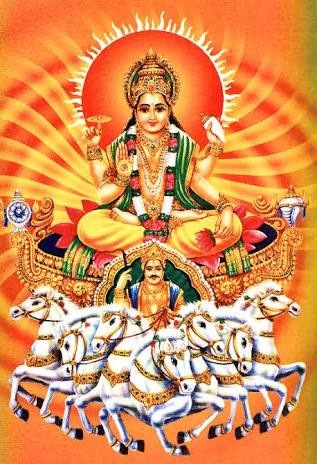
    Mitra is also used to denote Surya,The Sun God of Hinduism.

    Mitra is also worshiped as Dawn.

    Sun ,as he appears in the morning is worshipped as Mitra.

    ‘Mitrasya Sarshaneeth Dhridha’ Upasthana Mantra in morning Sandhyavandan daily,worship of Sun,Surya.

    Mitra also means Friend,Contract.

    Ancient Mittani ,Hittie Empiress refer to Mitra as a Witness in Treaties.

    The worship of Mitra became a cult and spread throughout the world.
    It may be worth noting that Mitra and Varuna are invoked towards the close of any Veda recitation, as the Deities who bring Prosperity.

    ‘Sanno Mitra Sam Varuna,

    Sanna Bavath Aryaman,

    Sanno Indro Bruhaspathihi’ -Santhi Paada,the recital of Peace in Veda Mantra.

    The Mitra worship spread to Europe and Mesopotamia through Persia,Iran,where Mitra was called Ahirman.

    From there it spread to Pre Roman period,Mittani and Hitties.

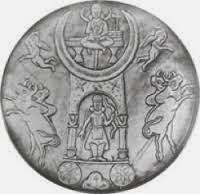
    Mitra relief in Roman Empire.image.
    Mithra Slaying Bull,

    The Romans and Greeks followed the worship of Mitra as a detailed cult, ‘Mithraism’.

    Mithraism, also known as the Mithraic mysteries, was a mystery religion centred around the god Mithras that was practised in the Roman Empire from about the 1st to the 4th century. The religion was inspired by Persian worship of the god Mithra (proto-Indo-IranianMitra), though the Greek Mithras was linked to a new and distinctive imagery, and the level of continuity between Persian and Greco-Roman practice is debated. The mysteries were popular in the Roman military.

    Worshippers of Mithras had a complex system of seven grades of initiation and communal ritual meals. Initiates called themselves syndexioi, those “united by the handshake”.They met in underground temples, called mithraea, which survive in large numbers. The cult appears to have had its centre in Rome.

    Numerous archaeological finds, including meeting places, monuments and artifacts, have contributed to modern knowledge about Mithraism throughout the Roman Empire.The iconic scenes of Mithras show him being born from a rock, slaughtering a bull, and sharing a banquet with the god Sol (the Sun). About 420 sites have yielded materials related to the cult. Among the items found are about 1000 inscriptions, 700 examples of the bull-killing scene (tauroctony), and about 400 other monuments. It has been estimated that there would have been at least 680 mithraea in Rome.No written narratives or theology from the religion survive; limited information can be derived from the inscriptions and brief or passing references in Greek and Latin literature. Interpretation of the physical evidence remains problematic and contested.

    (  https://en.m.wikipedia.org/wiki/Mithraism )

    In the Suda under the entry “Mithras”, it states that “No one was permitted to be initiated into them (the mysteries of Mithras), until he should show himself holy and steadfast by undergoing several graduated tests.Gregory Nazianzen refers to the “tests in the mysteries of Mithras”.

    There were seven grades of initiation into Mithraism, which are listed by St. Jerome. Manfred Clauss states that the number of grades, seven, must be connected to the planets. A mosaic in the Ostia Mithraeum of Felicissimus depicts these grades, with symbolic emblems that are connected either to the grades or are just symbols of the planets. The grades also have an inscription beside them commending each grade into the protection of the different planetary gods.( wiki)

    Sudha.

    Sudās (Sanskrit: सुदास्) was an Indo-Aryan tribal king of the Bhāratas, during the main or middle Rigvedic period (c. 14th century BCE).[1]

    He led his tribe to victory in the Battle of the Ten Kings near the Paruṣṇī (modern Ravi River) in Punjab, defeating an alliance of the powerful Puru tribe with other tribes, for which he was eulogised by his purohita Vashistha in a hymn of the Rigveda. His victory established the ascendency of the Bhārata clan, allowing them to move eastwards and settle in Kurukshetra, paving the way for the emergence of the KuMru “super-tribe” or tribal union, which dominated northern India in the subsequent period.

    He was a son or descendant of Divodasa. Divodasa was a descendant of Srnjaya, who in turn was a descendant of Devavata.

    His name means “giving well”, an s-stem, either from a root dās, or with the extra s added to avoid an archaic root noun in āSudā-, which would easily be mistaken for a feminine name. Sudas can differently mean “one who gives beautiful gifts/ bountiful/ giver of great gifts”. ( https://en.m.wikipedia.org/wiki/Sudas )

    Mitra in Rome ,Greece.

    “Both Mithras and Christ were described variously as ‘the Way,’ ‘the Truth,’ ‘the Light,’ ‘the Life,’ ‘the Word,’ ‘the Son of God,’ ‘the Good Shepherd.’ The Christian litany to Jesus could easily be an allegorical litany to the sun-god. Mithras is often represented as carrying a lamb on his shoulders, just as Jesus is. Midnight services were found in both religions. The virgin mother…was easily merged with the virgin mother Mary. Petra, the sacred rock of Mithraism, became Peter, the foundation of the Christian Church.”

    Gerald Berry, Religions of the World

    “Mithra or Mitra is…worshipped as Itu (Mitra-Mitu-Itu) in every house of the Hindus in India. Itu (derivative of Mitu or Mitra) is considered as the Vegetation-deity. This Mithra or Mitra (Sun-God) is believed to be a Mediator between God and man, between the Sky and the Earth. It is said that Mithra or [the] Sun took birth in the Cave on December 25th. It is also the belief of the Christian world that Mithra or the Sun-God was born of [a] Virgin. He travelled far and wide. He has twelve satellites, which are taken as the Sun’s disciples…. [The Sun’s] great festivals are observed in the Winter Solstice and the Vernal EquinoxChristmas and Easter. His symbol is the Lamb….”

    Swami Prajnanananda, Christ the Saviour and Christ Myth


    In time, the Persian Mithraism became infused with the more detailed astrotheology of the Babylonians and Chaldeans, and was notable for its astrology and magic; indeed, its priests or magi lent their very name to the word “magic.” Included in this astrotheological development was the re-emphasis on Mithra’s early Indian role as a sun god. As Francis Legge says in Forerunners and Rivals in Christianity:

    The Vedic Mitra was originally the material sun itself, and the many hundreds of votive inscriptions left by the worshippers of Mithras to “the unconquered Sun Mithras,” to the unconquered solar divinity (numen) Mithras, to the unconquered Sun-God (deus) Mithra, and allusions in them to priests (sacerdotes), worshippers (cultores), and temples (templum) of the same deity leave no doubt open that he was in Roman times a sun-god. (Legge, II, 240)

    By the Roman legionnaires, Mithra—or Mithras, as he began to be known in the Greco-Roman world—was called “the divine Sun, the Unconquered Sun.” He was said to be “Mighty in strength, mighty ruler, greatest king of gods! O Sun, lord of heaven and earth, God of Gods!” Mithra was also deemed “the mediator” between heaven and earth, a role often ascribed to the god of the sun.

    An inscription by a “T. Flavius Hyginus” dating to around 80 to 100 AD/CE in Rome dedicates an altar to “Sol Invictus Mithras”—”The Unconquered Sun Mithra”—revealing the hybridization reflected in other artifacts and myths. Regarding this title, Dr. Richard L. Gordon, honorary professor of Religionsgeschichte der Antike at the University of Erfurt, Thuringen, remarks:

    It is true that one…cult title…of Mithras was, or came to be, Deus Sol Invictus Mithras (but he could also be called… Deus Invictus Sol Mithras, Sol Invictus Mithras…

    …Strabo, 15.3.13 (p. 732C), basing his information on a lost work, either by Posidonius (ca 135-51 BC) or by Apollodorus of Artemita (first decades of 1 cent. BC), states baldly that the Western Parthians “call the sun Mithra.” The Roman cult seems to have taken this existing association and developed it in their own special way. (Gordon, “FAQ.” (Emph. added.))

    “Mithra is who the monuments proclaim himthe Unconquered Sun.”

    As concerns Mithra’s identity, Mithraic scholar Dr. Roger Beck says:

    Mithras…is the prime traveller, the principal actor…on the celestial stage which the tauctony [bull-slaying] defines…. He is who the monuments proclaim himthe Unconquered Sun. (Beck (2004),

    Mithra in the Roman Empire

    Subsequent to the military campaign of Alexander the Great in the fourth century BCE, Mithra became the “favorite deity” of Asia Minor. Christian writers Dr. Samuel Jackson and George W. Gilmore, editors of The New Schaff-Herzog Encyclopedia of Religious Knowledge (VII, 420), remark:

    It was probably at this period, 250-100 b.c., that the Mithraic system of ritual and doctrine took the form which it afterward retained. Here it came into contact with the mysteries, of which there were many varieties, among which the most notable were those of Cybele.

    According to the Roman historian Plutarch (c. 46-120 AD/CE), Mithraism began to be absorbed by the Romans during Pompey’s military campaign against Cilician pirates around 70 BCE. The religion eventually migrated from Asia Minor through the soldiers, many of whom had been citizens of the region, into Rome and the far reaches of the Empire. Syrian merchants brought Mithraism to the major cities, such as Alexandria, Rome and Carthage, while captives carried it to the countryside. By the third century AD/CE Mithraism and its mysteries permeated the Roman Empire and extended from India to Scotland, with abundant monuments in numerous countries amounting to over 420 Mithraic sites so far discovered…

    By the third century AD/CE Mithraism and its mysteries permeated the Roman Empire and extended from India to Scotland.”

    From a number of discoveries, including pottery, inscriptions and temples, we know that Roman Mithraism gained a significant boost and much of its shape between 80 and 120 AD/CE, when the first artifacts of this particular cultus begin to be found at Rome. It reached a peak during the second and third centuries, before largely expiring at the end of the fourth/beginning of fifth centuries. Among its members during this period were emperors, politicians and businessmen. Indeed, before its usurpation by Christianity Mithraism enjoyed the patronage of some of the most important individuals in the Roman Empire. In the fifth century, the emperor Julian, having rejected his birth-religion of Christianity, adopted Mithraism and “introduced the practise of the worship at Constantinople.” (Schaff-Herzog, VII, 423)

    Modern scholarship has gone back and forth as to how much of the original Indo-Persian Mitra-Mithra cultus affected Roman Mithraism, which demonstrates a distinct development but which nonetheless follows a pattern of this earlier solar mythos and ritual. The theory of “continuity” from the Iranian to Roman Mithraism developed famously by scholar Dr. Franz Cumont in the 20th century has been largely rejected by many scholars. Yet, Plutarch himself (Life of Pompey, 24) related that followers of Mithras “continue to the present time” the “secret rites” of the Cilician pirates, “having been first instituted by them.” So too does the ancient writer Porphyry (234-c. 305 AD/CE) state that the Roman Mithraists themselves believed their religion had been founded by the Persian savior Zoroaster.’

     ( http://www.truthbeknown.com/mithra.htm )

  • Turkey Sun God  Mitra Shiva Kingdom

    Turkey Sun God Mitra Shiva Kingdom

    Considering the fact that,

    There was Sanatana Dharma in the south of India much before the Indus/Sarasvathi Civilization,

    Shiva is described in detail in the Ancient Tamil Classics,

    Sage Agastya ,along with Shiva founded the Tamil language,

    The present geographical area of Syria,Lebanon,Jordan and Turkey was a part of  Lemuria/MU of the Tamils,

    The first Man, Manu,Satyavrata/ Vaivasvatha Manu was a Dravidian King,

    He meditated near Madagascar,

    He moved to Ayodhya in the north ,along with his son,who later founded the Ikshvaku Dynasty,

    Lord Rama refused to fight against the Lemurians quoting his Lemurian ancestry,

    The ancient Tamil Kings had a flourishing trade relationship with Turkey,


    Shiva,along with his son Ganesha moved towards the west from the south of India because of a Tsunami,which incidentally forced Manu to move to North,

    Shiva temple is found in Lebanon,

    Tamil city is found in  Sumeria,

    Mitra ,deity. Image
    Mitra,a name of son God,Surya

    ‘1.Lord Rama’s Chapel was found in UR, Iraq.*

    2.A burial ground called as Nagar is fond in Syria. It is called Tel Brak now.

    3.Idols of Rama,Sita and Lakshmana are found.*

    4.Ancestors of the Syrians were the Halaf and Ubaid.

    They date back to 6100 BC.

    They had connection with the Tamils and this is reflected in the ruins of  Nagar.*

    These people traded with the Tamils.

    ”Naram-Sin traded with Meluhha (almost certainly corresponding to the Indus Valley civilization), and controlled a large portion of land along the Persian Gulf. He expanded his empire by defeating the King of Magan at the southern end of the Persian Gulf, and conquering the hill tribes to the north in the Taurus Mountains.

    5.Akkadian’s( Forefathers of the Sumerians) Moon God was Naram Sin, Narasimha.*

    6.There are repeated references in the Sumerian/Akkadian language to Meluuha.’

    Ancient Tamil Brahmi Scripts were found in Oman and Egypt.

    These facts establish that,

    The Tamils were an advanced civilisation by 2200 BC(Akkadian Empire)

    The Hindu Gods and Goddesses were worshiped in Sumeria,

    Names of Lord Rama and Bharata were found in the Kings List of Sumeria.

    * Read My posts on This.’

    Source. Tamil city in Sumeria

    Lord Rama is mentioned in Sumerian Kings List.

    The traces of Shiva are found everywhere from the Middle east to the Arctic!

    The Chola dynasty traces its origins to ikshvaku dynasty of Rama.

    The story of Chola King Sibi is narrated in the Vishnu Purana, as the ancestor of Rama.

    Apart from the evidence of Hitties being influenced by the Tamils, it might be possible that the Cholas were in Hittie Kingdom,possibly they had a hand in forming the Hittie Empire.

    This is a speculation I have in the light of many of the Hitties customs and the depiction of a chariot  running over a man.

    In the Tamil Classics, King Manu Needhi Chola ran his son down by his chariot because his son ran over a calf and because the cow had complained of this to him by ringing the bell set up by the king for the people to let him know of their problems!


    Shiva city.

    It wasn’t until explorer Charles Texier stumbled upon ruins he had hoped belonged to an ancient Roman city that history would gradually begin to allow the Hittites to take their rightful place. Texier made his discovery in the isolated village of Bogazköy, in central Anatolia, roughly half way between Ankara and Sivas. The year was 1834. Though he didn’t know it at the time, he had in fact discovered the imperial Hittite city of Hattusa. However, the road to understanding the Hittites would prove to be a long one.

    Stones covered with mysterious hieroglyphs were being discovered in northern Syria and all over Anatolia and they seemed to relate to the hieroglyphs found at the Hattusa site. Archaeologists were beginning to consider the possibility that these hieroglyphs belonged to an ancient forgotten empire. In 1880, English Assyriologist Archibald Sayce shocked the world with his announcement that this empire and the Hittites of the Old Testament were one and the same people.

    Excavations at the site did not start until 1906, and tablets found in the Hittite’s cuneiform language revealed a surprising twist. The language of the Hittites belonged to the Indo-European languages with the Hittite word for water (‘watar’) for instance uncannily resembling English and German, leading to speculation that the Hittites may originally have migrated from Europe. Other theories, however, claim that Indo-European languages originated elsewhere, perhaps even in Anatolia itself. Whatever the truth may be, English and a host of other languages can thus be traced back to a single root hidden somewhere in the darkness of prehistory..

    ‘Excavations at a mound known as Topraktepe indicate Hittite settlement in the area as early as 2600 BC, though little is known of Sivas’ history prior to its emergence in the Roman period. In 64 BC as part of his reorganization of Asia Minor after the Third Mithridatic War, Pompey the Great founded a city on the site called “Megalopolis”. Numismatic evidence suggests that Megalopolis changed its name in the last years of the 1st century BC to “Sebaste”, which is the feminine form of the Greek name corresponding to Augustus. The name “Sivas” is the Turkish version deriving from the name Sebasteia, as the city was known during late Roman empire.

    Shiva city in Turkey

    Shiva connection in Haran in Turkey, Murugan was worshiped in Iraq,Narasimha and Tamil connection in Syria, Lord Rama’s name in Sumeria’s King List.

    Now on Gobekli Tepe, the remains in Turkey has a Temple, Burial /worship Ground.

    Gobekli Temple built by Brahmins

    Mittanai Mitra Kingdom.

    Mitanni (Mitranya Desa) appears in history in 1480 BCE, when Parrattarna (Pratardhana) was in control of Aleppo in Syria , By the end of 15th century BCE, Saushatar brought Assyria under Mitannian control. Tushratta was assassinated by his son in 1340 BCE. He was the last king of independent Mitanni. His kingdom was destroyed by the Hittites and Assyrians. A document from the Hittite capital Hattusa records a treaty in which Tushratta’s son Shattiwaza is recognised as the ruler of Mitanni as a Hittite vassal. Mitanni’s capital was called Washukanni (Vedic God Vasu) .
    A powerful Hurrian (Surya Vamsa; Hurrian=Suryan)) state in north Mesopotamia and Syria (named after Surya, Hindu sun god) , Mitanni is first mentioned in an Egyptian tomb inscription dating to the early the fifteenth century BCE and last attested at the time of Assyrian king Tiglath-pilesar 1115—1077 BCE.

    The name Mitanni comes from a personal name maiita (MITRA for Sun) known from Nuzi In Iraq. Since Bogazkoy inscription mentioned Mitra in Mitannian Peace Treaty, there is no doubt that it denotes MITRA, the Vedic God. Hurriya is also Surya=Sun=Mitra.’

    Source. https://tamilandvedas.com/2014/10/11/hindu-kings-who-ruled-syria-and-turkey/

    In a treaty between the Hittites and the Mitanni, the deities Mitra, Varuna, Indra, and Nasatya (Ashvins) are invoked. Kikkuli’s horse training text includes technical terms such as aika (eka, one), tera (tri, three), panza (pancha, five), satta (sapta, seven), na (nava, nine), vartana (vartana, turn, round in the horse race). The numeral aika “one” is of particular importance because it places the superstrate in the vicinity of Indo-Aryan proper as opposed to Indo-Iranian or early Iranian (which has “aiva”) in general.

    Another text has babru (babhru, brown), parita (palita, grey), and pinkara (pingala, red). Their chief festival was the celebration of the solstice (vishuva) which was common in most cultures in the ancient world. The Mitanni warriors were called marya, the term for warrior in Sanskrit as well; note mišta-nnu (= miẓḍha,~ Sanskrit mīḍha) “payment (for catching a fugitive)”.

    Sanskritic interpretations of Mitanni royal names render Artashumara (artaššumara) as Arta-smara “who thinks of Arta/Ṛta”, Biridashva (biridašṷa, biriiašṷa) as Prītāśva “whose horse is dear”, Priyamazda (priiamazda) as Priyamedha “whose wisdom is dear”,Citrarata as citraratha “whose chariot is shining”, Indaruda/Endaruta as Indrota “helped by Indra”, Shativaza (šattiṷaza) as Sātivāja “winning the race price”, Šubandhu as Subandhu “having good relatives”, Tushratta (tṷišeratta, tušratta, etc.) as *tṷaiašaratha, Vedic Tvastr “whose chariot is vehement”

    Source.https://en.m.wikipedia.org/wiki/Mitanni


    Rulers of Mittani Empire.

    The first king was Shuttarana

    His dynasty followed the Hindu/Vedic custom of naming the child after  paternal Grandfather.

    We have Kirata city in Turkey.

    Full Name: Kirata

    Primary Country Code: TU (Turkey)

    First-order administrative division code: 00 (Turkey (general) )

    Region Font Code: 4 (Russia/ Central Asia)

    Unique Feature Identifier: -753482

    Unique Name Identifier: -1087078

    Latitude in decimal degrees: 37.733333

    Longitude in decimal degrees: 44.016667

    Kirta (1500 BCE) = Kreeta/Crown or Kirti=Fame
    Shuttarna = Sudhana or Sudharsana (Gautama Buddha’s father name was Sudhodana)
    Paratarna = Pratardhana in Vishnu Sahsranama
    Shaushtatara = Suacadhara (Pure?)
    Artatama = Like Rudra Daman.
    Shuttarna II
    Artashumara = Artha Kumara
    Artatama II
    Shuttarna III
    Shattivaza/ Kirtiwasa = Sathya vakya, Sathya Vacha, Kirti Vacha, Krittivasan is name of Lord Shiva
    Shattuvara= Satvavara or Sathyavaran
    Wasashatta = Vasu satva or Sathya
    Shattuara II =

    Shiva is called Kirata,Hunter.