
Tag: Temples converted into mosques

  • Kashi Vishwanath Gynavapi Mosque Aurangazeb’s Firman Command Images

    Kashi Vishwanath Gynavapi Mosque Aurangazeb’s Firman Command Images

    It is strange to know, in India, that people say that claiming one’s heritage is sinful and you would find people branding you as extremist or a fundamentalist. Nowhere in the world find a part of the population, especially those who were not invaders but invaded leading this cry.You will not find this in Greece, Rome or the Middle East. There this cry is not heard because even the memories of earlier civilizations have been wiped out. Nor would you hear this in Africa for here also the people have been brainwashed into believing that they had no culture or history, as is often made out for Arabia before the advent of promoted Religions/ sects. When you take the instance of China you would not find references to pre-Buddist information ,or even a reference to religion under the communist dispensation. So history is what Victors tell you what it is.It is alright if the rulers continue to rule over you. But if your history and culture is denied even after you have become free of Invaders?
    This is what is happening in India now,when people are trying to recover their historic monuments,places of Worship. The seculars, a special breed of self styled keepers of Nation’s Conscience and Freedom of Faiths, would jump up and cry foul cawing that architectural history and cultural pluralism is being wiped out. Wish they adopt the same attitude if their property was encroached upon and a new structure comes up when the family was not in a position to put up a fight; and when the younger generation comes of age and tries to reclaim their past.

    This is what is happening in India now. To reclaim Ram Janmabhoomi , attempting to list out the temples destroyed by Mughals and recover them is considered as a sin.If the court intervenes, law enacted at the time of India getting Freedom,(in fact it was not independence at all,but only a release from being a Dominion of Britain) ,which forbids anyone including courts to review the place the places of Worship,thanks to nearly seven decades of proxy British ruling India under the garb of Indians, is quoted!That if the invader had destroyed your places of worship and you were powerless for about 100 years to rebuild or reclaim it, then your ancestry is not proven! I am talking about the Find of Shiva Linga in Gnanavapi mosque in Varanasi.This how the media in India report.

    I am providing the firmans, commands,orders of Aurangazeb to destroy temples and his special instructions regarding Varanasi,Kalka,Mathura Temples.Read on ..

    Aurangazeb’s Firman, Command to Destroy Kashi Vishwanath temple.

    Arun Shourie confronted this claim with the information given in the official court chronicle, Maasiri Alamgiri, which records numerous orders for and reports of destructions of temples. Its entry for 2 September 1669 tells us: “News came to court that in accordance with the Emperor’s command his officers had demolished the temple of Vishvanath at Banaras.”

    Moreover, till today, the old Kashi Vishvanath temple wall is visible as a part of the walls of the Gyanvapi mosque which Aurangzeb had built at the site.

    In the face of such direct testimony, it is wiser not to challenge facts headon. It is better to minimise or to justify them. Thus, Percival Spear, co-author (with Romila Thapar) of the prestigious Penguin History of India, writes: “Aurangzeb’s supposed intolerance is little more than a hostile legend based on isolated acts such as the erection of a mosque on a temple site in Benares.”

    But a perusal of the same Moghul chronicle thoroughly refutes this reassuring assertion: Aurangzeb had thousands of temples destroyed…

    JNU historian Prof. K.N. Panikkar offers one way out: “the destruction of the temple at Banaras also had political motives. It appears that a nexus between the Sufi rebels and the pandits of the temple existed and it was primarily to smash this nexus that Aurangzeb ordered action against the temple.” The eminent historian quotes no source for this strange allegation. In those days, Pandits avoided to even talk with Mlecchas, let alone to concoct intrigues with them.

    Other secularists have spread a more sophisticated variation, now regularly reproduced in the media: “Did Muslim rulers destroy temples? Some of them certainly did. Following the molestation of a local princess by some priests in a temple at Benaras, Aurangzeb ordered the total destruction of the temple and rebuilt it at a nearby site. And this is the only temple he is believed to have destroyed.”

    This story is now repeated ad nauseam, not only in the extremist Muslim press and in the secularist press but also in academic platforms by “eminent historians”. It is repeated with approval by historian Gargi Chakravartty, who also reveals the source of this story. https://www.google.com/amp/s/www.dharmadispatch.in/amp/story/history/exploding-the-secularist-myth-of-aurangzebs-demolition-of-the-kashi-vishwanath-temple

    Gyanvapi Mosque inside wall .

    Given that the picture and the associated caption portrayed Aurangzeb as a tyrant, the Congress party came to the defence of the Mughal ruler. The official handle of the Maharashtra Pradesh Congress Sevadal insinuated that the ancient Hindu temple was not destroyed by the Mughal emperor, by claiming how the photograph taken in 1890 can prove that Aurangzeb had destroyed the temple when the Mughal emperor had died almost two centuries ago.

    “Aurangzeb died on 3 March 1707. How a photograph clicked in 1890 can show that wall which is allegedly broken by a person who died in 1707?” the tweet by Maharashtra Congress Sevadal read.

    Allegations by Congress Sevadal junked

    Twitter user ‘IndiaHistorypics’ refuted the claim by responding that the same destroyed wall is also seen in a lithograph made In 1834 by British scholar James Prinsep, which had mentioned that the temple was destroyed by Aurangzeb.

    “Further you may take up the matter with ASI and British Library as the source belongs to them,” the popular handle told Congress Sevadal. https://www.google.com/amp/s/www.opindia.com/2022/05/congress-sevadal-whitewashes-destruction-of-kashi-vishwanath-temple/amp/

    Backside of Gnanavapi mosque. Hindu temple architecture visible.

    Join 4,576 other subscribers
  • Dargah Rest Room Over Punyeswar Narayana Temple Pune

    Dargah Rest Room Over Punyeswar Narayana Temple Pune

    I had written about https://ramanisblog.in/2013/07/22/temples-converted-into-mosques-a-pointer/How Humayun’s Tomb was a Vishnu Temple, Tajmahal, a Shiva Temple,Ajmer dargah was Temple…list goes on.

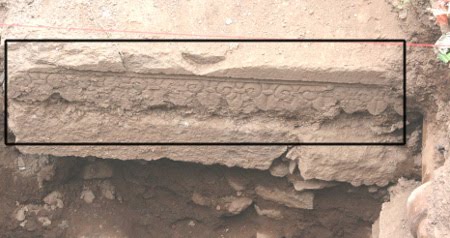
    Now in Pune efforts are being made to construct a test room for A muslim Graveyard over the remains of a Twin temple, Punyeswar and Narayaneswar. Pune is named after Punyeswar.

    Reports say that the evidence about the existence of the temple is being destroyed to facilitate the building of rest room. And there exists Dargah which is over 700 years old. The argument is that an old landmark, the Dargah is to be preserved.

    Punyeswar temple Pune. Remains.
    Remains of Punyeswar temple Pune
    Chhota Shaikhsallah Dargah,Pune.

    The temple is over 1000 year old. Which is an older landmark? And Dargah is not permitted in Islam. Detailed story.

    The controversy over the remains of a Hindu temple on the premises of the Chhota Shaikhsallah Dargah premises erupted again after historian Pandurang Balkawde objected to the construction work on the historic dargah’s premises, reports the newspaper DNA.

    The Hajrat Khwaja Shaikh Sallahuddin Algari Nizami Chisti Rahmatullah Alahi (Chhota Shaikh Sallah Dargah) is in the process of constructing a waiting room for the kin of the deceased at the graveyard on its premises. The dargah premises is situated at 1279 Kasba Peth near Kumbhar Wada, Dengale bridge.

    Balkawde said that being a member of Samajik Ekata Va Sanskruti Raksha Samiti, he had made a representation to the state home department. He also submitted memoranda to the city police and the Pune Municipal Corporation (PMC) in 2008.

    “The place where the dargah is situated used to house a temple almost 1,000 years ago. The Gazette of Pune mentions this temple as Punyeshwar Mandir,” he added. https://www-indiatvnews-com.cdn.ampproject.org/v/s/www.indiatvnews.com/amp/news/india/historian-claims-hindu-temple-remains-beneath-pune-dargah-3844.html?amp_gsa=1&amp_js_v=a9&usqp=mq331AQKKAFQArABIIACAw%3D%3D#amp_tf=From%20%251%24s&aoh=16468832425600&referrer=https%3A%2F%2Fwww.google.com&ampshare=https%3A%2F%2Fwww.indiatvnews.com%2Fnews%2Findia%2Fhistorian-claims-hindu-temple-remains-beneath-pune-dargah-3844.html

    Mr. Pandurang Balkawade, a senior historian has demanded that the construction should be stopped and the structure should be declared as a ‘preserved vaastu’. The construction was undertaken for building rooms in the durgah. The digging has been going on for a month when ruins of the temple were found. The durgah is 700 years old. In the year 1294, Alluddin Khilji attacked Raja Ramdev Rai and took over the whole area. Some ‘Fakirs’ came to Pune at that time and they demolished the ‘Narayaneshwar and Punyeshwar’ temples to build durgahs, said Mr. Balkawade presenting various proofs for the same. The Muslims inside the durgah did not allow taking pictures of the temple and started saying that it was not a temple but a tomb. They claimed that there were tombs and it was a graveyard. The dead bodies used to be buried there by filling soil. There were stables earlier. When the Panshet dam broke and there were floods in the city, everything flowed away and only those stones are remaining now, said Ibrahim Attar, a member of Kasba Peth Muslim community. https://www.hindujagruti.org/news/9781.html

    Two of the oldest structures in Pune, which have endured various regimes, are the two dargahs including the Thorla or senior, which lies opposite the Shaniwar wada and the Dhakta or Junior in Kumbharwada.

    A Marathi manuscript titled Pune peth kaifiyat, found in an archive in the Government Oriental Manuscripts Library in Chennai, tells the peculiar tale of the dargahs. The manuscript begins with the story of rishi Purna, who meditated in this region. Arguably, the city was named after him. The kaifiyat describes the building of the temples of Puneshwar and Narayaneshwar on the Mutha river bank in the period of the Yadava rule from 9th to 13th centuries.

    At this time, Delhi was captured by Qutbuddin Aibak and soon after, Islam began to spread to the Deccan. The kaifiyat says that two wandering missionaries including Sheikh Salahuddin awaliya, who ruled the city of Basra in Iraq and had abandoned his throne, along with Sheikh Ismauddin awaliya, travelled to India. They came to Pune with 12 followers and camped at the garden of a temple. When Sheikh Ismauddin’s followers asked him for food, the senior Sheikh told them to look around and eat what they found. The followers found two bullocks that belonged to a gardener, and these, they slaughtered for food. The gardener searched for the bullocks because he needed them to draw water from the well. Unable to find them and upon seeing the foreign visitors, he suspected the worst and asked them the whereabouts of the animals.https://punemirror-com.cdn.ampproject.org/v/s/punemirror.com/amp/entertainment/unwind/the-tale-of-two-dargahs/cid5092378.htm?amp_gsa=1&amp_js_v=a9&usqp=mq331AQKKAFQArABIIACAw%3D%3D#amp_tf=From%20%251%24s&aoh=16468858996872&referrer=https%3A%2F%2Fwww.google.com&ampshare=https%3A%2F%2Fpunemirror.com%2Fentertainment%2Funwind%2Fthe-tale-of-two-dargahs%2Fcid5092378.htm

    Punyeshwar Mahadev Mandir  was a Shiva temple along the bank of the river Mutha in Pune. Along with Puneshwar there existed another temple named Narayaneshwar. In the late thirteenth century Puneshwar temple was pulled down[2] and converted into a dargah now called Dhakta (Younger) Sheikh Salla Dargah,which stands in its place to this day. The Narayaneshwar was also converted into the Senior Sheikh Salla dargah around the same time. In 2006, a wall along the river collapsed leading to finding of old artefacts of the Puneshwar temple under the dargah.

    The temple remains one of the earliest named temples, after Pataleshwar in the city of Pune, although it does not exist in its original form now.

    The city of Pune is named after Puneshwar. Wikipedia

    Narayaneshwar Mahadev Mandir[1] and Puneshwar were two temples in Pune that were demolished[2] under the rule of the Delhi sultanate led by Nizamuddin and other religious preachers] The two preachers were later buried there. The dargah built over the Narayaneshwar Temple] is now the ‘Thorla (Senior) Sheikh Salla dargah’ and is located on the bank of the Mutha river, not far from the Shaniwar Wada.https://en.m.wikipedia.org/wiki/Narayaneshwar

    Join 4,576 other subscribers