

This post is a sequel to Hinduism,Mathematics Calculations and Measurements.
One who reads the Indian Puranas and Ithihasas like Ramayana would find that if a Rishi wants to curse or Bless some one’he/she sprinkles water thrice, taken from His /her Kamandalu, which is made of Copper.(Kamandalu is shaped like a small Teapot,without the Nose/snout)
In The Vedas,one of the most powerful Mantras being recited after the Pooja is performed is The Mantra Pushpa.
It is the worship of Water.
Water,Aapah,is extolled and prayed for Welfare.

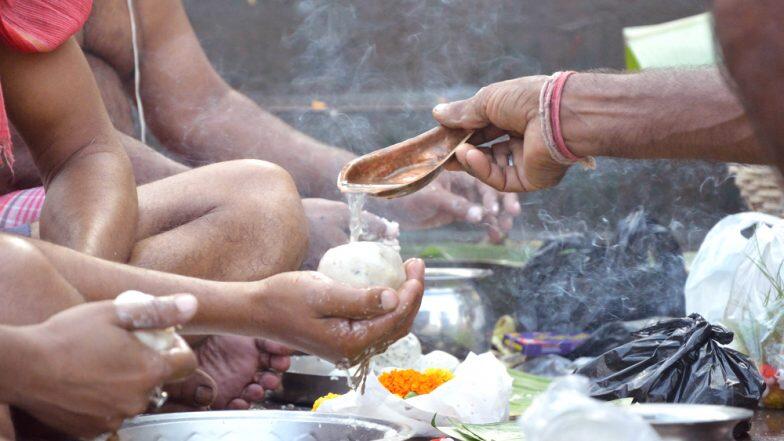
Water is used for all ceremonies,Functions.
Water is used for Purification ceremonies, like marriages,and cleansing the Home after a Death.
Temples in India are closed only between 1 and 4 pm and finally at 1030 pm.
The closing time after Noon is called the Closure after Uchchi Kala Pooja and the closure after 1030 pm is Closure afterArtha JamaPooja.
A temple is never closed at other times.
( Also a Temple is not sanctioned to be open after Artha Jama Pooja,after 1030 pm; we now have even Tirupathi Temple being kept open through out the Day during English New Year Day and other important Days,This is wrong ,according to the Sastras)
However the Temples are closed if death occurs in the Street where The Temple is located and it is opened after the body is taken out.
To cleanse the temple Punyahachana is performed with Water.
Temples are closed during the Eclipses,Grahans and they are opened after the Eclipse is over and a Punyahavaachana is performed with Water before opening.
The Sandhyaandana, which is a Daily Duty of the three Varnas, Brahmins ,Kshtriyas, Vaisyas is performed with Water ans the purification of Food is done with Water,Parishachanam.
Why?
I searched and found references about Electricity from the Agasthya Samhita.
Here it is.
Formula for Electric battery in Agastya Samhita an Ancient Hindu text by The ancient text of Agastya Samhita describes the method of making electric battery, and that water can be split into oxygen and hydrogen. Modern battery cell resembles Agastya’s method of generating electricity. For generating electricity, Sage Agastya had used the following material: 1.One earthen pot 2.Copper plate 3.Copper sulphate 4.Wet saw dust 5.Zinc amalgam His text says : “Sansthapya Mrinmaya Patre Tamrapatram Susanskritam Chhadyechhikhigriven Chardrarbhih Kashthpamsubhih. Dastaloshto Nidhatavyah Pardachhaditastah Sanyogajjayte Tejo Mitravarunsangyitam” संस्थाप्य मृण्मये पात्रे ताम्रपत्रं सुसंस्कृतम्। छादयेच्छिखिग्रीवेन चार्दाभि: काष्ठापांसुभि:॥ दस्तालोष्टो निधात्वय: पारदाच्छादितस्तत:। संयोगाज्जायते तेजो मित्रावरुणसंज्ञितम्॥ Which means, “Place a well-cleaned copper plate in an earthenware vessel. Cover it first by copper sulfate and then by moist sawdust. After that, put a mercury-amalgamated zinc sheet on top of the sawdust to avoid polarization. The contact will produce an energy known by the twin name of Mitra-Varuna. Water will be split by this current into Pranavayu and Udanavayu. A chain of one hundred jars is said to give a very effective force. (p. 422)” When a cell was prepared according to Agastya Samhita and measured, it gives open circuit voltage as 1.138 volts, and short circuit current as 23 mA. Anen Jalbhangosti Prano Daneshu Vayushu Evam Shatanam Kumbhanamsanyogkaryakritsmritah. if we use the power of 100 earthen pots on water, then water will change its form into life-giving oxygen and floating hydrogen. Vayubandhakvastren Nibaddho Yanmastake Udanah Swalaghutve Bibhartyakashayanakam. If hydrogen is contained in an air tight cloth, it can be used in aerodynamics, i.e. it will fly in air. (Today’s Hydrogen Balloon) Process Of Electroplating by Maharshi Agastya in Agastya Sanhita: Excerpt from “Technology of the Gods: The Incredible Sciences of the Ancients” – By David Hatcher Childress “In the temple of Trivandrum, Travancore, the Reverned S. Mateer of the London Protestant Mission saw ‘a great lamp which was lit over one hundred and twenty years ago’, in a deep well in side the temple. ……. On the background of the Agastya Samhita text’s giving precise directions for constructing electrical batteries, this speculation is not extravagant.”
”
अगस्त्य संहिता में एक सूत्र हैः
संस्थाप्य मृण्मये पात्रे ताम्रपत्रं सुसंस्कृतम्।
छादयेच्छिखिग्रीवेन चार्दाभि: काष्ठापांसुभि:॥
दस्तालोष्टो निधात्वय: पारदाच्छादितस्तत:।
संयोगाज्जायते तेजो मित्रावरुणसंज्ञितम्॥
अर्थात् एक मिट्टी का बर्तन लें, उसमें अच्छी प्रकार से साफ किया गया ताम्रपत्र और शिखिग्रीवा (मोर के गर्दन जैसा पदार्थ अर्थात् कॉपरसल्फेट) डालें। फिर उस बर्तन को लकड़ी के गीले बुरादे से भर दें। उसके बाद लकड़ी के गीले बुरादे के ऊपर पारा से आच्छादित दस्त लोष्ट (mercury-amalgamated zinc sheet) रखे। इस प्रकार दोनों के संयोग से अर्थात् तारों के द्वारा जोड़ने पर मित्रावरुणशक्ति की उत्पत्ति होगी।
यहाँ पर उल्लेखनीय है कि यह प्रयोग करके भी देखा गया है जिसके परिणामस्वरूप 1.138 वोल्ट तथा 23 mA धारा वाली विद्युत उत्पन्न हुई। स्वदेशी विज्ञान संशोधन संस्था (नागपुर) के द्वारा उसके चौथे वार्षिक सभा में ७ अगस्त, १९९० को इस प्रयोग का प्रदर्शन भी विद्वानों तथा सर्वसाधारण के समक्ष किया गया।
अगस्त्य संहिता में आगे लिखा हैः
अनेन जलभंगोस्ति प्राणो दानेषु वायुषु।
एवं शतानां कुंभानांसंयोगकार्यकृत्स्मृत:॥
अर्थात सौ कुम्भों (अर्थात् उपरोक्त प्रकार से बने तथा श्रृंखला में जोड़े ग! सौ सेलों) की शक्ति का पानी में प्रयोग करने पर पानी अपना रूप बदल कर प्राण वायु (ऑक्सीजन) और उदान वायु (हाइड्रोजन) में परिवर्तित हो जाएगा।
फिर लिखा गया हैः
वायुबन्धकवस्त्रेण निबद्धो यानमस्तके उदान स्वलघुत्वे बिभर्त्याकाशयानकम्।
अर्थात् उदान वायु (हाइड्रोजन) को बन्धक वस्त्र (air tight cloth) द्वारा निबद्ध किया जाए तो वह विमान विद्या (aerodynamics) के लिए प्रयुक्त किया जा सकता है।
स्पष्ट है कि यह आज के विद्युत बैटरी का सूत्र (Formula for Electric battery) ही है। साथ ही यह प्राचीन भारत में विमान विद्या होने की भी पुष्टि करता है।
Process Of Electroplating by Maharshi Agastya in Agastya Sanhita:-
“Technology of the Gods: The Incredible Sciences of the Ancients” – By David Hatcher Childress
“In the temple of Trivendrum, Travancore, the Reverned S. Mateer of the London Protestant Mission saw ‘a great lamp which was lit over one hundred and twenty years ago’, in a deep well in side the temple. ……. On the background of the Agastya Samhita text’s giving precise directions for constructing electrical batteries, this speculation is not extravagant.”
आपको यह जानकर आश्चर्य होगा कि आज की अनेक आधुनिक तकनीकों का वर्णन हमारे प्राचीन ग्रंथों में मिलता है। शुक्र नीति के अनुसार आज के इलेक्ट्रोप्लेटिंग के लिए “कृत्रिमस्वर्णरजतलेपः” शब्द का प्रयोग करते हुए इसे “सत्कृति” नाम नाम दिया गया है – “कृत्रिमस्वर्णरजतलेप: सत्कृतिरुच्यते”।
अब यह बताना चाहते हैं कि अगस्त्य संहिता में विद्युत् का उपयोग इलेक्ट्रोप्लेटिंग के लिए करने की विधि दर्शाते हुए निम्न सूत्र मिलता हैः
यवक्षारमयोधानौ सुशक्तजलसन्निधो॥
आच्छादयति तत्ताम्रं स्वर्णेन रजतेन वा।
सुवर्णलिप्तं तत्ताम्रं शातकुंभमिति स्मृतम्॥
अर्थात्- लोहे के पात्र में रखे गए सुशक्त जल (तेजाब का घोल) का सानिध्य पाते ही यवक्षार (सोने या चांदी का नाइट्रेट) ताम्र को स्वर्ण या रजत से आच्छादित कर देता है। स्वर्ण से लिप्त उस ताम्र को शातकुंभ स्वर्ण कहा जाता है।
References:
https://www.facebook.com/media/set/?set=a.459663690792028.1073741856.182221931869540&type=3
http://cpdarshi.wordpress.com/2012/04/28/proof-of-electric-battery-in-agastya-sanhita/
http://mysteriesexplored.wordpress.com/2013/01/12/electricity-in-ancient-india/
Related Articles
- From Where Did The Brahmins Come? (ramanan50.wordpress.com)
- Atomic Explosion Mahabharata Harappa Evidence. (ramanan50.wordpress.com)


[…] Electricity In Hinduism Texts Agashtya Samhita […]
[…] Electricity In Hinduism Texts Agashtya Samhita (ramanan50.wordpress.com) […]
[…] Electricity In Hinduism Texts Agashtya Samhita […]