
I am providing the Vedic Mantras for performing Śrāddha.
I have written earlier on Sraddha Rules How Face,Sit,Perform Homa,For Whom How Many Apasthamba Sutra.
I have written on the Basic Samskaras,forty duties,to be performed by three varnas,Brahmana, Kshatriya and Vaisya .
I have written on individual Samskaras,Garbhadhana,Pumsavana,Punyahavaasana,Namakarana and many more.
I have also described details for Sraddha,the Oblations to be performed for ancestors.
These rules,being Smritis,have variations in practice.
Those who are in Dakshina Para,south of Vindhyas follow the rules set by Sage Apasthamba.
Even in the south,there are people who follow other Sutras.
This is due to the Vedas Shaka assigned to them.
The Sakas one has to follow can be found in the Abhivadan Mantra,that is ‘Abhivaadaye….aham asmibho’
There seems to be some doubts on basic procedures to be followed in performing Sraddha.
The authority is the Smriti on these issues.
On How
To sit,
Which direction to face at various point of time during Sraddha,
Light fire for homa,
How many ahutis,
For whom…
These are all set out by Sage Apasthamba in Apasthamba Gruhya Sutra.
Those who follow Apasthamba sutra are to follow this.
I am providing the procedure from Apasthamba Gruhya Sutra.
‘
Praśna 1, Section 1
1. Now (follow) the ceremonies (the knowledge of) which is derived from practice (and not from the Śruti).
2. They should be performed during the northern course of the sun, on days of the first fortnight (of the month), on auspicious days,
3. With the sacrificial cord suspended over (the sacrificer’s) left shoulder.
4. (The rites should be performed) from left to right.
5. The beginning should be made on the east side or on the north side,
6. And also the end.
7. Ceremonies belonging to the Fathers (are performed) in the second fortnight (of the month),
8. With the sacrificial cord suspended over the right shoulder,
9. From right to left,
10. Ending in the south.
11. Ceremonies occasioned by special occurrences (are performed) according as their occasions demand.
Sraddha Rules How Face,Sit,Perform Homa,For Whom How Many Apasthamba Sutra – Ramanisblog https://share.google/MDYjF6I38j2vs6E9e
SacredVedic Chants for Ancestors: A Complete Guide to Pitru Homa and Śrāddha Mantras
In the Vedic tradition, honoring one’s ancestors (Pitrus) is considered a fundamental duty. The primary vehicle for this reverence is the Śrāddha ceremony and the Pitru Homa (fire ritual). These rites are believed to nourish the departed souls and remove ancestral karmic obstacles (Pitru Dosha) from the lives of descendants.
Below is a detailed guide to the key mantras from the Rig Veda and Yajur Veda that form the core of these rituals.
—
ThPrimary Hymn: Pitru Suktam (Rig Veda 10.15)
The Pitru Suktam is the foundational hymn for any ancestral ritual, whether a Homa (fire offering) or a Śrāddha. It is a prayer to the ancestors and to Lord Agni, the fire god, who acts as the divine messenger carrying offerings to the departed.
Source: Rigveda (Mandala 10, Hymn 15) & Yajurveda
Purpose: Invoking ancestors, offering respect, and seeking blessings.
The 14 Verses of Pitru Suktam
Verse 1: Invocation to Rise
udīratāmavara utparāsa unmadhyamāḥ pitaraḥ somyāsaḥ
asuṃ ya īyuravṛkā ṛtajñāste no’vantu pitaro haveṣu
Meaning: May our ancestors of lower, intermediate, and higher generations rise. May they protect us in our invocations.
Verse 2: Salutations
idaṃ pitṛbhyo namo astvadya ye pūrvāso ya uparāsa īyuḥ
ye pārthive rajasyā niṣattā ye vā nūnaṃ suvṛjanāsu vikṣu
Meaning: Salutations today to ancestors departed recently or long ago, residing in earthly realms or heavenly worlds.
Verse 3: Blessings of Vishnu
āhaṃ pitṝnsuvidatrām̐ avitsi napātaṃ ca vikramaṇaṃ ca viṣṇoḥ
barhiṣado ye svadhayā sutasya bhajanta pitvasta ihāgamiṣṭhāḥ
Meaning: We invoke the blessings of Vishnu. May the ancestors be seated on the sacred grass to accept the offerings.
Verse 4: Accepting Offerings
barhiṣadaḥ pitara ūtyarvāgimā vo havyā cakṛmā juṣadhvam
ta ā gatāvasā śaṃtamenāthā naḥ śaṃ yorarapo dadhāta
Meaning: O ancestors seated on the grass, accept the offerings and grant us freedom from suffering and disease.
Verse 5: Hearing Prayers
upahūtāḥ pitaraḥ somyāso barhiṣyeṣu nidhiṣu priyeṣu
ta ā gamantu ta iha śruvantvadhi bruvantu te’vantvasmān
Meaning: Let the honored ancestors come, hear our prayers, and protect us.
Verse 6: Seeking Forgiveness
āchyā jānu dakṣiṇato niṣadyemaṃ yajñamabhi gṛṇīta viśve
mā hiṃsiṣṭa pitaraḥ kena chinnō yadvā āgaḥ puruṣatā karāma
Meaning: We perform this ritual seated respectfully. O ancestors, forgive us any offenses we may have committed as humans.
Verse 7: Granting Wealth
āsīnāso aruṇīnāmupasthe rayi-ndhatta dāśuṣe martyāya
putrebhyaḥ pitarastasya vasvaḥ pra yacchata ta ihorja-ndadhāta
Meaning: Grant wealth to the mortal who offers to you, O ancestors. Bestow upon your children strength and prosperity.
Verse 8: Yama (God of Death)
ye naḥ pūrve pitaraḥ somyāso-‘nūhire somapīthaṃ vasiṣṭhāḥ
tebhiryama-ssaṃrarāṇo havīṃṣyuśannuśadbhiḥ pratikāmamattu
Meaning: Along with our distinguished ancestors who drink Soma, may Yama, the lord of death, enjoy the offerings presented.
Verses 9-10: Invoking Agni to Guide Ancestors
āgne yāhi suvidatrebhirarvāṅ satyaiḥ kavyaiḥ pitṛbhirgharmasadbhiḥ…
āgne yāhi sahasra-ndevavandaiḥ paraiḥ pūrvaiḥ pitṛbhirgharmasadbhiḥ
Meaning: O Agni, come with the truthful ancestors who performed sacrificial penance. Come with the thousands of ancestors who are worthy of praise.
Verse 11: Invitation to Seated Ancestors
agniṣvāttāḥ pitara ēha gacchata sadassada-ssadata supranītayaḥ
attā havīṃṣi prayatāni barhiṣyathā rayiṃ sarvavīra-ndadhātana
Meaning: O ancestors who are purified by Agni, come here. Accept the offerings placed on the sacred grass and grant us heroic offspring and wealth.
Verse 12: Gratitude to Agni
tvamagna īḻito jātavedo-‘vāḍḍhavyāni surabhīṇi kṛtvī
prādāḥ pitṛbhya-ssvadhayā te akṣannaddhi tva-devā prayatā havīṃṣi
Meaning: You, O Agni, invoked as Jātavedas, have carried our fragrant offerings. You have given them to the ancestors; they have enjoyed them.
Verse 13: Prayer for Unknown Ancestors
ye cēha pitaro ye ca nēha yāṃśca vidma yāँ u ca na pravidma
tvaṃ vēttha yati te jātaveda-ssvadhābhiryajñaṃ sukṛta-ñjuṣasva*
Meaning: O Agni, you know those ancestors who are here and not here, whom we know and do not know. Please them with the offerings.
Verse 14: For Peace of All Departed Souls
ye agnidagdhā ye anagnidagdhā madhye di-va-ssvadhayā mādayantē
tebhi-ssvarāḻasunītimētāṃ yathāvaśa-ntanu-ṅkalpayasva
Meaning: May all souls, whether cremated or not cremated, who reside in the celestial realm, rejoice with our offerings. Grant them liberation and peace.
—
🕯️ Mantras for Specific Rituals
1. Pitru Homa (Thila Homam) Mantras
Thila Homam is a specific Homa performed to pacify ancestors, especially those who died unnaturally or when there is Pitru Dosha in the horoscope. The key ingredient is black sesame seeds (Tila) , which symbolize purification and devotion.
Primary Mantra for Tila Offering:
During the Homa, the priest chants the Pitru Suktam (verses 1-14 above) while offering Tila and ghee into the sacred fire. The fire is considered the divine carrier (Agni) that takes these offerings directly to the ancestors.
Supporting Mantra (Pitru Gayatri):
Om Pitru Ganaay Vidmahe Jagat Dharini Dheemahi Tanno Pitro Prachodayaat
Meaning: We meditate upon the assembly of ancestors. May the sustainers of the world illuminate our intellects.
2. Śrāddha Ceremony Mantras
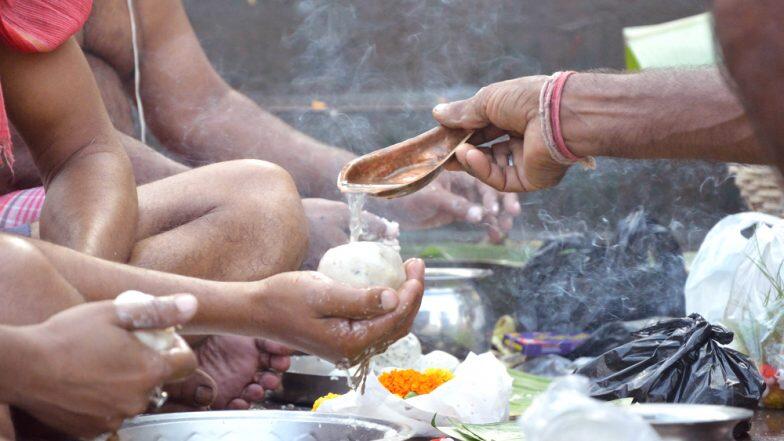
The Śrāddha is a more elaborate ceremony involving offerings of food (Pinda – rice balls) and water (Tarpanam). Unlike the Homa, which uses fire, the Śrāddha focuses on feeding Brahmins who represent the ancestors.
Key Procedures and Mantras According to the Brahma Purana:
· Invocation Mantra: Before offering the Pinda, the following mantra is recited:
“Om Svadha Namah Pitrubhyah”
> Meaning: “This is an offering of nourishment to the ancestors.”
· Tarpanam Mantra (Water Offering):
For each ancestor (father, grandfather, great-grandfather), water mixed with black sesame seeds is offered through the right hand (Pracheenaveeti style). A simple form is:
“Om [Gotra] [Name] [Relation] Tarpayami”
> Meaning: “I offer satisfaction to [Name] of [Gotra], my [Relation].”
· The Pinda Mantra:
While offering the three rice balls (for father, grandfather, and great-grandfather), the Pitru Suktam is recited.
· Aghamarshana Sukta: According to the Brahma Purana, the Aghamarshana Sukta is muttered thrice during the Śrāddha for purification.
—
Ritual Observances & Context
When to Perform
· Pitru Paksha: The 16-day lunar period before Navaratri is the most auspicious time.
· Amavasya (New Moon Day): Especially Mahalaya Amavasya (the final day of Pitru Paksha) is considered the most powerful day for ancestors.
· Death Anniversary (Tithi): The annual Śrāddha is performed on the specific lunar date of the ancestor’s passing.
Essential Materials
· Black Sesame Seeds (Tila): Used in both Homa and Tarpanam; symbolizes purity.
· Kusha Grass: Spread for the ancestors to sit upon.
· Pinda (Rice Balls): Made from cooked rice mixed with black sesame seeds.
· Ghee and Havan Samagri: For the Homa ritual.
Proper Procedure
· Posture: Mantras are chanted facing South (direction of Yama, the lord of death) with the sacred thread worn over the right shoulder (Pracheenaveeti).
· Timing: Śrāddha is typically performed after noon.
· Feeding Brahmins: Inviting and feeding qualified Brahmins (preferably Veda-versed) is an essential part of the Śrāddha, believed to directly satisfy the ancestors.
· Faith: The scriptures emphasize that sincere faith (Shraddha) in the ritual is more important than elaborate external arrangements.
The Journey from Preta to Pitru
In Hindu tradition, for the first 10 days after death, the departed soul is considered a Preta (restless spirit). Daily Pinda offerings are given to form a new body for the soul. On the 10th day, the head is formed, and the Preta becomes a Pitru (deified ancestor). The Sapindikarana Śrāddha on the 12th day or first anniversary formally unites the new ancestor with the departed forefathers.
—
Note: While these mantras are provided for understanding, performing these rituals correctly requires the guidance of a qualified priest (Purohit) who knows your family lineage (Gotra and Shakha), as pronunciation and specific procedures vary by region and tradition.