
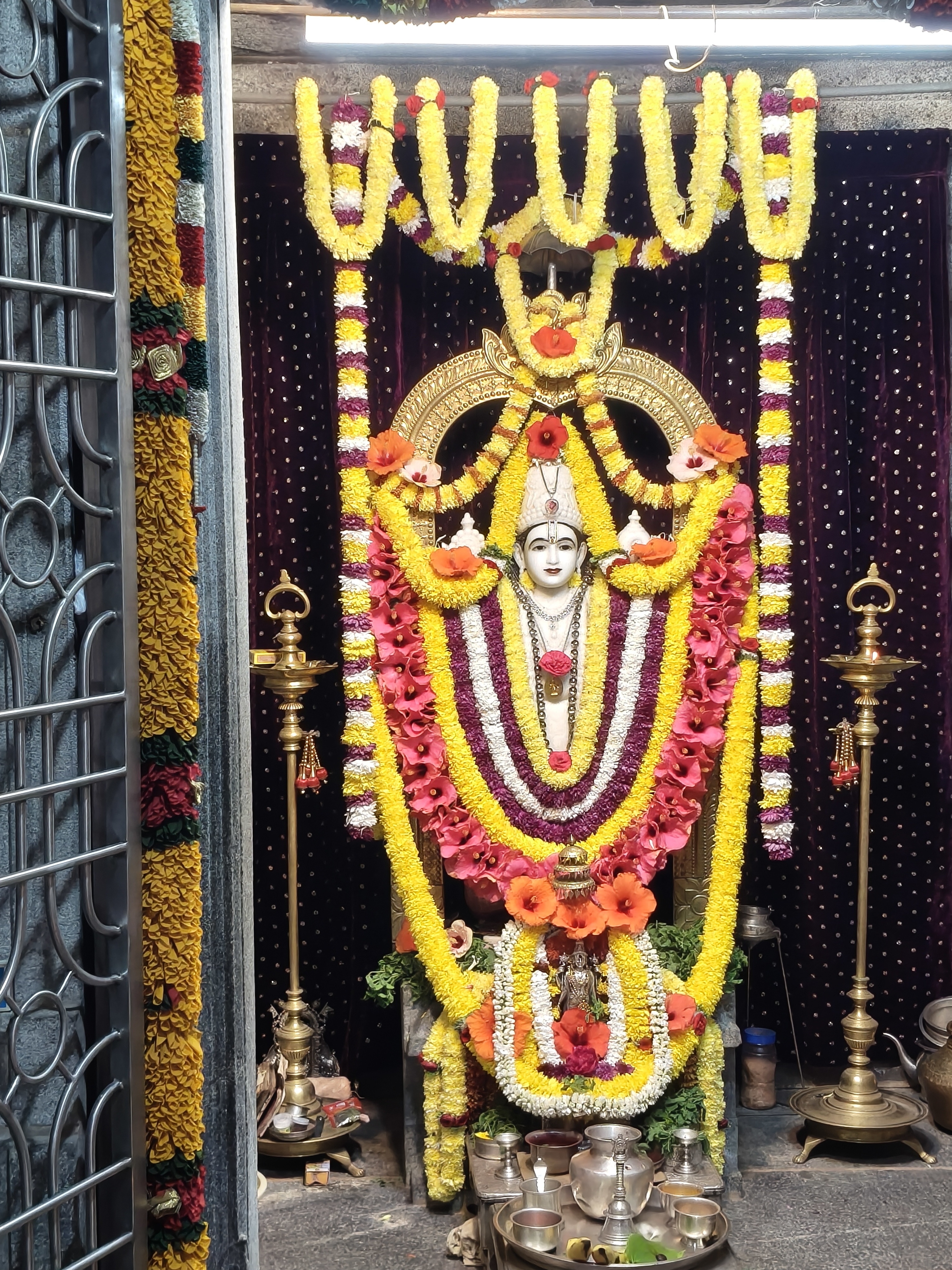

Satyanarayana Pooja is quite popular in Andhra Pradesh, Karnataka,Bengal and Maharashtra,though it is practiced in other parts of India as well.
It is different from the other Poojas performed in Hinduism.
Satyanarayana Pooja, a significant ritual in Hinduism, has its roots in the ancient texts and practices associated with Lord Vishnu. It is especially prominent in regions like Andhra Pradesh, Karnataka, Bengal, and Maharashtra, though its practice has spread across various parts of India.
Origin
The origin of Satyanarayana Pooja is believed to be linked to the Satya Narayana Katha, a narrative that describes the glory of Lord Vishnu. This Katha is traditionally recited during the Pooja and highlights the importance of truth (Satya) and duty (Dharma) in one’s life. The earliest references can be traced back to religious texts such as the Skanda Purana and the Padma Purana, which provide guidelines on the performance and significance of this Pooja.
Development
Over time, Satyanarayana Pooja has evolved in its practice and significance:
- Cultural Integration: As this Pooja spread across different regions, local customs and traditions integrated into the ritual, enriching its practice. Diverse interpretations of the Katha emerged, focusing on moral values and ethical living.
- Inclusivity of Participants: Unlike many other Poojas that may require specific qualifications for participation, Satyanarayana Pooja welcomes everyone, fostering a sense of community and shared devotion.
- Modern Celebrations: Today, the Pooja is often performed during auspicious occasions such as weddings, housewarming ceremonies, and birthdays, reflecting the desire for peace, prosperity, and wellbeing.
- Sustained Popularity: The enduring popularity of Satyanarayana Pooja is evident from its prominence in festivals and personal life events, demonstrating its deep-rooted significance in Hindu worship.
In summary, Satyanarayana Pooja has a rich history tied to the teachings of Lord Vishnu, with its practice and meaning adapting over centuries, making it a cherished ritual among devotees.
Mansour al-Hallaj
(Arabic: ابو المغيث الحسين بن منصور الحلاج, romanized: Abū ‘l-Muġīth al-Ḥusayn ibn Manṣūr al-Ḥallāj) or Mansour Hallaj (Persian: منصور حلاج, romanized: Mansūr-e Hallāj) (c. 858 – 26 March 922) (Hijri c. 244 AH – 309 AH) was a mystic, poet, and teacher of Sufism.[5][6][7] He was best known for his saying, “I am the Truth” (“Ana’l-Ḥaqq“), which many saw as a claim to divinity, while others interpreted it as an instance of annihilation of the ego, which allowed God to speak through him. Al-Hallaj gained a wide following as a preacher before he became implicated in power struggles of the Abbasid court and was executed after a long period of confinement on religious and political charges. Although most of his Sufi contemporaries disapproved of his actions, Hallaj later became a major figure in the Sufi tradition.’
Satyanarayana Pooja is quite popular in Andhra Pradesh, Karnataka, Bengal, and Maharashtra, though it is practiced in other parts of India as well. It is different from the other Poojas performed in Hinduism. The Pooja is dedicated to Lord Vishnu, who is worshipped as the embodiment of truth and righteousness.
More about Satyanarayana Pooja
Sufism and Mansour al-Hallaj
Mansour al-Hallaj (c. 858 – 26 March 922) was a mystic, poet, and teacher of Sufism. He is best known for his saying, “I am the Truth” (“Ana’l-Ḥaqq“), which many interpreted as a claim to divinity, while others saw it as an expression of the annihilation of the ego, allowing God to speak through him.
Key Points about Mansour al-Hallaj
- Teachings: Al-Hallaj’s teachings emphasized the deep connection between the divine and the human experience.
- Controversy: He gained a substantial following as a preacher but became embroiled in political power struggles of the Abbasid court and was executed after a long confinement on charges related to his beliefs.
- Legacy: Although many Sufi contemporaries disapproved of his ideas, he later emerged as a major figure in the Sufi tradition.
For more on Mansour al-Hallaj, you can find further information here.
20,085,835 hits

