It is always easy and rewarding to accept statements of our leaders and be complimented as Patriotic and if you question the words or the lives of these people, you had it,
I published an article stating that there are numerous references , documents and articles on the Nehru Family.
On Nehru being born in a Brothel,his father Motilal Nehru running it,
On Sonia Gandhi‘s Profile,Her Educational Qualifications. her reported involvement in the theft of Antiques from India,Her father having been a Nazi,
Her close association with Quattarochi , Bofors Deal,KGB paid Sonia and Rahul Gandhi.
On Rahiul Gandhi’s educational qualification.
I had received a lot of compliments for providing information with authentic sources, I also received criticisms.
Some of them abusive.
Of the mildest criticism I received this one I choose as the best.
‘One who comments on Sri Chakra should not comment on others like this”
This is from a reader in Facebook.
I understand.
Much as I would like to avoid writing about these voluntary characters, and willful propagation of falsehood as Truth, including in School text Books,
I feel I should not shy away from the Facts backed by documents.
This is the purpose of my posts on these subjects.

image credit.Dccan Chronicle Archives.
If contrary views are presented I am willing to post them.
All in the purpose of making people aware.
We have been taught in History ,in Schools, that China attacked India, while chanting Indi Chini Bhai Bhai, after attending a Conference , thus stabbing Nehru and India in the back.
Curious in India is the fact that the nation is equated to a Politician!
This tradition continues even today.
What are the facts of Chinese Aggression?
1.The disputed territory, if one were to go by the earliest ownership(reasonably , about 250 years earlier,if one were to extend this beyond this point there is no India!), was owned by the Chinese.
2.After the conquest by the Sikh Confederacy of Ladakh in 1842 the territory became a disputed one with the Chinese as it was owned by The Chinese and
when the British conquered the Sikhs, the territory became territory which was guaranteed by the Kashmir,which was defeated by the Sikhs , who were
finally taken over by the British.
So British control in a guarantee of Fourth Order,,British to Sikhs, Sikhs to Kashmir, Kashmir to Ladakh!
This is the ownership of the territory for which China attacked India.
Was China’s attack unprovoked?
No.
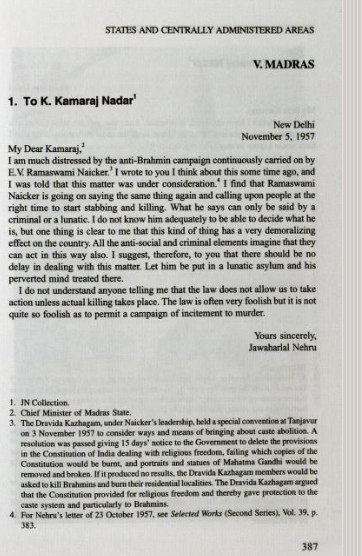
Nehru provoked it.
”
At the beginning of 1961, Nehru appointed General B. M. Kaul as army Chief of General Staff,[32] but he refused to increase military spending and prepare for a possible war.[32]According to James Barnard Calvin of the U.S. Navy, in 1959, India started sending Indian troops and border patrols into disputed areas. This program created both skirmishes and deteriorating relations between India and China.[8] The aim of this policy was to create outposts behind advancing Chinese troops to interdict their supplies, forcing them north of the disputed line.[8][26][30][33] There were eventually 60 such outposts, including 43 north of the McMahon Line, to which India claimed sovereignty.[8][13] China viewed this as further confirmation of Indian expansionist plans directed towards Tibet. According to the Indian official history, implementation of the Forward Policy was intended to provide evidence of Indian occupation in the previously unoccupied region through which Chinese troops had been advancing. Kaul was confident, through contact with Indian Intelligence and CIA information, that China would not react with force.[19] Indeed, at first the PLA simply withdrew, but eventually Chinese forces began to counter-encircle the Indian positions which clearly encroached into the north of McMahon Line. This led to a tit-for-tat Indian reaction, with each force attempting to outmanoeuver the other. However, despite the escalating nature of the dispute, the two forces withheld from engaging each other directly.[2]
Chinese attention was diverted for a time by the military activity of the Nationalists on Taiwan, but on 23 June the U.S. assured China that a Nationalist invasion would not be permitted.[34] China’s heavy artillery facing Taiwan could then be moved to Tibet.[35] It took China six to eight months to gather the resources needed for the war, according to Anil Athale, author of the official Indian history.[35] The Chinese sent a large quantity of non-military supplies to Tibet through the Indian port of Calcutta.[35]
Early incidents
Various border conflicts and “military incidents” between India and China flared up throughout the summer and autumn of 1962. In May, the Indian Air Force was told not to plan for close air support, although it was assessed as being a feasible way to counter the unfavourable ratio of Chinese to Indian troops.[36] In June, a skirmish caused the deaths of dozens of Chinese troops. The Indian Intelligence Bureau received information about a Chinese buildup along the border which could be a precursor to war.[36]
During June–July 1962, Indian military planners began advocating “probing actions” against the Chinese, and accordingly, moved mountain troops forward to cut off Chinese supply lines. According to Patterson, the Indian motives were threefold:
- Test Chinese resolve and intentions regarding India.
- Test whether India would enjoy Soviet backing in the event of a Sino-Indian war.
- Create sympathy for India within the U.S., with whom relations had deteriorated after the Indian annexation of Goa.[20]:279
On 10 July 1962, 350 Chinese troops surrounded an Indian occupied post in Chushul (north of the McMahon Line) but withdrew after a heated argument via loudspeaker.[9] On 22 July, the Forward Policy was extended to allow Indian troops to push back Chinese troops already established in disputed territory.[26] Whereas Indian troops were previously ordered to fire only in self-defence, all post commanders were now given discretion to open fire upon Chinese forces if threatened.[26] In August, the Chinese military improved its combat readiness along the McMahon Line and began stockpiling ammunition, weapons and gasoline.[8]
Given his foreknowledge of the coming Cuban Missile Crisis, Mao Zedong was able to persuade Nikita Khrushchev to reverse the Russian policy of backing India, at least temporarily.[37] In mid-October, the Communist organ Pravda encouraged peace between India and China.[37] When the Cuban Missile Crisis ended and Mao’s rhetoric changed, however, Russia reversed course.[37]
Confrontation at Thag La.
In June 1962, Indian forces established an outpost at Dhola, on the southern slopes of the Thag La Ridge.[8] Dhola lay north of the McMahon Line but south of the ridges along which India interpreted the McMahon Line to run”
Chinese Attempt at Mediation.
“He struck a match, and held the paper to the flames… He said it would take more than a quarter of a century to return to any substantive negotiation, provided the Chinese refrained from another attack on India.’
On October 24, Premier Zhou received PKB; the atmosphere was ‘definitely chilly’.
PKB writes, ‘He then said that the conflict had to stop, it had to end! He had therefore written a letter to Mr Nehru with three proposals: 1. The two countries should immediately agree to respect ‘the line of actual control’, and their armed forces should disengage and withdraw 20 km from this line; 2. The Chinese troops in the eastern sector would withdraw north of the line of actual control; 3. The prime ministers of the two countries should meet to seek a friendly and peaceful settlement.’
In reply PKB presented the Indian viewpoint, adding, ‘China had agreed in 1960, when Zhou had visited New Delhi, to maintain the status quo in the North East Frontier Agency area. At this point he interrupted me sharply by saying that it was not true; he had never given such an assurance.’
On November 19 and 20, PKB had two more meetings with Zhou.
In December 1962, PKB was instructed to come to Delhi for the Sri Lankan prime minister’s visit; the six non-aligned mediator ‘Colombo Powers’ — Myanmar, Cambodia, Egypt, Ghana, Indonesia and Sri Lanka — had advanced proposals to ease India-China tensions.
This was PKB’s first visit to Delhi during the assignment. Little wonder PKB felt he did not understand New Delhi’s thinking.
On January 7, 1963, PKB was summoned, told that he should come alone.
PKB writes, ‘He (Zhou)’ was in a pensive mood and somewhat tired, and said… he would like me to carry his very personal and verbal message only for Mr Nehru’s ears. He continued that war never solved any problems, but only created new ones… positive steps were urgently required besides public declarations and political statements. Mr Nehru, a man of high philosophy and great vision, and he had known each other personally over a period of many years. He understood Mr Nehru’s current political predicaments, but Mr Nehru should try and understand his (Zhou en-Lai’s) position as well. Mr Nehru should help Mr Zhou en-Lai’s hand, and a hand extended in friendship and cooperation…’
‘1. For the next three months, Mr Nehru and he would stop making negative statements about each other’s country although this may not stop others from making statements of counter-productive nature. 2. Mr Nehru and he should meet as soon as possible with only a small entourage, away from the press and publicity, in an agreed place, in order to exchange ideas for an agreed and joint action to defuse the current situation. This meeting in total privacy should last no longer than two days. 3. After this meeting, which would further ensure in every way the strengthening of the cease-fire line, the two governments would draw up a programme where they could jointly cooperate in areas like trade, science, culture and technology…’
‘When the climate for mutual trust had been created, then the border disputes would be discussed, on a sector to sector basis, by the two countries… He requested me again to give this strictly private and personal message directly to Mr Nehru.’
PKB decided to tell no one in Delhi about the content of Zhou’s message, not even Foreign Secretary M J Desai. He met Nehru several times, ‘(Nehru) wanted me to go with him to his office in South Block. In the car he… was mumbling to himself, “What went wrong, where did I go wrong?” During my stay in New Delhi, I was with Mr Nehru a number of times, and used to hear this type of monologue…’
‘(Some days later, at the prime minister’s residence) He asked me about the message sent by Zhou en-Lai… immediately after the meeting with Chou, I had myself typed out so that no point might be missed… I gave him the one-page typed message which I carried constantly with me inside my wallet. He started reading it… going over it a few times. He then put down the paper on the table near him and seemed lost in thought…’
‘He returned from his thoughts, looked at me and said that it was not possible since matters had gone too far. He added that during my stay I had met members of the government and the Opposition, press people, as well as ordinary citizens, and surely I must have reached the same conclusion that no one in India would stand anymore Chinese bluff and all nonsense.’
‘He briefly recalled his efforts to help China with goodwill and friendship, and his close association with Zhou en-Lai, whose betrayal had led to fraudulent territorial claims by China and the invasion of India. He gave descriptions of meetings and details of discussions and negotiations with Zhou en-Lai. It was a melancholy monologue…’
Citation.
Nehru’s No to China for mediation
Related articles