Tag: History of Tamils

  • Rajaraja Chozha Killed Elder Brother Aditha Karikala? Epigraphy Evidence

    Rajaraja Chozha Killed Elder Brother Aditha Karikala? Epigraphy Evidence

    One of the intriguing aspects of Rajaraja Chozha, who is one of the greatest emperors India had seen, is the mystery surrounding the murder of his Elder Brother Aditha Karikala. Aditha Karikala is reported to have been killed by the Personal Bodyguards of Veerapandya, the Pandya King who fought relentlessly against the Cholas. In the battle that ensued, Veera Pandya was seriously injured, escaped from the battlefield and was hiding in a forest,tending his injuries. Aditha Karikala, who led the Cholas in the battle,hunted Veerapandya in his hideout and Cut his head. He did not stop at that that. He hung the lifeless head Thanjavur Fort,which was the capital of Chozhas then. At that time,his father Sundara Chozha was alive. Adithya Karikala added the title,’One who cut the Head of Veerapandya’ ‘before his name. This was not taken kindly by the Pandyas.From here the narratives become hazy .The Bodyguards,called ‘Abathuthavis’ in Tamil,which is equivalent to the Z Group Security Guards, infiltrated into Chozha kingdom,plotted to avenge the death of Adhita Karikala by murdering Sundara Chozha,Rajaraja Chozha ( he had not ascended the the throne yet and was known as Arunmizhi Thevan) and Madurantaka Chozha was called as Uthama Chozha during later days..Madurantaka Chozha was the paternal uncle of Rajaraja Chozha. Madurantaka Chozha ruled ,after the death of Sundara Chozha,for a few years.After he was thrown out/killed, Rajaraja Chozha came to power.)

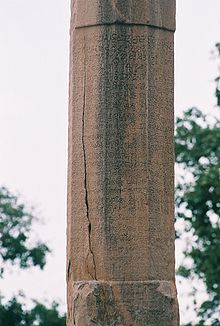
    The question of who killed Aditha Karikala remains a mystery.The narrative that the Guards of Veerapandya murdered Aditha Karikala and the conspirators were punished by Rajaraja Chozha after he came to power is recorded in the Udayarkudi Epigraph. Udayarkudi has a Siva temple built by Rajaraja Chozha The Epigraph states that the conspirators who murdered Aditya Karikala known as the one who cut the head of Pandya, Doman,Panchavan Brahmadhirayan Ravidasam Irumudi Chozha Brahmadhirayan Parameswaran,their brother Malayanur Revadasavithan’s portions of the properties: and from the properties of the Ravidasan’s mother Nangaichanai,his son, Ravidasan’s brother’s,relatives,uncle’s,and those who are married to these; Six house groups measuring two and three fourth veli and oNe Square Ma( a measurement of Ancient Tamil People) is to bought by Vyaazha Gajamallan from the Town Officials by paying 112 Gold Kazhanju,( medium of payment)

    Udayarkudi Epigraph.

    வீரநாராயண சதுர்வேதி மங்கலத்து ஊர் சபையின்  பொறுப்பில் இருக்கும்  ‘பாண்டியன் தலை கொண்ட’ ஆதித்த சோழனை கொன்று துரோகிகளான சோமன்பஞ்சவன் பிரமாதிராயரான ரவிதாசன்இருமுடி சோழ பிரமாதிராயனான பரமேஸ்வரன், இவர்கள் தம்பி மலையானூரனான ரேவதாசவித்தன் ஆகியோரது உடைமைகளில் இருந்தும், இவர்கள் உடன்பிறந்தார், இவர்கள் மாமன்மார், இவர்களிடம் பெண்ணெடுத்தவர்கள், இவர்களுக்கு பெண் குடுத்தவர்கள் ஆகியோரது உடமைகளில் இருந்தும், ரேவதாசவித்தன்அவன் மகன், அவன் தாய் நங்கை சாணி ஆகியோரின் இரண்டே முக்கால் வெளி ஒரு மா பரப்பளவு நிலத்துடன் கூடிய ஆறு வீட்டுத் தொகுதிகளை, வியாழ கஜமல்லன் என்பவர் ஊரார் சபையிடம் இருந்து 112 பொன் கழஞ்சு

    https://roar.media/tamil/main/arts-culture/ponniyinselvan-part-five

    The inscription from Udaiyargudi dated in the second regnal year of Rajaraja Chola states that the government confiscated the lands of a few people and their relatives, namely Soman, Ravidasan alias Panchavan Brahmadhirajan, Parameswaran alias Irumudichola Brahmadhirajan and Malaiyanur Revadasa Kramavittan and the properties of his son and mother for treason and for their hand in the murder of Karikala chola who took the head of the Pandya. Among these Ravidasan and Parameswaran were government officials. We can safely gather that although Aditya II was killed in 969 C.E., no action had been taken by Uttama during his reign to bring justice to the perpetrators. K.A.N. Sastry in his authoritative Colas says that based on an inscription at the temple at Udayarkudi, circumstantial evidence pointed to Uttama’s culpability in the assassination. https://en.m.wikipedia.org/wiki/Uttama_Chola#cite_ref-udaiyargudi1_7-0. https://en.m.wikipedia.org/wiki/Uttama_Chola#cite_ref-udaiyargudi2_8-1. South Indian History Congress (1999). Proceedings of the Annual Conference, Volume 18. p. 157.

    Doubt on the Epigraph is due to the fact

    • Why it took Rajaraja Chozha twenty years to punish the perpetrators?
    • Why his uncle , Madurantaka Chozha did not punish ?
    • Two of the perpetrators were Government officials.Dies it mean they had a hand in the assassination?
    • Even the punishment is not Death Penalty. The perpetrators were sent away from the country.Why?

    The argument that they were not given death penalty is due to the practice of the then kings did not execute Brahmins because the kings were following Manu Dharma Shastra which forbids Kings from killing Brahmins This is not supported by evidence anywhere.

    If one were to by motives behind a crime, only Madhurantaka Chozha and Rajaraja Chozha fit the bill. Madurantaka can be ruled out because because Rajaraja Chozha and his all powerful Sister Kundavai and her husband Vandhitath Thevan and Rajaraja Chozha’s close friend Aniruddha Brahmaraya( a Brahmin,who later became Rajaraja Chozha’s all powerful Prime Minister ,would not have allowed Madurantaka to ascend the throne By the same logic, Aniruddha Brahmaraya who was the Prime Minister at the time when the punishment was meted out, would not have done so as not only was he a Prime Minister but an astute politician as well not to allow the Brahmins to escape punishment as it would tar his image as a Brahmin and also endanger the King.

    Yet the order was passed on, as in the Epigraph,not as an Order of the King with Chozha insignia but only as a Sri Mukha, a letter from the King, which does not carry the force of an order with Insignia.

    So, it is probably, by the process of elimination,that Rajaraja Chozha was behind the conspiracy to kill Adhitya Karikala with the help of Kundavai,Vandhyath Thevan and planning by Aniruddha Brahmaraya. This would account for the meek acquiescence of Rajaraja Chozha to the Coronation of Madhurantaka and leaving for Lanka expedition, exposing Sundara Chozha too , to manage any fallout of the assassination,along with Madhurantaka. Events were stage managed that resulted in Madhurantaka sidelined and Rajaraja Chozha ascending the throne..
    Udayarkudi

    Join 4,576 other subscribers

    Chozha Coronation Ceremony At Chidambaram Nataraja Temple

    Chidambaram.The Three Thousand Brahmins,called Thillai Vaazh Andhanar Moovayiravar, தில்லை வாழ் அந்தணர் மூவாயிரவர்,perform this ceremony and they would not perform this for anyone else. This is recorded in a eighteenth century painting in Chidambaram Nataraja temple.

    Keep reading

    Thanjavur Big Temple How It Was Built Logistics

    This temple has withstood six powerful earthquakes.

    It’s one of the most amazing buildings in India. It’s 10 times taller than anything built before it, and not only is it huge, but it’s made of granite, one of the hardest stones in the world.

    Due to the temples’ size, the U.S. Senate, Versailles, the Houses…

    Keep reading

    Rajendra Chola Built Hospital Surgery Vedic School Thirumukkoodal Temple

    Thirumukkoodal temple dedicated to Sri Vishnu  as Thirumukkoodal Appan,Sri Venkateswara is an example of how Chola and later Pallava Kings maintained Vedic School and hospital for the people.The hospital had Fifteen beds and surgeries were performed. People were treated for diseases and epigraphs list the diseases and cures. Specially treated Cow Urine was used to…

    Keep reading
  • 43000 Tamil Nadu Inscriptions In Eight Languages

    43000 Tamil Nadu Inscriptions In Eight Languages

    Epigraphs and Copperplates Inscriptions form one of the sources for Indian history. Kings recorded their.. . https://en.m.wikipedia.org/wiki/Early_Indian_epigraphy

    About 43000 inscriptions are found in Tamil Nadu. Apart from a wealth of information, what interested me most was the number of languages used in these records. Eight languages have been used! To my surprise Prakrit occupies the second place to Tamil.And Local language is also used. I am not sure what it is. Might be local dialect. Am providing image showing the percentage of languages used in these records.

    Inscriptions.Languages used.

    • Reign details
    • Wars won,lost,
    • Genealogy,
    • Grants provided to the Temples,if any has been made or a temple built
    • Or if a donation to a group of people are made
    • Or donation by an individual to the temple or the Kings’ Coffers.

    Information such as these are recorded in

    • Temple walls.
    • In Copperplates,which are left in the custody of some people or buried in a safe place.
    • Written on Palm leaf 🍂.

    Indian copper plate inscriptions are historical legal records engraved on copper plates in India.

    Donative inscriptions engraved on copper plates, often joined together by a ring with the seal of the donor, was the legal document registering the act of endowment. It was probably necessary to produce them when required to prove ownership/ the claim to the rights. The retrievability of the copper plates was perhaps crucial in the newly settled lands. Detailed information on land tenures and taxation available from these copper plate grants….

    Indian copper plate inscriptions (tamarashasana), usually record grants of land or lists of royal lineages carrying the royal seal, a profusion of which have been found in South India. Originally inscriptions were recorded on palm leaves, but when the records were legal documents such as title-deeds they were etched on a cave or temple wall, or more commonly, on copper plates which were then secreted in a safe place such as within the walls or foundation of a temple, or hidden in stone caches in fields. Plates could be used more than once, as when a canceled grant was over-struck with a new inscription. These records were probably in use from the first millennium.

    Some of the oldest inscribed copper plates to be found in the Indian subcontinent date to the Mature Harappan era, consisting of up to 34 characters and thought to be used for copper plate printing…Indian Copperplates .

    Epigraphy is the study of Inscriptions on Rocks, Pillars, Temple walls, Copper plates and other Writing-materials like Stones, Metals, Potteries, Woods, Palm leaves, Clothes, Conch shells, Mural paintings and Coins. It is one of the most fascinating and instructive studies. It deals with the art of writing, which distinguishes man from animals and provides us with an instrument for conservation and transmission of historical traditions from generation to generation. ….It has been estimated with a fair degree of accuracy that the inscriptions written in Tamil occupy the first position in volume, amounting nearly 20,000, followed by those in Kannada (10,600), Sanskrit (7,500) and Telugu (4,500). Inscriptions in Tamil language are noticed from the third century BCE onwards. (Source: Journal of the Epigraphical Society of India Volume 19 : 1993)….

    A separate epigraphy wing was started during the year 1966. The primary function of this wing is to copy inscriptions on boulders, stone pillars, stones, temple walls and on copper plates. The inscriptions are deciphered,edited and published. So far, about 24,771 inscriptions are copied and their estampages (ink impression) are preserved in this wing. Some original copper plates and old palm leaf manuscripts are also under the custody of this department.

    Department of Archaeology, Government of Tamil Nadu
  • Indra Vizha Festival Celebrated First in North By Chedi Chozha

    Indra Vizha Festival Celebrated First in North By Chedi Chozha

    Now more information about Uparichara Vasu, Thodiththol Chola.He was the first King to conduct a Festival for Indra called Indra Vizha in Tamil. Silappadikaram ,one of the five Epics of India,devotes a chapter ‘ Vizhaa Kaathai, விழாக் காதை.This contains detailed procedure to be followed in the festival which was a sort of Thanksgiving to Indra.Contrary to what is known, this Festival was started in the North ,in Chedi Kingdom by Uparichara Vasu, a Chozha King. Check this Link https://www.whatisindia.com/inscriptions/south_indian_inscriptions/volume_3/no_205_aditya_ii_karikala.html#_ftnref7

    Krishna Lifts Mountain.

    Krishna Lifts Mountain Indra Vizha By Early Cholas

    Uparichara.

    Uparichara was a king of Chedi belonging to the Puru Dynasty. He was known as the friend of Indra. During his reign, Chedi kingdom had a good economic system and contained much mineral wealth, which made a lot of merchants around the world, come to the Kingdom. It was abundant in animals and corn. There were many towns and cities in the kingdom. He possessed a very special chariot. He introduced a festival in his kingdom in the honour of Indra. The festival involved planting of a bamboo pole every year, in honour of Indra. The king will then pray for the expansion of his cities and kingdom. After erecting the pole, people decked it with golden cloth and scents and garlands and various ornaments. From Chedi, he ruled a large territory, placing his sons as governors of various provinces. His son Vrihadratha (Maharatha) was installed in Magadha, who later fathered Emperor Jarasandha. His other sons, viz., Pratyagraha, Kusamva (Manivahana), Mavella and Yadu also became governors at various places. Thus the Chedi king attained the status of an emperor and his kingdom became a vast empire. He diverted the waters of river Suktimati from the locks of the Mountain Kolahala, for irrigating his capital-city which he named Suktimati. (1,63)

    • This beautiful city of the Chedis was called after the Oyster (14,83)

    His wife Girika, was from the valley of Kolahala. Girika’s brother was installed as the generalissimo of Vasu’s army. Apart from his five royal sons, he had a son and a daughter born of a woman of fisherman community. The male child, in due course established the Matsya Kingdom and founded the royal dynasty called Matsya Dynasty. The female child lived as a member of fishermen community. Her line established as fishermen on the banks of river Yamuna, in the kingdom of Kurus. The famous Kuru king Santanu‘s wife Satyavati was from this fishermen community. The author of Mahābhārata, vis Krishna Dwaipayana Vyasa and the Kuru kings viz Chitrangada and Vichitravirya were the sons of Satyavati. Pandavas and Kauravas were the grandsons of Vichitravirya.(1,63)

    ……….Another story connects Vasu with vegetarianism in ancient India. Filled with doubts respecting the propriety of eating flesh, some sages asked Uparichara Vasu for solving them. King Vasu, knowing that flesh is inedible, answered that it was edible. From that moment Vasu fell down from the firmament on the earth. After this he once more repeated his opinion, with the result that he had to sink below the earth for it. (13,115) http://www.sacred-texts.com/hin/m13/m13b080.htm

  • Chola Satyavrata  Conquered Kasiraja Varanasi

    Chola Satyavrata Conquered Kasiraja Varanasi

    The information we get from Purans and Ancient Tamil Sangam Literature and Copperplates evidence reaffirm the close proximity,nay the total identification of ancient Tamil Kings and Genealogy as listed out in Purans. References in Ramayana and Mahabharata also reaffirm.

    One finds

    • Uparichara vasu was a king of the Puru lineage and his grandson was Veda Vyasa.
    • Pallavas From Turvasu Dushyant Puru Dynasty, Cholas Cousins
    • Muchukunda Chozha Ruled From North Western India with Mandhata
    • Sixteen Emperors of India Mahabharata List Chola Among Them
    • Chozhas Were In North , permanently Settled in South In Dwapara Yug?

    You may find these details at this site.

    According to the Genealogy by Purans and by Thiruvalankadu Copperplates,Satyavrat conquered the King of Varanasi and was also called Rudrjit.’in his family was born Satyavrata who conquered Kasiraja, the king of Varanasi (i.e., Benares) (v. 25)

    Satyavrat came from the Chola lineage, one of his ancestors being Muchukunda Chola. In the same lineage was born Chola Emperor Sibi.

    The prasasti of the Chola family conveyed by the Sanskrit portion of the grant (vv. 1 to 137) consists of 271 lines and is mostly Puranic.  In verse 4 are introduced the sun and Manu, the latter of whom was produced from the Sun by concentration of mind.  His son was Ikshvaku (v. 5) ; his son Vikukshi (v. 6) ; his son Puranjaya (v. 7) surnamed Kakutstha (v. 8) ; his son Kakshivat (v. 9) and his son Aryaman (v. 10).  In this family was born Analapratapa (v. 11); in his family was born Vena; and his son born from the right arm was Prithu (vv. 12 and 13).  In his familywas born Dhundhumara, so called on account of his having killed the demon Dhundhu (v. 14).  In (his) family was born Yuvanasva (v. 15) ; his son was Mandhatri who ruled the earth as far as the Lokaloka mountain (v. 16) ; his son was muchukunda who, by killing the demon Kalayavana, pleased the god Mukunda, i.e., Vishnu (v. 17).  In (his) family was born king Valabha who founded the city of Valabhi (v. 18) ; his son was Prithulaksha who set the mountain Mandara whirling in the ocean for securing nectar (v. 19) ; his son was Parthivachudamani (v. 20). In (his) family was born Dirghabahu (v. 21) and then came Chandrajit (v. 22); his son was Sankriti who became the emperior at the close of the Krita age (v. 23).  In that family was born Panchapa (v. 24) ; in his family was born Satyavrata who conquered Kasiraja, the king of Varanasi (i.e., Benares) (v. 25) and acquired the title Rudrajit (v. 26) by conquering Rudra in battle.  In that family was born Sibi; an ornament of his family was king Marutta who was an immediate predecessor of the Pandavas (vv. 27 and 28). . Thiruvalankadu Copperplates

    Genealogy of Ikshvaku Dynasty(as found in Sanskrit Texts) – Chola Dynasty.( as found in Thiruvalankadu Copperplates) Table credit.https://jayasreesaranathan.blogspot.com/2018/01/divya-and-dharma-two-sides-of-yuga_21.html?m=0

    Table showing genealogy of Ikshvaku, Solar Dynasty as found in Sanskrit Texts and as in Thiruvalankadu Copperplates of Cholas.

  • Pallavas From Turvasu Dushyant Puru Dynasty, Cholas Cousins

    Pallavas From Turvasu Dushyant Puru Dynasty, Cholas Cousins

    When I search for the lineage of Kings from South of Vindhyas, i come across information that is startling in terms of its historic value and also how the records in the South in the form of Epigraphs agree with records found in Puran, Ramayana and Mahabharata: and Harivamsa of Kalidasa and Rajatharangini of Kalhana.

    I had traced the genealogy of Cholas to Ikshvaku. In the process I was able to identify the Chola Kings of Treta Yug , Dwapara and Kaliyug. I shall be tracing the genealogy y Pandyas and Cheras shortly.

    We have more dynasties in South which are ancient. One of them is the Pallava Dynasty to which Mahendra and Mamalla/ Narasimha Pallava belong.These are the kings who have built the wonder that is Mahabalipuram Cave temples.

    It is believed that Simha Vishnu founded this dynasty.

    Fact is that the Pallava Dynasty was founded by Marutta.( Turvasu Dynasty) ‘Marutta adopted Duṣyanta as his son because Maruttaa had no sons. ( Dushyant a was a King of the Pūru dynasty, .(Bhāgavata, 9th Skandha,) Dushyant’s son was Bharath’ after whom India is named as Bharat.

    1. Marutta(2) gave his daughter to Dushyanta Paurava and She begot Sarutta who succeeded his maternal Grandfather.
    2. Daughter of Marutta raised her son Sarutta who became the king of Sindhu Kingdom.
    3. Sarutta
    4. Andhra (founder of Andhra Kingdom) and Mleccha (Raised Mlechha dynasties)
    5. Kulya (Prince of Andhra and whose descendants were Pallavas and Tondai Kings),SaruttaAndhra (founder of Andhra Kingdom) and Mleccha (Raised Mlechha dynasties)
    6. Kulya (Prince of Andhra and whose descendants were Pallavas and Tondai Kings), Chola (Founder of Chola Kingdom and Dynasty), Pandya (Founder of Pandya Kingdom and Dynasty), Kerala (Whose descendants were Cheras) – Because of these kings Dravida Country (Tamil and Sanskrit are the two eyes of this country) was developed.

    https://www.wisdomlib.org/hinduism/compilation/puranic-encyclopaedia/d/doc241758.html

    In his family was born Dushyanta; his son was Bharata and his son was Chola after whose name the Solar race on this earth became known as Chola’ Thiruvalankadu Copperplates

    Turvasu’s (the second son of King Yayati) descendants were called Mlecchas (who ruled in Balochisthan) as per Srimad Bagavatha Mahapurana and Dravidas (who ruled in South India). The following kings were the disciples of Sage Agastya (Developed Tamil language and created Kaveri River with the help of Lord Ganesha). He ruled Southern side of Bharatkhand.

    1. Turvasu (Contemporary to Suryavanshi King Dundhumara)
    2. Marutta(1) was defeated by Ravana in a duel. (Contemporary to Suryavanshi King Mandhatri, Demon Ravana and Lord Parashurama)
    3. Vahini
    4. Garbha
    5. Gobhanu
    6. Bharga
    7. Bhanumaan
    8. Trishanu
    9. Tribhanu
    10. Karandhama
    11. Marutta(2) gave his daughter to Dushyanta Paurava and She begot Sarutta who succeeded his maternal Grandfather

    Check this and related articles.History Of India 1 Ikshvaku To Chandragupta Maurya.