Tag: History of Tamils

  • Madurai Dated 3 BC Chess Pieces Roman Coins Found

    What has been touted as legends without basis and figments of imagination is found to be true.

    The Rig Veda has been dated beyond accepted 5000 BC.

    Ancient Chess Pieces at Madurai found.
    Ancient Chess Pieces at Madurai keeladi.

    Dwaraka is about 30, 000 years old..

    Poompuhar, Tamil Nadu is 20,000 years old.

    Million Years old advanced Tamil Site has been found in Chennai.

    Lord Rama is dated at 5114 BC.

    Remains in Madurai of Sangam Age 3 BC
    Sangam Age find, Madurai

    Million year old Kannada Brahmi script was found in Karnataka.

    Sangam artifacts. Porsherd with Tamil Brahmi
    Tamil Brahmi in Potsherds,Madurai, Tamil Nadu.Madurai Sangam artifacts.

    Tamil Brahmi is found in Harappa.

    Madurai, Tamil Nadu has a hoary past.

    Lord Krishna and Arjuna married  Pandyan Princesses at Madurai, had children..

    Lord zkrishna visited Yanai Malai,Elephant Hill near Madurai.

    Madurai is called Moodur in Tamil, meaning old city.

    Vedic people and Greeks/Italians had trade with Madurai.

    The present Madurai is  later one

    Earlier there  was another Madurai, south of the present Madurai, called Then Madurai, South Madurai.

    It was near Madagascar in the Indian Ocean.

    This was here Lord Rama’s ancestor Vaivswatha Manu meditated.

    Rama’s ancestor migrated from here to Ayodhya.

    This city hosted Tamil Poets’ Conclave.

    The city, along with  Huge landmass , Lemuria was inundated by a Tsunami.

    All this sounds pure imagination!

    Please read my articles on each of these by Googling the search term +ramanan50.

    Now there is further evidence that Madurai existed at least by 3 BC.

    Keezhadi ,Madurai. Location
    Keezhadi, Madurai of Sangam age Map,.

    Carbon dating dating is yet to be carried out.

    Archaeologists  opine that it could date back to another 10,000 years back.

    Burnt Bricks used to Build houses, Chess Pieces, Micro Pearls, intricate potteries  were found.

    Archaeological report.

    At Keezhadi, a village not far from the southern bank of the Vaigai river near Madurai, the Archeological Survey of India (ASI) is undertaking a massive excavation, possibly its biggest to date in Tamil Nadu. Already 42 trenches have been dug in two locations in a coconut grove at a place called Pallichandai Thidal in the village. K. Amarnath Ramakrishna, Superintending Archaeologist, ASI’s Excavation Branch VI, Bengaluru, is leading the excavation, which has thrown up quite a few surprises and is attracting many visitors, among them schoolchildren and tourists. Amarnath takes time off to explain to visitors the significance of the finds. One such is a “deep terracotta ring well with 13 rings” that promises to go down further. “Here we have a ring well in association with a structure built of big-sized bricks. This is a peculiarity,” he tells a few visiting archaeology buffs. He contrasts this with the ring well excavated at Vasavasamudram near Kalpakkam (near Chennai), which stood independent of any other structure. The same is the case at Arikkamedu near Puducherry, he adds.

    The structure associated with the well is made of burnt bricks, and the floor is also paved with big bricks. In fact, trench after trench, each five metres long and five metres wide and several metres deep, has structures made of burnt bricks. No mud bricks have been used. One trench features two brick walls, looking imposing and meeting each other. One of the walls is ten bricks thick and set in mud mortar. Each brick is 36 cm long, 24 cm wide and 6 cm thick. Another trench features a rectangular brick structure that looks like an antechamber. Large-sized hand-made grooved tiles have also been found in this trench, suggesting that the structure may have had a tiled roof. One trench has a channel made of bricks, perhaps for releasing water. In most of the trenches, below a certain level, layers of river sand have been found, signalling the existence of paleochannels in the area many centuries ago. There are big storage jars, pots with spouts, twin pots, big decorated pots, black and red pottery, white-painted black ware, and so on, jutting out of the trench walls.

    “It is a fish,” exclaimed one of the children. Vadivel took out artefact after artefact and held them up for the children to see —pearl micro-beads, a big quartz bead with a superb engraving, ivory dices, terracotta human figurines, a copper rod for painting eyelashes, bangles made of conch shells, potsherds with Tamil-Brahmi inscriptions, arretine ware, and shining white-painted black pottery. At the end of it, the children appeared mesmerised. “Were all these that were shown now found here?” asked one of them.

    In fact, all these and more found here point to this being a Sangam Age site. “This is definitely a Tamil Sangam Age site…. It was a habitation site. It was purely a Sangam Age site,” said Amarnath Ramakrishna. What is “impressive” is the discovery of big brick structures in the trenches. “We have got good structures. We have found big-sized walls.” Similar brick structures were found at Arikkamedu, Kancheepuram, Uraiyur, Kaveripoompattinam and Azhagankulam. “On the basis of a comparative study of Keezhadi with these sites and the availability of black and red ware at stratigraphically lower levels, we can say that this site belongs to the 3rd century BCE. This is tentative. We have not done carbon-dating yet,” the Director of Excavation said. The Sangam Age of the Early Historic period is datable from circa 3rd century BCE to 3rd century C.E. Keezhadi derives its importance from its proximity to Madurai, the capital city of the Pandya dynasty. The Pandya kings were known for their patronage in convening assemblies or gatherings, called Sangam, at Madurai, where Tamil literature was composed and compiled…

    had on them the Tamil-Brahmi script. The trenches also yielded black and red ware, Roman arretine ware, rouletted ware, hundreds of beads made of semi-precious stones, ivory dices, iron spearheads and so on. “We have got a rich haul of antiquities. They show the nature of the habitation site of the Tamil Sangam Age and provide evidence about the culture that existed then,” said Vedachalam, who retired as Senior Epigraphist, Tamil Nadu Archaeology Department.

    K. Rajan, Professor of History, Pondicherry University, who visited Keezhadi, also asserted that it was an Early Historic site that had many urban components. “It was one of the urban centres on the Vaigai river basin. It was located between the capital city of Madurai and the port city of Azhagankulam of the Pandya country,” he said. Its urban components were indicated by its civic amenities, external trade, existence of a multi-ethnic society, a communication system, use of luxury items, occurrence of expensive pottery, and so on. The discovery of carnelian beads indicated Keezhadi’s external trade links—the carnelian stone came from Gujarat. Luxury items such as pearl micro-beads and ivory dices showed that the Early Historic residents of Keezhadi had surplus wealth. Potsherds with Tamil-Brahmi inscriptions showed the prevalence of a communication system. While Brahmi was the script used, the language used was both Tamil and Prakrit. The name “Tissa” inscribed in Brahmi script on a potsherd belonged to the Prakrit language. Rajan was sure that the Prakrit name signalled that Keezhadi had maritime trade with Sri Lanka.

    The first season of excavation began on March 2, 2015, and ended in September. Forty-two trenches were dug and, astonishingly, many of them yielded structures made of large-sized bricks that typically belong to the Early Historic period. For instance, a trench dug in the highest point of the mound yielded a massive brick wall. They were all burnt bricks. Another trench yielded a pot with a conical bottom, whose occurrence was rare. Yet another trench yielded a small room built of bricks, whose floor had a spread of river sand. This led to a debate on whether it was a dry toilet. The centre of the mound revealed a lot of structural activity. Small brick-built rooms threw up plenty of pots.

    A bonanza of artefacts was found in almost every trench. What stood out was a big quartz bead with a superbly made engraving. “We can say with confirmation that it was made about 2,200 years ago,” Amarnath Ramakrishna said. “It was found at a depth of 180 cm,” he added. A perforated shallow dish was found as well. “This is a rarity in Tamil Nadu,” he said. Prized discoveries included gleaming pearl micro-beads and hundreds of beads made of semi-precious stones such as carnelian, agate, lapis lazuli and quartz. Glass beads were also found. From the surface of the mound, Vedachalam picked up a human terracotta figurine.

    Other artefacts found in the trenches included shell bangles with decorations, ivory dice incised with concentric circles, terracotta gamesmen and spindle-whorls with iron roads (indicating the existence of a textile industry).

    Amarnath Ramakrishna said: “The artefacts are a confirmation that Keezhadi was a trade centre and that a big town existed there [during the Early Historic period]. Stratigraphically, in the lower levels, we get all the material such as arretine ware, rouletted ware and white-painted black ware which are associated with the Early Historic period. A wealthy, cultured society must have lived there. Stratigraphically, we have found a lot of deposits which offer good evidence to correlate Madurai with the Sangam Age. This site definitely gives a clue to the date of the Sangam Age.”

    Reference and citation.( Text and Images)

    http://www.frontline.in/arts-and-culture/heritage/digging-up-madurais-sangam-past/article8183616.ece

    Chess pieces image credit

    Hindustan Times via.

    http://www.newsgram.com/archaeologists-unearth-remains-of-sangam-age-in-a-city-near-madurai-tamil-nadu/

  • Bengal Bangladesh Vali’s Son’s Kingdom, Ancestors Tamils ?

    In my search  for detailed information on Sanatana Dharma, I notice some curious points and  I follow the thread.

    And I get startling information.

    Some of my thoughts are childish, some idiotic , and at times even stupid.

    But the results are worth the doubts.

    I wondered about the Colour of Rama and Krishna, who are described as Black.

    Rama is from Central India, Ayodhya and Krishna from Dwaraka, West of India.

    People of these Geographical areas are fair-skinned while the Dravidians from the South of Vindhyas are dark-skinned.

    I found that the ancestor of Rama, Satyavrata Manu migrated from South India.( Please read my post-Rama’s ancestor, Dravida?)

    On Krishna I am still searching, though I found He married a Pandyan Princess from Madurai, which is in Tamil Nadu and had his daughter married to a Pandyan Prince!

    Area where people speak Bengali. Indian West Bengal and Bangladesh.jpg Area where people speak Bengali. Indian West Bengal and Bangladesh.

    Now I wonder about the Bengalis,  (of Indian State of Bengal and Bangladesh) and Tamils.

    I have noticed some similarities.

    Both are, in general,dark skinned, dusky.

    Both consume Rice.

    Rice is consumed in South India, Kerala, Tamil Nadu, Andhra Pradesh and Karnataka in large quantities when compared to other states of India, especially North India.

    As a matter of fact, These Southern states along with Odisha and Bengal consume more of Rice.

    These states form an arc on the eastern seaboard of India.

    And like the Tamils, Bengalis are attached to their Language Bengali and like Tamils are highly emotional.

    This set me to search for the origin of Bengalis and Bengal.

    I found that like the Tamils, they were called as Dasyus, those who were different from the Vedic people in worship.

    ‘Some references indicate that the primitive people in Bengal were different in ethnicity and culture from the Vedic people beyond the boundary of Aryandom and who were classed as “Dasyus”. The Bhagavata Purana classes them as sinful people while Dharmasutra of Baudhayana prescribes expiatory rites after a journey among the Pundras and Vangas. Mahabharata speaks of Paundraka Vasudeva who was lord of the Pundras and who allied himself with Jarasandha against Krishna. The Mahabharata also speaks of Bengali kings called Chitrasena and Sanudrasena who were defeated by Bhima and Kalidasa mentions Raghu defeating a coalition of Vanga kings’.

    Tamils were called Dasyus because they did not worship fire, though they were following the other tenets of the Vedas and had a parallel system of Shiva worship.

    Please check my posts on Pre Sanatana Dharma in Dravida.

    I appears that Bengal was the Kingdom of Vali’s adopted son.

    Their ancestors?

    Dravidians.

    Tamils?

    The exact origin of the word Bangla is unknown, though it is believed to be derived from the Dravidian-speaking tribe Bang/Bangathat settled in the area around the year 1000 BCE.

    Other accounts speculate that the name is derived from Vanga (Bôngo), which came from the Austric word “Bonga” meaning the Sun-god.

    According to the Mahabharata, a number of Puranas and theHarivamsha Vanga was one of the adopted sons of King Vali who founded the Vanga Kingdom.

    The Muslim accounts refer that “Bong”, a son of Hind (son of Hām who was a son of Prophet Noah/Nooh) colonised the area for the first time.

    The earliest reference to “Vangala” (Bôngal) has been traced in the Nesari plates (805 AD) of Rashtrakuta Govinda III which speak ofDharmapala as the king of Vangala. The records of Rajendra Chola I of the Chola dynasty, who invaded Bengal in the 11th century, speak of Govindachandra as the ruler of Vangaladesa.[5][6][7] Shams-ud-din Ilyas Shah took the title “Shah-e-Bangla” and united the whole region under one government.

    An interesting theory of the origin of the name is provided by Abu’l-Fazl in his Ain-i-Akbari. According to him, “[T]he original name of Bengal was Bung, and the suffix “al” came to be added to it from the fact that the ancient rajahs of this land raised mounds of earth 10 feet high and 20 in breadth in lowlands at the foot of the hills which were called “al”. From this suffix added to the Bung, the name Bengal arose and gained currency

    https://en.wikipedia.org/wiki/History_of_Bengal#Etymology

    https://en.wikipedia.org/wiki/Vanga_Kingdom#Rulers_of_Vanga

  • Tamils Vedic Tribes Yadus Turvasas Rig Veda

    I had an interesting comment to one of my Posts.

    ‘If the Tamils have been mentioned in the Vedas, is The Tamil Sangam mentioned in the Vedas , Ramayana and Mahabharata?’

    The answer is that the Vedas or the Ithihasas do not mention the Tamil Sangam, though the Tamil Classical Poetry of the Tamil Sangams mention the Vedas, Ramayana and the Mahabharata.

    Krishna as a Toddler.jpgLord Krishna attended Tamil Poet summit.jpg
    Toddler Krishna.

    I shall provide the answer to the question at the end of the Post.

    To understand the Vedic references to other communities, one has to understand the Tribal Groups during the Rig Vedic period.

    What were they and where were they?

    five major tribal groups mentioned in Rig Veda : Yadus, TurvaSas, Anus, Druhyus and Purus. Tthe TRkSis are not included because they are referred to as people beyond the Vedic Aryan realm.

    It is emphasised however that the Rig Veda hymns are composed under the patronage of Purus, who alone among the five named above are Aryas or Aryans, as is meant in the text. Only the PUrus are addressed as “Arya” in the Rig Veda. The other four may or may not have been of the same racial stock but, to the Rigvedic people and the composers of Rig Veda hymns, they are considered and termed as non-Aryans or “an-Arya”.

    Rig Veda hymns include in mention and references : with Aryas – the Purus – on one part, and the other part comprising of Yadus, TurvaSas, Anus and Druhyus,

    But there are two distinct words by which the Rig Veda refers to these others :

    a. DAsas

    b. Dasyus

    It is necessary to understand the distinction between the two words.

    The word DAsa is found in 54 hymns (63 verses) :

    I.   32.11; 92.8; 103.3; 104.2; 158.5; 174.7;

    II.  11.2, 4; 12.4; 13.8; 20.6, 7;

    III.  12.6; 34.1;

    IV.  18.9; 28.4; 30.14, 15, 21; 32.10;

    V.  30.5, 7-9; 33.4; 34.6;

    VI.  20.6, 10; 22.10; 25.2; 26.5; 33.3;  47.21; 60.6;

    VII.  19.2; 83.1; 86.7; 99.4;

    VIII.  5.31; 24.27; 32.2; 40.6; 46.32; 51.9;  56.3, 70.10, 96.18;

    X.  22.8; 23.2; 38.3; 49.6, 7; 54.1; 62.10; 69.6;
    73.7; 83.1; 86.19; 99.6; 102.3; 120.2;  138.3; 148.2.

    The word Dasyu is found in 65 hymns (80 verses) :

    I   33.4, 7, 9; 36.18; 51.5, 6, 8; 53.4; 59.6;
    63.4; 78.4; 100.18; 101.5; 103.3, 4; 104.5;
    117.3, 21; 175.3.

    II 11.18, 19; 12.10; 13.9: 15.9; 20.8;
    III. 29.9; 34.6, 9; 49.2
    IV. 16.9, 10, 12; 28.3, 4; 38.1;
    V. 4.6; 7.10; 14.4; 29.10; 30.9; 31.5, 7; 70.3;
    VI. 14.3; 16.15; 18.3; 23.2; 24.8; 29.6; 31.4; 45.24;
    VII. 5.6; 6.3; 19.4;
    VIII. 6.14; 14.14; 39.8; 50.8; 70.11; 76.11; 77.3;  98.6;
    IX. 41.2; 47.2; 88.4; 92.5;
    X. 22.8; 47.4; 48.2; 49.3; 55.8; 73.5; 83.3, 6;
    95.7; 99.7, 8; 105.7, 11; 170.2.

    There are two distinct aspects that differentiates the DAsas and Dasyus :

    1. The term DAsa clearly refers to other tribes (ie. non-PUru tribes)

    while the term Dasyu refers to their priestly classes (ie. non-Vedic priestly classes).

    [This is apart from the fact that both the terms are freely used to refer to the atmospheric demons as much as to human enemies to whom they basically refer.]

    a.  According to IV. 28.4, the Dasyus are a section among the DAsas.

    b.  The Dasyus are referred to in terms which clearly show

    that the cause of hostility is religious in nature :

    ayajña (worshipless): VII.6.3.
    ayajvan (worshipless): I.33.4; VIII.70.11.
    avrata (riteless): I.51.8; 175.3; VI.14.3; IX.41.2.
    akarmA (riteless): X.22.8.
    adeva (godless): VIII.70.11.
    aSraddha (faithless): VII.6.3.
    amanyamAna (faithless): I.33.9; 11.22.10.
    anyavrata (followers of different rites): VIII.70.11; X.22.8.
    abrahma (prayerless): IV.16.9.

    Not one of these abusive terms are used even once in reference to Dasas.

    c.  The family-wise pattern of references to them also shows

    that the Dasyus are priestly rivals while the DAsas are secular rivals.

    The Dasyus are referred to by all the nine priestly families of RSis,

    but never by the non-priestly family of RSis (the Bharatas).

    The DAsas are referred to by the Bharatas (X.69.6; 102.3) also but not by the most purely ritualistic family of RSis, the KaSyapas, nor in the purely ritualistic of MaNDalas, the MaNDala IX.

    d.  The Dasyus, being priestly entities, do not figure as powerful persons or persons to be feared, but the DAsas, being secular entities (tribes, tribal warriors, kings, etc.) do figure as powerful persons or persons to be feared:

    In three references (VIII.5.31; 46.32; 51.9), the DAsas are rich patrons.

    In seven references, the DAsas are powerful enemies from whose fury and powerful weapons the composers ask the Gods for protection (I.104.2; VIII.24.27; X.22.8; 54.1; 69.6; 102.3) or from whom the Gods rescue the RSis (I.158.5).

    In three others, the word DAsa refers to powerful atmospheric demons who hold the celestial waters in their thrall (I.32.11; V.30.5; VIII.96.18).

    In contrast, Dasyus never figure as rich or powerful enemies. They are depicted as sly enemies who incite others into acts of boldness (VI.24.8).

    e. While both DAsas and Dasyus are referred to as enemies of the Aryas, it is only the DAsas, and never the Dasyus, who are sometimes bracketed together with the Aryas.

    Seven verses refer to both Aryas and DAsas as enemies (VI.22.10; 33.3; 60.6; VII.83.1; X.38.3; 69.6; 83.1; 102.3) and one verse refers to both Aryas and DAsas together in friendly terms (VIII.51.9).

    This is because both, the word DAsa and the word Arya, refer to broad secular or tribal entities, while the word Dasyu refers to priestly entities : thus, one would generally say “both Christians and Muslims”, or “both padres and mullahs”, but not “both Christians and mullahs” or “both Muslims and padres”.

    2. The second difference is in the degree of hostility towards the two.

    The Dasyus are clearly regarded with uncompromising hostility,

    while that towards the DAsas is relatively mild and tempered :

    a.  The word Dasyu has a purely hostile connotation even when it occurs in the name or title of heroes :

    Trasadasyu = “tormentor of the Dasyus”.
    DasyavevRka = “a wolf towards the Dasyus”.

    It is clear , then, that the Tamils who were living South od the Vindhyas are the people being referred to as Dasyus.

    This is confirmed by the information that Sage Viswamitra banished his sons to the Dasyu Region for disobeying him.

    Apasthamba, a descendant of these excommunicated sons of Viswamitra complied the Apasthamba Sutra which incorporated the Tamils’ customs like Mangalya Sutra for marriages.

    Lord Krishna married a Pandyan Princess and had a child through her;he had her married to a Pandyan prince.

    Please read my Post on this.

    Yadu families, after the Dwaraka deluge migrated to the South.

    The connection between the Yadus and the other Vedic tribes, though frowned upon, continued.

    The system of worship by the Dravidas, called by the Purus as Dasyus, was differnt.Tthey had Lord Shiva as the First Siddha and were more inclined towards the worship of Reality without Form.

    Reference to this may be found in Thirumoolar’s Thirumandiram, where Formless worship is emphasized and one may find reference to passages ridiculing the idolatry practices.

    Siva Vakkiyar, A Siddha observes thus.

    “NATTA KALLAI DEIVAMENDRU, NAALU PUTPAM SAATHIYE; SUTRI VANDHU MONEMONAVENDRU SOLLUM MANDHIRAM EADHADAA. NATTA KALLUM PESUMO?NATHAN ULLIRRUKAYIL; SUTTA SATTI SATTUVAM KARICHUVAYA ARIYUMO?’

    Why do you go around an Idol, chanting?

    Would the Idol speak when the God is within You”

    However Tamils, at a later period worshiped various Gods.

    They divided the lands into five, assigning Gods to each land.

    Kurinji-Mountainous Region- Murugan, Subrahmanya.

    Mullai-Forest areas, Maayon, Krishna,

    Martham,Coplands-Indra..

    Neydhal , Seashore, Varuna and

    Palai, Desert, Kotravai, Durga.

    And these Tamil Kings fought with the Vedic tribes of the North and have won many a battle.

    Ravana, belonging to Vedic people (though many people dispute this,he was a Vedic scholar) was defeated by a Pandya King and signed a peace treaty with him.

    Even Krishna and Arjuna fought with the southern tribes.

    No wonder the people of the North viewed the people of the South as Hostile, Dasyus and did not refer to the Tamil Sangam.

    I am continuing my research in this area as I am sure the there would be a reference to the Tamil Sangams.

    The present post is with the resources available to me now.

    * Please read my Post Rama’s Ancestor Manu a Dravida.


    Citation and Reference.

    https://vamadevananda.wordpress.com/tag/druhyus/

  • First Chola King From Kasyapa Gotra Manu Dynasty.

    I had posted an article that the Tamil Chola Kings were the descendents of Lord Rama’s Ikshvahu Dynasty and posted the list of Kings.

    I have come across information on the origin of the term ‘Chola’ and the founder of Chola Dynasty.

    There seems to have been three distinct Cholas.

    King Rajaraja Chola

    1.The Pre Sangam Cholas belonging to Ikshvahu Dynasty.

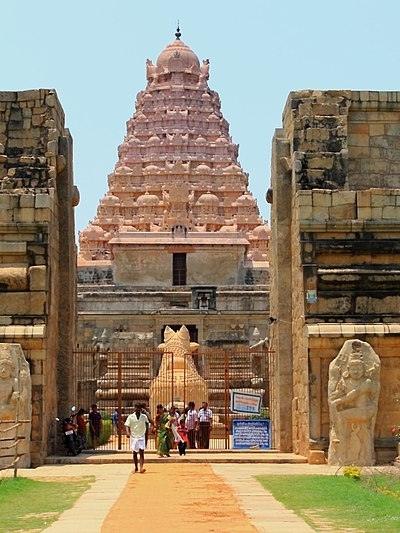
    2.The later Cholas, of whom the Great Rajaraja Chola was one.He built the Thanjavur Brahadeswara temple  and established an Empire extending from the Godavari Basin in the north to Sri Lanka,then called Elam.( Fifth century BC to Third Century AD),

    3.Rettapadi Cholas, who ruled in and from what is now called Andhra Pradesh.

    The word Chola, according to Col.Gerini, is from the Sanskrit word Kaala, or Kola meaning black, indicating that the ancestors of the Cholas were pre historic Dravidians who were black.The word Kola became Chola, avers Gerini.

    But Tamil Grammar does not lend to this view.

    Another view is that the word Chola came from the word ,’Choozh,சூழ்’, meaning ‘surround.

    The earlier group of the Cholas were possibly Nomads ,traveling widely in around Tamil Nadu and later when they formed a Kingdom, the term became Chola.

    Scholars think, rightly so, that this explanation is quite labored.

    There is yet another explanation.

    The name Chola is the name of the Dynasty by itself,

    The first King named, according to Kanyakumari epigraph ,, founChola Varman founded the Chola Dynasty.

    Chola Varman started chasing Raksasa Rajanijaran, who assumed the shape of a Deer .

    He chased the Deer and killed it.

    Then he took bath in the River Cauvery.

    On not being able to find a Brahmin anywhere nearby, he brought Brahmins from the north, provided them with lands and cows and ensured that they performed the Yagnyas.

    The land became prosperous, the Tamil word for this is ‘ செழித்தது’

    This word became Cholas .

    Chola Varman’s successors stated using this term ever since.

    Chola Varman is from the Surya Vamsa, Solar Dynasty( to which Lord Rama belonged).

    He is the descendant of Manu.

    He was from the Kashyapa Gotra.

    This information is from the Kanakumari Epigraphs.

    Many Tamil Scholars do not agree to this stating that one need accept information contained in the epigraph or Copperplates to be true because they are found there.

    Second objection is that the narration of one turning into a deer is not possible.

    The same scholars quote the same Kanyakumari epigraph to validate information on the other Cholas .

    They also accept the Anbil, Uthiramerut epigraphy.

    But when one finds a reference to Sanatana Dharma, they immediately find curious arguments to deny the facts.

    The theory that Cholavarman founded the Chola dynasty seems to tally with my theory that Vaivastha Manu left from Dravida Desa to North because of a Tsunami to found Ikshvahu Dynasty.

    I shall be writing another version from Thiruvaalkaadu Plates.

    And that seems to be more credible and backed by cross reference to Purana list of Ikshvaku,Puri Dynaties.

    Please read my post Rama’s ancestors Dravida.

    Citation.

    First Rajaraja Chola by K.D. Thirunavukkarasu, published by Ananda Vikatan Press.

    Tamil Chola Kings Descendants of Manu Rama

  • How Western Scholars Misinterpret Hinduism Max Mueller

    How Western Scholars Misinterpret Hinduism Max Mueller

    If one were to read Indian history, one is struck by a curious fact..

    History between the period of Harshavardhana onward to Mogul Emperors is hazy , if not missing.It becomes clear after this period.You do not get authentic records or information about the Middle ages, when Tamil and Sanskrit literature were awash with Bhakthi literatue.

    For instance one does not find reference of Adi Shankaracharya in either Sanskrit or Tamil literature during this period.

    One does not find reference to Shankaracharya even among Sanskrit and even among the records of kings who were ardent promoters of Sanskrit in their chronicles, either written by them or others.

    You find this only by the time of Vidyaranya when he established the Vijayanagar Empire.

    The information has been so scanty that it took the 33rd Acharaya of Sringeri Sharada Mutt to locate Kalady, the birth place of Shankaracharya!

    Again if You look at the works of these western scholars on ancient Hindu texts, they are presented in such a way,for one who does not know Sanskrit, the presentation of these authors would seem to be very faithful and they would declare these writers as Great and even call Max Mueller as Raja Rishi!

    They rearranged facts skillfully and you are left with the impression that Hinduism is full of contradictions and Indian Philosophy is a Fantasy!

    The methods, primarily, for dating any work , is by Internal evidence and the external evidence.

    Internal evidence is given a supplementary role to external evidence, that is that of references in the contemporary or succeeding period.

    If you manipulate the external evidence then the whole History becomes misleading.

    This is what the Western Scholars have done.

    Some Indian writers too fell into this trap and followed these scholars.

    Britishers in a quest to rule us have done a lot of conspiracies to damage our social, cultural, economic and religious systems. bhArata varSha, also known as Aryavart is the whole land beginning from foot of himAlaya-s to indian ocean. Britishers realized that our culture and spiritual base was so strong that it is not possible to convert people just by giving lectures on Bible. They concluded that the only way to push our way of life, and rule them was to demean their backbone – spirituality. To carry out their plan, they created Asiatic society and hired many professionals who were send to India with sole purpose of demeaning and denigrate our religious philosophy as inferior, mythology, primitive, supporting animal and human sacrifice, imaginative and full of superstitions.
     
    Then began a period of collecting manuscripts and then interpret them in derogatory way. They also paidlofty amount to Max Muller, a german philologist, who is often credited of interpreting veda-s and bringing them to west and general public. MAx Muller was also one of them who purposefully interpreted our shastra-s in derogatory way. Other members of Asiatic Society were
     
    Max Muller – Translation of rg veda in demeaning way and other articles tragetting our shastras to degrade them.
    Sir William Jones
    J. D. Peterson
    F. Wilford
    H.H. Wilson – Translation of Vishnu PurANa in demeaning way
    F.E. Partiger – Critical analysis of purANas and veda-s in demeaning way
    Sir Monier-Williams
    Colonel Colin Mackenzie
    Franz Bopp
    Pandit Taranath (Indian writer hired to write on Hinduism in derogatory way)
     
    (the list extends to 34 names).
     
    The list also includes Britannica encyclopedia, who added Hindu words and explained their meanings in demeaning way.
     
    They influenced Hindu writers like
     
    Surendradas Gupta
    Dr. R.G. Bhandarkar – highly influenced by Max Muller’s works and his research
    Bal Gandhar Tilak – who dated vedas to 1500-200 BC
    S. Radhakrishnan – whose works are used for post graduation in History and religion of India
     
    All these writers never wrote anything on Christianity. Why? If one is interested in studying religions of others, they also study their first religion. No one keeps studying and publishing foreign religion throughout their life and not study and publish something about their own religion. This shows the wicked mentality of the then Britishers.
     
    • They forged our shastras which include bhaviSya purANa, by adding Jesus, changing date of Chandragupta Maurya calling him a contemporary of Alexander.  To maintain consistency, they also pushed date of Lord Buddha and made him younger by 1500-2000 years. This also resulted in postponement of date of our beloved AcArya Adi Sankara, who as of 1999. should have been born 2500 years ago.
    • They also changed and interpolated dharma smriti-s, grihya sutra-s, purANa-s, kalpa sutra-s and our vedA-s also. They did this to endorse animal killing, sleeping with animals for carnal pleasure and other prohibited acts are actually approved by our shastra-s
    • They forged fake coins of Chandragupta Maurya to support their claims.
    • They destroyed our historic records and evidences, destroyed our faith, our culture and left of opportunity to project us, bhArtiya-s as poors chaps of inferior intelligence, and of superstitious and primitive nature.
    • Created fake Aryan Invasion theory to make us feel homeless. According to this theory, Germans (Aryans, sanskrit speaking people of high intelligence) migrated to India and they taught us everything.
    • Demean our holy deva-bhASa, sanskrit. Initially they could not find any concrete evidence of any language prior to sanskrit. So they created a fake proto-indo-european language, which is the root of all.
    • Compared our devatA-s with greek and other mythologies and equating them with nature spirits.
    • Calling our purANa-s are mythology.

    Citation.


    https://sites.google.com/site/understandingadvaita/conspiracies-east-india-max-muller-wilson-jones

    Image Credit.

    http://www.yogason.com/