I have wondered why English Dictionaries like Oxford, Webster’s have been reluctant to acknowledge and attribute the etymology of English words to Sanskrit as Greek and Latin also trace their origin to Sanskrit and many English words are straight from Sanskrit and from Tamil ,another ancient language of India( The term ‘Catamaran’ to denote a small ocean going vessel ,skiff , is from Kattumaram கட்டுமரம்,in Tamil.
Reverse of the myth of Invasion had happened !
Please read On …..
Do as the Joneses do” , is the dictum which people usually follow. Even so-called Scholars are no exception to this rule. They too have a penchant for repeating what the Joneses (i.e. Sir William Jones, Max Muller and company ) have said. This attitude has stifled scientific research in every academic field.
“Since the sphere of Indology, contemporary Scholars and the academic bureaucracy tend to cling tenaciously to pronouncements made 100 or 200 years ago by those in authority.
“This sad conclusion of mine was reinforced some time ago when I wrote to the Chairmen of the boards of editors of the Oxford and Wedster’s English Dictionaries, suggesting that since English was directly derived from Sanskrit the Greek-Latin basis of their etymology should be promptly abandoned.
“While the Oxford people wrote back that they wouldn’t like to drift away from teir 150 year-old etymological moorings, Wedster’s argued that since Englishmen were not even aware of the existence of Sanskrit until about 400 years ago, the English language which is older than 400 years couldn’t have been derived from Sanskrit. This Websterian argument unwittingly reveals the exact snag. It is their historical short-sightedness which is blurring their etymological perspective They seem to be ignorant that though Euro9peans ventured into Asia only 400 yars ago Indians were present in Europe and other parts of the World as administrators and educators right from the dawn of Civilisation.
Sanatana Dharma was in practice in Sri Lanka,Malaysia, Cambodia,Vietnam, Laos, Philippines,Japan,Fiji,China, New Zealand, Australia on the eastern side of the present India, Middle East, Bulgaria, Hungary, Italy,Spain,France, Britain, African Continent, South America, Central America,Mexico and North America(US). This Sanatana Dharma had Dravida or South India conncetion. This becomes evident when one reads Sanskrit Literature and…
Russian connection to Sanatana Dharma is complex,intriguing,interesting and merits detailed study. This is because there is evidence, I have written in detail abiut each of them, Vedas ,specifically the Rig Veda was composed in the Arctic, Indra’s City Amravathi is near Baikal,Russia, Indra’s Vaikanasa Theertha is Lake Baikal, Rig Vedic Swasthik Mandala city is…
Even ancient Hindu mythology states that the forefathers of the Hindus came down in successive waves from Eastern Siberia (Uttara Kuru). Even now, the major tribes in Eastern Siberia bear virtually the same names as the three major grass-roots Indian groups: Saka, Buryat, and Yakuts. In India, they became the Saka (Scythians), Bharats, and Yakhu-Deva…
The image above is Shaman rock and cape Burhan on Olkhon Island, Baikal Lake, Russia. I had written in my earlier article that there is a Sanskrit Inscription in Baikal area. As the article was about Krishna’s palace in Por-Byzhyn,I did not detail on the inscription. There is a Sanskrit inscription in Rock Shaman. ‘ Cape…
‘Three Hindu gods. The one at the left known as Ayu Devata (God of life) is still invoked in Siberia if some near and dear one falls seriously ill. The other two are just samples of the many gods and goddesses sold in the bazar of Ulan Bator, the capital of Mongolia. These indicate how…
If one looks for cultures that deny their’s, the pride of place must go to India, closely followed by Arabia. At least in Arabian countries’, they are proud of their latest religion while India has a masochistic pleasure in denying it’s culture and hoary past.
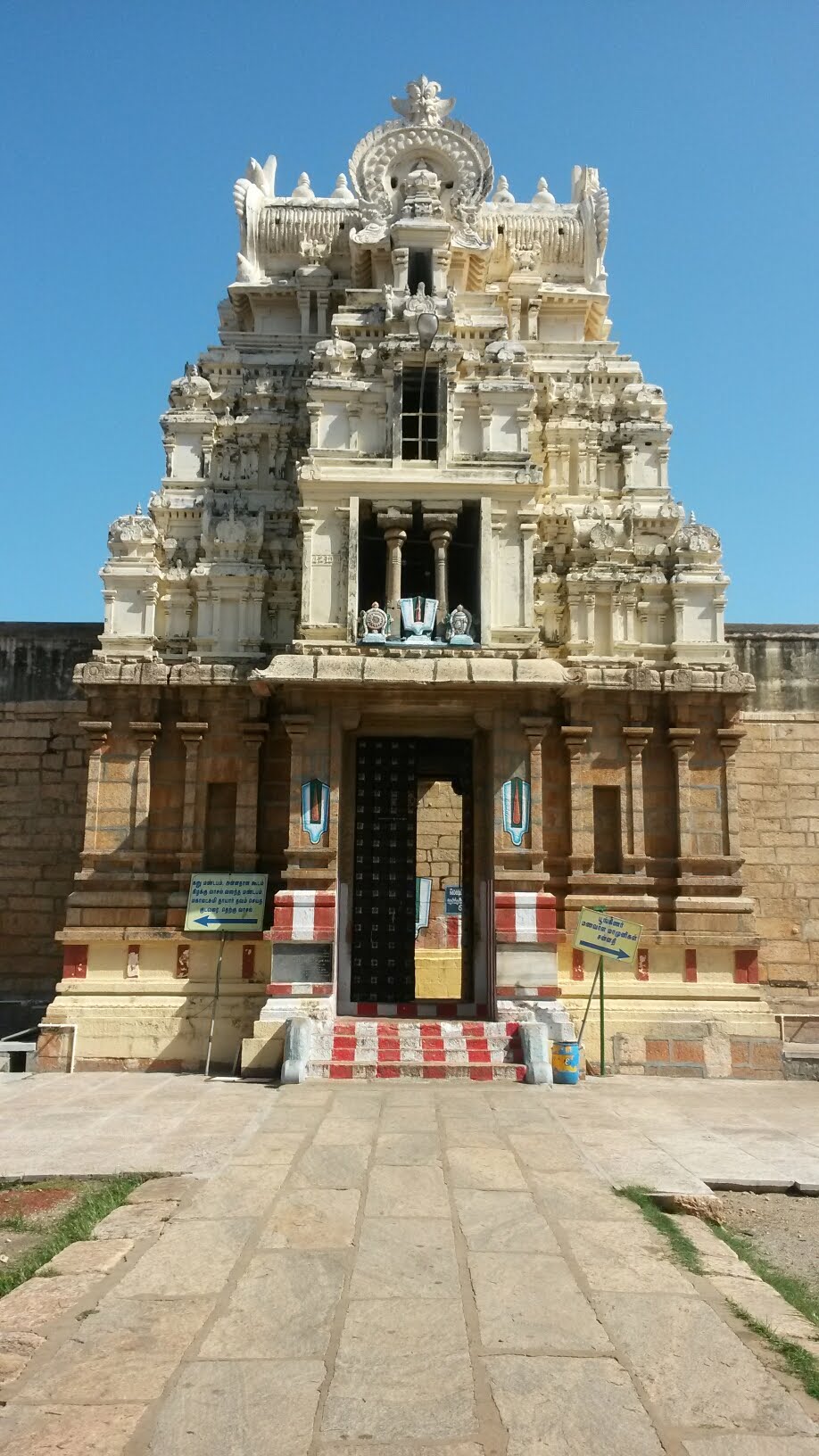
The Bridge at Rameswaram, one of the Holy places of Hinduism finds a mention in Ramayana, an Epic in Sanskrit by Sage Valmiki and in later Sanskrit works and regional language s of India.The bridge made of Pumice stones(?), Is mentioned to have been built by the army of Sri Rama while enroute to Sri Lanka to bring back his wife Sita who was abducted by Ravana.The island of Sri Lanka could be reached then only by crossing the Ocean.Hence a Bridge was built by stones by Sri Rama’s army. This is referred to in over hundred versions of Sri Ramayana,in many languages,other than Sanskrit and in other countries like Indonesia,Sri Lanka, Cambodia, Vietnam, and in many countries, of all places in Mexico!Temple records in Sri Ramanathaswamy temple, Rameswaram , Ancient Tamil literature including the Sangam Classics(which are at least over 20,000 years old, and ,among others in Silappadikaram,one of the Five Ancient Tamil Epics dated 16,000 years ago.)
In addition to this , temple traditions and records, not only in South India, but in North India refer to this fact There is also a temple for Sri Rama near Rameswaram,Darpa Sayanam,where Rama meditated lying on the ground as too how to cross over to Sri Lanka.
Tamil literature of yore call Rameswaram as Raman Koil,Sri Raman Koil. Read or download pdf evidence.
The sea bridge was named as Adam’s Bridge around 14th Century.
Rama Sethu
Rama Sethu BridgeRama Setu Bridge
·
·
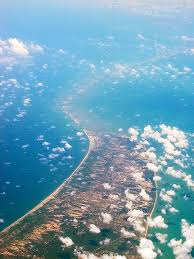
Adam’s Bridge (Tamil: ஆதாம் பாலம் āthām pālam), also known as Rama’s Bridge or Rama Setu (Tamil: இராமர் பாலம் Rāmar pālam),[1] is a chain of limestone shoals, between the islands of Rameswaram, off the southeastern coast of Tamil Nadu, India, and Mannar, near northwestern Sri Lanka. Geological evidence indicates that this bridge is a former land connection between India and Sri Lanka.
The bridge is 18 miles (30 km) long[3] and separates the Gulf of Mannar (southwest) from the Palk Strait (northeast). Some of the sandbanks are dry and the sea in the area is very shallow, being only 3 ft to 30 ft (1 m to 10 m) deep in places, which hinders navigation.[2][4][5] It was reportedly passable on foot up to the 15th century until storms deepened the channel: temple records seem to say that Rama’s Bridge was complete above sea level until it broke in a cyclone in 1480 CE.
The 13th century Venetian traveller Marco Polo’s travel map shows that he travelled around the Adam’s bridge area. His travel book calls this area Setabund-Rameswara which means bridge constructed at Rameswaram. A 19th century painting depicting a scene from Ramayana, wherein Monkeys and Bears are shown building a bridge to LankaThe bridge was first mentioned in the ancient Sanskrit epic Ramayana of Valmiki. The western world first encounters it in “historical works in the 9th century” by Ibn Khordadbeh in his Book of Roads and Kingdoms (ca. 850 CE), referring to it is Set Bandhai or “Bridge of the Sea”.[6] Later, Alberuni described it.
Adam’s Bridge, also known as Rama Setu, is a chain of limestone shoals, between Pamban Island, off the south-eastern coast of Tamil Nadu, and Mannar Island, off the north-western coast of Sri Lanka.
Summary: The Council had last year in March said it would conduct an underwater exploration study to see whether the Ram Setu or Adam’s Bridge was a natural or an artificial phenomenon
With permission from the Navy, we can take our guests upto Adam’s Bridge – the sand bank between Sri Lanka and India which we approach on a dinghy because the water is so shallow.
Adam’s Bridge, also known as Rama’s Bridge or Rama Setu, is a chain of limestone shoals, between Pamban Island, also known as Rameswaram Island, off the south-eastern coast of Tamil Nadu, India, and Mannar Island, off the northwestern coast of Sri Lanka.
Connected with the subcontinent by the Adam’s Bridge, a loose group of tiny, almost invisible mountains submerged in the sea, the Sri Lankans are not particularly fond of belonging to the subcontinent.
Some experts have also expressed concern about the course tsunami waves may take if the shoals of Adam’s Bridge are dredged to make way for the navigation canal.
At the center of the controversy is “Ram Sethu” (called “Adam’s Bridge” in English), an 18-mile-long coral and limestone shoal linking Tamil Nadu in India with Mannar Island off the coast of Sri Lanka.
It was with disbelief that when I enquired, I was told that the passage between the two countries was blocked by an impassible barrier known as Adam’s Bridge, an area of shallow and treacherous sand bars with pounding seas.
of Adam’s Bridge at net ”It’s 18 songs, double vinyl, gatefold sleeve, CD and cassette.
Adam’s Bridge, also known as Rama Setu, is a chain of limestone shoals, between Pamban Island, off the south-eastern coast of Tamil Nadu, and Mannar Island, off the north-western coast of Sri Lanka.
Summary: The Council had last year in March said it would conduct an underwater exploration study to see whether the Ram Setu or Adam’s Bridge was a natural or an artificial phenomenon
With permission from the Navy, we can take our guests upto Adam’s Bridge – the sand bank between Sri Lanka and India which we approach on a dinghy because the water is so shallow.
Rama Sethu as seen from Space..
1 – 13 of 13 Posts
Remains in Dhanushkodi , Tamil Nadu
·
·
Adam’s Bridge (Tamil: ஆதாம் பாலம் āthām pālam), also known as Rama’s Bridge or Rama Setu (Tamil: இராமர் பாலம் Rāmar pālam),[1] is a chain of limestone shoals, between the islands of Rameswaram, off the southeastern coast of Tamil Nadu, India, and Mannar, near northwestern Sri Lanka. Geological evidence indicates that this bridge is a former land connection between India and Sri Lanka.[2]
The bridge is 18 miles (30 km) long[3] and separates the Gulf of Mannar (southwest) from the Palk Strait (northeast). Some of the sandbanks are dry and the sea in the area is very shallow, being only 3 ft to 30 ft (1 m to 10 m) deep in places, which hinders navigation.[2][4][5] It was reportedly passable on foot up to the 15th century until storms deepened the channel: temple records seem to say that Rama’s Bridge was complete above sea level until it broke in a cyclone in 1480 CE.
The 13th century Venetian traveller Marco Polo’s travel map shows that he travelled around the Adam’s bridge area. His travel book calls this area Setabund-Rameswara[1] which means bridge constructed at Rameswaram. A 19th century painting depicting a scene from Ramayana, wherein Monkeys and Bears are shown building a bridge to LankaThe bridge was first mentioned in the ancient Sanskrit epic Ramayana of Valmiki. The western world first encounters it in “historical works in the 9th century” by Ibn Khordadbeh in his Book of Roads and Kingdoms (ca. 850 CE), referring to it is Set Bandhai or “Bridge of the Sea”.[6] Later, Alberuni described it.
The name Rama’s Bridge or Rama Setu (Sanskrit; setu: bridge) was given to this bridge of shoals in Rameshwaram, as Hindu legend identifies it with the bridge built by the Vanara (monkey-men) army of Rama , which he used to reach Lanka and rescue his wife Sita from the Rakshasa king, Ravana, as stated in the Sanskrit epic Ramayana.
The sea separating India and Sri Lanka is called Sethusamudram “Sea of the Bridge”. Maps prepared by a Dutch cartographer in 1747, available at the Tanjore Saraswathi Mahal Library show this area as Ramancoil, a colloquial form of the Tamil Raman Kovil (Rama’s Temple)[8] Another map of Mogul India prepared by J. Rennel in 1788 retrieved from the same library called this area the area of the Rama Temple [9] Many other maps in Schwartzberg’s historical atlas[10][11] and other sources call this area with various names like Koti, Sethubandha and Sethubandha Rameswaram along with others.[12][13][14][15] Valmiki’s Ramayana attributes the building of the bridge to Lord Rama in verse 2-22-76
Adam’s Bridge (Tamil: ஆதாம் பாலம் āthām pālam), also known as Rama’s Bridge or Rama Setu (Tamil: இராமர் பாலம் Rāmar pālam),[1] is a chain of limestone shoals, between the islands of Rameswaram, off the southeastern coast of Tamil Nadu, India, and Mannar, near northwestern Sri Lanka. Geological evidence indicates that this bridge is a former land connection between India and Sri Lanka.
The bridge is 18 miles (30 km) long and separates the Gulf of Mannar (southwest) from the Palk Strait (northeast). Some of the sandbanks are dry and the sea in the area is very shallow, being only 3 ft to 30 ft (1 m to 10 m) deep in places, which hinders navigation. It was reportedly passable on foot up to the 15th century until storms deepened the channel: temple records seem to say that Rama’s Bridge was complete above sea level until it broke in a cyclone in 1480 CE.
The 13th century Venetian traveller Marco Polo’s travel map shows that he travelled around the Adam’s bridge area. His travel book calls this area Setabund-Rameswara which means bridge constructed at Rameswaram. A 19th century painting depicting a scene from Ramayana, wherein Monkeys and Bears are shown building a bridge to LankaThe bridge was first mentioned in the ancient Sanskrit epic Ramayana of Valmiki. The western world first encounters it in “historical works in the 9th century” by Ibn Khordadbeh in his Book of Roads and Kingdoms (ca. 850 CE), referring to it is Set Bandhai or “Bridge of the Sea”.Later, Alberuni described it.
The name Rama’s Bridge or Rama Setu (Sanskrit; setu: bridge) was given to this bridge of shoals in Rameshwaram, as Hindu legend identifies it with the bridge built by the Vanara (monkey-men) army of Rama , which he used to reach Lanka and rescue his wife Sita from the Rakshasa king, Ravana, as stated in the Sanskrit epic Ramayana.
The sea separating India and Sri Lanka is called Sethusamudram “Sea of the Bridge”. Maps prepared by a Dutch cartographer in 1747, available at the Tanjore Saraswathi Mahal Library show this area as Ramancoil, a colloquial form of the Tamil Raman Kovil (Rama’s Temple). Another map of Mogul India prepared by J. Rennel in 1788 retrieved from the same library called this area the area of the Rama Temple . Many other maps in Schwartzberg’s historical atlas and other sources call this area with various names like Koti, Sethubandha and Sethubandha Rameswaram along with others. Valmiki’s Ramayana attributes the building of the bridge to Lord Rama in verse 2-22-76
Adam’s Bridge, also known as Rama’s Bridge or Rama Setu, is a chain of limestone shoals, between Pamban Island, also known as Rameswaram Island, off the south-eastern coast of Tamil Nadu, India, and Mannar Island, off the northwestern coast of Sri Lanka.
27 Between which two nations does the 30-mile chain of shoals known as Adam’s Bridge
The Capability Brown landscaped grounds, and Robert Adam’s bridge over the lake, have also undergone restoration, and in years to come extensive planting will no doubt mature into something splendid.
In Flores’ understanding, the “Sea of Ceylon” comprises the Gulf of Mannar, Pamban Channel, Palk Strait, and the area between Jaffna and the Mannar Channel; however, the main interest rests with the stretch of water to the south of Adam’s Bridge. The first chapter deals with the shipping routes and the rhythm of trade and traffic (“circulation”) in these areas.
The Ram Setu, also known as Adam’s Bridge, is similar to the causeway that connects India and Sri Lanka. The bridge begins from the Island of Pamban located in Tamil Nadu (India) to Mannar Island, located in Sri Lanka. This Ram Setubridge is 50 kilometers long on an approximate basis. Also, this bridge separates the Gulf of Mannar and the Palk Strait. The sea area around this setu is quite shallow, which ranges from 3 feet deep to 30 feet deep. Also, there is proof through geology that this setu was a land connection between the two nations (India and Sri Lanka). Until 1480, several scientific reports claimed that the Adam’s Bridge was constructed above sea level. But, because of the damage by a cyclone in that area, it damaged the bridge. The bridge was passable through foot until the cyclone hit that area. As per Oceanography, it is believed that the bridge is about 7,000 years old. This data tallies with the dating of carbon on the beach near Dhanushkodi and Mannar Island. https://www.squareyards.com/blog/rama-setu-adams-bridge-mnm
Rama Setu region is as intense geo-thermally as the sub-Himalayan region. This is proved by thermal wells in the southern coastline of Bharatam.
How dangerous is it to work in such a volcanic mid-ocean and create a channel passage across Rama Setu? This channel an idea was shot down emphatically by the first committee set up after Independence, Sir A Ramaswamy Mudaliar Committee, 1956 which asked that any idea of cutting a channel passage across the bridge should be ABANDONED. What could be tried, if at all, is a land-based canal across Dhanushkodi as in Suez or Panama canals.
This data was fed into the software. The results indicated that this was exactly the location of planets/stars in the noon of January 10, 5114 BC. Thus Shri Ram was born on January 10, 5114 BC (7123 years back). As per the Indian calendar it was the ninth day of Shukla Paksha in Chaitra month and the time was around 12 to 1 noontime. This is exactly the time and date when Ram Navmi is celebrated all over India.
‘. The research funded by University Grants Commission (UGC) and the Indian National Centre for Ocean Information Service (INCOIS) was carried out to know the past of the Gulf of Mannar region, which did not get affected by disasters such as 2004 tsunami. Scientists have found marine terraces which had a steeper descending slope on the seaward side near the Rameswaram islands….
Adam’s Bridge is a 35 km long stretch of shoal and sandbank under the sea between Pamban Island of Tamil Nadu and Mannar Island of Sri Lanka.
The bridge which is submerged in the water is roughly 100 meters wide and up to 10 metres in depth.
Chennai: The Adam’s Bridge, aka Rama Setu, was formed about 18,400 years ago, according to researchers from the Anna University and the Madras University, who said their study was the first of its kind done on samples taken from the drilled core surface in the depths of Gulf of Mannar off Rameswaram.
Adam’s Bridge is a 35 km long stretch of shoal and sandbank under the sea between Pamban Island of Tamil Nadu and Mannar Island of Sri Lanka. The bridge which is submerged in the water is roughly 100 meters wide and up to 10 metres in depth.
The research funded by University Grants Commission (UGC) and the Indian National Centre for Ocean Information Service (INCOIS) was carried out to know the past of the Gulf of Mannar region, which did not get affected by disasters such as 2004 tsunami. Scientists have found marine terraces which had a steeper descending slope on the seaward side near the Rameswaram islands.
Suspecting tectonic activity which could have caused the submarine landslide and vertical slopes in the region, they took samples at three places including one sample on the slope of the bridge. The water depth at the slope was 260 metres and the core sample was taken for 1.3 metres on December 12, 2015.
They looked for the microfossil called Cibicides margaritiferus to know more about the region’s past and also about the formation of the structure in the marine sediment of Adam’s Bridge.
“The microfossil Cibicides margaritiferus was almost nil up to 75 cm depth and after that, we found the fossil in good numbers. The sediments taken at the depth of 130 cm in the seabed, had microfossil around 300-350 per 10 gram”, said Professor Srinivasalu from Institute of Ocean Management, Anna University and the Principal Investigator of the project.
Since the shell-shaped fossils are rare to find on the east coast of India, scientists wanted to find out the time period of the fossils. “We knew something major had happened in that period. These fossils are also very sensitive to the climate and environmental changes and major incidents like tsunami or earthquake can wipe out its population. So, the samples were sent to US-based Beta Analytics, one of the top radiocarbon dating labs to determine the exact time period”, he told Deccan Chronicle.
The lab has determined the age of fossil using Carbon-14 dating method. The method uses organic remains of the fossil to find out the time period of its death. The results showed that the fossils found between 94 cm and 132 cm were at least 18,400 years old. The fossils in the marine sediment between 35 cm and 94 cm were 700-780 years old.
“It’s a major finding as we are one of the first groups to have scientifically got the samples from Adams Bridge. Now, it has been confirmed that the structure was formed at least 18,400 years ago,” Professor Srinivasalu said. The results also revealed that the region had a major undersea earthquake around 700 years ago.
“There were research publications indicating Indonesia and Thailand, Sri Lanka, Andaman had records of a major Tsunami and earthquake around the same time. But, there is no study that showed any quake affecting the east coast of India. This is the first study to find the evidence for an earthquake in the Bay of Bengal,” he added..
Scientists are surprised to find out the earthquake in the seismically passive Gulf of Mannar. “It was a major earthquake and tsunami happened 700 years ago and affected several countries like in 2004. It may again hit in future and we need to be prepared,” scientists said. G.Kalpana, a researcher from Anna University and Professors N.Rajeswara Rao and M.Jayaprakash from the Department of Applied Geology at Madras University also contributed to this study. Citation. Deccan Chronicle
Did Rama Destroy Rama Sethu?
And Rama awaking, called Nala unto him and said, ‘Build thou a bridge over the sea! Thou alone, I am sure, art able to do it!‘ And it was by this means that the descendant of Kakutstha’s race caused a bridge to be built that was ten Yojanas in width and a hundred Yojanas in length.And to this day that bridge is celebrated over all the world by the name of Nala’s bridge. And having completed that bridge, Nala, of body huge as a hill, came away at the command of Rama.
And while Rama was on this side of the ocean, the virtuous Vibhishana, the brother of the king of the Rakshasas accompanied by four of his counsellors, came unto Rama. And the high-souled Rama received him with due welcome. Sugriva, however, feared, thinking he might be a spy. The son of Raghu, meanwhile perfectly satisfied (with Vibhishana) in consequence of the sincerity of his exertions and the many indications of his good conduct, worshipped him with respect. And he also installed Vibhishana in the sovereignty of all the Rakshasas and made him his own junior counsellor, and a friend of Lakshmana’s. And it was under Vibhishana’s guidance, O king, that Rama with all his troops crossed the great ocean by means of that bridge in course of a month
.-Translation by Kisari Mohan Ganguly.
(Within the Mahabharata, Markandeya tells the story of the Ramayana to encourage Draupadi after Jayadratha’s attempted kidnapping of her.
Within that is a reference to the Rama Sethu which was called as Nala Sethu after the engineer in the time of Veda Vyasa.
Responding to petitioners’ argument that Ram Sethu was a place of worship and that if it was breached it would no longer be fit for worship, senior advocate Fali S Nariman said: “The scriptures say it was already broken into several pieces by Lord Rama himself after the Rama-Ravana war. If that is so, it is already broken since time immemorial and hence it can no longer be a place of worship.”
There is also a Tamil belief that Dhanushkodi,Tamil Nadu whci was destroyed by a Cyclone in 1964, means that the term Dhanushkodi means ‘ that the place was destroyed.
I am unable to find any reference in the Ramayana that Rama Sethu was destroyed.
To my understanding, Dhanush Kodi means the ‘end of Bow’, certainly no indication about it having been destroyed. And Tamil is my mother tongue.
Valmiki’s Ramayan contains graphic and poetic details of eight constellations during Hanuman’s return journey from Sri Lanka to Sunaabh Hill in the middle of the sea which apparently took about four and a half hours from 6:30 a.m. to 11 a.m. All these details of planets and nakshtras with reference to eight constellations described in…
Valmiki Ramayana, the epic that speaks of Sri Rama mentions Kavata, Kapatapuram in Tamil,and Pandya Kingdom. Kishkindha kandam also refers to Cheras,Cholas,Andhras as well
Sita threw away her Jewels as a Marker for those who would tray to trace her. The Monkeys(who later would search and Find Sita), picked up the jewel and wore them , without knowing which Jewel to wear where
Based on texts of Srividya, Subhaagama Tantras, Soubhagya Ratnakara, Arunamodhini, Kulaarnava Tantra, Sree Lalitha Sahasranama, Lalitha Trisathi, Soundaryalahari, Siddha kunjika Stora Devi Khadgamala and Durga Saptashati, the list of Devis Worshiped is provided here.
Removal of Evil eye, Protection from forces that hinder Spiritual development. Protection from Black magic,Animals. Increases self confidence and self assurance. Clarity of thought.. Above all,Mukthi and Gnana are facilitated.
Date of Rig veda in Ramanisblog According to Ramanisblog, the date of the Rig Veda is subject to considerable debate, with modern scholarly estimates generally ranging between 2000 BCE to 1000 BCE[1]. However, Ramanisblog highlights that Hindu tradition considers the Vedas to be timeless and without a specific beginning[1]. Perspectives on Rig Veda Dating Ramanisblog…
The Devi (mother Goddess) killed Madhu and Kaidabha as Vishnu Maya (Thamasic-base), killed Mahishasura as Lakshmi (Rajashic form-materialistic) and killed Shumbha and Nishumbha in the form of Goddess Saraswathi (Sathvic-spiritual).
All the three are combined in this Stotra.
It consists of Chapters 74 to 86 (13 chapters) of the Markandeya Purana and has 700 stanzas.
Following in the Ai Generated transcript of the Navavarana Pooja Mantras . Recorded and sent to my Shishyas. This is being made public so that this secret knowledge is not lost to posterity. Those who want to be initiated may contact me through mail at ramanan50@gmail.com. Also they can contact through the comment column. If…
Nithya Devathas in Sri Vidya Nithya Devathas, often revered within the Sri Vidya tradition, embody various divine forms that are essential for spiritual growth and understanding. The concept of Nithya Devathas emphasizes the importance of worshipping these deities to achieve higher levels of consciousness and fulfillment. Importance of Nithya Devathas Nithya Devathas in Practice Conclusion…








You must be logged in to post a comment.