Tag: Cholas

  • Chozhas Were In North , permanently Settled in South In Dwapara Yug?

    Chozhas Were In North , permanently Settled in South In Dwapara Yug?

    In my earlier articles, I had explored the references to Chozhas in Sanskrit literature, Ramayana, Mahabharata and the references to Kings mentioned in Chozha inscriptions in Thiruvalankadu Copperplates of Chozhas. Chozhas,as in anywhere else where they recorded, mention in these Copperplates that they are the descendants of Suryavansh, Ikshvaku Dynasty and they list the names. These names agree with the list provided Puran,( some discrepancies are found and they are very minimal; I had written on this point .).

    History of South Indian Kings ,List Verified Dates From 5100 CE

    As one can see in the excerpts provided below , one may find that Uparichara was a king in Dwapara Yug , Cholavarman, grandson of Dushyant and son of Bharat ,was the first Chozha King.And his grandson Perunarkilli was the first King in Kaliyug.

    Now comes intriguing part. Cholas are reported to have ruled in South. Yet we find that Muchukunda Chozha and Sibi having been present in the North of Vindhyas. Sibi is reported to have built the Pundarikaksha Temple at Thiruvellarai near Sri Rangam in Tamil Nadu.Again we find Muchukunda Chozha is referred to in Ramayana and he is reported to have lived in present Hyderabad India.He helped Krishna, who lived in Dwapara Yug, kill Kala Yavan, who was a Greek!

    From the genealogy it transpires that the Earliest Chozha kings seem to have been present in the North of Vindhyas , annexed and ruled the areas of South. Sibi is referred to as Sivi in the North and he ruled from there.
    The Cholas seem to have settled in South permanently after Dwapara Yuga and their hold in the North seem to have waned.

    It was King Chitradhanvan, of Ikshvaku) Chola Dynasty. Chitradhanvan’ s great grandson was the last King in Treta Yuga.’His son was Narendrapati who became king at the end of the Treta age.  His son was king Vasu entitled Uparichara on account of his having received a celestial car from Indra by which he moved about in all directions (v. 39).  https://ramanisblog.in/2020/08/07/chola-kings-list-treta-yuga-ikshvaku-tamil-copper-plates-evidence/

    One must remember that Cholas belong to Ikshvaku .Ramanisblog

    • Vikukshi
    • Puranjaya
    • Kakutstha
    • Kakshivat
    • Aryaman
    • Analapratapa
    • Vena
    • Prithu
    • Dhundhumara
    • Yuvanasva
    • Mandhata
    • Muchukunda
    • Valabha
    • Prithulaksha
    • Parthivachudamani
    • Dirghabahu
    • Chandrajit
    • Sankriti
    • Panchapa
    • Satyavrata
    • Rudrajit
    • Sibi
    • Marutta
    • Dushyanta
    • Bharata
    • Cholavarman
    • Rajakesarivarman
    • Chitraratha
    • Chitrasva
    • Chitradhanvan
    • Suraguru (Mrityujit)
    • Chitraratha
    • Vyaghraketu
    • Narendrapati
    • Vasu (Uparichara)
    • Visvajit
    • Perunatkilli
    • Karikala
    • Kochchengannan… https://en.m.wikipedia.org/wiki/Legendary_early_Chola_kings

    Muchukunda is mentioned in The Epics Manimekkalai, a Jain work,Silappadhikaram,Jain work,Kaligathupparani and in more post Sangam era literature.They record that Muchukunda Chozha helped Indra and as a token of gratitude Indra provided him with a Guardian Goblin( Booth) to protect Poompuhar Chozha city. It was called Naalangaadi Bootham, நாளங்காடி பூதம்.

    • நாளங்காடிப் பூதம்
    • இந்திரன் முசுகுந்தனுக்கு மெய்க்காவலாகுமாறு வலிய பூதம் ஒன்றை அனுப்பினான். அது பூம்புகார் நகரம் சென்று, மருவூர்ப்பாக்கம், பட்டினப்பாக்கம் என்ற இரு பகுதிகட்கும் இருந்த நாள் அங்காடியில் (பகற்காலக் கடைத் தெரு) இருந்து, தன் பணியைச் செய்து வந்தது.[1] அப்பூதம், புகார் நகரில் இந்திர விழாச் செய்யப்படா தொழியின் வெகுண்டு துன்பம் விளைவிக்கும் என்பது மணிமேகலை காலத்து மக்கள் கொண்டிருந்த நம்பிக்கையாகும்.[2] இவனைக் குறிக்கும் தமிழ் நூல்கள் முசுகுந்தன் சிலப்பதிகாரம், மணிமேகலை, கலிங்கத்துப்பரணி, கந்தபுராணம், ஒரு துறைக்கோவை முதலியவற்றில் குறிக்கப்பட்டுள்ளான். https://www.projectmadurai.org/pm_etexts/utf8/pmuni0600_01.html

    Ramanisblog

    Multi Lingual Blog English Tamil Kannada Hindi Indian History Verified Vedic Thoughts Hinduism around The World Tamils History

  • Chola Kings List Treta Yuga Ikshvaku Tamil Copper Plates Evidence

    Chola Kings List Treta Yuga Ikshvaku Tamil Copper Plates Evidence

    The effort to divide North and South continues even today. Though evidence from Sanskrit Ithihasas,Ramayana Mahabharata,Eighteen Puranas present a country called Bharatvarsha,though the Kings as is their wont were fighting against each others.

    I have provided evidence from Sanskrit and Tamil literature to prove that Tamil and Sanatan Dharma were intricately connected,Tamil kings participated in Damayanthi,Sita, Draupadi Swayamvara;Vedas mention spices ,Elephant tusk, honey and kings from the South;Krishna married a Pandyan princess,had a daughter; Balarama visited South to have darshan of Lord Muruga, Madurai Meenakshi’s father took part in Mahabharata war;Perunchotru Udiyan Cheralaathan,A Chera King fed the Armies that took part in Mahabharata battle…

    Cholas claim they are the descendants from Suryavansha.King Sibi, Ancestor of Rama ruled from his second capital from what is now in Northwest Pakistan.Cholas declare they belong to Kasyapa gotra.

    I have written extensively on this.

    In this article I am providing information from Thiruvalangadu Copper plates Inscription where. Cholas provide their lineage from Ikshvaku Dynasty.

    These Copper plates belong to the reign of Rajendra Chola,son of Rajaraja Chola who built the Thanjavur Big Temple.

    Rajendra chola was a great king,had a large powerful Navy and conquered Malaysia and Far East He also built the temple in Gangaikonda cholapuram.

    I am providing excerpts from Thiruvalangadu Copper plates .

    ‘The Sanskrit and Tamil portions of the Tiruvalangadu grant were written at different periods, as has been already pointed out by Mr. Venkayya,— the latter at the time to which the inscription refers itself and the former about at least a decade later.  A detached inscription written in continuation of the Sanskrit portion on sheet Xa and continued on Xb, is stated by Mr. Venkayya to be a later addition.[5]  It registers a grant made to the shrine of the goddess at Tiruvalangadu, perhaps contemporaneously with the grant of Palaiyanur to the temple of Mahadeva (Siva) of that place, but put into writing long  after.  The characters of the detached record are paleographically at least one or even two centuries later than the characters of the Palaiynaur grant and it is difficult to explain why a gift made to the shrine of the goddess in the 6th year of Rajendra-Chola I. must have been kept without being reduced to writing for such a long period.  In this connexion it deserves to be noted that separate shrines of goddesses in Siva temples are, generally, of much later origin than the original Siva temples themselves and that in the stone inscriptions registered on the walls of the Tiruvalangadu temple the shrine of the goddess is referred to for the first time only in a record of the 10th year of Tribhuvana-chakravartin Rajadhiraja II., i.e., in A.D. 1173 – clearly 155 years after the date of the subjoined copper-plate grant

    The tradition of the place Tiruvalangadu intimately connects it with Ammai or Karaikkal-Ammai, a great devotee of Siva who, under the orders of that god, put on a dreary emaciated appearance and worshipped his dancing form at Tiruvalangadu.  The name Ammai-Nachchiyar which occurs in the detached inscription on plate XVI as a name of the goddess of the temple does not so appear in the stone records of Tiruvalangadu.  No. 469 of the Madras Epigraphical Collection for 1905 calls her Periya-Nachchiyar; in another record her name occurs as Vandarkulal Nachchiyar (No. 497 of 1905), which is still current in its Sanskrit form Bhramaralakamba.  The god himself is named Ammaiyappa in v. 129.  He was perhaps so named on account of his being kind as a father to his devotee Ammai or Karaikkal-Ammai.  Both the names Palaiyanur (or Palanai) and Tiruvalangadu occur in the Devaram  hymns.  In the hymn sung by Sundaramurti-Nayanar the goddess is referred to as Vandarkulali-Umainangai and the god himself as Palaiyanur-Amma.  It is not  impossible that in the names Ammaiyappan and Ammai-Nachchiyar, Amma is synonymous with the god Tiruvalangadu.  The story of Karaikkal-Ammai is not referred to in the Devaram so called.  But the eleventh Tirumurai of the sacred collection which describes the god, at Tiruvalangadu was the composition of Karaikkal-Ammai herself and the place of honour is given to it as muthathirupathigam.

    The prasasti of the Chola family conveyed by the Sanskrit portion of the grant (vv. 1 to 137) consists of 271 lines and is mostly Puranic[6].  In verse 4 are introduced the sun and Manu, the latter of whom was produced from the Sun by concentration of mind.  His son was Ikshvaku (v. 5) ; his son Vikukshi (v. 6) ; his son Puranjaya (v. 7) surnamed Kakutstha (v. 8) ; his son Kakshivat (v. 9) and his son Aryaman (v. 10).  In this family was born Analapratapa (v. 11); in his family was born Vena; and his son born from the right arm was Prithu (vv. 12 and 13).  In his familywas born Dhundhumara, so called on account of his having killed the demon Dhundhu (v. 14).  In (his) family was born Yuvanasva (v. 15) ; his son was Mandhatri who ruled the earth as far as the Lokaloka mountain (v. 16) ; his son was muchukunda who, by killing the demon Kalayavana, pleased the god Mukunda, i.e., Vishnu (v. 17).  In (his) family was born king Valabha[7] who founded the city of Valabhi (v. 18) ; his son was Prithulaksha who set the mountain Mandara whirling in the ocean for securing nectar (v. 19) ; his son was Parthivachudamani (v. 20). In (his) family was born Dirghabahu (v. 21) and then came Chandrajit[8] (v. 22); his son was Sankriti who became the emperior at the close of the Krita age (v. 23).  In that family was born Panchapa (v. 24)[9] ; in his family was born Satyavrata who conquered Kasiraja, the king of Varanasi (i.e., Benares) (v. 25) and acquired the title Rudrajit (v. 26) by conquering Rudra in battle.  In that family was born Sibi; an ornament of his family was king Marutta[10] who was an immediate predecessor of the Pandavas (vv. 27 and 28).  In his family was born Dushyanta; his son was Bharata and his son was Chola after whose name the Solar race on this earth became known as Chola (v. 29) and who ruled the Chola country which was abundantly rich (v. 30).  Cholavarman’s son was Rajakesarivarman and Rajakesarin’s son was Parakesarin (vv. 30 and 31).  These two names were used as titles alternately by the Chola kings in the order of their coronation (v. 32).  Parakesarin’s son was Chitraratha; his son was Chitrasva and his son, Chitradhanvan (v. 33).  It is stated that this last king Chitradhanvan brought into his dominions the river Kaverakanyaka, i.e., Kaveri, just as Bhagiratha brought into the earth Ganga, the river of the gods (v. 35).  In that family was born Suraguru entitled Mrityujit (v. 36).  In his family was born Chitraratha who bore the title Vyaghraketu after his banner on which was the figure of a tiger.  He also bore as an ornament on his head the flowers of the dhataki (v. 37).[11] His son was Narendrapati who became king at the end of the Treta age.  His son was king Vasu entitled Uparichara on account of his having received a celestial car from Indra by which he moved about in all directions (v. 39).  In his family was born Visvajit at the close of the dvapara age (v. 40).  Thus verses 4 to 40 supply names of kings who ruled in the Krita, Treta and the Dvapara ages and as such can hardly be of any interest to the student of history, excepting perhaps the euponymous name Chola and the titles Rajakesarivarman and Parakesarin of the Treta age.

    Coming to the rulers of the Kali age, the first king mentioned is Perunatkilli who was born in this same family and was highly learned (v. 41).  In his race[12] was born Kalikala who renovated the town Kanchi with gold and established his fame by constructing flood-embankments for the river Kaveri.  The poet explains the name Kalikala as ‘the god of Death (Kala)’ either to the Kali age or to the elephants (kari) of his enemies (v. 42).  Evidently here, the tradition recorded in Tamil literature that the name Karikala ‘the burnt-leg’ was derived from an accident which happened to the king while yet he was a boy, was either not known or was purposely ignored by the eulogist.   In that family was born Kochchengannan whose former birth as a spider and deep devotion to Siva are described in verse 43.  The story of Kochchengannan is found in the Periyapuranam under the name Kochchengatchola-Nayanar.  He is there stated to have been the son of Subhadeva and Kamalavati and to have constructed many Siva temples in the Chola country.  The classic Tamil poem Kalavali, which is devoted to the history of his life, describes his defeat of the Chera king at Kalumalam.

      In the family of Kochchengannan was born Vijayalaya who took possession of Tanchapuri (i.e., Tanjore) and there consecrated the goddess Nisumbhasudani (vv. 44 – 46).  With Vijayalaya commences a regular genealogy of the Cholas whose capital was Tanjore.  The earlier Cholas of literature whose traditional capital was Uraiyur and who preceded Vijayalaya must have been in a decadent condition serving in some subordinate capacity under the powerful Pallavas.  A Telugu branch of them ruling perhaps independently over a small tract of country.  His son Adityavarman conquered the Pallava king Aparajita in battle and took possession of his country (vv. 47 – 49).  This was the Tondaimandalam which Aditya is known to have subdued.[13]  His son Parantaka was a devotee of Siva.  He drove the Pandya king into the sea and carried his conquests even into Simhala (Ceylon) (vv. 50-52).  This explains the titles Madirai-konda and Maduraiyum-Ilamum-konda often found added to the name of Parantaka in inscriptions.  This Parantaka is further stated to have built the golden hall called dabhrasabha (at Chidambaram) and thereby excelled Kubera, thefriend of Siva (v. 53).  The larger Leyden plates, on the other hand, state that he only covered it with gold.  His son Rajaditya defeated king Krishnaraja in battle and went to heaven (v. 54).  The reference here is evidently to the battle of Takkolam[14] in which the Rashtrakuta king Krishna III. and his Ganga feudatory Butuga jointly defeated and killed Rajaditya who was fighting from the back of an elephant as stated in the Leyden grant.  The summary way in which Rajaditya has been disposed of by the author of the Tiruvalangadu plates shows that probably he did not succeed to the throne, although the Leyden plates explicitly state that after the death of Parantaka, Rajaditya “ruled” the kingdom.[15]  Rajaditya’s brother, Gandaraditya next became king (v. 54).  The Leyden plates say of him that he produced a son called Madhurantaka and founded a town after his own name on the northern bank of the river Kaveri.[16]  The next king mentioned is Arindama (v. 55) whose exact relationship to Gandaraditya is not specified.  But it is known from the Leyden plates and from other inscriptions that Arindama (Arinjaya, Arinjiga or Arikulakesari) was the third son of Parantaka.  His rule was evidently neither famous nor long.  From the Melpadi inscription published at page 26f of this volume, we learn that Rajaraja I. erected the Siva temple called Arinjisvara (the modern Cholesvara) as a pallippadai (tomb-shrine) to his grandfather Arinjaya who was also known as Arrur-tunjinadeva.  Arrur where Arinjaya appears to have died must be distinct from Tondaiman-Arrur where Aditya I. is stated to have died (Madras Epigraphical Report  for 1907, page 71, paragraphs 29 and 30).  Then came Sundara-Chola or Sundara-Chola Parantaka (II.) who was very famous.  Five verses (56 to 60) are devoted to his praise.  Of Sundara-Chola the Leyden plates state that at a place called Chevura he fought a great battle and caused rivers of blood to flow.  This Sundara-Chola’s son was Arunmolivarma (vv. 61-63).  After the death of Sundara-Chola (v. 64) his wife Vanavan-Mahadevi is stated to have abandoned her people and followed her husband to heaven (vv. 65 and 66).  His son Aditya next ruled the earth, killed the Pandya king in battle and placed his head high up as a pillar of victory in his capital (vv. 67 and 68).  This Pandya king is stated in the Leyden plates to be Vira-Pandya.  We also learn from the same plates that Aditya II. had the other name Karikala.  Immediately after the death of Aditya, Arunmolivarman (called Rajaraja in the Leyden grant) was requested by his subjects to succeed to the throne but he desired it not while his paternal uncle still coveted his dominions (v. 69).  This statement which indicates a probable dispute about the succession to the throne immediately after Aditya-Karikala (II.) is not referred to in the Leyden plates.  These latter state that Madhurantaka, the son of Gandaraditya, succeeded straightway after the death of Aditya.  Perhaps we have to give credence to the information furnished in the Tiruvalangadu plates and accept that while by right the succession was Rajaraja’s, he voluntarily permitted his uncle Madhurantaka to rule the kingdom, on the understanding that he would himself he chosen for the office of the heir-apparent (v. 70).  Madhurantaka ruled the kingdom virtuously as a pious devotee of Siva (v. 71).  After Madurantaka, Arunmolivarman was installed in the administration of the kingdom amidst the rejoicings of his people (v. 72).  His digvijaya or the conquest of the quarters and the tulabhara i.e., ‘weighing oneself against gold’ are mentioned in verses 74 and 75.  The conquest of the quarters began with the south (v. 76).  Rajaraja conquered first the Pandya (king) Amarabhujangawhile his commandant (dandanatha) captured the impregnable fortress of Vilinda whose moat was the sea (vv. 78 and 79) The latter officer also crossed the ocean by ships and destroyed the lord of Lanka (Ceylon) (v. 80).  Arunmolivarman’s ocean-like army next defeated Satyasrya who fled away to avoid misery.  “Being produced to Tail (oil) this (slipping away) was but natural in him” (v. 81) saysthe poet , thereby indicating that Satyasraya who was defeated by Rajaraja was the son of Tail II.  He also killed the faultless Andhra king Bhima for the mere reasons that the latter had killed by a powerful club a certain Rajaraja, his namesakeke, who was an expert in war (v. 82).  This statement makes it clear that Rajaraja unnecessarily interfered in the politics of the Andhra country, by killing a king called Bhima.  This Bhima and the Rajaraja killed by him have not been identified.  Rajaraja next conquered the [Kerala] country which was the creation of Rama (i.e., Parasurama) and also subdued in battle successively the Ganga, Kalinga, Vanga, Magadha, Aratta, Odda, Saurashtraka, Chalukya, and other kings (v. 81).  This list of Rajaraja’s conquests, though by no means impossible, is yet exaggerated when it includes names like those of Magadha and Saurashtraka.  According to the Leyden plates Rajaraja I was known by the title Rajasraya.  Rajaraja’s son was Madhurantaka (v. 85) who backed up by a powerful army turned his attention to the conquest of the quarters (digvijaya) (v. 89).  This king called Uttama-Chola (II.) started to the south as usual[17] with a desire to conquer the Pandya king (v. 90).  The commander of his forces (dandanatha) so struck the Pandya that the latter ran away from the land of Agastya and sought refuge in the Malaya hill (v. 91).  After taking possession of many a pure lustrous pearl of the Pandya king (v. 92), Madhurantaka placed there his own son Chola-Pandya for the protection of the Pandya country and started westward (v. 93).  For the first time in its history, Kerala, which was impregnable and unconquered, was entirely annihilated (vv. 94 to 97).  The king after this returned to his capital and started afresh for the conquest of the north (v. 98), having again appointed his son Chola-Pandya[18] to protect the western country (v. 99).  Rajendra-Chola entered Kanchi (i.e., Conjeeveram) in his march against Jayasimha of the Tail family, the lord of the Chalukyas[19] (vv. 99-100).  He thoroughly routed  him and his forces, thereby causing the ladies of the Ratta kingdom to shed tears[20] (vv. 101-107).  Rajendra-Chola returned again to his capital (v. 108).  With the idea of bringing the river Ganga into his own country through the strength of his arm he ordered his commander[21] to subdue the kings occupying the banks of that river (vv. 109-110).  From v. 113 it is inferred that Rajendra-Chola also held the title Vikrama-Chola.  The first king conquered was Indraratha of the Lunar race (v. 114); next, Ranasura was robbed of his prosperity and then Dharmapala.  The commander of the Chola army reached the Ganga and got the most sacred water of that river carried to his master Madhurantaka (vv. 116-117).  Meantime Rajendra Chola himself reached the river Godavari to meet his able General who had just brought the water of the Ganges, after having defeated Mahipala on the way (vv. 118-119).  Here, Rajendra-Chola is stated to have killed the wicked king of Odda and to have accepted as tribute from the surviving claimant, many rutting elephants[22] (v. 120).  His next campaign was against Kataha (v. 123).  He then constructed in his capital the tank called Cholagangam which was composed of the waters of the Ganga river, and established it there as a memorial pillar of his victory (v. 124).  The conquests of Rajendra-Chola are mostly recorded in the historical introductions to his Tamil inscriptions dated from and after the 13th year of his reign.[23]  It may here be noted that the Tamil introduction given in lines 131 to 142 below is naturally the shorter one, since it belongs to the 6th year of the king’s reign ; and since it does not include a list of all conquests mentioned above, it has been suggested that the Sanskrit portion of the grant which includes the conquests of the later years must be a subsequent addition.https://googleads.g.doubleclick.net/pagead/ads?client=ca-pub-2137364728838345&output=html&h=250&slotname=6325448717&adk=3007479896&adf=2600224992&w=300&lmt=1506580324&psa=0&guci=2.2.0.0.2.2.0.0&format=300×250&url=https%3A%2F%2Fwww.whatisindia.com%2Finscriptions%2Fsouth_indian_inscriptions%2Fvolume_3%2Fno_205_aditya_ii_karikala.html&flash=0&wgl=1&adsid=ChAI8NSu-QUQsO-A1JmQnLMFEjsAndZOYA_9oqlvxFUxRA7cqQ_JTAgegP2QAo85US6p–swMq3bOrafAvM3Dq3TLD0ve8aIvXgOhxP_rA&dt=1596777723454&bpp=7&bdt=685&idt=172&shv=r20200803&cbv=r20190131&ptt=9&saldr=aa&abxe=1&cookie=ID%3Dcbbe4a7b732d7dbf%3AT%3D1596776454%3AS%3DALNI_MZiYFGbzM4uc1J7Xmn2ePgskSeUyQ&prev_fmts=728×90&correlator=1165038271063&frm=20&pv=1&ga_vid=1596251553.1596776457&ga_sid=1596777724&ga_hid=257832054&ga_fc=0&iag=0&icsg=2239146&dssz=18&mdo=0&mso=0&u_tz=330&u_his=3&u_java=0&u_h=813&u_w=375&u_ah=813&u_aw=375&u_cd=24&u_nplug=0&u_nmime=0&adx=668&ady=3374&biw=980&bih=1782&scr_x=0&scr_y=708&eid=42530558%2C42530560%2C21066125%2C21066819%2C21066973&oid=3&pvsid=373936515875853&pem=13&ref=https%3A%2F%2Fwww.google.com%2F&rx=0&eae=0&fc=896&brdim=0%2C0%2C0%2C0%2C375%2C0%2C375%2C682%2C979%2C1782&vis=1&rsz=d%7Cd%7CEebr%7Cn&abl=XS&pfx=0&fu=8192&bc=31&jar=2020-08-07-02&ifi=2&uci=a!2&btvi=1&fsb=1&xpc=mEIJOnzsbP&p=https%3A//www.whatisindia.com&dtd=184

    Being encamped at Mudigondasolapuram, king Madurantaka deputed his minister Janatha, the son of rama, in the 6th year of his reign, to grant the village of Palaiyura to the temple of Siva [at Tiruvalangadu] (v. 125).  This Jananatha is stated to have been a minister of Madhurantaka and a crest jewel of the Chalukyas (v. 127).  The village Puranagrama, (i.e., Palaiyura quoted above), which was granted to the god Siva named Ammaiyappa, was the ornament of the province of Jayangonda-Chola-mandalam and was situated in the district Paschatyagiri[24] (vv. 128-129).  It was also called Tiruvalangadu and was bounded on three sides by Simhalantaka-chaturvedimangalama and on the fourth by Nityavinoda-chaturvedimangalam (vv. 130-131).  The srimukha or the royal order conveying the grant was written by Uttamasola-Tamiladaraiyan.  Tirukkalatti Pichchan made the request (vijnapti) on behalf of the temple and Araneri, son of Mayana, a native of Mangalavayil and of the fourth caste, did the business of taking round the female elephant (karinibhramana), etc., under orders of Jananatha (vv. 132-135).  The learned poet Narayana, son of Sankara and a devotee of Vishnu, composed the grant (v. 136).  Tirukkalatti Pichchan and Araneri, sons of Mayana, do not appear in the Tamil portion of the grant described below.  Jananatha of the Sanskrit portion is identical with Narakkan Marayan Janathan alias Rajendrasola-Brahmadhirajan who together with three other officers of the king issued the order to execute the grant of Palaiyanur to the Siva temple of Tiruvalangadu.  Uttamasola-Tamiladaraiyan is identical with Narayanan-karrali alias Uttamasola-Tamiladaraiyan mentioned in 1. 276 of the Tamil portion.    

    Source.

    https://www.whatisindia.com/inscriptions/south_indian_inscriptions/volume_3/no_205_aditya_ii_karikala.html

  • Ramayana Sugreeva To Hanuman Describes Tamil Chera Chola Pandya Kingdoms

    Ramayana Sugreeva To Hanuman Describes Tamil Chera Chola Pandya Kingdoms

    Some time back there was a comment for one of my articles that there is no reference to Tamil Kings and Tamil Kingdoms in the Valmiki Ramayana. nd that I am making this up only to make Tamil and Tamils look ancient!
    Funny that it was nade by a gentleman in/from Tamil Nadu!

    Readers of Ramanis blog are aware that I do not promote or align my self to any language or region and I present facts as available in Indian and reliable foreign texts.

    The purpose of Ramanis blog is to get rid vof the misinformation spread over thecpast few cetuiries about India and Sanatana Dharma and to clear the cobwebs about Hinduism that had crept in because of not referring to original sources including Vedas , Puranas and Ithihasas.

    It is also aimed at sourcing ancient languages of India,Sanskrit , Tamil Brahmi texts along with other world languages cultures and Religion.

    I am aware that the other languages of India are also ancient have  vast information.

    I shall take them up too.

    These two languages have been taken up because I know something about these.

    Now the Tamil Kingdoms of Chera, Chola and Pandyas are described by Sugreeva to Hanuman and Angadason of Vaali, when Sugreeva directs them to routes to be taken by themthe places to search for Sita, who was kidnapped by Ravana.

    These verses appear in the Valmiki Ramayana.

    I am providing the text of slokas and translation hereunder.

    Valmiki Ramayana,Sundarakanda, Slokas 1 to 49.

    ‘Sugreeva sends Vanara-s to southward which troop includes Hanuma, Jambavanta, Niila and others and Angada is its leader. Sugreeva gives a vivid picture of the southern side of Jambu dviipa up to the south-most part of passable regions, next to which the abode of Yama, the Terminator is there. This troop is also given one month’s time to find the whereabouts of Seetha.

    tathaa vangaan kalingaam ca kaushikaan ca sama.ntataH |
    anviikSya daNDaka araNyam sa parvata nadii guham || 4-41-11
    nadiim godaavariim caiva sarvam eva anupashyata |
    tathaiva aandhraan ca puNDraan ca colaan paaNDyaan keralaan || 4-41-12

    11, 12. tathaa= like that; vangaan kalingaam ca=, Vanga, Kalinga [kingdoms,] also; sam antataH= verily, at its fringes; available; kaushikaan ca= Kaushika [territories,] also; you search and then; sa parvata nadii guham daNDaka araNyam = with, mountains, rivers, Dandaka, forest, caves; anviikSya= on seeing – on searching Dandaka; godaavariim nadiim caiva= Godavari, river, also, thus; tathaiva= like that; aandhraan ca= Andhra territory; puNDraan ca colaan paaNDyaan keralaan= Pundra, Chola, Paandya, Kerala [provinces]; sarvam eva= all of them; anu pashyata= closely, see – make a through search.

    “Like that Vanga, Kalinga territories shall be searched along with Kaushika territories available on their fringes, then cast about the Dandaka forest all over its mountains, rivers, and its caves, then River Godavari that courses through Dandaka forest, and then the provinces of Andhra, Pundra, Chola, Paandya, Kerala are to be searched thoroughly. [4-41-11, 12]

    Some other mms have Matsya desha in this verse instead of the Vanga desha. The Vanga is the present day Bengal and this territory retained its epical name, but while pronouncing it becomes banga because the Sanskrit grammar allows to pronounce or write va as ba by the rule va ba yoH abhedaH and thus it is called Baangla or Bengal as British used to call. Kaushika in some other mms is read as kaashika. Kalinga is Orissa which touches Bengal at its north, and it is the Kie-ling-kia as said by Huet Tsang.

    The Andhra is the present day Andhra Pradesh and Chola is the present Tamil Nadu, especially northern area, and Pundra is roughly in between Andhra and Chola. Paandya is south-most area where in Kanyakumari district the Cape Camorin is there, and Kerala is the present Kerala state from Gokarna to Kanyakumari. Its historical name was chera raajya and in Ashoka’s time, it was called kerala putra.

    ayomukhaH ca ga.ntavyaH parvato dhaatu maNDitaH |
    vicitra shikharaH shriimaan citra puSpita kaananaH || 4-41-13
    suca.ndana vanoddesho maargitavyo mahaagiriH |

    13, 14a. dhaatu maNDitaH= with ores, crowded with; vi citra shikharaH= verily, amazing, with crests; shriimaan= prosperous [mountain]; citra puSpita kaananaH = motley, flowered, with forests; such a; ayaH mukhaH parvataH= iron, mouths, mountain – a mountain having iron-ore mines in the shape of mouths, namely Mt. Malaya]; gantavyaH= reachable – you shall go to; su candana vanaat deshaH= best, sandalwood trees, with copses, places; mahaa giriH maargitavyaH = great mountain, is to be searched.

    “You shall go to the prosperous Mt. Malaya which is crowded with iron-ore mines as its vast mouths, and with amazing crests and motley flowered forests. Search shall be carried out on that great mountain in the places that are with the copses of sandalwood trees. [4-41-13, 14a]

    This Mountain is also called Agastyamalai and it is in Western Ghats from which River Tamraparni emerges.

    tataH taam aapagaam divyaam prasanna salilaashayaan || 4-41-14
    tatra drakSyatha kaaveriim vihR^itaam apsaro gaNaiH |

    14b, 15a. tataH= from there; divyaam= divine one; prasanna salila ashayaan= limpid, waters, receptacle of; apsaraH gaNaiH vihR^itaam = by apsara, throngs, make pleasure-trips; taam kaaveriim= her, Kaveri; aapa gaam= water, flowing [river]; tatra drakSyatha = there, you shall see.

    “From there you shall go and see the divine River Kaaveri there, a receptacle of limpid waters, to where throngs of apsara-s will be making pleasure-trips. [4-41-14b, 15a]

    The River Kaaveri is the best river in southern peninsula of India that flows from Braham Giri Mountains in Coorg of Western India to the East draining in Bay of Bengal and irrigating a major chunk of land. Many legends are associated with this river, of which one is that when Sage Agastya was bringing waters of River Ganga, they sprinkled from his kamandulau, the handy water-vessel, and flooded like Kaaveri. The original Tamil name is kakaviri where kaakam is ‘crow…’ viri ‘spread out…’ When Agastya is bringing water it sprinkled from his handy vessel and flooded the kaa ‘the garden…’ in Tamil, the garden of Indra. Then it is called kaaviri, but Shilpadikkaaram records its name as Kaaveri only pulavoy vazhi kaaveri… nadanthai vazhi kaaveri…

    tasya aasiinam nagasya agre malayasya mahojasam || 4-41-15
    drakSyatha aaditya sa.nkaasham agastyam R^iSi sattamam |

    15b, 16a. mahaa ojasam= highly resplendent [mountain]; tasya malayasya nagasya agre = of that, Mt. Malaya, mountain, on the top of it; aasiinam= who is sitting; aaditya sankaasham= Sun, in similarity; R^iSi sattamam agastyam drakSyatha= Sage, the eminent, Agastya, you shall see.

    “You shall see the eminent sage Agastya, whose resplendence is akin to that of the Sun, and who will be sitting on the top of that highly resplendent Mt. Malaya. [4-41-15b, 16a]

    saa candana vanaiH citraiH pracChannaa dviipa vaariNii || 4-41-17
    kaantaa iva yuvatii kaantam samudram avagaahate |

    17b, 18a. citraiH candana vanaiH = with amazing, sandalwood trees, copses; pracChannaa dviipa vaariNii= with overlapped, islands, water; saa= she [the river]; yuvatii= a young woman [Taamraparni]; kaantaa = one who is yearning for; kaantam iva= for whom she is yearning – her love, as with; samudram= to ocean; avagaahate = [she will be] rendezvousing.

    “She whose water is overlapped with amazing copses of sandalwood trees and islands that River Taamrapani will be drifting for a rendezvous with her much yearned lover, namely the ocean, as with a young woman who will be coursing to have a rendezvous with her yearned lover. [4-41-17b, 18a]

    tato hemamayam divyam muktaa maNi vibhuuSitam || 4-41-18
    yuktam kavaaTam paaNDyaanaam gataa drakSyatha vaanaraaH |

    18b, 19a. vaanaraaH= oh, vanara-s; tataH= from there; yuktam= joined to – braced to the wall of fortress; hemamayam divyam= full with gold, beautiful one; muktaa maNi vibhuuSitam= pearls, gemstones, decorated with; paaNDyaanaam kavaaTam= of Paandya [kingdom’s,] castle-door; gataaH= having gone there; drakSyatha= you shall see; search inside that gateway.

    “From there, on going to the Paandya Kingdome you shall see a fully golden castle-door bracing the compound-wall of the fortress, which is decorated with pearls and jewels, and conduct your search even in that kingdom. [4-41-18b, 19a]

    tataH samudram aasaadya sa.mpradhaarya artha nishcayam || 4-41-19
    agastyena antare tatra saagare viniveshitaH |
    citra saanu nagaH shriimaan mahendraH parvatottamaH || 4-41-20
    jaata ruupamayaH shriimaan avagaaDho mahaarNavam |

    19b, 20, 21a. tataH samudram aasaadya= then, [southern] ocean, on reaching; artha nishcayam sampradhaarya = purpose’s, resolve, on resolving; agastyena= by Agastya; tatra= there; saagare antare vi niveshitaH= in ocean, inside, verily, penned up [one end of mountain]; citra saanu nagaH= one with marvellous, terraces, trees; shriimaan mahendraH = glorious, Mt. Mahendra; parvata uttamaH= among mountains, best one; jaataruupamayaH= completely golden; shriimaan mahaa arNavam= august [Mt. Mahendra,] into great, ocean; avagaaDhaH= will be steeping in.

    “Then on reaching the southern ocean, and on taking a resolve with regard to the purpose of your task, viz., importance of the mission undertaken vis-à-vis your individual capacities to leap the ocean, you reach the glorious Mt. Mahendra. Sage Agastya once penned its one end in the ocean, and the other end is now visible. That august and best one among all mountains will be completely golden with marvellous terraces and trees, and it will be steeping into ocean on the other side of land, and this mountain becomes the jumping-off point for you vanara-s. [4-41-19b, 20, 21a]

    naanaa vidhaiH nagaiH phullaiH lataabhiH ca upashobhitam || 4-41-21
    deva R^iSi yakSa pravaraiH apsarobhiH ca sevitam |
    siddha caaraNa sa.nghaiH ca prakiirNam sumanoharam || 4-41-22
    tam upaiti sahasraakSaH sadaa parvasu parvasu |

    21b, 22, 23a. naanaa vidhaiH= numerous, sorts of; phullaiH nagaiH= with flowered, trees; lataabhiH ca upashobhitam= with climbers, also, glorified; deva R^iSi yakSa pravaraiH= by gods, sages, yaksha-s, important ones; apsarobhiH ca= by apsara-s, even; sevitam= adored; siddha caaraNa sanghaiH ca = by siddha-s, caarana, groups of, also; pra kiirNam= well, overspread; su manaH haram= truly, heart-stealing [for a look]; tam= it – to that mountain; sahasraakSaH= Thousand-eyed Indra; parvasu parvasu= on auspicious day, on auspicious day – on every auspicious day; sadaa = always – regularly; upaiti= he comes.

    “Mt. Mahendra is glorified with numerous kinds of flowered trees and climbers. Important gods, sages, yaksha-s and even apsara-s will adore it, and it is overspread with the groups of siddha-s and caarana-s, and thus it will be heart-stealing for a look. And the Thousand-eyed Indra will always be visiting that Mt. Mahendra on every auspicious day. [4-41-21b, 22, 23a]

    dviipaH tasya apare paare shata yojana visR^itaH || 4-41-23
    agamyo maanuSaiH diiptaH tam maargadhvam sama.ntataH |

    23b, 24a. tasya= its – Mt. Mahendra’s; apare paare= on the other, shore; shata yojana visR^itaH= hundred, yojana, in breadth; maanuSaiH= by humans; a + gamyaH = not, passable; diiptaH= a dazzling; dviipaH= island – is there; tam samantataH maargadhvam = that, till its fringes, you have to search.

    “There is a dazzling island on the other side of the shore of Mt. Mahendra, which is breadthwise a hundred yojana-s, and which is an impassable one for humans, and you have to search that island up to its fringes. [4-41-23b, 24a]

    This island on the other shore of the ocean is Ravana’s Lanka, and it is believed to be the present day Sri Lanka. That island’s association with River Taamraparni is as noted above.’

    Reference and citation.

    http://www.valmikiramayan.net/kishkindha/sarga41/kishkindha_41_frame.htm

  • Chola King List From 3020 BC

    The Tamil Kingdoms run parallel to Puranic Timelines and the Puranas, Ramayana and Mahabharata mention these kings in various places, Damayanthi/Sita/Draupadi Swayamvara,Krishna/Arjuna marrying a Pandyan Princess,Shahadeva/Balarama pilgrimage to South,import of spices and elephant tusks.Agastya’s visit to South…..


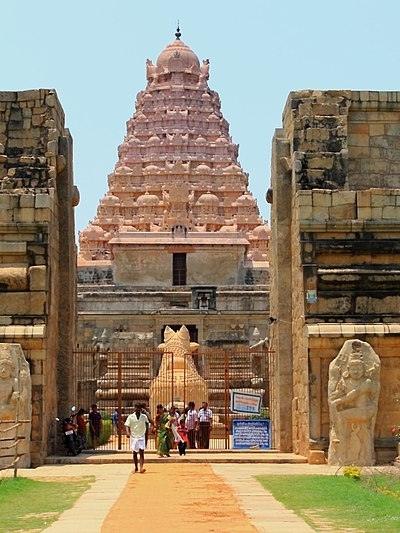
    Tanjore Big Temple.image.jpg
    Thanjavur Big Temple

    I am providing a list of Cholas from 3020 BCE based on Puranas and the evidence from the copperplates,Chola Inscriptions belonging to Chola period.

    Even this may not be accurate as Chera King Udiyan Cheralaathan , Chola and Pandya Kings took part in the Kurukshetra war in the Mahabharata.

    As Ramayana also refers to these Kings the date may be pushed back to somewhere around 5000 BC.

    List of Chola Kings as indicated by Puranas.

    • Eri Oliyan Vaendhi C. 3020 BCE
    • Maandhuvaazhi C. 2980 BCE
    • El Mei Nannan C. 2945 BCE
    • Keezhai Kinjuvan C. 2995 BCE
    • Vazhisai Nannan C. 2865 BCE
    • Mei Kiyagusi Aerru C. 2820 BCE
    • Aai Kuzhi Agusi Aerru C. 2810 BCE
    • Thizhagan Maandhi C. 2800 BCE
    • Maandhi Vaelan C. 2770 BCE
    • Aai Adumban C. 2725 BCE
    • Aai Nedun jaet chozha thagaiyan C. 2710 BCE
    • El Mei Agguvan a.k.a. Keezh nedu mannan C. 2680 BCE
    • Mudiko Mei Kaalaiyam Thagaiyan C. 2650 BCE
    • Ilangok keezh kaalaiyan thagaiyan a.k.a. Ilangeezh nannan C. 2645 BCE -start of Kadamba lineage by his brother Aai Keezh Nannan
    • Kaalaiyan gudingyan C. 2630 BCE
    • Nedun gaalayan dhagayan C. 2615 BCE
    • Vaengai nedu vael varaiyan C.2614 BCE
    • Vaet kaal kudingyan C. 2600 BCE
    • Maei Ila vael varaiyan C. 2590 BCE
    • Sibi Vendhi C. 2580 BCE
    • Paru nonji chaamazhingyan C. 2535 BCE
    • Vaeqratrtri chembiya chozhan C. 2525 BCE
    • Saamazhi chozhiya vaelaan C. 2515 BCE
    • Uthi ven gaalai thagan C. 2495 BCE
    • Nannan that kaalai thagan C. 2475 BCE
    • Vel vaen mindi C. 2445 BCE
    • Nedun jembiyan C. 2415 BCE
    • Nedu nonji Vendhi C. 2375 BCE
    • Maei Vael paqratrtri C. 2330 BCE
    • Aai Perun thoan nonji C. 2315 BCE
    • Kudiko pungi C. 2275 BCE
    • Perun goep poguvan C. 2250 BCE
    • Koeth thatrtri C. 2195 BCE
    • Vadi sembiyan C. 2160 BCE
    • Aalam poguvan C. 2110 BCE
    • Nedun jembiyan C. 2085 BCE
    • Perum paeyar poguvan C. 2056 BCE
    • Kadun jembiyan C. 2033 BCE
    • Nedun kathan C. 2015 BCE
    • Paru nakkan C. 1960 BCE
    • Vani sembiyan C. 1927 BCE
    • Udha chira mondhuvan C. 1902 BCE
    • Perun kaththan C. 1875 BCE
    • Kadun kandhalan C. 1860 BCE
    • Nakka monjuvan C. 1799 BCE
    • Maarko vael Maandhuvan Aaththikko C. 1786 BCE
    • Musukunthan Vaendhi C. 1753 BCE
    • Peru nakkan Thatrtri C. 1723 BCE
    • Vaer kaththan C. 1703 BCE
    • Ambalaththu Irumundruvan C. 1682 BCE
    • Kaari mondhuvan C. 1640 BCE
    • Vennakkan Thatrtri C. 1615 BCE
    • Maarko chunthuvan C. 1565 BCE
    • Vaer parunthoan mundruvan C. 1520 BCE
    • Udhan kaththan C. 1455 BCE
    • Kaariko sunthuvan C. 1440 BCE
    • Vendri nungunan C. 1396 BCE
    • Mondhuvan Vendhi C. 1376 BCE
    • Kaandhaman C. 1359 BCE
    • Mundruvan Vendhi C. 1337 BCE
    • Kaandhaman C. 1297 BCE
    • Monjuvan Vendhi C. 1276 BCE
    • Ani sembiyan C. 1259 BCE
    • Nungunan Vendhi C. 1245 BCE
    • Maarkop perum Cenni C. 1229 BCE
    • Monjuvan Nanvendhi C. 1180 BCE
    • Kop perunar chenni C. 1170 BCE
    • Monthuvan jembiyan C. 1145 BCE
    • Narchenni C. 1105 BCE
    • Caet chembiyan C. 1095 BCE
    • Nakkar chenni C. 1060 BCE
    • Parun jembiyan C.1045 BCE
    • Venjenni C. 998 BCE
    • Musugunthan C. 989 BCE
    • Maarkop perun jembiyan C. 960 BCE
    • Nedunjenni C.935 BCE
    • Thatchembiyan C. 915 BCE
    • Ambalaththu iruvaer chembiyan C. 895 BCE
    • Kaariko chenni C. 865 BCE
    • Venvaer chenni C. 830 BCE
    • Kaandhaman, C. 788 BCE
    • Kaandhalan C. 721 BCE
    • Caetchenni C. 698 BCE
    • Vani nungunan C. 680 BCE
    • Mudhu sembiyan Vendhi C. 640 BCE
    • Peelan jembiyach chozhiyan C. 615 BCE
    • Maeyan gadungo C. 590 BCE
    • Thiththan C. 570 BCE
    • Perunar killi Porvaiko C. 515 BCE
    • Kadu mundruvan C. 496 BCE
    • Kopperunjozhan C. 495 BCE
    • Narkilli Mudiththalai C. 480 BCE
    • Thevvan go chozhan C. 465 BCE
    • Naran jembiyan C. 455 BCE
    • Nakkam peela valavan C. 440 BCE
    • Iniyan thevvan jenni C. 410 BCE
    • Varcembiyan C. 395BCE
    • Nedun jembiyan C. 386 BCE
    • Nakkan aran jozhan C. 345 BCE
    • Ambalathu irungoch chenni C. 330 BCE
    • Perunar killi C. 316 BCE
    • Kochaet Cenni C. 286 BCE
    • Cerupazhi Erinda Ilanjaetcenni, C. 275 BCE
    • Nedungop perunkilli C. 220 BCE
    • Cenni Ellagan C. 205 BCE
    • Perun gilli C. 165 BCE
    • Kopperun jozhiyav ilanjaetcenni C. 140 BCE
    • Perunar killi Mudiththalai ko C. 120 BCE
    • PerumpootCenni C. 100 BCE
    • Ilam perunjenni C. 100 BCE
    • Perungilli Vendhi aka Karikaalan I C. 70 BCE
    • Nedumudi Killi C. 35 BCE
    • Ilavanthigaipalli Thunjiya Maei Nalangilli Caet Cenni, C. 20 BCE
    • Aai Vaenalangilli C. 15 BCE
    • Uruvapakraer Ilanjaetcenni, C. 10 – 16 CE
    • 16–30 CE Kingdom ruled by a series of Uraiyur chieftains
    • Karikaalan II Peruvalaththaan, C. 31 CE
    • Vaer paqradakkai Perunar killi, C. 99 CE
    • Perun thiru mavalavan, Kuraapalli Thunjiya C. 99 CE
    • Nalangilli C. 111 CE
    • Perunarkilli, Kula mutrtraththu Thunjiya C. 120 CE
    • Perunarkilli, Irasasuya vaetta C. 143 CE
    • Vael kadunkilli C. 192 CE
    • Kochenganaan C. 220 CE
    • Nalluruththiran C. 245 CE

    Based on Chola Inscriptions.

    • Manu
    • Ikshvaku
    • Vikukshi
    • Puranjaya
    • Kakutstha
    • Kakshivat
    • Aryaman
    • Analapratapa
    • Vena
    • Prithu
    • Dhundhumara
    • Yuvanasva
    • Mandhata
    • Muchukunda
    • Valabha
    • Prithulaksha
    • Parthivachudamani
    • Dirghabahu
    • Chandrajit
    • Sankriti
    • Panchapa
    • Satyavrata
    • Rudrajit
    • Sibi
    • Marutta
    • Dushyanta
    • Bharata
    • Cholavarman
    • Rajakesarivarman
    • Parakesarin
    • Chitraratha
    • Chitrasva
    • Chitradhanvan
    • Suraguru
    • Chitraratha
    • Vyaghraketu
    • Narendrapati
    • Vasu
    • Visvajit
    • Perunatkilli
    • Karikala
    • Kochchengannan

    Please read my posts on Cholas from Kasyapa Gotra, Sibi, Cholas from Ikshvaku Dynasty.

    For more articles on Cholas ,please Google Cholas+ramanan50.


    Citation and reference.

    http://america.pink/legendary-early-chola-kings_2572689.html

  • Konarak Sun Temple Built By Kulothunga Chola I Descendant

    The inmate  relationship between Sanatana Dharma and Tamils is striking.

    One has been misled into believing that The Tamils had ancestry that was inimical to Hinduism, Sanatana Dharma.

    How wrong could this be!,

    I have written through  many articles including the one that Lord Rama’s ancestor was a Dravidian and he migrated to Ayodhya due a Tsunami in the South of India.

    The ancestry of the two Tamil Dynasties goes back to Solar and Lunar Dynasties, That of Rama and Kauravas.

    Please read my articles on this.

    Sun Temple,Konarak.Image.jpg
    Sun Temple,Konarak,Odisha,India. Image credit.http://en.wikipedia.org/wiki/Konark_Sun_Temple#/media/File:Konark_Temple_Panorama2.jpg

    Konarak Su Dial.Image.jpg
    Koanarak SunDial. The wheels of the chariot are also symbolic and have been interpreted as the ‘Wheel of Life’. They portray the cycle of creation, preservation and achievement of realisation. The diameter of each of the wheels is about nine(2.73 metres) feet and each of them has a set eight equal parts. They are elaborately carved all over. The thicker ones are all carved with circular medallions at their centres on the widest part of the face. The axels of the wheels project by about one foot from the surface, having similar decorations at their ends. The rims are carved with designs of foliages with various birds and animals, whereas the medallions in the spokes are carved with the figures of women in various luxurious poses, mostly of erotic nature. These wheels may also possibly represent the twelve Zodiacs. (src: shreekhetra) – See more at: http://eodisha.org/amazing-odisha-accuracy-sundial-konark-sun-temple-built-1250-d-people-still-use-today-time-konark-sundial-suntemple-india/#sthash.YVHmT0Wb.dpuf

    I am researching on the third Tamil King Dynasty, the Cheras and shall write shortly.

    The Tamil Kings, Cholas and Pandyas were great Devotees of Shiva, Vishnu and Karthikeya, called as Murugan in Tamil Nadu.

    A Chola King had built 101 Shiva Temples along the banks of River Kaveri.

    The Big Temple at Thanjavur ,an architectural marvel was built by Rajaraja Chozhan

    The special type of Vimanas of the temples in India is the contribution og the Tamils to Sanatana Dharma.

    One of the great Temples of India, The Sun Temple at Konarak was built by a descendant of Kulothunga Chola I.

    “Kulothunga Chola I was the grandson of Emperor Rajendra Chola I .As a Chola prince he conquered the Sri Vijaya provinceKedah on behalf of his maternal uncle Emperor Virarajendra Chola in the 11th century. As a Chola Prince he also conqueredBastar in modern Chhattisgarh

    Scroll down for Konarak Video

    Konark Sun Temple was built in Orissa by Chola prince who was daughter of Rajaraja and wife of Vimaladitya.

    The Melakkadambur Shiva temple, built in the form of a chariot during the age of Kulottunga Chola I (1075-1120), is the earliest of this kind, and is still in a well preserved state. It is believed that this temple set the pace for the ratha (chariot) vimana temples in India, as a distant descendant of Kulottunga I on the female line, and thefamous Eastern Ganga ruler Narasimha Deva, built the Sun Temple at Konark in the form of a chariot in the 13th century. Kulottunga Chola is also credited with having built the Suryanaar temple near Kumbhakonam. Temples dedicated to the Sun are not a common feature in the Tamil speaking region of the Indian subcontinent..

    Legend has it that Samba, the king of Krishna and Jambavati entered the bathing chamber of Krishna’s wifes, and was cursed by Krishna with leprosy. It was decreed that he would be relieved of the curse by worshipping the sun God on the sea coast north east of Puri. Accordingly Samba reached Konaditya Kshetra and discovered an image of Surya seated on the lotus, worshipped him and was relieved of his curse.

    It is said that the temple was not completed as conceived because the foundation was not strong enough to bear the weight of the heavy dome. Local beleif has it that it was constructed in entirety, however its magnetic dome caused ships to crash near the seashore, and that the dome was removed and destroyed and that the image of the Sun God was taken to Puri.

    The Temple: The Konark temple is widely known not only for its architectural grandeur but also for the intricacy and profusion of sculptural work. The entire temple has been conceived as a chariot of the sun god with 24 wheels, each about 10 feet in diameter, with a set of spokes and elaborate carvings. Seven horses drag the temple. Two lions guard the entrance, crushing elephants. A flight of steps lead to the main entrance.

    The nata mandir in front of the Jagamohana is also intricately carved.  Around the base of the temple, and up the walls and roof, are carvings in the erotic style.  There are images of animals, foliage, men, warriors on horses and other interesting patterns. There are three images of the Sun God, positioned to catch the rays of the sun at dawn, noon and sunset.

    The Melakkadambur Shiva temple, built in the form of a chariot during  the age of Kulottunga Chola I (1075-1120),  is the earliest of this kind, and is still in a well preserved state.  It is believed that this temple set the pace for the ratha (chariot) vimana temples in India, as a distant descendant of Kulottunga I on the female line, and thefamous Eastern Ganga ruler Narasimha Deva, built the Sun Temple at Konark in the form of a chariot in the 13th century. Kulottunga Chola is also credited with having built the Suryanaar temple near Kumbhakonam. Temples dedicated to the Sun are not a common feature in the Tamil speaking region of the Indian

    The Konarak temple.

    Konark is also known as Konaditya. The name Konark is derived form the words Kona – Corner and Arka – Sun; it is situated on the north eastern corner of Puri or the Chakrakshetra. Konark is also known as Arkakshetra.

    The entire temple is made in the form of a chariot, which symbolizes the carrier of the Sun God. This chariot comprises of 12 magnificent wheels and is drawn by seven fine horses.

    At the entrance of the temple, there are two huge sculptures that show two lions, which are crushing a huge elephant. The Konark Sun Temple, India, also includes a temple known as the Nata Mandir. There are exemplary floral and geometric carvings that adorn the precincts of the Konark Sun Temple, India. The temple continues to amaze the tourists who visit the temple each year. This temple, which worships the Sun God, has been appropriately designed to match the power and aura of the Sun.

    The ruins of this temple were excavated in late 19th century. The tower over the Garbagriha is missing, however the Jagmohana is intact.

    Citation.

    http://veda.wikidot.com/info:konarak-sun-temple

    http://eodisha.org/amazing-odisha-accuracy-sundial-konark-sun-temple-built-1250-d-people-still-use-today-time-konark-sundial-suntemple-india/