Tag: Cholas

  • Cholas Descended From Rama’s Dynasty Inscriptions

    I have written an article  that the First Chola King  was from the Solar Dynasty of Ikshvaku the ancestor of Rama.

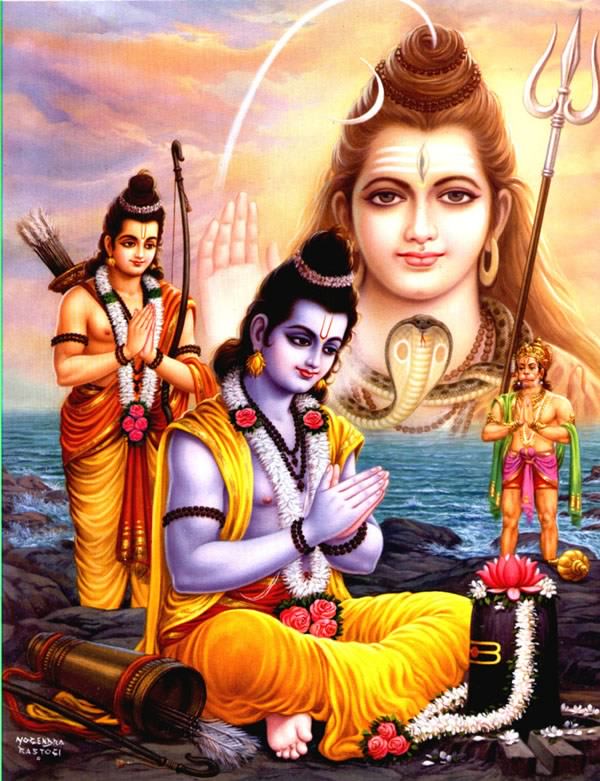
    Rama with Kodanda,Bow.jpg
    Lord Rama

    In another article I mentioned that Lord Rama,s ancestor Satyavrata Manu migrated from the South because of a Tsunami to Ayodhya , whose son Ikshvaku founded the Ikshvaku Dynasty, to which Lord Rama belongs.

    Tanjore Big Temple.imae.jpg
    Thanjavur Big Temple

    Some researches show that the  facts mentioned are correct and they corroborate the fact that the Cholas indeed were the descendants of the Solar Dynasty of Lord Rama.


    “Cholas claimed their descent from Sun and solar race kings ( Surya vamsis). Cholas worshipped Sun and built several Sun Temples. Konark Sun Temple was built in Orissa by Chola prince who was daughter of Rajaraja and wife of Vimaladitya. One Mudiraj ancestor Dharma Choda chari was said to belong to solar race. Chola- Mutharayar research center concluded that Cholas and Mutharayars belonged to one family tree. Some of the chola surnames among the Mutharayars of Tamilnadu are as given below :Cholamutharayar, Cholan, Cholavalavan, Cholavallakamayar, Killirayar,Killivazhavan,Karikalarayar,Valavan,Valavar. The Cholas claimed their descendancy from Manu, Ikshvaku, Mandhata, Mucukunda and Sibi. A prominent warrior race, cholas are central to many ancient tamil literary works, which describe them as benevolent, courageous and just. They were supposed to have descended from sun and thus were scions of the legendary royal solar dynasty, heirs to a tradition begun centuries ago. Many Chola kings took names and titles ‘sibi’ to probably acknowledge their descent from that legendary king who is celebrated as a paragon of justice. Medieval chola kings took titles like ‘Parakesarin’ and ‘Rajakesarin’ remembering their remote ancestors of that same illustrious lineage who were supposed to have lived centuries and even millenniums before them. The chola country is mentioned by Greek chroniclers and merchants, a more detailed description is provided in works of Ptolemy a Roman trader of 1st century A.D. The recent excavations following tsunami of 2004 has helped throw more light into poompuhar,(Kaveryppattanam) the capital city of early cholas. Evidently, poompuhar was an important port city in the ancient world. It was a place from which traders set sail to far east. Among the greatest of early chola kings was karikala, who according to various tamil literary sources during first century A.D defeated all his southern neighbors. He is also credited with building efficient irrigational systems and canals. The fact that he was benevolent is brought out by a poem which was written on his death. Kampan composed his poem (Tamil Kamba Ramayana) during the reign of the largest and most powerful Tamil kingdom, the imperial Cholas. Sholas might have supported this literature keeping in view of their descendancy to solar race to which Srirama belonged. Under the umbrella of that expanding empire, which claimed victories from the Ganga to Sumatra, Rama shrines were built, extensive sets of Ramayana reliefs were carved along the base of several temples, and temples supported recitations of the Rama story. Chola monarchs also bore Rama’s name in their imperial titles, and apparently one raja perceived parallels between his conquest and Rama’s when he erected icons to the epic hero to celebrate a victory over the Sinhala kings of Lanka. One temple inscription goes so far as to suggest the story of Rama as an origin myth for the Cholas, which was a solar dynasty like Rama’s. The Cholas belonged to the Solar and the Chalukyas to the Lunar race. The former were generally Saivas and the latter were Vaishnavas as they had the boar for their crest. Besides, the Chalukyas were also patrons of the Jainas. Cholas connection to solar race kings consolidated through Rangavimana : Manu’s son Ikshwaku cherished the desire of possessing the Ranga Vimanam for the benefit of the people on earth. He consulted his family preceptor, Vasishtha (priest of the Surya vamsha), who advised him to start penance uttering the sacred Ashtakshara Mantra. Accordingly, Ikshwaku started a severe penance which puzzled even the devas, foreboding evil days for them. They attempted to spoil the penance by deputing Maninatha and the celestial nymphs to distract his attention. Indra took the lead in this affair and did not even hesitate to send the Vajraayudha (lightning weapon) to foil the penance. But all failed in their attempts. In disappointment, they prayed to Brahma, to save them from the baffling catastrophe. Brahma on his part approached Ranganatha for advice. Ranganatha consoled Brahma by expressing his desire to go to Ayodhya where he would be worshipped by the descendant of the Solar dynasty for four yugas, and at the end of the fourth yuga he would go to the kingdom of the Cholas in the South, on the banks of the Kaveri, where he would stay for 700 years. At the end, of this period he would return to Brahmaloka. Brahma was directed to part with the Ranga Vimanam to Ikshwaku. Cholas were Kolis : One Gandaraditya in one of the hymns calls himself ‘king of Kori’ and ‘lord of Tanjai’. This means that he belonged to the Chola royal family as per historians. Koris and Kolis are one and the same people. Mudiraj and Muthuraj people are said to be kolis of South India. Koris <=> kolis => Kolas => Colas => CholasGangaikonda Chola : According to the Kalingattu-Parani, Kulottunga’s father belonged to the lunar race, and his mother was the daughter of Gangaikonda-Chola .

    ‘. One other ancestor of Sri Rama, Musu Kunthan, is none other than the Musu Kuntha Chola in ancient Tamil history. This Musu Kunthan’s reign was during the second Tamil Sangam age 4800-2800 BC.’

    Citation.

    http://mutharayan.blogspot.in/2013/05/king-karkala-cholan.html


    http://www.veda.harekrsna.cz/connections/Americas.php#7

  • First Chola King From Kasyapa Gotra Manu Dynasty.

    I had posted an article that the Tamil Chola Kings were the descendents of Lord Rama’s Ikshvahu Dynasty and posted the list of Kings.

    I have come across information on the origin of the term ‘Chola’ and the founder of Chola Dynasty.

    There seems to have been three distinct Cholas.

    King Rajaraja Chola

    1.The Pre Sangam Cholas belonging to Ikshvahu Dynasty.

    2.The later Cholas, of whom the Great Rajaraja Chola was one.He built the Thanjavur Brahadeswara temple  and established an Empire extending from the Godavari Basin in the north to Sri Lanka,then called Elam.( Fifth century BC to Third Century AD),

    3.Rettapadi Cholas, who ruled in and from what is now called Andhra Pradesh.

    The word Chola, according to Col.Gerini, is from the Sanskrit word Kaala, or Kola meaning black, indicating that the ancestors of the Cholas were pre historic Dravidians who were black.The word Kola became Chola, avers Gerini.

    But Tamil Grammar does not lend to this view.

    Another view is that the word Chola came from the word ,’Choozh,சூழ்’, meaning ‘surround.

    The earlier group of the Cholas were possibly Nomads ,traveling widely in around Tamil Nadu and later when they formed a Kingdom, the term became Chola.

    Scholars think, rightly so, that this explanation is quite labored.

    There is yet another explanation.

    The name Chola is the name of the Dynasty by itself,

    The first King named, according to Kanyakumari epigraph ,, founChola Varman founded the Chola Dynasty.

    Chola Varman started chasing Raksasa Rajanijaran, who assumed the shape of a Deer .

    He chased the Deer and killed it.

    Then he took bath in the River Cauvery.

    On not being able to find a Brahmin anywhere nearby, he brought Brahmins from the north, provided them with lands and cows and ensured that they performed the Yagnyas.

    The land became prosperous, the Tamil word for this is ‘ செழித்தது’

    This word became Cholas .

    Chola Varman’s successors stated using this term ever since.

    Chola Varman is from the Surya Vamsa, Solar Dynasty( to which Lord Rama belonged).

    He is the descendant of Manu.

    He was from the Kashyapa Gotra.

    This information is from the Kanakumari Epigraphs.

    Many Tamil Scholars do not agree to this stating that one need accept information contained in the epigraph or Copperplates to be true because they are found there.

    Second objection is that the narration of one turning into a deer is not possible.

    The same scholars quote the same Kanyakumari epigraph to validate information on the other Cholas .

    They also accept the Anbil, Uthiramerut epigraphy.

    But when one finds a reference to Sanatana Dharma, they immediately find curious arguments to deny the facts.

    The theory that Cholavarman founded the Chola dynasty seems to tally with my theory that Vaivastha Manu left from Dravida Desa to North because of a Tsunami to found Ikshvahu Dynasty.

    I shall be writing another version from Thiruvaalkaadu Plates.

    And that seems to be more credible and backed by cross reference to Purana list of Ikshvaku,Puri Dynaties.

    Please read my post Rama’s ancestors Dravida.

    Citation.

    First Rajaraja Chola by K.D. Thirunavukkarasu, published by Ananda Vikatan Press.

    Tamil Chola Kings Descendants of Manu Rama

  • Tamil Chola Kings Descendants of Manu Rama

    Tamil Chola Kings Descendants of Manu Rama

    If there is one One culture ,One advanced civilization that matches the Sanatana Dharma, it is the Tamil Culture, Literature .


    It has been in existence for such a long period that the Vedas and Puranas quote Tamil language,Culture,Spices,Pearls,Elephant Tusks, Tamil Scholars.


    Chola Dyansty Time Line.png
    Chola Dyansty Time Line.


    Valmiki has written a Tamil Classic,Vanmikar Arupthu,Vlmiki’s Sixty, a work dealing with practical life and Philosophy.


    Ramayana describes the princes from Tail Kingdom being present in Sita’s Swamvar.


    Mahabharata speaks similarly on Draupadi’s Swayamvar.


    Chera King Udiyan Chralathan fed both the Panadava and kaurava Armies during the Mahabharata War.


    The Pandya King fought along with the Pandavas as the Pandya Princess was married to Arjuna.


    Krishna  married a Pandyan Princess,Pandyah, Megasthanes says and had a daughter through her.


    Arjuna married a Pandya Princess and had a son Babruvahana, who was the only person who killed Arjuna,that Arjuna was revived is another matter.


    In its turn Tamil quotes extensively the Vedas.


    A King Sibi was the ancestor of Rama.


    There are numerous references  that speak of the close relationship of the South Dravida with the Sanatana Dharma.


    I have posted extensively on this in posts where it is warranted(Under Hinduism/Tamils)


    I have posted an article, based on archeological, geographical evidence that Lord Rama’s ancestor Vaivaswatha Manu migrated from the South to Ayodhya to found  his kingdom.


    Shiva with his son Ganesha left by the Arabian sea towards the middle east.


    Now let us consider the following .


    Tamil People settlement dates back to Palaeolithic Age.


    That is Prehistoric Age, 1,510,000 BCE until around 3000 BCE.


    A discovery of a rare fossilized baby brain in Viluppuram district, by a team of archeologists was reported in April 2003, It is estimated to be about 187,000 years – 200,000 years or older.

    Then came the Neolithic and Iron Ages.


    Considering the fact that Sibi and manu Needi were Cholas and are quoted by extensively by Puranas and Tamil Literature, there is definitely a possibility that the Cholas descended from the  Solar Dynasty.


    Cross checking with the Thirvalangadu Copperplate, the Dynasty of the Tamil Kings are traced back to Solar Dynasty.


    Genealogy from the Chola Inscriptions.


    • Manu
    • Ikshvaku
    • Vikukshi
    • Puranjaya
    • Kakutstha
    • Kakshivat
    • Aryaman
    • Analapratapa
    • Vena
    • Prithu
    • Dhundhumara
    • Yuvanasva
    • Mandhatri
    • Muchukunda
    • Valabha
    • Prithulaksha
    • Parthivachudamani
    • Dirghabahu
    • Chandrajit
    • Sankriti
    • Panchapa
    • Satyavrata
    • Rudrajit
    • Sibi
    • Marutta
    • Dushyanta
    • Bharata
    • Cholavarman
    • Rajakesarivarman
    • Parakesarin
    • Chitraratha
    • Chitrasva
    • Chitradhanvan
    • Suraguru (Mrityujit)
    • Chitraratha
    • Vyaghraketu
    • Narendrapati
    • Vasu (Uparichara)
    • Visvajit
    • Perunatkilli
    • Karikala
    • Kochchengannan

    Genealogy from the Purana Timeline.


    • Eri Oliyan Vaendhi C. 3020 BCE
    • Maandhuvaazhi C. 2980 BCE
    • El Mei Nannan C. 2945 BCE
    • Keezhai Kinjuvan C. 2995 BCE
    • Vazhisai Nannan C. 2865 BCE
    • Mei Kiyagusi Aerru C. 2820 BCE
    • Aai Kuzhi Agusi Aerru C. 2810 BCE
    • Thizhagan Maandhi C. 2800 BCE
    • Maandhi Vaelan C. 2770 BCE
    • Aai Adumban C. 2725 BCE
    • Aai Nedun jaet chozha thagaiyan C. 2710 BCE
    • El Mei Agguvan a.k.a. Keezh nedu mannan C. 2680 BCE
    • Mudiko Mei Kaalaiyam Thagaiyan C. 2650 BCE
    • Ilangok keezh kaalaiyan thagaiyan a.k.a. Ilangeezh nannan C. 2645 BCE -start of Kadamba lineage by his brother Aai Keezh Nannan
    • Kaalaiyan gudingyan C. 2630 BCE
    • Nedun gaalayan dhagayan C. 2615 BCE
    • Vaengai nedu vael varaiyan C.2614 BCE
    • Vaet kaal kudingyan C. 2600 BCE
    • Maei Ila vael varaiyan C. 2590 BCE
    • Sibi Vendhi C. 2580 BCE
    • Paru nonji chaamazhingyan C. 2535 BCE
    • Vaeqratrtri chembiya chozhan C. 2525 BCE
    • Saamazhi chozhiya vaelaan C. 2515 BCE
    • Uthi ven gaalai thagan C. 2495 BCE
    • Nannan that kaalai thagan C. 2475 BCE
    • Vel vaen mindi C. 2445 BCE
    • Nedun jembiyan C. 2415 BCE
    • Nedu nonji Vendhi C. 2375 BCE
    • Maei Vael paqratrtri C. 2330 BCE
    • Aai Perun thoan nonji C. 2315 BCE
    • Kudiko pungi C. 2275 BCE
    • Perun goep poguvan C. 2250 BCE
    • Koeth thatrtri C. 2195 BCE
    • Vadi sembiyan C. 2160 BCE
    • Aalam poguvan C. 2110 BCE
    • Nedun jembiyan C. 2085 BCE
    • Perum paeyar poguvan C. 2056 BCE
    • Kadun jembiyan C. 2033 BCE
    • Nedun kathan C. 2015 BCE
    • Paru nakkan C. 1960 BCE
    • Vani sembiyan C. 1927 BCE
    • Udha chira mondhuvan C. 1902 BCE
    • Perun kaththan C. 1875 BCE
    • Kadun kandhalan C. 1860 BCE
    • Nakka monjuvan C. 1799 BCE
    • Maarko vael Maandhuvan Aaththikko C. 1786 BCE
    • Musukunthan Vaendhi C. 1753 BCE
    • Peru nakkan Thatrtri C. 1723 BCE
    • Vaer kaththan C. 1703 BCE
    • Ambalaththu Irumundruvan C. 1682 BCE
    • Kaari mondhuvan C. 1640 BCE
    • Vennakkan Thatrtri C. 1615 BCE
    • Maarko chunthuvan C. 1565 BCE
    • Vaer parunthoan mundruvan C. 1520 BCE
    • Udhan kaththan C. 1455 BCE
    • Kaariko sunthuvan C. 1440 BCE
    • Vendri nungunan C. 1396 BCE
    • Mondhuvan Vendhi C. 1376 BCE
    • Kaandhaman C. 1359 BCE
    • Mundruvan Vendhi C. 1337 BCE
    • Kaandhaman C. 1297 BCE
    • Monjuvan Vendhi C. 1276 BCE
    • Ani sembiyan C. 1259 BCE
    • Nungunan Vendhi C. 1245 BCE
    • Maarkop perum Cenni C. 1229 BCE
    • Monjuvan Nanvendhi C. 1180 BCE
    • Kop perunar chenni C. 1170 BCE
    • Monthuvan jembiyan C. 1145 BCE
    • Narchenni C. 1105 BCE
    • Caet chembiyan C. 1095 BCE
    • Nakkar chenni C. 1060 BCE
    • Parun jembiyan C.1045 BCE
    • Venjenni C. 998 BCE
    • Musugunthan C. 989 BCE
    • Maarkop perun jembiyan C. 960 BCE
    • Nedunjenni C.935 BCE
    • Thatchembiyan C. 915 BCE
    • Ambalaththu iruvaer chembiyan C. 895 BCE
    • Kaariko chenni C. 865 BCE
    • Venvaer chenni C. 830 BCE
    • Kaandhaman, C. 788 BCE
    • Kaandhalan C. 721 BCE
    • Caetchenni C. 698 BCE
    • Vani nungunan C. 680 BCE
    • Mudhu sembiyan Vendhi C. 640 BCE
    • Peelan jembiyach chozhiyan C. 615 BCE
    • Maeyan gadungo C. 590 BCE
    • Thiththan C. 570 BCE
    • Perunar killi Porvaiko C. 515 BCE
    • Kadu mundruvan C. 496 BCE
    • Kopperunjozhan C. 495 BCE
    • Narkilli Mudiththalai C. 480 BCE
    • Thevvan go chozhan C. 465 BCE
    • Naran jembiyan C. 455 BCE
    • Nakkam peela valavan C. 440 BCE
    • Iniyan thevvan jenni C. 410 BCE
    • Varcembiyan C. 395BCE
    • Nedun jembiyan C. 386 BCE
    • Nakkan aran jozhan C. 345 BCE
    • Ambalathu irungoch chenni C. 330 BCE
    • Perunar killi C. 316 BCE
    • Kochaet Cenni C. 286 BCE
    • Cerupazhi Erinda Ilanjaetcenni, C. 275 BCE
    • Nedungop perunkilli C. 220 BCE
    • Cenni Ellagan C. 205 BCE
    • Perun gilli C. 165 BCE
    • Kopperun jozhiyav ilanjaetcenni C. 140 BCE
    • Perunar killi Mudiththalai ko C. 120 BCE
    • PerumpootCenni C. 100 BCE
    • Ilam perunjenni C. 100 BCE
    • Perungilli Vendhi aka Karikaalan I C. 70 BCE
    • Nedumudi Killi C. 35 BCE
    • Ilavanthigaipalli Thunjiya Maei Nalangilli Caet Cenni, C. 20 BCE
    • Aai Vaenalangilli C. 15 BCE
    • Uruvapakraer Ilanjaetcenni, C. 10 – 16 CE
    • 16 CE – 30 CE Kingdom ruled by a series of Uraiyur chieftains
    • Karikaalan II Peruvalaththaan, C. 31 CE
    • Vaer paqradakkai Perunar killi, C. 99 CE
    • Perun thiru mavalavan, Kuraapalli Thunjiya C. 99 CE
    • Nalangilli C. 111 CE
    • Perunarkilli, Kula mutrtraththu Thunjiya C. 120 CE
    • Perunarkilli, Irasasuya vaetta C. 143 CE
    • Vael kadunkilli C. 192 CE
    • Kochenganaan C. 220 CE
    • Nalluruththiran C. 245 CE

    Many scholars dispute this despite evidence from from the Puranas and Chola Inscriptions.


    Purana evidence is disputed despite the fact the geographical features mentioned in them, Kings reign tally with other verified facts and accredited by archeology.


    Chola inscription are also not due credence because it happens to be excavated mostly by Indians and it does not agree with the concocted story of Aryan Invasion Theory.


    What a scholarship!


    The fact that Ramas’ ancestor was from the South, the Floods mentioned in the Tamil Classics tally with this event, I am of the opinion that the Cholas descended from te common parentage of Lord Rama.


    One group migrated to North, another towards  the Middle-east and yet another survived and stayed back in the south.


    * I will be tracing the Pandya and Chra Dynasty as well.


    Citations.