

The place where The Bhagavad Gita was born,
The Epic War of Mahabharata was fought,
Where Bhishma was pierced by the Arrows of Arjuna and had been lying down awaiting Uttarayana,
Kurukshetra,
Which was addressed by Dhritharashtra with the adjective, Dharmakshetre, Land of Righteousness.
It is in Haryana, meaning, Vishnu Came heer, Hari ka Aana.
The legend.
”
The founder of the land was King Kuru who practiced austere penance to make this land righteous – that is why in the first verse of the Bhagavad-gita, Kurukshetra is prefixed with Dharmakshetra (place of pilgrimage). This region comprises a large number of temples and tanks of antiquity.
King Kuru selected this land on the bank of sacred river Saraswati for spiritual culture and cultivation of eight-fold virtues. He arrived here on his golden chariot and utilized its gold for making a plough. He took the bull of Shiva and buffalo of Yama on loan and started ploughing the land. Indra, the king of heaven, came and asked Kuru as to what he was doing? He replied that he was preparing the land for growing eight-fold virtues of religious austerity (tapa), truth, forgiveness, kindness, purity, charity, yoga and continence (brahmacharya). Indra asked him as to where he would get the seed of these virtues. The King replied that the seed was in his possession. At this Indra laughed and went away.
After the king had cultivated the land for several days, Lord Vishnu appeared before him and asked as to what he was doing? He gave the same reply as given to Indra. Vishnu asked Kuru to give Him the seed and that He would sow it for him. At this Kuru put forward his right arm and the same was cut into 1000 pieces with the Chakra of Vishnu and sown in the field. In the same way king Kuru’s left arm, his two legs and then his head were offered by him to Vishnu for sowing.
Indra appeared at this stage and told him to ask for any boon. Kuru asked for two boons: one, that this land would forever remain a holy land named after himself, and the other, that anyone dying here would be relieved of the cycle of birth and death irrespective of his sins or virtues.
Sripad Madhvacharya, a great Vaishnava acharya, from South India came here around 1250 AD. During his visit he dug-up a certain piece of land in Kurukshetra and found the mace used by Bhima in the battle of Kurukshetra. Later after showing this to his disciples he replaced it in the same spot.
Jyotishvar:
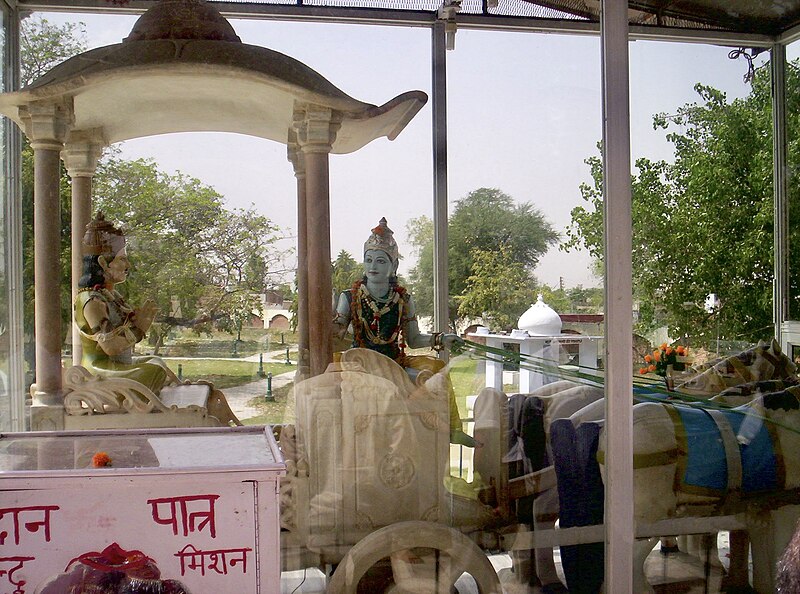
This is the exact spot where Lord Sri Krishna spoke the Bhagavad-gita; there is a banyan tree here under which Krishna explained Bhagavad-gita 5000 years back to Arjuna. There is a sign board placed on the tree which reads: The immortal banyan tree witness of the celestial song Bhagavad-gita. In fact this place is named as the Gitopadesh sthal – place where the Bhagavad-gita was spoken.
A parikrama of the tree is considered very auspicious. There is also a small chariot in a glass and marble case below the banyan tree where one can see Krishna and Arjuna speaking to each other. In the same courtyard of the Gitopadesh sthal is a Ved Pathshala, rooms containing different characters of Mahabharata like Bhishmadeva, Krishna-Arjuna etc. There is also an ancient Shiva temple which is sheltered by the banyan tree. Jyotishvar is on Pehowa road, 5 km from Kurukshetra.
Bhishma Kunda:
In this place the great grandsire of Kuru dynasty, Bhishmadeva, was shot down by Arjuna in a volley of arrows with Shikhandi in front of him and Bhishma refusing to fight. Bhishmadeva was lying on a bed of arrows called Sharashayya, waiting for his death at the most auspicious time called Uttarayana. Following the advice of Lord Sri Krishna, all the Pandavas headed by Yudhisthira Maharaj arrived at the spot where he learned the science of Raja-dharma. Deities of Bhishmadeva, Pandavas and Lord Sri Krishna are nearby at the Bhishma Kunda temple.
Ban Ganga:
During discussions between Bhishmadeva and Yudhisthira Maharaj, Bhishmadeva asked for water, while lying on Sharashayya and Arjuna shot an arrow piercing the ground from which emanated the sacred Ganga water which flowed into Bhishma’s mouth. This body of water is called Ban Ganga which means the Ganga that emanated with the shot of a Bana (arrow). Next to the Ban Ganga is a very tall and huge figure of Hanuman.
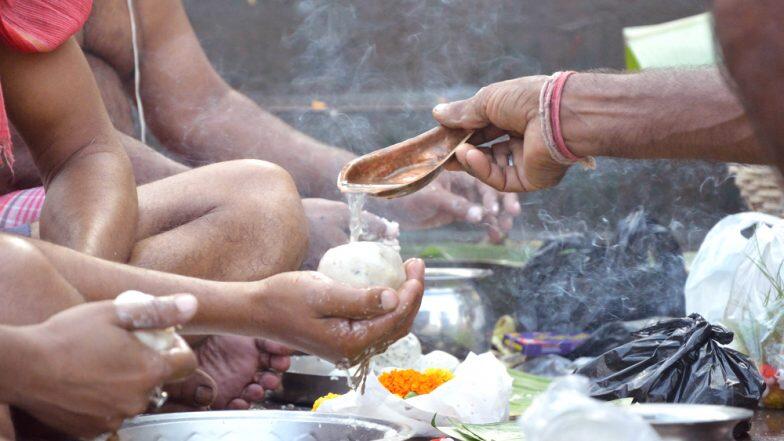
This is a huge lake where people do pitr tarpana for the souls of their near and dear who are dead. Performingpitr tarpana on the day of Amavasya is considered to be very auspicious. A lot of people come to take bath there on that day.
Citation.
http://www.harekrishnablog.com/your-corner/70-galleries/176-kurukshetra-gitopadesh-sthal


Reblogged this on HINDUISM AND SANATAN DHARMA and commented:
Sanatan dharm is in hearts of sanatani.
Indeed a very lucid description of Kurukshetra giving the historical perspective.