Tag: Arjuna

  • Bhagavad Gita In Egyptian Pyramid  NOW With Private Collector?

    Bhagavad Gita In Egyptian Pyramid NOW With Private Collector?

    I wrote an article on 8 December, 2014, Appropriate Bhagavad Gita Verse in Egyptian Pyramid.

    I received information as comment from a reader as to where the tomb is.

    The comment.

    JessicaEDIT 0 0 Rate This

    Mr. Ramani,
    Its Pyramid 2 in Egypt but the tablet was immediately taken to British Museum and no photographs can be found online)

    # During my visit to UK in April 2019, I visited the Museum to check the information contained in this article.

    I was informed by the curator that the artifact was returned to the private collector.

    The curator informed me that he could not divulge information about the collector.

    In Leeds Musuem, I saw a Third Century BC Vishnu Panchaloka Idol.

    The curator was reluctant to share additional information except the date.

    Screenshot of Original source Navbharat times. Screeenshot
    Screenshot from Navbharat Times 18/04//1967

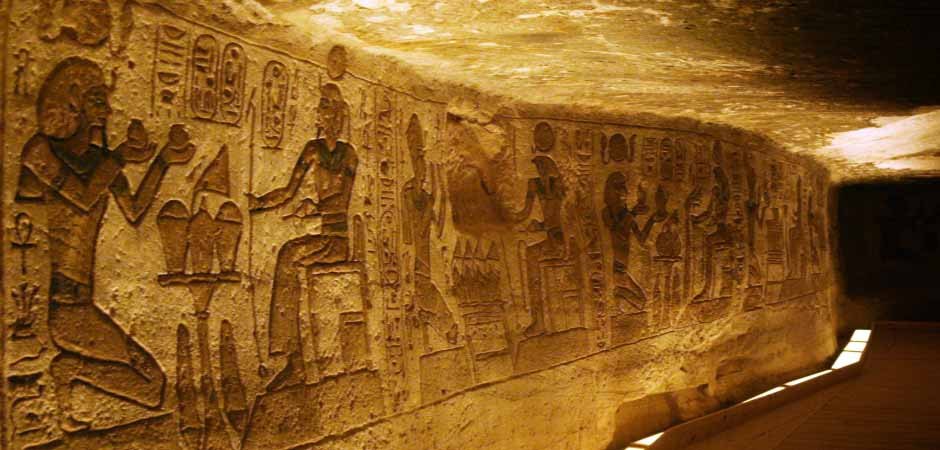
    In one of the Pyramids, dating back to 3000 BC, a verse, from the second chapter of the Bhagavad Gita was found inscribed.

    Here it is:

    vasanvsi jeernani yatha vihaya, navani
    ghrunnati naro parani

    – Nava Bharat Times, 18-4-1967

    # During my visit to UK in April 2019, I visited the Museum to check the information contained in this article.

    I was informed by the curator that the artifact was returned to the private collector.

    The curator informed me that he could not divulge information about the collector.

    In Leeds Musuem, I saw a Third Century BC Vishnu Panchaloka Idol.

    The curator was reluctant to share additional information except the date.

    I received information as comment from a reader as to where the tomb is.

    This verse is from The Bhagavd Gita Chapter 2,verse 22.

    The text and translation.

    vasamsi jirnani yatha vihaya
    navani grhnati naro ‘parani
    tatha sarirani vihaya jirnany
    anyani samyati navani dehi

    vasamsi–garments; jirnani–old and worn out; yatha–as it is; vihaya–giving up; navani–new garments; grhnati–does accept; narah–a man; aparani–other; tatha–in the same way; sarirani–bodies; vihaya–giving up; jirnani–old and useless; anyani–different; samyati–verily accepts; navani–new sets; dehi–the embodied.

    As a person puts on new garments, giving up old ones, similarly, the soul accepts new material bodies, giving up the old and useless ones.

    How appropriate for a Burial Tomb!

  • Thirty Gitas Of Hinduism

    The term Gita, Sanskrit means,


    गीता– a song, sacred song or poem, religious doctrines declared in metrical form by an inspired sage’

    All of us aware of Srimad Bhagavd Gita.

    Though I know some texts( I have written on some of them) which are called Gita, I have recently come across information that there are thirty Gitas!

    The rate at which I come to know what I do not know about Hinduism is staggering.

    Childishly I have started started writing on Hinduism.

    I am certain that I would not even touch the periphery of Hinduism before my death.

    Hope and pray that I may attempt to scratch its surface.

    I propose writing on these Gitas in detail shortly.

    Who Realize God? Bhagavad Gita
    Bhagavad Gita quote.


    1. Uttara Gita Lord Krishna’s second discourse to Arjuna
    2. Anu Gita – Lord Krishna’s final message to Arjuna
    3. Uddhava Gita – Krishna’s last discourse to his disciple Uddhava.
    4. Devi Gita
    5. Asthavakra Gita
    6. Avadhoota Gita
    7. Rama Gita
    8. Vibhishana Gita
    9. Hanumad Gita
    10. Guru Geeta
    11. Siddha Gita
    12. Vidya Gita
    13. Yama Gita
    14. Ganesha Gita
    15. Agastya Gita
    16. Bharata Gita
    17. Bheeshma Gita
    18. Bhikshu Gita
    19. Brahma Gita
    20. Gopika Gita
    21. Hamsa Gita
    22. Rishabha Gita
    23. Rudra Gita
    24. Siva Gita
    25. Vyasa Gita, Vasistha Gita(Yoga Vasistha)
    26. Sanatkumara Gita
    27. Sanat Sujata Gita
    28. Rishabha Gita
    29. Sruti Gita
    30. Kapila Gita

    Reference.

    Sanskrit Dictionary

  • Krishna Defeated Pandya Chola Mahabharata

    Contrary to the misinformation being spread that the Tamil Polity and Culture were inimical to Sanatana Dharma references in the Mahabharata and ancient Tamil classics abound about the intricate and interwoven relationship between Sanatana Dharma and Tamils.

    Genealogof Bharata.jpg

    Lord Krishna as a child.Image.jpg
    Krishna as a child

    I have quite a few articles on this issue.
    Lord Krishna married a Pandyan princess.
    He had a daughter through her and he gifted his daughter diribg her marriage 100 Yadava Families, enjoining them with the task of providing Milk and Curds to her descendents.

    images.jpg
    Madurai Meenakshi Amman Temple.

    Her name was Pandyah.
    The wife of Lord Krishna was called Nappinnai and Andal, the Vaishnavaite Saint states this in her Thiruppavai which is sung even to day in Vaishnava Temples.
    Arjuna married a Pandyan princess Chitrangadha and she was from Manalur Tamil Nadu.

    Sahadeva defeated Cholas, Pandyas, Andhras and Cheras during his Dig Vijaya on the occasion of the Rajasuya yaga performed by Yudhistira.
    Balarama visited Parashurama in the South which was then called Chera Kingdom.
    Balarama worshiped Devi at Kanyakumari and Lord Murugan at Valliyur, Tamil Nadu.
    Chera Kimg Udiyan Cheralathan fed both the Pandya and Kaurava armies during the Kurukshetra War.
    Pandya  King Malayathdwaja fought alongside the Pandavas during the Mahabharata War and wounded Dronacharya.
    He was the father of Meenakshi after whom the Madurai Meenakshi Amman Temple is named.
    (Please read a detailed post on this in thecsite)
    Now I have come across references in the Mahabharata that Lord Krishna broke open the gates of a Pandyan King Kulasekhara and killed him in a battle.( VII.11.398) and VIII.23.1016)
    ‘ Kulashekharan is said to be as strong as a bull. He is apparently killed by Lord Krishna, but although his son wants to avenge his father’s death, he is dissuaded from doing so by his well wishers.
    Krishna also defeated Chola King.(VII.11.321)

    Krishna’s encounter with the Pandyas

    Vasudeva Krishna slew king Pandya by striking his breast against his, and moved down the Kalingas in battle (5:48). TheCholas and the Pandyas were mentioned as vanquished by Krishna at (7:11).

    The mighty Sarangadhwaja, the king of the Pandyas, has white steeds, decked with armour set with stones of lapis lazuli. His country was invaded and his father was slain by Krishna in battle. Obtaining weapons then from Bhishma and Drona, Bala Rama andKripa, prince Sarangadhwaja became, in weapons, the equal of Rukmi and Karna andArjuna and Achyuta. He then desired to destroy the city of Dwaraka and subjugate the whole world. Wise friends, however, from desire of doing him good, counselled him against that course. Giving up all thoughts of revenge, he is now ruling his own dominions. Steeds that were all of the hue of the Atrusa flower bore a hundred and forty thousand principle car-warriors that followed that Sarangadhwaja, the king of the Pandyas, opposing Drona in Kurukshetra War.(7:23)

    http://ancientvoice.wikidot.com/pandya )

    One of the contemporaries of Jarasandha of the Brhadratha dynasty of Magadha is Jayatsena of Magadha. He takes part in the Kurukshetra War in the Mahabharata as one of the leaders on the side of Kauravas, along with Srutayus of Kalinga, Paundraka Vasudeva of Pundra, Karna of Anga, and Malayadwaja of the Pandyas.

    During the battle, Malayadwaja apparently wounds the mighty Dronacharya, the teacher of both the Pandavas and the Kauravas, and who fights on the side of the Kauravas. Malayadwaja goes further and takes on Drona’s son, Ashwathama, in a duel.

    Malayadwaja’s daughter is Meenakshi, after whom the famous temple of Meenakshi Amman is built in Madurai. The city of Madurai is built around this temple. After this, the Pandyas fall back into obscurity for seven centuries.

    The Magadha King, Jayatsena, brought to the Pandava’s side another akshauhini division of soldiers consisting of warriors with unlimited prowess. King Pandya, who lived near the ocean, came to the Pandava’s side bringing with him a veritable sea of troops.

    An inscription records that a Pandya king led the elephant force in the Mahabharata War on behalf of the Pandavas, and that early Pandyas translated the epic into Tamil. The first named Chera king, Udiyanjeral, is said to have sumptuously fed the armies on both sides during the War at Kurukshetra ; Chola and Pandya kings also voiced such claims—of course they may be devoid of historical basis, but they show how those kings sought to enhance their glory by connecting their lineage to heroes of the Mahabharata. So too, Chola and Chera kings proudly claimed descent from Lord Rama or from kings of the Lunar dynasty—in other words, an “Aryan” descent. ‘
    References and Citations.

    http://books.google.co.in/books?id=ERq-OCn2cloC&pg=PA90&lpg=PA90&dq=arjuna+pandya+princess&source=bl&ots=FsZomzMkxM&sig=Lesd6aWvWlMAdyY8aOzLzBsGAmw&hl=en&sa=X&ei=zSqwU5WtBcKHuAT_2IKwBw&ved=0CCMQ6AEwAjgK#v=onepage&q=arjuna%20pandya%20princess&f=false

    https://www.quora.com/What-was-happening-in-South-India-during-Mahabharata

    http://hinduwebsite.com/history/mahasangam.asp

  • Arjuna Visited Tirupati Papavinasa Theertha

    Countless Pilgrimages were taken by people belonging to Mahabharata times to South India.

    And contrary to what people think Tirupati is 2100 Million Years old.

    Route taken by Arjuna in his Pilgrimage.jpg Arjuna’s Pilgrimage,Route.

    Geologists have dated this and the information tallies with what Hindu Puranas say about the age of the Hills.

    It is about 21oo Million years old.’

    Source .Tirupati 2100 Million Years old

    The List includes,

    Lord Krishna,

    Balarama,

    The Pandavas,

    Karna….

    I had written an article on the Pilgrimage undertaken by Arjuna to South India.

    papavinasam-theertham.jpg
    Papavinasana Theertha, Tirupati.

    Among other places visited by Arjuna, he visited Tirupati, had Darshan of Lord Varaha ,Balaji  and took a holy dip in the Papavinasana Theertha for atoning the sin of seeing Yudhistra and Draupadi together.(Skanda Purana)

    Tirupati Papnanasa Theertham.jpg Tirupati Papnanasa Theertham.

    When the five Pandavas were living together with their wife Draupadi, they had an arrangement,that Draupadi shall live as wife together with one of the Five and the other four Pandvas shall not be with her.

    Sri Vatsam of balaji, Tirupati.jpgi.
    Balaji Tirupati,Srivathsam is visible.

    Lord Balaji, Tirupati.


    At a point of time, Yudhistra was living with Draupadi.


    Agni,God Fire,in the guise of a Brahmin sought the help of  Arjuna to help  ease his hunger.


    Arjuna,being a Kshatriya and a King, could not but to accede to Agni’s request.


    Without knowing who Agni was and what his hunger was for, Arjuna agreed and was  shocked to know it was Agni and his hunger was for burning down the Kanadava Forest.


    He was in a dilemma for as a King he(Prince)  he had a duty to protect   forests with the animals living in it.


    He consulted(who else?) Lord Krishna,who told him as a King and Kshatriya it was his duty to fulfill his promise .


    ( Krishna had a hidden agenda.


    He knew that a great war will ensue , that Arjuna  did not have a powerful Bow and he waned Arjuna to possess one.


    He engineered the whole event though Indra,father of Arjuna.)


    As anticipated by Krishna Agni asked Vauna to give the best bow and he gave the Kandeeva to Arjuna.


    Arjuna burnt the forest.


    Agini gave him the Agneyastra as well.


    When Arjuna came Home to take his old bow and arrows,he unintentionally saw Yudihistra and Draupadi together.


    It is considered to be a sin to see man and wife together when they are intimate,Sastras declare and one has to atone for this,Prayaschitta.


    One of the Prayascitta was going on a Pilgrimage.


    Krishna advised the Prayaschitta of Pilgrimage as He wanted Arjuna to get the help of as many Kings as possible for the Mahabharata war(Arjuna was not aware of the fact).


    Arjuna went on a Pilgrimage of India and in the process married many a princesses,including the daughter of a Pandya king-the Pandya fought the war along with the Panadvas.


    Vyasa gives a detailed description of the route taken by Arjuna during the Pilgrimage.’

    Source.Arjuna’s Pilgrimage Photot Essay Ramani’s blog


    Papavinasam Theertham is around 2 miles from Tirumala and is a beautiful waterfall in the region. The devotees also believe a holy dip at this site can relieve them from their sins and evils. There are separate dressing rooms at this site for men and women, where they can change their dresses. The reservoir near the dam restricts the water flow in this theertham.


  • Draupadi , Lover Of Krishna?

    There are a lot of articles in the web that Lord Krishna and Draupadi were lovers.

    Krishna saves the honor of Draupadi.
    Krishna saves the honor of Draupadi.

    And this is the reason for Krishna taking an active part in the Kurukshetra war and Draupadi seeking Krishna’s help and advice at critical moments in her life, be it her being stripped in Public in Mahabharata , when Dhrvasa visited them during Pandavas Vana Vasa, when she was crest fallen when Abhimanyu’s wife’s Foetus was about to be annihilated by Aswathama… !

    “Many authors have their own interpretations for this relationship. It could spring up from the attributes given to both the characters from historical narratives to fan fictions in each period of time. IMO, most of the readers find their relationship not distant enough as the religious discourse has conditioned our society.

    I would want to approach it from both the premises.
    Assumption 1 : They did not have feelings for each other.
    From this view point, the narrative projects a great bond of friendship. Protecting/mentoring/humoring a woman who you respect/admire shows that Krishna valued a relationship of standing by each other as something higher than the socially believed concepts of chastity (Probably the society too did not care much!). People might call it a sakhi-sakha relationship or a brother-sister relationship or a god-devotee relationship. But the common feature of any of the above is that they walked together towards a common goal

    Assumption 2 : They had feelings
    The narrative now projects a compromise in a relationship for a perceived greater cause. But we can observe that their interactions post her wedding were not much inhibited. Probably neither of them felt much guilty about it or they consciously faced the situation and grew out. The beauty of it is that the ‘separation’ did not seem to affect their commitment to each other. At the same time, their relationship did not affect their commitment to their own spouses. They were still together and yet not together.

    Either ways, I find the relation worth a bow.

    My unsolicited advice/request to those who explore the epic : Try not to judge the historical characters. We have no idea what they have practically faced. Try not to justify the weaknesses that exist in us by projecting them in the historical characters. Yes, they were humans like you and me. But had they just been like you and me with similar strengths and weaknesses, they would not have created immortal epics. :)”

    (https://www.quora.com/What-was-the-relationship-between-Krishna-and-Draupadi-like)

    Draupadi was Lord Krishna’s true lover! 14 unknown facts about Mahabharat

    Draupadi was Lord Krishna’s true lover! 14 unknown facts about Mahabharat
    When it comes to Mahabharat, there’ll be hardly anyone of the Hindu religion who would have not heard about the epic.  However, there are many things in this scripture that are neither told to anyone, and also people have not paid any attention to it. This epic is filled with innumerable interesting facts.


    In the Shastras, Mahabharat is also known as the fifth Veda. The writer of this epic is Ved Vyas.

    Today we will tell you about that secret of Mahabharat you would have never heard or thought of. Did you know that Draupadi was Lord Krishna’s lover?

    (http://daily.bhaskar.com/news/JM-draupadi-was-lord-krishnas-true-lover-14-more-facts-of-mahabharat-not-known-4511290-PHO.html?seq=1

    More than what the ill intentioned outsiders could do to malign Hinduism, these self-styled writers on Hinduism could do better.

    I am not sure if these Catherine Mayos and Max Muellers have heard of a gentleman named Veda Vyasa,and he wrote The Mahabharata.

    Krishna has always been explicit about His relationships, be it Rukmini or Sathya Bhama.

    As to the observation Krishna had 16,000 wives please refer my post under the same name.

    If Krishna and Draupadi were lovers Vyasa would have recorded it, for he is the man who recorded,

    That,

    Draupadi had Five Husbands,

    Santhanu , at an advanced age lusted after Sathyavati,

    Sage Parasara’s liaison with a fisherwoman,

    Kunti’s Illegal child,

    Krishna’s manipulation of people and events in the Kurukshetra Battle,

    .. list is endless.

    Now Vyasa on Draupadi’s Swayamvara ,

    Among others came in all her beauty the Princess Draupadi, stepping gently and sweet, bearing in a delicate hand the golden bridal garland, which was adorned with sparkling gems. Tardily she made approach, blushing with increasing loveliness, and appeared in the presence of the princes. Mighty and high-born men were there. The Pandavas beheld in the galleries their enemies Duryodhana, Karna, and all the great Kauravas, and they

    p. 215

    saw also Krishna, the amorous and powerful one, and his brother, the wine-drinking Balarama 1, the Yádava princes, the Rajah of Sindhu and his sons, the Rajah of Chedi, the Rajah of Kosala, the Rajah of Madra, and many more. Now the Pandavas were still disguised as Brahmans, and stood among the holy men.

    An aged and white-haired Brahman, clad in white, approached the high altar, chanting mantras. He spread the holy grass and poured out oil; then he kindled the sacred fire, and the offering to the gods was blessed.

    Thereafter the thousand trumpets were sounded, and a tense silence fell upon the buzzing crowd. In the solemn hush all eyes were turned towards the royal mansion as Drupada’s valiant son, Dhrishta-dyumna, led forth his sister Draupadi, and in a voice like thunder proclaimed his father’s will, saying:

    “Here stands the noble princess, my sister. Whosoever can bend this bow, and strike with an arrow yonder whirling target set on high, may, if his lineage is noble, claim Draupadi for his bride. My words are truth!”

    Having spoken thus, the prince recited to his sister the names of the royal guests, their lineage and their deeds of fame, and bade her award the golden garland to the successful archer.

    The rajahs then descended from their gorgeous thrones and gathered around Draupadi as the bright gods gather around Párvati, the mountain bride of Shiva. Their hearts were filled with love for the maiden and with hate for one another. Rivals frowned upon rivals. Those who had been close friends became of a sudden angry enemies because that Draupadi was so beautiful. Krishna

    p. 216

    and Balarama alone remained aloof; calmly and self-restrained they stood apart, while rajah opposed rajah like to angry elephants.

    Each of the love-sick monarchs gazed upon the mighty bow and upon the whirling target on high, and for a time no man sought to lift the bow lest he should be unable to bend it and then be put to shame. At length a rajah, more bold than the others, picked it up and tried his strength without avail; another followed and another, but failed to string it. Soon many rajahs strained their arms in vain, and some fell upon the ground and groaned, while the laughter of the people pealed around the barriers. . . . The gods had assembled in mid-air and looked down with steadfast eyes.

    At length proud Karna strode forward; he took the bow and bent it and fixed the bowstring. Then he seized an arrow. Drupada and his son were alarmed, fearing he might succeed and claim the bride. Suddenly Draupadi intervened, for she would not have the son of a charioteer for her lord. She said, speaking loudly: “I am a king’s daughter, and will not wed with the base-born. . . .”

    Karna smiled bitterly, his face aflame. He cast down the bow and walked away, gazing towards the sun. He said: “O sun! be my witness that I cast aside the bow, not because I am unable to hit the mark, but because Draupadi scorns me.”

    Others sought to perform the feat, but in vain, and many rajahs feared to make attempt lest they should compel the laughter of the people. A buzz of merry voices arose from beyond the barriers.

    Meanwhile the Pandava brethren, disguised as Brahmans, looked on with the others.

    Then suddenly silence fell upon everyone, for Arjuna

    p. 217

    advanced from the priestly band to lift the bow. The Brahmans applauded him, shaking their deerskins.

    Said the rajahs: “Can a weakly Brahman, who is a mere stripling, accomplish a feat which is beyond the strength of mighty warriors.”

    Others said: “The Brahman knoweth best his own skill. He would not go forward if he were not confident of success.”

    An aged priest endeavoured to restrain Arjuna, lest he should by his failure bring ridicule upon the Brahmans; but the hero would not be thwarted. He strode forward like to a stately elephant and bared his broad shoulders and ample chest. He was nimble as a lion, and calm and self-possessed.

    Ere he lifted the bow, he walked round it; then he addressed a prayer to the gods. . . . He stood up unmoved and serene as a mountain peak, and he bent the bow and fixed an arrow in it. . . .

    All eyes watched him. He drew the cord, and the arrow flew upwards with a hissing sound; it hit the target eye, and the golden fish fell over and clashed upon the ground.

    Like distant thunder arose the plaudits of the multitude; hundreds of Brahmans shouted in ecstasy and waved their scarfs; a thousand trumpets clamoured in triumph, and the drums were beaten loud. . . .”

    Source.http://www.sacred-texts.com/hin/iml/iml18.htm

    If Draupadi loved Krishna, she would have garlanded Krishna and Krishna would have earlier met the challenge easily.

    Vyasa has not mentioned anything about Krishna and Draupadi being Lovers in his Mahabharata.

    She was called Krishnai, because of her color was black, like Krishna.

    She considered Krishna as her mentor and she was a few among the people in Mahabharata who knew Krishna was the incarnation of Vishnu and as such was devoted to him.

    Time that people rebut this type of non sense floating around stating that Krishna and Draupadi were Lovers.

    Or is this secular writing?

    ( I am called a Right wing Historian, I am neither)