Tag: Golu

  • Navaratri Puja Slokas I Lalitha Sahasranama Trishati Text Audio

    Please refer my other blog for additional details on procedures and to know what Navratri is about.

     http://ramanisblog.in/2012/10/14/navarathri-golu-essential-details/

    This is the first part of the Slokas for The Navratri and some more to follow.

    Links to the other parts are provided towards the end of this post.

    Click The Links for audio/Text to Play in a New Window.

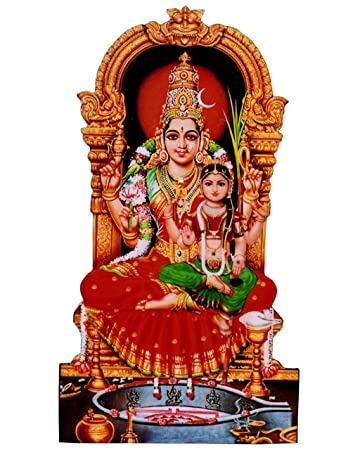
    /lalitatripurasundari.jpg
    Lalitha Tripura Sundari.


    Durga Suktham.

    http://ishare.rediff.com/music/sanskrit-devotional-devi-geet/durga-suktham/10012521

    Lalitha Sahasra Namam.

    http://musicmazaa.com/MMaPlayer/play/680b4ee4392bccec8d8bda67b1ca4295

    Lalitha Trisathi.

    shri lalitha trishati.mp3

    Sri.Lalitha Sahasranama Text in English.

    Nyasah

    Asya Sri Lalita Sahasranamastotra Maha Mantrasya
    Vasinyadivagdevatarsayah
    Anustup Chandah
    Srilalita Paramesvari Devata
    Srimadvagbhavakuteti Bijam
    Madhyakuteti Saktih
    Saktikuteti Kilakam
    Sri Lalita Maha Tripurasundari prasadasiddhidvara
    Cintitaphalavaptyarthe Jape Viniyogah

    Lalita Sahasranamam Stotram Dhyanam Lyrics

    Dhyanam

    Sindhuraruna vigraham trinayanam manikya mouli spurath
    Thara Nayaga sekaram smitha mukhi mapina vakshoruham,
    Panibhayam alipoorna ratna chashakam rakthothpalam vibhrathim,
    Soumyam ratna gatastha raktha charanam, dhyayeth paramambikam.

    Click the Link for Full Text.

    Opens in new window.

    http://www.hindudevotionalblog.com/2008/09/lalita-sahasranamam-stotram-sahasra.html

    Lalitha Trishathi Text.

    Ka- aa-ee-la-hrim
    Ha –sa-ka-ha-la-hrim
    Sa-ka-la-hrim

    Lalita Trishati Stotra Lyrics – 300 Divine Names of Goddess

    Nyasah

    Asya Sri Lalita Trishathi Stotra Maha Mantrasya
    Bhagavan Hayagreeva Rishi-hi
    Anustup Chandah
    Srilalita Maha Tripura Sundhari Devata
    Aiym Bijam
    Souh Saktihi
    Klim Kilakam
    Sri Lalita Maha Tripurasundari Prasadasiddhidvara Jape Viniyogaha

    Dhyanam

    Athi –madhura –chapa –hastha –aparimitha moda –bana sowbhagyam
    Aruna-athisaya-karuna-abhinava-kula sundharim vande

    Sri Hayagriva Uvacha:

    Kakara Roopa Kalyani Kalyana Guna Shalini
    Kalyana Shaila Nilaya Kamaniya Kalavathi
    Kamalakshi Kalmashagni Karunamritha Sagara
    Kadambha Kanana Vasa Kadamba Kusuma Priya
    Kandharpa Vidhya Kandharpa Janakapanga Veekshana
    Karpoora veedi Sorabhya Kallolitha Kakupthada
    Kali Dosha Hara Kanja Lochana Kamra Vigraha
    Karmadhi Sakshini Karayathree Karma Phala Pradha

    http://www.hindudevotionalblog.com/2008/10/lalita-trishati-stotra-lyrics-lalitha.html

    Enhanced by Zemanta
  • Navarathri ,Golu Essential Details.

    Navarathri ,Golu Essential Details.


    Note – Navratri day 9 and 10 are marked on same date in many calendars.

     
    South India
     
    In South India, Goddess Durga is worshipped during the first three days.
    Goddess Lakshmi is worshipped during the next three days
    Goddess Saraswathi is worshipped during the last three days.

    The Navratri commences on the first day (pratipada) of the bright fortnight of the lunar month of Ashwin. The festival is celebrated for nine nights once every year during the beginning of October, although as the dates of the festival are determined according to the lunar calendar, the festival may be held for a day more or a day less.

    Mantras and Procedure are being posted.

    Durga _Lakshmi+ Saraswati._
    Durga Lakshmi Saraswathi.jpg.

    Navratri Day 1


    Pratipada

    Ghatasthapana
    Chandra Darshan
    Shailputri Puja

    Panchang for Ghatasthapana Day

    Colour of the day

    Yellow


    Navratri Day 2

    2


    Dwitiya

    Brahmacharini Puja
     

    Panchang for Brahmacharini Puja Day

    Navratri color of the day –

    Green


    Navratri Day 3

    3
     

    Tritiya

    Sindoor Tritiya
    Chandraghanta Puja
    Varad Vinayaka Chauth

    Panchang for Sindoor Tritiya Day

    Navratri color of the day –

    Grey


    Navratri Day 4

    4

    Chaturthi

    Kushmanda Puja
    Upang Lalita Vrat

    Panchang for Kushmanda Puja Day

    Navratri color of the day –

    Orange


    Navratri Day 5

    5


    Panchami

    Skandamata Puja

    Panchang for Skandamata Puja Day

    Navratri color of the day –

    White


    Navratri Day 6

    6


    Shashthi

    Katyayani Puja

    Panchang for Katyayani Puja Day

    Navratri color of the day –

    Red


    Navratri Day 7

    7


    Saptami

    Saraswati Awahan
    Kalaratri Puja

    Panchang for Saraswati Awahan Day

    Navratri color of the day –

    Royal Blue


    Navratri Day 8


    Ashtami

    Saraswati Puja
    Durga Ashtami
    Mahagauri Puja
    Sandhi Puja

    Panchang for Saraswati Puja Day

    Navratri color of the day –

    Pink


    Navratri Day 9

    9


    Navami

    Maha Navami
    Ayudha Puja, Navami Homa

    Panchang for Maha Navami Day

    Navratri color of the day –

    Purple


    Navratri Day 10


    Dashami

    Navratri Parana
    Durga Visarjan, Vijayadashami
    Panchang for Navratri Parana Day


    The tenth day is celebrated as Dasara or Vijaya Dashami.

    The Five Navaratri.

    Navarathri is celebrated five times a year. They are Vasanta Navaratri, Ashadha Navaratri, the Sharada Navaratri, and the Paush/Magha Navaratri. Of these, the Sharada Navaratri of the month of Puratashi and the Vasanta Navaratri of the Vasanta kala are very important.

    1. Vasanta Navaratri: Basanta Navaratri, also known as Vasant Navaratri, is the festival of nine days dedicated to the nine forms of Shakti (Mother Goddess) in the spring season (March–April). It is also known as Chaitra Navaratri. The nine days of festival is also known as Raama Navratri.

    2. Gupta Navaratri: Gupta Navaratri, also referred as Ashadha or Gayatri or Shakambhari Navaratri, is nine days dedicated to the nine forms of Shakti (Mother Goddess) in the month of Ashadha (June–July). Gupta Navaratri is observed during the Ashadha Shukla Paksha (waxing phase of moon).

    3. Sharada Navaratri: This is the most important of the Navaratris. It is simply called Maha Navaratri (the Great Navratri) and is celebrated in the month of Ashvina. Also known as Sharad Navaratri, as it is celebrated during Sharad (beginning of winter, September–October).

    4. Paush Navaratri: Paush Navaratri is nine days dedicated to the nine forms of Shakti (Mother Goddess) in the month of Paush (December–January). Paush Navaratri is observed during the Paush Shukla Paksha (waxing phase of moon).

    5. Magha Navaratri: Magha Navaratri, also referred as Gupta Navaratri, is nine days dedicated to the nine forms of Shakti (Mother Goddess) in the month of Magha (January–February). Magha Navaratri is observed during the Magha Shukla Paksha (waxing phase of moon).

    • Durga, the inaccessible one
    • Bhadrakali
    • Amba or Jagadamba, Mother of the universe
    • Annapoorna devi, The one who bestows grains (anna) in plenty (purna: used as subjective)
    • Sarvamangala, The one who gives joy (mangal) to all (sarva)
    • Bhairavi
    • Chandika or Chandi
    • Lalita
    • Bhavani
    • Mookambika.
    • First three days

      The goddess is separated as a spiritual force called Durga also known as Kali in order to destroy all our impurities.

    • Second three days

      The Mother is adored as a giver of spiritual wealth, Lakshmi, who is considered to have the power of bestowing on her devotees inexhaustible wealth, as she is the goddess of wealth.

      Final three days

      The final set of three days is spent in worshiping the goddess of wisdom, Saraswati.


      In order to have all-round success in life, believers seek the blessings of all three aspects of the divine femininity, hence the nine nights of worship.


      Kolu-Golu
       
      Golu.jpg.
      Golu .
       
      During the festival of Navratri in South India, it is customary in the states of Tamil Nadu, Kerala, Andhra Pradesh and Karnataka, as well as in some Tamil communities within Sri Lanka, to display a “Kolu” (also Golu, or Bombe Habba or Bommai Kolu or Bommala Koluvu). This is an exhibition of various dolls and figurines in odd (usually 7, 9, or 11) numbered tiers (“padis”).
       

      When people come to a person’s house to see the Kolu, usually they are given prasad (the offering given to God that day), kumkum and a small bag of gifts. These are only given to girls and married women. In the evenings, a “kuthuvilakku” (small lamp) is lit, in the middle of a decorated “kolam”(Rangoli), before the Kolu and devotional hymns and shlokas are chanted. After performing the puja, the food items that have been prepared are offered to the goddesses.


      Kolu is adorned with dolls – predominantly with that of the gods and goddesses depicting mythology. It is a traditional practice to have at least some wooden dolls. There should also be a figurine of a boy and a girl together called ‘Marapacchi’ Bommai. Some photos taken during Kolu of Navratri 2007 & 2010 are displayed at a home situated at Nerul, Navi Mumbai, Maharashtra, India & at a home in Walldorf, Germany respectively are shown below. On the 9th day (Saraswati Puja), special pujas are offered to Goddess Saraswati – the divine source of wisdom and enlightenment. Books and musical instruments are placed in the puja and worshipped as a source of knowledge. Also, tools are placed in the pooja as part of “Ayudha Pooja”. Vehicles are washed and decorated, and puja is performed for them.

      The 10th day, “Vijayadasami” – is the most auspicious day of all. It was the day on which evil was finally destroyed by good. It marks a new and prosperous beginning. New ventures started on this day are believed to flourish and bring prosperity. Kids often start tutoring on this day to have a head start in their education.

      In the evening of “Vijayadasami”, any one doll from the “Kolu” is symbolically put to sleep and the Kalasam is moved a bit towards North to mark the end of that year’s Navaratri Kolu. Prayers are offered to thank God for the successful completion of that year’s Kolu and with a hope of a successful one the next year. Then the Kolu is dismantled and packed up for the next year.

      Citation.

       http://en.wikipedia.org/wiki/Navratri

      Related;

      http://ramanisblog.in/2011/09/28/what-is-navaratrihow-to-perform-pooja/

    Sri Vidya Mantra Tantra Vidyas Sources Details

    Sri Vidya is that which grants Knowledge and Prosperity or Knowledge of Prosperity.

    As Knowledge that liberates the Soul it has no equal.

    The special feature is that it grants both prosperity and Liberation n the after Life, nay, Liberates one from the cycle of births and deaths.

    In two short phrases Lalitha Sahasranama describes…

    Keep reading

    Sri Vidya Tripura Sundari Upasna Maha Shoda Nyasa

    Nyasa is a ritual where the individual touches various parts of the body with specific Mantras to purify these parts.

    In Tripurasundari Upasana, Sri Vidya as well, the performing of the ritual is mandatory.

    I have been hunting down for information on these texts and I mentally vowed six months ago. to start writing on…

    Keep reading

    Navaratri Puja 4,Days 7-9 Saraswathi,Vijaya Dashami Text Audio.

    Day 7-Bhavani.     Bhavani. Bhavani Bhujangam. Shadathara pangeruham, anthar virajath,Sushumnantharalethi thejollasanthim,Sudha mandalam dravayanthim pibanthim,Sudha moorthy meede chidananda roopam. 1 Jwalath kodi balarka bhasarunangim,Sulavanya srungara lokabhiramam,Mahapadma kinjalka madhye virajat,Trikone nishannam bhaje sri Bhavanim. 2 Kwanath Kinkini nuporoth bhasi rathna,Prabhaleeda lakshardhra padaabhja yugmam,Ajesachyuthadyai surai sevyamanam,Maha devi manmurdhy thee bhavayami. 3 Susonamambara baddha ne virajanMaha rathna kanchi kalapam…

    Keep reading

    What Is Navaratri How to Perform Pooja in English Hindi Telugu

    Navaratri is a Hindu festival that celebrates the divine feminine, worshipping the goddess Durga in various forms over a ten-day period marked by the lunar calendar. The festival marks two important junctions of climatic and solar influence – the beginning of spring and the beginning of autumn. The first three days of Navaratri are dedicated…

    Keep reading

    Over 7K people have signed up.
    Join the crowd.

    Enter your mail to get the latest to your inbox, delivered weekly.