Tag: Chedi Kingdom

  • Poompuhar Founded Eleven Thousand Years Ago?

    Poompuhar Founded Eleven Thousand Years Ago?

    Now comes the tough part in determining the Timeline for Kaveri River.From Chola Copperplates evidence of Thiruvalankadu and the genealogical table by the Purans,it becomes evident that Cauvery River was brought to earth by Chitradhanvan Chola, emulating his ancestor Bhagirath who brought Ganga River to Earth.This would place Cauvery River timeline and consequently date of Poompuhar to Treata Yug,which is atleast a 900,000 years ago( We are in Kaliyug now; Dwapar Yug preceded this lasting for 8,64,000 years).

    However, dating of Ramayana places it around 5114 BC, that is about Seven thousand years ago.

    The conundrum is because of Time being Cyclic and not Linear.

    The origin of Kaveri river is associated with Sage Agastya and it was brought to earth by him.We find references to Agastya ,apart from references to him in Puran, Vedas,is mentioned in Vedas. He imparted Adhitya Hruday stotra to Sri Rama to shrug of his depression when Lakshmana was felled by Ravana’s Mohanastra. Agastya is reported to have come down south . This time frame is validated by Star Canopus, Agastya Nakshatra visibility in the southern hemisphere.And Ramayana lists over Thirty Rivers.

    Our minds do not accept such vast scale of Time. Can we then ,place Cauvery River and Poompuhar date around 7000 years ago.

    But we have archeological evidence from Poompuhar that Poompuhar to support a date of around atleast 11,000 years ago.

    So as a compromise, we may assign the Date of Cauvery River to atleast 11000 ago?

    Now, Indra Vizha celebrated in Poompuhar also supports this timeline because Uparichara Vasu was a Chola King who ruled Chedi Kingdom and was a friend of Indra. Indra is reported to have given him Bamboo Pole.

    Uparichara Vasu was a king of Chedi belonging to the Puru Dynasty. He was known as the friend of Indra. During his reign, Chedi kingdom had a good economic system and contained much mineral wealth, which made a lot of merchants around the world, come to the Kingdom. It was abundant in animals and corn. There were many towns and cities in the kingdom. He possessed a very special chariot. He introduced a festival in his kingdom in the honour of Indra. The festival involved planting of a bamboo pole every year, in honour of Indra. The king will then pray for the expansion of his cities and kingdom. After erecting the pole, people decked it with golden cloth and scents and garlands and various ornaments.

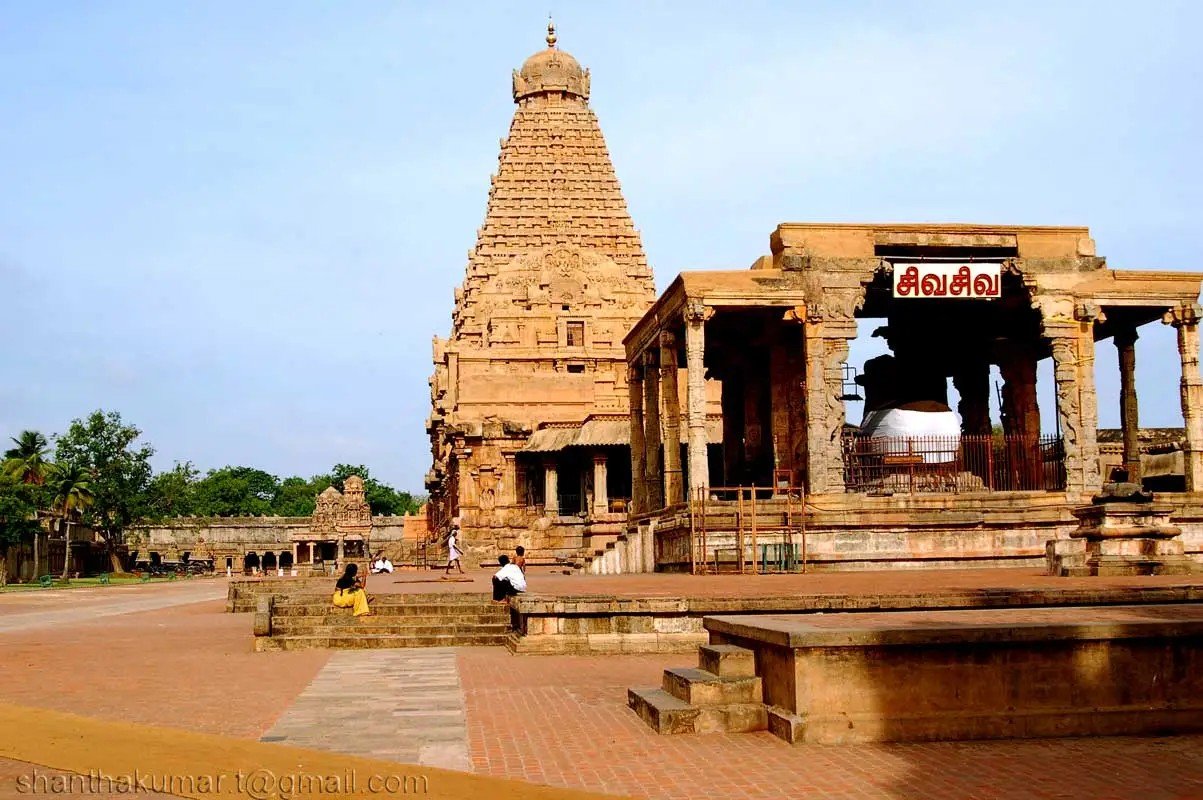
    Chedi Kingdom

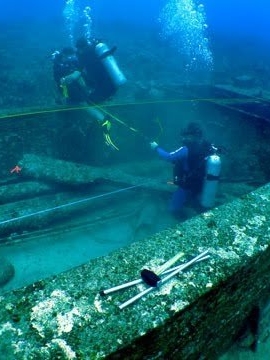
    Indra Vizha , Festival was celebrated with great pomp in Poompuhar. Failure to conduct it had resulted in a great Tsunami consuming Poompuhar, Tamil Sangam Classics, including Silappadikaram aver.

    So this shall place Poompuhar being intact before Kaliyug that is Chola Perunarkilli , who is recorded to be the first Chola King in Kaliyug.

    Hence ,it is safer to postulate the date of Poompuhar to about 11000 years ago.

    Cholavarman’s son was Rajakesarivarman and Rajakesarin’s son was Parakesarin (vv. 30 and 31).  These two names were used as titles alternately by the Chola kings in the order of their coronation (v. 32).  Parakesarin’s son was Chitraratha; his son was Chitrasva and his son, Chitradhanvan (v. 33).  It is stated that this last king Chitradhanvan brought into his dominions the river Kaverakanyaka, i.e., Kaveri, just as Bhagiratha brought into the earth Ganga, the river of the gods (v. 35).( Chitradhanvan was an ancestor of Sri.Rama and therefore Kaveri was in flow during Ramayana)

    Thiruvaalangadu Copperplates

    V. 36.) In that family was (born) Suraguru who was the hereditary abode of the maiden, the Lakshmi of victory.  This king having conquered by his glory the god of Death in his own territory acquired the name Mrityujit.

    (V. 37.) In his race was born king Chitrartha called Vyaghraketu from his banner-cloth bearing (the figure of) a tiger, who was a store of great heroism and who wore as an ornament on his head the flowers of the dhataki (Grislea Tomentosa).

    (V. 38.) The Treta-age having come to a close, a son of this king known as Narendrapati became the ruler.  The diadems of (subordinate) kings dropped down their gems ; (because their) fastenings had become loosened by the constant rolling at his footstool.

    (V. 39.) From him was produced the head-jewel of the powerful Solar race, (king) Vasu, who was the cause of the destruction of the demons (and) who (known) by the significant surname of Uparichara moved in any direction he liked in a celestial car which was presented (to him) by the lord of gods (i.e., Indra).

    (V. 40.) At the end of the Dvapara (-age) was born in the family of this head-jewel of kings a conqueror of all hostile kings named Visvajit.[30]https://www.whatisindia.com/inscriptions/south_indian_inscriptions/volume_3/no_205b_aditya_ii_karikala.html

    Kings after Muchukunda Chozha.

    Mandhata
    Muchukunda
    Valabha
    Prithulaksha
    Parthivachudamani
    Dirghabahu
    Chandrajit
    Sankriti
    Panchapa
    Satyavrata
    Rudrajit
    Sibi
    Marutta
    Dushyanta
    Bharata
    Cholavarman
    Rajakesarivarman
    Parakesarin
    Chitraratha
    Chitrasva
    Chitradhanvan. https://www.whatisindia.com/inscriptions/south_indian_inscriptions/volume_3/no_205_aditya_ii_karikala.html

  • Uparichara Thodiththol Chola Great grandfather Of Pandavas Founder Chedi Kingdom

    Uparichara Thodiththol Chola Great grandfather Of Pandavas Founder Chedi Kingdom

    While tracing the genealogy of Ikshvaku and chola kings in my efforts to find out the King, who was gifted with a Flying chariot,Vimana by Indra (.His son was Narendrapati who became king at the end of the Treta ageI came across interesting information.  His son was king Vasu entitled Uparichara on account of his having received a celestial car from Indra by which he moved about in all directions).This King was Thodiththol Chembian, a Chola King. This has been explained in detail in Manimekalai and Silappadikaram belonging to Sangam Literature,among other literature of the same period.The King is reported to have aided Indra and as a boon the Chola King was given a staff and flying chariot. The King is mentioned as Uparichara in Sanskrit in Mahabharat in Puru Genealogy.He founded the Chedi Kingdom. In Tamil texts mentioned above, this King celebrated a festival lasting for Twenty eight days in Poompuhar, the port of Cholas,which is now in Tamilnadu. This was called Indra Vizha.The Indra Vizha, Festival was also celebrated by Incas. Interesting to find that Chedis celebrate’The festival involved planting of a bamboo pole every year, in honour of Indra. The king will then pray for the expansion of his cities and kingdom. After erecting the pole, people decked it with golden cloth and scents and garlands and various ornaments. From Chedi, he ruled a large territory, placing his sons as governors of various provinces. Ref. Chedi Kingdom

    And more. This Thodiththol Chola, Uparichara was the father Vyasa ,Great grandfather of Pandavas and Kauravas. ‘

    The girl was named Matsyagandha which means “the one who smells of fish”; due to her upbringing, she retained this characteristic for a time. She was Satyavati, who later married Shantanu and who was the mother of Sage Veda Vyasa, and thus the great-grandmother of the Pandavas and Kauravas. The boy was named Matsya because he was born out of a fish; he founded the Matsya Kingdom. His descendant was Virata who founded the kingdom’s capital Viratanagara.

    Vasu and Girika had five sons: Brihadratha (Maharatha), father of Jarasandha, the prince of Magadha Kingdom; Pratyagraha, the prince of the Chedi Kingdom, whose descendant was Shishupala; Kusamva (Manivahana); Mavella; and Yadu.  

    It was King Chitradhanvan, of Ikshvaku) Chola Dynasty. Chitradhanvan’ s great grandson was the last King in Treta Yuga.’His son was Narendrapati who became king at the end of the Treta age.  His son was king Vasu entitled Uparichara on account of his having received a celestial car from Indra by which he moved about in all directions (v. 39).

    Uparichara Vasu was the son of King Krtaka and a descendant of Kuru(2) of the Puru Dynasty. He lived in Dvapara Yuga. He was a contemporary of the Kuru king Shantanu. He was devoted to Truth and Virtue. His name derives from “upari”, meaning “upwards”, and “chara”, meaning “going”, i.e. “the one who goes upwards always”.[1]This meaning arises from his flying chariot………

    He is described in the Mahabharata, (1:63) and (12:338). One day, he decided to give up rulership of his kingdom and decided to do penance to please Lord Indra. He made severe penance. and Indra and devas appeared before him, promising him eternal friendship and great bliss in heaven, also giving him a garland which was made of Lotuses of Kalpaka Vrksha. This was given in a mark of friendship between Indra and Vasu. By the blessings of Indra, Vasu conquered the Chedi Kingdom, then he returned to his kingdom. There was a river named Suktimati (Ken) which flowed in his capital; hence the capital was named Suktimati.

    After Vasu performed the austerities, gratified Indra had blessed him and given him a crystal chariot along with a bamboo pole to protect his subjects. Uparichara, after one year, planted the pole and worshipped it as Sakra. This became a tradition in Chedi and people used to erect pole and deck it with gold cloth, scents, garlands and various ornaments. Indra was gratified by this festival and blessed them.

    The neighbouring mountain, Kolahala was once maddened by lust and attacked this river, blocking her path. The river sought the protection of Uparichara Vasu, who split the mountain with a kick, allowing the river to pass through. By the union of the mountain and the river, a boy and a girl were born. The boy was made Commander-in-Chief of Vasu’s army; the girl, Girika, was married to Vasu. At the due time, Girika bathed preparatory to conceiving a child, and told her husband that the time was right. However, when Vasu and Girika were out in the palace gardens, The Pitrs (ancestors) of Vasu appeared before him and commanded him to slay the running deer. He could not disobey their words, and set out for a hunt to slay the deer. [2]……Full of thoughts of Girika as he travelled the beautiful forest, the king’s seed, which he was anxious not to waste, was caught by him on a leaf. Having consecrated the seed with mantras, he called on a passing hawk, asking it to carry the seed to Girika as it was her time to conceive. On its way, the hawk was interrupted by another, who mistook the leaf for a piece of meat. In their fighting, the seed fell into the river Yamuna, where lived a beautiful Apsara named Adrika, who was at the time in the form of a fish, having been cursed by Brahma. Adrika swallowed the seed; nine months later, some fishermen of Vasu’s kingdom caught the fish, and took from her belly two human children, a boy and a girl. Adrika, having been told by Brahma that, on giving birth to two human children in her fish form, she would be released from her curse, resumed the form of an Apsara and ascended to the celestial realm. The fishermen took the children to Vasu; the king chose the boy to be raised in his household, and gave the girl to a fisherman named Dasaraj. [2]

    The girl was named Matsyagandha which means “the one who smells of fish”; due to her upbringing, she retained this characteristic for a time. She was Satyavati, who later married Shantanu and who was the mother of Sage Veda Vyasa, and thus the great-grandmother of the Pandavas and Kauravas. The boy was named Matsya because he was born out of a fish; he founded the Matsya Kingdom. His descendant was Virata who founded the kingdom’s capital Viratanagara.

    Vasu and Girika had five sons: Brihadratha (Maharatha), father of Jarasandha, the prince of Magadha Kingdom; Pratyagraha, the prince of the Chedi Kingdom, whose descendant was Shishupala; Kusamva (Manivahana); Mavella; and Yadu. https://en.m.wikipedia.org/wiki/Uparichara_Vasu
    விழாவறை காதை உரை இந்திர விழாவின் வரலாறு 1-10: உலகம்……….ஆகலில் (இதன் பொருள்) உலகம் திரியா ஓங்கு உயிர் விழுச்சீர் பலர் புகழ் மூதூர் பண்பு மேம்படீஇய – சான்றோர் சென்ற நெறிநின்றொழுகுதலில் ஒரு பொழுதும் பிறழா தொழுகுதல் காரணமாகப் பெரிதும் உயர்ந்துள்ள தனது மாபெரும் சிறப்பினைப் பிறநாட்டிலுள்ள சான்றோர் பலரும் புகழாநிற்றற் கிடமான பழைய ஊராகிய புகார் நகரத்தின் தெய்வத் தன்மை காலந்தோறும் மேம்பட்டு வளர்தற் பொருட்டாக; ஓங்கு உயர் மலயத்து அருந்தவன் உரைப்ப – வானுற உயர்ந்து புகழானும் உயர்ந்த பொதிய மலையின்கண் இறைவன் ஏவலாலே எழுந்தருளியிருக்கும் செய்தற்கரிய தவங்களைச் செய்துயர்ந்த அகத்தியமுனிவன் பணிப்ப: தூங்கு எயில் எறிந்த தொடித்தோள் செம்பியன் – வானத்திலே இயங்குகின்ற மதில்களை அழித்த வீர வலைய மணிந்த சோழ மன்னன் ஒருவன்; விண்ணவர்தலைவனை வணங்கி முன்னின்று – தனக்கு நன்றிக் கடன்பட்டுள்ள அமரர்கோமனை வணங்கி அவன் முன்னிலையிலேயே நின்று; மண்ணகத்து என்றன் வான்பதி தன்னுள் – நிலவுலகத்திலமைந்த என்னுடைய தலை நகரத்தினுள்; மேலோர் விழைய விழாக்கோள் எடுத்த நால் ஏழ் நாளினும் நன்கு இனிது உறைக என – விண்ணவரும் கரந்துரு வெய்தி வந்து கரண்டற்கு விரும்புதற்குக் காரணமான பெரிய தொரு திருவிழாவை நினைக்கு யாங்கள் எடுத்தலை மேற்கொண்ட இருபத்தெட்டு நாளினும் நீ அந்நகரத்தே அவ்விழாவினை ஏற்றுக் கொண்டு உறுதியாக அங்கேயே இனிதாக வீற்றிருந்தருளல் வேண்டும் இது யான் நின்பால் பெற விரும்பும் வரம் என்று வேண்டா நிற்ப; அமரர் தலைவன் ஆங்கு அது நேர்ந்தது.தேவர் கோமனும் மறாஅது அவ்வாறே தந்த வரத்திற்கு; கவராக் கேள்வியோர் – ஐயுறாமைக்குக் காரணமான மெய்ந்நூற் கேள்வியினையுடைய சான்றோர்; கடவார் ஆதலின் – மாறுபட்டொழுகாராதலின் என்க. (விளக்கம்) உலகம் என்றது சான்றோருடைய ஒழுக்கத்தை,ஓங்குயர் விழுச்சீர், என்று ஒருபொருட்பன்மொழி பலவற்றை அடைபுணர்த்தோதினர். புகார் நகரத்துப் புகழ் சாலவும் உயர்ந்த புகழ்; தனக்குத் தானே நிகரான புகழ் என்றுணர்த்தற்கு. அப் புகழ் அத்தகையதாதலை புறவிற்காகத் துலாம் புக்கதும் ஆன்கன்றிற்கு மகனை ஆழியின் மடித்ததும் தூங்கெயில் எறிந்து அமரரைப் புரந்ததும் ஆகிய இன்னோரன்ன அந்நாட்டு மன்னர் செயற்கரிய செயல்களாலறிக. நாகநீள் நகரொடும் போகநீள் புகழ்மன்னும் புகார் என இளங்கோவடிகளாரும் (மங்கல) பாராட்டுதலறிக. பலர் அயல் நாட்டுச் சான்றோர் பலரும் என்க என்னை புகழத்தகுந்தவர் அவரேயாகலான். பண்பு – தெய்வப்பண்பு. அருந்தவன் – அகத்தியன். அகத்தியன் சோழனுடைய மூதூர் மேம்படுதற் பொருட்டுச் செம்பியன்பால் நீ இவ்வரத்தைக் கேள் என்றுரைத்தமையாலே செம்பியன் இந்திரன்பால் நீ விழாக்கோள் எடுத்த நாலேழ் நாளினும் என் பதியில் நன்கினிதுறைதல் வேண்டும் என வரங் கேட்டான்; அவனும் செய்ந்நன்றிக் கடன்பட்டிருத்தலான் அவ் வரத்தை மறாது நேர்ந்தனன் என்றவாறு. வானத்தே இயங்கு மதிலினுள் இருந்து அரக்கர் வானவர் ஊரெல்லாம் புகுந்து அவர்க்குக் கேடு விளைத்தனர். அம் மதிலை ஒரு சோழன் அழித்து அமரரைப் பாதுகாத்தனன். இவ்வாற்றல் நன்றிக் கடன்பட்ட இந்திரன் நீ விரும்பும் வரங்கேள் என்ன அச்சோழன் அகத்தியர் அறிவுறுத்தபடி வரம்கேட்டனன். அவனும் நேர்ந்தனன் என்க. இவ் வீரச் செயல்பற்றி அச்சோழமன்னன் தூங்கெயில் எறிந்த தொடித்தோள் செம்பியன் எனப்பட்டான்.

    Tamil Epics Refer Uparichara

    Additional References.

    http://www.tamilvu.org/courses/degree/p104/p1041/html/p1041333.htm

    1. சின்னமனூர் செப்பேடுகள் ஐங்குறுநூறு 62. (மணிமேகலை. 1: 65-72.) சிலப்பதிகாரம், இந்திரவிழவூரெடுத்த காதை மணிமேகலை, விழாவறை காதை

    குறிப்பு:தென்னமேரிக்க இன்கா நாகரிக மக்களும் இவ்விழாவைப்போன்றே இண்டிர்யாமி என்னும் விழாவை கொண்டாடினர்[1]

    1.  “the summer of rainy season come… Cuzco was now gay with arriving indians, for it was the sesaon of sun festival, the INTIRYAMI celebrating the time when, as the indians believed, the sun god came and live with them” – VictorW.Von Hagen, “HIGHWAY OF THE SUN”